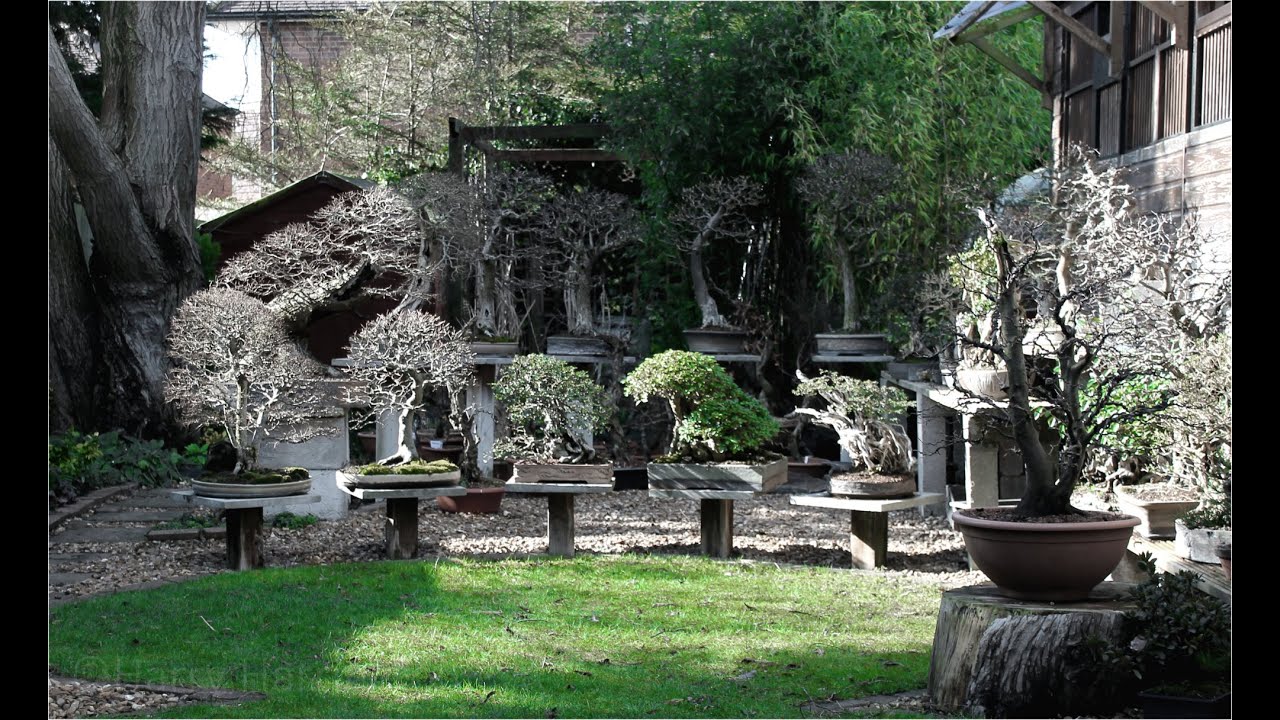
In this instructional video, Harry Harrington gives a behind‑the‑scenes tour of his bonsai garden, focusing on the polytunnel where newly collected trees are overwintered. He explains the layout of his garden, the distinction between his new and old polytunnels, and the areas for trees for sale or needing shade. The core of the video details his winter care regimen: a highly humid, well‑drained environment achieved with a large‑grain pumice, sphagnum moss, and bark mix; the use of black bin bags and occasional wet towels to boost humidity around the trees; and the timing of bag removal as shoots emerge. Harrington also describes his undersoil heating system—ordinary heating cables laid on the ground that raise soil temperature by about 10 °C, aiming for a root‑growth optimum of 20‑25 °C until ambient temperatures reach ~15 °C. He emphasizes the importance of avoiding water‑logged roots in the UK’s wet winter and provides practical tips for replicating this setup in other shaded or polytunnel spaces.
Chapters
So many people are familiar with my garden in pictures and on video, but in this series of videos I thought I'd show you behind the scenes. Walking past the monkey poles in my private collection, we then come to the area where I have the polytunnels. I have the new polytunnel that went in in autumn And then round the corner I have my old polytunnel where all the newly collected trees are kept. I also have this area where I have trees that are for sale or trees that need just a little bit of shade. But let's take a look in the polytunnel itself. So this is my shaded polytunnel where I keep my newly collected trees and trees that have struggled in their first year after collection. It's very shaded and I keep it very, very humid. The more humidity I can give the trees, particularly hawthorn and blackthorn that I clip primarily, the better. They absolutely love humidity. What they don't particularly like is having very, very wet roots. So I use a very open large-grain pumice mix with some sphagnum moss and some bark, and this allows the soil to drain very fast and stops the, the roots getting very wet and sitting there in moisture all winter long. Now this is our main problem in the UK, is temperatures will not get lower than— I see here it's about -1. It's the coldest I've had it in this polytunnel throughout the winter up until now in January. But we have continual moisture and rain, and it's the rain that we have to avoid around the roots of the trees. At the moment it's January and all the trees are just sheltering. There's not much activity going on until the end of January when root growth will start. At that point I will start putting black bin bags over the tops of these trees and then spraying inside the bin bags, and that will greatly increase the humidity. And if you're not doing this already for your trees that you've just collected, it's something that you need to start this spring because it is extremely effective. Now, the black bin bags will stay over the trees until they come into leaf and start to extend the shoots, and then we'll start to gently tear open the bin bags, allowing a little more light in and allowing the humidity to drop. Meanwhile, the polytunnel itself will be kept very, very humid, and I even put wet towels along the frame of the polytunnel so when the sun shines on them, which it does do for a couple of hours each day, it increases the humidity to the point where it feels like a If you can create an area like that, either in a polytunnel or just somewhere in the shade where you can bag up your trees, it's perfect. Notice that I've got undersoil heating cables running around the newly collected trees. These raise the temperature of the soil by about 10 degrees, and I'll keep them on through the winter and then through the spring until the ambient temperatures reach around 15 degrees. The ideal soil temperature for root growth is supposedly around 20 to 25 degrees, so that's the, the temperature that I'll aim for. But these are ordinary soil cables that are laid directly onto the ground, and then the pots are simply put straight on top. You can use sand and a sandbox method, but I find that this becomes very cumbersome Taking the sandbox down and then putting it back up in the following collecting season.