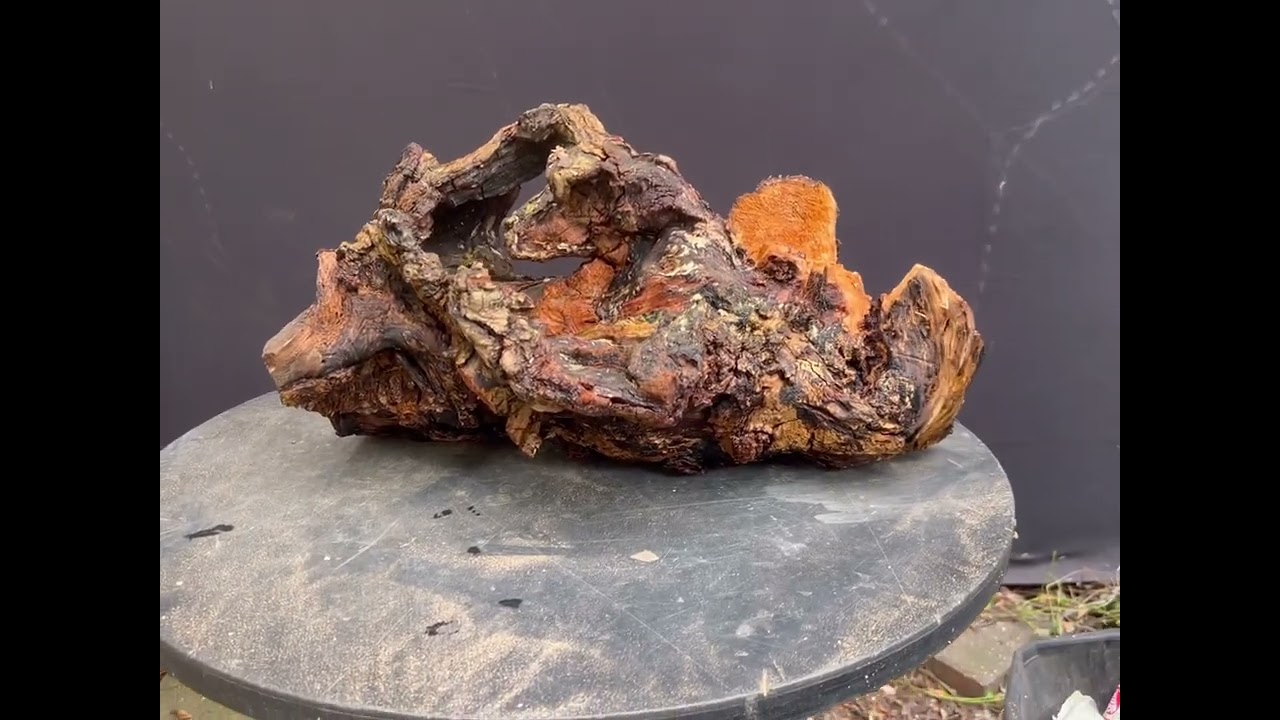
Harry Harrington transforms a field maple stump into a driftwood-style bonsai pot using a chainsaw, Paraloid B72 sealant, and a die grinder. He carves a planting pocket, thins the wood on one side to match the Ezo spruce's branch direction, and plans to use keto, a moss-and-akadama blend, to build up soil edges.
Chapters
Very much inspired by seeing bonsai planted on pieces of driftwood, I thought I would create something for myself using this large field maple stump that had been hanging around my garden for a few years. Although it's not a particularly inspiring piece of driftwood, I could see the possibility of a nice design in there if I was to do a little shaping. First of all, I cut a couple of old roots at the base so the deadwood had a fairly flat base on which to stand, and I was able to identify a possible planting pocket. Using a small 6-inch chainsaw, I started to shape the would-be container. The majority of the wood is very hard but would still need hardening and waterproofing if it was going to last at least a decade with a tree growing in it. Paraloid B72 with acetone is a great preservative that is a more runny product than Crazy or super glue, useful for covering larger areas of deadwood. The Paraloid is dripped over the surface of the wood where it sinks into the grain and sets very hard. I will also use super glue during this process to reinforce the hardness of the The paraloid dries, leaving the wood a slightly darker colour, but within a week it had dried fully and the natural appearance of the wood and the bark is perfectly preserved. The plasticised wood can then still breathe but is waterproof and protected from rotting, or at least breakdown of the wood is slowed down greatly. by a good number of years. Using a bonsai nibbler fitted to a Makita die grinder, I also started to cut a deeper planting pocket into the wood so there was more room for the roots of the tree that would be planted into it. I will need to add tying wires at the point that the bonsai is planted into the, uh, deadwood, and I will use keto to build up the edges of the soil mass where needed. Keto is a mixture of a very sticky mixture of sphagnum and akadama and is very useful for jobs like this. The tree I intend to use for this piece is an Izo spruce. Its main character branch faces towards the right, and so I have made sure that the driftwood is thinner on the right-hand side so that the movement of both the tree and the pot are coordinated. In my next video, I will start showing you the planting up of the tree.