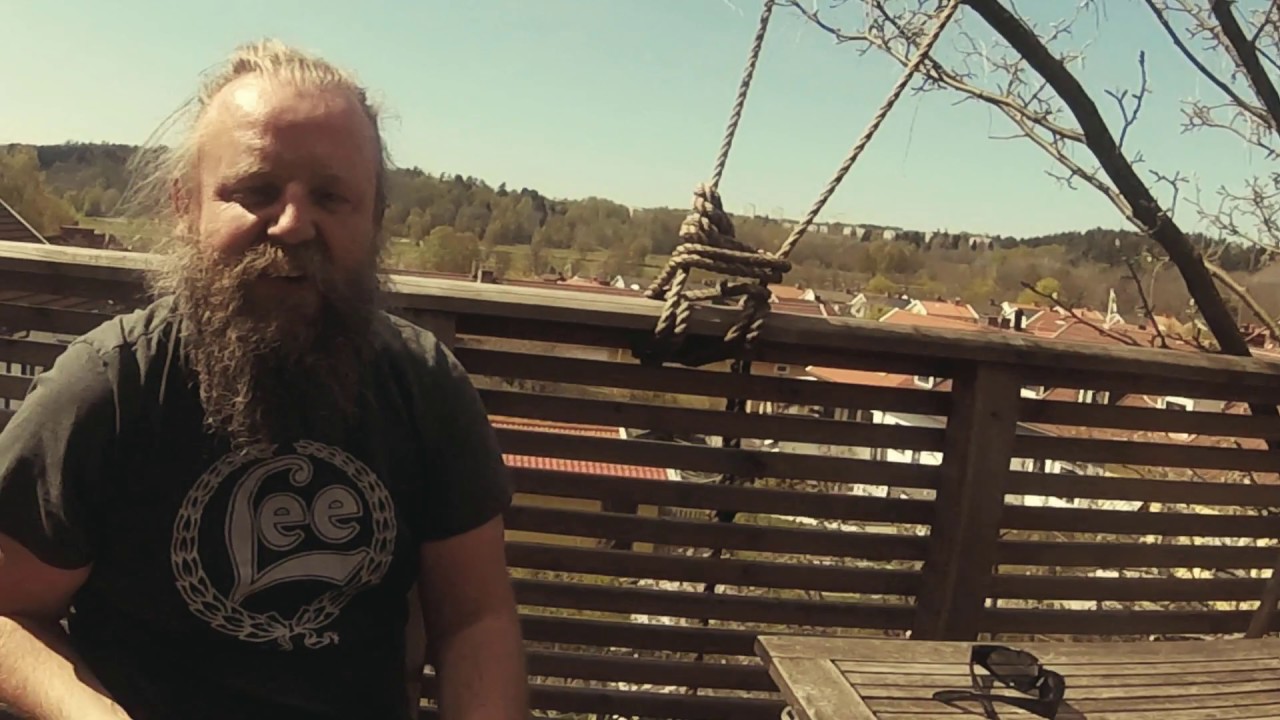
In this interview‑style studio tour, potter Thor Holvila explains how he transformed an old neighborhood heating plant into a shared studio with Karina. He details his five primary clays, focusing on Danish Granite Grey and bone‑white clay, and describes his preference for working with soft, wet clay to retain tool marks. Holvila outlines his firing process: a biscuit fire to 900‑950 °C followed by a glaze fire to 1240‑1250 °C, and his finishing techniques using slip, drying, and polishing with a cloth to achieve a bony texture. He then discusses his signature skull bonsai pots, linking the skull motif to themes of death, rebirth, and the Swedish toast "skål," which historically referenced drinking from an enemy’s skull. Throughout, he emphasizes the aesthetic of roughness and the philosophical meaning behind his work.
Chapters
Yeah, so the studio is down close to the garden. And this used to be like an old Firing, you know, for the heating for the whole neighborhood. I see. Yeah. So we had to tear everything out, you know, all the machines, all the concrete, you know, where they were standing on. There were like big screws coming in here with coal from the outside. So we had to wipe that out, and now we created this studio, which is split between me and Karina today. Exactly. This is, uh, this is, um, the main— the 5 main clays that I use. Okay. Um, and because of the quality and because of the, the Scandinavian origin as well, and, and also just for, for, uh, for the feel of it, which is also important because I like them kind of rough, and I work a lot with soft clay. Most potters, they wait until the drying stage is leather hard or, you know, a little bit stiffer. But I like the way of working with soft clay that gives, you know, leaves traces of the tools and you can see my thumb there, you know. And it's also, you get a different expression. So I just want to show you the different clays. This is Granite Grey. Which is from Denmark? And it's, uh, it's the— when it's— this is after first firing, I have to say. This is not in the wet stage. Is that what you call biscuit firing? Biscuit firing, exactly. You, you fire it first to 900, 950 degrees Celsius, and then you glaze it and refire it up to a level like 1240, 1250. That's when it becomes one piece of mineral, right? So the colors you see here is not the final stage, but this one will turn into a really nice gray, which reminds me of the Swedish granite. Granite, that's what I was thinking. Yeah. And then I use a white, a bone white clay, which is, which is really, really nice working with. It dries much faster because there's a lot of chalk in it, and it's, uh, but you can get really nice effects with the glaze on this one, and you can also get Get— what I like to do is like, I like to use slip afterwards and dry them off and polish them with an old sock or a cloth. So you get like a really bony feeling. Yes. Which suits the skulls very well. Because the skulls has become like a signature pot for me. The thing is, I mean, like, death is a condition for all living things, right? Certainly, yeah. Everything will decompose and turn into Growing and rebirth. And that's why I like the skull as a theme, because it reminds us about how everything has to return to nature again. And from death comes life. Life comes life. So the skull as a theme might seem morbid, but it's— for me, it's a reminder and it's a beautiful framing of a living tree. Certainly, yeah. And I call them like, yeah, skull is actually like in Sweden when we drink we say skål. Yep. Which actually derives from like back in the days when we were a little bit more aggressive. We used to, we used to say cheers in the skull of our enemies. So we drank from the skull. So that's skål. I've got a few of your pots in my flat. It's very interesting seeing it in this biscuit stage. Yeah, it's almost purple in there.