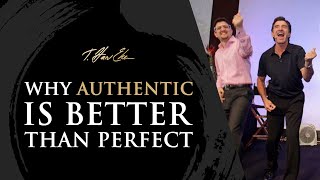
T. Harv Eker argues that striving for perfection alienates audiences because it highlights others' insecurities and erodes trust. By contrast, authenticity and vulnerability create connection, trust, repeat engagement, and ultimately drive sales and long-term success in teaching/business.
Chapters
The idea of perfection makes people uncomfortable and not like you. And that's not just on stage, my friends. That is everywhere in life. Everyone knows it's impossible, so they wonder what you're really like and what you're hiding behind that mask of perfection. Your perfect appearance, your perfect words, your perfect smile, your supposed perfection reminds people of their own imperfection and brings up their insecurities. It's subconscious, but they feel it. And in the end, they just don't trust you. Does that make sense? The truth is, they don't really care much about you. They care about them. And that's not selfish, that's just human nature. So what if you're not perfect or polished or even good looking? None of that affects their life. What's important is what you are teaching, the knowledge and information you provide, and what result it's going to have for them. It boils down to this. When you are not authentic, your audience, they can smell it. Sure, they'll smile and they'll clap for you, you know, at the time, but just assure they will never bother, buy your product or come back to learn more from you. On the other hand, when you are authentic, when you are vulnerable, your audience relates to you and they connect with you. It's what gets them to trust you and want to learn more from you and pay for that additional learning. And that ongoing relationship is one of the key ways you create success and wealth in this business.