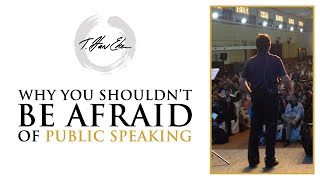
T. Harv Eker says audiences don't want perfection, they want you. Accept the fillers and stumbles, use notes on a music stand instead of memorizing, and ask the audience questions when you lose your place. People connect with genuine over polished.
Chapters
When most people think of speakers or trainers or seminar leaders, they think of this perfectly polished, perfectly sounding, perfectly looking person on stage with the perfect vocabulary and the perfect gestures and the perfect hair and the perfect on and on and on. I mean, I mean, come on, you are on stage in front of hundreds or even thousands of people. You better look and sound as perfect as possible. You better yes or yes. And the answer, of course, is no. Be authentic. I repeat, be authentic. Authentic is a thousand times more important and more impressive than perfect. You have to be and sound like you and only you. No airs, no ego, and absolutely no perfection in the way you look or the way you speak. It's perfectly okay if you say or ah. Or you stumble or even forget what you're talking about. In fact, really great trainers don't try and memorize everything. You know, when I train, first of all, I use a music stand with notes right in front of me to guide me and keep me on track and keep me on time. And I hardly memorize anything. And if I'm away from my notes and I get a little off topic and I forget what I was, you know, you know, what I do? I ask the audience, hey, what were we talking about? And you know what they tell me? And we laugh and we all work together and it's all good. And no one, no one cares that I'm not perfect. In fact, they welcome it. Why? Because they are not perfect.