Andy Mant┃Modern Life vs. Your Biology: How to Take Back Control of Your Health
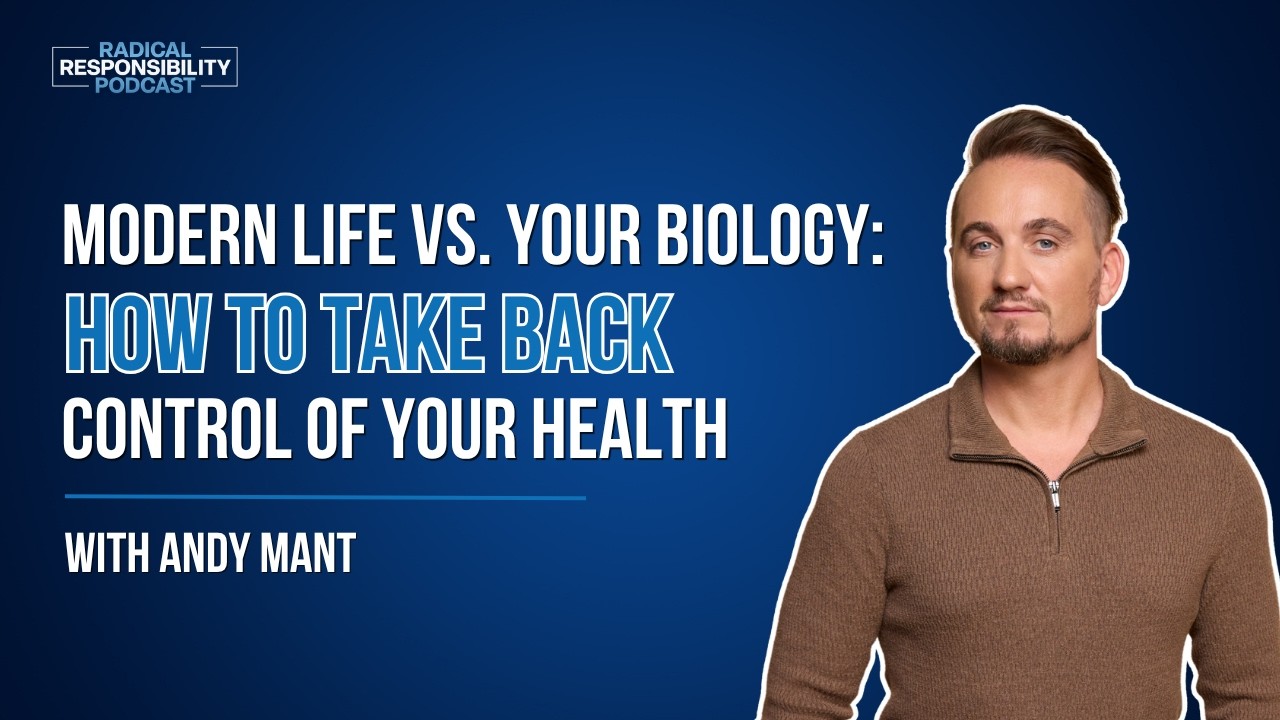
In this Radical Responsibility podcast episode, host Fleet Maull interviews wellness‑technology entrepreneur Andy Mant, founder of Bon Charge. The conversation opens with a description of how modern environments—artificial light, Wi‑Fi, 5G, air and water pollution, processed foods—create a profound mismatch with the biological cues (zeitgebers) our ancestors evolved under. Andy recounts his personal health journey: failed conventional diets, a transformative ketogenic experiment, chronic sleep problems, and the discovery that blue‑light exposure before bedtime sabotaged melatonin production. This insight led to the creation of scientifically‑tested blue‑light blocking glasses, which then expanded into a suite of products (circadian‑friendly lighting, red/near‑infrared therapy, infrared saunas, PEMF devices) aimed at restoring ancestral light cues and supporting mitochondrial health. He explains the dual use of these modalities for symptom relief versus long‑term prevention, emphasizing the importance of holistic pillars—light, water, whole‑food nutrition, breathwork, meditation, and grounding. Andy discusses how to discern credible wellness‑tech companies (independent testing, scientific advisory boards, transparent data) versus marketing‑driven hype. The dialogue shifts to mindset: radical responsibility, questioning authority, and building a personal “n=1” experiment framework. Recovery is highlighted as equal to performance, with examples from elite athletes and heart‑rate‑variability tracking. AI’s emerging role in personalizing wellness through wearables and data analytics is explored, alongside cautions about AI as a new authority. The episode concludes with rapid‑fire practical advice—watch sunrise, keep habits simple, prioritize consistency, ground yourself, and tailor diet (Andy’s APOE4‑informed Mediterranean pescatarian approach) and intermittent fasting to individual goals.
Chapters
We're living in an environment where we're not connected to the Earth's magnetic field anymore. We're living in an environment where we're connected to Wi-Fi, radio frequencies, 5G, 4G, which is interrupting our biology. We're living in environments that are polluted, heavily polluted if you're living in a major city, which is very different to the natural environment that our bodies are used to.
What if optimizing your health isn't about doing more biohacks, but becoming more intentional about the signals you're giving your body every day. Today, I sit down with wellness technology entrepreneur and Bon Charge founder, Andy Mant, for a fascinating conversation about light, sleep, recovery, longevity, and the future of personalized wellness. Andy explains why he believes modern life has created a growing mismatch between our biology and our environment, and how everything from artificial light to our always-on lifestyles can interfere with the natural rhythms our bodies rely on. We explore why morning sunlight remains one of his favorite health practices despite building a company around advanced wellness technology, why recovery may be just as important as performance, and how to tell the difference between real innovation and marketing hype in the exploding biohacking industry. Andy also shares how how AI and wearable data could make wellness increasingly personalized while warning us not to outsource our judgment to technology. And perhaps most importantly, he explains why longevity doesn't require chasing every new trend. Keep it simple, know why you're doing what you're doing, and prioritize consistency over constant optimization. Andy Mant, welcome to the Radical Responsibility Podcast.
Thank you so much for having me on. I'm super excited to talk to you and your audience.
Oh, really happy to have you. And I'm, I'm really fascinated with your work and a big interest area of mine right now, the whole world of the technology side of biohacking and how that interfaces with the body-mind, personal evolution, personal growth, and healing work and so forth that HeartMind's all about and that I've been involved with for most of my life. And so, it's fascinating what's becoming possible. And, you've done some really interesting work. So, I'm going to share your bio with our audience so they can be familiar with who you are and your work a little bit. And then, we'll jump right in. Sound good?
Sounds amazing.
Okay. So, Andy Mann is a global leader in the wellness technology industry known for building Bon Charge into a multimillion-dollar direct-to-consumer brand focused on red light therapy, PEMF, circadian lighting, and other cutting-edge wellness technology targeting longevity. With a personal and professional journey deeply rooted in performance optimization, mitochondrial health, and innovation, Annie brings easy-to-understand, science-backed insights under the principle that modern life disrupts biology, Bon Charge restores it. Whether speaking with High performance entrepreneurs, biohackers, or skeptics, Andy brings energy, contrarian thinking, and tactical takeaways that stick with audiences long after the conversation ends. Great. Well, I love contrarian thinking. Yeah. So, we like to start our conversations off on a little bit of a personal note. So, I'm sure there's a personal story behind your entry into the wellness industry, in particular, Lee, your interest in mitochondrial health and then, and then establishing BON CHARGE and the work you've done. So what inspired you to, to move into this field?
Yeah, I think it all began for me maybe 4 or 5 years before BON CHARGE started. I was very much in the conventional way of thinking when it came to dieting, actually something a little bit far away, but still relatively close to light and health. But I used to, I, I used to follow diets that were basically prescribed, like low fat, exercise more, eat less, and none of it ever worked for me. And I got quite overweight and I had quite a few health issues— kidney stones, I had to have my appendix out, I was always sick. And this was in my like mid-20s, and I decided to start thinking a little bit more for myself and outside the box and actually reading what scientific literature was telling me about various protocols that I could use to improve my health and weight. And I, I stumbled back then across a ketogenic diet, and I adopted that. Long story short, lost a lot of weight, regained my health, and that was a brilliant phase of my life that got me to think critically on how to look for information that would benefit myself from sort of a cellular level. and then put that into my life rather than just sort of blindly leading what people were telling me to do. And I always advocate for that and always have done since that inception point, that people should always think for themselves and do what's best for them, 'cause what one person does may not be right for the other. Now, after I lost a lot of weight and got into really good shape from a health standpoint, I started to think to myself, well, I'm on this sort of optimization train now of like, well, if I can do this for my weight and my wellbeing, what can I do to improve other things in my life? And a big thing that I was struggling with even before and after I lost a lot of weight was my sleep. And I just was not sleeping well. I was getting up in the night constantly. I couldn't fall asleep. I was waking up feeling really tired. I was really wired before bed. It was all sort of— Not working well for me. So I started to think to myself, well, how can I sleep better? You know, the conventional wisdom was spray some lavender spray on your pillow and, you know, um, just kind of wind down before bed, and, and that was it. And it didn't really do much for me at all. And then I discovered that light plays a very significant role in, in, in our in our biological systems. Um, and we can come on and talk a little bit more about that in more detail later should the conversation divert that way. But in a nutshell, exposing myself to the wrong frequencies of light before bed was tricking my brain into telling me it was daytime and I didn't need to produce sleep hormone to sleep properly. And when I fixed the light in my environment and removed the, the negative effects of blue light specifically before bed, and I did that through blue light glasses, um, and down the line circadian-friendly lighting, I discovered my sleep was a lot, uh, a lot better. And what led me to create Bon Charge was the first product we released was, was blue light blocking glasses, because the ones I was trying that I got from Amazon, we ran them through spectrometers and we wanted to match them with what the optimal banding of light is to block to improve sleep from what the scientific literature was saying, and none of them did this. So we wanted to take a product that was already in existence and optimize it based on the latest science, and that's what led us into launching Bon Charge with these blue light blocking glasses that really optimize sleep. But then we started to think to ourselves, well, what could we do involving light that can help us even further? So we knew that the light bulbs in our house were emitting the wrong types of of light. So we brought out light bulbs that put the correct sleep-friendly light into your environment after dark. We, we then understood that there were therapeutic wavelengths of red and near-infrared light that could help with bone healing and muscle and joint pain. So we brought out red light therapy. And then as time went on, we looked at infrared light for infrared saunas, pulsed electromagnetic field therapy, which is another form of electromagnetic frequency that's beneficial for health. And that led us to become this sort of overall holistic, evidence-backed wellness brand that brought tech to the market that actually did what the science was saying.
Wow. Amazing. So, yeah, I'd like to— there's so much there to explore. So before we get more in-depth into technology, just kind of stepping back for a moment, I know your work is grounded around the idea that modern life as it is, and probably that's exacerbated by a lot of modern technology, interrupts our biology, interrupts the natural cycles and healthy function of our biology. And so, I wonder if you could talk a little bit about that because then we can start talking about the various modalities you've employed for intervening in that. But, But let's talk about the problem to begin with.
Yeah, absolutely. Otherwise it just becomes a, a product that no one knows why they, they're using it and the backstory. And I think that's very important when it comes to how we operate as, as humans. And we've evolved for, you know, thousands, hundreds of thousands, millions of years, um, through primary zeitgebers being through light, temperature, basically the natural environment giving cues to our body to release certain hormones and neurotransmitters for us to optimize and, uh, and basically operate optimally and function properly. So, you know, back in, you know, even, even as much as hundreds of years ago, we would have got up with the sunrise, we would have been outside a lot, um, we would have seen the sunset, we wouldn't have had artificial lighting in the house, it would have been candlelight, and our hormones would have been in, in sync. with the environment. Now, evolutionary, evolutionary change takes, you know, thousands, hundreds of thousands, millions of years. So we've still got that same internal biological system that our ancestors had many thousands of years ago. But what's happened is cultural and technological evolution has sped up at such a rapid rate that we're living in this alien world that has different cues that are interrupting our natural biological systems. So for instance, where we used to get up with the sunrise in the morning, we're now switching on an artificial light in our house, which is a very different, um, biological cue that, that gives our body, as opposed to the rising sun, because of the spectral difference. We're living in an environment where we're not connected to the Earth's magnetic field anymore. We're living in an environment where we're connected to Wi-Fi, radio frequencies, 5G 4G, which is interrupting our biology. We're living in environments that are polluted, heavily polluted if you're living in a major city, which is very different to the natural environment that our bodies are used to. The food we're putting into our bodies has gone through high levels of processing. Ancestrally, the environment that produced it would have been organic, pesticide-free, and it would have been much more in harmony with our biology. And our water has also changed as well. We're now we're now drinking water that is ultimately dead. It's basically stagnated. All the nutrients have been stripped out of it, chemicals put into it, whereas our body historically would have been in an environment where we would have drunk flowing water, which, which would have been much better for our cells and mitochondria. So the way we have 2 options to fight this, this environmental mismatch between our biology, right? We got one where we can go and we can live in a cave in the middle of the mountains somewhere. I don't know, like, you know, maybe the Himalayas in India, and we can be there and we can live in harmony with our biology. But not many people want to do that. So including myself, I love the technology. We're having a conversation now via internet signals, which is not natural for our body. It's not probably not good for our body. But we can put things in place that manage the environment that we're in and make it more compatible to our biology. For instance, without going into too much detail on each, we can put blue light filters on our laptop screens to stop the mismatch of light entering our ecosystem. After we finish this call, we can go outside and get natural light into our eyes and our body to resync the hormonal efficacy of our biological system. We can make sure that we're not using Wi-Fi when we're speaking to each other. We can plug into an Ethernet cable so we're not disrupting the frequencies coming into our body. So there's lots of different ways that we can now manage our environment through, want of a better word, biohacking. And this is where Bon Charge comes in. Our products restore the biology through making the environment appear more ancestral to our biological systems.
So again, just before we kind of dive— take a deeper dive into some of the technology, um, So, at HeartMind, what we're really about is helping people come home to the body and really reclaim the territory of our own body. And in process of coming home to the body, develop capacities for self-regulation and then co-regulation with others. And being able to drop into the depth of our being where we can discover that Fundamentally, we're not broken. We don't need fixing. We have this innate wisdom, innate intelligence. Our biology is this amazing magical phenomena, right? The most complex system in the known universe. And it works quite beautifully under normal conditions. And also the principle of what I call radical responsibility, which is the name of my book and the name of this podcast. So, this is the idea of taking really radical ownership for our lives. Not in any way, shape, or form is to to be involved in self-blame. Not at all. Certainly not blaming others or circumstance. Not blaming victims, but simply embracing choice. Right? That the choices I'm making right now are influencing how I'm going to show up in life. How life's going to show up for me. It's going to influence my destiny right now. And that's the one place where we really have some power. So you know, a lot of us could be in modern life, and we're starting to hear. A lot of people are hearing all about this kind of information. Oh, there's all this stuff that's bad for you. And, you know, I mean, it just seems like we're surrounded by everything that's bad for us, right? And more, you know, if we live in a big city, even worse. And all the kind of pollution you talked about, the light pollution, the pollution in our food and our air and our water. And, uh, and we could just slip back into feeling kind of victimized by the whole thing, you know, either want to run off to a cave in the Himalayas or just sit and feel You know, victimized by it all, right? And, um, um, and, you know, you can kind of grow up in the culture and go along with the way maybe your parents are living and eating, and just the way this— the school system you go to. I mean, everything's there to just encourage you, if you kind of go along and get along, to be in a pretty unhealthy lifestyle, right? And then you can wake up one day and you find that you have some of the health problems like you were experiencing, right? And like, why did this happen to me? I mean, it's pretty easy to feel victimized by it. So, how can we make that shift into ownership and realize, okay, this is modern life as it is. The technology is not going away. We're not going to go back to candlelight and kerosene lamps, which have their own problems. But, you know, here we are. And can I embrace optimizing my ability to thrive in this current environment that we're in? So I wonder if you could talk about making that shift and if that was kind of part of it for you. I mean, as I heard you talking about, you know, being learning to think for yourself, right, in terms of your own health. You know, we did a kind of a podcast show about six months ago with Mind Medicine Australia, another organization there in Australia where you live. We called it Becoming Your Own Chief Medical Officer. And this is the idea that we really have to take responsibility for directing our own health in terms of how we interface with the medical system as well as whatever we're doing personally. So I wonder if you could just talk a little bit about that sense of the possibilities in taking ownership, given everything we're facing, that we don't need to be victimized by that or by our own conditioning. But we can actually, we can make a difference if we'll step into really embracing that kind of ownership.
Yeah, absolutely. I mean, there's, there's 2 ways to go about it. I guess the way I went about it was more reactive to a situation I was in. I had, you know, you, you summarized it really well just a minute ago when you said you can wake up one day and your circumstances aren't beneficial for yourself, right? And this is exactly what I'm about to say leads to the point of where I've gotten to. When you're doing something, you don't know the harm it's doing until it harms you sometimes. Now, diet was one of those. You can eat a crappy diet every single day, and, you know, in, in your teenage years, like for me, wasn't really much of an issue. I was playing sport, wasn't a problem. When I stopped playing sport and carried on eating the rubbish food, I started to get health issues, and that spurred me on to seek out advice. And I, I guess what's inherent, I guess, in, in, in, in my sort of personality, or people in their 20s, is you typically get your information from authoritative figures like university when I went there, from school, from parents. And that's where the logical place to look is and, and was for me to start with. Like, what are the government saying? How do I lose weight? What does You know, you know the government health line channels say about losing losing the weight, and I tried all those and it didn't work. And then it was kind of just something that came to me was enough's enough. Like I need to start questioning everything. And for me, it was surrounding myself with people that were questioning mainstream advice. And like back in the day when I was in my twenties, it was more through internet forums and listening to what people were saying. They were saying, you know. get rid of carbohydrates and just eat fat and protein. And I was like, what? That's like goes against everything. Fat's bad. It's going to cause high cholesterol and give me a heart attack in 5 years. Um, and then I was, I was just like really interested in the science behind that. Well, what are the studies saying? And when you start looking at it, that wasn't the case. So I was like, well, let's give it a go. Let's, let's try it. And I was inquisitive. And once you start going down the rabbit hole and finding that one thing that takes you down the rabbit hole, it starts opening and expanding all other possibilities of like, wow, if I do things myself, I can get the results I want. And, and that is true for everything in life, whether it be your career, whether it be your health, whether it be whatever, um, you want to bring into and welcome into your life. But I guess the other way to doing it, doing it, which a lot of people are starting to do now, is they're not waiting for that moment to be reactive to something, that horrible moment where I'm ill every week and I, I now need to figure out what to do. They're learning from the stories of the, of others and being able to really take on board, you know, well, I don't want this to happen to me, so I'm going to take action now. So I think the best way to do a mindset shift on that perspective is really critique and look at everything as in with untrustworthy eyes. And I know that's a negative thing to say, and I don't often like to lead with a negative, but Trust no one. Don't trust what I'm saying. Don't trust what, you know, a doctor's telling you. Don't trust what, you know, someone on the news is telling you, or whatever it may be. Take that information, process it, and think to yourself, does this make sense to me? Is it logical to do this? You know, when, when people are saying things like— let me give you an example— don't go out in the sun because you'll get skin cancer. Okay. Think to yourself, is that logical? Would ancestrally, would my body be better off being inside a building with artificial light rather than in the sun? And start to question it, start to look at the reasons. What are other people saying about this? What's the antithesis of what these people are saying? What is the opposite? You usually find in almost every case that I've come across when I'm looking to improve something in my health whatever the mainstream is telling you to do, you're better off doing the opposite. But I caveat that with caution because there are certain situations where you'll need to do, do your own research and start to delve deeper. But more often than not, what you're told by the mainstream is, is, is contradictory to what you should be doing. You should be outside in the sunlight, um, you know, you should be blocking artificial blue light after dark, you should be eating organic food, you shouldn't fear fat or saturated fat. Um, you know, the opposite is, is, is inherently, um, it's inherently the correct thing to do. Um, but it's hard to make that shift because we've trusted people for so long. And if you're in a, if you're in a situation where you've trusted what the authorities have told you to do for so many years and you're in a good space and your health is amazing and you're physically active and you're fit and your mind is great, you haven't got any anxiety or depression or any kind of modern metabolic dysfunctions, keep doing what you're doing because it's working for you. But I would say 90% of people that follow those guidelines are probably not in a good space with what I've just, just mentioned there, and I have one or more of those conditions, at which point you need to stop and question what you're doing. And, and it's, it's that moment that when you start to then go, okay, this is overwhelming, I've got to change my entire life and this is going to be difficult, that you stop and you think to yourself, okay, this is a journey. This is not something that we're going to do as a trend or a fad. This is going to be life-changing, and we're going to change our lives for the better. And it might be one thing. It might be, okay, well, I'm going to wear blue light blocking glasses. I'm going to watch the sunrise in the morning. I'm going to ground to the earth. I'm going to do breathwork. I'm going to read a book and create parasympathetic time before I go to bed and see how you feel. And if it makes a positive change, keep it in your life. If it doesn't make any difference, drop it, move on to something else. But then what you'll find is over time and the years of doing this, you'll stack habit upon habit. And you'll generally and progressively start to compound in terms of the health and wellness benefits you'll receive. So yeah, it's a marathon, not a sprint with these things. But that's kind of a roundabout way of saying the 2 ways of going about it in my mind.
Yeah, it's so important what you're saying, Andy. I really encourage people to go back and replay that, listen to it several times. It just is so much there and it is so important. I remember years ago, and I think probably a lot of people have had this feeling, you know, because even in the mainstream, the information you hear about this is good for you, that's bad for you, it changes a lot, right? And so, you know, I would feel like, just make up your mind so I know what to do. Will you guys make up your mind? Tell me what to do so I know whether I can drink coffee or not drink coffee, drink wine or not drink wine, do this or not, you know, high-fat diet, low-fat diet, right? And it, back then it wasn't really, I was resenting the confusion and wanting them to clarify for me. rather than taking responsibility for, okay, I'm just gonna have to figure this out myself. Fortunately, I made that shift a long time ago, but I think a lot of people are in that place. And so, you know, be what it may, we kind of wish there was some authority out there that would simplify life for us, but life doesn't work that way. And so I just really encourage people to go back and listen to what Andy just shared with us several times. So given that, you know, the wellness technology industry has just exploded in recent years, right? And, you know, there's, uh, yeah, I remember I, uh, one of my main parts of my life and profession is being a meditation teacher and a meditator. So I've been doing that for more than 5 decades. And, and, uh, I remember when first there was some technology to assist with meditation, things like binaural beats and then various forms of neurofeedback. And now there's a number of wearable devices and so forth. So there's all of that. There's all the things around light protection and blue light stuff. There's exposing ourselves to beneficial light, red light therapy and all. There's the infrared saunas, full-spectrum infrared saunas. There's electromagnetic bioenergetic transmitters or so forth to expose ourselves to the right. I mean, there's just so much different stuff, right? There's— I mean, if anybody really wants to get a sense of what's going on in that industry, really recommend they go to Dave Asprey's Beyond Conference. I've been there the last several years in a row and And the, the ex— just the exhibition space is worth the price of admission, right? It's just, it's so amazing what's going on there, the whole world of supplements and all the different technologies. But it can be really confusing, right? It can be really confusing. Like anything, there's probably— like you found with the blue light glasses you went out and tested, some of them weren't really doing what they said they were doing, right? So, um, I know there's some really great companies, uh, in this space And I'm sure there's some others that are a bit more exploitative. And so how does one begin to, you know, have some discernment around all this without going out and starting your own tech company and building your own products? That's, that's a bit of a stretch. If somebody wants to do that, that's great, like you did. But other than that, how does one exercise some discernment about where to start, how to determine what are really beneficial products and what might be still kind of at the smoke and mirrors level?
Yeah, absolutely. It's, um, there's, there's 2 types of company out there and how they're run when it comes to wellness tech. The first one is, um, is the marketing company that just sees a trend or something doing well in, in an environment. They know nothing really about that technology and they just think, right, we can just make a quick buck of this and move on to the, to the next thing. And, and they're difficult to spot because they know how to market, so they know how to get into you psychologically. The second form of company is, is the ones that care about the science and they're there to actually help people, right? And they're the ones you want to be buying from. And like you rightly said, there's a lot of them out there, which is good, probably, you know, on a par with, with, um, the amount of not-so-good ones out there. But you don't want to buy something that's wrong because otherwise you're going to buy the blue light glasses that don't work, you're going to buy the red light therapy that doesn't have the correct frequencies, or the PEMF that's not um, oscillating at enough megahertz to, to be able to have an impact on our, on our mitochondria. Now, I guess the best way to go about it is you don't want to be comparing on price. I think that's just nonsense. You can buy something cheap and it be as good as something really expensive, or you can buy something, you know, mid-range and it be absolutely terrible, something expensive and it's terrible, or cheap, or whatever it may be. What you've got to look at is Look at the infrastructure behind the company that you're purchasing from. For instance, you'll want to look at a company that infuses science within their products. And what has happened in the industry over the last 5 or 6 years is everyone just goes, we sell science-backed products. What does that even mean anymore? We don't even know. It's been used so much in the wellness industry that it's kind of lost meaning. And so look for the companies that actually can back that up. Have they got independent testing? Have they done their own clinical trials and studies? Do they have a scientific advisory board of PhDs that are contributing to product development and, and how we, how we, um, come across within the market? Do they house in-house PhDs relevant to the product development within their company as well? And are they very transparent with data on their website and product pages? Are they showing you the spectral reports? Are they showing you the data? Are they showing you the user-reported benefits? And then you can start to differentiate between the two. The marketing ones would just be a whole lot of, you know, this is going to be amazing for you, buy this, you know, a lot of like, oh, better get that now, here's a deal, go and buy it. Um, whereas the ones that infuse true science will have all of the above of what I'm saying. And I think that's That's probably where you want to start. Because if I start going too deep into like, right, you need this wavelength, it needs to block this, it becomes very difficult to ascertain. And what you, what you find is a lot of the products out there do operate in, in a similar way in terms of they have the basic fundamentals of, yes, it's this frequency of light we need to block, or it's this frequency of light and red light therapy that we need. But then it goes deeper into like intensities or radiances and, and then it gets more complicated for the users. Now, you want to find a company that, that removes all of that stress for you, which is when the scientific advisory board, the PhDs, that being transparent with clinical trials and, and test reports on the website, um, is, is fundamental. If it's not there, then, then I would not consider purchasing.
That's very helpful. So, um, as you, you know, Most of us don't get motivated to do something about our health and lifestyle until we're having some struggles with it, right? I mean, most of us went through our teenage years, we ate whatever we wanted, did whatever we wanted, and we didn't realize many negative effects, right? But as we get older, we start to see some symptoms. And our whole medical and healthcare system, some people call it the sick care system, is focused on symptomology and addressing symptoms and in some cases correcting symptoms. But, I know your approach is about fundamentally restoring our biology. So, I wonder if you could talk about that difference between— because even using some of these current wellness technologies, somebody might be suffering with something. Okay. I'm going to try this and expect it's going to get rid of my symptoms right away. That's mostly what we want is I want to get rid— I'm having these uncomfortable symptoms. Uh, get rid of them for me, right? And, uh, it's a little deeper approach and maybe a little long— more longer-term approach, I would think, to think about actually restoring our biology to its optimal functionality.
Yeah, and I think there's 2 ways to use the products, right? Red light therapy is a prime example. Um, you can use it if you've got like muscle and joint pain, and that will relieve the symptoms and, and help you, um, get better. Quickly, which is, which is fantastic. But then there's people in the longevity community that utilize red light therapy, and I'll just use it as an example because it's the easiest one to explain, um, as preventative, um, treatments. So let me, let me explain how that works. Like, we, we have mitochondria, right, in our, in our cells, and they're the battery power of, of our cellular system. They create energy. Ultimately, we feed feed them water, food, light, and they will go through a 4-stage process, um, to— for want of a better word— and they will produce ATP, which is energy. Now, if we feed that system the wrong fuel, so a rubbishy diet, rubbish water, the wrong light, the efficiency of that energy system is going to deteriorate. Think of it as putting the wrong fuel in the car. Um, you know, you, you put the wrong fuel in and it will function, but you know, it will conk out eventually very quickly. And that's what will happen to your cells if you're feeding it the wrong things. Over time of not performing optimally, you'll lead on to having metabolic issues in your, in your life. You know, that could be personified in a bad knee, a bad hip, anxiety, stress, depression, whatever it may be metabolically. It could lead to something like that with other circumstances coming into play. So when you start putting in mitochondrial optimization strategies like utilizing red light therapy, for instance, that makes sure that the most optimal light is entering that energy production system. So you're putting like the premium gasoline in your, in your car here, so your energy output is more efficient. And when your energy output is more efficient, you're less likely to to suffer from metabolic issues as you age. So you, you start to age well rather than just aging poorly, where you get older and older and start getting more and more ailments. But you can't do this in isolation. You have to look at preventative modalities as not just wellness tech. Wellness tech's fantastic because it puts light into the system in its correct or therapeutic wavelengths to optimize your energy output. But you also need the correct water. You shouldn't be drinking tap water. It should be filtered, should be reverse osmosis with remineralization in it. You should be eating the correct food, and the correct food is simply organic, fresh, whole foods. And when that system then is fully optimized from all the different pillars, you're going to have less likely negative outcomes from your metabolic health as you age. Now it goes another step further as well on the preventative side, that yes, that's brilliant because that looks after you physically— wellness tech, food, water, you know, whatever else it may be. But from a mental health standpoint as well, you've got to look after that side. And I know that's a— you talk about that a lot as, as well, and it's super important. You can't just come on and say that, you know, light is the primary thing you need to do, food is primary, water is from— it all feeds into the same system. And preventative happens on the mental health side as well. You need to take time to enter that parasympathetic time. You need to be able to meditate, breathwork, all those things that lead into a healthier mind, because a healthy body without a healthy mind is, is obviously, um, no good to anyone. So those are the 2 ways you can use— you could use it to treat the ailments, or you can use it to prevent them. And red light therapy is great for that. PEMF is great for that. Blue light blocking is great for that as well. So Yeah, it's just incorporating it into your everyday wellness practices to set yourself up to age well.
What if transformation isn't just about thinking differently, but feeling differently? Science shows us that true change happens when we align not just our minds, but also the neural networks in our hearts and guts. This heart-mind connection is the key to deeper healing, resilience, and expanded awareness. That's why I created the HeartMind All Access Membership and Community, a space designed to help you rewire your nervous system, cultivate heart intelligence, and live with greater clarity and purpose. With over 1,000 hours of transformational teachings specifically curated to meet your needs, you'll learn from world-renowned meditation teachers, neuroscientists, and experts in neuroplasticity, all sharing powerful tools to help you shift your mindset and heartset, regulate your emotions, and unlock your full potential. You'll also gain unlimited access to every summit and course we've ever produced, a treasure trove of wisdom worth over $10,000 and growing, plus live gatherings and an inspiring global community to support your journey. If you're ready to step into a more heart-centered, connected, and conscious life, I invite you to join us. Click the link to learn more and start your journey today. So, as, um, uh, in our work, we often talk about transformation really begins with awareness. And so we may find ourselves in a health crisis of some kind that's going to motivate us to create change in our lives. So there's an immediate awareness, right? If we It's been subtle for a long time and it's no longer subtle. It's like hitting us in the head, like, wake up, you gotta do something here, right? But other than that, if people aren't in that kind of health crisis, the signals can be subtle. And then when we start doing a number of the right things, like you were talking about, some of the helpful things, using the wellness technology, just common sense stuff to help us sleep better, exercise, eating better food. various body-mind technologies, meditation, breathwork, and so forth, the changes can be subtle over time. We often hear stories from people about, you know, dramatic change, right? And curing cancer and things like that. And of course, these things happen. But often for a lot of us, as we start engaging in changing our lifestyle and developing some positive habits around a lot of the things we're talking about here, The changes are subtle. So how do we work with that and keep up our confidence and the momentum and get a sense? Because a lot of these things, sometimes we might be doing using a number of different modalities and technologies. We don't really know exactly, oh, that one thing is making this difference, right? Because I ate that food today, I'm feeling X, right? So there's, there's some, there's, there's some kind of way that, that we need to work with developing our confidence in developing our own lifestyle, our own path, and it really is improving our health.
Yeah, absolutely. It's very difficult when, when changes are subtle and slow to stay the course. And a good example is when you invest money, right? You, you invest for the long term knowing that over 30 years your money will compound, the interest will compound, and at the end of it you've got this massive pot and And you've got generational wealth to hand down, or you've looked after yourself in your retirement years. And the same is true with health, because if you look at your bank balance after investing after a year or 2 years, it's not materially going to look like much, but the work is being— the hard work is being done for that money straight away that will allow for 20, 30 years' time for it to flourish in its most, um, most spectacular way. And the same is true with health. What you're doing now is going to compound over the more, more times you do it, and you've got to have faith in, in that, that it's going to work. And I think what a lot of people are scared of is, well, what if I'm on the wrong path and I do this for 30 years and it's going to do nothing? And I've, you know, another study will come out to say that, oh, actually artificial light's great for you, whatever it may be. Um, you've kind of just got to make sure that whatever you're doing when it comes to health, um, both physically for your body and mentally as well, is, would my ancestors thousands of years ago have benefited from this? You know, the meditation, the mindfulness, the, um, correct light exposure. Would my body thousands of years ago have received this type of input? And if the answer is yes, then it's most likely going to be good for you. If it's whole foods, if it's natural light, um, if it's mindfulness away in nature, it's, it's most likely going to be good for you. I don't think you need studies to, to prove that. There's been multiple, you know, thousands out there, to be fair, across all the things I've just mentioned that show that forest bathing is great for your mental health and being out in, in daylight, uh, when the sun is shining is great for vitamin D and serotonin and dopamine production. So, um, it, it compounds over time and you've just got to stay the course. And I'll push back a little bit in saying that some changes are going to be noticeable quicker for people than others depending on your style of life currently. Like, for instance, if you are majorly struggling with insomnia and you're watching TV without blue light blocking glasses 2 to 3 hours before bed and barely going outside, I would argue to say that go outside and watch the sunrise for a week every morning without fail. Set your alarm and wear red lens blue light blocking glasses 3 hours before bed. There will be significant improvements straight away because they're further along on the spectrum of, you know, their current health being really poor and the improvements being more. But as one starts to become healthier, the changes are going to be more subtle, like weight loss, right? You, you know, you're 50 pounds overweight, the first sort of 6 to 8 weeks you're going to lose a lot of weight, and then it will stall and it will be smaller increments as you go down. And the same's true for for health, as you start to optimize, if you're already on the optimal training, you're already a 9 out of 10, those, those extra gains to get to 10 are going to be more subtle and more difficult to, to feel. But I would imagine that majority of people that are looking to improve their health and well-being will probably be at a sort of 1 to 5 on the scale, where they start to notice that if they align their circadian rhythm correctly by watching the sunrise and wearing blue light blocking glasses, they're going to notice that pretty quickly. If they are eating a high-processed food diet and they switch to organic, fresh, whole food, they will feel a lot better quickly. But that will be to a certain point. You'll hit the point where, wow, I feel great on a whole food diet and I feel great optimizing my sleep hygiene. But then it will cap out of like, okay, well, that's, that's my baseline now. And then you've got to look at, well, what else can I do to, to compound on those, um, on those early results. And it might be breathwork or meditation before bed. It might be a, a room temperature set to a certain, um, a certain coolness. Um, it might be sleep masks, earplugs, things like that. You start compounding on it. Um, but I think a lot of people will see initial change fairly quickly. Um, and then it's just ensuring that you continue to do that throughout your life so you know that you know, if you keep the faith with that, that it will compound over time. And when you're in your 80s, 90s, you'll be, you know, living like the people in the Blue Zones. You'll be able to walk to the shops, play with the great-grandkids, and, and just have a really good quality of life.
Yeah, I love the analogy of the compounding interest in the world of investing. That makes a lot of sense. So, um, you know, I, I think some people are motivated to become interested in wellness technology and various wellness approaches because they're suffering in some way, right? It's either physical maladies or overwhelming anxiety and stress and so forth. And others are interested, they just, you know, are doing pretty well but really want to optimize their health, right? They're interested in how healthy can I be. And then a lot of people also are attracted because they want to optimize their performance. So I think there's a lot of high performers Maybe even a lot of so-called Type As that get attracted into the biohacking and space and so forth. And that can have its own issues, right, of pushing too hard, of getting just more anxiety about all these different things that I could do and be doing and measuring myself and all that. And what I think sometimes we forget about is the need for recovery. So, I'm wondering if you could talk about that balance between the efforts we can make to really, you know, if we're interested in really being high performers, whether it's physically, athletically, or it's in, in our profession and business, or just really optimizing our life to add as much value as I can to life. But we're really interested in kind of like being all we can be or doing all we can do. But sometimes we forget about the need for recovery.
Yeah, absolutely. Recovery is super important. Like, gone are the days where we expected performance to be output after output after output, whether that be physically on, on a sport or, or a hobby, and even with work, because eventually it leads to burnout. The system is overloaded. You're running it too fast for, for too long. And recovery is super important. We work with a lot of athletes. Um, we're— Bon Charge is the official recovery partner for Fulham Football Club, who are a big Premier League soccer club here in, in London. And We work with their sports scientists and performance coaches to optimize recovery routines, and a lot of them are really into it anyway and starting to wake up that how you perform is based on your recovery. If you like, I track everything. I track with all my metrics and data points, and I know that if I go for, you know, six-seven mile run for the rest of the day, my heart rate will be elevated and my. Heart rate variability will will most likely drop, which which is which is in the short term it's it's not a bad thing. It's good because cardiovascularly it will keep me fitter, and the next day my recovery will will be good. If I do that same run again the next day, my recovery will drop again, and over time if I'm doing that same run every single day, my heart rate continually elevated, my heart rate variability trends down. My ability to handle stress reduces, my sleep starts to get impacted, which then has a knock-on effect to me being able to perform optimally over the next, you know, amount of time. So it's super important to allow the body to rest and recover. It's, it's much like, you know, uh, what they say about weightlifting, right? You, you don't get your muscles by lifting weights in the gym, you get them by recovering. That's when they grow. You fuel them with the protein and you relax and The body works in such a cyclical way when you start looking at it, and there are periods where the body needs to be active and needs to be producing. So for instance, during the day when there's blue light on you, your cells perform in a very different way in terms of how they function, as opposed to when there isn't blue light present. So when there isn't blue light present, the skin goes into a recovery mode. Which is what's needed to restore any damage in the cells, for instance. So if you're continually shining blue light on your cells, you are going to have periods of activity but no periods of recovery. And the same is true when you're doing cardiovascular exercise or when you're doing a lot of work. You've got to have periods where you allow the body to recover, to retort, to basically refuel itself up to do the next, um, the next phase. And if, if you just allow the body to just continually produce output without putting any input back into it, you're going to have major injuries, maybe health concerns as you go, um, go through life. A lot of injuries are from overtraining, not allowing the body time to recover. Um, but it's gone, it's gone one step further now in terms of optimization of recovery. So people know that, okay, I'll run today and then I'll sit around and not run the next day and then I'll run again. It's gone a little bit further than that now. It's gone down to a mitochondrial level where we're optimizing the amount of energy that we can produce optimally through the, um, through the mitochondria. And that's very much akin to I guess you'll hear me now, I love an analogy. It's like charging your phone, right? Gone are the days of just, you know, plugging it in, off you go. You want the type of electricity that goes into it, how often you charge it, when you need to charge it. All comes down to that. And I think recovery now is about optimizing those periods between the output that you want to do, whether it be with work or whether it be from a physical activity. to be able to mentally and physically prepare the body for, for the most optimal output when it, when it then becomes physical. So it's, it's super important, it really is. And those that neglect it find out the hard way over time when they suffer industry— in, um, suffer injury from overperformance, or they suffer depression, anxiety, or burnout from doing too much work without, um, focusing on the recovery aspect.
Yeah, I know. Um, for years I kind of leaned in the direction of, uh, sleeping less because you, you just get so much time back, right, to do things with. And, uh, there was a period around midlife when I was actually sleeping 4 to 6 hours a night and thought I was doing okay with it. Maybe I was, I don't know, at that point. Uh, but, um, um, uh, I can't do that anymore, and I don't try to do that anymore. But I remember A few years ago, reading how Roger Federer, one of the greatest tennis players ever, and then LeBron James, one of the greatest basketball players ever, in— for really for big games, big matches and so forth, they would sleep an inordinate amount of hours. They would log in like 12, 14 hours of sleep sometimes to kind of charge themselves for optimal performance. And it just really got my attention, right? So, I pay a lot of sleep to— attention to my sleep today and really trying to optimize my sleep because I realize that recovery is so important for me to be at my best and perform at my best. So, let's just talk a little bit about— we're going to finish off. We're getting towards the end of our time, but we're going to finish off with a kind of lightning round of questions just to kind of pull some uh, uh, tidbits of, uh, wisdom and information from you because of the, the depth of your background and all this. But before that, well, a lot of us, when we think technology, uh, AI also comes to mind because it seems to be changing everything very quickly. So what's your sense of the impact of AI on wellness technology in the wellness industry and just how we can use AI? I mean, AI can present its own challenges, and it's creating a lot of anxiety for a lot of people because it's changing the world so quickly. But how can we use AI as an enhancement for developing our own really optimally healthy lifestyle?
Yeah, I think AI is going to be good for the whole n equals 1 kind of personalized medicine, both preventative and non-preventative. But that's where I think it's going to go. I think it's going to allow people to dial into what works for them. And I think AI is being incorporated into wearables, fitness trackers, um, even in wellness tech now to, to be able to help you understand the impact and show the impact that it's having on the body. For instance, um, I wear a, a tracker that tracks all different metrics within my body, and I know that if I log a session in a hyperbaric oxygen chamber, or I do red light therapy, I can look back at the data during that period and see, well, what impact did that have on my stress levels, my heart rate, my heart rate variability, rather than just going by intuition. So I think AI, um, can help with that and help you determine quickly if something is working for you or not, because, you know, not, not everything works for everyone. So I think that's going to be super important. I think what you feed AI is typically going to vary in terms of the quality of what you feed it. It's going to give you the quality of the answer. You don't want AI telling you what you want to hear. It needs to be trained in such a way that it's going to be critical. It's going to use the information that you want it to use or correctly use. But the one thing that concerns me with AI is where is it getting its information from, right? It's, it's another authority ultimately. Exactly. Telling you what to do. So never take anything as gospel, even AI, because it's pulling it from somewhere, and somewhere someone may have an agenda to feed you that kind of information based on some wider goal that they may have. So still do your old your own research, um, when it comes to things like that. But I think it will come in handy when you're seeing how a certain modality like meditation, breathwork, red light therapy, whatever it may be, may have a positive impact on your biological metrics.
Yeah, that's so important because the danger with AI on many levels is that people turn that into another authority, right? And, um, and that, that can be really problematic. And externalizing our authority is a big problem to begin with. It's run through this whole conversation, the problem with externalizing our authority. And, um, uh, and so, you know, one of the ways I use AI is, is I, I, I get, you know, 3 or 4, uh, kind of deep blood work tests every year. I, I put all that information into an AI. I have a special project in an AI around, you know, my health, right? So I put all that information— I'm able to download information from wearables, I'm able to download information from my smart scale, I'm able to— I put in all my supplements stack in there, I do all kinds of things. What AI is really good— I mean, in some ways it's a really great computational device, right? It can just analyze a lot of data really quickly, right? So it analyzes all that data and then I can have conversations with it, but you really have to train it. Because AI has a tendency to tell you what you want to hear and to be a bit sycophantic. So you really have to train it to be really objective. But what it can do is help you gather all these different bits of information about your health and do an analysis and not just trust the analysis you get, but then have a conversation about it, right? Well, why is that? And this and that. And if I did that, well, where are you getting that information from? And what would do that? You know, you have to really, you have to engage it. You have to be an active partner with it. But it can do some amazing things that doing manually would take very long, right? If you wanted to figure out, if I wanted to figure out how all my blood work and all the information from these other, from wearables and all about my lifestyle and all supplements and pull all that together and create spreadsheets and figure out how it's all connected. And, you know, that would, it would, it would take you forever. But now AI can do those things very quickly. So it can be a very useful partner in that way. Great. So, just so, Bon Charge, you start off with blue light blocking glasses and wanted to develop some that really do what they're supposed to do, right? And then you're into red light therapy, I believe, and also the PEMF emissions, right? And the benefits of that. So, we've talked a bit about blocking blue light. And, you've talked a bit about red light therapy and the importance of getting some of the beneficial light exposure to our mitochondria, right? And, I don't think we have time today to go into all the technology and the frequencies and all that. But, like you said, if you're going to get a red light therapy device, make sure you really get it from a company that's doing the science and you can see that they have the advisory committee and they're involved in clinical trials and really a high-quality product. And, and if you try to get the bargain one on Amazon, you know, you get what you pay for. So you're probably, uh, you're probably not getting the best, uh, technology there. Uh, talk just a little bit about PEMF. What's, what's that technology all about?
Absolutely. This is, this is one of the, the newest forms of, um, of biohacking, and it's, it's starting to gain a lot of popularity now. What it is, is it's utilizing natural frequencies of energy that's found in nature and found within us internally, and it's pulsing them into the body to create certain states of, of well-being. So you mentioned binaural beats earlier. It's very similar concept to that where they use sound and auditory inputs to mimic um, natural frequency. So for instance, binaural beats are great for sleep. PEMF uses a similar modality where delta waves will be pulsed into the body, and the brain, in terms of wanting to conserve energy, will mimic the energy in the environment or the energy that's being pulsed into it. So putting delta waves in is going to help you sleep better. By using PEMF at 7.88 hertz, That's the Schumann resonance, which is the Earth's magnetic field, which basically is the same as grounding, which reduces inflammation. If you start to use alpha waves, you start to feel more creative. If you start to use, um, higher frequencies between 13 and 13 Hz, you're going to be able to be more productive, more in, in tune with meditative practices, allow you to be more present. So these frequencies can be used to put your body into these amazing states. Now, the opposite of how this works is imagine you're in a supermarket during a very busy period, loads of screaming children around. You're gonna— your body starts to mimic that and you start to feel stressed. Or you're getting on the train and it's busy and you have to stand up, people everywhere, feel stressed. Your, your body mimics what's around you. So the way PEMF, um, pulsed electromagnetic fields, work is it takes natural frequencies, you turn it to a setting that you want, you lie on this device or you sit on it and, and work or whatever it is you want to do, and you choose what kind of energy you want to feel. Do I want to feel grounded? Do I want to be more productive? Do I want a deeper meditation? Do I want to sleep better? Turn it on and then you just either relax, meditate, or work, or sleep, or whatever it is. And they've started to be used, um, quite heavily in the wellness community, but also in the recovery communities as well, where people are looking for that parasympathetic time. But also studies have started to come out that show that, um, 13 to 30 hertz of PEMF can actually heal bones faster. Um, it can actually help muscle recovery for quicker returning to physical activity. So there's a lot of promise in PEMF, and there's been a lot of trials that's happening at the moment. It's being incorporated around the world, which has been fantastic.
Wonderful. Wonderful. And so are there— so this sounds like a device you would lie on or sit on. Are there wearable technologies with PEMF or
There is, yes. There's actually a wrap, um, that we produce as well that wraps around the body, um, so you can use it to actually help heal a bad back. I know a lot of people have lower back issues. You strap it on, um, also gives out far infrared heat, um, which is fantastic for relief of, of muscle soreness as well. So yes, you can get them as wearables as well, so you don't just have to lie on a
And I'm really curious because another way to, you know, adjust your brainwave frequencies is through various neurofeedback devices, neurofeedback training, and so forth. And of course, various meditative disciplines do this anyway, but you can get a more measurable thing to know what's going on and work with the feedback you're getting from some neurofeedback device to train yourself to move into these different brainwave states you were talking about. Is anybody doing anything with combining like PEMF, PEMF where you're, you're getting an external source that's kind of putting you there, but then you're also learning how to get yourself there with some kind of biofeedback or neurofeedback? Is there anything going on like that?
Not that I've seen. The only ones I've seen out there are like Muse headband and Pulsettos where they're utilizing frequencies. I'm not sure if it's technically classed as PEMF. I'm not too sure. I'd have a look a little bit more.
I don't think so, to my best knowledge. Yeah. Yeah. Well, that might be an interesting development. Alright. Well, let's, let's, let's slip into our, our lightning round here. So just, these are just really quick answers to some quick questions. So what's the one health habit that everyone should take more responsibility for in your, in your mind?
Watch the sunrise every day. First light you see, natural light.
What's the most underrated factor when it comes to longevity and healthspan?
Keep it simple.
Mm-hmm. What's— you use the analogy of investing before. I've been reading a lot about investing lately, and there's a really key value in there in simplicity. Yeah. So simplicity is an overall human value is really important, I think. What's one popular wellness trend that you think may be a bit overhyped?
Cold, cold plunge.
Okay. And if you had to choose between morning sunlight and red light therapy?
Morning sunlight because there's red light therapy in it.
And what's the biggest mistake when people come to their sleep or trying to optimize their sleep?
Phone usage. They can block all the light they want, wear blue light glasses, do the wind downs, but as soon as that phone comes in stimulated, it's not going to help.
So, um, what's the one thing that you think we should really change In terms of our relationship to technology? What would be a key factor to have a sane relationship to technology?
Safe and sensible usage.
And, what matters most for longevity and healthspan, optimization or consistency? Consistency. What's one biohack that costs absolutely nothing?
Grounding.
Great. And what's one thing you've changed your mind about when it comes to health or longevity?
Ketogenic
dieting. So that became a positive for you?
It was a positive, but I don't think it's the long-term solution to optimal health. I think it's served a purpose for, for me, um, and I'm ever grateful for it. But I believe there are more optimal diets out there for me personally, um, being Mediterranean.
Well, that's a great— I mean, it's a whole nother, uh, subject, and, uh, but a very interesting one. And, uh, uh, yeah, diets can be a bit faddish and so forth. Ketogenic diets can be a great way to lose weight and get yourself on kind of a new track. I'm curious, and, and there's no one answer for everybody. Everybody's got to find their own way to this. But what direction are you moved in from ketogenic? Is it more towards a balanced paleo diet, or what, what kind of direction is that taking you in?
For, for me personally, um, I have an APOE4 variant gene, which means I'm highly susceptible genetically to develop Alzheimer's disease. So I have to I had to do a lot of research myself on what most optimal diet is for me, and mine is a high seafood Mediterranean diet. Um, and that's what I eat. I eat a lot of fish, um, whole grains, vegetables, um, a lot of variety, but it's all whole, whole food. Um, basically, yeah, pescatarian, I would say. But I do eat red meat in there as well, just not as much as say someone on a carnivore diet because of the APOE4 variant I have.
Right. Makes sense. So, and again, that points to the, the importance of really digging in and understanding our own system. And really it's a, it's a very personalized approach we need to take to our health. One last just quick question around, because you've probably explored this, what's your, what's been, have you experimented with intermittent fasting and what's your view on that or what's been your experience with that?
Yeah, I think it's a great tool for calorie restriction and control because it puts calories into a specific window, and it's harder to overeat when there's a smaller window to eat in. Um, I think we're, we're fasting when we're sleeping, so if you're getting at least 8 to 10 hours sleep a night, then you're fine. But a lot of people don't, so intermittent fasting allows your body to enter recovery mode and allow the cells to, to undergo apoptosis and autophagy, clearing out dead and damaged cells. I think you've also, again, got to be careful for females what stage of your cycle you're in when you're intermittent fasting, because there's areas of luteal phase when you're under a lot more stress and your heart rate variability is, is very low that you probably don't want to intermittent fast and place more stress on the body, or cold plunge and place more stress on the body. So again, I think it's, it's, it's very specific, but I think used I'm always— I always say to myself with, with things, or say to people, that you've got to know why you're doing something. So if you're doing intermittent fasting because someone says, oh, it's a cool thing to do, it's probably not the right thing. Are you using it for calorie control because you're on some sort of weight loss plan? Are you doing it because you have cancer and you want to have more periods for healing and restoring of clearing out cells? Are you doing it because, um, you find your spiritual practices during the fasted state are more heightened? I think you just got to understand why you're doing something, and then if it's working for that purpose, then, then, then keep doing it.
Fabulous. So it's been really incredibly, um, I've learned a lot. It's been incredibly educational. I'm sure it has been fascinating. And thank you for your work, and, uh, and I encourage people to find out more about you and BonCharge, where can people do that?
Yeah, they can— boncharge.com is great. Um, there's a great education, um, section on there. People start learning about the technologies in our modern environment. Our Instagram, BonCharge_. Um, those are both very, very good educational platforms where we have a lot of scientific articles written by our PhDs.
Wonderful. So, Andy Mant, thank you very much. Founder of BoneCharts. Thank you for your work, and thank you for being a guest on Radical Responsibility.
Thanks, Fleet. I really appreciate your time.
Thank you for joining me on the Radical Responsibility Podcast. Remember, real change happens when we commit to our growth, face our challenges with compassion, and stay open to transformation. If you found this episode helpful, I encourage you to subscribe and help us spread the message of healing and personal empowerment. Until next time, stay grounded, stay present, and stay true to yourself. Take care.
More from Fleet


What Oregon Learned When Legal Access Had to Work in the Real World - Angie Allbee PATGS 26

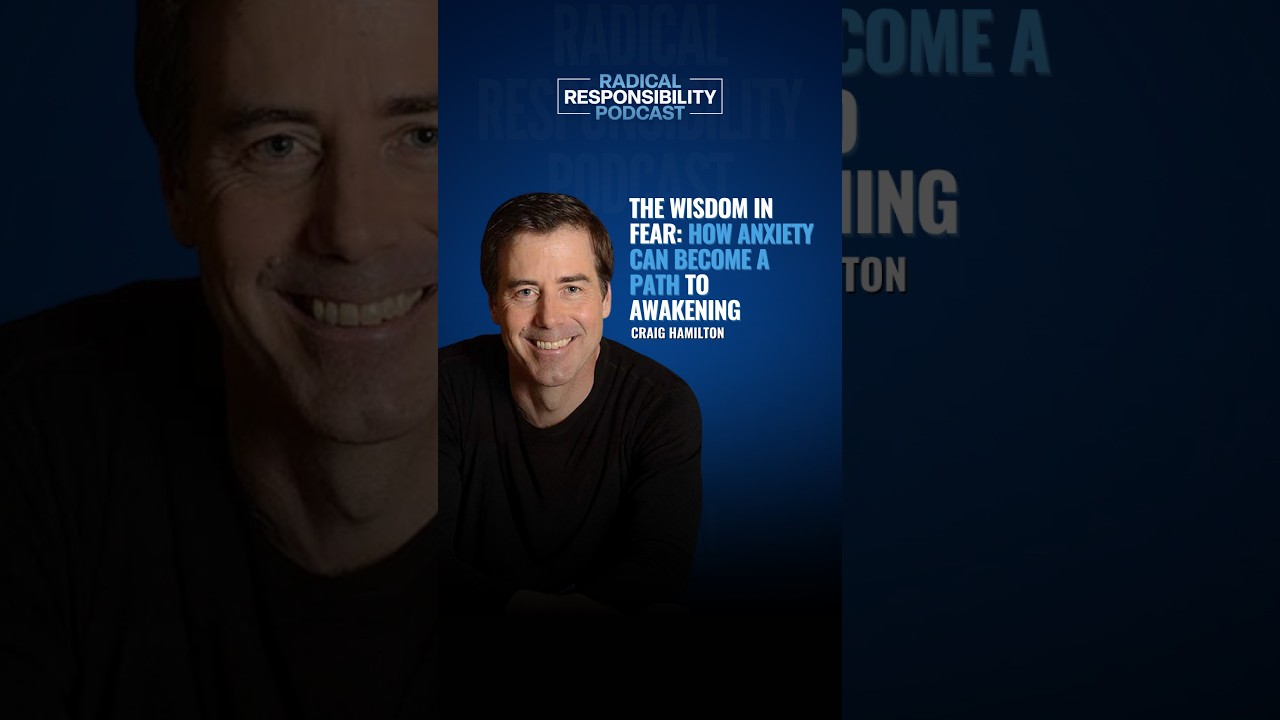
What if freedom from anxiety isn't about eliminating fear, but changing how we relate to it?
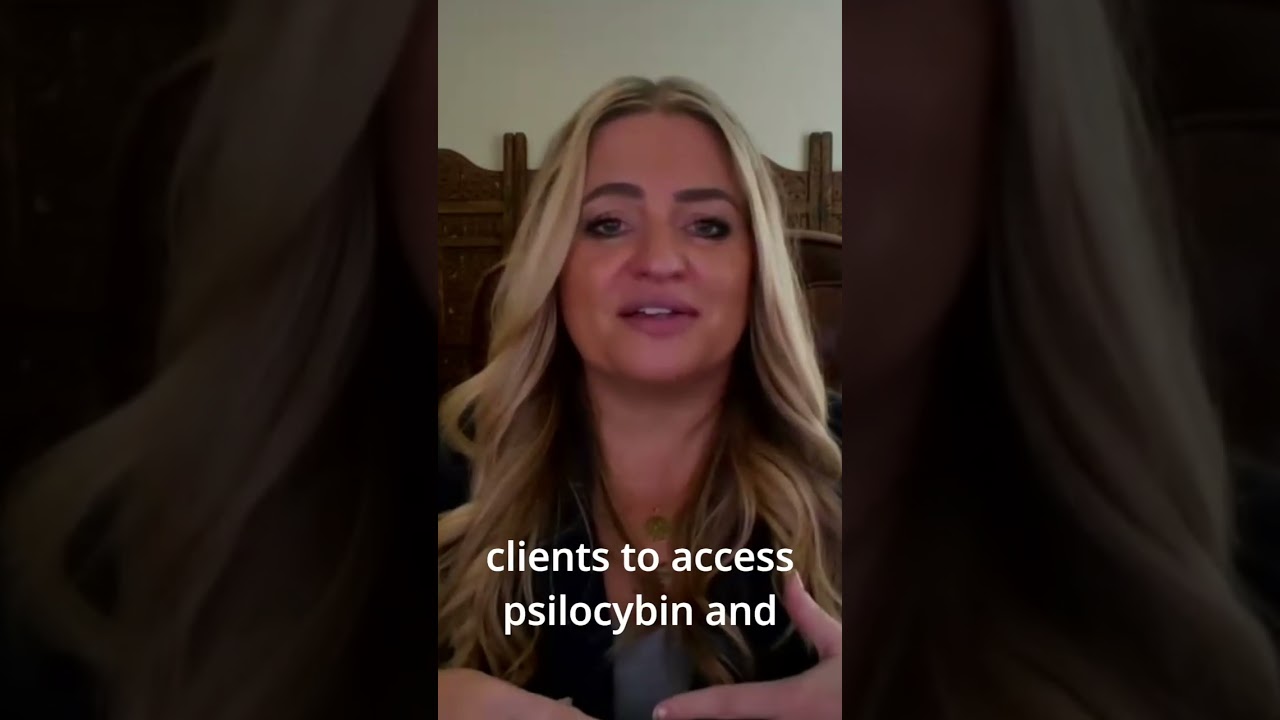
What Oregon Learned When Legal Psilocybin Access Had to Work in the Real World - Angie Allbee