Dr. Kien Vuu | Unpacking the “Thrive” State and How to Be In Control of Your Health
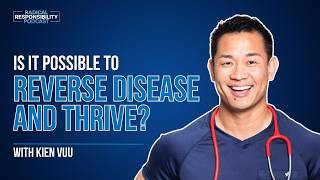
Dr. Kien Vu, an interventional radiologist, reversed his own diabetes and hypertension by shifting his mindset and lifestyle. He describes the "thrive state," where cells receive safety signals through five pillars: sleep, nutrition, movement, mindset, and community. Epigenetics shows how your beliefs and emotions directly influence which genes turn on or off.
Chapters
Welcome to the Radical responsibility podcast. I'm Dr. Fleet Mahl and I'm excited to guide you on a journey of authentic transformation. In each episode, I'll bring you insights from leading experts to explore trauma recovery, mindfulness practices, positive psychology, and innovative breakthroughs in health, wellness and life optimization. This is a space for real conversations that inspire meaningful change, helping you find alignment with the person you were always meant to be. Let's get started.
What if aging isn't written into your DNA after all? In this episode, I sit down with Dr. Ken Boo to explore how epigenetics and bioenergetic medicine are reshaping what we believe about longevity and health. We'll look at how your choices, your mindset, relationships, purpose and daily habits actually influence your biological age. The this is a powerful invitation to take your health and vitality back into your own hands. My name is Fleet Ma. I'm the co host for this session and thrilled to do another interview with Kim Boo, who's one of our favorites. So your personal journey to really to becoming a leader in this field was very much grounded in your own experience of addressing your own health challenges. And I wonder if you could share what were some of the pivotal moments that have now shaped your career and that maybe changed your own belief structures along the way?
Absolutely. So, as you mentioned, I am an interventional radiologist by training and for those who don't know what it is, it's a specialty that uses medical imaging to guide minimally invasive procedures. Very high tech. I went into the field thinking that I want to know all about medicine. So radiology, you can really use imaging to look inside the body, to look at disease states. And then as an interventional radiologist, we use the technology to perform minimally invasive surgeries. And throughout my life, I was constantly striving to achieve something outside of myself for success. Went to the best medical schools, got trained at the best medical institutions around the world. And I find myself a couple years out of being an attending physician, bought a fancy car, bought a fancy house, went around the world speaking on the advances of interventional radiology. And I remember looking myself in the mirror and this is after a failed relationship. This is after a injury to my shoulder. And I wasn't sure if I was going to be able to do surgery anymore. But that person who was looking back at me was overweight, was diabetic, had high blood pressure, had diabetes, and was on several prescription medications. And in that moment I said, whatever I am doing in life now, if I have believed in the traditional Medical model of health, I would understand that years down the road, not only will my doses and number of medications increase, but also potentially end up in my own operating room table. And so I realized that I needed to make a change in life. And I said, whatever I'm doing now is not working. And so that really opened up the door to starting to do some personal development. And as I dive into the world of personal development and the world of longevity and regenerative medicine, I just started to take on new habits on how I approach life, how I viewed life, how I slept, how I ate, how I moved. And I noticed very in a short period of time, I reversed my diabetes and high blood pressure. What I also noticed was I had more energy, more creativity, more innovation. Everything started to unfold and improve. And how I was living my life, as we discover when we started to study the longest lived people on the planet, was actually my best medicine. And what I have discovered is on the path of longevity, on the path of human potential. As we start to remember who we are and start to live in a place that is more authentic to who we are, we start to give messages to every single cell in our body, which from the science of epigenetics, and we'll break this down a little bit more, actually turns on the genes to give us optimal health, longevity, and peak performance.
Well, I do want to get more into the science of it and get into your work around what you call the thrive state. But first, I just want, since we're talking about rewiring our beliefs here, I want to explore the belief structures a little bit more for you and your personal journey. So, you know, our behaviors are basically driven by the desire to meet our needs, Whether it's a need for safety and security, for relationship, for love, for inclusion, and so forth. And then by our belief about how we get those needs met or not. So I wonder if the set of behaviors that were leading you to be overweight, have diabetes and be headed on a not very positive health trajectory over time, if there was a set of beliefs kind of underlying those behaviors, and then, you know, once you started to see different possibilities and kind of saw yourself in the mirror and started to make changes, if there were certain beliefs you had to change about how you were going to get your needs met that then supported these new behaviors, new habits.
Oh, such a great question. I'm so glad you went into this. And I think in order for me to explain this, I have to go back a little bit about my own personal journey. I was a Vietnamese Boat, refugee. My parents were forced to escape on a refugee boat a couple years after the Vietnam War. We were crammed on a boat with 2,000 other refugees. And I was the only one, only infant to have survived. When I came to America, we were very poor. We lived in a crammed, I don't know, like 300 square foot apartment with my uncles. And growing up, I remember being bused to a more affluent area for school. And I was constantly being teased for the holes in my hand me down clothes, for the different food my mom sent me to school with. I got a lot of go back to your home country cheeky, those type of comments. And so growing up, I just felt like I was not enough, not good enough, not tall enough, not American enough, not white enough, not rich enough. Why do we have to live in this neighborhood? Why couldn't my parents speak English? Why could we not afford the clothes and the food that we saw other, that the other kids had bad? And so for the longest time I was thinking, why me? And so then set in the beliefs of I'm not good enough then. Basically what we're now starting to understand is there was a part of our brain and nervous system called the default mode network. And at a very early age, it just starts to take on the beliefs of your surroundings, from your parents, from your teachers, from society, from everywhere that's in there. And in particular, this autopilot mode of the brain is used to help us be safe. So anytime as the child, we don't feel safe, we don't feel loved, we don't feel accepted. Those traumas also is something that's picked up by the default mode. And it forms a version of us that are based on these beliefs. My version is I'm not good enough. And so this version of myself went out into the world thinking that I need to strive, I need to be something outside of myself and to achieve so that I can have love, so that I could have worthiness. And my entire life, going through high school, striving in undergraduate to medical school to the NIH to the Howard Hughes Medical Institutes of Health, I was just chasing this thing outside of myself from the core belief of I am not enough. And so every single choice made from that consciousness of I am not enough meant I don't need to sleep because I need a hustle to achieve success. I don't need to eat good food. And I was stressed out every time I sat to eat. In fact, I didn't even sit to eat. I was running from patient to patient. And Grabbing some whatever fast food the cafeteria had at the time to stuff myself. And so the choices that I was making from that consciousness created basically the state of stress and disease in my body. And so those sets of beliefs led to emotions, led to actions, led to the behaviors, leading to the energetic state of my body that then basically created that state of stress and danger. And when our body senses and feels stress and danger, when you are not aligned with who you are, it basically turns on the genes of stress and the hormones of stress in our body, which increases inflammation, which lowers our immune system, which basically puts every single cell in our body in the consciousness that they're in danger and they're not going to perform very well. And basically, when you have the body system start to break down, you break down in a cardiovascular system, you're going to have high blood pressure, you could have arterial plaques. A breakdown in our nervous system will cause diseases like dementia and Alzheimer's. You have diseases that affect our endocrine and metabolic system, that causes diabetes. So the root causes of so many of these factors are basically the energetic and the environment we are giving ourselves. And so to answer your question, that belief of I am not good enough led to the choices that created the energetic environment that made my feel stressed. And it was a lot of the deep personal work in the personal development realm that I started to analyze. Are these beliefs real? Am I really not good enough? Where did these beliefs come from? And it was really uncovering some of that work that led me to be able to be more conscious about how I approach life. And I'm going through this every single day. There's a version of myself that have to let go and get to choose new again. And really, it was rewiring of that core belief of I am not worthy, I am not good enough. And it's a work I continue to do every single moment that has really allowed the reversal of all those diseases, be able to biologically age backwards and be in a state that I was not in previously.
Well, that's really fascinating, I'm sure familiar to a lot of us. A lot of us struggle with feelings of unworthiness and not being enough. And it's kind of endemic in the culture. And of course, you coming over as a refugee in that way, your life is really a miracle. Hearing your story, the only infant to have survived that particular boat and that journey, obviously you're here for a reason and really adding huge value to life today. And you know, some of us, because of those negative core beliefs, feelings of unworthiness not enoughness, don't even really get our life started or find ourselves really not able to actualize. But some of us, like you did, are driven to success, at least outer success, to overcome that. But then we pay the price. Right? As you were paying. And so now to be able to take your professional success and build a new foundation of self worth under it is what's really allowing you to add the value you're adding today, which is so fabulous. What you were describing was probably the opposite of the thriving state. And you were describing many of these illnesses that are so common today. Diabetes, and as we age, forms of dementia and Alzheimer's and all the cardiovascular illnesses that, that have deep roots. And all these have deep roots and often are attributed to what's called systemic inflammation, which can start very early on when we're not even having symptoms. And I would assume that when our body is in a state of systemic inflammation, that's also kind of the opposite of what you're calling the thrive state, I'm assuming. But let's have you talk about the thrive state. What do you mean by that?
Well, great questions there. And you know, I know you aren't an md, but certainly you are very studied in this, my friend, and your consciousness and awareness and your probing of these questions are so important. And so what is the thrive state? Well, what I begin to understand once I started to study longevity epigenetics and how, you know, human biology works is, you know, if we go back to the big bang, everything in life is energy. Every thing is energy interacting with different forms of energy, whether it be physical or non physical. And it's an exchange of information. I mean, right now we can take the energy of the sun and it reaches basically photoreceptors, which is a energy receptor in our eyes, creating an action potential, which is a chemical energy that sends a nerve signal all the way down to our gut to then release serotonin, which is actually a physical chemical energy that has us feel, starting to feel good. There's a transfer of energy. And we used to believe that our DNA is basically the blueprint for biology. Well, yes, it's a set of instructions just like a recipe in a cookbook. But just because you have that cookbook doesn't mean dinner on the table is going to look the same each time you go through these recipes and how these recipes are formed that actually creates basically what the dinner table looks like very similarly. That's how our genes are meant to act. They're meant to be a blueprint. And it's constantly listening. Our DNA is constantly listening to the energetic cues in its environment and it responds. And so it's given a certain cue, it would basically have either a chemical or hormone, a protein or some other form of energy, cause a cascade of signals down to form transcription factors that basically turn on and turn off genes. And so your DNA is always playing these different programs based on its environment and based on how this DNA is playing. That's how the cell will respond. We have the exact same DNA in every single cell in our body. But how's a heart cell different from a lung cell? Well, they're basically turning on and off different genes. So our DNA is constantly listening to its external environment. So the study of the epigenetics, epi meaning above genetics, genes that basically say that it is the environment around the DNA or around the cell that determines how that cell will ultimately behave. What signals are you giving to that DNA in the stress state when your body thinks that it is in danger? You know, there is a gene complex called the conserved transcriptional response to adversity. CTRA is a set of, I think 150 genes or so that when the body senses stress or danger, it basically turns on a set of genes that increases inflammation. It turns on a set of genes that lowers your immune system. So basically every single cell in your body is doing this. And all the ATP you, we've got a fixed amount of ATP in our body. Are you diverting that ATP to protect yourself for inflammation and to draw up your immune system? Or are you using that ATP to grow, to he heal, to thrive? And so not being conscious in that state of stress, in the state and beliefs of I'm not worthy, I'm not good enough, I was basically turning on that stress signal the entire time and I was giving stress signals toward the cells in my body. Basically the entire ecosystem of Kien Vu was thinking that it was in stress and danger. In that way we're basically again diverting the energy of growth and healing to that of stress. And, and over time, as the systems break down, the symptoms are high blood pressure, the symptoms are poor sleep, weight gain, brain fog, aches and pains. And so what is the thrive state? The thrive state is a state where the energy around the cells, the energetic state of our body, this bioenergetic state, is basically giving your cells the signals of safety. And basically there is already an intelligence of our entire body that if you're able to give those cells the signal of safety, it does what it does best. And the outcome the symptom of that is optimal health, longevity and peak performance. And the things of energetic state there. Here's the empowering part. We choose that environment we give to ourselves. We either choose it consciously or we could use it unconsciously. And the five most important things that create this thrive state or affect the bioenergetics of our body are physical, which includes sleep, nutrition and movement, our thoughts and our mindset, our social or our community. What we do there a sense of purpose. Are we living for ourselves or do we understand we're a part of something greater? And then certainly the emotional part, because the emotional piece is basically our body's interpretation of the energetics that are in our body.
So this is incredibly fascinating and the science of epigenetics is advancing quite rapidly. And as you described it, that environment around the genes at the cellular level, I think sometimes called the epigenome can be called that environment. It's basically an energy environment. And so this is really pointing to really the basis of what we call body mind medicine and the whole body mind relationship, all the body mind practices. This is the interface of the body and mind very much. Of course there's stuff a lot we don't know about it. A lot we do. And you mentioned the intelligence of our overall body. So the immune system, which we don't fully understand how it works yet, but is phenomenally intelligent and it's very much connected to this same epigenetic environment. And I know in, I don't want to get too far afield here or get too woo woo, but in like holotropics, Jan Groff's work around holotropic breath work, and then they've applied it as well to some of the psychelics assisted therapy. And that part of what they feel they're accessing or allowing us to access or we do ourselves through this kind of work, is they call an inner healing intelligence, that the body has this inner healing intelligence. And I don't think we, we could think of that, maybe higher consciousness in spiritual terms. But I think you can really be in a world of science, bioenergetic medicine here and talk about the intelligence of the immune system, the intelligence of this epigenetic interface. Wonder if you could respond to that?
Yeah, absolutely. If you want to start thinking about life and how everything is constructed, everything is a beautiful analogy of how life is organized. You know, if we take a look at heart, it is made up of millions of heart cells, each one of those cells very, very different. They each act on their own. But when it Senses, stress, it's an environment, they all work together to have the heartbeat faster. But if you look at every heart cell itself, it's also an ecosystem and it's made of little tiny organ, the nucleus, the ribosomes that make proteins. You have the Golgi apparatus, you, you've got a mini universe that's in there, this ecosystem. But if you look at every single organelle in there, it is made up of macromolecules, proteins and things like that. You go further is an ecosystem of subatomic molecules, atoms, pockets of energy, all that to form the human heart. Of course it doesn't stop there, right? Because the human heart works in the ecosystem of our lungs, of our kidneys, of the other organs in our body, forming the ecosystem system that is the human body. We extrapolate that out further, we could see how we are individuals, just like cells in the body of our families, of our teams, our organizations, and humanity itself. So everything is interconnected. So as you mentioned that I want to say that ecosystems have three fundamental traits I think people should understand. One is independence. Every single cell in our body has its own individual function and it functions on its own. And they have their own purpose. But among that there is also a profound interd. Just like the oxygen that extracted from our lung cell goes to our heart cell, our heart cell pumps so that everything can circulate in our body. These cells are interdependent of each other. We are connected in that sense. And then lastly there is the state of the entire ecosystem that affects every single cell that's in it. So as you just mentioned here about, you know, the breath work in the higher consciousness. Well, our default mode network is a very, very primitive part of our brain and nervous system that every human is blessed to have. And in life we are meant, I think, to transcend our human biology. We, you know, we come from the same things that are made from the stars there, there is a divine nature in all of us. And this, I don't actually think it's woo woo, it's to the truth, but we inherited this human part of us that makes this human flesh system stays alive, which is this nervous system. And in order to stay alive, it learns things along the way. And unfortunately, you know, now in modern times, I think it's very different from back in the day where we were in tribes. But now we learn that if we don't look a certain way, speak in certain way, think in a certain way, we will be ousted from the crowd. And so our default mode network makes Us form this ego and it learns this thing. When we start to understand the science of breath work, we could talk about the physiology, although, you know, and it's very scientific. But at the end of the day, we've actually studied people doing this type of breath work in FMRI machines. And what we have noticed is a quieting down the default mode network, a quieting down of these programs that are not us. That quieting down of this thing that's meant to keep us in danger because it's always looking out for what's wrong, what could happen and who we are. If we can quiet that down, we remember who we are, the divinity of who we are and that process. And a lot of the practices that I promote to get into the thrive state is the quiet down that default mode. And so, you know, really important that you brought up that question. I'm glad you asked. And you know, I really do believe that we are on a precipice of people awakening to their true power and potential.
You know, it's interesting, you were referring in many ways to the principle of macro, micro, micro, macro relationship or the spiritual saying classic as been as above so below. And that's a spiritual principle for a long time. But the more science progresses, the more we're seeing it's really a completely a scientific principle. It holds true everywhere you look. It's quite fascinating. And you were also talking about that, you know, just talking about a heart cell and you know, how that extrapolates out to the whole being a large organism that we're part of families and systems and so forth. But going all the way down into the heart cell, you get down into the atomic, even the subatomic, and you get down to the quantum realm where, you know, you're kind of talking things that feel very spiritual, very energetic and very mysterious in way. They're there, they're not there, they move. Right. So obviously we are a world of energy and spirit and energy and consciousness. And so the old reductionistic models seem to be falling away in the face of hard science. Hard science is kind of breaking down those old reductionistic models in many ways. So one thing I just want to check out with you, and this may be not accurate understanding my part, but my understanding is if you take an individual cell, could be a heart cell and another type of cell, take an individual cell and really isolate it like in a petri dish or something, that it won't survive over time. And whereas if you put two cells together, they resonate, that cells need other cells. You mentioned the independence and the interdependence. But isn't there some quality that cells need other cells to create that resonance and that coherence that is part of the thrive state? And then we could extrapolate from there to all the practices, some of which you were referencing, that can move us into states of internal resonance and coherence.
Well, really great question. We actually can harvest and grow cells in isolation. They basically change the different medium. And you know, it's an artificial cell. It's not a cell that's really connected to do what it's meant to do, which is actually be a part of something much bigger. And we're probably going to be talking about that because I do believe that that is the key to understanding our performance. And longevity is actually not l but living for others and recognizing that that is actually key for us to live longer as well. But you can create these mediums that basically give the nutrients that other cells would be giving. But it's a very artificial cell. You know, it's not something that, that you know, necessarily would exist out in nature. So you can create that, but within the body, they are all interconnected. You know, every single cell, you know, even if you think it's in the same organization, are completely different in terms of the amount of protein that's in there, the amount of ATP they use, where they are in the organ itself and what exactly it does. And so every cell is unique there.
And so in a sense, the idea that we often hear that as human beings, we're social beings. So that's also kind of a micro macro principle, right? The way things are organized you've been referencing. You know, basically we've begun talking about bioenergetic medicine. I wonder if you could go further with that and talk about some of the basic principles and interventions for mitigating the impact or curing illnesses like diabetes, like Crohn's disease, like and other disorders, Both interventions to heal those kind of ailments, but also then interventions that support overall health and well being, thriving, and then eventually longevity and healthy aging. What are the principles and what are the interventions?
What if transformation isn't just about thinking differently, but feeling differently? Science shows us that true change happens when we align not just our minds and but also the neural networks in our hearts and guts. This heart mind connection is the key to deeper healing, resilience and expanded awareness. That's why I created the Heart Mind all access, membership and community. A space designed to help you rewire your nervous system, cultivate heart intelligence and Live with greater clarity and purpose with over 1000 hours of transformational teachings specifically curated to meet your needs. You'll learn from world renowned meditation teachers, neuroscientists and experts in neuroplasticity, all sharing powerful tools to help you shift your mindset and heartset, regulate your emotions and unlock your full potential. You'll also gain unlimited access to every summit and course we've ever produced, a treasure trove of Wisdom worth over $10,000 and growing. Plus live gatherings and an inspiring global community to support your journey. If you're ready to step into a more heart centered, connected and conscious life, I invite you to join us. Click the link to learn more and start your journey today.
Yeah, I mentioned this earlier. Everything in life is just energy interacting with other energy. And so what exactly is bioenergetic medicine? It's just understanding that the human body and the human biological process processes. There's an energy flow, right? We just mentioned how sunlight can basically turn on vitamin D in our body. But sunlight could also increase the serotonin. There's that energy, the physical energy of those light beams coming in, transforming into a biological process. So as we understand, there's basically the entire, there's energetic flow in our biological systems all the time. And so that is basically the bioenergetics of the human body. So as we understand that I mentioned to you earlier, what energy and what environment are you creating for the cells in your body? Of the five things that I've mentioned, sleep, nutrition, movement in the physical realm, our emotions, our thoughts, and we, let me tell you right now, we can't control a lot of our thoughts. Some people say 80 to 100,000 thoughts a day, most of them negative. Why? Because they're basically playing the programs of the default mode, which are looking for negativity and danger and stress. But what can we do? We can control where we shine the flashlight of the thoughts. We can choose which thoughts we want to focus on, where we want to put attention, and where we put our attention is what we feel. And all of a sudden what we feel changes the energy that's inside our body. How do we connect with people? Are we holding resentment and anger for other people? If so, if we're feeling it, guess what? Our cells are as well. And then that final bit of purpose. Do we think that we're just surviving on our own and we're out there? Just me. How do I get more do this, do that? Because that, my friends, is living in that space I used to live in. I'm not worthy I'm not enough. I need to attain more. That is the default mode. And unconsciously, you are telling your body that you are not safe. That's why that causes disease versus understanding that you're connected to something bigger, which is why a purpose, which is why serving does something very awesome to our subconscious mind. When you serve, when you help people, you're basically telling your body and your nervous system that you're. You are safe. You're telling your body and nervous system that you are accepted and connected and that you are love as well. And so those are the principles. These are the five areas. And if you look at these five areas and if you could focus on each one of these things, you'll start to recognize those are the true root causes of disease. Yes, there are things outside of us that we cannot control in like, for example, being exposed to infections or toxins. But outside of that, those are the things we can't control. And we start to work on creating conscious choices about how we approach those five pillars of our bioenergetics. We can start to reverse disease, what we understand with a lot of autoimmune disease. Actually, most diseases out there also has a component of their gut because we have a, you know, 70 to 80% of our immune system is lined by our gut. And if we're eating things that are destroying our gut, making our gut junctions leaky, then we basically had this food particles and things from the outside world coming into our body that's turning on our immune system and our immune system, like, oh, my God, we just gotta attack. Let's attack. They start shooting things down, they might start shooting things down that belong to you, right? So if it starts attacking your thyroid, you've got Hashimoto's. If you start attacking your own gut, you've got Crohn's disease, things of that nature. And so what I've found is that when people started working on the things that I have in my book Thrive State, naturally the symptoms would decrease and potentially even reverse the conditions that are there. You know, I still recommend if you have nagging symptoms or going through something where, you know, those processes aren't working yet, certainly go see a functional medicine doctor. But those are great examples, and I have tons of examples of how people have been able to, you know, reverse their disease. I have a patient, Bruce, that I had treated for liver cancer back in the day. And he was someone, without going too much into a story, was he got liver cancer. I would treat it with, you know, a combination of chemotherapy and things to Plug up his artery. The tumor would go away, but another tumor would form. And this was happened for years. And so I started to get more into the personal development realm and started to share maybe how he was living life. And there was one thing that was, you know, really gnawing at his life his entire time was he was estranged from his brothers. And you know, they had a argument early on in life and then his three brothers and him were estranged and he thought he was going to die. And basically what he did was he wrote these letters, you know, telling him how much he wanted to reconnect with them and how he wanted to let the past go. And in doing so, I started to notice a change. And after that moment on he started to say, he started to, you know, try to focus on creating the muscle of gratitude and feeling that more on a day to day basis. And I would say after that moment, the cancer that just coming back over years has not come back in the last, I think seven to 10 years. Now that is a beautiful story about how a shift in our energetics could start shifting the ways our cells behave in our body, letting the innate intelligence of our cells and our body heal itself.
You mentioned the importance of purpose and having something bigger than just ourselves to live for and be motivated. Maybe think of a lot of the neuroscientific research into positive emotions, Richie Davidson's work and others where they've seen that when we act altruistically, we get all kinds of neurobiological rewards that do contribute to a thrive state. And even observing others acting altruistically, we experience similar things. So yes, there's so many different things. You're pointing to the fact that we.
Could observe other people do some altruistic things and we feel that within ourselves. And this speaks to how we are all energetically connected. We are all Bluetooth or WI fi connected to each the energy that we are able to share around us. Which is why when we do the work of elevating ourselves, that heal ourselves and bring ourselves into that energy, we basically contribute to the field that's out there. And so such an important point that you mentioned just by observing. So how do we start changing the world is really changing ourselves. And when we start to notice that how we respond to the world, we'll start to notice that the world will start to shift as well.
Yeah, absolutely. So bioenergetic medicine, your work is certainly your work around longevity, healthy aging and so on within the context of what's often called integrative medicine. Also preventive Medicine. And there's a major shift here in that we've been, many of us, probably most of us, have been inculturated at one point in our lives to be sort of passive patients, to go to a doctor, something's wrong, they prescribe a medicine, they provide intervention, and we just hope it works. Right? It doesn't require us to change our lifestyle or do anything, think differently or something. But what we're really talking about here is a need to empower ourselves and embrace the power of choice and the responsibility of choice around our own choices and empower ourselves to start making the kind of changes that will support health and wellbeing. So I wonder if you could talk about that fundamental shift, because culturally, that's a huge shift for a lot of us.
Yeah, we used to, I think, you know, even back, you know, several hundred years ago, we had the shamans in groups that were highly revered as the people that only had access to the healing. And then, you know, when medicine started to, you know, come on Western, you know, in the Western world, we play so much of our ability to heal over somebody else who may start to understand this. And unfortunately, this unconscious giving away of that power allows us to be stuck in the consciousness that creates the choices and the environment that basically creates that disease state. We're starting to wake up, we're starting to understand that disease itself is something that is generated by basically the consciousness in our own mind, that basically, how can we control the energetics around ourselves? Are we positively controlling it, or what type of energy we're starting to do? And then the epigenetics is really the empowering science that allows us to recognize, oh, if my biology, if my performance of my healing, if my ability to stay away from disease is all the energetic environment around my cells, and if my choices are ultimately the major thing that controls the environment of ourselves, that's a very empowering, very empowering statement. Now, you know, it's certainly a journey to be able to get to a place where we can really, truly feel that we can consciously choose this environment. But doing that work is ultimately the work that I did to, you know, reverse my disease. And certainly. And not only is reversing disease or preventing disease a perk, but you also find that you live life much more richly. You're. You live life much more of an authentic version of yourself that your performance, that your. Your vitality and your energy is just so much better once you start to make these new choices.
I think that's one of the real forks in the road in life is whether we embrace choice and what may feel like a burden if we've been enculturated. I think that we're just. Life is happening to us and we're just coping with it. But once you do embrace choice, it's like opens the doors to all possibilities. So it seems like one of the real forks in the world for all of us. Let's talk about aging for a little bit here. Now, young people in the audience, maybe, maybe you're not so concerned about aging. I think you should be, because there's a lot of things, choices we make when we're young are going to impact our aging later on. Now, it's also important to note, no matter how old we are, even if you have gray hair like me, it's never too late to start doing healthy things that will have impact, but also things we're doing in our 20s can set us up for healthier aging. So it's really. It's something we should be thinking about all along, I think. And you agree? So what are some of the misconceptions people have about aging and maybe some of the belief structures that might not support healthy aging? And also when we're talking a lot about longevity, I want to talk more about longevity. But it's also important to talk about healthspan, because if we live, you know, to be 90, but the last 20 years, we're very unhealthy and suffering. That's not something anybody wants. Right. So we need to talk about both longevity and healthspan. But let's start with the concept of aging and maybe some of the misconceptions about what is it in the body? Is it inevitable? I know some of the discoveries now about epigenetics and the function of the mitochondria. It seems like we may be able to slow aging down a bit. And so let's start there.
Well, super exciting field. And I think the primary misconception about aging is that it's genetic that mom, dad, your uncle and all that they live to a certain age, they have certain diseases, and ultimately that will, you know, happen with you. And I would probably say it is probably, if that to be true, it is more likely that you inherited their epigenome and not their genome. You've inherited their way of thinking, feeling, behaving, being that creates the energetic environment that basically turns on the diseases of aging. Now, what we can say about aging is our body. You know, we have David Sinclair talking about how it's these changes of the epigenome that Starts basically making marks in our body every time we're exposed to toxins or negative energy. Our body has to do a lot to be able to fix the DNA and to basically create a healthy cell. Well, over time, basically what happens is you're exposed to a lot of things. You're probably exposed to, you know, pathogens that are in the air, you're opposed to toxic chemicals, hormone disruptors, things of that nature, and they start to, you know, pile up, up, and basically our capacity to be able to get rid of those things decrease over time. The question is, are you consciously choosing to live your life in which you're basically hitting yourselves with a bunch of these insults throughout time, which accelerates aging? Which brings me basically to the second misconception is the time of years you spend on the planet is actually the biological age you are. And that's untrue, because the more stress that your body has to overcome, it basically ruins the biological machinery that keeps healthy cells from functioning. So the smoking, the sleeping, the inflammatory foods, all that will increase the accelerated aging. So that's the difference between chronological age and biological age. The chronological age is how long you've been on the planet, you know, circling the earth. But your biological age is a predictor of your performance, is a predictor of when you are going to die. It's a predictor of how healthy and young your cells are. So that's really the difference there. So aging is not a chronological process, but a biological process. And we just talked about how epigenetics and bioenergetic medicine is the empowering thing, because you can now control the biological processes from the consciousness and the actions that you make from that conscious space. That's the major misconception. It is very exciting now that we've got science and technology potentially expanding our lifespan. But not only that, because who wants to live to 110 and spend 30 years miserable? We want to have vitality. We want to have elevated mental, emotional, physical, and sexual health even as we age. And so if we could keep ourselves young, we can potentially maintain and potentially even enhance these functions as we age. And we have a lot of things in the science and technology space that will help with creating the environment of our cells. And I'm really excited about that. We have some people thinking that, you know, in the next couple of years, we'll really reach something called longevity escape velocity. That's when science and technology like stem cells, gene editing, and AI could potentially give us back more time and give us more years. Facts are at a rate that we're aging, potentially allowing us to live forever. Now, I don't know where you feel about that, and I don't know how I feel about that yet. I think science will always play a factor, but hopefully not at the expense of people understanding the true capacity that they have within themselves to start to activate those biology of performance and longevity within themselves.
Yeah, it's all quite fascinating. And you know, sometimes people often comment philosophically about this. Would we really want to live forever if we even if we could? But certainly it does seem like the aging process can be slowed down. And there's some fascinating things going on with gene editing and so forth. But another real technology, conventional medicine, allopathic medicine, what's called evidence based medicine that most of us encounter when we go to our primary care provider is all based on averages and you know, the test will run or they won't run. It's all based on the averages and the third party coverage from the insurance companies and so forth.
Forth.
And they're not talking about you as an individual, they're talking about averages in the bell curve of all these huge studies. Right. And what does that actually have to do with me as an individual? Not very much. So I know technology is now allowing, there's some things going on with genetic testing and also with some kind of photographic scanning, a body type and some different things that are allowing practitioners of personalized medicines to help us engage in preventive medicine or even heal when we're having health problems in a way that's much more targeted, much more personalized to our actual biophysical makeup. So I wonder if you could talk a little bit about that or what's coming online in the realm of personalized medicine.
Yeah, I think technology and science is really allowing us to be more precise in how we treat people. We are all different ecosystems, Right. If we took like, you know, five different cars, like a Lamborghini, Tesla, a Honda Civic and all these things, and we start to look at, you know, different metrics of what they do, they're all going to give you different metrics. They're all going to require different energy forms to fuel their body because they're all designed differently. And similarly, we were all designed differently as well. I am actually of the belief that our bodies, like if we take a look at all the animals in the world, for example, we take a look at the birds, they've got wings. Oh, okay, you've got wings. This thing is going to fly. We've got animals with web feet. Oh, okay, they got wet feet. Most likely they're going to be treading in the water. So our outside body gives us a clue to what our purpose really is because we are normally we'll have gifts of, you know, different people are going to have different gifts. And you can probably take a shot of this by looking at somebody's outside. There's an amazing technology that I am working with called Shae AI which basically would they snap of a smartphone, be able to take a look at your outside being to deconstruct how your nervous system, gut system and all that works on the inside. And if you follow the recommendations, it's basically not the recommendations that are given to everybody. But this is how your body works. This is how you respond to light, this is how you respond to sleep. And it basically allows you to get recommendations for you to really step up and to become your best state. And there's going to be more of those technologies once we start to understand how laboratory values, how our genes and how all these different data points form this entire ecosystem. Buzzing ecosystem that is the human body. So we'll have basically technology being able to truly allow us to understand more in real time what's happening inside and is just additional data sets for us to be able to make more precise choices about how we live our life.
Yeah. I had the opportunity to interview the founder of the Shea app of Rewiring the Brain Summit. It's fascinating. I haven't done it yet, but I definitely want to and plan. I think it was very compelling. So along with the world, you know, I know that you emphasize lifestyle medicine and you were talking about those five areas of our life where we can all make healthier choices that will give us a better, a more a healthier epigenetic environment or epigenome. Right. That's going to help us be in that thrive state or more in that thrive state. And so that's accessible to all of us really. There are choices we can make that don't really cost us any money. Might even save us money in some cases. Right. And there is one thing I liked about the Shea app is this is personalized medicine, but it's pretty accessible. It's not something that's going to cost a fortune. Now getting recommendations and getting your primary care provider to go along with that may be another question. So that points in the direction of today. There is the practice of medicine. It's sometimes called concierge medicine. And appreciate what executive concierge medicine. And often what's offered there are, you know, much deeper blood work, type of Scans, different types of genetic testing and so forth. And it can be incredibly expensive and really only accessible by, you know, the maybe the 1% in our society, basically. And so I know there have been been some efforts, some hospital systems, to try to make it a little more accessible, where you pay a big dollar amount a year, but it's still significant money. It's kind of an elite kind of thing that one can access. So the reason I'm asking you about this is for people who, you know, are concerned about healthy aging, they're interested in longevity, increasing their health span. They really want to live and thrive as long as they can in life and optimize their life in many ways. You know, what might be some of the primary areas to look into or choices to make, you know, on how we, you know, allocate our time and our financial resources to try to optimize our health.
That's a great question. You know, a lot of things in the biohacking space right now, we've got people like a Brian Johnson, you know, spending, you know, upwards of 2 million plus a year on his body. And obviously that's not accessible to most people. But even he himself will tell you that that what moves the needle the most for most people are the very, very basic things. I wrote my book Thrive State to make it accessible. In fact, everything in my book is basically free to do and without doing some of the more personal, deeper work yet, which I find is going to be so important, because to understand and master mental and emotional and spiritual, we have to do a lot deeper work. What can people do in the meantime? And in the meantime, if you focus on the physical, if you just slept better, ate better, move better, you'll start to notice the shift in your body already. Can you be just a little bit more conscious about those three things? And what is going to be the easiest thing for you to adapt? Because once you start to know that, then it's a positive biofeedback for you to go, oh, wow, I made a change. I feel a difference in my body. What else can I do? And so I think starting with the physical aspects of sleeping, moving and what you eat are so important. And within the physical realm is trying things out like breath work, because you can find that you can immediately take an emotion of stress, worry, anxiety, fear, and very quickly transform that into something different. You know, one of my courses is all about, you know, changing our energies. Where do our energies come from? What are the physical things that we can do to. And we'll notice, you know, when we sleep, move, breathe differently, we'll start to notice the shift in our body. So I think that is something that is probably going to be most accessible for people because the other things that are going to require. How do we start connecting and healing our relationships with the people around us? How do we start to heal ourselves? This is some of the deeper work that we do. But I would say the very next step is for me is allowing different times of the day. Because we mentioned this whole thing about creating disease and the bioenergetic state in our body is really about our consciousness. Are we actually living the life and the program and the beliefs that we choose, or are we on this default programming that's been running for years now? And we're making choices and reacting based, looking at our circumstances and reacting from this program. So building in times throughout the day, and the more times you build in, the better. But how can you do this? You could set alarms. You can. Every time you. Every time I walk through a set of doors or underneath doorway, I'm like, all right, can I get intentional? How do I want to be when I walk through that door? Do I want to be generous? Do I want to be loving? Do I want to be connected? How do I want to show up there? And I just give myself a couple of moments. And here's the thing, once we start to do some of the work, the deeper work that I do with people, we'll start to understand that just by getting quiet, just with our focus and our breath, we can start to create these emotions in our body. We could start to feel wealthy before wealth is out there. We could start to feel connected, we could start to feel joy, we could start to feel. We could create these emotions in our body. We could create the energy in our body just with our focus, our breath alone. And once we start to get into the practice and know that we can do this, we can start to insert this in different parts of the day. And the more we do this, we are basically rewiring our entire body and brain into a new frequency, into a new energy. And that's when we see lots of synchronicities happen. Not only improvements in our health, but really bringing in probably the things that were just dreams in your mind. And so practical steps focus on the nice intangible things. The other things I talk about sound a little woo woo, but me as a medical doctor, you know, can talk about all the scientific breakthroughs that are demonstrating that our ability to tap into higher levels of our consciousness actually heals our body. And also, you know, brings in more synchronicities to our life. But that's something that we could all work towards.
Absolutely. So we're coming close to the end of our time here. I want to ask one, I think, final question, and this is the power of measurement and feedback loops and what I'm referencing here, because again, this has to do with some of the way we might allocate our resources in medicine and so forth. But even with all the things you talked about, the lifestyle changes we can make, the mindfulness meditation, breath work, focusing on getting restorative sleep, diet, exercise, and all these kind of things, you know, having a sense of purpose, volunteering in life, doing our relation, the quality of our relationship, all these things that have been really shown to impact health. In fact, the Harvard Study of Adult Development, the longest longitudinal study anywhere, has shown that the quality of our relationships is probably the biggest impact on our longevity and health. Right. So there's a lot of things we can do. But often making changes is helpful when we can see some result or we get some measurements. In fact, in the kind of biohacking at this world, they sometimes say if you can't measure it, it won't improve, or if you do measure it, it will improve, and things like that. So there are some things any of us can do. I mean, they do cost some money, but, like, I have several wearables I use, and I'm using this to really work on trying to optimize my sleep and other things. But sometimes the deep blood work that your primary care provider usually won't do, you have to go to maybe an integrative medicine clinic or something to do a blood work. Now, some people in the biohacking space will regularly do deep blood work and hormonal testing because they're making incremental changes. They want to see if there was a result that probably can get expensive. And it also becomes almost like an occupation. But it might be helpful. I'm asking you, is it helpful maybe periodically or even once a year to do some deeper blood work and work with a physician to see what impacts some of the things you're doing otherwise may be having on your health and what some of the risk factors are where you might want to focus more? This could be the same for various types of genetic testing. So the whole aspect of measurement, whether it's wearables or various types of medical testing, to see if we're improving, to motivate us to improve, to monitor where to focus our attention within that spectrum of those five areas we spoke about and so forth.
Yeah, great question. I do really believe that being able to measure something gives us a biofeedback loop. I'm starting to enjoy wearables more now, but I lose them all the time and I feel like I've tuned in my body and you will, you know, be able to intuit or have a sense of just from how you feel, how your body is responding. And that's something that we could develop with wearable technologies because you'll start to be, oh, okay, this is right. I start to feel, you know, I'm starting to feel a little bit different. So I used to test all the time. I used to do really full big blood panels like every three months or so to see where I'm at, how I change my eating, how I change my sleeping and, and how that affected my metabolic markers. So certain, I think that having a more comprehensive set of labs done frequently is something that's going to be useful. Now it all comes down again to budget. How much money do you have to spend? Because these comprehensive labs can cost, you know, upwards of, you know, high hundreds to the thousands of dollars depending on what you want to get tested. But I think, and then back in the day, the wearables, I would probably say we're only about 60 to 70% good. That I wouldn't necessarily look at the score and go, I'm gonna look. You know, I had so many of my clients look at their sleep score and said, man, I slept really well, but God dang it, this number is still like 63. And they would get all stressed out and that defeats the point because they're not super accurate, but they're great for trends. So measuring, I think is great. And I think everybody probably needs to potentially work with a health coach or a integrated physician to just basically balance out where you are in terms of your budget, how often you want to get tested, and what your goals really are. At this point, I do my blood work not four times a year, but two times a year. And I find that how I feel on a day to day basis is a good gauge of how my body's actually doing. And that's something you get to, you know, at the end of the day. I think fit testing is great, but I think we'll eventually get to a point where you can actually intuitively feel like how your body is responding. And basically anything that you measure is just used to corroborate the intuition you have about what's going on inside. And I think that's super. That's something that, that's a skill that we're going to develop. I want to really end with this last thing in terms of, you know, understanding the parallels of who we are as a human being to the human body. And if we want to live forever, if we want to perform our at our best, can we start to use the analogy of, of the microcosm that is our human body? If I was a heart cell and that heart cell wanted to live forever and perform it at its best, there basically is two main choices, right? That heart cell could go, man, I'm gonna steal all the oxygen, grab all the nutrients and just hustle and grab all these things and get all these things. So it could divide and it could grow, it could do that for it to survive. And there's actually a state of that in our body. It's called cancer.
Exactly.
And that thing basically ruins the entire ecosystem that would cause the demise in a human being. But if you just think of it the other way, if a heart cell starts to understand that I'm not just here for me, I'm here for everything else here. I just need to exist as myself, do the thing I do best, and then do it for other people, do it for the other cells in the body, all of a sudden it's doing its thing, but it's getting the, the optimal version of a lung cell giving it oxygen. It's getting the kidney cell that's extracting all the toxins away from it to provide that environment for itself. So in order for basically itself to live its longest, to perform its best, is to serve this thing that it belongs to. That's where we are as humanity itself. If we are in that ego based mode of what can I do? How do I live longer, how do I get more? We're basically in that same consciousness that causes cancer in the body. But if we can start to really recognize and certainly what doing the breath work and I think, you know, psychedelics can open the door to what we really are is something that is connected, yes, super unique in a way, but connected to something much, much bigger. And if we start to recognize that this is why understanding our purpose, understanding giving, understanding that the things that light us up, the things that inspire us, those things that make us feel so good, is actually encoded into our DNA. And if we just exist as that, that it's not something you necessarily have to go find, but something that you are versus the things that we're programmed, we were not. If we recognize that, if we live as that and serve that which we are a part of. That is the true sense of human performance and longevity.
Wow, I love that. And you're describing the Tri state is basically our. It's our birthright and in some ways our true default mode, you know, before the fear and survival biology kind of clicks in with the negativity bias and so forth. Also, as you were spoken, it made me think of something I've always loved from Vedic philosophy, Indra's Net. I don't know if you're familiar with it, but it's the idea. It's like a huge fish net or something that all the nodes where the, you know, where the knots on a net, right? There's like a jewel or a pearl that reflects all the information in the net. And it's sort of like that's similar to Bohm's Holotropic universe and these ideas, but so based on. And, you know, once the World Wide Web came on, it's like, whoa, we finally made this visible. Right? It's a physical form of it. But what I've always liked about that is I understand my place in the world. My job is really to be a good node on the Net, to try to be the best node I can be on the Net. So I'm adding at least as much value to the net as I'm receiving. And so to be a good. If I want to change the world, want to create global transformation, well, I have to take care of myself, because if I'm an unhealthy node on the Net, what am I going to be contributing? Right? So taking care of myself, but in service of being a good node in this larger net, adding as much value as I'm receiving, if not more so. I love that. That's what I was hearing, as you were describing. Relationship. Yeah. Well, thank you so much, Ken. Dr. Ken Boo, a leading authority in lifestyle medicine, bioenergetic medicine, and you're really bringing a wonderful voice to the world of health and healthy aging and longevity. So thank you so much for your work.
Thank you for having me.
Fleet, thank you for joining me on the Radical Responsibility podcast. Remember, real change happens when we commit to our growth, face our challenges with compassion, and stay open to transformation. If you found this episode helpful, I encourage you to subscribe and help us spread the message of healing and personal empowerment. Stay grounded, stay present, and stay true to you. Take care.
More from Fleet



What Oregon Learned When Legal Psilocybin Access Had to Work in the Real World - Angie Allbee


Eric Zimmer┃How a Little Becomes a Lot: The Small Choices That Transform Your Life

What if anxiety isn’t something to eliminate, but something we can learn to work with differently?


What if aging, energy, and performance are more programmable than we’ve been taught to believe?

Dave Asprey┃From Survival to Human Upgrade: How Personalized Biohacking Can Transform Longevity

What if spiritual awakening isn’t about escaping your humanity, but becoming more present within it?
