Dr. Rola Hallam | Healing Trauma, Transforming Lives A Conversation
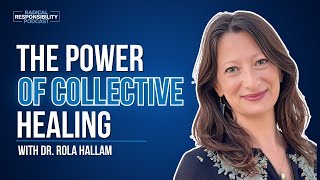
Dr. Rola Hallam, an anesthesiologist who worked in war-torn Syria, discusses how trauma shapes both individuals and communities. She argues that healing requires local leadership and spiritual grounding, not outside saviors, and offers practical strategies for frontline workers to build resilience through self-compassion and purpose.
Chapters
Trauma is the dehumanization. Trauma is that alienation. Right. It's me versus you. It's that defensiveness, that protectiveness. And so I feel like we are literally right now seeing the effect of unresolved trauma. When hate instead of love becomes the ruling force. When fear instead of love becomes the ruling force. Yeah. When power over rather than shared power becomes the norm. I think that's what we're seeing. You know, I'd say in Syria right now, what I'm noticing is just a despair and everyone can has different degrees of it, that hopelessness or that helplessness, that powerlessness. And I think it's something that we all know, right. At a personal level as well as at a collective level. And that I think is one of the hardest things to heal.
Welcome to the Radical responsibility podcast. I'm Dr. Fleet Mall and I'm excited to guide you on a journey of authentic, authentic transformation. In each episode, I'll bring you insights from leading experts to explore trauma recovery, mindfulness practices, positive psychology, and innovative breakthroughs in health, wellness and life optimization. This is a space for real conversations that inspire meaningful change, helping you find alignment with the person you were always meant to be. Let's get started. Today, I'm honored to sit down with a woman whose work has transformed countless lives in some of the most challenging corners of the World, Dr. Rola Hallam. An award winning doctor, humanitarian and trauma informed life coach, Rola's journey is extraordinary. With 18 years of experience as an anesthesiologist, having served in the front lines of healthcare in the uk, Sub Saharan Africa and war torn Syria, she is the founder of Can Do, a humanitarian organization and the first Syrian TED fellow. In this episode, Dr. Hallam also shares her deeply informed perspectives on trauma, healing, resilience, and the critical role of spirituality and purpose in driving transformation. How do we heal the wounds of war, both personal and collective? What does it mean to face profound adversity and still choose hope? This conversation offers answers that could change how you see yourself, others, and the world. Let's get started.
So I want to jump right in. You know, this work that you do with frontline health workers and your initiative to establish hospitals in Syria, you've really witnessed firsthand the deep scars of collective trauma, ancestral trauma, and of course, individual trauma. I wonder if you could describe how these experiences really shape community and what patterns you've observed that either hinder or foster post traumatic growth.
Thank you. So my involvement in war zones really came completely involuntarily when my home country of Syria went from having a peaceful revolution where the people were asking for freedom and dignity, and that was met with a violent crush by the regime. And we went into a violent war on civilians that continues to this day today. And, you know, in that process, I lost over 30 members of my extended family. And, you know, the war continues now 13 years later. And so if you can imagine, there hasn't been a single person in Syria, if we're using that context, which is the one that I know intimately, who hasn't been affected. So we're now talking about, you know, 11 million people directly and just so many millions of people more than that. And so it's affected us at every single level. At the personal level, it affected me professionally, it's affected all of us at a family level, at a community level, at the whole, you know what I mean? Like at the regional level, of course, same what's happening in Gaza now and the genocide there, that doesn't affect just there, right? It's affecting the whole region and the whole world. And so I think that's the first thing we need to appreciate is that it may seem to some people like war is over there is not affecting me. But that's just perhaps at best a blind way of realizing and maybe just denialist way of keeping it over there. But war affects us across the world, even when it's not from our own countries. So what I saw is that it actually certainly initially brought us together. You know, when you rally together in support of each other or any kind of emergency really brings a community together. We, you know, Syrians have survived because of the help that Syrians have given themselves and each other. Yes, of course, we've had some global support. But by and large, I think most people around the world, you know, survive because of the locals, the local aid workers, the local nurses, doctors, the communities themselves that are aiding themselves. And so it certainly brought us together. The problem is we are not in the post traumatic bit yet. There is no post yet. The war continues, the violence continues. Now we have, you know, poverty on top of it and we now have, you know, rising everything, you know, illness, disease, et cetera. And so this is the first problem we have is that how do you heal your traumas when it is not yet post? And this is often the issue I face with a lot of my community where they're like, we're getting wounded over and over again. Every single day. There's a humiliation, a degradation, an alienation, right? So how do we heal when it's still going on? But Just to wrap that one up, I think that oftentimes, and maybe we can riff on it a little bit more later on, what I have found helps is a mindful intention to heal. Healing does not happen just by the passage of time. The first time I went to visit Sarajevo in Bosnia, it was 30 years after the war. Not only were the war scars visible on walls still 30 years later, but it took with five minutes to talk about the war with the locals. Five minutes, and one of them would bring it up. That's how close to the surface it still is 30 years later. And so to heal, we have to have the intention of healing. And that first and foremost, therefore has to be locally led and context specific in the way that really works for that population, for that society, for that community.
Well, I'd love to dive into some of the local strategies that are working within your community and then we can certainly extrapolate to the wider world because we are suffering as well. You know, even those who are outside of these war torn countries, you know, we're seeing a collective trauma as social media has exploded. Right. You know, the difference between 30 years ago or 100 years ago is that now every one of us can see the direct impact of war and we're all being traumatized collectively. But let's start with on that local level, what have you seen for the local Syrian population that's helping, at least with the resilience? You're not in the post trauma, but there can be these healing resources that are building resilience.
Yes, yes. So when I interviewed frontline workers, especially those who were still in Syria, you know, the ones who had the opportunity to leave but had chosen to stay. So when I interviewed them, they all had several themes in common. So first and foremost was their spirituality and their connection to God. You know, they were very clear that they were here in service, they were here for something bigger than themselves and it was their faith. And turning to that faith again and again, that was a great source of solace and a great source of strength, a great source of support in everything that they were doing. So that was a really beautiful eye opening realization. And it's really relevant for us in the Western context because we've kind of thrown, you know, God out with the baby, with the bathwater, Right. And the baby, you know, it's all gone. And, you know, that kind of psychological Western approach is great in lots of ways, but it is alienating and excluding many people around the world who don't see themselves in that way. So that was definitely One of the common threads, the other one, was around the mission, a purpose. You know, they were here to save lives. They were doctors, nurses, aid workers, whether professionally or became so because of the war, but they were there and they had this spirit of service. So again, it was bigger than them, but this time at a kind of more direct kind of community, or, you know, maybe call it human level. Right. So they really had that very powerfully present in their lives. And the third really important common theme was the importance of community. You know, in Syria, in the Middle east, as in many cultures around the world, unlike the Western world, we live in collectives. We live in community. They are not individualistic societies. And that played a tremendous role in fortifying the resilience. You know, the doctors and nurses were talking about their medical family being, you know, the family of the all the people who worked in the hospital who, they were besieged together, they were starving together, they were being bombed together. And the tight bond that was created between those 30 or so team members and they were living for each other. They were doing what they needed to do also for each other. And so those three things were like the common threads that I noticed in the interviews that I did and with a lot of the work that I do with the frontliners.
Well, that makes sense that those are three out of the five domains of post traumatic growth. So it's beautiful that you can already see it there, which, you know, God willing, it will lead to that post traumatic growth. And I think it's very interesting that you bring up the idea of a connection to God and that the Western world is somewhat devoid of that, because I. I'm also seeing that as someone who lives in Europe, everyone from these different religious backgrounds, I've seen this rallying cry that says, whatever religion you believe in, what's going on in the world, this can't be that We've got to call on some sort of spiritual strength. Because what we're realizing is people feel completely helpless, like, what can we do? We try to aid. But then we're hearing that maybe the funds are not getting to the right people. And so we're, you know, we're taking the social media. But there's been a big cry for people connecting to something beyond themselves. And I think that's what we, the rest of us, are going to need as well.
Absolutely. I mean, I think by its nature, trauma is this fracture, right? It's this disintegration, this disconnection. And it's not just an internal feeling where we disconnect from ourselves or part of ourselves, but we disconnect from each other and we've disconnected from the divine. Whether you think of the divine being outside of you, within you, both, either or, but. And it's why I think it's so critical that when we talk about healing that we talk about it in a holistic way, that, you know, we are multi dimensional beings and therefore the somatic approach isn't going to be sufficient and the mental level approach is not sufficient and the emotional level is, and the spiritual is not sufficient. You know what I mean? We need to have enough of us practitioners who can bring all of those components at the appropriate time bespoke to the people who we find and see in front of us, who we're here to serve. But especially like I said, you know, in that, what does that context specific and locally led approach look like? Because it may be of greater significance in certain communities than others, it may look different in certain communities or others that connection to the divine. Right. But I know that this epidemic of loneliness that we have right now around the world is part of that disconnection from the divine and from ourselves and from each other. And it is no surprise that we are seeing such incredible results with the psychedelic therapies, because a huge part of it is the transpersonal experience, is the mystical experience, is the fact that it reminds those of us who have become veiled by our traumas that, wait, I'm not alone. I am part of the oneness. There is a wholeness, there is beauty. It reminds us to see it, to reconnect to it, to feel it again. And that's incredibly healing for that person and for the rest of us.
Mm. Can you share some insights on maybe the broader societal impacts of unresolved trauma or the perpetual trauma that we're seeing? What's the impact on.
I mean, honestly, isn't what's happening in Palestine now the result of unresolved trauma? In so many ways, right? I think in so many ways. Unfortunately, as humans, we are caught right now in these cycles of violence, trauma and free traumatization. And you know, this goes back to that point about the intentional healing that if we don't do the intentional healing on ourselves individually and together collectively, trauma is the othering. Trauma is the dehumanization. Trauma is that alienation.
Right?
It's me versus you. It's that defensiveness, that protectiveness. And so I feel like we are literally right now seeing the effect of unresolved trauma when hate instead of love becomes the ruling force, when fear instead of love becomes the ruling force. Yeah. When power over rather than shared power becomes the norm, I think that's what we're seeing. You know, I'd say in Syria right now, what I'm noticing is just a despair. I might call it a despair. And everyone can. Has different degrees of it, that hopelessness or that helplessness, that powerlessness. And I think it's something that we all know, right, at a personal level as well as at a collective level. And that, I think is one of the hardest things to heal, actually. When you're in fight and flight, there's momentum, there's energy. You can do something with that. But when you have gone into a collective shutdown, when we are in a collective freeze. Right. That's the work. That's why it's so important for those of us who have done the healing work or who are doing the healing work to be there in solidarity. Right. Healing is a relational thing. And so if you're struggling in urine freeze, it's my role to Tom, lend you my nervous system and support you and be that healing presence you need until you can thaw enough to get back into motion. And that's what I hope to be doing, you know, individually as well as together with good folks like you who are working on this.
Well, I'd love to talk about your own personal journey and resilience. I know that it's probably evolved throughout your own healing journey. Can you share what resilience means to you now? And also a little bit about your own valley of darkness? You know, how did you navigate through that?
It has evolved so much. So I would say that, you know, I've been called many things, but, you know, strong and resilient have often been there. And I think that I used to think of it as being tough, maybe even fearless. You know, the fact that I was able to go into an active war zone and when many others couldn't, I was always a woman who. Or the girl who stood up to bullies. You know, from when I was a little girl, I've lived outside of my comfort zone. I found my comfort zone a highly uncomfortable place to be. And, you know, I was always the one who was challenging myself. And I think for many of us who experience early adversity and kind of childhood trauma, we can develop to be these, like, tough, strong, you know, how are you? I'm fine. You know, and it would take my banner and going into what I now call my valley of darkness, and I'll circle back to that in a minute to realize that actually I had built a fortress. I called myself Fortress Rilla. And that meant that, yeah, I was powerful and strong, but that meant that I was not willing and able to show you my vulnerability. There was an absolute vulnerability aversion. There was not even a connection to my own needs or to my own emotions. Such was the distance, if you like, the disconnection that fortress had created within me between those wounds and between that pain and therefore with others. And so the more that I started to realize about this fortress, the more I realized, wow, like I've forever been my own best friend, you know, this sort of like self reliant, but kind of almost pathologically so. Right. And I think this disconnection from myself, this fortress, meant that I drove myself. I drove myself relentlessly. And I don't want to demonize that because I've done some incredible things, right? I've done some amazing things. And for many of us here who might be hearing themselves and what I'm saying, I am in no way shaming us or judging us because we are survivors. And survivors learn to fortify themselves and they build their own way, their own fortress for a reason. We needed it to survive. But it would take, you know, the wheels falling off into a huge, huge burnout to realize that trauma had taken up home in every cell of my body and that I needed to go on an enormous healing journ to retrieve this exiled and deeply buried parts of myself and essentially destroy my fortress, you know, brick by painful brick. And so now my impression of resilience is extremely different because now when I give you a really stupid example, I just stubbed my ankle on the way here right before I would have like rubbed it stiff, upper lipped it and just carried on like, you know, I'm not going to cry. I'm a big girl, you know, Now I'm able to like, ow. That really hurt. I was able to sit and be with the emotion, feel it, give myself a moment. In fact, it was a couple of moments. My husband came, my daughter came. I accepted the support and the love instead of like, no, no, no, I don't need it. I don't need it. I'm strong. I was able to accept it, give myself a moment. Okay, it's passed. That for me now feels like resilience. So I really started to feel like it is much more. It's not that I'm disconnected from what happening around me, but it's more like I'm surfing. I'm just a better surfer now. I'm going to Go up, but I'm going to go down and I'm going to get totaled and I'm going to get wiped out. But actually with presence, with feeling, yeah.
I can relate so much to what you've shared. You know, being that warrior, burying myself in projects and to dos and not staying tuned into what my body and my soul needed. And for me, it was burnout that led me on my deepest resilience journey, which I'm grateful for now. But I've seen that with so many of us as doctors and therapists and counselors, it's a very common journey. And so I wonder, you know, how do you work with frontline workers? Because I don't know, maybe it's different, but I know that a lot of us who became helpers, we have that tendency to work hard to the point of burnout or to put up these walls so that we can do our jobs without just crumbling. How do you adapt your approach when you're working with frontline workers in these high stress, high risk areas where they may not give themselves permission to like take breaks or nurture themselves?
Absolutely. Well, you know, that archetype of the wounded healer and the wounded warrior, you know, I think a lot of us get called. That's what I'm realizing in retrospect, although I had definitely had the calling all along, I think that for so many of us, we develop that savior, caregiver, whatever you want to call it, whatever words and language you want to use it. But there was certainly this idea that I'm going to save you and I'm going to save the world. Right. And so, you know, that underpins so much of what drives many of us who are every day facing indifference and injustice and illness in own ways. Right. And you know, one of my hugest lessons was just so beautifully summarized by the words of the Sufism mystic and poet Rumi. This is where he talks about, you know, yesterday I was clever, so I tried to change the world. Today I am wise, so I'm changing myself. And that was really the hugest realization or one of the hugest realizations I had as I was coming out of my valley of darkness, you know, if you like. It was one of my biggest post traumatic growth areas where I realized, wait, I have been out there in the world with my cape on, busy, like, you know, going into the world, trying to save it and sacrificing myself in the meanwhile, ignoring my needs, ignoring my wants and ignoring my own wounds. So I think what I have found super helpful with our, like Is first of all, the fact that I've been on the journey, I have walked the walk, I'm not just talking the talk, I'm not just regurgitating from a book. It's not that I've got the training, I haven't just got, you know what I mean? Like, I've actually, I've been there, I've done that. And I talk about it a lot because I think we need to de shame burnout. We need to de shame the fact that we are actually human beings, you know, with needs that, who need to prioritize themselves. So I think I found that very helpful with our colleagues in that way because they can see that I'm there, having lived it from places of experience. And I think that the greatest gift that this valley of darkness and my own extremely painful experience and at times difficult journey has been is that it has actually taught me what compassion truly is in the way that ridiculously as a doctor, even though, you know, we are these caregivers and you would think that months of training on compassion, we don't. Right. We're not actually practicing compassion. And it's why we've got the misnomer of compassion fatigue, because we don't actually know what compassion really is. And so when I finally developed my own self compassion, when I finally developed that practice that I have found the most transformative with all my clients, doctors or not, when you have been able to sit in the darkness with yourself, with love, that means you can sit in the darkness with someone else. And I think that's all that any of us actually really need to thaw ourselves and to start self healing because we were made to heal. We have that innate wisdom, we have that innate ability. It's like we just need that relational field, that field of love that says, it's okay, you've got this, we can do this. And ideally, without any of the words.
Yeah, I can definitely attest to the power of compassion, self compassion, because I too early in my healing journey, I was really struggling and I remember someone saying, you need to give yourself a break. Why don't you do this compassion meditation? And I remember listening to it going, can I give myself a break? Like it's been a part of my identity to always go and always get back up. And I remember as I started to recite the phrases of the compassionate meditation, I had ears streaming down my face because it was the first time I'd ever directed that loving kindness toward myself. And now I help people create exactly what you're talking about. That relational field that gives us permission to turn on that innate vitality code that can bring back the sense of vitality and resilience. But it's a definite shift in many of our thinking.
Yes. Oh my God. So much so because for so many of us, shame has such a chokehold on us, right? Like I let that voice of shame drive me forward for so long and I had, I didn't even recognize it as shame, you know, because I was so blind to it at that point. You know, about that. Like, you know, whenever I would think about taking a holiday or taking very, like, who do you think you are trying to wanting to take a holiday? You should be ashamed of yourself. Like, people are dying. You should get back to work. You know, like just that nasty voice that you're like, okay, you know, I better had. And you know, and it would take a self compassion meditation where I finally was able to say, and you too, and you have suffered and witnessed and borne so much and exactly the same as your experience. Compassion thaws, compassion melts. I broke down into sobs because I had realized I had been so mean and nasty to myself for the longest time, as so many of us are to ourselves. You know, we don't realize that shame is that red flag of trauma and we allow it to like literally whip us forward, right? Until, you know, you either fall apart or maybe you listen to something like this that might just, you know, hopefully bring it into your consciousness sooner than it did you and I, and realize that actually, wait, you know, the antidote to shame is self compassion. The best medicine is us practicing that loving kindness towards ourselves. And from there, everything became possible.
Yeah. I shared my story in my TEDx as you have, and I didn't realize how big a healer, the act of being vulnerable and sharing what I went through. I knew that it was going to help people because I just like you say, I want people to know that before you hit a brick wall, before you hit rock bottom or burnout, these are the signs. These are some things you can do. And it turned out to be so healing for me because I got to get rid of the shame by being vulnerable. I got to really look at that and say, oh, yes, of course I deserve a break. And especially because of all the programming that led me into that state in the first place. So I'd love to touch a little bit on your TEDx from Clever to wise, how healing our traumas heals the world. Because I love how you connect personal healing with global transformation. So I'd love if you'd share how this individual healing from trauma can lead to this societal evolution and what steps can we really take to foster this, especially within communities that are suffering from long term conflict and instability.
So it was my experience that, you know, the burnout and just getting into that, just such a terrible state, it took me out of action, right? So there I was being a doctor, a humanitarian, a social entrepreneur, a world advocate, and I had to stop doing all my work for 18 months because I did not have capacity to do anything except survive. Except finally, at one point, seemed like an endless amount of stuff to deal with, right? Which wasn't just mine, but it was my family's. And the fact that even as with my family, we were unable to talk about our pain and trauma because it was so painful and everyone was just locked in their own pain, right? And so I share that because that, for me, is an example of how one person's burnout has a ripple effect in a not so good way, right? If we as doctors, as warriors, as healers, as change makers are burning out by, you know, by the dozens, which we are, then that means we're not doing the work and we're not doing that work of healing our world. So every one of us has that, you know, our health has that ripple effect. But what was really beautiful was that, you know, towards the I'd come out of my valley of darkness and, you know, I was sort of feeling like ready to be back in the world. And, you know, as always happen, you get a pretty, you get a test pretty soon after, right? Like, test your resilience, test your strength, like, yeah, you think you're okay? Like, let's see, you know. And so shortly after that, there was an enormous earthquake in Turkey and Syria that killed, you know, over 50,000 people, you know, and it was so fascinating to notice myself. My immediate thought was, I need to buy a flight ticket and I need to go there and I really need to roll up my sip, right? Like, my savior pattern was like immediately lit up in my mind and I wanted to kind of do. I wanted my cape and I wanted to kind of, you know, launch myself. And then I was able to have enough presence to say, and now we do things differently. Let's go to that prayer mat and let's meditate and let's see what's going to happen from that point of view. And it was so beautiful because if you had told me five years ago that I would pray in order to either seek guidance or when I feel in pain or in trouble, I would have really laughed at it. And now it's like literally the first thing that I do. And what was so incredible about it, which won't be a surprise to anyone here who does pray, is that I got this beautiful, inspired message of, no, you are now here supporting the frontliners to help them heal and recover from banner and trauma. Continue in that way. Do what you need to do. Support them in that way. And so I was guided to contact some global trauma experts to create a series of conversations so that we can send love and support and healing, you know, tools and practical tips to these healers. And that was really incredible. And that was like a really beautiful way of me feeling myself turning from, or the transformation of savior to just being a healing presence. You know, someone who was gathering the relational field, gathering the support and pointing it towards where it needs to be as an invitation for anybody who needs it. And it just became so clear to me that, you know, as whether you're a. A healer, warrior, wherever you are, you know, we cannot heal the world if we are deeply wounded. You know, we can't bring peace to earth if we have a war raging within. We cannot possibly reimagine and restructure systems of prejudice and oppression if we despise ourselves. It just became so clear to me that we needed to do that healing work, right? We needed to turn from clever to wise. We needed to realize the change was here, not as a way of washing our hands off the collective change. Absolutely not. But here's the focus of change. Let me be the piece I want to see. Let me be the healing that I want to see. Let me be, you know, the beauty that I want to see, the compassion that I want to see. That healing it and bringing it to myself was a much surer way of me resonating it out to the world than me trying to bang on about it without actually first embodying it. Because I feel like that is often what is happening in the social justice circles. We're looking for impact, and we're coming to things from the same consciousness that created the injury in the first place. And what we really need is to be elevating human consciousness, which basically means we have to do things differently. And for me, that means we have to do the healing work individually and collectively. And that's why I'm so honored and grateful for initiatives like this, because I feel like this is one beautiful way in which we can support that happening. Indeed.
And we're so grateful to have you. You know, I carried that same sort of approach when there was this big uprising on social media about ceasefire. And I'm like, of course we want a ceasefire. But as I was on my meditation cushion, I kept hearing this message of, you need to turn that within. Where am I launching bombs. Judgment.
That was one of them.
Hatred. Like I had to really get clear that I need to resonate with the ceasefire energy within and within my community and then I can project that outward because I was feeling so hopeless and it was getting me riled up. Which, as you say, if we're depleted or if we're in the consciousness that is creating war and discord, how are we going to be effective as peacemakers and healers? So I love that you bring that up. You talked earlier about the need for a holistic approach. From whatever perspective we're going to bring the mental, the somatic, the emotional, the spiritual perspective. I wonder how you see bringing this holistic perspective into trauma healing where we can actually get to the root causes.
Root cause is such a sexy word because we don't often think like that. We are stuck in cycles of quick fixes, right? We don't have self care, we have emergency response plans, right? It's like, let me wait until my hair is on fire and then I'm going to do something about it, right? And so. Absolutely. And so on the one hand, I feel like my experience and experience of so many of my clients, that disconnection, right, like that for me is the crux of it. When I see that there is this internal disconnection where we've disconnected from us, ourselves, we've disconnected from our environment, from the plant beings, from the planet. I mean, I can't tell you the difference between me now and me three years ago. I actually can now feel the trees as beings. Like the moment it happened, I literally just bawled my eyes out because I was like, oh my God, you were just a pretty green thing a moment ago. And now I can feel you as a being. And so I with disconnected from ourselves, we've disconnected from each other as humans. We're connected from the planet, which is why we're busy, you know, destroying it and pillaging it. And we've disconnected from the divine, right? And so a lot of the work that I do, especially with those who are spiritually curious or spiritually minded, is really a big part of it is. And because I'm a Sufi, we have a big part of that, of our work together is that reconnection back to the divine. And so I do that through kind of mantra and Mantra meditations where we repeat one of. In Islam, we say that God has 99 names. And so it's through a repetition of one of those names. And as you know, I'm sure, and so many people here know, you know, sound and sound code and vibration and sound healing, you know, is so profound. And so actually in doing that, you're creating the divine connection. You are creating the nervous system regulation and the parasympathetic activity, motivation. And it's my experience that oftentimes that vibration tends to shift and poke and move that which is ready to reveal itself and to be dealt with. And so that might be a memory or an emotion or a feeling or a thought. And that can then become the focus of some therapeutic coaching, right? Like whatever that comes. And so that for me is what a holistic approach is like. It's like we are working that somatic and nervous system regulation work which is so important. We are in a body, we need to be listening to our body and to be regulating our body. So many people come with disease and like me, they don't even realize that the root cause of their disease is trauma. So when you talk about root cause, I mean, that was the first thing that came to my mind is, you know, I used to be an anesthesiologist, right? So I was the person who would send you off to sleep for your cancer surgery. And I feel like the work I'm doing now is to, God willing, stop you getting cancer in the first place. Right? And so we know that cancer and so many of those illnesses like autoimmune disease and chronic pain and so many of these other ill defined and misunderstood, you know, illnesses like IBA and irritable bowel syndrome, there's so much that comes. The root cause of it is that trauma, that dysregulation. But that's deep work, isn't it? You know, and I think this is why so many people don't do it. And it's what makes it so imperative to do it. And what I'll say on that is that if you are someone who knows, you know, you need to do the healing, but maybe you are terrified of it. I will say that whilst, yes, I have at times felt the pain and the suffering and the fear and the terror, but I have also never known or seen or felt such beauty and felt such wonderful and felt such awe and felt such joy and such bliss, because when you, when your heart cracks open to your own pain and your suffering, it doesn't just reveal the pain and the suffering. It reveals all the beauty and it lets in all of the joy. Right. I feel another level of aliveness, of vitality or vibration since I've done my healing work. And so for that, I'm so grateful. And for that, I want to just encourage anyone who might be listening here to start the journey. Just one step at a time, but start it.
I love that. I love how you've gone from being the doctor that puts them to sleep for their healing to. You're waking them up, you're elevating consciousness and doing it with such grace. I love that.
Oh, I never thought of it like that. Nice. I'm gonna use that. From putting you to sleep to waking you up. So as you look to the future.
You know, what are your aspirations for expanding the impact of your work? Are there particular strategies or projects that you think are really crucial for advancing the healing of the collective and even ancestral and systemic traumas on a global scale?
Thank you for that question. You know, as someone who is now so deeply committed to her spiritual path, I have relinquished my belief that I am in control to God. I've sent it back to Source. So with that, that, I have committed to being a tool, to being a channel, to being, you know, of service. But I no longer have the overburden of feeling like I need to save it all and to do it all. And I say that for someone here who needs to hear that where, you know, the world can seem so screwed up at times, and there's so much to do, right? And it's like, yes, and it's not my full responsibility, nor yours. Let's put ourselves shoulder to shoulder. But remember, there is the divine that who is there inside support and whose role it is to do that. So I think that's first really important. The second thing for me is really important about collaboration. Like, we are talking about a huge global issue, and therefore no one of us can do it alone. And so I feel like the more of us that can coalesce together and put our hands together and join in movements, you know, join even like, something like, this is such a beautiful way of saying, come on, it's all of us who are working on this gather together, right? And so I feel like collaboration is going to be the big difference between us making the jump that we need or not. And finally, the work that I'm kind of semi obsessed with at the moment is really about bringing that trauma, informed approach to the healers and the warriors, right to leadership. We need to have a much better understanding of what trauma is how to recognize it, how to bring it into the workspace, into policies, so that we're able to recognize it, address it, to create the transformation that we need. And so I really feel that the healing and the education go together hand in hand. And so I really look forward to working. I've been doing a little bit of that with the Pocket project, but certainly want to do that and expand that to the Middle East. You know, what does trauma informed leadership in the Middle east look like? How do we contextualize that in a way that feels appropriate to our context in all the ways, and bring it especially to those who I think of as the catalyst. Right. The health workers, those in position of leadership, so that we might start to really propagate that work, create pockets and ambassadors and you know, those different beacons of light around the world so that we're. Yeah, rippling it out. So those are three of the ways in which I'm. I'm hoping and praying to resonate deeper and wider.
Well, I think you're already off to a wonderful start. And this conversation has really illuminated many little ideas and even just shifts in consciousness that can support folks. But I wonder if you would kindly offer a practical strategy or maybe a daily practice that our listeners can adopt immediately to help them process or even integrate their traumatic experiences in a way that fosters this ongoing collective growth.
I think that I want to say that remember to just love yourself better. We said it before, and we're going to just keep saying it until everybody is not just saying it, but feeling it and doing it. Like the medicine is compassion. And that is the compassion that we can feel as a feeling, but it's also a being and connecting to that being. But the answer is compassion. And developing that self compassion is literally going to catalyze, accelerate whatever other tools you use. For me, it's almost like the fertilizer you're going to put in your garden. Then whatever you're going to see, it is going to germinate. But if you use whatever tools it is, whether it's nervous system regulation exercises, whether it's some kind of psychotherapeutic technique, if you are putting it into an earth full of self loathing, full of shame, full of self hatred, it is not going to have the effect that it has if you put it into a ground that is fertile with love and self acceptance. And so for me, it's in the tiny acts of befriending yourself yourself, become your own best friend. So I always say that to my clients, like what Would treating yourself like your best friend look and sound and feel like, right, if you drop something, you realize you made a mistake. You know, most of us kind of go, oh, you're stupid. Bleep bleep. Right? Like fill in the blank. I was like, what would your bestie say right now? Oh, she would say that I'm doing my best and I'm so busy and maybe I need to do less and I'm just so right. So become your own best friend. Like, like bring yourself that loving kindness and remember that sometimes, slash often you might need someone else to hold that loving space for you until you're able to love with hold it for yourself. So no, you're not alone. So many of us who are traumatized just feel so isolated, so separate, so alone, so locked up in our pain. And please know that it is not true. It's just the illusion of trauma. It's the sound of trauma. So if you cannot bring that self love to yourself, find a loving self that can hold that space of transformation for you until you slowly but surely start to embody that self love. But it can absolutely start with those small acts of being your own best friend.
Well said. Thank you again for being here with us. For those who would like to follow your work or see what you're up to in the world, where can they get more information?
Effy? Yes. If I can be of any service to anybody, then call me.
No.
So I'm going to share a couple of things. I think for some of us it's really hard to know whether we are in a state of nervous system dysregulation or whether we really are potentially suffering with some unresolved trauma. So I'm going to be sharing a small assessment or kind of quiz that you can do that might support you and guide you. And yeah, just doing a bit of an assessment that can pinpoint it to what you might be able to work for or work on. And actually later on this year I'm going to be launching a healing trauma course for frontline workers and emergency responders that will of course be eligible for anybody who is traumatized, but especially for those on the front lines because there's so much moral injury in that segment. And so that's going to be coming out later. And also I'm relaunching. I call it a nine month rebirthing journey for the wise warriors, those who are ready to go on their journey from Klepper to wise and really embody their wisest warriors. And so you can find all of that on my website. So, Dr. Rola Hallam, I'll share it in the notes. But yeah, if I could be of any service to anybody, drop me a note and it'll be my honor to connect with you. Wonderful.
Well, we'll put that in with this video. Drrolohalam.com thank you. Thank you again. Sending you many blessings and continued success in your work.
Thank you so much. It's been my honor.
So there you have it, my friends. I hope that you've enjoyed today's session. We'll see you on the next one.
Thank you for joining me on the Radical Responsibility podcast. Remember, real change happens when we commit to our growth, face our challenges with compassion and stay open to transformation. If you found this episode helpful, I encourage you to subscribe and help us spread the message of healing and personal empowerment. Stay grounded, stay present and stay true to you. Take care.
Of.
More from Fleet



What Oregon Learned When Legal Psilocybin Access Had to Work in the Real World - Angie Allbee


Eric Zimmer┃How a Little Becomes a Lot: The Small Choices That Transform Your Life

What if anxiety isn’t something to eliminate, but something we can learn to work with differently?


What if aging, energy, and performance are more programmable than we’ve been taught to believe?

Dave Asprey┃From Survival to Human Upgrade: How Personalized Biohacking Can Transform Longevity

What if spiritual awakening isn’t about escaping your humanity, but becoming more present within it?
