Generosity as Strategy: Building Wealth That Aligns With Your Soul
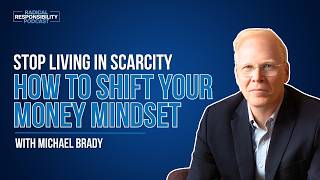
Wealth manager Mike Brady lost everything in the 2008 crash and founded Generosity Wealth Management to help clients align money with values. He discusses the "three buckets" framework for what you can control, why wealth magnifies who you already are, and how to practice generosity as a daily discipline rather than an afterthought.
Chapters
I have met with people who make $500,000 a year and they spend $600,000. That doesn't really matter how much money you make. It's just like if you want to be fit, you know, I keep using this fitness analogy. It's calories in, calories out. That's it. Everything else is details. Okay. It is about, you know, the discipline. I have had some wonderful success stories of people who, yes, were modest blue collar, or they were just working a job, raising their family, living their life, but they made good financial decisions. They treated their life like a business. They knew what their inputs and their outputs were. Okay, that's one of my first clues when I'm talking with someone is if they have absolutely no idea how much they're spending, if they have absolutely no idea where their money is or anything, it's like, hey, we need to start tidying this thing up.
Mike Brady hit the pinnacle of traditional finance only to watch his world evaporate in the 2008 crash. But that loss became his greatest teacher. Forcing a shift from chasing numbers to stoking the fire of intentional generosity. Today, he's redefining wealth management by proving that money doesn't just buy things, it magnifies who we already are. In this episode, we dive into the discipline of abundance, the power of boundary setting, and what it really looks like to lead a life where your assets finally align with your soul. Hi, welcome to this episode of the Radical Responsibility Podcast. This is Dr. Fleet Maull, your host, and I'm really happy to be to be here today with longtime friend and colleague Mike Brady. Welcome, Mike.
Glad to be here, Fleet.
Well, I've been looking forward to this. We've been working together for a long time. Uh, you were president of a company where I was doing executive coaching, and as a result, you later became my wealth manager. And you've been doing a great job of stewarding my little nest egg for quite a while now, through some real ups and downs in the marketplace. And so I'm happy to be able to have this conversation about everything we've kind of learned together and been through together.
I'm excited because you and I have known each other for 25 years and you have seen me from pretty formative time, you know, in my early 30s to where I am today at 57 years old. And not only have we shared a business relationship, but we have had some pretty interesting— I have had a lot of personal growth through your mentorship and we have shared some great adventures together, you know, not just in the United States, but, you know, in Africa and in Europe. So I'm pretty excited to be here. Yeah.
And those have been, these have been very formative experiences for both of us. So excited to explore all this. And I'd like to talk about, to begin talking about a little bit about sort of the nature of money, the nature of wealth, and it's kind of a mirror for our lives. And you know, a lot of us think of money with, well, we may just think of we have some or we don't have some, and it can be tied to a real sense of scarcity. Or we may think of it in terms of, you know, numbers and market and strategies and so forth. But your firm, Generosity Wealth Management, as I understood it or understand it today, is focused on a deeper, more conscious relationship with money and wealth. So I wonder if there was a time in your life or career when you realized that money is more than just a financial tool, but perhaps our relationship with it kind of mirrors many aspects of our life.
Yes. So I was working at a traditional investment firm in the 1990s and into the middle of the 2000s. And I remember very vividly that a client of mine came up, he was the first AIDS doctor in Boulder, and he came up and he is like, Mike, do I have enough money so that I can retire? And my answer was, yes, you do. And what did he do? He retired and he went to Uganda and as a doctor, a medical doctor, he helped the doctors there on better ways to do palliative care with those that, that are stricken with AIDS. And his wife went along, they, you know, did a lot of great work. And so that was my first kind of opening to, wow, what I'm doing is enabling people to follow their dreams and allowing them to make an impact in the community. And that's when I kind of had that realization. I'm like, I'm removed from it, you know, as their advisor, I'm kind of behind the scenes. How can I integrate more fully that lesson into what I'm doing and kind of be a little bit of a preacher, be an evangelist for that way of thinking about money, with my clients. And so that's when I, within a year or two, I left that firm because that firm was going to stay traditional and I needed to kind of spread my wings, take a couple years off to figure out exactly what that meant. And that's when I created Generosity Wealth Management. And, you know, we talk about it, we align wealth with purpose and possibility, which I'm happy to talk a little bit more about, but that's what we're doing. We're aligning wealth with purpose and possibility and money is Money's just a thing. It's just a thing. And it can be good. It doesn't— it magnifies what's already there. If you're a good person with no money, you're gonna be a great person with money. Okay? And the opposite, unfortunately. If you're a jerk with no money, you're a big jerk with money. So, mm-hmm.
So Radical Responsibility, which is the theme of this podcast.
Yes.
Within that philosophy, I talk about, you know, the power of ownership, the power of living in choice. And we address the many ways in which we often avoid ownership for our inner lives. And so I'm wondering how you see, you know, the inner dynamics that we often arrive in adulthood with the various levels of fear and self-criticism, shame, inherited stories about money from our childhood and so forth, driving just kind of avoidance around our financial life or self-sabotage or things like that. I mean, you've been listening to people, you've had conversations with people about their money, which is a pretty sensitive subject often. Yeah. I think, you know, for 30 years or more. And so, you know, when you see people, they're even in kind of over-control mode or they're just avoidance and just kind of not really taking responsibility for managing their money properly, or they're even sabotaging themselves financially. What have you learned about all that?
Yeah, well, I wish I could say that I talk with people, I see it, identify it in them, I say a few words and they're converted. I wish it was that easy. It's not. But I do try to guide them over some time And the way I approach it is, you know, life is filled with 3 buckets. Okay? One bucket are those things that we can control.
Okay?
I can wake up and get out of bed. All right? Things that we think that we can control or that we're, we have some influence over, whether I get to the office or not on time is something I can influence, but there might be a, a car accident, there might be extra traffic, and then things that I have absolutely no control over. And my experience has been that we have a tendency to spend an inordinate amount of time on the things that we have no control over. Okay. And geopolitical events are sometimes those things. No one ever asked Mike Brady what he thinks, come to find out. And so I like to, with clients, say, hey, what are those things that we can control? And let's really spend our time on that. What are the things that we can have some influence? We can mitigate, you know, any risks or mitigate bad things happening, but understand that we don't control you know, everything that, that's part of life. As I've gotten older, that cliché that life is a journey becomes more and more evident to me. That's true. That cliché actually has some, has a wisdom behind it. We don't know about the future. It's inherently unknown. So I talk with clients about, let's live to, we can't undo the past. Okay. We're here in the present. What can we do to take control, the power position, to be intentional in our lives? About going forward. And part of that is saying, what is it that we can do? You know, what are those things that we can focus on? And that's kind of how I, I work with clients to your question. Mm-hmm.
Yeah. Well, speaking of things we can't control, when we talk about, you know, kind of how things have been evolving societally and globally, but then how do we work with that as individuals? So the whole issue of wealth, you know, when I was growing up, you knew maybe there was a certain neighborhood somewhere, the big houses up on the hill where these wealthy people live, but it was a small thing. Most people were not wealthy. As I came into my adulthood and middle adulthood, wealth really became a thing and it became much more in the media and everywhere and people kind of worshiping celebrity and wealth and so forth. And there has been a huge increase in wealth. I mean, there are, you know, even relative, even if you, you know, do the math, so you do it in today's dollars, but there's still huge amount of wealth globally and growing disparity between the wealthy and the not wealthy and the inequality around income and wealth and so forth. So with that growing wealth, ideally it would come responsibility. And as you mentioned, you know, wealth just tends to exacerbate what's already there, right? So I wonder, you know, we could discuss a little bit this area from your experience about how we can work with this as individuals, how you work with your clients. You know, when wealth is growing either collectively or individually, wealth is growing faster than responsibility. And I think you've really modeled community spirit and responsibility to try to get out there and give back. And I, the work you're doing in Ukraine with orphans, the work you do with young men and fraternities, as well as the work you've done in Africa and other places. And you know, just really exemplifies that you're gonna focus your life on doing good and giving back. And that's not always the focus, or at least our society doesn't encourage that so much around money and wealth. Yeah.
Well, you know, when I started Generosity Wealth Management in the late, you know, 2000s or so, my belief was that people want to do good. And maybe this is my own optimism. Maybe this is my, you know, just kind of my attitude that people want to do good in the world, but they don't know how and they need to be guided, or at least they need an example of what you can do. And so that's kind of how I've led them over the last 18 years or so is that I want to meet you where you are. You know, I, because my, the name of my company is Generosity Wealth Management, because I'm very, you know, out there that, hey, we care about aligning wealth with purpose and possibility. We want to be generous in the world with yourself and family, community. I mean, these are messages that we're always kind of shouting out to the world. We attract some pretty incredible people who are attracted to that positive, forward-thinking, proactive, approach of living your life. Now, that being said, some people are further along than others, and I meet where they are. What do you want to do? What impact do you want to make in the world? And it might just be you and your family, and that's fine.
Okay.
There's no judgment about that. It frankly, it might just be you. How can you live your life so that you're happy and that you're generous with yourself? And if you can really get so that you don't— are not fearful, then maybe you can be generous with your family. And then from there, kind of the last part is being generous in your community, both local and global. I do try to live a life of example. You know, I put sweat equity in, I put some financial equity in. I try to show a path to those that want to be engaged. And I counsel with people many times. That's one thing I really love about that kind of local community foundations is they're a wealth of knowledge. They're like a little bit of a chamber of commerce for charities and for goodness in, in a community, whether it's a town or city you're in, there's probably some kind of a community foundation. And I meet people where they are, I guess, is my ultimate answer. And a lot of people, when they see how happy it makes you, because that's another thing that I have found is that we always talk about how we're going to make an impact on others, but we forget about how that impacts us. You know, we learn an awful lot about ourselves and we're better off and we're happier the more we're engaged with, the more we're helping them out. It really helps us out too. And people need to know that it's like a gym. Most people don't wake up saying, oh, I'm so glad that it's 6 in the morning. I'm gonna go run. It's a— yeah. But once you're there, you feel so great. And when you leave the gym after a great workout, you feel good and you have to remind yourself, okay, tomorrow morning when I don't want to, It's cold outside and dark. I'm going to do this again because I have to remember that great feeling. And being involved in your community, getting out there, kind of the same thing.
So the name of your company really points to this and everything you've been discussing so far, a distinction between an abundance mindset and a scarcity mindset. And a lot of us suffer from a scarcity mindset in general, but especially when it comes to money. And it's surprising how many high net worth individuals they have plenty of resources and they still suffer from this scarcity mindset. And in some ways it seems like the more wealth they have, the more the fear goes up. Maybe it's there's more to lose or something if you have that scarcity mindset. So I'm wondering if you run into that with your clients and how you work with that. Can people make that shift from having a fear-based scarcity mindset around money, no matter how much they have, to having more of an abundance mindset and a, a ability to find meaning and a sense of security in life sort of regardless of, you know, what their net worth is doing at the moment.
Yes, I periodically do meet people who, you're right, no matter how much money you have, if it's a part of who you are, if you add another zero or two, that doesn't change who you are. It just means that the number is bigger. I mean, truly, it's a number on a sheet of paper, and you still might have the fear that you had, or always thinking that you're going to run out, that scarcity, as you say. Over time, I have seen people shift, okay? And they might fall back to— it might have taken them 40 or 50 years, 60 years of living a certain way. It's not going to change overnight or, you know, over a couple of weeks. But over time, by really becoming comfortable and having lots of conversation with them about, hey, there is enough, and let's talk about how we're going to turn that negative that you're feeling right now in the pit of your stomach into a positive. And so how I've shifted a lot of people is saying, instead of taking that negative and focusing on the negative, how can we turn it into a positive? And once they start seeing that, wow, I have the abundance where I can give $500, I can give $1,000, I can give whatever the amount is, it could be significantly more, at least starting small and getting bigger and bigger to where they're feeling that they're making the impact that they want is the way that I have helped shift. I wish that I had 100% success rate. I don't. Okay. Some people, it is ingrained. I'm not really a therapist. Okay. At the end of the day, I try to help people along, but I also have to say I've done what I can. And, you know, if you really want to change, I can't want this more than you. If you don't want to change your scarcity mindset, I'm not going to make you do it. I can't will it upon you. We may or may not work together long-term. If It's just that simple. 'Cause you know, behind the scenes, what we don't put up on our website is, you know, we don't like a lot of drama. Okay. We don't, we have no drama in our company within the team members, but also with our clients. And so it will work with some clients and stuff, but if, if it's filled with chaos and drama, that's not the way we live our lives long-term. And we try to help them get out of that. But if we're ultimately unsuccessful, okay. And I have to acknowledge we are, okay. Things that I can't control, I try to control, but I can't control them. It might not work out. And you're just going to have to figure that out on your own, Mr. and Mrs. Client.
And I think that's a really important thing to model as a business person and human being altogether is we need to have boundaries. And if we don't have boundaries, our life is going to be chaos, right? And so we can help a lot of people. We can't help everybody. And we need to make our choices. And it sounds like you've done a pretty good job with that. And I know you focus, Mike, on sort of long-term financial planning and asset allocation, long-term investment strategies. And I, you know, I've subscribed to a few investment newsletters here or there. So I guess that's got me on a lot of lists, right? So I get emails from these different, you know, people trying to promote their investment strategy letters and so forth. And even from what I think are pretty famous and fairly reputable people, there's still so much fear in it. They're constantly predicting this crash or that crash, you know, And they claim to have called the 2008 crash and, you know, etc., etc., etc. But it just seems like in the marketing of financial services and investment advice and investment strategies, there's so much fear in it. So it's sort of like all the political stuff I get around the campaigns, like depending on which side you're on, that side is telling you the sky's falling and they're, you know, they're cleaning out your bank accounts. And, you know, I constantly get things about how, you know, they're going to change the monetary system. All your cash is going to disappear. I mean, it just seems to be so much fear in that world. You seem to be a very divergent voice in that field. There's so much fear and scarcity thinking and communication that is in the world of financial advising.
Well, I appreciate you using that word, you know, divergent, because I don't wanna be like everybody else. Okay. And I don't think that what everyone else is doing is helpful anyway. You get spam, you're like, gosh, why do they keep spamming? Well, it obviously works, right? Or they wouldn't do it. Or it's the same way with, you know, you know, telemarketing calls. I mean, it obviously works and it makes money for 'em. It doesn't work with you and me, but you know, hopefully, but obviously works. They keep doing it. So unfortunately, certain things like fear does excite the emotions of people. It's almost like a drug, you know, that people want drama. Some people want drama. Some people need outrage or fear or the next thing to get their juices flowing. And I'm not into that. Okay. I'm proud of being relatively calm and even-keeled. It doesn't mean that I'm, you know, Mr. Spock, you know, with no emotions. It just means that I keep— I control them. They don't control me. I always tell, you know, my team that when a client ends a conversation with us, whether it's on the phone, a Zoom, in the office, they have to leave with hope. Okay, that's it. And so if someone comes in or prospective client, they want something that, that's not going to happen. Okay. They want to retire next month and they have no money. Well, I don't know what to tell you. I can't change. I have no magic wand here. That being said, I still try to provide them with some hope. Hey, you know what? If you pay off this credit card or you do this, that, or, you know, you save $5,000, you come back to me in 6 months. If you've done that, then I'll help you take the next step. And so, and it's all about, you know, being proactive, having some kind of a solution. And unfortunately, you know, whether it's the news media, whether or not it is print media, they're there to excite your emotions many times, not necessarily inform you. And well, frankly, I'm more sensitive to it because of my first iteration, that traditional investment firm that I was with. We used fear. That's how I grew up. In my 20s and 30s, I thought that's the way you attracted clients to you. Come to find out, you attract fearful clients and can't figure out, oh, why are they having mindset of scarcity? I mean, of course. I want to, on the other hand, attract the people who are not that way. People who are pretty even keeled, people who are wanting, you know, positive and hopeful and proactive. And once again, powerful in that they have an intentional life. I mean, that's really what we're talking about with purpose and possibility. The purpose is what you need money to do. The possibility is what you want it to do. And sometimes those things that you haven't even considered yet. And that's very hopeful. And that's what we want to do. We want to use it to help people out, not just run from things, run towards things.
So let's talk a little bit about the name of your company, Generosity Wealth Management. So generosity, I think sometimes we think generosity is something I'll be able to do once I'm wealthy or once I'm successful or I have more time or something. And, or that it's just a quality that we have. We're either generous or we're not generous. And I wonder if you could talk about generosity more as a discipline, as a practice, as a thing we can learn. And also that, that generosity could be part of creating and developing worth rather than something that follows. It could be something that a part of creating wealth ultimately, as opposed to something that just follows that.
Yes. Let me talk about that. But let me tell you how I kind of came to this thought is I remember meeting with a client. His name was Jack. He's now passed on, but he came to me. He's like, Mike, when I die, I want some of my money to go towards this park bench about a mile in on this one trail in Boulder, Colorado. And I'm like, why, Jack? And he's like, well, I'm always tired about a mile in. And so I'd really like to have a bench there because I figure that other people are also tired about a mile in. And I'm like, Jack, you don't have to die. In order for that to happen, why don't we do it while you're living so that you get the benefit from that bench? And he looks at me like, wow, I never thought of it. I mean, it had never occurred to him that you could have that level of generosity while you're living. He thought and had been programmed that it only happens upon your passing. And so that's what I try to do with clients all the time is say, hey, while you're living, where you get to see the benefit as well, What can we do? And it's not just writing checks, although that's good too. All right. But it's also, hey, is it getting involved in coaching at your high school or your elementary, your kids, or teaching Sunday school at your church? It doesn't really matter necessarily what you're doing, but you're engaged in the world and, you know, you're really making that impact in that particular way. So, you know, how I've addressed generosity with a lot of my clients is, hey, this is something that we can do. But personally speaking, whenever I give out of my genuine heart, not expecting anything, okay, it has always come back to me in a multiple. Okay. Not every, not always it has come back. I might do it, you know, be generous for, with a couple and, you know, great. I made the world better. That's it. That's what my expectation should be is that I did a good thing for somebody. But frankly, I'm always doing, you know, trying to do good in the world and it has come back and enriched my life and it also attracts the right people. You know, but you gotta do it with the right intention. Don't join or do that expecting something back and then being disappointed if it doesn't. When you have no expectations of it, you can't be disappointed. You did it because it was the right thing. But my experience has been that generosity in your life, when you genuinely are being kind to other people, when you're genuinely being active in your community, your neighborhood, your school, your church, what, whatever it might be, that charity, people see that. People can tell when you really just are caring and kind and they want to be a part of that. It attracts the right people. And that has always come back and helped my business. Frankly, it's a cycle. Okay. That helps my business means my business grows. That means I can then do more in the world as well. I can write checks. I can be out there. I can, you know, I can afford someone to join my team so that I'd maybe spend more time out in the community. So it's just this wonderful, beautiful cycle of goodness that keeps coming back.
Yeah, and I wanna talk a little bit more about your experience of building your business over these years in a moment. But first of all, I wanna still talk a little bit about wealth creation and financial management and stewarding money with some both sanity and insight. So I think a lot of us don't even really think about, you know, trying to create some wealth or create some financial security until we start imagining that, oh, maybe I'm gonna need to retire someday, right? And you know, we grow up kind of living at the edge of our means or beyond our means. We live in such a kind of consumerist, materialistic society. We're getting these constant messages to spend and live like others and so forth. And, uh, you know, if you don't start thinking about retirement until your 60s, you don't start thinking about how you're gonna retire until your 60s. It gives you a shorter window. And for those who are younger in our audience especially, If someone in their 20s and 30s starts taking a proactive long-term view of wealth creation, even if they have modest income, with the power of compound interest and the general upward trajectory of the markets over time, you can end up with some considerable wealth by the time you're in your 60s or 70s if you start early. I wonder if you could talk to that a little bit. What if transformation isn't just about thinking differently, but feeling differently? Science shows us that true change happens when we align not just our minds, but also the neural networks in our hearts and guts. This heart-mind connection is the key to deeper healing, resilience, and expanded awareness. That's why I created the HeartMind All Access Membership and Community, a space designed to help you rewire your nervous system, cultivate heart intelligence, and live with greater clarity and purpose. With over 1,000 hours of transformational teachings specifically curated to meet your needs, you'll learn from world-renowned meditation teachers, neuroscientists, and experts in neuroplasticity, all sharing powerful tools to help you shift your mindset and heartset, regulate your emotions, and unlock your full potential. You'll also gain unlimited access to every summit and course we've ever produced, a treasure trove of wisdom worth over $10,000 and growing, plus live gatherings and an inspiring global community to support your journey. If you're ready to step into a more heart-centered, connected, and conscious life, I invite you to join us. Click the link to learn more and start your journey today.
Yeah, absolutely. I mean, I think that it's not just money when you're young, it's hard to think about the future. Okay. 20, 30, 40 years ago from now is just a long time. I mean, if everyone thought about the future all the time, we'd all go to the gym, right? When we're in our 30s and 40s, we never do anything to our bodies that as we get older, we say, huh, maybe I should go to the gym a little bit. I'm a little bit more motivated. Maybe I'll forego that extra piece of cheesecake. So it's not just money. It's tough when you're in your 20s and 30s, but that differentiates those that can think that way. You know, I like to think of it as today money and tomorrow money. Okay. We don't want to only think about today because tomorrow is going to be here before we know it. We don't want to only think about tomorrow because that makes today not that much fun. So there's some, some spectrum between the two that each client has to figure out for themselves. But every dollar that you don't spend today is income for you in the future. If you can get that concept, if you can get and understand and truly make into your DNA the discipline that it's like, wow, if I save 20 or 30% of today, that will then provide me with the income for tomorrow. And tomorrow could be 30, 40, 50 years from now, but that is it. And so I work with young people in their 20s and 30s, and whenever they do something that I really think is like, wow, that's great. That's right on. I of course give them lots of praise. No one seems to be immune. To praise and to compliments. Okay. And so I really try to encourage that because hopefully that's the endorphin that they're getting is not only watching a balance go up through their efforts and through its efforts on its own, you know, how it's invested, et cetera, but also through me externally saying, you are doing the right thing, you are knocking it out of the park, et cetera. Because on the flip side, you get external feedback from when you go to the bar and you buy a whole round for everybody, or you go and buy a car and everyone's like, oh my gosh, this is a great car. Well, you know, all my paychecks were going towards it. Okay. Nobody cares about that. All they can see is that you've got this, you know, this asset, you know, that maybe doesn't really help you, makes you feel good in the short term, but it doesn't really help you in the long term. So how can we, the way my approach is, how can I counter that with really positive feedback? Now, my experience has been, you can sit here and show all the spreadsheets in the world. You can do all the logical stuff, it's less helpful. All right. You got to really get it in your, get it in your DNA, have that discipline. If you've got emotional control and discipline, that gets you through 80, 90% of what I do. And same thing with the working out. If you've got some discipline in order to get in there, it doesn't really matter if you're using free weights or machines, really. At the end of the day, it doesn't really matter. You got in there, you got the discipline, okay? And you have the emotional maturity to say, wow, this is for— this is good for me today. This is good for me 30 years from now as well.
And maybe, maybe the convincing argument isn't the numbers in the spreadsheets. It's the emotional support and reinforcement as you're discussing. I do think it might be helpful to know, because I think when I was young, I was pretty clueless around this, that, you know, and there's many stories of essentially blue-collar workers who've had a modest income but were just embedded savers. And invested it, and they have millions of dollars to retire on.
Absolutely.
A modest income.
Yes. I have met with people who make $500,000 a year and they spend $600,000. That doesn't really matter how much money you make. It's what, you know, it's just like if you want to be fit, you know, I keep using this fitness analogy. It's calories in, calories out. That's it. Everything else is details. Okay. And so you're right, it is about You know, the discipline. I have had some wonderful success stories of people who, yes, were modest blue collar, or they were just working a job, raising their family, living their life. But they made good financial decisions. They treated their life like a business. They knew what their inputs and their outputs were. Okay. That's one of my first clues when I'm talking with someone is if they have absolutely no idea how much they're spending. If they have absolutely no idea where their money is or anything, it's like, hey, we need to start tidying this thing up. Hey, let's first clean up your life. Today is day zero. There's no judgment. No shame in this. Okay? I'm glad that we're having this conversation, but going forward, we have to have a new approach because the approach that you've had up till now hasn't worked out, right? That's the reason maybe why we're talking. And so let's treat our life like a business. Let's know what our inputs and our outputs are. And let's make sure our inputs are greater and move forward.
Yeah, I think that's a really powerful idea. And one I use in a lot of the coaching work I do with folks is really realizing that we're all in business, whether we think we are or not. We have talents, we have energy, we have our time, and we offer that to the world. We get compensated for it. And then how successful we are is how well we manage all that, how well we manage all the inputs and the outputs, right? And what do we do with the revenue that's coming in and how do we manage it? Just like any other business, right? I think that, that shift in consciousness can really make a huge difference in people's lives because in the world of business, a lot has been learned about just the basics of operating a business in a good way. And most of us probably aren't applying those principles to our lives, much to our own detriment. So let's talk about growing your business. So you were working for a financial management mutual fund hedge fund company, and at some point you decided to go out on your own and you took a little time off and Fortunately, I think that was a time when you'd already really made a shift where you had multiple sources of meaning in your life and you were already focused on service and things like this. So I think you were inspired to create your own business in alignment with that from the very beginning. But nonetheless, you had to figure out how to be successful with your business. You, I think you probably took a couple clients with you, but you started off very, very small. And you've gradually grown your business. And I wonder if you could talk about that, just that pathway of learning how to be a successful business owner and grow your business.
Yeah, well, I think I may have told you this, Fleet, but you were one of the first people when I ended my employment there. I took 2, 3 months off. I mean, I went to Africa for 2, 3 weeks. I came back, my wife and I went to Australia and New Zealand for a couple of months. It was wonderful. We still talk about it 20 years later. I mean, just one of those magical trips. And then I came back and now it's reality. Okay, great. Vacation's over. Now what? I knew the intention, but I didn't know how to execute it. Okay. And to someone who, you know, has worked, it felt like every single day since I graduated college, that was a weird feeling to say, wow, I, what is my purpose? You know, I kind of know what I want to do, but therefore what? And I reached out to you and you started to give me some books to read. You're like, wow, you know, I think you should read Bearing Witness by Bernie Glassman and Instructions for the Cook. And you know, you kind of guided me through. And as I recall, you said, oh, well, why don't you come along to this charity thing on Thursdays? I go down and work in this prison. And before I knew it, I think it was maybe 2 weeks later, you're like, well, why don't you run it? So you got me good. And here I am still on that board 20, 20 years later. I did take a couple years off to kind of figure out what my next steps were. I didn't know it was gonna be a couple of years, but it turned out to be that way. I thought it was gonna be 6 months. Okay. And after 6 months, I still didn't know. And after a year I didn't know, and after 18 months I didn't know, but eventually I did. And that's when I moved forward. And yes, some clients actually reached out to me to say, Mike, you know, we would like to be your first clients. We would like to help you out. And whenever you're starting a business, if you haven't done that before, there's a lot of decisions you gotta make. I mean, like, what filing system do you have? You know, what's your logo? What's your name? Just all these things that, you never really think about that you have to make. And many times you're doing it all by yourself. It's a very lonely business. It did take me 3, 4, even 5 years for me to be profitable. Okay. It took me a while. I wish I could say it was an overnight success, but it wasn't. You know, there's certain fixed costs and it took me a while. Okay. As my, as I was spending down my savings, okay, towards this, but I had a vision. Okay. I had a vision of what it could look like. Who I was going to attract. I mean, I was very specific about that. I want the right people who allow me to, you know, to live my life, to make an impact in it. I, as a matter of fact, when I met with people, my job was as much to find out who I didn't want to work with as it was to see who I would want to work with.
Okay.
If you need a guy in a suit in a corner office, you can just stop by every day and hang out with, that's not me. You know, You will not be happy if that's what your expectations are. Let me tell you who I am, and then you can decide whether or not we can jointly decide whether we're right for each other. And that's right from the beginning. That's the way I built a client by client. And what's nice about my business in the wealth management is it's a cumulative business. You know, if you do treat people right, you know, last year's 10 clients, you add 2 more this year, you got 12. And then you got 14 and then 20 and then 40 and then 100 and then 200, you know, it kind of grows. And so it does take a while, but I did, once I got that word out there and great people were, they believed in my mission as well and they believed in me. And I guess maybe that gets back to, you know, live your life where people are going to say nice things about you even when you're not around. And I would always tell the people that I mentored, we don't want to walk down the grocery aisle and worry about who we're going to bump into. Okay, so always treat everyone, even if the relationship doesn't continue. Okay, they're going to only remember the end. Okay, you did great for them for years. If they want to move on for whatever reason, you treat them like a king or a queen at the end because that's what they're going to remember. And it's just the right thing to do anyway. And we want to treat people well.
So, so in my experience, a lot of successful people have experienced failures in their life. And even, you know, been through bankruptcies and all kinds of things before they ultimately get on a real stable trajectory of success. And I know when you made that transition early on, you took a pretty big financial hit. You had some wealth, some sweat equity in a company and so forth. And you took a really significant financial hit at an early age, which I would imagine could have been pretty deflating because one might have thought, well, I'm in pretty good shape here. I'm just gonna build from here. And suddenly I'm kind of starting over. I'm curious about how that played out for you and whether you feel that contributed to, in any positive way, to who you've become today.
Oh my gosh. Well, let me just tell you that I remember when that was happening, it was very painful. Okay. I don't want to sit here and put a, you know, rosy picture on it. I always joke that I didn't sleep for about 2 years. Okay. But I remember right in the midst of that thinking, I know I'm going to look back on this and say that this was a great educational experience. I'm really looking forward to looking back on this, okay? Because the present wasn't much fun. Okay. What happened, you know, at the very highest level is I left that firm and they did owe me, you know, a lot of money. Okay. Some deferred compensation, some equity, because they bought my interest out and then they went under.
Okay.
2008 hit. They had not done a good job in certain areas of mitigating risk, et cetera. And so 2008 was very, painful for them, which then kind of blew back to me as well. And so that was— here I was in my mid to late 30s thinking I kind of had it. Okay. I'm like, great, now I can— I've worked hard, you know, feels like every day for 13 years. You know, I've got a nice number of zeros there. I'm good to go. And very quickly that evaporated. And I have to say that the firm, you know, had done very poorly for the clients as well. And it turned out to be one of the best things that ever happened to me because, you know, I rallied those clients, you know, to really help them out because the other firm wasn't communicating with them, wasn't helping them. I had an opportunity to frankly, to go to the other firm and help them out. But no, I didn't like what they did. There was a reason why after I left, it didn't turn out well. Okay. They had changed some philosophy. They had changed some, major things after I had left that I was unaware of, and I didn't want to be a part of it, but it could have been financially good for me. But you know what? I decided not to do that. I decided to really help out the clients, and it was one of the best things that ever happened. It makes me a better person, makes me a better financial advisor because I can empathize with my clients. It's not like, oh, you've been successful since you graduated, you know, 37 years ago or something, 35 years ago. No, I've had some ups and downs. I had no money. I made some money. And then unfortunately, I got some humility. The universe decided that Mike needed some humility. I got that humility, and then I built it again with the right people in the right way, with the right attitude. And, you know, my, my wife I've been married to for almost 30 years. We've been together 32 or 33 years. And so I know You know that she's always with me. We've gone through this together. I know who I am. It's a little bit like a soldier who wonders, wow, you know, when I'm really there in the war, am I going to run away or am I going to be the brave soldier that I have in my head? Okay. I haven't been tested in my life. It was actually the first test of who am I? You know, what are your principles and your values? And when your money is on the line, what do you do?
Okay.
What do you do? And so, That's very nice that I did choose wisely. And you know, only as it kind of played out that I realized not only did I do the right thing, but it also played out properly for me. You know, if I'd chosen a different path, I know I wouldn't be happy and it wouldn't have turned out as well. And so that's it. I talk about it all the time. I'm proud of it, to be honest. You know, you fall down 7, you get up 8.
Okay.
You learn from your failures. And if you're afraid of failure, You gotta keep moving forward. And that was painful, but I learned a lot from, you know, it is what it is, you know, and I'm a better person because of it.
I've witnessed you through all of that, and I've really always admired the approach you took. And so for the entrepreneurs in our audience, and it really applies to anyone, but a lot of people who get into business and start businesses are looking for freedom on some level. Maybe they don't wanna work for somebody else. Maybe they wanna be more the captains of their own destiny in some way. And they're looking to create some wealth and looking to create some freedom. But often they find themselves wearing all the hats and overwhelmed. And now they've got all this responsibility and all this stress that before somebody they worked for was carrying. Now they're having to carry all that. And it turns out to not be quite the dream they, they had hoped for. And I think you've modeled really creating a business that works for yourself all along, I'm sure there's been moments and highlights and some lows, but at least what I've seen from the outside, you've seemed to have always had time for family, time for your philanthropic work, your community work. You kind of, you know, live where you want to live. I know you have your home in Colorado, but you also have another place where you spend a lot of time, a cabin that I think you came down to your family. It seems like you have really been able to achieve a lot of that freedom that people get into business looking for. And I wonder if you could talk about that and how maybe, maybe if you had got caught up in the allure of something else, you might have created a business in a different way that could have been more overwhelming and never actually gave you that freedom you were looking for.
Boundaries make great neighbors. Okay. No truer words have ever been said. And that's how I kind of live my life. Boundaries, meaning this is what's important to me. And if it doesn't work, it doesn't fit there, then I have say no to it. Okay. I always say that people who get taken advantage of let themselves be taken advantage of because you can say no, and that doesn't work for me. And I appreciate that. I know your intent is good, but that conflicts with something that's important to me, some value. So you've got to stick up for yourself at the very beginning. I think I alluded to this, you know, earlier in the interview, but people would come in. This is when I really needed clients. Every client was like, oh my gosh, I hope I can have this. But I was very clear. Hey, listen, going over to Africa, I go over there for a couple of weeks every April. This is important to me. So if that doesn't work for you, you need to say something now.
Okay.
And oh, I'm just going to let you know that I also fly around the country periodically and do other things. I'm not always here in the office. Does that work for you? Oh, it does. Great. You know, so I was very clear in setting those expectations with the people that I interacted with, that this is what's important to me. So if I didn't do that, then it's not their fault. Okay. If they intrude in that, they try to change my life. Okay. So I've got to communicate, negotiate that with them. But I do the same thing with my team members. Hey, you know, I'm going to go up to my cabin in Wyoming, okay, which is 30 minutes outside of a 900-person town. I'm going to go up there for 3 months of the year. That is important to me. Okay. Now I have fiber optics there now, which is wonderful. Okay. I can continue to work there. I could be there now for all you would know. I'm not, but you know, in today's world, this is, I can continue the business there, but that was important to me. So therefore I made it important. It's just like my interactions with the community and the generosity that is important to me. That gives me happiness. Okay. And just like someone else might get happiness from skiing or from, you know, golfing. Okay, that makes me happy. So therefore it's a priority. I was at a seminar a couple weeks ago and people were talking about what they're struggling with. What are you struggling with right now? And time management. And then second person's time management, et cetera. And this one guy says, stop calling it time management. You don't control time. It's called priority management. Okay, what's your priority? All right. And if you don't do that, don't blame time, blame yourself, your own discipline, and you not doing the priority. So if it's important to you, you'll figure it out. And for me, I'm incredibly disciplined. If it's on my calendar, it happens. You know, I'm just a very disciplined person. But if you're not disciplined, find somebody who is and have them work for you. It's that simple. If I don't know how to fix my car, I can't complain that the car doesn't work. I guess I got to find somebody to fix the car. I mean, there's no excuses. Radical responsibility, right? For what you want. Okay. And everything else are just excuses. Is.
That's absolutely right. Well, I think fortunately, you know, when you started your business, you'd kind of figured out who you were by that time.
Yeah.
And I think for a lot of us, our business can become our total identity, and then it, you know, can tend to take over, and our whole self-esteem and sense of meaning in life and everything is going up and down with, you know, with the numbers month to month. And that can be a terrible way to live. So you've built a business around who you actually are and one that seamlessly works with what your priorities are. And that's incredibly admirable. And I don't know that it's that common.
Yeah, I'm not sure how common it is either. I tell people all the time to get external feedback. Okay. And you were part of that. And another person that we worked with there at the company, you consulted with the company. That's how we know each other, but you were not of the company. All right. And that's important because just like a fish, you know, the fish is saying, what water? They're clueless. I was in an unhealthy personal dynamic with behind closed doors, even though we were externally very successful internally, there was a mismatch and I just didn't know it. It just, I couldn't articulate it. Why? Because I was in my 20s and 30s. You don't know anything. I mean, I hadn't had a life experience yet. And just like a Sometimes you have to get out of a bad relationship, okay? Whether it's a boyfriend, girlfriend, or domestic abuse, whatever it is, sometimes you have to exit. You look back at it and you're saying, wow, it was so obvious. Oh my gosh, I can't believe I was so clueless about that situation. So I encourage people to have some external checks, reality checks, whether that's a life coach, whether that's some strategic coach, whether or not that's just a, you know, religious leader. It doesn't matter who. Somebody who can say, wow, this— you're blind to it, but I think that you have a mismatch. That's why you're unhappy, or you don't have enough time, or you say that this is a priority, but you never prioritize it. Someone who can help guide you because you might be clueless. I mean, join a business group and with other entrepreneurs, and frankly, they'll find your problems and you'll find theirs. You'll— they'll find your problems that you're clueless to. You'll find problems of theirs that, that they're clueless about. And that's just, that's community right there.
Well, I think that segues into my final question for you, because I know you've been at most of your career since starting your own company, you've been kind of essentially a solopreneur. And, but now I know you're kind of building out your company a little bit to provide broader services, not necessarily building a huge company, but bringing together complementary professionals to be able to offer a full spectrum of wealth management and also exit planning strategy for business owners and entrepreneurs and various things. And I know you have joined a mastermind where you're with other entrepreneurs learning. And so that this seems to be a little, a new stage in your career and the growth of your business. And I just wonder if you could talk about that, both your inspiration and maybe, you know, kind of take what you're doing, your business to the next level, whatever that might be. I'm sure still in alignment with your core purpose, not just driven by ambition to grow, to just to grow a company, but something you've seen a different possibility where you can still do this. With that same alignment you've always had, but you're also not trying to figure it out by yourself. You're getting involved with other entrepreneurs so you can do it in the best way. So I wonder if you could just— maybe that could be our last question. You could just talk about that a little bit and where you see all that going.
Yeah, absolutely. As I look back on my life, I'm 57 years old. I've just kind of noticed that about every 10 or 15 years I feel like I reinvent myself. Okay. It's not necessarily intentional, but as I've kind of looked at like, Wow, this is an important, you know, pivot, you know, in my life. Or this was— I could see how the next 10 years was because of this one year or this one period. And I'm just in one of those right now.
Okay.
And I could feel it because I am energized.
Okay.
I have a lot of energy. I have even more energy than normal right now. My brain is always going because it's so exciting as you're creating something. I was in my mid-50s. Okay. I'm 57 now. So this is about 2, 3 years ago. I was like, okay, well, I've got all this information in my head. Okay. I've got it in my head. It feels like a waste if I don't pass that on in some fashion. So there's a little bit of legacy.
Okay.
I don't have children, so that kind of, well, I don't have DNA that I'm going to pass on, but hopefully I'll pass on some knowledge, some wisdom, a way of living your life. And so that was actually the big push for me rethinking my business and bringing on other people. So that I can kind of expand the impact that we're making beyond Mike Brady and a few other people, you know, kind of evangelizing, getting other people here, which is exciting because we're having that conversation right now. What are the appropriate key performance indicators, your KPIs? Okay. It's not just, oh, let's just increase revenue by, you know, 10% or 50%. No, no, no, no. Let's not have some, you know, lagging indicator of some success that society says that we should be. We're right now working on what are the KPIs, what's the impact that we can quantify with the number of people that we're touching and then the impact that they're making out in the world. So right now I'm working on this less easy, right? This more difficult. What does it mean to have the right key performance indicators that I can spend and work on as I'm building out the company so that it lasts beyond my, you know, beyond my death. Okay. You know, you start, as you get older, you start to think about that and say, hey, I want this that we started that's doing good, that feels good. That is, you know, people, you know, I think are enjoying being a part of. How can we continue this instead of just, well, I think I'm just going to, you know, go off into the sunset. I don't want to do that. And the creation of it, the imagination, just me talking with you right now is exciting. I do work with other entrepreneurs. Yes. Every quarter I fly to Chicago as part of this coaching program. I really enjoy it. Many of them are not even in my industry. As a matter of fact, most of them are not in my industry. So the basics of running a business, what are the possibilities? How do you do it? It just gets applied in my case, to wealth management and finance, but to other people it might be solar panels and to somebody else it might be consulting and, you know, a fourth person, it's something else, a CPA firm. Okay. And so there's some basics that we can talk about and we're helping one another. I think man and human beings, man, men and women are social beings. Okay. And that's why I feel that you're better off just talking with, you know, having your team, whether it's a CPA, a lawyer, your friends, your colleagues, other entrepreneurs. You don't have to go through this alone. I mean, that's the point. You don't have to go through this alone. At the very least, get feedback from them, really hear it, and then decide how to move forward with it. And that's where I am right now. It's very exciting. I mean, I'm gonna hire somebody, I think, in the next couple of weeks that will bring them onto the team, and then I'll hire the next person, you know, over the next quarter after that, and keep adding them on so that we're intentionally hiring, we're intentionally building according to our strategic plan, and it's exciting.
That is exciting. Exciting indeed. I look forward to being able to witness that as you grow that. So Mike Brady, Generosity Wealth Management, thank you very much for being on the Radical Responsibility Podcast.
Thank you very much.
Taking radical responsibility for our lives means taking action, and today you can start by helping us grow this community. If these insights into healing and transformation have served you, please subscribe on YouTube and follow us on Apple Podcasts and Spotify. While you're there, leave us a review. It takes 30 seconds, but it's the most powerful way to help our message reach someone else seeking deeper self-awareness. Thank you for being part of the journey towards lasting change. Thank you for joining me on the Radical Responsibility Podcast. Remember, real change happens when we commit to our growth, face our challenges with compassion, and stay open to transformation. If you found this episode helpful, I encourage you to subscribe and help us spread the message of healing and personal empowerment. Stay grounded, stay present, and stay true to you. Take care.
More from Fleet



What Oregon Learned When Legal Psilocybin Access Had to Work in the Real World - Angie Allbee


Eric Zimmer┃How a Little Becomes a Lot: The Small Choices That Transform Your Life

What if anxiety isn’t something to eliminate, but something we can learn to work with differently?


What if aging, energy, and performance are more programmable than we’ve been taught to believe?

Dave Asprey┃From Survival to Human Upgrade: How Personalized Biohacking Can Transform Longevity

What if spiritual awakening isn’t about escaping your humanity, but becoming more present within it?
