Sammy Taggett | Turning Your Journey to a Bridge to Connect with Your Audience
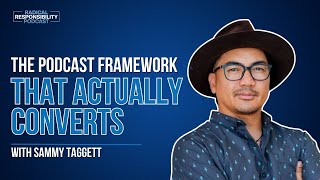
A Radical Responsibility podcast episode (host Dr. Fleet Maull interviewing Sammy Taggett) that shows how authentic personal storytelling becomes a marketing bridge to connect with audiences. Sammy shares his origin story (found as a newborn in a shoebox — the "Shoebox Moses" origin), explains the BINGE storytelling-marketing framework (Bring attention to a pain; Insert an emotional story; Name the pain; Give a way out; Empower action), and gives tactical guidance for launching and monetizing podcasts (monetization pyramid, ascension offers). The episode also surveys content-repurposing and AI tools (Opus Video, Swell AI, Descript, Google Notebook lm, Delphi) and advocates treating a podcast as a content ecosystem and relationship-builder rather than a single-platform product.
Chapters
Welcome to the Radical responsibility podcast. I'm Dr. Fleet Mahl, and I'm excited to guide you on a journey of authentic transformation. In each episode, I'll bring you insights from leading experts to explore trauma recovery, mindfulness practices, positive psychology, and innovative breakthroughs in health, wellness, and life optimization. This is a space for real conversations that inspire meaningful change, helping you find alignment with the person you were always meant to be. Let's get started. What if the most powerful marketing strategy isn't tactics or tech, but your story? In this episode, I sit down with Sammy Taggett to explore how authentic storytelling builds trust, loyalty, and real human connection in business. This conversation may change the way you think about how you show up and share your message. My name is Dr. Fleetmall, your co host for this session, and I'm thrilled to be here today with friend and colleague Sammy Taggett. Welcome, Sammy.
Hey, Fleet. Good to be here, bud.
Yeah, I've been looking forward to this. It's always exciting to get in conversations with you that you're just such an enthusiastic communicator. I love it. I'm always a little reluctant to ask any of our guests to sort of encapsulate their origin story in just a couple minutes, but I'm going to ask you that because we got a lot to cover today. But I would like to start off with how you got started, how you got into this world of being a dj, being a media technologist, podcasting, and all the rest of us, and maybe some of the bumps along the way. So give us a little bit of your story.
Story. Yeah. So thank you for asking. I will start at the humble beginnings, because a lot of times people go ask, why are you named Shoebox Moses? What is this about? And I always start here because what we're talking about is storytelling. And I got gifted one of the craziest stories ever. And Shoebox Moses comes from the start of where I was born in the Philippines and adopted out of the Philippines. But before all that happened, they found me as a newborn in a shoebox in a dumpster. And so my whole origin story started right there. And what's really amazing is that whole name came to me many decades later after I went on a pilgrimage, Fleet. To go find out these roots of where I was from. I just wanted to find my orphanage, and I had a couple big trips back to back. I was super excited. I was going to the Philippines for the first time, and then on the back end of that, I was going to come home, and then I was going to Necker island island with Sir Richard Branson to play music on the island. But in the process of doing that, as I was quite literally out the door, I'm about a day out from traveling, I get this call from my mom, and she says, you need to look at the papers. I was like, what? Oh, the adoption papers? She said, look at the adoption papers before you go, because I know you're hot. You're hot to go find your origin story, maybe find your biological mother. And this is my adopted mom speaking to me. And I remember sitting there, and I'm sitting in my apartment, I'm opening up the folders, and I look, for the very first time ever, I look down on these adoption papers, and they're thin, they're worn out. You can barely read them. And it says, foundling shoebox dumpster. And it's the first time in my entire life that I'd ever looked at these papers and read that. And now I'm on my way across the planet to go find my orphanage and do some other mission works there. And I remember having a moment of just complete overwhelm. And in the moment, I actually just kind of. I had a bit of a panic attack. And I remember waking up and I was so dazed and confused about the whole thing, but I just had to go. So I went. And they actually had this in a book, which is cool, but I went to the Philippines. That was my story. Then I came back and I had to go to Necker island the next week to go perform. And I remember those guys were looking at me and they could sense I was a little off, as you would be if you find your origin story. And they asked what was going on. I told them. I was like, I found out that I was left in a shoebox as a newborn. I feel so off on all the things that I've been doing. I actually feel kind of guilty because I've been a little reckless with my life, and I feel like I should be doing more. And I want to go back and save these kids. Like, I just saw where I'm from, But I also found out where I'm. Where I started. It's insane. And they said, well, if you want to set those kids free, you're like, moses, that's great. You're our little shoebox Moses. Whatever you need to do, we'll take care of it. And that's where shoebox Moses came from. And then what that turned into was this amazing story which led me into being a performer. And it showed why I Did so many things because all I wanted to do fleet was stay connected. And what I noticed with my fear of abandonment and my fear of just being left behind again, I just started making these connection points. And what was the driving force through all of these things and the thing that connected me with so many people was that story. My story of where I started, then how I got going, then what I did next, and the thing I did after that. And I noticed very quickly that storytelling was a beautiful way to pass on legacy and a beautiful way to pass on what we're doing. And that's why I love what you're doing, because you really, you bring these brilliant people and they tell their stories of trans, and you tell their stories of transformation. You tell yours of transformation. Your story blew me away. And so I knew when it came to podcasting and when it came to marketing, the most powerful thing you can do to glue people in and keep them connected with your mission. And what they need to do is learn how to tell a really good story and then tell your own story. And so that's really how my whole. My whole journey into marketing and entrepreneurship started, was that beginning piece. And so everyone's like, where did you start? I started when I was left.
Wow, that is so powerful. And the storytelling, what you've done with that is a way to give meaning to your origins as well, I think. And, you know, Moses works on at least two levels. You know, Moses set his people free, but Moses was placed in a basket and set on a river according to the biblical stream, on a stream by his mother and for his own protection. And then I guess he was found by a high level, high caste family there in Egypt who raised him, and he became this prince and later led his people free from Egypt. So it works on so many levels. Wow. Well, let's talk about storytelling. And I wanted to talk about maybe two aspects of it. I think they're interesting. One, I think, is having a powerful origin story and learning to tell it in a compelling way. You know, somebody I've always admired is Tony Robbins. I don't know how many times I've heard him tell his origin story. Right? Many, many, many, many, many times. And he's told it gazillion more times than I've heard him tell it. And yet every time he can tell it with such passion and clarity and like, it was the first time he was telling it. And boy, that's an art. And something I think we could all model at the same time in marketing, you know, our own story. Is compelling, and it can help people connect with us. But ultimately, what people really care about is their own story.
Right.
And, you know, the real hero in our marketing needs to be our customer. And so how do we connect our story with their story? Invite them into their own story? Because, I mean, you know, I guess if we have big enough celebrity around our story, because we have such a cult of celebrity in this country, people will flock to that and want to be near it, want to be around it. But in general, people are most interested in their own story. Right. And moving their own life forward. So, anyway, I think both are really important. But maybe as we weave this interview, you can touch on both and that dynamic of how they connect. Let's talk about how your experience and wisdom and technology around storytelling has evolved. And is podcasting been the main vehicle for that? Are there other vehicles for that relate to entrepreneurship? So let's go to the next stage in your journey as you began doing that as an entrepreneur yourself, but also in supporting other entrepreneurs in their journey.
Yeah. Well, you touched on it right there. Right? What does it mean? Why would you tell a good story? And why does it matter in entrepreneurship? And we know that an amazing story is how people get connected to brands. It's how people stay connected to the mission of a brand. Because people. You know, we've always heard people don't care about how much you know until they know how much you care. Right. And that's where the origin story always seems to be such a powerful piece. And then people don't remember you until, like, most of the time, people, they won't remember half of what you say. They'll just remember what. How you made them feel. And that's why these stories are so good. So when it comes to weaving the two together, yes. The stories that really worked for me first was when I was a dj, a professional dj around the world with places and like Antarctica, that story that we wove together, we were playing. I was a DJ dressed as a penguin on a glacier playing in the water. That is a crazy story. You know, people are. That's nuts. That story is. That's a cool story, but what does that do? How does that transfer information? How does that really add to the bottom line in sales? And what I came up with was a framework that we use. I wanted to share it with you. We actually do this when we edit your stuff too, because when we edit your show, we like to use a framework. It's called the binge framework. And the binge stands. It's an Acronym Binge is a framework that we use that you can use in any story arc and anything you're marketing, and it stands for bring attention to one pain. Or then you insert an emotional story and then you name the pain again, give them a way out and empower them to take action. So B I N G E. And the reason I came up with that is as you make, I mean, we have 200, 300 million plus downloads of podcasts. 20% of those podcasts hit out of all of those, 20% of all those are the ones that people are like, oh, that's cool, I like this, I'll buy something from this show. The rest of them just get lost. And the reason we found out after dissecting thousands, if not hundreds of thousands of shows is that people that start with this, when they bring attention to a big issue or a pain, they can talk to it and insert an emotional story on the back end of it. People are connected to it. And then by the time you get to G and E, giving them a way out and empower them to take action. So an example of that in your show is you give them a way out, you tell them the modality, because you have science fact evidence to help in this practice that you do, whether it's meditation or whether it's movement things that you teach. And then at the end of it, you empower them to take action by downloading the book or joining a quick quiz or a membership. And so it gives people this ability to sell, communicate and get the know like and trust factor just really built genuinely through that story arc. So we use the BINS framework to really communicate. And I came up with that fleet way before AI and I just realized that this is exactly what has to happen for people to remember your story and to really insert themselves into what you're telling. Because if you don't, then you're just telling a story. But if you have a solution that you can give them, that seems to be something that really helps. Because right now, and we said it, people are not only just interested in their own story because of so much chatter and so much stuff that's going on in the world of media. There's, I think, 2 million pieces of media that are released like every hour. So they need to know what's in it for them right away and if it's something that they need and if it's something they relate to. And so we had to figure out the framework that works for shows. So in a long roundabout way, that's what we Do.
That's a beautiful framework. And the first one is so important because we got to break through that, that massive amount of media that's out there every hour. And, you know, even in the world of podcasts, I think there's something like 3.2 million podcasts now, and the majority of them are in the English language. And it's a very small group of them that get most of the viewership. Right. So how do we break through? But by really connecting with actual pain points that people have, though. They're real challenges, they're real pinpoints, a real solution. But I love that framework because in that framework, you kind of answered my question. So I could see how you could be sharing your own story across that arc, but then inviting the appropriate customer avatar into that story because they connect with that same pain point. You share the same pain point with them, right. And then you're walking them through how you found a solution, how you found the transformation, and you're inviting them into that same journey, you know, and that's what gets them to believe that it might be possible for them too, right? It absolutely might be possible for them too. So it seems to me that's a beautiful framework for bringing those, those two stories together. And, you know, it works across whoever you're trying to connect with around whatever myriad number of pain points, right?
Oh, yeah, all of it works. I mean, I've. I'm reluctant to find it not working in any place that you're any marketing, any story that you're ever telling if you have the, if you have them in mind, right. It's the, it's the whole Dale Carnegie when friends and influence people mentality. Like if you're go giver and you're like, hey, listen, I know I've struggled with this. You probably are struggling with it too. It's this, and here's what happened to me, or here's what happened to somebody else. And to be honest with you, if I didn't get this figured out, I was going to die. And this is how it happened. I was face down this. And it, you know, I was on my deathbed and I found this book or I found this teacher. And you know what was funny? At the end of this show, I just want to share it with you. You're going to love this. So get the download. Like I just did the binge framework for you guys. So if you caught that, that's what we're doing. It's so simple.
This also points to the wisdom that I think many marketers and teachers of marketing. I don't know who maybe originated this particular phrasing of it, but our best customer is that person. That's now where we were. They're where we were, you know, in that pain without the solution. And so we've taken the journey. All we got to do is describe the journey to them and give them the means to follow that same journey 100%.
Yep. Our best customer was us five years ago.
Yeah, absolutely. Absolutely. So how do marketers get started? Right. You know, let's say, you know, I think there's a lot of entrepreneurs and probably a lot of entrepreneurs in our audience who are not out front in their businesses. I mean, there are some businesses that you build around. You're teaching your brand. You're the principal from the get go. But there are other businesses could be in any industry where you're, you know, you're creating great products, you're developing your sales and marketing. So as you're building your team here, but you're kind of back there in the background, and you're really reluctant to put yourself out there. You're reluctant to tell your own story. There can be a lot of fear about, you know, just fear of rejection or feeling, I don't have the chops to get out there and be on video and be charismatic or entertaining. And so how do entrepreneurs get beyond that? And there's a million ways to do it. It's not that we all have to become Tony Robbins or something, but there's lots of ways to do it. But how can an entrepreneur who's a little resistant to get out there and be at least in part, the face of their company and the communication, you know, how do they get started?
Yeah. Such a great question. I think what we're actually asking is how do you get over and get into the right mindset of starting a show or really supporting people? And I think most people think of this podcast or starting one as like, this gigantic, you know, this insane, insurmountable tasks they get to take or this gigantic meal they gotta do. And the meal they said, what to eat. An elephant is one bite at a time. When it comes to supporting people, we always look at this. We don't think about getting thousands and thousands of downloads fleet. We literally look at this helping one listener every day. That's all we're looking at. If you can go in and help one listener every day, it'll lose right to what you're asking. How do you know who should start a podcast? Right. Should you start a podcast? Because it's not just for industry experts. It's for everybody out there. And the reason we see people get stuck in podcasting and not doing it is a complete. You know, it's a belief that they have that there's too many things that make it hard to do, like technology, or they get stuck with, like, who's going to listen? And I'm not going to get a big audience. I'm going to have these things. The problem is, we've thought about that way more than everyone else and the statistics around. And I'm speaking specifically for podcasting. To help your audience understand the mindset that probably needs to shift with this is podcasting. We have three different mindset shifts that we like to focus on. The first one is that you just need to help one person every day. And if you get a hundred downloads, when's the last time you were at an event with 100 people in the room? If you look at that, it's actually kind of a lot of people. And the thing about podcasting is, Even today, in 2024, the average listener, if they listen to four of your shows, four of them, they're more. They're 55% more likely to purchase something from you. They listen to four of them. So that's all we're looking to do, is get that into them and to have them listen to four episodes. A podcast listener right now usually makes upwards of over $75,000 a year, meaning that they're in the top. I think it's like 5% of the income around the world. The majority of all the podcast listeners are in the United States, and they listen on average to 8 hours of podcasts a week. So if they're listening to that and you think of a hundred people, 55% of them are more likely. That's over 55% of the people. 55 people out of a hundred in that one room will be more likely to buy something from you because they're listening to you in a place that they're comfortable, they're walking, they're on their way to work, they're very casual. Then their guard is down. So the know like and trust factor just goes through the roof while they're listening to your show. And we find this a lot of times as people, like, if they miss an episode, it's not like everyone goes crazy and they leave your show, but they'll know. They're like, hey, where were you? You're like, my homie, I love listening to you. You didn't have your show out this week. That's how we know that this is the place to be. And here's what's crazy fleet right now. Even though there's. This is. We're talking about your YouTube strategy, right? And I was like, well, yes, there's over a hundred million YouTube channels in podcasting. There's like five million podcasts. You're in the top 1% of podcasts if you have over eight episodes. Top 1%. Most podcasts don't even make it past eight episodes. So the market for starting a show is still wide open, which is just astronomical. We always laugh because we don't think that because we're in a silo.
I want to follow up on a couple of really important points you made for our audience because, you know, we might think, well, you know, I'm never going to break through, you know, via Joe Rogan or Sam Harris or Tom Biu and have a top tier podcast, but you don't need to at all, you know, especially if you're really niched down. And of course, you know, with our business altogether, the more we niche down in terms of our audience and the products or service that we're selling, the more successful we're going to be anyway. So you really niche down and like you said, you start a podcast. This is a great way to be in relationship with your customers, a great way in conversation with them. It's a great way to gain credibility. I mean, your podcast can be you talking and it's a great way to communicate. You can also have guests on and your guests can also begin to give you a lot of credibility, enhance your credibility with your audience. So there's. Even if you have a very small listening audience to your podcast, it could pay off hugely in terms of sales and revenue and customer retention and building that loyal fan base. That customer base. Right. So I think that's really an important breakthrough because I think what a lot of us think of podcasting, oh, there's already 3 million podcasts. Why should I start another one? But that's not. It's not about the viewership, it's about the relationship. What if transformation isn't just about thinking differently, but feeling differently? Science shows us that true change happens when we align not just our minds, but also the neural networks in our hearts and guts. This heart mind connection is the key to deeper healing, resilience, and expanded awareness. That's why I created the Heart Mind All Access, membership and community. A space designed to help you rewire your nervous system, cultivate heart intelligence, and live with greater clarity and purpose. With over 1000 hours of transformational teachings specifically curated to meet your needs. You'll learn from world renowned meditation teachers, neuroscientists and experts in neuroplasticity, all sharing powerful tools to help you shift your mindset and heartset, regulate your emotions and unlock your full potential. You'll also gain unlimited access to to every summit and course we've ever produced, a treasure trove of Wisdom worth over $10,000 and growing. Plus live gatherings and an inspiring global community to support your journey. If you're ready to step into a more heart centered, connected and conscious life, I invite you to join us. Click the link to learn more and start your journey today.
100%. And actually, can I share just like a couple key shifts that we talk about when it comes to podcasting? Because we do this with you and your team does it brilliantly. So when we work with Sara and everyone in your team, this is what we talk about. The first key shift that we like to mention is that it's not about a single platform. It's actually about a content ecosystem. And what does that mean? It means that a lot of times people think when I start a podcast, I just make a podcast and then people show up. And it's not like that because what we do is we create one episode like what you were doing. Like we created one and you were even repurposing some stuff you. And then we deploy it everywhere. So one 30 minute episode. This is what we like to see at a maximum level. And you don't even have to do it this depthly, but one episode becomes 12 social media videos, 15 quote graphics, 3 blog posts, 1 newsletter, 5 LinkedIn articles, 20 social media posts and it looks like this. So this is jj. You know jj, she was just on your health and health summit. She has her show, right? One episode, five tips for CEOs and weight training. Here's what happened with that one show, and this is what we're always looking to do with shows is from the one episode we created five short form videos and those were 30 to 60 seconds each. And we used AI to support and start that. And if you're just starting, they make it so much easier now. And we can talk about that. But then each habit became its own micro content. So Remember, it was five tips for CEOs and weight training, right? Each one of those habits became its own micro content. These videos got 10,000 plus views. We created 15 quote graphics that turned into a specific pain point. Like each quote was a specific pain point. Meaning it was a really nice viral hook. Then we made three in depth blog posts for her and each post expanded on one keys concept. There's a newsletter and then it went out to the email list, LinkedIn articles. And that always positions her as an authority. And that's why yours is so effective. This always positions you fleet as the authority, because you are. Yeah, you bring them in. And that generated income and made the podcast. So that whole process, when done properly, can take two to four hours a week. That's it. It shouldn't take that long. And so we talk about that because if you can do that and you use content multiplication, right. You can take that. And I say we just take one thing and put it into the wood chipper and send it all out. And that's what we like to do. No wondering about where to post and all that. Right.
That's amazing. It's so empowering. I remember I learned this from Brendan Burchard years ago, who's. I don't know how much he does now, but back then he said, I film a half hour video once a week, that's what I do. And my dad takes that and slices and dices it into all that content you're talking about and it completely multiplies. And of course people know how successful Brendan Burchard has been, but it multiplies out there and the possibilities are pretty endless. And as you mentioned before, AI is making this so much simpler to do.
So much simpler. Yeah.
Yep. That's great.
And then I think to flee real fast, not to interrupt you, but the main thing that we're trying to do is help you have all omnipresence everywhere. And what happens when that, when you get into that spot, it's what you have mastered, which is you're everywhere. And then what really comes, which is the next shift, is a strategic relationships. And people don't realize a podcast, when done properly for entrepreneurs, is one of the best and most powerful strategic relationship builders out there.
Absolutely. And you know, there's also this synergistic impact, as you mentioned, the blogs. Right. So you create some great blogs. Well, blogs are one of the best tools for increasing SEO in Google Analytics. And what Google shows people in Google Search, right, is keywords and blogs. So if your blogs are doing a gov that increases your SEO, people are going to find you more. But I also wanted to talk about, you know, there's lots of different businesses and some of us are selling, you know, the B2C business to consumer or B2B business to business. And you know, we might be selling fairly lower priced products that people will just make a decision online and buy it, or we may be just selling higher priced services or products that there's a fairly long sales cycle and you really need to develop that trust in that relationship. Well, what a great way to develop that trust and relationship with your audience, a podcast, because you can just demonstrate your expertise, you're a thought leader, you can demonstrate your credibility again and again till you get to that point where a business owner, a check writer, is going to be willing to consider purchasing or enrolling in a more high ticket offering from you, whether it's a product or a service or a program or a coaching program, whatever it might be. But you've built that trust. And it would seem to me like developing your own podcast audience in your niche, what you're trying to do is a great way to develop that credibility and trust for the bigger ticket sale.
Totally. And in fact, an example of that working really well would I would even use our personal podcast. And then if it's cool, I'll share what we've found as the most successful ascension model that you can take out of a podcast to make it really convert for you, if that's cool with you.
That would be great. Absolutely, yeah.
But here's what's great. So we have a podcast that we did. We designed it to just be 24 episodes total. It ended up being, I think, 36 or something because people kept asking for more. But when we started our podcast, we were having, when you started the company, we were having a lot of our people have a problem starting it. Take like four months to launch. And we were, we're very like kind of laid back, probably too laid back in some respects, where I was like, guys, these shows should be done and ready to go. But people got busy and did their things. And so we knew we had to prove that it was easy to launch a show. So we launched our show called the Healthy Profits Podcast in two weeks. And that show was for health and wellness entrepreneurs, which is a wide net. And then we said it's for health and wellness entrepreneurs with a podcast, more narrow net that want to monetize their podcast. So we went wide, narrow and really narrow. So if you're a health and wellness entrepreneur that has a podcast and wants to know how to specifically monetize a health and wellness podcast, this is the show for you. We started with three or four episodes, and what was great is we had somebody that showed up and listened to four of our episodes and they Said, oh, you guys are talking exactly what we need with our health and wellness company. We want to start our podcast. And they booked us to start producing for them. That was a five figure client in two weeks. And that happened to us right away. And so I know. And we had 90 listeners. We didn't have that many, but because we were so good. And now that podcast has thousands of listeners. But that was like three weeks in, I think it was when we got that client. So in less than a month, if you do this right and you follow the systems and the rails that we give you to do that, especially in a niche topic, it will really work for you. So that's what we have found for strategies. Now if you're starting and what I wanted to share with you real fast too, if you're starting and you're like, well, I don't even know what offers I would make. A lot of times people are like, where should we start? We've created a monetization pyramid and this will kind of follow along with what you guys have here before you get into that.
And I think this is really important because around the idea of monetization of a podcast, you know, a lot of people are on this might be thinking, well, yeah, yeah. You mean like ads on a pod? Well, sure. Tim Ferriss tomb, you know, Joe Rogan, they can advertise for all these companies, make a lot of. But you don't necessarily have to have a big enough podcast for advertisers. You can monetize your podcast with your own products and services. Right?
As you should. And exactly like we were looking at years and I remember our team was like, should he get sponsorships? Because he's got a bunch of really high leverage people. I was like, no, let's sell fleets stuff first. Like, because you have these amazing summits. And so what I wanted to show you, this is the monetization pyramid on how this works. And here's how it looks, is you gotta start Anytime Offer Campaign and Limited Times Offers, Reoccurring Evergreen Automated Offers, and then the abs. That stands for affiliate and brand sponsorships. What happens is a lot of times fleet people will start at the top of this pyramid, which is the wrong place to start when you're trying to sell your. You don't want to start with brand sponsorships because you need a huge audience. You want to start with your stuff. And so what does that look like? And start Anytime Offer. It would be just like a quick membership, a product or coaching that's like they can get into A funnel. The. And the best thing to start with there is a quiz like, here's a quiz to see if you're ready for it. The next thing that you'd probably want to start or offer out of the show, and this is the Ascension model we suggest is a live campaign or a limited time offer. So like jj, she has the Summit. She has the I played all the time, the Mindshare Summit. So she has that. She would put that in her show and sell tickets from that, but that would come after she'd done memberships. Right. And then you've got masterminds and courses. That's another good reoccurring offer. These are all really good things to put in there. But when you're starting out the base of the pyramids, where you really want to start, when you are selling from your show and just getting your audience warmed up to things that are not that expensive, a lot of times people will come in and try and sell a $5,000 product which isn't necessarily going to convert right away. Right. So that's where we talk about is that is the start here where you'd want to start up the Ascension model. And we found this to work time and time again. So right now, for example, with your show, which everyone should be listening to, Fleet show, if you're not the Shameless Plug, you'll see that we have a start anytime offer for them to check out something and get in your ecosystem, because they're already listening. And I guarantee once they listen to four of your shows, they're so good that they'll be like, I want to know how to do more. Like, how do I enhance my life even more with this coaching, with this teaching. And so that's where you want to start was with your own stuff. So you hit it right on the head.
That's incredibly helpful. Let's do talk a bit about how AI has really revolutionized podcast creation and so many other things about business and marketing, but let's focus on podcasts in terms of somebody wanting to really launch a podcast and then continue to create those shows and get those shows out on a regular basis. Go get into the monetization, get into the multiplication of the content creation, all that whole world of that creating that content. Echoes. Podcast is the starting point. How do we use AI tools to really optimize that?
Yeah, So I would say the first thing, because AI makes things so easy that the first thing you can use AI, especially when it comes to ChatGPT and, you know, Claude, which are our two favorites and now Google Notebook. I'm mentioning a few of these, we can probably list these. But the first thing that you want to do, and I do this constantly, is use those as your research partner in that research. Because what you want to do is really research who you want to be have on your show. That's one. But the bigger thing you want to do is research who you're serving, who your audience is, and research how to niche down so that you're actually making big improvements in people's lives. And what we like, what we have everybody really search when they're starting a show. We do a cohort with people where we launch them and show them how to take themselves from not having a show to having a monetizing show in like four months. But what we do for that first month and a half is really dig into how they research using these tools to find out the psychographics of their audience, to find out what's keeping them up at night, what do they get angry at, like because they can't fix this in their life, and then how they're going to position themselves to be the best solution for them. And we use GPT and we use Claude and Perplexity and Google Notebook to organize your thoughts so that you're really getting into how you can support and transform people's lives the fastest. And then once you figure that out, you're obviously going to want to be bringing in good guests for your show. So you want to research them in a unique way, right? Like I wouldn't have known your origin story if I hadn't researched you more like I didn't know you spent time there. I didn't know that that had been something. And you know, that is something that is really amazing because then you can uniquely like take a unique spin and interview them that way. The other thing to do, because now you've got the access to them as a person and it makes research so much faster. I mean, you research, it's crazy how fast you can research something. What you also need to do is research how to be the best type of podcaster. Because not everyone's going to be Stephen Bartlett from the Diary of a CEO. But you can take GPT or you can take one of these platforms and say, how do I interview like Stephen Bartlett? And if I were to find this information on this guest, how do I make this information? And I want to ask him questions like Stephen Bartlett and we do this all the time. And it'll say, here are 10 open ended questions like Stephen Bartlett So that you can have a very beautiful open discourse with your guest. Similar to what you did with this, right? You're like, Sammy, what about this? And you've just left it open. That and you're a masterful interviewer. So you have that at your luxury. But then when you put a AI thing on the back end of it, then you can really make great storytelling arcs and you can have really good conversations and interviews. So that's what I would do first. That's the first thing I would do. Then you would probably want to use a myriad of the tools to take the content that you're making and turn that into tons of viral clips. And one of the ones that we, you probably, if you haven't heard of this, you'll want to see this. This is called Opus Video. Opus Video is an incredible platform that will take any of the content that you have and turn it into a bunch of different viral clips. And I'll even show you. One of the things that we want to do is really showcase how we take your clips. Now there's a couple of things. Fleet has a full on agency behind them. We take these clips and then edit them again. But we start, we use this as a starting place, right? So here's one of Fleet shows. We would take this in here. Here's what Dave ASPREY that one YouTube clip or that one episode, we will start here and we will look. It will take that one video and it will cut it up into I think there's 30 different pieces here and it will rank on what it thinks will be the most viral hook from that video. And it does it instantaneously. And then it will take the text and it'll put the text on there. We then take it from this and let's say we wanted to use use this. We will usually download this into a editing software to make it even better. But if you're just starting Fleet, you don't have a team, you don't have to do all of that. You can just spray a bunch of stuff out there. We know your brand voicing and with your team, we nuance this a little bit more. But we love to start here because you can see it says, hey, this is why this hook got an A rating. This is why the flow got an A rating and the value and the trend. So when you go in and you're like, how do I make a bunch of content that should work? You can use things like Opus Video to make a myriad of different content and send it out. So that part of it are two massive wins with using AI.
Fabulous. Fabulous. And then what about, let's say, going from there to blog posts, from there to the reels on Instagram? I mean, those. What you just showed us could be reels on Instagram, obviously.
Yeah, definitely. We like to use is a platform called Swell AI. Swell is a repurposing tool that will allow you to go in and it will take your episode and turn that into a myriad of different content. It will write your blog posts, it will write your email posts, it will write five or six different things for you, and you can export those out with just what you need in any of your myriads. It'll even write an email for you. We also use a platform called Descript, and Descript will do the same thing. And those are the platforms that we like to use to get those out to the audience.
You know, another use of those snippets that you were identifying with that first software you showed us. So I've seen this in a lot of podcasts when we're doing in ours. I've seen it in various formats where. Because we got to get people's attention, right? And so you take a really great snippet right from the podcast and you put it in front. So when somebody opens your, you know, up on wherever they are, Spotify or Apple podcasts or whatever, the first thing they see is this powerful snippet with the guest speaking, communicating something really powerful. Oh, that got my attention. Then you go into the podcast intro and into the whole podcast. And so you can use that in so many different ways to put up front what's really going to grab people's attention. And you could test it, right? I mean, you're getting those ratings from that software you're using, but then you can start testing it and develop your own analytics and metrics, like which snippet is really pulling people in. What's getting the most views.
Totally right? And you've seen that because we use those snippets in years before, we're like, oh, and then remember when we talked about the binge framework, we're usually using those snippets from one of those sections. Was it the emotional story or was it the big pain point that we're talking about? We want to figure out what that looks like. And so what we found, because people have goldfish brains these days, we need to hook them in like three seconds. We're hooking people as fast as we can in three seconds. And what's the best way to do that? If we don't know your name, we need to know your pain. If we don't know your name, we need to know your pain. So here's why you should be listening to the show today. We got 35 minutes and here's why I want you to stick around. We are going to cover what's happening when you don't do this. And if you don't manage this, it's going to cause a myriad of different issues for you. But by the end of the episode today, you're going to know exactly what to do, how to do it, and how to get to it.
I interviewed the great marketer John Asrap, who does neuroscience, brain based marketing, right. And, and he was talking about this with AI. You know, it used to be we had six, seven, eight seconds or a long form the old days, longer. He says it's collapsing into like one second. You got one second to get somebody's attention, right? And so he gave an example and he goes, and you know, he looks right into the camera, he goes, if you're suffering from hemorrhoids. And then he just went on. And I had to think for a minute, do I have hemorrhoids? I mean, it was grabbed me, you.
Know, and if you can do the pain point and identify like that, right? Hey, are you suffering from hemorrhoids?
Yeah.
Oh, are you, Are you talking to me? And then like, if they're not, they can move on. But there's so many people watching stuff, it's okay to do that. Podcasting ecosystem's a touch different because it's not just scrolling. You do have people in an ecosystem looking for some transformations. But yeah, he's absolutely right.
So get into broader strategy of how a podcast fits into the overall marketing ecosystem of a company, regardless whether we're marketing services or coaching services or widgets or products or online courses or, you know, high ticket offers. Well, how does you know? Because there's so many different things we can be doing, right? And we, and there's a lot of people out there, oh, you got to do this, you got to do that. You should be doing this, you got to be doing more. Your social media strategy or this strategy. How does podcasting fit into that overall marketing? Because I would think if we put a lot of energy into creating a podcast, but we haven't done the high level work of having a strategy that's going to fit into, we may not get the bang for the buck that we otherwise would get. So I guess that's my question is how You've seen it work to have to really optimize the benefit of all the energy and work you'll put into a podcast by having it be part of an overall strategy that is really tied into your overall business strategy and going to move you forward.
Oh yeah, that's a great question. The biggest thing, and you nailed it, is the 30,000 foot view of your company and what you're doing. Right. How does it fit in with all the stuff that you're doing? And I think one of the best things that you have to figure out is who you want to really serve and niche down. That's one big piece of it. But one thing that's amazing about a podcast in general, a podcast is an absolute Swiss army knife of the marketing engine for your company. So if you are looking to scale your time and you're looking to scale your impact and be omnipresent, a podcast, when done properly, is the best tool that you can create. Now, if you have a team that is masterful at YouTube and doing that, those are two very different ecosystems. But if you're looking for the quicker, lower barrier to entry, the podcast is such a smart way to do it. And here's what we've been doing, like the kind of content, the way that I've been working this, and this is actually kind of lens to some of the new tools that are out there, things that people are not doing right now, which is amazing. I'm doing this for you too right now as well, is I'm using some of the tools like Google Notebook lm, which will actually produce a podcast on your behalf. So here's an example of that. What that looks like is you can go in and with Google Notebook lm, I'm having it produce. It's a AI generated podcast with two people talking, but they're talking about your podcast. So it's a trailer about your podcast that links back to your show. It's absolutely bonkers.
And with AI avatars. You mean completely AI? Yeah.
And that lives on its own. So, like, we're talking about launching your YouTube channel. I'm going to have us launch two YouTube channels, one with your show and then the other one, which is going to be the trailer for Radical Responsibility. The only job for that channel is to funnel energy back to your original show. We'll probably put the same CTAs inside of those show notes, but the only thing it's designed to do is get SEO for Fleet Mall and Radical Responsibility and lead it back into that show. But what we have to do first. And this is where people get stuck is you got to figure out which ones perform because you don't want to just do all this energy for the wrong show. So we do that. That's one crazy thing that happens and that just cycles back through. And what this really is speaking to Fleet is when you say, okay, what's new and how do people think about this? This is the new way of thinking and marketing, right? And you don't want to build all these farms. Like there's like they did all that BS where they build farms and do false things. But this is actually real value because I want people to be like, hey, if I'm going to spend 35 minutes with this show, what's it actually talking about? And this is like a 10 minute clip of the show because I love watching trailers of movies, I'll watch two hours of trailers and sometimes you get great value from it. These AI generated ones, like with Google Notebook lm, they'll come in and they will literally, they will talk about your episode, they'll talk about your show in a way that will help you. And so what I'm talking about and hopefully the team can hear this, but this is Google Notebook LM. I've dropped all in a YouTube with our one of our clients, Dr. Greg Eckel. This is how good it sounds. Hopefully you can hear it. Hey everyone, welcome back. Today we're going to be doing a deep dive into brain regeneration.
Ooh, brain regeneration.
You got it. Sounds interesting. Yes. So that's two people speaking. It's bananas. What will happen? That's a 15 minute episode on an hour long episode. And it will talk about how cool this episode is or it will talk about how crappy it is. One of the two. So you can learn a lot from it. It's amazing. And then the second thing that we will do, because if it's a multi prong piece of your business, the other thing that we do is we use automation to connect with the audience and to connect with your, your group once they're done. And we use a platform called Delphi. And Delphi is basically an AI sidekick. And instead of using tons of notes and show notes where people rarely go back to show notes, what we found and only, and I'm telling you this because this has only happened over the last month and a half that we've seen this start to work. So we're rolling this out like this is fresh, guys. This will probably be the standard that you're going to see. I'm doing this with yours Fleet, we're going to build you a Delphi bot. This is exactly what needs to happen. And what's crazy about this, the Delphi bot is going to be coached on you and it will be your voice. And so what does that look like? That basically is a bot that talks about everything that you have in there and it will speak. And I'm not going to do the speaking one, but here's what it will answer, right? How do I make a podcast? So this is answering with my knowledge base and what will happen as it takes everything that I know. Oops. Go to evolve podcasting, feel free to explore our website. That's not the best example, but who makes the best podcast in health and wellness, right? You can ask these questions. And here's the thing I want you guys to take away from that, because there's so much information. The thing we want to do when you have people come out of a podcast, when using automation with a bot or anything, is to start a conversation with your audience. You want to make sure that you're connecting with them. The power of these new AI generated bots is that you can have a conversation with your audience. They can tell you what troubles they're having, what struggle are their challenges that they're going through. And then after three of those questions, your AI bot or your chat bot will say, hey, you knew you've actually asked three different questions on this certain topic. Have you checked out Fleet Summit on just that? In particular, it sounds like you're dealing with some trauma around betrayal. Did you check out his summit on trauma? You should check that out. And if you haven't, here's a little quiz you can take. And you can start stacking AI and communications around exactly what people need. So you're not just trying to sell people the wrong things.
Well, you're driving home just really some such critical points in marketing and sales altogether, especially marketing is to know our audience, right? You gotta get clear about who's your audience. You gotta niche that down. As clear as you and some of us may have some multiple audience, but whatever they are, you have to niche them down, get totally accurate. And then it's about being in conversation, being in relationship and having. How do you get in conversation with anybody? You start dating, you start talking, you have conversations, right? You get them laughing, you get them, you get. You build rapport, right? That's how we build relationship, right? So we gotta find ways to start having a conversation with our audience. And it sounds like, you know, this podcasting as you're describing it. Even if we have a very small listener, listenership or viewership, we can be having great conversations with the people that matter most, the people in our customer audience niche. Right? Yeah. That is so cool. And what about, you know, I mean, there's a lot of data right now showing that, you know, video is king when it comes to communication and what people want to consume and getting pretty hard to get people to read very much, but people also listen. Now, when I listen, I love podcasts and where I listen is generally on my phone when I'm out walking or in my car when I'm driving. So I don't consume much video podcasts, but I know a lot of podcasts today are offered in both video and audio. And it's probably important, but I wonder if you could talk about the strengths of both, the need to do both, how they're different, you know, et cetera.
Yeah, the video is strong. Video is really strong. And people are starting to watch a ton of video podcasts. And if you're going to start a podcast now, you definitely want to have a video element to it.
YouTube is all video. Right. So then so much podcast viewership is over there now. So that's going to be video, right? Yeah.
The reason YouTube was so great and it continues to be a platform while it's so strong is that people can leave comments and ratings and things on YouTube. And now Spotify for podcasters is doing that same thing. So what we love having is your video inside Spotify for podcasters as well, so that people can. They can ask questions. Like we just said before, you need to know your audience and get to know them as well as you can. And how do you do that? That's why YouTube has long been such a great format. But one of the best things you should be doing is having both. And then once you have the audio, make sure that you edit for audio and you edit for video, because audio can tend to be a lot snappier and quicker. You can cut out pauses and lots of things when you have video, if you have a lot of these jump cuts, because let's be honest, not everyone is a fluent speaker. It looks super weird. It looks like an old Max Headroom style video if you're like in those edits. So with, with audio, you just want to edit for audio, but you for sure want to have both formats and, you know, a little ninja hack. Spotify for podcasters has the video player. So if you're going to start a video podcast, put it in Spotify for podcasters, because you'll have that ability to have video there, but you want to have it in both YouTube and Spotify.
So listening, kind of listening between the lines with you. One thing that came, came up for me is so by getting in a car, using a podcast to get in conversation with our niche audience. Right. And maybe we've identified that to a degree. Right. But the podcast conversation is also an incredible way, an incredible strategy for harvesting more customer data, their language, because they're going to be in dialogue with us, they're going to be responding, they're going to be commenting, they're going to be leaving. And so that's gold because now they're starting to talk about their pain points and their needs in their own language. And that's the actual language we're looking for, that then recycle into our marketing messaging. So that conversation, it's a two way street. You know, we're delivering value to them and they're also teaching us how to be in relationship with them, how to communicate with them.
And oftentimes not even just being communication with them, they're giving you the roadmap to help them. Yeah, listen, I suck at this. If I don't get this solved, my life's not going to be better. And you can very quite literally say, good, this show is the start of that. And if you need more help with it, which if you're listening to the show this far, you probably do at the end of this show, grab our download. But more importantly, jump into our community because the community will help you do that. And to make it easy for you, we got a two week trial. It's a buck and I guarantee it's going to help you.
I love this. They'll teach us how to help them. Yeah. It reminds me many, many years ago, it was a Frank Kern training, who's quite masterful and audacious marketer and he was talking about you launch a course and you know, you have an idea for the course and you roll people and you just get your first introductory unit out there and then you get the feedback from them and based on that you create the second module of the course and then all you have to stay a week ahead of them.
Right.
And they're designing the course for you and with you as you're building the course, I mean, that's the old, you know, build the plane while you're flying it kind of thing. But really we need to do that. Otherwise we come up with these genius ideas that we think are going to solve People's problems, and they don't. Or they're just not design Right. Or it's not in their voice or something. So we need to have our niche audience teach us how to help them both how to communicate with them and how to help them. It's so important. And I'm just. I mean, really, I'm just listening to you, Sam, and being in dialogue. Today, I'm in fire. My sense of how podcasting can be part of this whole landscape of understanding my customer, reaching my customer, learning from my customer, that just exploded as we've been talking here. So this is what I'm talking about.
Fleet.
Absolutely illuminated. Illuminating. Yeah. So, you know, this has been great. How do people find out more about you? And I think you have some free resources to offer people, and they can also find out about the services you offer. So where do people find that?
So if you want to get a free roadmap, we have a great roadmap for you that basically will. If you followed the roadmap from the start, from conception, all the way to launch and then the monetization, you really. You could quite literally launch your own podcast. And we can give them that free download. We'll have that for you in the link. It's the monetization action plan. That's our roadmap. And to help you with that, we also have a chatbot that we've created and curated specifically for people to kind of go in and niche their audience, figure out how they would start the show. The basics on like, hey, what do I need to start to get this done? So we'd be more than happy to give that to them as well. And so that is two amazing tools. And what we. We love to do too. There's a lot of times people will get that, but they also want to be part of a bigger community that's really doing this. So they have some feedback loops with people. And that is what we have. It's called the Podcast Accelerator. And that accelerator, we have a vision. We're launching 100 Kingdom podcasts this year is what we call it. We do a lot of work in the Christian space, too, but we have 15 shows that we just launched last month, and we're on fire to just launch another 85 of those. But that accelerator course is specifically designed for anyone that's really wanting to start a podcast inside a community. So we have those free resources that we'll give them. And if they want to, if they're wanting to be part of a community that's doing that, to Fleet. We have that accelerator and we'll put that link down there for you.
Right. And all those links are right there below. You can get them right now. So I encourage audience to check all that out because the value is just limitless in doing this. And whether you want to DIY it or you want somebody to guide you, be part of a community or have somebody do it with you or for you, there's all kinds of resources there with Sammy Taggart at Evolve Podcasting. So thank you so much. It's been really exciting and great. Thank you.
Yeah, totally. Thank you for having me, brother. Good to see you.
Be well. Thank you for joining me on the Radical Responsibility podcast. Remember, real change happens when we commit to our growth, face our challenges with compassion, and stay open to transformation. If you found this episode helpful, I encourage you to subscribe and help us spread the message of healing and personal empowerment. Stay grounded, stay present and stay true to you. Take care.
Of.
More from Fleet



What Oregon Learned When Legal Psilocybin Access Had to Work in the Real World - Angie Allbee


Eric Zimmer┃How a Little Becomes a Lot: The Small Choices That Transform Your Life

What if anxiety isn’t something to eliminate, but something we can learn to work with differently?


What if aging, energy, and performance are more programmable than we’ve been taught to believe?

Dave Asprey┃From Survival to Human Upgrade: How Personalized Biohacking Can Transform Longevity

What if spiritual awakening isn’t about escaping your humanity, but becoming more present within it?
