Why This Therapist Turned Down the BBC to Build His Own Platform
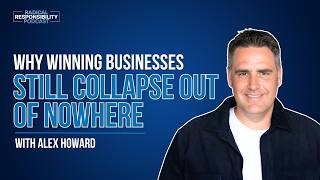
Therapist Alex Howard turned down a BBC deal to keep control of his business. He built the Optimum Health Clinic and runs large online conferences on fatigue and trauma, which became his main way to find customers and make money. He also shares what went wrong with a cryptocurrency charity venture.
Chapters
I was sort of persuaded to put quite a large chunk, I mean, about $40,000, I think it was, into Bitcoin in 2012. And of course the market crashes on me. Literally the day I go in is the day that Mt. Gox goes down and the whole thing kind of crashes on me. So I've then lost like $25,000 within a few hours. This is the worst thing I've ever done. And then long story cut short, over about 6 months, I kept trying to trade my position and every time I traded up, I was on the wrong side of the trade and I lost money. But anyway, in the end, I managed to get my money out with a sort of modest, whatever it was, like 15, 20% profit or something. At the time, it felt like the most reckless, stupid decision of my life. If I had just held that original Bitcoin I had, I'd be on about $12 million now of crypto.
Alex Howard was a prodigy of clinical therapy, treating patients across 50 countries by his 20s. But he quickly hit the classic entrepreneurial trap, spending all of his time managing a business instead of doing the healing work he loved. He even walked away from a major television deal with the BBC just to protect his autonomy, eventually pivoting to build online conferences that have reached over a million people worldwide. In this conversation, we get into the messy reality of scaling a heart-centered business, navigating cash flow pressures, and what it truly takes to grow your platform without compromising on your ethical standards. My name is Dr. Fleet Maull, your co-host for this session, and I'm really thrilled to be here with friend and colleague Alex Howard. Welcome, Alex.
Hi Fleet, thanks for having me.
Oh, thrilled to have another conversation. We get to have a lot of these conversations between your super conferences and I'm particularly excited to talk to you about entrepreneurship and entrepreneurial mastery today. I'd love to start a little bit with your background. Now we've done interviews more focused on your, your health and wellbeing work and the Optimum Health Clinic and so forth, and your trauma super conference and other conferences like the Anxiety Super Conference and others. But today we're focusing on the entrepreneurship aspect of it. So feel free to share a little bit of your story 'cause I know your work came out of your own healing process of your need to heal yourself from a really debilitating form of chronic fatigue or ME. But still, that begs the question of how you moved or why you moved into becoming an entrepreneur and not only wanting to get your healing work out to others, but really building a business around it, a thriving business around it. And these very large conferences that you do and all the rest that you do. So I wonder if you could share something about, a little bit about your backstory in the context of how it inspired you to move into becoming a health and wellbeing entrepreneur, if you will.
Yeah, sure. Well, as you mentioned, I suffered from ME, chronic fatigue, a debilitating chronic illness in my teenage years. And that was a very, obviously very painful, but also very isolating and difficult experience, particularly because going back to the mid-'90s, there was really very little available in terms of solutions inspirational stories, effective frameworks for treating chronic fatigue and fatigue-related conditions. And I went on this very intense and proactive healing journey. I was ill for 2 years, basically waiting for someone else to find the answers, and then spent 5 years on this very intense and proactive committed healing journey. And on the other side, I really felt this compulsion to set up the organization that I felt had been missing. In the years that I had been ill. And, you know, it was also, you know, I'd graduated a degree in psychology. I'd done various training in NLP, hypnotherapy, coaching, psychotherapeutic approaches, and I'd figured out some pieces of the jigsaw to recovering from chronic illness. I started working with a colleague and friend at the time who was a nutritional therapist, and we kind of realized that this integrated approach of psychology work that I was doing and a functional medicine-based nutritional therapy approach that she was doing was quite a big part of that jigsaw. And so I set up the Optimum Health Clinic and, you know, I was ambitious and I had, you know, a couple of things that probably worth pointing out. I had overcome an illness that I was told it wasn't possible to overcome. So I had a strong sense of personal belief that I could do challenging and hard things. And I'd grown up with my mom being a single mom for the first 7 7 years of my life working 3 jobs. I was often the kid that didn't go on school trips 'cause we couldn't afford it. My clothes were always sort of secondhand, hand-me-down clothes from other kids. And I remember having one particularly big tantrum 'cause I couldn't have a pair of designer trainers and then eventually getting a pair of designer trainers that were Nikes, but I couldn't have the Nike Airs. So I wrote Air underneath the word Nike to try and upgrade my trainers. Anyone knows the Enneagram and any type 3, so I had this big mission of something that I was very passionate about. I had a sense of self-belief and I have this sort of tough, in different ways, childhood where I was like, I just don't want to live in poverty. I know what it is to not have enough. And of course then the reality is one starts their entrepreneurial career and they live in even more poverty than they expected. I remember many times in that first year of going to the supermarket to get to the checkout, and I'd go to pay for the food and my card would get declined. And then I'd, it'd be a game of how many things had to come out of the basket until I could get the card to go through. And that was also before self-checkouts. There was like, there's someone there in front of you, like, can you run the card again please to see if it goes through? It was, so it was super tough. It was super, super tough. I was 20, I'd literally come straight outta university. I'd had a summer job working 15 hours a week in a health food store. So that was the only, kind of paid in, you know, I'd had a paper round and other things, but I mean like an actual job where I had like a sort of contract and so on. And I think it's fair to say that I have pretty much made every single well-trodden mistake that entrepreneurs make along the way. And I still make some of them today, but 20 years later, I've definitely learned a few things. And I sort of consider myself a therapist or a sort of content creator, whatever you want to call it, very much first and an entrepreneur second. But I quickly came to realize that if I wanted to bring my ideas into the world and I wanted to do it my way on my terms, then I was going to have to build the platforms to do that. And I, you know, relatively early in my career, I was sort of a budding TV fronting TV shows using psychology, but also so presenting. And I did a big budget pilot, then I was offered a series by the BBC and I quickly realized that not having control meant that I would have to compromise and I couldn't do then things perhaps to the ethical moral standard that I wanted to do them, but I also didn't have the autonomy that I wanted. And so right through my career, a sort of defining thing has been wanting to build the systems and build the organizations that then give me the freedom to do things the way that I want to do them.
So you sacrificed becoming the British Dr. Phil to preserve your autonomy.
I don't think I'd ever be, have been as good as a Dr. Phil, but that's a very kind perspective of how you might look at it.
So, well, yours is a really classic entrepreneurial origin story. Clearly both the desire to not remain in poverty and not, you know, carry that forward into your next generation and for your own children and so forth, as well as You know, having that belief in yourself and the sense of possibility. So re— really a classic entrepreneurial origin story. Were there any points along the way in the earlier years of beginning your entrepreneurial journey where you mentioned making all the classic mistakes that entrepreneurs make? And many of us do learn, most of us learn by those mistakes. One of the reasons for the summit is that so everybody didn't have to repeat all the same mistakes, we could actually learn from each other and shorten the journey a little bit. But I'm wondering if there are any of those that led to, you know, really putting your, your business at exit existential threat in the early days? Were there any moments where it almost fell apart or you almost gave up? Or—
I have never considered giving up because the alternative is so much worse. The idea of going to work for someone, I'm sure this would be true of you as well, Fleet. At this point, I am so utterly unemployable. It is, I wouldn't even know where to start. But I've had some incredibly tough chapters in my entrepreneurial careers, no question about that. And you know, there's been times where I just, you know, I backed something with a lot of energy and I just totally got it wrong. You know, those times have been tough. You know, many times over the years having ambition and ideas ahead of my ability to execute and then the inevitable cash flow pressures that come from that or being overly stretched and trying to do too many things at once. So many people stories of putting the wrong people in the wrong roles and, you know, the challenges that come from that. You know, if I think back to the early years, the early, and I think a lot of entrepreneurs or a lot of health entrepreneurs, let's say, or people that are specialist subject matters people, I think often have this experience where you can get through those first stages of growth by being just really good at what you do and really passionate about what you do. And in the early years of the Optimum Health Clinic, there were 3 of us. There was myself, there was Nikki Gratrix, who was the original director of nutrition, and then there was Anna Daszynski, who was the original director of psychology. Who now 20 years later still runs our therapeutic coaching practitioner training. And we were all looking back, we were all in our, I mean, Anna and I were in our 20s and Nikki was in her early 30s. We were exceptional practitioners. I mean, we were sort of, it sounds a bit arrogant, but I think it's just an objective truth. We were outstandingly good practitioners and particularly Anna and I, for two people so young, we just really had a lot of talent for what we were doing. But then you try and scale that to more people, right? You go for that transition in a business where you can't do everything yourself, particularly if your business is effectively selling people as a resource. How you find those people, how you train those people, how you retain those people, how you protect the standard of those people. And for me, as someone that really loved and still loves over 20 years later, doing one-on-one therapeutic work with people, sort of finding this point 3 or 4 years in where I'm spending nearly all of my time managing other people to do the thing that I love to do, not getting to do it myself. And I'm making less money and they're being ungracious at me about it. And the patients are unhappy, they're not seeing me. It's like, so that was definitely for quite a while.
One of those scratch your head moments in the entrepreneurial journey. What am I doing?
But everyone's unhappy, right? I'm unhappy. Practitioners seem to be unhappy. Clients seem to be unhappy. And then it's that thing of like, do we go back to just being a couple of 2 or 3 practitioners that are just, you know, you just keep putting the prices up more and more and that's how you control the sort of supply demand challenge. Or do you grow through that phase? And then effectively what you've got to do is you've got to build a finance department, a marketing department, an operations department, you know, a training department and all the pieces that it needs. And a clinic business where you're scaling practitioners, in my opinion, only really works 1, 2, 3 people or 20 to 30 people plus and anywhere in between that and it's a disaster.
So we were talking before we got started here about, you know, some of the challenges we're all facing now in the health and wellbeing space. Although we always hear it's a growing market and huge interest, but at least in the world we're in around healing and healing trauma, health and wellbeing, life optimization and so forth. And in the world of online summits and conferences and courses and all that, we do begin to get the impression we're all kind of circulating the same customer base. And especially when we both have businesses where, you know, we're reaching a lot of customers. It's a large-scale B2C business. And I think both of us would like to add some more kind of high-ticket offers and kind of sustained revenue into our business picture. But we built our businesses in the B2C world. So, you know, getting the customer acquisition costs are getting much higher in many ways. Both through affiliate marketing and through paid advertising on Meta or Google or other— YouTube and so forth. And so given these pressures on our business, I'm wondering what you think some of the important strategies are and how we can leverage strategies to really create a loyal customer base and one where we're thriving and feel good about our businesses, our customers feel good about us, rather than just having a transactional approach to growth, right? But we're really building something and building a loyal customer base and community. And what do you think some of the keys to that are?
Yeah, it's a good question. I think part of it comes down to lots of pieces to this jigsaw. I mean, part of it is just, you know, paid advertising used to be cheap and now it's expensive. Hopefully it's gonna come down in coming years. It probably won't. And that just makes it more difficult. I think also the market is much more saturated. Like there's a lot more people, like when my reset program came out, 6 years ago, I guess it is now, it would, I think Irene Lyon probably was the first person to do an online program around nervous system regulation. I'm not saying I was the second, but I was certainly the second major one. And I think Reset's probably the globally best-selling program in that market. There was a lot of demand and we create, we pumped that demand by educating people about that need. And there wasn't a lot of supply in terms of options. And that has got much more challenging as lots more products have flooded the market. What I will say though, in answer to your question, how I'm trying see it at this chapter is it's almost going back to real business fundamentals, right? How good is the actual product? There's lots of people doing online summits now. Most of those on, I mean, I'm sure you get the same as I get, which is almost every day now I get an invite to speak at an online summit and I speak on maybe, I don't know, 20 a year or something. So, you know, we're turning down, you know, probably 90, 95% of the requests that we get. And most of these events are, sort of copycat type events. They don't have good sets of speakers. They're not well put together. The interviewers, I mean, one of the, what for me, one of the big red flags is interviewers who are really just constantly trying to insert themselves and trying to build their own profile on the back of the guests. Like, you know, one of the reasons I love talking to you, you know, you are a very skilled interviewer. I hope I'm a good interviewer. And so really coming back to making the product as good as it can be, like you and I were talking about before we started recording around memberships and around how you genuinely make that membership a valuable experience for the people that are in the membership. I think it is also, you know, one of the things I think we've all had to sort of figure out in recent years. We had a gold rush in 2020. I did my first online summit in 2019, which was the Fatigue Super Conference. As we mentioned earlier, part of my background is specializing in fatigue-related conditions. We had 42,500 people sign up for that conference, and I thought that was incredible. And we then decided to do an event on trauma, which was in end of June, early July 2020, which of course was whatever that was, 3, 4 months into the first COVID lockdown. I basically thought, well, I don't know if trauma's as big a subject as fatigue. Hopefully we'll do really well if we end up with the same as we had on fatigue. We ended up with 185,000 people on that event. I made, turned over more money. I mean, obviously you have some cost in an event like that, But I turned over more money in that event than I think I probably turned over ever in a year before. We did nearly just under $1 million on the event and we did about another $500,000 on the back end of the event. So it's easy, you know, the optimists amongst us go, well, that's just how it's gonna be for the next however many years. So there's a kind of like, right, we're gonna do, we're gonna do go from one event a year to two events to four to eight to 12 to, you know, and we're gonna spend all or even more money on paid advertising and we're gonna find another 100 amazing affiliate partners, you know, all that. And then of course there's a reality that one's optimism, one's, as I know you are, I'm phenomenally hardworking, so I don't have any problem with putting in the hours, managing the complexities, the details and all of that kind of stuff. But one's optimism and one's hard work doesn't override the realities in the market.
Right?
And so it's also being a grownup, which is often hard for those of us that have that more childlike, right? Let's just go and make stuff happen and really try to see the trends and where's the industry going. I was just having a conversation with one of my oldest friends last week.
What if transformation isn't just about thinking differently, but feeling differently? Science shows us that true change happens when we align not just our minds, but also the neural networks in our hearts and guts. This heart-mind connection is the key to deeper healing, resilience, and expanded awareness. That's why I created the HeartMind All Access Membership and Community. A space designed to help you rewire your nervous system, cultivate heart intelligence, and live with greater clarity and purpose. With over 1,000 hours of transformational teachings specifically curated to meet your needs, you'll learn from world-renowned meditation teachers, neuroscientists, and experts in neuroplasticity, all sharing powerful tools to help you shift your mindset and Heartset: Regulate Your Emotions and Unlock Your Full Potential. You'll also gain unlimited access to every summit and course we've ever produced, a treasure trove of wisdom worth over $10,000 and growing, plus live gatherings and an inspiring global community to support your journey. If you're ready to step into a more heart-centered, connected, and conscious life, I invite you to join us. Click the link to learn more and start your journey today.
We were at university together. We were very close friends at university. And, you know, she has become a very successful occupational psychologist. I think she has an MBA as well. She also happens to be a Black woman. And, you know, she's had this massive wave of DEI work over the last 4 or 5 years. Her business has sort of grown, you know, exponentially. She's published a successful book on the subject. And we were just having the conversation last week as, as fast and as high as that wave rode. And of course, when George Floyd was murdered, that was the sort of a big tipping point in that world, which ironically was around the same time that we had the same wave in terms of conferences. She's now facing a reality where DEI programs are effectively becoming almost, as I understand it, almost illegal in the US, which is where some of her work is. So, you know, one can feel the victim, one can feel it's not fair, one can feel, you know, but the reality is there are trends, there are things that blow up, there are things that crash down, and one has to be really careful where they position themselves against those moving trends. And I certainly, my experience is one typically gets this right in hindsight, but it's trying to not over-leverage and take so much risk, but at the same time, one wants to ride the waves when they're coming along.
Well, I think you, you brought out a, a really important point there of kind of how we can integrate that child, somewhat childlike in a positive sense, enthusiasm, sense of possibility of the entrepreneurial mindset with being a grownup and not letting changes in the marketplace throw us into a victim mindset, but realizing this is the nature of markets are constantly changing and we have to figure that out and we have to be adaptable and nimble. Absolutely.
Yeah. My litmus test to that is my wife's eyes. So there are times I come home from work and I'm like, oh my God, I got this amazing idea. And when I get the eye roll, I sort of know that I'm potentially not quite landed. And then every so often I get the eyes light up and that's often the clue. But I just, 'cause I think it builds on this point a little bit more. So I remember 2012, it must have been, And I was about to go on a meditation retreat with a couple of very close friends of mine and they were buzzing about Bitcoin and they were like, oh my God, like it's a new currency, it's this, it's that. And you know, they'd both got in like really early and had already made quite a bit of money with it. And I was sort of persuaded to put quite a large chunk of, I mean about $40,000 I think it was into Bitcoin in 2012. And of course the market crashes on me. Like the, literally the day I go in is the day that Mt. Gox goes down and the whole thing kind of crashes on me. So I've then lost like 25 grand within a few hours. This is the the worst thing I've ever done. And then long story cut short, over about 6 months, I kept trying to trade my position and every time I traded it, I was on the wrong side of the trade and I lost money. But anyway, in the end I managed to get my money out with a sort of modest, whatever it was, like 15, 20% profit or something. At the time it felt like the most reckless, stupid decision of my life. If I had just held that original Bitcoin I had, I'd be on about $12 million now of crypto. I then in 2017, I think it was. This is really the only entrepreneurial endeavor that I've ever done, which was completely outside of the health, wellbeing, self-development space, which was that we tried to launch a cryptocurrency to bring more transparency to charitable giving. And actually though, I won't get too technical here 'cause I'm not that technical. I was the sales guy and the hustler, not the techie that was making it happen. But If you think about how blockchain is used, blockchain can be used to bring transparency. Most of the cryptocurrencies that get created, there's no real use case for the cryptocurrency. But actually charitable giving is a really robust use case because people often don't give money. I've been giving this pitch in years. I've been trying to raise money for this in years. But my pitch was basically people don't give money to charity because they're not confident where that money's going to get spent. And if you could have total confidence that you give money to a charity and you could see where the money's spent, you could even vote that you were satisfied that would then release the funds. That's a genuine use case of blockchain. So I ended up raising about $1 million to launch this cryptocurrency. We had this amazing board of advisors, including one of the, one of the guys behind the Ice Bucket Challenge. We got delayed in coming to market and one of our competitors, our main competitor, went to market a couple of months before us. On their initial coin offering, they raised $20 million. So we're like, this is gonna be amazing. The whole market, this is my luck with crypto. The whole market crashes by the time we come out, we struggle to even raise our minimum. The point of the story that I'm making is that you can have a great idea, you can be deeply passionate about something. I spent a year traveling around the world raising money for this project, but you can have the wrong timing. And that is the, you know, for all the positive stuff that people hear at summits like this, marketing conferences and sort of business influencers, there is a tough side, which is sometimes you're just on the wrong side of something and that's hard. And it took me personally about 6 months to rebuild emotionally from that whole experience of a year of working hard I'd ever worked in my life. I put a lot of my own money into it. And actually the game, just to complete the cycle on this story, the first conference that I mentioned a little bit earlier, the Fatigue Super Conference, was basically me just wanting to catch my breath and do something that was easy, right? And so, you know, an entrepreneurial journey has a lot of twists and turns, and sometimes the things that we think are the worst turns are actually turning us towards the next opportunity and the next exciting ride.
Absolutely. And I'm glad we spent time with that because I think it's so foundational to the entrepreneurial mindset and entrepreneurial success is really that pathway into becoming fully adult and be willing to embrace what I call radical responsibility for all the circumstances we face day in and day out. And there'll be some that we can see we play, we had a hand in creating, right? But other things just change on us and we just have to be willing to flow with it and be nimble and be agile and so forth. So as tough as things get, there can be, and you know, even if one is really focused on delivering a quality product or a quality service into the world, and one is really passionate about that and has a high level of ethics and just passionate about really adding value when it comes to being successful in business terms, one can be tempted to just go with any kind of marketing that would work, right? Because it just seems so tough. And yet I know you have remained committed to authenticity in marketing. I know, uh, you and I are part of a small informal mastermind where we have a wonderful group of characters, uh, kind of a rogues gallery of, of marketers in a positive sense. And one of them, uh, tell Hargrave, Right. Who has Marketing for Hippies is, is the name, and he's got long hair himself. But I think another way to translate his approach, he's really focused on authentic marketing and authenticity in marketing. So I wonder if you could talk about the importance of that in terms of long-term success and sustainable success.
Yeah. Yeah. I think the question is, are you trying to, is one trying to make a quick buck? Or is someone trying to build a long-term brand? And for me, particularly in 2025, like one's personal brand is everything. And so there's tons of things that I've turned down or opportunities to be involved in things where I've been like, you know, even there's money on the table being like, but that, I don't think this is gonna play out well in the next, you know, 5, 10, 20 years' time. It's also been interesting as an Englishman, The tone of marketing, which is palatable this side of the pond from what is in the US, is really different as well. And so a lot of the marketing books that I've read over the years and webinars that I've watched and sort of informal trainings that I've sort of followed, I've had to both in terms of the English or the European audience, although over half our customers are in the US, but also the sectors that we're in, right? It's like working with complex chronic illnesses in the UK, there's what's called the Advertising Standards Association and there's a whole load of things you just can't say. Like you can't legally say that you're gonna cure someone of cancer, and rightly so. Like unless you've got totally robust, like randomized controlled trials, you shouldn't be able to come out and say those things. And so there's the sort of moral ethical side of it. There's also the legal side of it, I would say, as, as well. It struck me in recent years as well that most of my friends and a number of my family are also on my mailing list. It's because they've signed up for something that we've done at some point over the years. So kind of my litmus test is, am I okay with everyone that, and 'cause you know, we do a lot of affiliate marketing like you do. Like, am I okay with everyone that I know reading this email? Am I okay with, and the most, when I approve every email that goes out from our list, and it happens less now 'cause the team are well trained on this, but nearly always the things that I change are toning down claims, right? So affiliates send us the proposed copy And, you know, the team will basically rewrite it to make it more moderate and to make it more realistic. But what I've also found is beyond just like doing what's morally and ethically correct, there is huge power in authenticity as well. And because in our industry, almost more than any other industry, people are buying people. And if they feel that you're inauthentic or they feel that you're, full of bullshit, or they feel that you sort of one minute you're endorsing this thing and the next minute you're endorsing something completely opposite to that, then people don't trust you. And to me, I would rather make a lot less money and have an audience that actually trusts me, that wants to be around my work for the coming decades than just telling people what they want to hear to make that short-term money. I remember back in my mid-20s, I'm a little bit delicate how I tell this story, but My mentor who I did some of my original therapeutic training with developed a methodology for working that was applied in addition to other areas to working with ME chronic fatigue and made a lot of very inflated claims. What he'd do is he'd run a 3-day workshop, get people at a sort of peak moment at the end of 3 days, and then film the testimonials. And then all the testimonials were basically people on a post-workshop high, and then they would almost consistently have crashes afterwards and then come to our clinic saying, I felt great for 3 days and now I feel worse than ever. And I really saw this whole thing rise up. He made quite, I mean, not, I wouldn't say huge amounts of money, but insignificant money in the short term while I was running this sort of struggling clinic picking up the aftereffects of this. But before being canceled was a thing, he basically got canceled to the point that in the government guidelines around healthcare in this country, the methodology he created is explicitly stated as something to avoid. And so it was a big thing for me in my 20s, seeing my mentor go down a path. I was like, I don't feel this is right. I feel that this is effectively lying to people to get them to invest in something, and it's having real physical harm in their lives. I take, toed this very moderate, measured sort of middle of the road path. But you know, not that it's, it's competition, but my career is in a very different point at this to his because of that more authentic and more measured approach.
Wonderful and very, very illuminating story. So I know what one of the things that really expanded your business was that first trauma super conference that you did. And before that you did one on fatigue, similar timing to our businesses. Our first summit that really took off for HeartMind, I've been involved in a lot of summits in the past with other people, but was also going into the pandemic lockdowns in 2020. And our first summit, the Global Resilience Summit, was successful, but it wasn't as successful as your trauma super conference, but it got us outta debt and got us rolling, right? Our big summit came Later in, let's see, '24, '23, '22, we had our first psychedelic assistant.
I was gonna say, sort of psychedelics for you, wasn't it? Yeah.
That was our first million-dollar-plus launch, right? And by then I was seasoned enough to not to expect that I was just gonna be repeating that, making it bigger and bigger every year. I knew it was a timing thing and it wasn't likely to be as big the next year, which it wasn't. But when you have those initial successes, you can really get stars in your eyes, right? But at any rate, But these, the summits have been great business builders for us. And so I wondered if, and again, it's, you know, there's a certain level of saturation now and I get approached constantly and there's all kinds of people trying to kind of duplicate what we're doing. And you know, which is natural. No, no resentment around that. And you know, the cream will always rise to the top. But nonetheless, I wonder if you could just talk about doing these large-scale online conferences. As a business building, list building, brand building vehicle.
Yeah, yeah. There's nothing really like it, I would say, to really— because the thing is, what I think works so well about that model, if you've built the affiliate network to do this, is you've got whatever it is, 50 speakers that all have their own mailing list that are all promoting an event because they're speaking as part of the event. And there's nothing quite like that in terms of the buy-in of their audience, that they want to see the person that they follow, but there's all these other great people speaking on that event. And if you have good interviewers and good guests and you make good content, they are genuinely valuable places to learn. But then what you've got, that first event we had, or second event, the first trauma event, we had 185,000 people on a mailing list. I then marketed my 12-week online coaching program on the back of that. And we've got hundreds and hundreds of people then signing up into that program. And then our practitioner training program in therapeutic coaching, which had been around 15 students a year for 15 years, suddenly goes to 60 students a year, to 100 students a year, and just kind of built from that point. What I will say though, as a bit of a note of caution and something that's been part of my own sort of business reflections in very recent time is for us, the success of conferences has also bred a sort Laziness is not the wrong word because we're anything but lazy, but maybe a complacency around other forms of lead generation into the business. So I was just doing an analysis last week and about 65 to 70% of people that come into our practitioner training program, their origin with our business is via a conference. So if you don't follow, if you don't sign up for online conferences, there's lots of people that are interested in this stuff that just don't sign up for online conferences. You likely don't even really know that program exists. So one of the things that we've been trying to do much more recently is go, okay, conferences are a really good acquisition channel for us. And particularly for us, like you, we've built an infrastructure, you know, we've got video editors, transcribers, we've got the tech platform, right? So for us to make each new content is a fraction of the work that it would be for someone that's doing that from scratch. But rather than seeing that as our business and going, we're just a conference company that do some stuff on the backend, like the reset program and therapeutic coaching and so on, to see each of those businesses as their own business where conferences are one of the ways that we generate clients, but we have hopefully 4 or 5 other ways of generating customers into those businesses to then de-risk that dependence upon conferences.
I think that's a very important point and just overall diversification of lead acquisition, customer acquisition, revenue and so forth are really important in a business and it's really easy to get stuck on one thing and think this is gonna keep working forever. Whatever, right? But it never turns out that way. You know, unless you're, I don't know, McDonald's and you perfect that particular delivery system and people seem to have an unending appetite for hamburgers and fries. But for most of us, we need to diversify.
I would also say without ever sort of picking at your metaphor, that business model works because McDonald's, okay, they've got all the other stuff, you know, they've got the recipes and they've got the training and everything, but they're picking the right locations. As long as they get in the right locations and the brand stays relevant, Our problem is how we, how like you and I get customers is primarily through affiliate marketing and through paid advertising. Affiliate marketing is a capped market, kind of has a ceiling on the market 'cause there's only probably, I mean there's probably 100 or 200 affiliates we've worked with. There's probably only 20 or 30 that really drive meaningful traffic. And then you've got, and we obviously like you do work with all of those. And I know our partner partnership managers talk to each other and like, can you put us in touch with so-and-so? We'll put you in touch with so-and-so. And then we are dependent upon the whims of Mark Zuckerberg and various other people about what's happening with, you know, and also the iOS update 4 or so years ago, which had a big impact as well. So we are vulnerable to variables that we actually can't de-risk. Well, we can't de-risk them directly. We de-risk them by having multiple pathways. And that's challenging because when something's working, My mistake over the years has been once it's working, it's gonna keep working forever.
Just to stay with the large online conferences or any really online conferences, even smaller ones for a moment. So when you started yours, you had several decades of deep clinical experience behind you. And so you were a content expert and you were recruiting other content experts to have dialogues and create those conferences. Similar to you, I'm a generation ahead of you. I had 5 decades of experience in this field. And so when I started doing the same, I was a content expert having conversations with other content experts. And actually I found the speakers really appreciate being interviewed by someone that knows what they're talking about and is really able to be very conversational with the person's work and the, and the really the roots and the research behind someone's work and so forth. So, you know, more power to it if a young person can get on there and start a summit and start interviewing people and build their credibility, as you said, kind of on the backs of their on their speakers if they can figure out how to do that. But I think it really is, if one wants to do this in a genuine way, I think it really is important to try to figure out some alignment between who one is and what one's learning and one's experience and kind of working your way into that. One of the things we're thinking of doing in business terms is I've always had the idea that we're, we've gotten pretty good about putting on these summits. We should train other people to do so. I had a reluctance because the last thing we need is more competitors, right? It's kind of saturated as it is. But I think there could be a good business strategy for people that, you know, a lot of times in the world of marketing, you really encourage the niche down and really niche down because the narrower your niche is, the less competition there is and the easier it is to dominate that niche. You know, I did a lot of training with Jeff Walker, as many people did, who was one of the authorities in this field, and he really emphasizes And he has examples of people, students of his in Mark, who have niches that are just so obscure that you're surprised. But you know, it's a global market and even in this obscure little, I remember one example was, I think this was from the UK, someone who was teaching women to sew and make sort of Victorian clothing, right? And so you'd think that's a pretty narrow niche, but it turns out there's at least several million people in the world interested in it. And this woman had a 7-figure business doing that, right? By really niching down. So I'm thinking about possibly, you know, developing a program to train people to use online summits, but in a very narrow niche-down way to build their market and build their credibility and so forth. So, so anyway, I think there are a lot of possibilities to go with the model that, that you and I have kind of built our businesses on. But of course, We need to expand, as you said. And I'm wondering, we've kind of been talking about this already a little bit, but, you know, you, you've been building Optimum Health Clinic for decades. You've been training other clinicians to build out that business. So it wasn't just you and your primary partner doing it. Then your business kind of really accelerated with the first big trauma super conference. And you've now had to deal with all the issues of scaling a business and building teams and getting, as you said, getting the right people in the right seats or finding out you have the wrong people in the wrong seats. So what are some of the struggles that you've dealt with in scaling? And you know, it's like what will allow us to be a really successful startup entrepreneur to get some passionate idea out into the world and start having success doing so is not the same thing that'll help us scale a business to the next level. In fact, sometimes we're not even the right person to do that. I mean, most of us have to keep transforming ourselves to keep going for a while till we get to that point where if we wanna hire a CEO, we could do that. But for most of us, we have to take a journey and keep reinventing ourselves to be able to effectively manage our business at the next level of scale. So I wonder if you could talk about that journey a little bit for yourself, how it's been for you.
Yeah, really hard and quite painful. I think the challenge is that, so I tried business partnerships for a long time and I only had bad experiences in the round. You know, I had good moments and I had, you know, people that I really enjoyed working with as business partners. But in the end, I always found that I worked harder and I took more responsibility. Therefore, disproportionate amounts of work ended up on my plate. And in the end, although I'm a pretty easygoing guy, I would get resentful and frustrated with it. And so about on the back of the first trauma conference actually, and that put me in a cash-rich position for the first time in really in my life for that scale. I had a bunch of investors in one of the businesses. I bought all those investors out. I had gifted the clinic to a registered charity and it sat under that charity for about, I think it was about 7 years and it really floundered under the charity. It needed cash injection, it needed leadership. So having gifted it for nothing, I bought it back for a 6-figure sum so I could bring it back and make it what I believed it could become. And these days, I have 100% ownership in, well, my wife is a very silent partner, but effectively have 100% ownership and control of my entire business group. And that's what works for me. And I have 3 of the most senior leaders in the business have all worked with me for over 15 years. So these are longstanding friendships and partnerships and they're well paid, well looked after, but I own the businesses and they all have seen the level pressure, stress, risk that I've took over the years and have never in the end resented the fact that they didn't want that bit. What they wanted was to do what they loved and have the predictability and the guarantee of a well-paid salary regardless of what was happening in the overall picture. So that's how I've ended up doing it in terms of partnerships. In terms of bringing in people, I know, sounds terrible, I no longer really trust my own judgment in terms of hiring the most senior roles in the business. So these days, whereas I used to rather arrogantly go, I know what I'm doing, and made a number of poor choices over the years. These days I really have a trusted, robust process of bringing in sometimes external advisors, using internal advisors. And you know, that very clichéd saying of hire slowly and fire quickly is something that I really live by these days. Because when you get the wrong person in a senior role in your business, when it's a relatively small business, You know, if you've got hundreds of millions of turnover business, you can maneuver those people around and you can afford to carry the dead weight. But when you are in a sort of, you know, sort of millions of revenue or maybe even if you're in the tens of millions, so much destruction can be done. And I'm not saying, sorry, they're bad people or dishonest people, just the wrong person in the wrong role. And that has been, these days I am incredibly careful about who I place in at least, you know, more junior roles. The obviously the impact is reduced, but Finding those people is really hard. Really hard.
Well, we're kind of near the end of our time and this has been incredibly illuminating. There's so many other questions I'd like to ask you and to continue on so our audience can find out more about you and about your work. And I know you have a marketing program that you do once a year and you have a free gift offer. So tell us about where they can find out more about your work and about that offer.
Yeah, thanks Fleet. The best place to go is alexhoward.com/heartmind. Created a download page for people attending this event where you can sign up for a free 1-hour webinar with me where I walk you through my key business lessons, particularly in the context of authentic marketing. So if you're looking how to communicate yourself and your voice in the world to scale your lead generation, but do it in a way that feels authentic to you, then if you sign up for this webinar, then you'll get the best of my experience around that. So it's just alexhoward.com/heartmind.
Wonderful. And also at alexhoward.com, they can find out about all your other work and the conferences and everything else. Yeah. Wonderful. Well, thank you so much, Alex Howard. It's always a joy to have these conversations with you, and I really appreciate our interrelated business endeavors and so forth. It's a joy to be in the entrepreneurial space with you.
Oh, bless you, Fleet. I often say to people would be amazed how good of friends you can be with and how collaborative you can be with your direct competitors. But I very much enjoy our friendship and our collaborations. And the way that we've managed to make the pond bigger rather than sort of fighting over things. And yeah, I very much enjoy and appreciate our friendship.
Great. Be well. Taking radical responsibility for our lives means taking action. And today you can start by helping us grow this community. If these insights into healing and transformation have served you, please subscribe on YouTube and follow us on Apple Podcasts and Spotify. While you're there, leave us a review It takes 30 seconds, but it's the most powerful way to help our message reach someone else seeking deeper self-awareness. Thank you for being part of the journey towards lasting change. Thank you for joining me on the Radical Responsibility Podcast. Remember, real change happens when we commit to our growth, face our challenges with compassion, and stay open to transformation. If you found this episode helpful, I encourage you to subscribe and help us spread the message of healing healing and personal empowerment. Stay grounded, stay present, and stay true to you. Take care.
More from Fleet



What Oregon Learned When Legal Psilocybin Access Had to Work in the Real World - Angie Allbee


Eric Zimmer┃How a Little Becomes a Lot: The Small Choices That Transform Your Life

What if anxiety isn’t something to eliminate, but something we can learn to work with differently?


What if aging, energy, and performance are more programmable than we’ve been taught to believe?

Dave Asprey┃From Survival to Human Upgrade: How Personalized Biohacking Can Transform Longevity

What if spiritual awakening isn’t about escaping your humanity, but becoming more present within it?
