COPING WITH GRIEF with Heather Prince, Life Harmony Coach

Heather Prince walks through the five stages of grief: denial, anger, bargaining, depression, and acceptance. She shares her own losses—a marriage breakdown, moving from her family home, and her father's death—and explains common grief reactions, myths, and coping strategies like support groups and allowing yourself to feel.
Chapters
The Kubler-Ross model, or the 5 stages of grief, is a series of emotional stages experienced by survivors of an intimate's death, wherein the 5 stages are denial, anger, bargaining, depression, and finally acceptance. There's millions of online products teaching people, informing people, a variety of stuff about life, but how to teach about loss? My name is Heather Prince and I am a Life Harmony Coach. 4 years ago, I began my journey of grief over the loss of a 34-year-old relationship when my marriage broke up and my 3 grown-up children left home. 2 years ago, I grieved over the loss of our family home when I moved to a new home on my own. And 2 weeks ago, my darling dad died at the grand old age of 92. And everyone keeps asking me how I coped, so I've decided to share some insights with you in this video. There is no right way to grieve. It's an individual process and a very natural part of life. Life will not be the same after a loss, but experiencing your grief will allow you to adjust to it. Grief lasts as long as it takes an individual to adjust to the changes in his or her life after the loss. It can take months or even years. Grief has no timetable. Thoughts, emotions, behaviours, and other responses may come and go. The stages of mourning and grief are universal and are experienced by people from all walks of life, and mourning occurs in response to an individual's own Terminal illness, the loss of a close relationship, or the death of a valued loved one, human or animal. In our bereavement, we spend different lengths of time working through each step and express each stage with different levels of intensity. The 5 stages do not necessarily occur in any specific order. We often move between stages before achieving A more peaceful acceptance of death. Many of us are not afforded the luxury of time required to achieve this final stage of grief, of acceptance. The death of your loved one might inspire you to evaluate your own feelings of mortality. Throughout each stage, a common thread of hope emerges. As long as there is life, there is hope. As long as there is hope, there is life. Many people do not experience the stages of grief in an exact order, and that's okay. The key to understanding the stages is not to feel like you must go through every one of them in precise order. Instead, it's more helpful to look at them as guides in the grieving process. It helps you understand and put into context where you are. Keep in mind all people grieve differently. Some people will wear their emotions on their sleeve and be outwardly emotional, others will experience their grief more internally and may not cry. You should try and not judge how a person experiences their grief as each person will experience it differently. Now the first reaction is denial and isolation. So if you learn of a terminal illness or a death of a cherished loved one, the first thing is, is to deny the reality of the situation. It's a normal reaction to rationalize overwhelming emotions. It's a defense mechanism that buffers the immediate shock. The second thing we feel is anger. As the masking effects of denial and isolation begin to wear, Reality and its pain re-emerge. We are not ready. The intense emotion is deflected from our vulnerable core, redirected and expressed instead as anger. The anger may be aimed at inanimate objects, complete strangers, friends or family. Anger may be directed at our dying or deceased loved one. Rationally, we know the person is not to be blamed, Emotionally, however, we may resent the person for causing us pain or for leaving us. We feel guilty for being angry, and this makes us even more angry. Remember, grieving is a personal process that has no time limit nor one right way to do it. The doctor who diagnosed the illness and was unable to cure the disease might become a convenient target for your anger. Health professionals deal with death and dying every day. Coping with loss is an ultimately deeply personal and singular experience. Nobody can help you go through it more easily or understand all the emotions that you're going through, but others can be there for you and help comfort you through this process. The best thing that you can do is allow yourself to heal by feeling the grief as it comes over you. Resisting it will only prolong the natural process of healing. Losing someone or something you love or care deeply about is very painful. You may experience all kinds of difficult emotions, and it may feel like the pain and sadness you're experiencing will never let up. These are normal reactions to significant loss, but while there is no right or wrong way to grieve, there are healthy ways to cope with the pain that in time can renew you and permit you to move on. Grief, as I've said, is a natural response to loss. It's the emotional suffering you feel when something or someone you love is taken away. The more significant the loss, the more intense the grief will be. I've spoken about death of a loved one, which is often the cause of the most intense type of grief, but any loss can cause grief, including divorce or relationship breakup, loss of health, losing a job, loss of financial stability, a miscarriage, retirement, death of a much-loved pet, loss of a cherished dream, a loved one's serious illness, loss of a friendship, loss of safety after trauma, or selling the family home. The more significant the loss, the more intense the grief. However, even subtle losses can lead to grief. For example, you might experience grief after moving away from home, graduating from college or university, changing jobs, selling your family home, or retiring from a career that you loved. Everyone grieves differently. How you grieve depends on many factors, including your personality and coping style, your life experience, your faith, and the nature of the loss. The grieving process takes time. Healing happens gradually. Feeling sad, frightened, or lonely is a normal reaction to loss. Crying doesn't mean that you're weak. You don't need to protect your family and friends by putting on a brave front. Showing your true feelings can help them and you. Another myth: if you don't cry, it means you aren't sorry about the loss. The fact is, crying is a normal response to sadness. But it's not the only one. Those who don't cry may feel the pain just as deeply as others. They may simply have other ways of showing it. And another myth: grief should last about a year. There's no right or wrong time frame for grieving. How long it takes can differ from person to person. If you are experiencing any of these emotions following a loss, it may help to know that your reaction is natural and that you'll heal in time. However, not everyone who grieves goes through all of these stages, and that's okay. Contrary to popular belief, you do not have to go through each stage in order to heal. In fact, some people resolve their grief without going through any of these stages. And if you do go through these stages of grief, you probably won't experience them in a neat, sequential order, so don't worry about what you should be feeling or which stage you're supposed to be in. Grief can be a roller coaster full of ups and downs, highs and lows. Like many roller coasters, the ride tends to be rougher in the beginning, but the lows may be deeper and longer. The difficult periods should become less intense and shorter as time goes by, but it takes time to work through a loss. Even years after a loss, especially at special events such as a family wedding or the birth of a child, we may still experience a strong sense of a huge void. While loss affects people in different ways, many experience the following symptoms when they're grieving. Just remember that almost anything that you experience in the early stages of grief is normal. Including feeling like you're going crazy, feeling like you're in a bad dream, or questioning your religious beliefs. There's shock and belief. Right after a loss, it can be hard to accept what happened. You may feel numb, have trouble believing that the loss really happened, or even deny the truth. If someone you love has died, you may keep expecting him or her to show up, even though you know that they're gone. And then there's sadness, profound sadness. It's probably the universally experienced symptom of grief. You may have feelings of emptiness, despair, yearning, or deep loneliness. You may also cry a lot or feel emotionally unstable. And then, as we've said, there's guilt, guilt about things you did or didn't say or do. You may also feel guilty about certain In fact, you might be feeling relieved when the person dies. You can join a support group. Grief can feel very lonely, even when you have loved ones around. Sharing your sorrow with others who have experienced similar losses can help. To find a bereavement support group in your area, contact local hospitals, hospices, funeral homes, and counselling centres. Here is a healing prayer that I love from a colleague, Jennifer Hoffman, and I'm sharing it with you to share with anyone that you feel needs healing, including yourself. I offer this gift of healing to you from my highest heart to yours, offered in a spirit of connection, wholeness, and divine unconditional Where you lack in faith, I send you the energy of trust. Where you have doubt, I send you the energy of confidence. Where you have chaos and discord, I send you the energy of peace. Where you are lost, I send you light to guide you on your path. Where you are sad and unhappy, I send you the energy of joy. Where you are confused, I send you the energy of clarity. Where you feel unworthy, I acknowledge your value and worthiness. Where you are wounded and afraid, I send you the healing power of divine grace. Where you feel alone, isolated, and rejected, I send you the energy of connection. Where you lack self-love, the knowledge of love, and the ability to give and receive love, I surround you with the divine truth of unconditional love, and I offer you and myself the gift of healing, release, closure, and divine unconditional love as we complete our healing and and karmic cycles with grace and ease. I send you oceans of love on this day where we have connected in this video. Thank you for your participation as we have taken this journey together. I help people achieve freedom from negative emotions associated with memories in the past, overcome fears, phobias, anxiety, remove their negative self-talk and disempowering beliefs that hold them back. I have gone through significant emotional transformation myself, which continues to drive my desire to help others to free themselves from their emotional constraints and live the life they want to live. I run workshops and work with clients on a one-to-one basis alongside being a mum And grandma. My name is Heather Prince, Life Harmony Coach. You can sign up for my regular newsletters on www.heatherprince.co.uk.
More from Heather


August 12 Eclipse 2026: Time to Let Go, Heal & Choose Yourself After Heartbreak


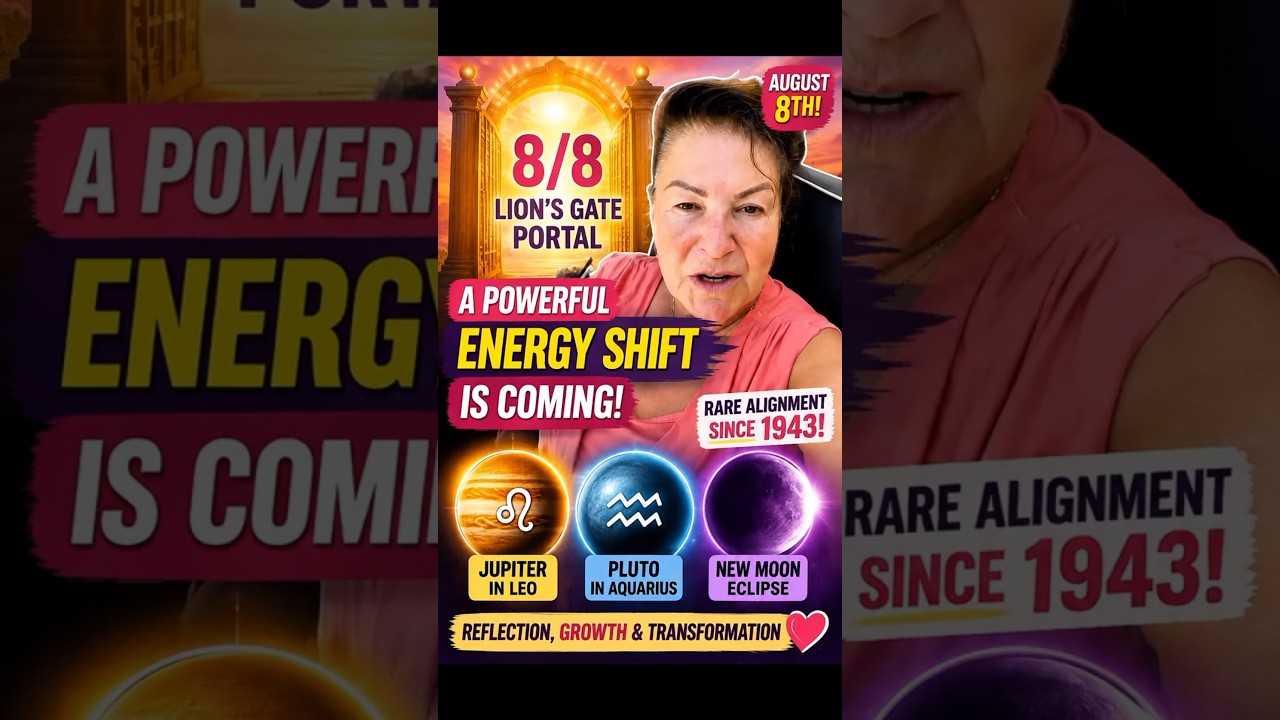


August 8, 2026 Is Not a Normal Day… The Lion’s Gate Portal Explained #shorts #august

Stop Repeating the Same Relationship Patterns | Heal Your Past & Attract Healthy Love #shorts