Boarding School Syndrome & The Outer Critic | Pete Walker's Complex PTSD | Inner | Piers Cross
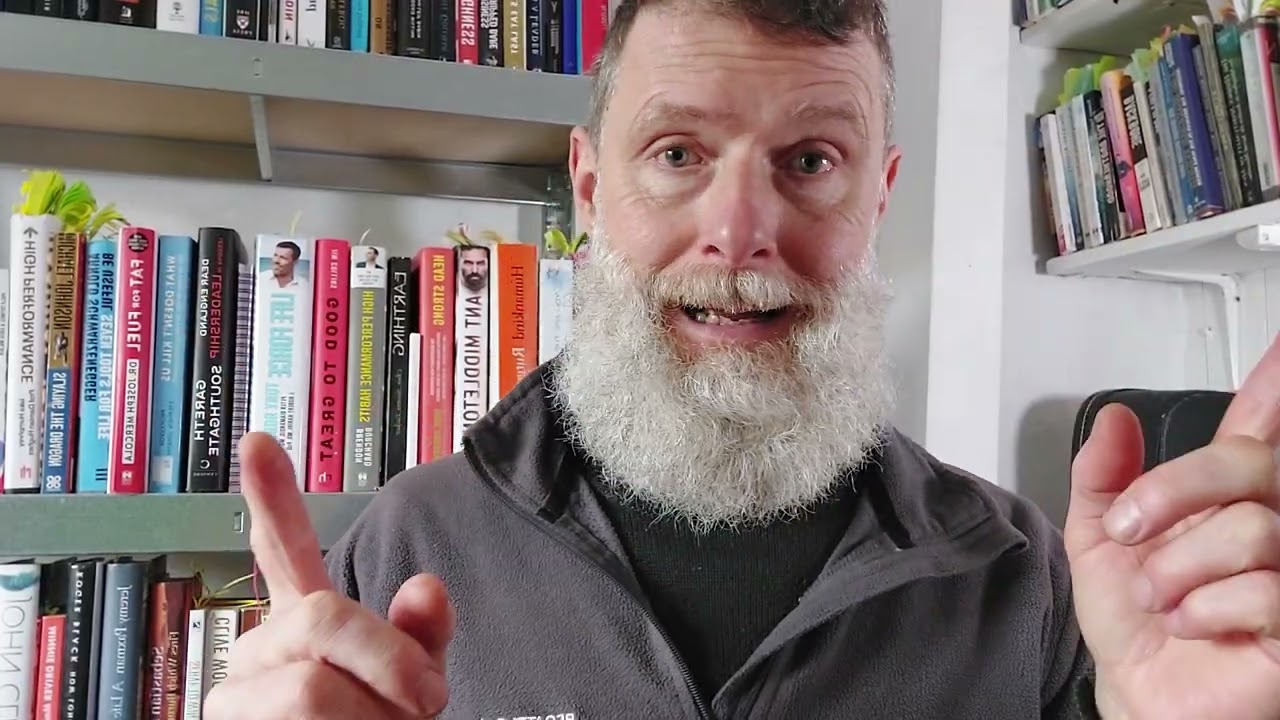
Piers Cross explores Pete Walker's concept of the outer critic, the habit of judging others as flawed or dangerous, and traces it to boarding school trauma and complex PTSD. He shows how unprocessed survival responses leak into constant criticism of others, and offers three fixes: grounding the nervous system, grieving trapped emotions, and building a new vision to calm it down.
Chapters
Okay, welcome. Today I wanted to offer some reflections about the outer critic and boarding school syndrome, and this comes from the work of Pete Walker in his book Complex PTSD: From Surviving to Thriving. And we've covered before— this was a couple of years ago— the inner critic, but Today I want to be talking about the outer critic, where this shows up, what some of the solutions are, and where we might see this manifest in the outside world. So enjoy. So yeah, the outer critic. Like I said, we've— I've talked about this, and I'll put this as the video at the end, the inner critic, and the outer critic is very similar to the inner critic in that, and I'll read the definition from Pete in a moment, but the inner critic is, it's all aimed at us, you're shit, you're not good enough, mine at boarding school, or basically till my 20s, was you're a piece of shit, so it's all outside. It's all aimed inside, sorry. The outer critic is aimed outside. So what that means is that you see someone's doing something, and maybe it's a neighbor, maybe it's your partner, and it's just like, oh my God, what are they doing? And a lot of people say, well, I don't have that outer critic, I'm not always critical of them. No, but you are often in your head And I think this is really key, so I want to unpack this a little bit today. I've been using this a lot with clients recently because it's been coming up in my own life as well. So essentially, if we— I'll read a couple of definitions out. So this is page 191 from Complex PTSD, and if you haven't read this, really recommend. It's genius, this book. So in CPTSD, complex PTSD, the critic can have 2 aspects: inner critic and outer critic. The inner critic is the part of your mind that views you as flawed and unworthy. The outer critic is the part that views everyone else as flawed and unworthy. When the outer critic is running your mind, people appear to be too awful and too dangerous to trust. He goes on to say, the outer critic is the counterpart of the self-esteem destroying inner critic. It uses the same programs of perfectionism and endangerment against others that your inner critic uses against yourself. Via its all-or-none programming, the outer critic rejects others because they are never perfect and cannot guarantee to be safe. As with the inner critic, outer critic attacks are usually internal and silent unless you are a fight type. So I'll just put into context, so we've got 4 different types that he talks about that we've talked about before: fight, flight, freeze, and fawn, or please appease as modern psychology is also calling it. Fawn is, I have no needs. Roll on my back, you know, and I found certainly I was an aspect of the fawn, but I was a lot of the freeze and the fawn as, uh, the freeze and the flight as well. Less so fight, although that sometimes would come out every now and again. If you are really mainly in the fight type, then you are likely to verbalize it. Or like, so just at people. But if you're one of the other 3, you're likely to internalize it. And if I— if we unpack this, what I find is it's almost like an energy. So if you imagine you get to school, childhood, you have something difficult comes up, but you have nowhere— way of expressing this emotion. And it builds, and then something else happens, and it builds, and there's no way of releasing this buildup of energy, emotion. And what happens is that energy goes— has to go somewhere, and it turns into that inner critic that beats us up, or the outer critic. So the solution is that we deal with that energy source. And what Pete Walker talks about is this idea of grieving. Now, in my work, I've seen a lot with ex-borders that we really struggle to grieve. I was very fortunate in my 20s that because I had the safe container of the monastery and I was working on my dreams, suddenly I could connect to that anger, that, that energy source, and my tears started to come. Before that time, my outer critic was, oh, really vicious, never verbalizing it, but in my mind I would get really angry. And how that would manifest, and I've heard this a lot with clients, is we're having an argument between one party and another. So it might be someone who's done something to us and we're having an argument and the other person's winning in our minds and it makes us more angry. And we can get really riled up. And where I often notice this manifests in my life is when I might be doing a mundane task, uh, or it might be that I'm out running or doing something, and I might start going into the outer critic. My inner— outer critic has diminished a lot. My inner critic is, you know, very kind now. My inner voice is very kind, but it wasn't for many years. And I remember in the monastery, I'll give you some examples. So there were these kids who used to, you know, a couple of weeks, it was the nephews of the local farm owner, would drive up on this Little golf buggy up and down outside, and I would get so angry, and I'd just be in my head, the outer critic. What are they doing? It was obviously, looking back now, it's to do with my childhood trauma of not, you know, not having a space to deal with this emotion. As I started to grieve, it stopped bothering me, you know. I remember another instance. I was in the kitchen and I could hear— we weren't allowed to go on the computers as novice monks, and I could hear one of my other novices would go up while I was cooking, and I could hear him because you could hear that, oh, he's gone into the office, and he'd be looking at his emails. We weren't allowed to do that. It was like We didn't, um, it was one of our rules, we weren't allowed by the monastic rules, it was like we had to not have internet. So I could hear him doing this, I would get really angry, and I remember one time I actually self-harmed because I was feeling so much anger, and I ended up hurting my hand quite badly. I'm like, And it was again, it's that energy within us. I've been noticing this recently as well. Some of my boundaries have been crossed, and again, when I've been out running, it's like rawr rawr rawr rawr rawr. And like I say, while it's a lot less, I've just been a bit like, wow, this hasn't come in for a long time. And so this outer critic is, is there, and it is a common symptom of childhood trauma, especially of boarding school syndrome. And what I want to share here is that, first of all, when you notice you've gone into this what Pete Walker talks about, he's saying you're having an emotional flashback. This really helps, and it's helped me over the last couple of months, is just to go, oh no, this is just a childhood pattern being reenacted. Often we have this with our partners, and I had this with Michelle. I would just get quite angry. She'd not washed up, or she'd not done something, and I would Oh, she's lazy. And I just feel a lot of that energy again. And what I do is I take myself off, I would walk, and then I go, actually, I'm being quite lazy because I'm just letting this proliferate in my mind. So this often shows up in relationships, and I see that show up quite often in my, my clients with their partners. We see something which is not right And it's the same as what he's saying here, this idea of they're never perfect and they cannot be guaranteed to be safe. He goes on, he says, when we regress into the outer critic, we obsess about the unworthiness, imperfection, and treacherousness, dangerousness of others. Unconsciously, we do this to avoid emotional investment in relationships. Enjoy, Shavrien. Points this out, and Nick as well, is this idea of the wall that we put up between us and other people. And it is that we don't want to emotionally invest because it is quite scary. So we build these walls up. When we take that down, it's stepping into that vulnerability, that authenticity which we need in intimate relationships. So how this shows up in the world, I was just reflecting before I began, I'm thinking how many of our journalists have been to boarding school? Like Piers Morgan or Jeremy Clarkson, a lot of the leading journalists have been to boarding school and I'm like, I wonder if That's kind of their outer critic showing up, how vicious sometimes the British newspapers can be towards other people, especially in the '80s and '90s, how they would just rip people to pieces. And I'm thinking, I wonder if that's to, to do with that play of that they've learned that energy, it has to go somewhere and it's put onto others. So that's something. I've seen. The other thing I wanted to speak about is why this is really difficult as well for ex-boarders is often it stays in our mind because conflict, external conflict, is dangerous in these schools. It wasn't okay, as George Orwell says, it wasn't okay to grass up, it wasn't okay to speak up in these schools. So because conflict was dangerous, it's kind of— it's got nowhere to go. We can't go, hey mate, you're just— you've stepped over my boundary, enough. We couldn't say that, so it's like we've got to hold on to it, but it's got nowhere to go. The other thing is we want to be liked. It wasn't safe if someone didn't like us, or, you know, we were ostracized or sent to Coventry. Coventry. I've had that in my podcast where people have said, that was dangerous. Suddenly it's like— and so we didn't want to verbalize the things that were bothering us about other people, but there were things. We're living in a community, we're living where we have no space to ourselves, so people are going to bother us, but it just proliferates in our minds. And the final thing is, yeah, it was just dangerous to speak up. So I'll just end, it's been a longer video but thank you for listening, is, you know, I recommend reading Pete Walker's work and he says towards the end there about some of the solutions. One is mindfulness, you just draw back into the feelings, what am I feeling, I'm feeling Irritated, or I'm feeling really angry. Where am I feeling this? And this is kind of Stephen Porges and Peter Levine's work of somatic. Look left, look right. See? Oh, I can see a plant over there. Green. Okay. What do I see on the right? I can see a book. What's it say? So what we're doing is we're anchoring into this moment. Right. And what I will say to my clients is. Are there lions or tigers left or right? Are you still at boarding school? No. Tell your nervous system, I'm not at boarding school, I'm in a room and I'm safe. Then we can start feeling these feelings. It's not easy, but what you'll find is rather than you being stuck in your outer critic for days or weeks at a time, within 5 minutes, 10 minutes, 20 minutes, Breathing, staying with it, the energy dissipates and it goes down. That's the mindfulness. Grieving— when we can connect to our tears and our sadness. Like I said, I don't personally find with ex-boarders there are many who are able to access that. About 50% I see can, but 50% can't. The third solution that I found really useful is to create a new vision. What would I like to see happen here? And see that, and that comes from a lot of peak performance, Lanny Basham in his book With Winning in Mind, saying the more stressed you are, focus on your target. And so that I found really useful, you've really, the outer critic, ah, they're doing this stuff, focus, what do you want? And I've been doing that a lot recently, and it's just my nervous system is really calmed by doing that, and everything seems to transform when I do that. So yeah, just some ideas there. I mean, it's, uh, he's got a great chapter in there just talking about the different ways this manifests, and yeah, it's, it's very powerful. So just So kind of getting a grasp of how it might show up and some of the things that we can do to, to do that, to reduce it. So thank you for listening. We've got a— I've got a podcast going live this Friday with a lovely guy called Christopher J. Wesley, really very talking about his childhood trauma, growing up in LA and Yeah, really resonates so much with boarding school and difficult times, and he talks about grieving. Recommend listening to that. We've also got a screening of the documentary down in Glastonbury on the 18th of April, so in 3 weeks' time, 3 and a half weeks, 2 and a half weeks actually. So please do join us down there. I will be there along with other ex-boarders, so please do come along and Yeah, hope you have a wonderful Easter. Okay, take care. And yeah, please do— does this resonate? What's your inner critic like? Oh yeah, yeah, yeah, I have one like that. I just didn't realize, and it's a common symptom of ex-boarders. So please do comment below, and thank you for all your support. Take care.
More from Henk







Psychology of Polymaths: Why Having Multiple Interests Is an Unfair Advantage

