Can anyone become a genius | Mark Diaz | TEDxBlvdTeofiloBorunda
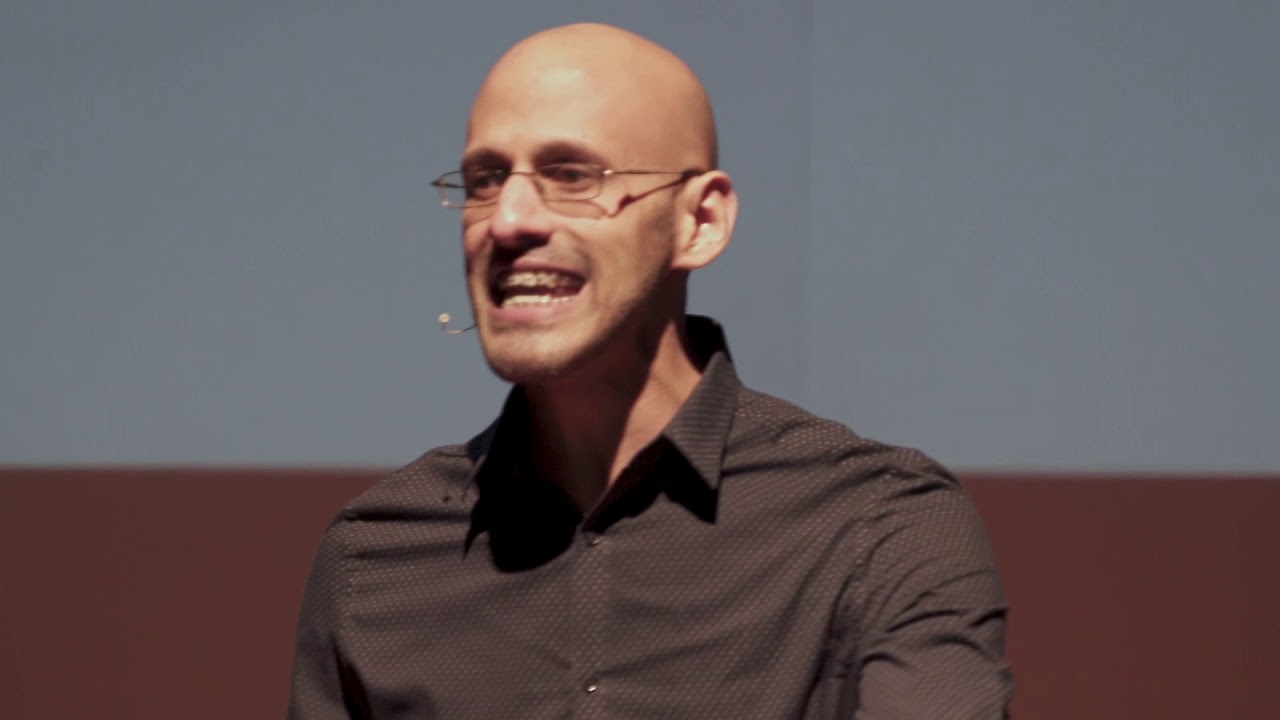
Mark Diaz argues genius isn't innate but learned through tiny, deliberate steps. Mozart logged 3,500 hours of piano practice by age six. His online art school found that breaking skills into micro-steps lets anyone master drawing, regardless of age or starting ability.
Chapters
What would it feel to be the genius and not the spectator? What would it feel to achieve a dream? Not long ago, I had a discussion with my sister. And I was saying that Mozart was a human with a brain. And because we are all humans with a brain, we could totally play the piano like Mozart. And then my sister said, come on, Mark, you've got to be born with a little bit of something that you then develop. So life is about finding your gift. And I thought, huh, that is very depressing, isn't it? Because what if I'm born with nothing? Just one of those— Hey guys! One of those dudes that are terrible at everything. I actually know someone personally, and this is a real person, by the way. 5 years ago, she said that she was going to become amazing at drawing. So you will look at her dream up here. That's your dream, nice! You know the dreamers today. And then you will look at her drawing. Reality check. Dani, I don't think this is your thing, so why don't you go and find your gift? Yeah, go, go, yeah. So I'm not kidding, that's her drawing. Let's be honest here, that has no potential at all, right? Now compare that with— Ah, now that has potential, right? Well, here's the interesting thing. These 2 drawings were made by the same person. This was made 5 years ago, and this is how Dani Garcia can draw today. So what happened? How did she go from this to this? That's what I want to talk about today. We have an online school in which we help students all over the world To improve in animation and drawing. And we found out that the difference between those who make it and those who don't is not because of what you're born with. Some people have advantages, yes, but that's not the main thing. The main thing is the actions you take. Let me explain this with a little analogy, okay? This little guy wants to get to the top. And if you notice, when he tries to take the first step, it turns out it's too big for him. But don't worry, because for that we have teachers. And the teacher tries to explain. Look, it's very easy. All you have to do is rise your leg and there you go. Oh, okay. I just have to cross my leg. My leg! What happened? I know, your legs are too small. So why don't you go and find your gift? Hmm. See ya. Later, a new teacher comes along with a solution. Ah, look, I just made it easier for you. All you have to do is raise your leg and there you go. Huh. Oh. Now you try it! Okay, I just have to raise my leg. My leg! So what do we do in this moment? Well, we give up, right? This is not for me. This is for somebody else. So life is about finding your gift, right? But what do you get? No, don't give up! Try harder! Okay, okay, I'm going to try harder! What happened? I know! Your legs are too small! So why don't you learn to be happy down there? I mean, who wants to go up there anyway? Yeah, who wants to go up there anyway? And that is the story for most of us. The story of conformity. The story of, who wants to play the piano like that anyway? Or, who wants to dance like her anyway? I mean, look at her, she's so good! Now, what if this little guy Didn't try harder because trying hard doesn't work. What if he created another solution? What if he created smaller steps and even smaller and smaller steps, perfect for his legs, perfect for his abilities? Now you might see that and think, yeah, but it's gonna take more time. And more effort. So? He just found a way to get to the first step. And if you notice, he just found a way to get to the top. Recently, my friend David told me, why would people want their life to be so short, to get their talent so fast? Why? Hey, it's a journey. If it's gonna take 10 years, it's a 10-year adventure. It's yours. It's your story. My friend Spencer said, well, if you get your gift super quick, it's gonna destroy you. You don't have the mind for it yet. Michelangelo said, if people knew how hard I had to work To gain my mastery, it wouldn't seem wonderful at all. All those steps. Just imagine all the steps Michelangelo had to take. Now, all of this is very easy to understand because I'm using drawings. Yay! But what about real life? Well, we have a student called Joanne, and she went to the Art Institute in California, and in there, They have 2 Disney animators who are amazing in animation and they are teaching animation. So they were amazing at it. They were explaining how to take the first step in animation. And all the other students who were also good at drawing could also take that first step. Nice, but what about Joanne? And what about the other students like her? No drawing skills. Well, it doesn't matter how hard you try. They can try super hard and they will fail because they don't have the ability. In real life, could be like— just picture this. You just have to draw a circle and then a line and then finish the details. Easy peasy. Well, yeah, but if you don't know how to draw, you will come up with a tragedy. Later, Joanne joined our online school and she told me that, you know what, Mark? I'm actually getting results here and I think it has to do with the instructions. They are more detailed. And so we got very excited and decided, hey, What if we get beginners who have no drawing skills and help them become amazing at it? I know, I know, it's super ambitious, but we started with some experiments. And some of our students were testing the instructions. The instructions were so perfect that you can just leave them alone and then come back And see the results. Ah! What? It was not working. We were failing. Our instructions didn't work out. And after trial and error, we found out that the secret was finding the smaller steps. I have a very good friend. Her name is Katarzyna. She's a beautiful person, a wonderful artist. She provided a lot of her artwork to our school so we could use it as exercises for our students. I asked her, hey, can you send me one of your very early drawings before you developed your talent? And this is what she sent me. And this is very inspiring for me because this is how Katarzyna can draw and paint today. And after finding smaller steps to get there, Waylon Myers got results. This is before the training, and this is after 4 weeks of training. Another example is Glenn Gray. This is before, and this is after 2 weeks of training. Now you might think, yeah, that works for young people. But what about me? I'm 40, or I'm 50, or 60. Well, Glenn Gray is 75. It's not about the age you have; it's about what are you doing with the age you have. In real life, it would go like this. Let's pretend the instruction is. Finish the part of the face. Okay. If you don't know how to draw, you would do this. No, try harder! Well, you would do this. So you can see trying hard doesn't work. But what if I gave you smaller steps? What if I tell you, okay, just focus and find these 3 points and then put them together. And then cut the edges. And then cut them again. And now you can see the face. You don't have to be born with a talent. You can develop it. When I was a little kid, I remember my grandpa was having a discussion with my dad. And my dad was saying that because my grandpa was very good at drawing, We were good at drawing too, thanks to his DNA. And my grandpa said, ah, that is very interesting, but no. He said he had my mom, my aunt, my uncle, and then he learned how to draw. And then he had my other uncle and aunt. So in other words, he transferred the DNA of drawing to my cousins. They should be the ones good at drawing, not us. The interesting thing is that they were not good at drawing. We were. Because my grandpa was with us teaching us. And my cousins lived in another city. So for me personally, this is very exciting because we didn't get the DNA of drawing. They did, but they didn't know how to draw because my grandpa was with us teaching us. So that makes you think, doesn't it? What if Mozart was not born a genius? What if he was born just a human with a brain? And what if in that time there was No distractions, no smartphone, no social media, nothing. And all that was there was a piano. And for a kid, all you could do to have some fun was playing with it. And what if he played so much that he became amazing at it? Well, that actually happened. When he was At 6 years old, it's calculated he already had 3,500 hours of piano practice. Now, you might look at that number and think, oh, that's interesting because those are the hours I have invested in my phone. So yeah, I'm an expert in my phone! Hey, congratulations, because you are a time waster! Now let's think about this. What if you put away your distractions and you start focusing playing the piano for 3,500 hours? What do you think is going to happen? Well, you're going to play the piano like Mozart when he was 6. Oh yeah, but that's not impressive. I don't want to play the piano like Mozart when he was 6. I want to play the piano like Mozart when he was 21! Yeah! What you need to do then is play for 15 more years, and then you can play the piano like Mozart when he was 21. So it's not about if you have the proper brain of a genius. No, we get it backwards. It's about if you're using your brain properly to become a genius. Martin Luther King Jr. said, if you cannot fly, then— Run. If you cannot run, then walk. If you cannot walk, then crawl. Crawl. But whatever you do, keep moving forward. That really sounds like smaller steps, doesn't it? So if you are a human with a brain, what steps are you going to take to become a genius? Thank you very much.
More from Henk







Psychology of Polymaths: Why Having Multiple Interests Is an Unfair Advantage

