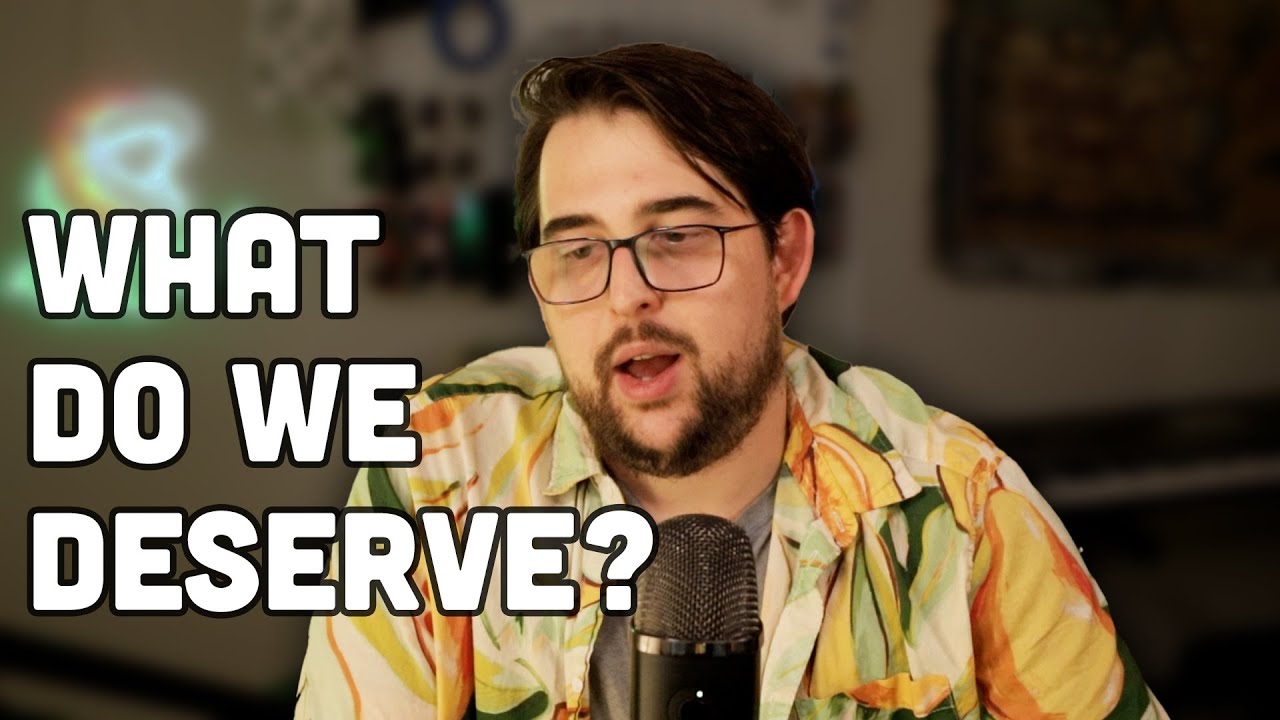
In this video, the speaker laments the disappearance of the societal middle—economically, politically, and culturally—and links it to widening wealth, education, health, and housing gaps, algorithmic media bubbles, and a growing tribalism that isolates people. He argues that the root of this division is a failing education system that leaves many young people, especially disaffected men, vulnerable to a propaganda "oppressor pipeline" that turns them into agents of oppression by convincing them they are victims. Drawing on his own experience of nearly joining the alt‑right, he stresses that empathy, literacy, and exposure to diversity are the missing tools that can break the pipeline. He calls on privileged individuals to act beyond self‑interest: advocate for equitable school funding, volunteer in mentorship and literacy programs, engage with local government on housing and healthcare equity, and diversify media consumption to understand opposing viewpoints. Throughout, he balances a tone of urgent concern with hopeful advocacy, urging collective responsibility while rejecting tolerance of the intolerant. The video concludes with a promotion of his memoir, Get Up with Fleas, which recounts his upbringing in poverty, encounters with fundamentalism and abuse, and his escape from the oppressor pipeline.
Chapters
The middle is disappearing. The middle class, the moderates, the bridge builders, even the middle of my sandwich from my local deli has half the fillings it had a year ago. Polarization is happening in every arena of public and private life. It is insidious, and we are largely blind to it. And before you make accusations, this is not an argument for centrism. Trust me, I have my convictions. This is an argument for commonality. And commonality is disappearing. Economic polarization is leading to a wealth gap, diminishing the middle class as wealth concentrates at the top and poverty persists at the bottom. Corporate greed and inflation are squeezing out affordable options, leaving either luxury items or low-quality alternatives. Automation and globalization are eroding mid-level employment opportunities, leading to a divide between high-skill, high-pay jobs and low-skill, low-pay jobs. The educational achievement gap is widening, with students increasingly clustered at the extremes of high achievers and those significantly behind. In family life, there's a growing divide between highly involved parents and those who are entirely disengaged. Housing market dynamics create a divide between affluent areas and tragically under-resourced communities, with fewer mixed-income neighbourhoods. Algorithm-driven content delivery is leading to more niche and polarized media consumption reducing exposure to diverse viewpoints. The gap in healthcare access and quality is widening, with premium services for the wealthy and inadequate care for lower-income groups. This is inequality at its most rampant. It reflects the lie of extreme individualism: as long as I get what I want, everyone else should fend for themselves. This attitude is pervasive and divisive. It ignores the reality that the world is better for everyone when we work to make it better for others. Social cohesion is dissolving, opportunities are dwindling, and people retreat into physical or virtual enclaves, and the internet funnels people into deep niches and tribalism instead of fostering dialogue. I hate to engage in this kind of doomerism, but there is real fear here. My fear is that my son will come of age in a world where commonality has been eradicated, and anyone not from your enclave is alien and unrelatable. And I think that at least one of the things at the root of this growing separation is education. I have certain privileges of security and education, privileges that I will pass on to my son. But national literacy rates are plummeting due to a cocktail of factors: inequality, parenting culture. These are factors that my son will be largely shielded from just by virtue of the privileges that I will pass on to him. But students are the least prepared for college than they've been in 3 decades. In 2023, more than 4 in 10 high school seniors hit zero of the college readiness benchmarks. In 2023, the National Assessment of Education Progress showed that less than half of 4th graders are proficient in reading. And for marginalized students, it's much, much worse. So when my son goes to school, he'll certainly excel. He'll have the advantages of my education and my resources, but I fear that he will stand alongside one or two others wholly unable to communicate across a deep divide that separates him and the many other students who are being denied basic literacy. And when he enters the adult world, I think he'll excel there too, but I fear that the only community that will avail itself to him is one made up of people that look and speak exactly like him. And I can work against this in some ways. In my local community, I can advocate for resources and outcomes that don't just benefit my son, but benefit his fellow children. In fact, and this may run contrary to some parental opinions, I don't think I should be lobbying in my local community for my son at all. Why should I use my voice and my resources to ensure that my son gets the best teacher, the best school equipment, the best outcomes? I'm already in a position to give my child a huge leg up Regardless of those things. I don't want what's best for my kid. I want what's best for all kids. I should lobby for the school down the street in the lower-income neighborhood to get the funding, the newer books, the better teachers, because I want my son to come of age in a world where everyone is safe and educated and achieving, not just him. I'm not in the ultra-wealthy, but I do have the privilege of helping my son cross gaps that other parents cannot. But there are so many parents who don't see it that way. They want only their child to have the best. They want only themselves to have the best. Everyone fights for scraps in a losing game, echoing the rhetoric of the elites at the top, sneering at each other just as they sneer at us. I want to turn fear into hope. Hope that my child won't have to build a life in a world where the system itself requires you to put someone else under your boot, To stay afloat. But I don't know. It requires a shift in consciousness. People have to start believing that it is fundamentally good to take care of their neighbor, and they have to expand their category of neighbor to people who don't look like them or think like them. Those who only care about class barriers should try to understand the fears of those who are affected by cultural barriers Even if you think those cultures perpetuate harm. And those who are fearful of cultural alienation, even if you're part of a culture that has predominantly been part of the ruling class throughout history, you should try to understand the solidarity that exists within classes, even if the people that share your class have wildly different values. I mean, this is why so many people will betray their own economic interests and even their own safety to vote for a billionaire, just because he champions a particular cultural identity. And you can certainly call that stupid, or foolish, or even the result of decades of illiteracy and cultural toxicity, but it's a reality all the same. And to be clear, I am not encouraging you to tolerate the intolerant. You shouldn't. But I am asking you to have empathy for the unempathetic. And those are different. Right now, a lot of people are angry, scared, resentful, and that makes sense. But I'm also seeing a lot of people call for an increase in hostility. Some people believe that the only relief will come not through civic engagement, but through a violent clash, and they want accelerationism, so they are denouncing all empathy. But I don't agree. I want people to understand that the antidote to tribalism is connection. The antidote to hatred is community. The antidote to fear is compassion. And I'm not saying that we should use empathy to make allowances for people to hurt other people, but I do want people to understand that just because there is no excuse for oppressing others, there was still, at some point, an opportunity to shape that person's worldview and reach them before their perspective warped into a justification for hurting people. Here's my argument: there exists an oppressor pipeline. Working-class people, people without the advantages of education, and especially disaffected young men are swallowed whole by a propaganda machine that turns them into oppressors by convincing them that they are the victim. And I know because I've been there. There's real work to be done in the communities exploited and disadvantaged by oppressors. But there is also work to be done in the communities that manufacture the oppressors themselves. If we want to dismantle that oppressor pipeline and stop so many young people from being swayed by the lies of division and hatred, we have to figure out what they are missing. What crucial thing did they not receive? I think it's education. I think it's exposure to diversity. And I think it's empathy. So many people grow up without being given these They are not given the tools to think critically, they are not given the opportunity of finding commonality with people who look and act differently from them, and empathy is never modeled for them. And I believe that it is the responsibility specifically of those of us with resources and privileges, people like me, to make that intervention. What people like me need to realize is that the kind of interventive work that I'm talking about here It's not new. People of marginalized backgrounds have been doing this work for decades, and they've been asking for help. Those of us who stand with the oppressed, but have the resources and privilege to not be oppressed in the same ways, should be allies in more than just name only. We should be finding out what makes someone become a monster, and do the work of building the communities required to put young people on a different path. It is easy, and I'll grant it may even be justified, to label some people as monsters. But doing that only widens the gap between the world that exists and the world that you want. Labeling people monsters removes all empathy, and empathy is required to reach people before they become the monster. How can we understand what drives people to justify exploiting others and heal those wounds before it coalesces into an ideology that inflicts more wounds. The people across the aisle from you? They might be delusional, they might be misguided, they might be selfish, but they aren't evil. Again, let's be clear: don't tolerate the intolerant, don't take the high road at the expense of your own safety, and don't make compromises with the ignorant, and don't do the work of building community with your oppressor, when they are only going to use that to exploit you. And I'm not even saying have empathy for people who voted directly to make you less safe. Don't do that. But what about the young people who will become those voters? Do we understand what pushes them there? Where are the young people who haven't become oppressors yet, and what are their fears? What are the blinding cultural narratives they are digesting, and who is in their ear? And who is teaching them empathy? Perhaps no one. And empathy cannot be learned unless it is modeled. Empathy is a gift that has to be received before it is given. People who do evil are not a separate species from you. Empathizing with bigots and monsters is the best defense against becoming one, because when you demonize villains, you become unable to recognize villainy in yourself. And if you are blind to the humanity within those who do evil, You will be blind to the capacity for evil within yourself. So, what do we all deserve? It's a complicated question. But I have education, and time, and security, and empathy, and I will bestow all of those privileges on my son. But I don't want what's best for just him. I want him to come of age in a world where as many people have opportunities as possible, because that is ultimately the best world for my son. And I think that world can only exist if people who know how to practice empathy and literacy and awareness intercede in the pipeline of lies that convinces people to hurt people. So, what can you do? Well, there's always work to be done at the local level to bring relief to disadvantaged communities, and there's also work to be done in helping the young people caught inside the propaganda machine to become allies instead of antagonists. Attend your local school board meetings and raise issues of resource distribution. Do it even if you don't have kids, because a future with a better-educated population is a better future for you too. Research campaigns and volunteer with nonprofits that advocate for equity of housing and healthcare, and talk to your representatives. Go to city council meetings and ask them about allocating resources to safe recreational spaces in low-income neighborhoods. Get involved in youth mentorship, volunteer for a literacy program, or even start one. Diversify your media sources and try to understand why someone would hold the opposite values from you. Start dialogue with people who come from an entirely different way of life and learn what their struggles and fears are. This video is sponsored by me. I wrote a book. It's called Get Up with Fleas, and it's a memoir about poverty, growing up in the South, religious fundamentalism, and abuse. It's about isolation, and community, and hope, and fatherhood. Just a content warning: it very plainly describes instances of abuse and violence. And if you know me in real life, please don't read this book. It also talks about how I stood on the edge of the alt-right pit, And I was a disaffected young man who had been routinely rejected by nearly everyone I loved. I was a prime candidate for the oppressor pipeline, and the book explains what made me turn away. If that sounds like something you would be into, you can grab it from the Amazon link below. Thanks for watching.