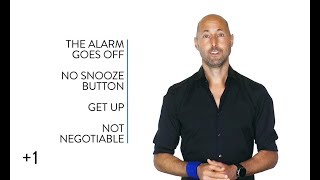
Mel Robbins explains why snooze buttons wreck your morning. Sleep cycles run 90 to 110 minutes, so hitting snooze starts a new cycle that gets interrupted, leaving you groggy and cognitively impaired for up to four hours. The fix: get up when the alarm goes off.
Questions this video answers
About 90 to 110 minutes.
Up to four hours.
Chapters
Hi, this is Brian. Welcome back to another Optimize plus one. Continuing our trip through Mel Robbins great book, the Five Second Rule. Let's talk about why your snooze button sucks the life out of your day. Seriously, science says. But first, quick context. As we discussed a couple plus ones ago, before she came up with her five second rule, Mel's life was more than a little wobbly. In addition to struggling with her marriage and finances and drinking too much, she was hitting the snooze button on her alarm way too many times. The one thing she decided to change was getting up and out of bed immediately after her alarm went off. She used her 5, 4, 3, 2, 1 countdown to blast off and changed her life. Now, there's something magical about taking control of your life from the moment you wake up that has ripples throughout the rest of the day. Of course we talk about your morning actually beginning the night before with good shutdown complete and digital sunset routines. But that's a separate chat for now. Today I want to talk about the science of why your snooze buttons suck the life out of your day. Get this. Mel tells us that for peak productivity, we should never hit the snooze button. Here's why she tells us that. We all know getting a good night of sleep is super important, but how you wake up is just as important as how you sleep. Scientists have recently discovered that when you hit the snooze button, it has a negative impact on brain functioning and productivity that can last up to four hours. Short story I quote Again, we sleep in cycles that take about 90 to 110 minutes to complete. About two hours before you wake up, these sleep cycles end and your body starts to slowly prepare to wake up. When your alarm rings, your body is in wake up mode. If you hit the snooze button and drift back to sleep, you force your brain to start a new sleep cycle that is 90 to 110 minutes long. She continues by saying when the snooze alarm goes off 15 minutes later, the cortical region of your brain, which is the part of the brain responsible for decision making, attention, alertness and self control, is still in the sleep cycle. It won't be able to snap awake. It needs 75 more minutes to finish what that snooze button started. Which leads us to the fact that it can take four hours for this sleep inertia condition to wear off and for your cognitive functions to return to their full capacity. That's why you feel so darn groggy. She says, when you get up after hitting the snooze, it's not because he didn't get enough sleep. It's because once you hit the snooze button, you started a new sleep cycle and then interrupted it. On days when you hit the snooze button, there's no way you're at your best. End quote. In conclusion, she says, I quote one more time, so I'm dead serious about this. The alarm goes off. No snooze button. Get up. Not negotiable. That's today's plus one. If you're a little snooze button happy, how about we snooze the snooze button tomorrow morning? Better yet, let's work toward getting rid of the alarm clocks altogether. We'll save that for tomorrow morning's +1. Right after we 5, 4, 3, 2, 1. Go to start our days.