#1: A Tribute to Greatness (Anders Ericsson - A hero has fallen. :/) (#22)
Brian Johnson reflects on Anders Ericsson's death and his influence on deliberate practice, then previews an upcoming video series on optimization featuring Maslow, sleep science, and habit formation. Johnson emphasizes urgency: do your heroic work now.
Chapters
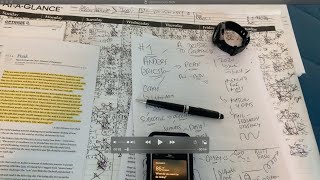
Hey guys, what's up? This is Bry. Happy Tuesday. We will do our normal aura check in. Resting heart rate at 40. Heart rate variability is just going through the roof. 134, which is just crazy. The average has just gone way up as I've been using not only the PEMF machine more, but this nanov thing. Longer chat, but it's. I having fun. Testing more on that in a moment. But today I want to celebrate Anders Ericsson. I just realized that he passed away, so I'm super bummed. I learned this yesterday. Anders Ericsson is. He's like the world's leading thinker on greatness, right? So he wrote a great book called Peak. He and I connected. He was coming out to our optimized 2020 event, which was supposed to be in June. Of course, Covid pushed that back. So then he passed away in July a month ago. Yeah, and it just, you know, my heart just sank when I, when I heard the news. He's just such a beautiful human being who's inspired me so deeply. Great interview with him and just one of the highlights of my life, you know, is connecting with him on two different things. One, I asked him what he thought of my. I was going to interview him. This is the guy who came up with the research that Malcolm Gladwell leaned on for his 10,000 hour rule. And it's not quite a 10,000 hour rule, which he and I talked about in our interview, which I'll share in the notes below. But anyway, I was excited to talk to this guy because he's like the master of deliberate practice. And I wanted to ask him, hey, how can I get better at my craft? And I will forever be grateful that he just had this hilarious response. He said, you know, are you talking about that video you did on my book? I said, yeah, that one. He said, I don't know how you could improve that. I just, I don't know how you can improve that. And it was one of the most humbling, inspiring moments my life just to celebrate that. And then the other thing that I will always remember, and frankly, I'm super bummed we didn't get to do was he and I had some great conversations and I was talking about the research. I don't know where our research went, but the research we were doing with Sony Lybomirsky, Right, because we wanted to scientifically prove that our program works. And so I was talking to him about it and he's a hardcore scientist, so he's pushing back and he's like yeah, yeah, yeah, yeah. That's nice. This is before we got the data. You know, you may get subjective measures, but I want to get objective measures. Just because someone says they feel better, are they actually doing better? And again, our data has been astounding. But he wanted to work together and we were talking about actually creating a project within something called Optimized Labs. Again, I'm super passionate about the science of applying this wisdom. So we were going to create a study together. We were talking about creating studies together where we would move from the subjective to objective. So he based his entire work on peak by analyzing journal entries of violinists and other world class performers and then he traced that to their actual performance. So what we were talking about was having our optimized community create journals where every single day we can see the practices they were engaged in and then we can look at the data, stuff like this. So I shared with him, look, no, when you actually change your behavior, and I have goosebumps right now, literally, I was like so inspired. I'm like, you change your behavior, you get a better night of sleep and you eat earlier. It changes quantifiably objective data. And it's so cool to see that when you do this, it leads to that. It's not subjective. This is objective data. Anyway, we had some really, really cool chats on that. And it just, it all kind of brings me to a point of sense of urgency. You know memento mori, right? We talk about memento mori all the time. But remember death. You know, this is 72 year old man who's so energized. He had the energy of a kid just in love with what he does. A true radiant exemplar of what's possible. So just it adds a level of urgency to me and to my work. My coach, Phil Stutz, his fifth tool is called Jeopardy. Where you imagine the Jeopardy music playing, right? Do, do, do, do whatever it is, right? You only have so much time to get the answer. Well, he says that's how life is and you need to show up. And I've drawn this circle a couple times recently. But you need to show up with full intensity. And when you do that, you meet God. You need to have a level of urgency to how you're showing up. Which is why Joseph Campbell quoting Sri Ramakrishna said, don't approach enlightenment or optimizing unless you approach it like a man or woman whose hair is on fire approaches a pond. You need to live with what Phil calls 105% intensity. That's when the Divine energy comes through you and you can do things that may feel impossible. And you do it in Anders style. Deliberate practice, pushing your edge, deliberately developing and cultivating your skills, and you can do astonishing things. So, yeah, there's that man. Such a bummer. And then at some point, I want to share with you my notes from my chats with Phil. So this is my conversation yesterday and I've got pages of notes. I literally. I'll walk you through it. At some point I pulled this out of the closet. This is Phil's notes. It was the most important thing for me when I moved. That's Emerson, the first time he ever wrote his name. Isn't that awesome? Oh, that gives me tears in my eyes. Oh, there's a sweet note my wife left me. Oh, geez. Anyway, I've got like, you know, we've met every week for over three years, so I've got, I don't know, what is that, a 6 inch stack of notes. That again is my most prized possession. Right behind that Emerson and I love you. So that's Anders Ericsson. You can read his New York Times obituary. I actually had some thoughts I'm not going to get into now on some of the comments by some other scientists. But his ultimate point was we all have the gift. You may or may not be able to achieve greatness in the sense of a chess master or in the sense of a violinist, whatever, who cares? You have the gift. His ultimate thing was you have the gift to improve your life. That is the ultimate gift. And you're going to, you're going to be able to achieve that if you practice, if you show up deliberately, mindfully, and you push yourself beyond your edges and you're willing to put in the hard work. Homo exorcismsis the practicing man. He says, you got to practice what you want to be great at, whether that's your energy, your work, your love, etc, etc, etc. So that's that. I'm going to leave it at that. And then. Thank you, Anders. Bless you. May we continue on in your memory, which I'm going to do with urgency and intensity today. So my big thing today is pntv. So we got the studio set up, took us a day longer. It's eight Epic. I'm really excited to get in there and start creating new PNTVs. I'm going to start with three of my favorite books over the last couple years. I've taken a couple years off, right. So I'm going to start with Abraham Maslow, who, by the way, this is his unpublished works, right? Future Visions. And this is how I prepare for a pntv. I don't expect you to be able to read this. This is what I do. Five ideas I'm going to walk through. I've got a couple of different thoughts. This is how I capture my ideas. I know what each of those words means. Boom. I can tee it up and just kind of let it rip, which is my intention. Soul Force. Can I communicate my passion for optimizing and hopefully share some really practical ideas with you in this context and everything else I do to change your life today? Not in an abstract. Oh, maybe someday we can do something. But today, what can you do to get better? Anyway, this book, Future Visions is a collection of unpublished papers from Abraham Maslow Abraham Maslow died of a heart attack at age 62, 10 years before Memento Mori. Anders Ericsson four days before he passed away, he wrote the first words of the book, which happened to be the More I think of the EU Psychean Society. EU Psychean When I read that, I did like backflips. That's his take. EU Psychean is his take on Eudaimonian. Eudaimonic, as we would say. They both mean good soul. EU psych, good psychology or good soul Eudaimon. This is everything we talk about. He wrote those words four days before he passed away. He had no way of knowing that four days after he wrote the More I Think of the youth Psyche in society and gave his best that he would pass away. That urgency needs to be present. We're not guaranteed anything beyond this moment right now. And again, you want to stay grounded, which is why I share this. You know, there's the practices of showing up with intensity, but training your recovery like a professional optimizer, turning off all the electronics, focusing all of your energy on whatever you decide is most important. Turning off the electronics, I mean, as you go to bed. Which actually leads us to the second thing I'm going to feature. That's the first note I'm going to do on my I always like to start when I take a break with the best book. Well, there you go. One Amazon review. No one's read it. You've never heard of it. It's unbelievably good. Then we're going to talk about why we sleep. Matthew Walker why I share this is Sleep is the foundation our well being. It's not a pillar of health. Eating, moving, sleeping. Matthew Walker, UC Berkeley neuroscientist, says no, no, no. Sleep is the very foundation on which Everything else rests. We're going to talk about the bridge from despair to hope, creating a solid pm. And then my number one tip. And then a pro tip to get your sleep on. I'm fired up about that. And then the third one I'm going to do this morning. And then I'm going to take a break, recover, do as many as I can, and see what my rhythm is. FedEx the card to Ben so he can produce it. We can share our first one on September 1st. Building all the systems for that. Thank you, Patrick. Anyway, tiny habits. BJ Fogg will be the. This is what Emerson drew. This is Emerson's take on BJ Fogg's behavior of Fogg behavior model. Right. We'll talk about this in the pntv. But your motivation, your ability, and your prompt map. Motivation, ability, prompt. Right. So I taught Emerson these ideas. How do you want to change your behavior? Super important. If you want to optimize your life. Boom. Here's what this brilliant guy at Stanford has to say. He gets it. So you have motivation, ability, and then prompt. We'll talk about that. The ABCs and how to install and delete a habit. We talk about this again in the Mastery series for Optimize Coach. We call IT Self Mastery 101. This is the heart of everything we do. We talk about some other teachers, but this behavior design model is so powerful. So you know the prompt is the number one thing. If you can remove the prompt, just get rid of the prompt. You won't do a negative behavior. You're much less likely to do a negative behavior. You're going to have to work really hard to do it if you can make your trigger, your prompt, easy. So for me, I've got my meditation cushion there on the ground, so the sound is muffled, but my meditation cushion is boom, right there. I trip over it every single morning. Right? I'm doing a new little set of burpees. Boom. There we go. I got my way to. I literally trip over them. Ouch. I can't miss it. That prompt, that trigger, that cue is right there. You need to have a clear prompt. You need to make it easy to win, and you have high. You don't actually need to have high motivation. If you have an obvious prompt and you make it easy, you can be super not motivated and still take action again. We'll unpack that more in the pntv. Of course, we talked about it in the Oops, where to go philosopher's note. So there you go. Anders, thank you for serving as a Radiant exemplar and doing the work to be the best you could possibly be. His wife had a great comment at the end here. She said, you know, if I could psychoanalyze him, I'd say he was interested in becoming the best at what he was doing. Ms. Socks Erickson. I can't Sax Harrison. I can't tell you how many books he read. My house is head to toe books. He read everything. I'll tell you what, I've raised money from, you know, a billionaire and hung out with some pretty cool people. The thing that makes them one of the things that most distinguishes them is you should see their libraries. These guys read like crazy. John Mackey, the whole food CEO. The guy's like part of like multiple book clubs Crazy. And one of my another honor just to pat myself on the back for a moment. I sent him the first hundred philosopher's notes after we became friends and then when I visited his ranch with some of his friends once he had it out, he busted it out and they're all checking it out. Subscriber for years. Super inspiring. Let's do great work. I'm going to wrap it up with this. I don't know if I shared this quote yet, but here's Abraham Maslow. This is how I'm going to kick off this PNTV Maslow once asked his class, which of you believe you will achieve greatness? Imagine that. Imagine your professor 1950s and 60s asking you, hey, which of you believe you will achieve greatness? When they stared at him blankly, he asked, if not you, who then? If not you, who live heroically, give yourself to the world and be willing to do the hard work to have the strength for to give your family, your communities, the world all you got. I'm about to do that today. How about you? What's your number one thing you may have gotten out of this? What's the number one thing you're going to do today to go crush it? Energy. Work. Love wise. Let's get on it. Serve as heroically as we can as we strive to reach our peak today.






