#1: Need to write yourself a prescription? (Here's the Rx pad!!) (#20)
Brian Johnson walks through using biometric data like resting heart rate and HRV to spot what's wrong, then adjust it. He shows how small experiments with eating, sleep, and movement build confidence you can fix things, and gives you a concrete tool: write yourself a prescription for the habits that matter most.
Chapters
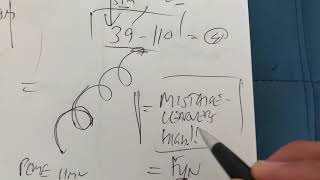
Hey, guys, what's up? This is Bry, happiest of Sundays, fun days. I might have just gone off. I got up early this morning, but I'm three and a half hours into my first deep work time block. That's like me kind of got on a roll. I never typically work longer than 90 minutes, 2 hours. Today I just got on a roll working on the letter for our coach program and then also some stuff for our general membership, etc. So, anyway, I did that. And as I'm excited to share some data from yesterday, I took what didn't work yesterday and made it work today. So we'll talk about that. But then first, just briefly, Lanny Basham, Olympic gold medal rifle shooter. He's part of our faculty for our optimized coach program. We've done notes on his book with winning in mind, his son's book, Attainment, and another book called Parenting Champions, which is awesome. Check out those notes. But he says that when he was training with, at the time, the guy who was the best in the world, he was aspiring to be the best in the world, right? Once they trained and they said they were going to train for like 60 minutes or something, right? And I'm going to get to a point here of keep shooting. And they were going to shoot and shoot, then take a break. And Lanny's like, okay, we got to that point. Then he took a break. He went and got lunch and he came back and the guy was still shooting. He's like, what's going on? And the guy basically said, when you are in a groove and you were in a pattern, keep shooting. Now, I also put a big asterisk on that and say, make sure you oscillate. Typically, your behavior starts to atrophy. NASA says after like 60, 75, 90 minutes, you need to honor what's called an ultradian rhythm, right? You just can't keep on going on. Now, what I do is during my deep work time blocks, whether it's for 30 minutes or 60 minutes or 90 minutes or two hours or today, very rarely three and a half straight hours, I'm constantly oscillating, right? So I've got the little weights going on down there. I'm doing my burpees. I've got some fun little things I call hero makers now, kind of mixing up burpees, et cetera. So my energy is kind of oscillating throughout, and I just happen to feel great. So I had the energy to crush it, which leads us to the gain that I made yesterday. So if you Recall yesterday's number one, I said, oh, wow, my resting heart rate was 44, which is still very good, but 10% higher than my typical best of 39 or 40. Right. Four points higher is 10%. And my heart rate variability, 58 is still very good, but for me that's below my average these days. And so it's interesting. So I looked at that and I said, huh, why was that different than where I like it to be? And it was very quickly obvious to me that, oh, I ate a little late and I ate a little bit more than normal. Interesting. That radically affects it. So my number one last night yesterday was to address that. It's the whole point. You say what's working, what needs work, what am I going to do differently? And then you use the data to your advantage. So my number one for yesterday to optimize this was, well, I'm going to eat earlier and actually ate radically earlier. More like 2:30 or something, which is even my last meal at 2:30. Usually I have my last meal before 4 and it's just funny to me to see what happens. So again we go from 44 resting heart rate lowest point, 58 heart rate variability to just silly numbers. 39 resting heart rate, which is, I may have beaten that once, I don't know if I have. But 39 resting heart rate lowest and my heart rate variability, that's the highest it's ever been, average 110. And if you use aura, you know that that's ridiculous. So. But the point here is again, less about me and more about using me as a context to, to do the work. And then you get it. It gets really exciting when you can make a connection between something that's working or not working and then do something about it. And you cultivate what scientists call agency, which is a sense of power in your life. So imagine how exciting it is for me to look at that and go, oh, that's so fun. It's literally like a game for me. Oh, I was a little bit off there. What do I need to do? Let me adjust my shot because I'm a world class target shooter. Boom, there we go. Now what do we laugh? And this is why people like Ray Dalio. Ray Dalio is one of the wealthiest people and most influential people in the world. Bridgewater associates, hedge fund, etc. Artificial intelligence, blah, blah blah. Check out our notes on his book called Principles. He says, you get so into the process of evolving and all you care about is getting better and evolving in service to the world that when you make a mistake and his loop goes like this, you have an ambitious goal. And then you know what he says you do? You fail. That's like built into a success formula. Step one, have an ambitious goal. Step two, fail. But this guy is all about the growth mindset and getting better and evolving. So he says, whatever. What do you need to do differently? Cool. What are you going to do? Go do it. And then you spiral up. And he says when you really, really, really, really, really get that, and I mean really, really, really, really get that, you let go of all shame. No fixed mindset. It's all growth mindset. And then you have what he calls a mistake learners high. You get excited when you make a mistake. So I'm fired up. Oh, wow, cool. I'm not going to shame myself. Yeah, I like to have better numbers, but awesome. What did I do wrong? Oh, yeah, it was that. Boom. Then when the data shows it like that, it's just incredible. So my sense of agency is very, very, very, very high. My trust in myself, which is what confidence means. Confidere intense trust with intense trust is what confidence literally means. I have intense trust in myself. Not that things are going to go perfectly, but that when I inevitably fall short, boom. I'm going to bounce back and in fact, I'm going to get stronger, which is why we call it antifragile confidence. You're not fragile when things are hard. You're not even resilient. You're antifragile. You get better when you get knocked around a little bit. That agency is the core of hope. And again, we talk about this all the time in everything, but particularly in the optimized coach program in the Mastery series, hope is essential. If you don't have hope, you are hopeless. And hopelessness is basically depression. So there are three elements to hope. One, you need to have a clear target. That's my symbol for a target. I've got it everywhere on my calendar, my wall calendar is this one big target after another. Boom. I'm constantly knocking down what's important now. W I n what's important now. Target, target, target. So you need to have a goal that fires you up. You're inspired to go crush, right? And you need to have a sense of agency. That's number one, you need to have a goal or a sense that your future will be better than your present. Two, you need to have agency. And then three, you need to be willing to take multiple pathways to get it. You have a plan, but you know that plan Won't actually be the one that works. You take pathways, this, this plan A, plan B, plan C, whatever. That's hope. But the cornerstone to it is agency. This sense that you have the ability to shape your reality, that when you do things, you. It affects your world. This is what we teach our kids, Alexandra and I. Make the connection. I tell them, make the connection. You eat that food, then this happens. You yell and scream and this happens, right? This is how you get what you want in life. You have agency, get clear on what you want, and then communicate that powerfully. Be willing to be flexible and boom, you can do great things. Anyway, that's all I got. Taking the kids to the zoo today. Worked hard, played play hard. Energy, work and love. We're going to train together. Go to the zoo. Ben, our creative director and film genius, is finalizing the PNTV studio setup. I might need to do a special behind the scenes video. There. He has just crushed it. We've got a moving wall in our barn now. That is the chalkboard, black chalkboard on rails. So I've got three studios now in the barn, plus ones, which is, as you know, if you watch them white with me in a black shirt. And then there's Mastery series, which is a little different. And then the PNTV is coming soon. I get to start filming them tomorrow, which is amazing. Anyway, then another little funny thing. So coach program. One of the big things we do is we talk about writing yourself a prescription. If you want to change your life, you need to write yourself a prescription. Imagine you're a doctor in an office, but you aren't receiving a prescription from a doctor. You aren't a patient, which literally means etymologically to submit. If you're a patient, you submit. Now, you know, I'm willing to submit to my daimon, to God, to really wise teachers, but otherwise I prefer to be a conqueror, not a submitter, a patient, a conqueror. A conqueror literally means one who succeeds, who goes on a successful quest. So conquer. It comes from the same root as quest. So a conqueror goes on a quest successfully. So anyway, we tell our coaches, look, you are a conqueror. Your clients are conquerors. And we created this little prescription pad we got to work on a little bit. This is just kind of the version one. We're going to make this bigger, you know, whatever creative process, this will become bigger, this will go down, this will become bigger, etc. But imagine this, we have a prescription pad. It's like, okay, so what do you need to do? So what I needed to do yesterday was eat earlier. Eat earlier. Brian. I'm going to sign that. There you go. Doctor's orders. Go eat earlier. Boom. There you go. Okay, what other fundamentals you need to do? Write yourself the prescription. Right. What is this? That was an eating fundamental. How about movement? All right. I'm going to write myself a movement fundamental prescription today. Train with kids. You know what we're going to do today? We're going to play walkie talkie tag around our property. Walkie talkie tag. It's game Emerson invented. He loves it. It's awesome. The kids get a workout in not knowing they're working out and dad gets to chase them around. Perfect. Awesome. Boom. Sleep. What am I gonna do? Well, I'm gonna get the bedtime routine going. We wind down at 7:30. Takes us an hour. Right. I'm kind of the one that drives this ship. Right? Got diaper on. Eleanor, we got the PJs on. Emerson does his thing, we do our thing and then that lets us go to bed at 8:30. Perfect. Okay. Dad duty and I also spend time with the kids. One on two from like 6 o' clock to like 7:15 or whatever. Giving mommy some time. Boom. Write myself a prescription. Sleep wise. That's kind of fun. We can't wait. We're going to give these all to our coaches. That's more than enough for me. Go make today an awesome day. What prescription do you need to write for yourself? Get on that. Look forward to sharing more soon. See you.






