Brian Johnson breaks down Darren Donnelly's framework for reframing failure, rooted in Martin Seligman's research on learned optimism. When you fail, pessimists see it as permanent and personal; optimists see it as temporary and fixable. A three-step habit—Recognize, Argue, Replace—helps you catch negative thoughts and turn failures into learning moments.
Chapters
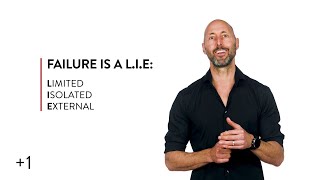
Hi, this is Brian. Welcome back to another heroic plus one. In our last plus one we talked about creating relentless optimism via targeted thinking and heroic action. In the one before that, we hung out with Michael Jordan and SNL's Stuart Smalley to talk about how to forge antifragile confidence. Today we're going to talk about the fact that, as Darren Donnelly puts it, in relentless Optimism, failure is a lie. L, I E. Let's jump straight in. Note this is probably the best description of how to apply Martin Seligman's research on learned optimism that I've ever read. Quick context. Relentless Optimism features a minor league baseball player who meets a brilliant manager who helps him break through to fulfill his dreams. Wally, the hero coach guide in the fable tells us, I quote, failure is a lie. Lie. Failure is limited, isolated and external. It's limited to one particular moment, it's isolated to one particular area and it occurred externally outside of you. You see, Wally continued, we're not talking about positive vibes and happy feelings here. That's not what optimism is. We're talking about logic. When people experience negative events, they usually lie to themselves. You have to recognize those lies and stop them in their tracks. Very few people get this. They feed themselves pessimistic lies after each setback and it creates a vicious cycle of new setbacks in future events, in other areas of their life and deep inside of them. It draws them down and whittles away at their self esteem. Know this. End quote. Now know this. The reason I'm such a big fan of this book and the others in the series is because it's not just a bunch of pom pom waving, feel good wishful thinking, mumbo jumbo. It's grounded in real science. In fact, as I said, I think this book features the best practical application of Seligman's research on optimism. Period. Now the foundational book from which Darren draws his wisdom is Seligman's classic Learned Optimism. As you know, if you've read that note and or book, Seligman's research focuses on the difference between learned helplessness, which is a one way ticket to depression, and learned optimism, which is the engine for a flourishing life full of meaning and joy. Of course, the opposite of optimism is pessimism. Seligman tells us that the primary difference between optimism and pessimism comes down to what he calls explanatory styles. There are three P's in his explanatory styles. Check out a plus one on how to learn optimism for the longer take. Here's the Shorter Story when something happens, whether that thing is good or bad, you can think that it will be either permanent or temporary, either isolated or pervasive. And you can also think it was because of something you did or something out of your control. Pessimists tend to think that failures or bad things are permanent, meaning they will last forever, that they are pervasive, meaning the bad stuff spills over into every aspect of their lives and they take it 100% personally, meaning they can't see how external factors out of their control influenced the situation. And they tend to think that good things are the exact opposite. They think that they are temporary, isolated, and not because of something they did. Their poor pessimistic explanatory styles make them much more likely to get depressed. Optimists, on the other hand, take the exact opposite approach to explaining these events. And that's where Darren comes in with his super practical take on how to apply the science to our lives. He tells us that failure is a lie. Lie. Failure is limited in time. It's not permanent. Failure is isolated, it is not pervasive, and failure is external. There were causes outside of your control that influenced the outcomes. Now, when things don't go our way, we need to practice our philosophy and put Seligman's scientific wisdom to work. And we need to know that how we choose it's always a choice hero to explain what's happening has huge impacts on the quality of our lives. Here's what Darren's guide in the book tells us to do with failure. I quote again, it's a quick three step process. You have to get in the habit of instantly recognizing those negative thoughts, arguing with the lies they try to tell, and then replacing those negative thoughts with positive thoughts. Recognize, argue, replace. He continues by saying, once you realize you've made a negative event personal, for example, you have to remind yourself that it's the other way around. You aren't a failure because you experienced a failure. You're a successful person who temporarily failed and is now returning to your natural state of success. A negative event is a single isolated event that you can stop in its tracks and make sure it will never affect you or anything else in your life again. And he says, if you've made a negative result permanent in your mind, turn it around quickly. You didn't miss out on your only shot at success. That negative experience will now lead to positive experiences in the future because it's made you smarter and more prepared for the future. You're now wiser, more experienced and one step closer to the inevitable success and you've prepared yourself for Remember, failure is a lie. Here's to your relentless optimism, hero. P.S. darren's also a big fan of some of my other favorite books, How Champions Think by Bob Rotella, the Magic of Thinking Big by David Schwartz, Psycho Cybernetics by Maxwell Maltz and Mind Gym by Gary Mack. Check out all those notes for more.