Heroic Chat with Alden Mills: We Are Build to Be Unstoppable
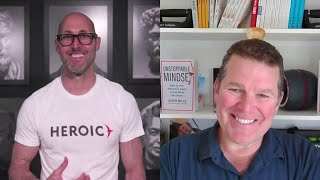
Alden Mills, a former Navy SEAL and entrepreneur, talks about his new book Unstoppable Mindset and the mental tools he uses with his four sons: a focus funnel, identity cards, and a practice called 'not me' to separate yourself from setbacks. He traces his path from childhood health struggles through SEAL training to building companies.
Chapters
Foreign. What's up? This is Brian. I am here with my dear friend Alden Mills, who just wrote a great book that is coming out. When is it? April 23. Alden.
April 23.
April 23, unstoppable mindset will be released. As you know, if you've been following along, searching Alden in the app will reveal a few plus ones and then we have notes on his book.
I don't.
How did we meet Alden? Do you remember?
I can tell you. I just remember you had read Be Unstoppable and I was living in Spain at the time and my manager's like, I think you should talk to this guy named Brian Johnson. And you and I spoke and did the full thing on the backside of Menorca island. And I was like, oh, this guy really read my book. I like talking to him. And then we, when I came back, then we went down to Santa Barbara and then we started doing some filming.
Yeah. Oh, dude, that's so good. Okay, cool. I was writing a note on Unstoppable Mindset and I'm like, how did we meet? I'm like, I don't know, but I'm really happy we did. So for everybody who has is following along, check out the app search Alden and then check out Be Unstoppable. So Alden wrote this for his four boys when they were younger. I read it then I read it with Emerson, who loved it. It's a phenomenal book that you as an adult will love. And if you have kids, I think they'll love it as well. And then Alden's second book is called Unstoppable Teams. This is when you came down to Ojai. We filmed the class Unstoppable Teams 101, which you can see in Alden. Dude, you did that in one take. Like, it's an hour long class, right. And you got all these ideas. And I remember I wasn't there. I don't think I was there for it, but I remember my film guy saying he did it in one take, literally the entire hour class without an edit, which I thought was insane. And you're like, yeah, that's how it's done. I came in prepared.
Well, you know, it's easy when you're passionate about something, right. And you guys also made it a very inviting environment.
Okay.
But thank you. Passionate about it.
Yeah, dude. Passion meets competence and just awesomeness. So check out that content. And again, the book's coming out April 23rd. I wrote a blurb for it, you know, and and when I did the blurb, I kind of. I quickly skimmed through the book. I'm like, oh, I get what the book is about. It's Alden. He's amazing. And I wrote that blurb knowing I'd come back and go deep, deep into it the way I. I read a book, when I read a book. So I just finished reading it, and as I told you in the prelude, and again, I loved it in my quick scan, but as I went through it, I'm like, this is really solid. I've read a lot of books on mental toughness over the years, dozens of them, and this is one of my new favorites. This and. And the confident mind that you referenced, I read back.
Yeah.
Oh, you did great books, but it's absolutely fantastic. Alden shares his experience. Well, we're going to talk about some of the stuff from your childhood through the Naval Academy, then as a Navy SEAL, platoon commander and then an entrepreneur, you know, and your humility, your willingness to share the scars you've earned in the process with the lessons you learned, and then the practical wisdom is super inspiring. So, anyway, I'm fired up to have you here and appreciate you making the time, man.
The only thing would be better is if we were right there together, because I'd start with a hug with you, Brian.
Oh, dude. And would. How big are you, dude? Six. What?
632-5-029.
Al would pick me up and be nice. Not, not, not crush me. Oh, my goodness. Dude. So good. All right, cool. So I want to start at the top, and we're going to talk about you and your hero's journey. So I want to know about you. And again, you begin the book with this, you little Alden. Which sounds like a good place to start, but I want to hear about you, your heroic quest, the challenges you face, the dragons that you encountered and overcome, the guides that you've had, and all those different things. Then we'll. Then we'll come back to the. The practical wisdom in the book. But if you're open to starting there, I'd love to.
Yeah, I think we ought to just start with the. The opening story, because it really sets the tone for the beginning of my hero's journey. And. And I still reference it today with every new obstacle. And that, that journey, that story that we're talking about, folks, has to do with my first leadership coach, my mom. I. I had been having real problems with my lungs, and I had had pneumonia three times. At one point, I was so bedridden that I had to Have a spinal tap because I thought I had meningitis. I did not. But I got sent to the big city of Wista, Massachusetts. Now, if you know Massachusetts, not really that big of a city, but they have a pulmonologist there at UMass General. And when they brought me in, he had this laboratory for an office with all these different machines, and he had me blowing in these different devices and about halfway through. And by the way, the guy looked like an older Danny DeVito. White scalp, shiny scalp, white wispy hair, thick coke bottle glasses where his eyes look larger than they were. And he constantly looked like he was smelling sour milk. And after he saw me do these tests, he stopped and goes, I see the problem here. Mrs. Mills, not talking to me, pulls me over to the little stand in the middle of his office, and he's like, yeah, you see this chart here? This is an average size boy's lungs at 12. He's way down here, okay? He's born this smaller than average sized lungs. And then he flips the chart again and he goes. And you see this chart here? This. This is his airway. And you see where he is? He's down here. You know why? Because he's got asthma. Here's what's going to have to happen. He's going to have medication for the rest of his life. He needs to lead a less active lifestyle. And I suggest a game of chess. And right then, mom saw me, right chin dropped down to my chest and shoulders rolled forward. And she saw that, hit me hard. And she tapped me on the shoulder and she's like, alden, why don't you go wait in the lobby? I'll talk to the good doctor from here. By the time mom comes out, I'm in full pity party mode. I remember making puddles on the brown linoleum floor with tears. And she comes out in that offensive mom position. You know, the one with hands on your hips, Kicks my foot. What's wrong with you? I look up at her like, mom, chess. How am I going to play chess? I'm terrible at checkers. And mom had these long French cuticle nails, and I swore she would file them right. And she filed them because she would use them as like a velociraptor clot and dig into my forearm when she wanted my attention. And this one, she dropped down on a knee, dug it into my forearm, and she's like, now you listen to me. I'll get you that medicine. But no one defines what you can or can't do. But you, you're going to have to decide what you're going to deal with this now. I didn't get it that day. I didn't get it that week. I just wanted her to release. I'm like, okay mom, okay. And she's like, say it back to me. Set it back. And you know, about a month later, I started out for YBA basketball. I went to the YMCA as a kid. Only basket I ever scored was for the opposite team. I was so excited. She was like, so what? You scored. Keep trying. And that began a 12 year old boy's journey of chasing one little dream that turned into a bigger dream. And that you know the details and, and some of the arc of the book has to do with chasing one dream that stacks on another, that stacks on another. And I start the book with that story because that's really what any of us want to be heroic. You have to decide what you are going to want to do, what your limits are, where you can go. So that's where, that's where I start that book. And you know, I think about my mom all the time. I lost her about a, a year and a half ago. But when I'm out there and I'm talking to my four boys and they're thinking about something they can do, or I'm talking to a coaching client, inevitably some form of that conversation comes up because you have to grapple with that.
Well, dude, that's so good. And how old were you again?
I was 12.
You were 12. Okay, cool.
That's amazing.
That's so cool. I can picture emerson, who's now 11, in that same position and I can also picture his mom without the nails doing the exact same thing and that anti fragility that comes from it, but just to close the loops. And then you became a rower. Right? So this little boy who is destined to play chess and never do anything active and slow all those things down, became a, essentially a world class rower. You made that team in high school. I'd love to hear that story. And then you go to the Naval academy, you become a Navy seal. Lungs kick up there if I recall correctly. But basically just conquering, you know, having that unstoppable mindset throughout. But did you go, go back to that though? Like what, what, what, what happened? Like your mom's talking about that and then, then how did you evolve into the man that you are today?
So mom, you know, she kept saying like hey, don't, don't focus on what they're saying. You can't do the doctor's there to keep you safe. You got to decide what you can or can't do, right? And. And so I love being outdoors, and I loved, like, catching frogs and snakes and turtles. Like, that was me as a kid being in and out and around the water. And I was terrible at ball sports. I literally scored against my own team on four different sports, soccer, hockey, and basketball. But I found this sport in freshman year of high school, where you were rowing. I could sit on my butt and go backwards for long periods of time. I'm like, I can do this sport. And this, this meets everything I wanted to do, right? It was teamwork. It was eight people getting their blades in the water, their oars in the water at the same time. It was such intense work, but it wasn't that coordinated of skill, Right. All sports require a lot of coordination. And I found that the harder I worked at this, the better you got and that. Sophomore year, this is another big story in the book. It took me to the opportunity to try out for the boat, and there were only two spots available. And it turned out the school I had gone to, which was a boarding school in Connecticut, was a world renowned rowing school. And they brought kids in to row. They brought kids in from across the pond, from Europe. And here I was, this sophomore kid who only had one year of experience, and I wanted to try out for that program. And the problem became, and I worked hard, and it's a longer story, but I'll get you to the kind of climax of it was I'm trying out for it. I've got no skin left on both my hands and. And a wave breaks over my back. When it's salt water down in Florida and it is so painful that the only thing I can do is cry. But I reasoned nobody can see me crying because I'm soaking wet. And once I move through the pity of that pain to wait a second, if I can pull just a little bit harder, there's some pleasure here at the end that I can get to. And there's a. That was kind of a next big learning curve for me, was not focusing on the pain of what we were dealing with, but focusing on the pleasure of what could be accomplished. And in that little lesson learned on the heroic journey then took me to the Naval Academy. I became the captain of the crew there, tried out for the Olympic team, had the opportunity to go to the camp and turn it down to go to SEAL training. There was not saying I would have made it through that piece, but it was a real Honor to get invited to do that. And then when you get to SEAL team, you face a whole series of other conversations. And there's a whole chapter in the book where I talk about what the lead SEAL instructor at SEAL Team starts to talk to us about. He gave us a 10 minute conversation before we started SEAL training. And by the way, everybody who was standing there, there's 122 of us, we had all passed the PT test four times. We had to take it a fifth time. But first he comes and talks to us, lead instructor, first phase. And he basically says, my job is a conversation in here that's going to drive you to make a decision or what you're going to focus on, the pain or the pleasure of training. He was a deep Southerner. He was a character. He, by the way, he was missing his left butt cheek because it got blown off.
Let's go half butt.
That's a, again, another whole story. And I'm happy to dive down in each one of these. But to give you this snapshot, this arc is that you start to learn that there is this conversation. This is a very important piece of mindsetting. And I, I use the term mindsetting, not mindset, because it's an active management of your mindset. I don't want you to think that mindset is a destination. It's an active thing that you are constantly doing every second of the day, whether you've decided to go after writing a book, creating a product, trying out for a team, helping somebody that you're not sure you can help. There is a constant mind setting that you must and that really sets the table for all the other elements of this book. So you get me on a roll, Brian, and just tell me how deep you want to go.
An hour later, an hour later, we'll take a break. Hey, I want to go back. I want to go back to you as a kid in high school doing the rowing. But then I want to connect that to what you are teaching your boys. And I know that, you know, you got the two convert, two voices in your head, the whiner, the winner. Is it helpful or hurtful? And those things we'll talk about and you talk about in the book. But can I share? Well, I can share because you talk about it in the book. One of Alden's sons is a water polo player at usc, which is the best water polo program in the country from my understanding, at least at one point, another son's being recruited to play football, etc. So your kids are excelling clearly at a high level in their chosen domains, which, as a dad, is exciting for me to imagine the joy that you feel, etc. But walk me into those conversations. How have you taken what you've learned, what you talk about in the book, and brought it to life with your kids? I'd love to hear what arises for you when I ask that question.
So I will tell you as a father of four boys. The boys are currently 14, 16, 19 and 20. They're about to flip. They're all roughly two years apart, right around seventh and or eighth grade. Now, for us in our family, sports are important for no other reason that we want them to be athletically, physically engaged in something. We don't care what sport it is, but get your body moving, learn to how to experience your body and experience competition, winning and losing. And right around seventh to eighth grade, they kind of zero in on, hey, I think this is a sport I'd like to do. By the time they're in eighth grade, I literally do a goal setting process with them. I'll sit down and be like, okay, you know, and sadly, we don't have a Bo Jackson athlete or a Deion Sanders. And what I mean by that is someone who could be so exceptional at two sports. And I think for a large majority of kids today, they have to start to specialize in one sport when you get to high school. So for our boys, we're like, okay, what is it that you want? What is it you dream about when you're a senior? What would you like to experience? And I literally go through an envisioning process with them. And I say, no, I just want you to think about it. And we literally will take from New Year's up until spring time of their eighth grade year to just talk about, well, how do you see yourself being involved in that? What would that mean to you? Who's involved with it and how does it make you feel? And. But right as they start high school, I have them write it out and we create a 3 by 5 card. And the 3 by 5 card is once they've decided what it is they actually want, in Charlie's case, his three by five card. I am the best high school water polo goalie in the United States.
And he at 14, freshman year.
Yeah. Now, I want to be very specific with everybody. I didn't say will be, I said I am. We are in the present tense right now. And I want Charlie always thinking at this moment, every time he steps in that water, every time he touches a Molecule on the pool deck. He is thinking about how I am the best high school, but what does it take? What do I have to do? When he comes back at night, what is he thinking about? He looks at that card in the morning, he looks at it at night. And I will often jokingly, in a kind of sincere fatherly way is like when he gets in a tough spot, I'm like, Charlie, you remind me, who are you? Well, who are you? I'm the best high school water pole in the country. And you know, they don't have an official ranking system, but by the end of his junior year, he was top two in the country. John Mills, I want to be the number one offensive left tackle in the country. You know, he is currently ranked number two in California. They did the work I just offered the guardrails of continually reminding them and, and they have to. It isn't just being on the pool deck, right? It isn't just being on the gridiron. It's everything they're willing to sacrifice to get to that goal that's on their card. And you know, we're going through this with Yummy right now. Yummy is our youngest, William. Joe couldn't say William, so we got Yummy. And you know, this card is. I am a better high school water polo goalie than my brother. So there's a little peer pressure going on in the family right now. But that's, that's a piece of it, right? And, and then there's another piece. And we talk about this in the book when they come out and they're like, you know, my coach isn't giving me playing time or it's not fair that I'm not starting the first half or you know, defense wasn't playing well for me. And then I'll just look at like, is that helpful or hurtful to being the best goalie in the country? Tell me that. And getting them just to create the self awareness of their action at that moment and how it stacks to get them in the direction where they're going is a really important part of the journey.
Dude, that's so cool. I looked up which son is the water polo player.
Charlie.
Charlie, yes, looked, I looked up, Charlie. Saw him holding what I think was the whatever under whatever championship trophy, you know, whatever it was. You know, I'm like, oh, goosebumps, tears my eyes. Let's go Euro. So proud of you, man. It's so cool to see you bringing these things to life in your own life. And then you and your wife doing it so fiercely and consistently with your boys. And I'm humbled by, you know, how hard you've worked writing be unstoppable. And then just the work that I know that you do beyond what you shared right now, you know what the goal setting and then all the work that you do to bring out their best. So super cool. Anything else on that before we transition?
You know? Yeah, I. I want to. I want to just keep tying it back because as I think of everybody who's going to watch this or is watching this right now as a hero, that it. Step one is great. Father takes care of his son and helps him do that. Every single program that they're involved with, I come in and talk to the whole team. I'll talk to all the kids, and that's when you get the real joy. And, you know, you talk about this energy and life force that you get. One of the great things is going back and giving it not just to those that you love, but expanding it to their team. And when you can see the lights come on with some of those other kids.
Yeah, yeah, that's cool.
You know, it's a. It's. That's. That's the gift. That's.
Yeah. I. I was literally standing outside the Austin. So Emerson is into chess. Not because of poor lungs, just because he happened to get into it. Right. But I was sitting outside with one of the grandmasters that runs the Austin Grandmaster Chess Academy. We were talking about these ideas, you know, in my own frame, mental toughness, whatever. We were talking about me doing a little workshop for the kids. You're giving me the. The impulse to make sure that I follow through on that. What else is on that three by five card? As a dad, I selfishly want to know. And I also just think it's fascinating. So they've got the identity slash goal, which is beautifully connected. What else, if anything, is on that three by five?
I make them sign it. I make them sign.
That's it. If the affirmative positive present, I am.
The best offensive lineman in the country, and they sign it. And by the way, they give the date of when they are considered the best offensive lineman. They sign it. Where the additional work comes into play is we have to talk about what they're willing to sacrifice and what they're willing to get to do that. That shows up in. On different pieces of paper. You know, I created. I created this little. Yeah, I created this little vision board. Okay. It's portable vision board. It accordions. Okay. And so you have dreams on one side and then. And then you have these visions on the other side and we go through the process of. Okay, so tell me some dreams. And they don't have all these dreams like they're. They got a very couple small ones. But this. This thing which you can, you know, I carry with this thing all over the place and walks them through is the process of taking the figment of their imagination, their dream, bringing it to a vision where they can then envision it. And envision is different than visualizing. It's bringing all the senses in. What's it like when you're in that cage? Cage meaning the goalie position and it's come down to a shootout and you just blocked the last one and you won the pennant. That school hasn't won in 25 years. And. And Charlie had that experience and he did it and it didn't even get to his shootout. And they wanted two years in a row like that. That is such a cool experience. Will it always happen like that? I'm sure probably not. But when you go through that process of dream, vision, goal, daily action, those are the steps, by the way, folks. It's all outlined in chapter one of the book. It's a book. At the same time, like, I'm going to ask you, if you want an unstoppable mindset, well then what are you going to do with it? That's. That's actually the harder part. Everybody can get the unstoppable mindset. It's, now what are you going to have the courage to use it for?
Dude, it's so good. And the first big idea that I highlight in the note that I haven't shared with you yet, but I will as soon as I record this and edit it. You said the purpose of this book is to help you achieve something you aren't sure you can accomplish. Such a cool frame. And just to feel into that. I got goosebumps a couple times while you were describing your process with your boys. And I'm glad I asked. Just to take it out of the abstract and to feel the dynamic reality, you know what I mean, of what your family looks like. It's meant to help you manifest that figment of your imagination called a dream into trackable goals that eventually become your new reality. So in that chapter, he walks us through how to go about doing that in a really cool way. Is that accordion thing online somewhere? I seem to remember you might have referenced that. Where can we get it?
And you can go to. This is called. This is my vision board. They're Called Unstoppable Vision Boards. And I'm actually kind of fired up about this design. When I were living in Spain and I found this design through the Juan Miro Gallery, and he had created this total accordion of his life of connection with art. I'm like, that's my Unstoppable mindset vision board. So anyhow, yeah, you go to Beyond Stoppable.com.
Okay. Be Unstoppable.com and then look for the vision board.
Yeah, you'll see a bunch of different goal setting tools.
Cool. Oh, that's so good, dude. Let's go there. So then Spain. Bring us back there. I actually didn't have the space in the note to talk about the end of the world, but can you tell us that story? I thought that was so cool.
Oh, oh, yes. Finisteri.
Yeah, yeah.
Yes, yes, yes. Okay, now we're really fast forwarding. Went through SEAL team, led three platoons, went to business.
We'll come back, but, yeah, but I.
Gotta understand how I got to Spain.
Yeah, yeah, yeah, yeah, yeah. Do it.
Failed for seven years in business. Next seven years, things worked well. Sold a business, but got totally burned out. Wanted to reinvent ourselves and write my second book. So we moved to Barcelona, Spain. At the time, the kids were 5, 7, 9, and 11. We went there sight unseen. Lived in an apartment for two years, and I bought this old Volkswagen van and we drove all around Europe in it. And we drove out to the westernmost region of Spain, which is up in Galicia. It's also where the end of the world is considered by the Roman Empire. Finasteri end of Earth. And it's where the Camino ends. If you do the full Camino Santiago pilgrimage. And I remember going out there, and I use this as this metaphor is, could you imagine a thousand years ago, the Roman Empire goes to the westernmost section of Spain and goes, okay, this is it. This is the end of Earth. There's nothing else past the horizon. And when we were out there, I'm like, boys, we are walking to the end of Finister. You know, it's only a couple kilometers if you can drive a portion of it. But I love that metaphor. I use it all the time. And around horizons, in our personal horizons of where our greatest growth is, is way past the end of Earth. It's way past that horizon. And that is the biggest piece of mindsetting is going, okay, I've got to figure out a way to get past my negativity bias that's out there going, wait a minute. If I Get past that place. Isn't there sharks out there? Am I going to get eaten? Right? That's the negativity bias that's constantly getting us to look in the rear view mirror. So I. That's one of my metaphors that I love to use. Finastery.
That's so good. All right, I blew us right through SEAL training and all the things went with that. I love your quick synopsis of it. Let's go straight to mindsetting then. Or straight deeper into mindsetting. I could walk us through the ideas I pulled out, but I'm going to let you start with what's your number one kind of frame or tool you want us to think about to optimize, deal with that negativity bias and cultivate that unstoppable mindset?
Well, I guess the best way to do it is to think about the kind of main premise of mindsetting and what we can take control of versus what we can't. The first big decision process is understanding what you can control versus what you can't. News flash, there's a lot more we can't control than we can now. I appreciate there's probably some psychologists out there that might differ, but if you really boil down the things you can control, it really comes down to three things. Thinking, focusing, and believing. Those your thoughts, your focus, your beliefs. And they work in a loop. And I call that loop, this mindset loop of how they each work. And the way the book is set up after we go through the goal setting process and getting your mind right to embrace these controllables is we start with thoughts, you end with belief, which basically takes you back to thoughts. And one you know. And I and I share key stories along the way of first about thoughts and understanding. I use the example of two main voices and those two main voices that I call the whiner. And the winner, the whiner is a much louder voice, comes in all kinds of varieties. And I split the whiner down into subcategories, which you've all run into, from the doubter to the hypothesizer to the procrastinator, all different variants of. Of a voice that's fueled by fear. There are only two main emotions that we ever have to contend with. Everything else can be derived from it. They are love and fear. When you understand that mindsetting is about overcoming internal or external fears, it already gives you a leg up when dealing with the fact that you know about negativity bias. There was this great study done by a Neuroscientist out of ucla. And I use this example because I've launched a lot of products on Amazon. If you launch a product on Amazon and you get a one star review, do you know how many five stars you need to get above a 4.2? Get into the 4.5 range? You need five. That's how insanely challenging it is to overcome one one star. That is the same metaphor as dealing with a negative thought. A neuroscientist did a bunch of studies and figured out that, hey, one negative thought needs three positives just to get back to status quo. It needs a couple more positives to get your momentum moving in the direction of where you want to be. Now, look, you can't just do that once. I don't know about you, but I get negative thoughts that I have to deal with all the time, sometimes multiple times in a couple of minutes. So if you think about that process, the first sample is dealing with your thoughts. But thoughts by themselves really aren't dangerous. Katie Byron, she did the work. I really enjoy her thought process. She calls thoughts, she, she gives them analogous to clouds. They're just going over your head. They're always there. Some scientists have studied something like 10,000 thoughts an hour or a day. It's all kinds of different, lots of thoughts that we generate. But thoughts are neither helpful nor hurtful until we attach energy. The process of attaching energy to a thought is focus. Okay, so here we are. All these thoughts are flying by. I can, I can't. Those are our basic leadership decisions. I can or I can't. We pick the I can thought and we attach energy to it. The process of attaching energy is like a focus funnel. That's what I call focus. It funnels energy to this point like a laser beam, where we go, okay, I'm going to make the decision and take an action. I don't know if I can even do this, but I'm going to try because it's become that important to me. And we take the action. And then after we take in the action, a new thinking process comes along. The new thinking process is inside of us going, do I believe I can actually do this? That thinking process is we're looking for a reason to believe. And then when we get that reason to believe, new thoughts get generated and they start flying by. And then we start to decide, do I want to attach this thought? Hey, let's do it a little bit better, a little bit differently. Let's go left instead of right. And our focus funnel can either Become like stainless steel and get into a fine full all in commitment action. Or it becomes porous and we get a series of funnel hole makers. They can be external ones, your environment, a bunch of people going, why do you think you can make it through SEAL team? You don't know anybody's making through SEAL team. You have asthma, you shouldn't be able to do that. And by the way, you can't even run well and you suck at pull ups and push ups, right? External people, they've never even tried it. Those are external homemakers. And then you have your own internal ones. All powered by fuel, doubt, fear, different beliefs of wait, I don't know if I can really do this. I am not that good of a runner. Maybe I can't do it. And then we lose that energy and we give an action. But it's not nearly our best action. It's actually a pretty weak action. We went through the motions and when that happens that we're in a dangerous place because now this loop could start to spin the other way and go, nope. See I knew it all along, I couldn't do it anyhow. And then we become a judgment making machine on why we can't do something. We look to reinforce it. All right, so Brian, you got me on a roll. I could keep going on that topic but I really want to impress your show brother.
It's your show. Continue.
Well, look, you know I, I think of all of you as coaches and you know the training you're getting here with Brian and through heroic in your willingness to go out and improve. You are a natural leader and people are going to be looking at you. So I want you to have these tools to remind everybody we all have these capabilities. We are, these are innately built inside of us. Don't let anybody give you any excuses that they can't focus. They don't know what thought to pick or what belief. Their environment is always a challenge which by the way gives you the opportunity to be a better coach for them. But they have God given talent to be unstoppable. The idea of being unstoppable means you have been stopped. You can't not be unstoppable without being stopped first. I have failed way more than I've ever succeeded. I am known for those successes. But by the way, most of the conversations in the book are all about the failures. They're all about the struggles. They're all about being able to flip the switch from looking at a problem and seeing the possibilities from viewing the obstacle to see the Opportunity to find the advantage in adversity when you get to that point. Well, now we're getting unstoppable mind setting. And we understand that's where the growth is. We need that friction, that end of earth, pushing ourselves beyond our original horizon of what we can or can't do.
So good, dude. And I love the Amazon metaphor with the five, three to one to get baseline. Five to one positive negative. And it's not zero negative, but keeping it five to one plus. And again, the one, two punch of your book. And then the confident mind took my. I always had an ambivalence toward affirmations. You know, they can be used in such a unscientific, ungrounded way that I frankly, they didn't resonate with me beyond to the level they should have. Between your book and then the confident mind, over the last 72 hours, I have just been having so much fun just like dominating that present personal, positive, you know, affirmative statements, which has been awesome. So I love the way you framed it. Again, check out the book and the note coming soon on that. But I want to move from the focus funnel, which you talk about beautifully in the book, to the can of whoop ass. Can you. I think. I think whoop ass is okay. I'm Mr. Rogers in public. I don't curse in public. I'm gonna decide that whoop ass as a combination will be acceptable, at least in this context. By the way, Daniela, I loved your. Your video. Just watched it right before I came on you describing it with your daughter. But walk us through. And Alden is an acronym producing machines. There are a ton of names from goal goals you persist from be unstoppable, etc. But walk us through what it means can C A N of whoop ass. And the story that you told about, you know, your master chief who said, yeah, yeah, we can do all the, you know, prep we want to do before we go out on a mission, but I want to make sure our team has one.
They got their can. So what Brian's talking about is before you go out and do a mission, you have to do an inspection of your platoon. And it may sound like an obvious thing, but when you're going out for whatever the mission requires, you have to make sure everybody is mission ready with the correct equipment that's going to be required. You'll have backups, but you have to make sure everybody has everything. And it's. It's built into the protocol of all SEAL platoons. The platoon commander and their senior petty officer in My case was a senior chief. We'd walk down the line, we'd line everybody up before you get on the helicopter or in the submarine or whatever the mission required. And we'd go through them. And it's not like a formal process like you're looking to see if they've shined their boots. It's hey, do you have this equipment? This equipment, this equipment, this equipment? And inevitably, the senior chief looked, he said it first, and he goes, hey, Petty Officer Schmuckatelli, you got your can? And you know, petty officers look around is like, my can. Like, you know, I got grenades, I got this, I got phosphorus. Like, he goes like, do you have your can of war pass, son? All this stuff could go to hell in a hair basket. But we need to have your can. And I was like, oh, okay, can can. We gotta have our can with us. And so it became a platoon thing. And it got to the point where when you can't say anything and it's all hand signals, you would see somebody go. And that was, we're opening the can. And I use that hand signal when Charlie goes into the cage with water polo, and I'll turn to and go. And he'll turn back. And that process of the can is about. And I use the acronym can to. It's time to concentrate on what it is specifically you're trying to do, activating your body at that moment. Now, activation is a very important component to make sure you stay out of the fact of getting your amygdala firing and activating by breathing through your nose. Like in the case of Charlie, I give this story about him learning how to use his can. He was a 5 meter stud when it came to blocking 5 meters. Water polo has something similar to soccer for penalty shots, but there's a lot more penalty shots in water polo. It's actually a tactic for their team to try and get these five meters all the time. You're only five meters away and, and there's. They can sling those balls up to 60 miles an hour. Charlie had the highest blocking percentage for the longest time until he didn't. And it stopped. And he, he didn't, he didn't block any for like six weeks. And the whole team was like, hey, what's going on here? You, you're the man. Like, we count on you to block these things. And what happened was Charlie was concentrating on the wrong movie clip in his head. He started to allow a different thought, in this case, a string of thoughts, a movie clip of him missing those block Shots. And he was seeing the ball going by him like, Charlie, let's play through the ones that you've seen. In this case, we had to. And I would have video clips of him. Bam, block, bam, block. And we would play them again and again and again. And then we would ramp up the speed and like, now watch it again, watch it again. And while you do that, I want you to go through a breathing pattern. Breathing in, doing a box breath, getting you activated in your prefrontal cortex, getting enough blood flow in there. That's the concentrate. Activate. And then narrow your focus. And the narrowing of the focus means all we're doing is letting everything else go away. And we're just focusing on what the moment is and staying in the present. And that is a way of saying, not just do you have your can, but here's how to open your can. And you can use a can, not just of your water polo. You can use it in sales. I do this with CEOs of large companies when their focus funnel kind of exploded. And we're like, hey, hey, let's get back to opening our can and let's go through this what we want. So.
So walk us through that. So you're working with the CEO. Just give us the quick, quick walk through C A N concentrate, activate, Narrow the focus. But I'd just love to hear one more contextual example.
Okay, here's a CEO running about 2 billion. He's got 3,000 plus employees. And a negative comment comes to him right after he's given the first ever All Hands town hall. He gets one negative comment. He got about 150 positive comments. And I've been coaching him. I coached him all the way through the pandemic, helped him turn the corner of what they're doing. I mean, he really did it. But I met a swim buddy with him through all that, and he latched on to the negative comment. Whoa, stop, stop. Is there anything we can learn from that? What can we learn from that negative comment? That negative comment was nothing more than meant to hurt his confidence. There was nothing that offered him anything substantial to learn from. There wasn't anything there. Sometimes there is, but this one was just a negative comment because you could clear like, why would somebody say something? And you'd ask him, why would you say something like that? Well, because I was probably jealous of the person. That's probably the root cause of where that comment came from. So now we have to get it out. So how are we going to get new thoughts back in there? Let's go Back through a whole list of those positive ones. Now we're concentrating, right? We're building up a new movie clip of all these positives. Boom, Boom. Okay, now stand up with me. Breathe in. How does that feel? I'm going to say them in different tones to you, each one. Now, what do we got to do as CEO? How are we narrowing in for this next town hall? What could you think we could do better on that? And now we've kind of flushed that thought out. And by the way, it didn't happen just once. You've got to do that a few times. This isn't something that you're just going to do once and be like, oh, magically, I'm all better. Use the can for sales presentations. Use the can for pitching companies for new ideas for CEOs, for SVPs that I've coached private equity. We go through it with a whole managing partners. Okay, how are we going to open our can and our portfolio companies? And how can we teach them to open that can as well? Now, I want to stress, everybody, that's a tool, right? That's a pretty specific tool that isn't like the overarching framework of something. So.
But it's funny. It's great. I don't think it was half. But who taught you? And it wasn't half, but it was your. Your chief. Awesome. You know what I want to hear you talk about quickly because we're running. We're running close to time. But I definitely want to hear you talk about not me. So, you know, we talk a lot about, you know, self image and building that we use. That's like me when we do something great. It's a Lanny Basham idea. Olympic gold medalist, as you may know, rifle shooter. When you hit the target, you say, that's like me. Boom. You feast on it. He has this thing when you miss the target, you say, needs work. And you don't think about the miss. You think about what you can do differently next time. To hit the target. But you're not me is the perfect compliment to. That's like me. Vis a vis. That's not me. So, everybody, that's the frame. I've got it in the. In the note. You'll see it when you read the book. But. But walk us through that, because I thought it was such a cool. And then I read the Confident Mind, by the way, and the way you framed it up was with deference, perfect. And I won't say so much better because I don't want to be biased, but it was just great. But walk us through, not me, why it's important and how we activate that.
So first of all, I want to share with everybody, when I give an acronym, the acronym that I have created is in direct alignment with what I want you to have as the tool. In the case of the unstoppable, I want you to persist. The acronym is you persist in unstoppable teams. The key nuance of building a team that connective tissue is caring. The care loop is the care is the acronym. In the case of opening your can and not me, I want you to understand, okay, when I open the can, those are the things I have to do. And then when things don't go your way, what I want you to say to yourself, and I want you to give yourself permission because first of all, understand this. We are flawed, we are imperfect, we are not going to do it right a lot of the time. Okay, Give yourself a whole bunch of gratitude for trying. But you're going to make mistakes. And when you start to beat yourself up, all it does is bruise you. That's all it does. It hurts you, it holds you back from your best performance. So how then when, if you're a quarterback, if you're a golfer, a tennis player, pick the sport, you've tried and tried and tried. You made all these great shots, you've done it a thousand times in practice and you whiff whatever it is you whiffed. You have two ways to go. And I actually give the story recounting like you're playing with your buddies playing golf. You can beat yourself up, get all frustrated. Well, that's going to fire your amygdala. It's going to make you more tense, make you more stiff and you will become a self fulfilling prophecy of poor performance. Or you can laugh it off and be like, that's not me. That's, that's not representative of what I am. That was a one off. You know what? That was temporary. It's not me. Okay, if you can't remember, not representative, one off or temporary, you can remember it's not me. That's not what I'm training for. Yeah, it happens. It's there to remind me I have to stay focused and give my best. But that was not representative. I can do better. It was a one off. And this is temporary because I have another shot. I have another word, another sentence to write. I can do better. That's what not me means.
Brilliant. And in the note I talk about Martin Seligman. That's the coolest Practical application of what optimists do when things don't go their way. They don't make it personal, they don't make it pervasive. They don't make it permanent. So it's a really fun, playful way to operationalize that. Brilliant. All right, let's wrap it up with the. The moment versus the mountain, which is how I end the. The note. But talk us. Talk us through that.
Okay, I gotta give that story.
Okay. Yeah, yeah.
Okay. At this point, it is Friday before Hell Week. Hell week was the sixth week when I went through SEAL training. We're down to 36. We started with 122 and one officer.
Sorry, I gotta interrupt you. I'm sorry, but I gotta interrupt you. When Half Butt gave the talk, you didn't get to the punchline on part of the story. I want to come back to this. But you said there were 120 whatever dudes that had gone through PT four times, right? Then Half Butt gives them the talk and says, all right, I want to make sure that you know how hard it's going to be, these two voices. And then a ton of them failed the 5th pt. Is that right?
That's right.
They've the moment.
They literally divided the class in half. 64. Pass the test because this guy, you know, and I give this story about. You all want to be a seal on a sunny day. And there's the rub. You see, your country, she don't need seals on sunny days. She needs them on scary days. And he. He goes on. But the point was, he's saying, you've only been thinking about the seal when it's the easy day. And that's not what you're being trained for. You're being trained for the hard day. And, folks, I. I give that conversation a lot out on stage, and sometimes I'll set the tone when I'm asked to come in and speak to a company. Because you take out skill, put in sales, put in entrepreneur, put in coach. Everybody wants to be that on a sunny day. But that's not where the growth is. That's not where the opportunity is. It's on those scary days, the days where we don't know where things are going to end, where the risk is, where we're going to fail a bunch of times before we get it right. So anyhow.
And then half the people dropped out, basically. They suddenly couldn't do the pt. They're like, oh, God. Wow. Okay. Sorry to interrupt. So now we're through that fade. Now we're toward the End frame it up. I won't interrupt you this time.
No, no, it's all right. So we're, so we're in that. By the way, seal training goes for 30 weeks, but in the six week you have Hell Week. Hell Week goes from a Sunday to a Friday and you get a total of about three and a half hours of sleep for the entire week. And on Friday, instructor half butt, right before Sunday goes, and Mel's instructors and I are going out for lunch, we're going to be gone for one hour, all of us. I want you to come in here and clean our office. We'll be gone for an hour. I mean, he was very specific. Kept telling us, an hour, all of them gone. I'm like, okay. It was an odd request because his office is small. Like they had 12 desks and trash cans and you know, mopping the floor would take all about seven minutes. And you don't need 36 people to do it. And they walk away and we walk in and on the very front desk there's a 4 inch thick white ringed notebook, 3 ring notebook. And it has in big block letters class 181, hell week schedule. And it's facing us as we walk in. You cannot miss it. There's nothing else on the desk. One of my classmates grabs the book, sir, look what we got. We got the Hell Week schedule. I'm like, peter Smith, not his real name. Don't you think that's a little odd that it's sitting right there and it's facing us and he starts flipping through and I'm like, you know, if I were you, I wouldn't look at that thing. And he goes, sir, I think I have just enough time to go photocopy this. Don't you think that's a little unusual? Well, I told him not to do it. He and his roommate went and photocopied the whole thing and surprise, they got it done in 50 minutes, came back, put it right back. And they went back the end of their day to their room roommates. Do you know how many different evolutions and exercises you can do in five and a half days when you have eight hour round the clock shifts of Navy SEAL instructors pounding on you? I didn't know. But I can tell you right now, it's a lot. And what do you think happened to those two guys after they start flipping through this? Well, as you might imagine, they didn't even start Hell Week. They quit Saturday afternoon. They walked over, rang the bell, put their helmets down because they looked at It. There's no way. We can't do this. They're crazy. We're going to get hurt. Something's going to happen. And what was worse, after they decided they couldn't do it, before they went to quit, they went around, tried to convince other people, dude, look, it's in this. You don't want to do this. This is not healthy for us. And they tried to convince other people. I call this term the moment versus mountain for very specific reason. And I've also given a story about climbing. I've done some big mountain climbs like Denali. And I really want you to think about whatever horizon you're going past, whichever end of Earth you think you're at. But you can go further. You must understand that the mountain of work out there will always be there. You will not be able to do it all at once. Don't even let your focus realize how much of that work there is. Focus on the very next thing you can do. Use the mountain to check your progress, but then get back to the moment, because if you don't, your focus funnel will literally explode. Just like those guys did, right? They saw this mountain of work can't be done became overpowering, and that was it. And I got to tell you, I use that story all the time. Whether it's my kids, whether it's me. Every time I sit down and write a book, oh, how hard is it? Get the first sentence out when you're like, Oh, I only have 57, 000 more words to go, right?
Brilliant. What have we not talked about? You want to make sure we talk about knowing we just scratched the surface on all the good stuff. Everybody you can. While he thinks about that, you can learn more. Be unstoppable dot com. Is that still the best site or is Unstoppable Minds?
Yeah, Be unstoppable. Be unstoppable. And the. The book is in pre order, so obviously pre orders are helpful for me, Amazon, and then bulk book orders and stuff like that. But I, I think the most important thing that I, I really, I want to impress this with everybody, folks. We are built to be unstoppable. And we have this gift. All of us have a gift. It's different for each one of us. But here's the rub with the gift. It doesn't get activated until we go deal with the obstacle. We need that friction. We need to deal with things that are outside of our purview, the things that we're not quite sure we can do. But we use our gift. Now this is a very important thing to understand because I. I really believe this is how the universe will work with you, is that once you start to discover your gift and you become unstoppable at honing that gift, it's a raw, unpolished stone, if you will, inside of you. It needs the friction to polish the facets of the gift. And once you discover the gift and say, okay, I. I think I'm figuring out I'm really good at this and by the way, I really like doing this, then your next stop is to go give that gift to others. It's to give it without expectation of return, to find places to continually give. And when you do that, you will find other people will make sure that you will be unstoppable too. The gift will come back. But it's got to be your gift, not just, I'm going to do something nice for somebody. I want you to use your gift and give it all you have and watch how your energy will grow when you do that.
Let's go. Mic drop on that. I appreciate you, brother. Great work on the book. Truly just so excited for you and to support you in your big mission. You know, a million of these book sold X. How many what? How many goals are we gonna hit?
100 million. 100 million goals.
Let's go. Inspiring. I appreciate you very much the hard work you've put in for decades. Excited to celebrate the book launch with you and all that is in store in the months and years and decades ahead. Also, can't wait to watch your boy play, depending on where he ends up. I'll watch him either way, man. But can you?
I'll be in Texas.
Let's go. Oh, goosebumps. That'd be so cool. That'd be so cool. All right, man. Thank you. Bless you. And we'll be spreading the word far and wide.
Hey, sending my blessings to all of you. Go be heroic.
Thank you once.
Thank you, Brian.
Thank you. All right. See you, brother.
See you later. See you.
Now. We doing the breakout today or not? I'm not sure how we. How we scheduled this one.
We can do that if you want.
Awesome. Good to see you guys. We kind of kept this one secret, didn't we? But it's great to see you. I have been in a deep work bubble. It has been so fun. Day five for me in a row of seven hours of deep work. I haven't done that in a long time, which has been fun. Zero tech inputs, tons of good content coming up. At least. I hope you enjoyed. I've been enjoying the exploration. Hope you enjoyed that chat. Can't wait to see you again soon. And, Nat, if you would do the honors, that'd be wonderful.






