Heroic Chat with Dr. Gabrielle Lyon: Setting Heroic Standards
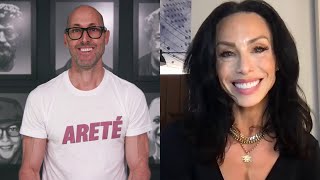
Dr. Gabrielle Lyon explains muscle-centric medicine: skeletal muscle is your largest endocrine organ and metabolic sink. Eat 0.7 to 1.0 grams of protein per pound of ideal body weight, split across meals with 30 to 50 grams each, within an 8 to 9 hour eating window. Pair it with resistance training.
Questions this video answers
0.7–1.0 grams per pound of ideal body weight.
About 30–50 grams of protein per meal (higher end—40–50 g—for older adults).
An ~8–9 hour eating window (implying ~15–16 hours fasting); eat 1–2 hours after waking and stop eating ~4 hours before bed.
Leucine — it activates the mTOR (mTORC1) pathway in skeletal muscle to trigger muscle protein synthesis.
Chapters
Foreign. Pm +1 +1 +1 Gabrielle Lyon is going to join us today. She is figuring out the WI fi from her hotel. My apologies for the delay. I figured I would come in, say hi, get the party started, then we will bring her in. We're going to go 45 minutes or so. Did I just. Did I just blink out in the middle of my Hello. Perfect. Rewind to the beginning.
You were just saying that Gabrielle will be joining us. She's figuring out the WI fi and.
Then apparently I'm figuring out the WI fi as well. Starlink business. Bless you. It is a miracle to be with you here today. Gabrielle will join us when she joins us and I figured I'd come in and say hi while we give her the space she needs to officially get connected. Great to see you, Stephanie. Coach Lanny, Roger, great to see you. Amy, Josh, Adam, Sweetness. Megan, Anthony, Gary, Ryan, Heidi, Colleen, Roy, Lydia. Plus one, Kitty. Plus a arete T shirt. Is this the first official are at a T shirt spotting? Other than on my body. Wear them, folks. Wear them. You'll get a shout out. Roger's got his. Look at that. You look great. Plus one, Kitty. It's a sharp looking T shirt. I'm biased, but that looks fantastic. What we got Kelly throwing on his. You look great, sir. Please do costume change if you feel so inspired and have your arete T shirt. Plus all of you. Paul, great to see you. Daniela, great to see you. Ryan. And your mustache. Great to see you. Socrates, Becky, Kyle, Christopher, Kelly, Arete again and column. Wonderful to see you on the first screen. Everybody going deep. Krista, Kyle, Eloy, Aki, Mark, Monica, Great to see you. I. I felt the share even though we weren't able to get to it the other day. Bless you. Jamil, Kate, Sarah, we got another coach. Kevin's rocking the art day. Let's go, heroes. So fun. Yesterday was a good day. Emerson was a little rusty. We got an opportunity to learn a lot. He won two, did not lose any, but drew three matches, literally three times more than he had ever drawn in his entire life, which was fun. So we had a ton of fun. Winning or drawing in the case of chess, not losing, but drawing and learning in the process. So that was awesome. But let's flip the switch. Oh, we got Gabrielle here. Just got a text that she is here. Nat, you want to bring her in?
She's here. There she is.
What? Where we go? Let's get her up. There you are.
Good to see you too.
Travel day.
Yep, it was a travel day. I'm here with my husband. We're in New York City. Very excited to be here.
Oh, my goodness. Well, I'm excited that you are here. Bless you. I was just kind of know that you're going to be joining us and saying hello, but I'm so thrilled to connect and feel so connected already via all of our texts. And here we are in person to talk about your book coming out this week. Forever.
Tomorrow.
No way. Tomorrow. Oh, my goodness. Goosebumps. 29 days for us. So I'm feeling the countdown 29 days away. How you feeling right now with the big book coming out tomorrow?
I'm excited. It's my first book and it's this crazy thing. It's so much bigger than just me. It really is about the mission. And I'm excited. That mission can get out there. That's what I care about.
Let's go there. So let's just jump straight in. So the mission. What's the mission? Yeah.
So the mission is to change the paradigm of health and wellness. Right now we focus all about obesity, cardiovascular disease, Alzheimer's disease, aging, frailty. And we think about it as something out there, but something that we're always trying to fix. But the reality is all of these relate to the health of skeletal muscle, and that happens decades earlier. So obesity, diabetes, cardiovascular disease are rooted strongly in the health of skeletal muscle. If we can begin to focus on. On what we have to gain, which is the health of this endocrine organ system, the largest organ system in the body, which is muscle, and shift away from focusing on what we have to lose, we have a chance at changing the narrative. It is empowering. It is makes people capable. And really that's the mission. It's that the sole focus is skeletal muscle is a pinnacle, not the periphery.
Yeah, I love it. And one of the, one of the. The frames that you use in the book, and I have yet to read the book completely, Alexandra stole it. So she, she got it and she's like all reading it. I'm like, come on, let's go. And then as we moved up our. Our talk, we were talking about things that I was, I was really excited to cover with you. But one of the main distinctions that you talk about, and then we'll step back because I want to hear what it means for you to be forever strong, et cetera. But fat loss versus muscle gain was implicit to what you were describing. So. So talk to us about why that distinc.
Yes. And first of all, I would love to frame this for your heroic group and here is why. The heroic group is really about making incredible humans. And there's one thing that is the common denominator, that is a non negotiable and that is your physical health. You can be mentally strong and capable, etc, but you must be dialed into your physical health to make that needle move Right now. We've been trying to treat an obesity epidemic for the last 50 years. 50 years we have only gotten worse. And part of the reason is that we've focused on fat loss. These are not issues of fat loss. And in fact, I created muscle centric medicine and muscle centric medicine came from an aha moment. Do I have time to share this aha moment with you?
Oh my goodness. This is your show. I'm just getting some water so I can sit back and listen. This is so exciting. Let's go.
I, I did my fellowship in geriatrics and nutritional sciences at Washington University in St. Louis and the deal was I would work as a geriatrician during the day. Meaning for those of you guys who are joining us, it's individuals over the age of 65, sometimes not such in such great health in nursing homes. That would be my weekend excursion would be to go to nursing homes and typically these were on the dementia wards in the dementia units. And then during the day would be in the hospital doing hospital rounds. In the evenings I would do obesity medicine work. So I, part of my job as a fellow was to run an obesity clinic. And at the time we were looking at the interface between brain function and body composition. I fell in love with one of the participants. We'll just call her Betty. She was a mom of three, in her mid-50s. And we all have a Betty in our life. She put everybody before herself. It was what everybody else needed. And Betty had been trying to lose the same £20 for a lifetime. Yo, yo. Dieting, focusing on fat loss. And each year things got worse. Her metabolic profile got worse, her mental fortitude got worse, her confidence got worse. Because as we age, if you don't really dial things in, the body changes. I imaged Betsy's brain and her brain looked like the beginning of an Alzheimer's brain. And it was at that moment that I realized that we failed her. We failed her as a medical community. We failed her with the information that we were giving her to exercise more and eat less rather than understanding that we have to focus on the health of skeletal muscle and that this is the origin of all these diseases that she was going to be facing. And I realized that we had to do better. I dove into the literature, and all the literature was still focused on fat loss, as if this was the primary aspect of health and wellness. It's not obesity, excess body fat. These are just symptoms of unhealthy skeletal muscle that has to be addressed first. This book has the potential to change the narrative of medicine, to change the way we begin to think about health, longevity from a root cause perspective.
That's so good. And the subtitle was. Well, go ahead.
Yeah. And that's. That's the mission. That's why this book was written. This book is written for everybody. It's not written for physicians. It's not written for people that have to be good at science. It is. It's for the people.
Yeah. And you were. I mean, you talked publicly about your work with some of the elite operators in the world, right?
Yes, yes.
Okay, so. So one of the connections that Gabrielle have is I think you were on a panel with, with Brittany Loney. Is that right? Okay, cool. So Brittany, dear friend, heroic coach. So Brittany Loney and Gabrielle were on the same panel at a special forces kind of workshop symposium, like the global event. She was talking about the mental side, you were talking about the physical side. But Gabrielle's working with the most peak performers, special forces operators in the world and those who are struggling just to get out of bed in the morning is how we frame it up. And then your point on, we got to get our energy dialed in if we're going to show up, as we like to say in your work and your love. But when you were starting to talk about the heroic community, it struck me as, yeah, yeah, yeah, we need to have strength for two is one of the frames we always use. A hero is a protector. A hero has strength for two. Their secret weapon is love. So one of the reasons why I'm such a big fan of you, beyond a lot of other reasons, is you bringing that message to bear with the scientific grounding.
And.
And then the WHO talks about skeletal muscle as the primary driver here. So the opportunity to truly change the way the medical field thinks about this is very, very inspiring for me. But let's step back. We kind of got a little bit into it with the fat loss and the muscle building, which we'll come back to, but Forever Strong subtitle A new science based strategy for aging well how to reboot your body to burn fat, fight heart disease, reverse diabetes, Stay sharp, build muscle and boost energy. Now please share a link in the. The chat to the Amazon page literally comes out tomorrow. Forever Strong you know, as an author with a book coming out in 29 days.
Yeah.
The title matters and it's. It means something. How did we arrive at. How did you arrive at Forever Strong?
The book is about global strength. It's not just about physical strength. And what you said before. I'm married to a Navy seal. A part of our practice is all special operations. We work with Navy Seal, the Navy Seal Future Foundation. I work with Hunter 7. We're very involved in elite war fighter care. One of the privileges of being able to treat some of the most elite, elite warriors that exist today is you get to peel back the layers and peer inside as to how they actually process information. And someone could say to me, well, I'm not a Navy seal, and I could say, okay, you're right. But there's so much that we can learn, and what we can learn from them on their health journey translates to strength. It really differentiates between individuals that become an asset versus a liability. This book, while it does talk about physical strengths, it talks about the myths of nutrition and why it's not just about cardio. It is about true physical strength and who you have to become to actually get to where you need to be. Meaning skeletal muscle is a currency. It is a currency. It is your currency of health, but it's a currency that you cannot buy, that you cannot bargain for, that you cannot trade. It is a currency that is 100% of the time earned and the person that you have to become to execute the actions necessary trickle down to health and wellness. This book, Forever Strong is lessons that I've learned from working with operators over the years from elite entrepreneurs, because they're not that different. There are core fundamental principles that they execute on that are not that different, and they're actually somewhat surprising. The other thing I thought was important is, again, I'm a physician who sees patients. I still have a clinical practice. And one of the biggest things that you have to be able to prescribe is hope. And the way you prescribe, hope and assurance is through evidence based empowerment. And that's exactly where the title comes from. Forever Strong. It's never too late.
Super inspiring. And so many threads I already want to pull on that. So as you were talking about the seals and what you learned, you know, getting into their mindset, how they process information, how they show up. One of the other distinctions I love that you make in the book is setting goals versus setting standards. So that just arose for me as. All right, what did you get from them as it relates to that distinction?
Yeah, there's. We have this narrative of how we should all set goals and that your goal should be you're going to wake up and do X, Y and Z. Or maybe you have short term weight loss goals or short term health goals. But what becomes more powerful is if you set a standard for how you interface with the world and how you operate within the world. You set a standard of discipline, you wake up early at this time, you execute on this, you train, this is your nutrition plan. When you set standards, you don't even have to set goals because you are always striving and executing on a architecture that is built on your values.
Oh, that's so good. And the goal becomes to live up to your standards. So this is where you and I get along as well. This is what you're capable of. Let's go. What are some of the standards that you've seen and that you encourage us to set for ourselves and, you know, kind of that identity and the, the things we're striving to embody such that we're more consistently doing it. Then we'll get into why skeletal muscle is so important and all the other things.
Well, a standard is very different for everybody. There's one thing that, again with a standard, is I believe that we should set standards for ourselves as it relates to health and wellness. That means a few things. And I talk about that in the book. You know how you're going to do your nutrition, it's not chaotic. You're going to execute on the standard that you set for yourself. That is disciplined. You are going to train. Right. These are all standards. There's a couple of other things that I think are really, really important. And one of the other things is understanding where you are and where you feel worthy to get to. And I know that that might be a little bit of an off the wall kind of recommendation, but the standards for your life and the capacity for your health will only go as high as your understanding of your own personal worthiness. That has to be addressed. The other thing, I know that we're talking about standards, but the other thing that I'd really love to share that would be that is so valuable for your community is that the highest level performers are very neutral. They are very neutral going into an event, going in to execute on a big deal, going into an event to show up for. I mean, I don't know if war is a good example. My husband is sitting over here, probably so maybe war is not a good idea as it relates to neutrality. But individuals that have the ability to temper the highs and lows. I'll give you an example. I have one entrepreneurial patient who puts on this huge event every year. And every year it is absolutely predictable that he will crash and burn immediately after. And each time he's shocked by his own personal experience. Every time he's shocked happens every single time. What an individual has to understand is that at the height of something that matters to you, as high as you're going to go, that is a point of vulnerability. So for you, Brian, you've got this book coming out at the peak, at the pinnacle of the excitement is where individuals are most vulnerable. And as high as they go is as low as they go if they do not temper it. The meaning of stress, the meaning of the experience. And I know that that sounds a bit counterintuitive, but I see it all the time. And those individuals that set a standard that is high for whatever it is that is meaningful to them are less pushed around.
Is what comes up for me. So then, you know, one of the things that we come back to again and again and again is what my coach, Phil Stutz, calls emotional stamina that I call antifragile confidence. I hear hubby makes cameos once in a while, so maybe we're going to get lucky enough to have a cameo here. That would be phenomenal. Alexander told me about one of the chats you guys had where the two of you showed up and it was just so great. So fingers crossed if he's willing. That's so good. Are we actually going to get you on camera, brother? Look at you. I heard you were off camera last time. This is so good to see you. Yeah, you too. Nice to meet you.
So for anyone that doesn't know Mark Devine is one of our very dear friends. Mark Devine helped train up Shane before buds 12 or so years ago. More 14, 15.
Anyway, well, and then Mark connected us and of course that the depth of that connection and then your dad and all that is just so good. But talking about the highs and lows is kind of how I see it, you know, and as, as Phil Stott says, the worse you feel, you take it off. Shane, I was, I was looking forward to your potential. Dude, let's go. No, do whatever you need to do. Just the, you know, the worse you feel, the more committed you are to your protocol. Is one of his things that I talk a lot about in my work. But the better you feel, the more committed you are to your protocol. So knowing who you are, maintaining that calm Confidence, the neutrality, but the discipline on the basic fundamentals, especially when you find yourself either really up or really down. That's when we, as Mark says, simplify the battlefield front side, focus, execute what needs to get done at the standards and just do what you do when you're at your best, especially when you're at your worst or you're feeling that almost manicy, or just the all in this, you know, that can't be sustained. You know, that beautiful oscillation. But I just felt resonance with that completely, of course. But love it, love the perspective. And again, appreciate you coming on camera there, Shane. Yeah, for sure. All right, we'll let you step off.
Bye, honey.
Again, so many different things. Let's go to skeletal muscle. So I just want to talk about it. We've said it, you know, but. But skeletal muscle is what, the largest endocrine organ. I've never thought about that as, as a. When you say it out. Oh, wow, okay, cool. Why don't we talk about that more? But just define it for us and why it's important.
Yeah.
Then I want to talk about how we actually address it with certain nutritional protocols, training protocols, et cetera.
Here. Here is the buy in that I want to get from the heroic community. I have never had a patient say, I regret being strong physically and strong and having capacity. Never in the history of any of my patients have they ever said that they regret this. Skeletal muscle is the largest organ system in the body. That's right. You heard it. It's not the skin. It is actually an endocrine organ. Skeletal muscle is the only organ system that we have voluntary control over. There's other kinds of muscles. There's smooth and cardiac muscle. Neither of those muscles we have control over. Skeletal muscle makes up 40% of the body when it is healthy. Can you imagine what that does for us when it has pathology, meaning when it is more unhealthy? Can you imagine what that does to us? Skeletal muscle, when you think about it, you think about the seals. They're jacked and tan and usually have good hair or whatever it is that they are. But skeletal muscle actually has so much more than that. When you contract skeletal muscle, the body was designed to. To be cultivated under resistance and under pressure. When you train, when you contract skeletal muscle, it releases myokines. Myokines are molecules that travel throughout the body. They have local effects, they have systemic effects. It affects the brain. It interfaces with the immune system. We've all heard of the cytokine storm. Contracting skeletal muscle releases. There's hundreds of different myokines, but we'll say Interleukin 6 is probably the most famous. And it can counterbalance inflammation in the body. The impact of not just having skeletal muscle, but healthy training skeletal muscle releases something called glutamine, which is a semi essential amino acid that feeds white blood cells. There are also myokines that help suppress tumor markers and tumor genes above and beyond looking jacked and tan and having mobility. It is an organ system that provides myo kinds that improve neurogenesis, brain function, mood. So that's one thing that skeletal muscle does. It's also your body armor. It is not if, it is when that you will, you will call on skeletal muscle to help you. It's not if, but it's when. And that could be being sick for a week. It could be some other kind of catabolic crisis. It could be whatever it is, none of us have perfect health throughout our whole life. It's just not the reality. Skeletal muscle is your body armor. It is what your body is going to use to protect itself, not just physically, but also the amino acids that make up the that skeletal muscle. It's incredible. It is also, and this part may be obvious, it is your glucose. It's your sink, it's your metabolic sink. And what does that mean? That means the food that you eat, 80% of that glucose gets disposed of in skeletal muscle. The more healthy skeletal muscle you have, the greater your place for glucose disposal. Everyone here is thinking, why do I care about glucose disposal? You definitely care about diabetes. You definitely care about obesity. More than 40% of Americans are struggling on some level with that. So just by the numbers, you're going to care about that. Skeletal muscle is the tissue and the organ system that protects us from that. And the health of that, whether it's good or bad, will determine these outcomes. So that's just a few reasons. And then one more thing, One more thing. Skeletal muscle is a nutrient sensing organ. It senses the quality of the food and diet.
So there's all the questions we can get into on my goodness, how is this something that's so important, yet the first time that I'm certainly hearing about it in this context? And again, when I look at your book, I see Peter az outlived. So if you're into Peter a work without Liv, what you'll see is fitness. He's leaning on a lot of Gabrielle's work and a lot of the work that she's bringing to a bear in her own powerful style. But I think, like, how is it possible this isn't already part of the conversation? We'll save that for another time. Yeah, but then. Yeah, yeah, unless you want to go off on that a little bit. But then practically speaking, I'm just really excited to hear your top recommendations for us here that we should be thinking about in my mind know, perhaps naively, but immediately goes to the two obvious things which is what we're eating and how we're moving our bodies. And of course there's the, you know, sleep and all those things. But what are the, the, the top things you encourage us to think about as we think about how to optimize our skeletal muscular system to have all those benefits you briefly told us about?
Well, what is one thing that everybody does aside from breathe?
Yep. Eat.
They eat. We have to nail food because it's something that we all do. The way in which you optimize food. And again, I talk a lot and we don't have time to necessarily go into everything. But there's two reasons I highlight skeletal muscle so much. Because number one, it is the only organ system that you can voluntarily control. We can eat in a way and train in a way that directly affects the plasticity of this organization. Organ system. So that's number one and number two, skeletal muscle. Well, we'll just stick with number one. We're going to stick with number one. When you think, oh, I remember what I was going to say when you eat for skeletal muscle health, everything else falls into place. Everything else falls into place. Here's what we talk about when we talk about skeletal muscle health. It's probably what everybody's thinking the obvious, which is dietary protein. It is the most essential macronutrient that we have. Everything that you see, everyone here on zoom, everyone that you're looking at, you require dietary protein. And everything that you're looking at is made up of that. Dietary protein is a non negotiable and it is the only macronutrient whose needs change over time. Your fat and carbohydrates, you can have the same amount. Once you're an adult, you could have the same amount from being 25 to 85. But you can't do that for dietary protein. Dietary protein needs. I'm just going to give you guys something very practical. Ideal range would be 0.7 to 1 gram per pound, ideal body weight. And that is where the evidence is. Even though the RDA which is 08 grams per kg or 0.37 grams per pound body weight, that has not been updated since 1968 and that is the minimum to prevent deficiencies, not for optimal health. So anyone here that is on the mature end, it is critical that if you take nothing else away from this conversation is that you really hit these protein needs. Because it, it supports your architecture, it supports the infrastructure of your body. No matter if you're on the vegetarian camp or you're a flexitarian or you're whatever, whatever your views are. Because you must remember that nutrition is never an empirical conversation, even though it is an empirical science. Nutrition, I am very sensitive to the fact that the lens at which we view it is empirical. But there is a lot of other things tied to those conversations. But 0.7 to 1 gram per pound, ideal body weight, the way in which we distribute it certainly matters as we age. And when I say age, if you are over 25, you should be listening to what I'm saying because I'm about to drop some bombs on you that you just do these one or two things, I guarantee you you will feel better. I have been seeing patients since I've been a doctor since 2006. That is a lot of nutrition and a lot of patients to see. The first meal of the day and the last meal of the day are the most important. Here's why. The first meal of the day, you are coming out of an overnight fast. You are in a catabolic state. Skeletal muscle is primed to be fed. It is primed to be trigger. And I mentioned that skeletal muscle is a nutrient sensing organ and it senses the protein quality of the diet. What does that mean? That means we talk about protein as if it's one thing. Protein is actually 20 different amino acids. Each one of these amino acids is an individual nutrient with diverse biological roles. Yet you look at the back of a label and it just says protein. Nine of these amino acids are essential, meaning the body cannot make them. This is where the conversation between high quality proteins and low quality proteins come from. It is purely a biological number. High quality proteins are considered to be from animal sources. Low quality proteins are considered to be from plants based on the amino acids. Yet when we look at the back of a label, it will just give us one number of protein. That's very misleading. Now why is it so important? I'm giving you background because if you know the why, then you will be able to execute on the how. Skeletal muscle over time requires a certain amount of protein to be eaten at once. And that we'll just say is 30 to 50 grams at one time. The reason this is is because of the amino Acid, leucine. It's an essential amino acid that is required for muscle to be stimulated. You either stimulate it or you don't. It's like turning the key into a car. You either, you can turn the car on or, or you don't. You either turn it on or you don't. When you are eating below 30 grams of protein, you are not turning that car on while you're getting dietary protein. The goal as we age is to protect skeletal muscle. And if you have followed along on the story that skeletal muscle is a nutrient sensing organ, it either senses the amount or it doesn't. And the way in which we have the muscle to sense the amount of protein is it has to reach a certain level. The reason is, is because the process of muscle protein synthesis is expensive. It's a highly valuable system. So in order for it to be turned on, it has to know that it has the building blocks to make it happen. So 30 to 50 grams is critical. Now where this comes to be so important to understand is the average American will eat a small protein breakfast, a small protein lunch, and then a big steak dinner. The protein distribution is completely skewed. What happens over time is if you are older, if you are sedentary, you're not able to stimulate that tissue. It's, it's not as beneficial it the way in which you retain skeletal muscle and you optimize body composition. Because you guys are here, you're looking for optimization, right? You look, you are looking to be the best version of yourself. First meal of the day, between 30 and 50 grams of protein, no matter what. And if you are older, go for higher. If you're older, it should be 40 to 50. That could be two scoops of whey protein. It could be some kind of eggs and a little and another scoop of whey protein. Or it could be Greek yogurt, or it could be, doesn't have to be complicated to be effective. And then that last meal before you are going into an overnight fast, that last meal should be robust and dietary protein. If everybody on this call did those two things that first and that last meal, your energy will improve, your hunger will improve, your body composition will improve. And again, obviously you have to control for carbohydrates and overall calories. But if I can just ask.
So good. I'm so fired up right now. I got so many follow up questions. What else? I interrupted your final thought there. No, no.
But if I can ask you guys to execute on this, I would be happy.
Amazing. And again, check out the Book for the details, love the overview. So then just two things come to mind. One, Alexander wanted me to ask you about MTOR because I know some people here will be saying yeah, yeah but what about. I heard all this, the too much protein will do this and that. Yeah but then just very personally, what are your thoughts on, on fasting windows and how long you would recommend? We'll use me as a case study. Right. If you were architecting my ideal first meal, last meal window fasting, what would you say in terms of plugging in that data points and then whatever generalizability we may need to make outside of a 49 year old dude that's lean yet does his burpees and all these things and enjoys. Let's go. You know, eager to hear your thoughts on that fasting window length and then first meal, last meal and how many hours before bed would be the other question in terms of that protein consumption.
Okay, and then I'll circle back to MTOR because that's a very important question to answer fasting. I used to always recommend that individuals fast from start eating at noon to 8. I no longer believe that to be effective and the reason is there's many different ways to fast but we're gonna, we'll, we'll talk about it in a time restricted window. So you'll eat in an eight to nine hour window. I do believe that there is benefit for two main reasons. Number one, it allows for control of calories and number two, it allows for bowel rest. Again, I'm a clinician who sees patients and all the warriors by the way come back with some kind of special. In fact that's what I was talking about Global Operations Health week was gastrointestinal issues. One effective way in mitigating this constant feeling of bloating and etc, whatever it is while dealing with any kind of pathogen is to restrict that feeding window. There's also evidence to support that circadian alignment. This idea of a 24 hour wake sleep cycle, we think about circadian entrainment meaning we wake up when the sun comes up. We go to sleep when, when the sun goes down. The other major factor in circadian alignment is food is feeding. So making sure that you're getting your feeding windows appropriate can have positive impact on your health and wellness. I recommend eating one to two hours after waking up if you can't and then stopping four hours before bed.
Four. Perfect. Yeah, that's huge. And then an 18 hour window, not a, not a four or five or six, an eight to nine hour eating window, which gives you a 15, 16 hour fasting window. And you can overdo that, obviously. Right. So you can, I imagine when we're talking about skeletal muscle, too much fasting is not a. Is no longer a good thing. Correct. Exciting.
Personally, also, too much fasting, if you are older, you got to get off that fasting train or if you have any kind of chronic condition or you've been a yo yo dieter, get off that fasting train. That's what happened to Betty. She would like fast all day. There's only two ways to stimulate skeletal muscle. It's through training and diet. And exercise is probably more effective, but again, you have to get an appropriate stimulus and you could go your whole life without training, whereas 100% of people eat. You gotta nail that. You gotta get the low hanging fruit dialed in.
Y.
Did you have more questions on fasting.
Now just to recap though. So then folks, we're talking about an eight to nine hour eating window, which means we have a 15 to 16 hour fasting window, which is, which is important. We talked about 13 hours plus with Sachin Panda. We've, you know, talked about his work and whatnot. But that's a big distinction for me personally. And then the four hours before we go to bed, I've talked about. But you just gave me a more concrete thing and I just want to celebrate. Team. I've talked about Phil Stutz a lot where he gives me a distinction and I don't need to think about it anymore. I know Gabrielle well enough to know her believability and credibility. So this is a thing for me. That's a personally powerful distinction. Now again, you need to run it through your algorithms and do all your homework. But I just want to celebrate and thank you for that personally. And that's perfect. Mtor. Knowing that we could talk about this for a long time. Eager to hear your Gabriel notes on.
That subject, I would love to frame the conversation by telling you a moment about my mentor. My mentor's name is Dr. Donald Layman and he is one of the godfathers of protein metabolism. And in fact, when we talk about mechanistic target of rapamycin, for those of you guys who are listening or maybe have never heard of it, it's also known as MTOR or MTOR. C1 is really what we're going to focus on. And mechanistic target of rapamycin is a growth promoter. It's a complex. A growth promoter, a growth promoting complex. In every single cell in the body. There is MTOR in the Brain, there's MTOR in the heart, in the liver, the kidney, the pancreas and skeletal muscle. Mtor. This protein complex is sensitive to different things depending on where in the body it is. What is its role? Its role is in growth promotion. What are other ways to stimulate mtor? Mechanistic target of rapamycin. Exercise resistance training also stimulates mtor. Mechanistic target of rapamycin in skeletal muscle. MTOR is stimulated by exercise, by hormones, by stress, by insulin, by calories and by amino acids. Mechanistic target of rapamycin in skeletal muscle is exquisitely sensitive to leucine. And in fact, leucine is that amino acid that is necessary for muscle protein synthesis. That is exactly the pathway necessary. No one on this call believes that skeletal muscle is detrimental to health and well being. Do you not one person. We all recognize, including physicians, including everybody, that the health of your skeletal muscle from an aging standpoint is critical. Dietary protein I spoke about stimulates muscle protein synthesis. The mechanism through which it does that is MTOR. You eat 30 grams of protein, 30 to 50. You stimulate mechanistic target of rapamycin and downstream effect, you stimulate muscle protein synthesis. If MTOR was bad, then the same would be said for exercise because that is also a stimulate that also stimulates MTOR signaling in skeletal muscle. MTOR is uniquely sensitive to amino acids in muscle. Only in the pancreas. In the liver, mechanistic target of rapamycin is much more sensitive to excess carbohydrates, excess energy and insulin. When you are overeating and you are releasing more insulin and you have more calories, this stimulates MTOR outside of skeletal muscle. This is not a good thing. So the real conversation is if you care about MTOR as a risk factor in a, again, a growth promoter, then you have to care about total calories, especially calories that stimulate insulin.
So good. And then the distinction between skeletal muscle vis organs like the pancreas. Yeah, and the relationship between protein stimulating it here, but then the excess carbohydrates, and just to throw a name on it, refined carbohydrates, even more precisely, sugar, which is dysregulating the insulin. And it usually goes, I'm thinking of my brother, as I think about this, who died of pancreatic cancer. So my brother had it seesawed. Too much fat, too little muscle. Pancreatic cancer. It clicked for me as you shared that now when I talked about conquering cancer one on one and these things, I didn't have the nuanced distinction. You just Made where mtor was universally bad, to put it, you know, crassly and unnuanced. What you just described as a longer chat but resonated with me deeply. And I will bless my wife. She's like, make sure you ask her about mentor. I'm like, that's pretty in the weeds. See if we get there. But I'm so happy we did. We need to have a part two. I unfortunately have a hard stop and I know that you just, just landed, just got off. I would love to do that. I am so excited to support you. I'm so excited to be connected. I can't wait to see you and Shane and the kids. We got pictures of.
Leonidas, my son Leonidas.
Leonidas wearing his hero in training T shirt. It is one of the coolest pictures in the history of cool pictures. Knowing again, we could talk about so much more. We barely scratched the surface. What's the one thing you want us to have in our minds as we take the next steps? And I'll say it again, forever strong. Check it out. Nat, throw the link up again, please. Launches tomorrow. You'll get it in your inbox the day after. If you're in the U.S. what do you want to leave us with as we go out?
Well, number one, thank you guys. Thank you all. And I will say that muscle is the organ of longevity and that together we can all become more strong, more capable. But again, this is something that we do together as a team.
I love it. Moving from theory to practice to mastery together today. Bless you. Thank you for settling in and getting ready so quickly. Shane, I look forward to seeing you in person, brother. And thanks for making the cameo. Last time I heard you were just talking off camera. So I don't take it lightly that you were willing to come on camera here. Can't wait to see you and and connect in person. Bless you both. Bless the heroes you're training and thank you for all the hard work you're all doing and look forward to seeing you soon.
Bye, guys.
All right. See. That was a rapid fire in and out. I got a 2 o' clock interview of my own, which is why we need to keep that one short. But this is powerful stuff. If you've gotten into Peter Attia's work in outlive, you'll see what I reflected on in terms of fitness being one of the greatest predictors of our well being and our morbidity. He's basing a lot of his work on Gabrielle Line and her mentor, which is redefining the Importance of skeletal muscle, obviously, as we just discussed, of protein and of vigorous training, where we're actually building that throughout our lifetimes. Super excited about the book. We'll be coming back to it and we'll bring her back. We had originally scheduled it for November and then just wanted to support her with her launch, which is coming up tomorrow, which is why we called an audible and brought her in so quickly in advance of that scheduled time in November. But I hope you got one thing out of it. I hope that you, if you feel so inspired, check it out. I rarely, you know, obviously, push. I'm not bashful, obviously, when I'm excited about something, but I think this is important. And excited to make distinctions with you and excited for you all to connect with one another. Well, I go have fun connecting. And then we've got a busy week Tuesday. Tomorrow we've got the founder of Comic Con, who, you know, one of the world's leading superhero guys who I met at dinner and then at a movie premiere last week in Toronto. And then on Thursday, I think it's Ben Greenfield. And then on Friday, we've got Michael Bungay Stainier. So we've got a busy week of heroic chats with Masters and let's flip the switch on the way in. We didn't do it. Let's do it for both the beginning and the end. If you have not officially invited the best, most heroic, most grounded, strong version of yourself to be with us today, let's do it. The physical posture supported by your skeletal muscles, no less. Calm, confident, grounded, strong, energized and tranquil. As we recommit to living with wisdom, discipline, love, courage, gratitude, hope, curiosity, and zest. Creating the strength for two so we can help create a world in which 51% of humanity is flourishing by 2051. Starting with us, as always, moving from theory to practice to mastery together today, day one. All in appreciate you all. Look forward to seeing you soon, Nat.






