Heroic Chat with George Mumford: Developing Pure Perception
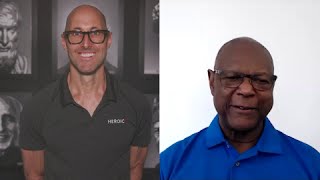
George Mumford, who trained Michael Jordan and Kobe Bryant in mindfulness, talks about pure perception and the space between stimulus and response. He shares his path from addiction to stress-management coaching, and explains how slowing down and anchoring to breath creates the mental clarity elite athletes need.
Chapters
Foreign.
P.m. central time plus a few, which means it is day one. Today we are blessed to be with one of my favorite human beings on the planet, George Mumford. We've featured George and his wisdom in our notes on the Mindful Athlete Philosopher's note coming up on his newest book, Unlocked. But as you may know, in addition to just having an incredible story that we're going to talk about today and his heroic quest, George is one of the world's leading thinkers on mindfulness who has applied that in the context, well, a lot of different contexts. But you may know that he was Michael Jordan's mindfulness coach. Kobe Bryant worked with Phil Jackson, the Chicago Bulls, Los Angeles Lakers, and people from just such a broad spectrum of well being. And George, as I said a moment ago and to you a moment before, I love you, I appreciate you. You're one of my favorite human beings on the planet. And your humility, your wisdom and just your quiet power really, really inspires me. So thank you so much for taking the time to be with us today.
So thank you. And I'm excited to be here. And yeah, so what I would like if people could hear me a little bit. People are still coming in. I don't know if you want to start now, but I like to. So for, for instance, for me, so I, I'm in my workspace so I had to drive through traffic and, and you know, jump over things to get here and it would really be helpful and I suspect a lot of you have busy lives also and how to juggle things just to be here. And what I'd like to do is actually just physically and mentally and spiritually and emotionally be here in this space. So I'd like to do a short little exercise I call arrival. So you're not doing anything special. If you're standing or sitting, whatever the posture you're in, that's fine. Just be aware of it. So from for instance, I'm sitting, I have my sternum up and I'm aware of sitting and I can lightly shut my eyes and I can engage in the belly breathing. So I'm breathing in, belly expands. And as I breathe in, keeping the mouth closed and breathing through the nose, I can feel myself sitting, a felt sense of sitting and at the same time breathing, breathing in, expanding the belly and feeling the breath go all the way down to the finger, you know, all the way down to the feet, out to the fingers, up to the top of the head. So it's like the whole body is being breathed. So this is something we do all the time, but we don't direct our attention to it. And it's an inside out process. So you're inside your body, feeling your body in a seated posture and just allowing it to be just as it is, is breathing in, feeling the body, the felt sense of sitting with the touch points for your feet and your sit bones and your hands and lightly shutting your eyes, your eyelids are lightly shut. Just sitting and breathing and knowing it. This is what we do all day long. But we want to direct attention to it and actually experience sitting and breathing and knowing it so that we are actually resting in the breath, resting in the body. It becomes our anchor to anchor us into the here and now. And I'll just offer an image of you take a pebble or stone and you drop it into a lake. And that process involves stopping, dropping. And as the pebbles dropping and moving towards the lake bottom, there's a calming that happens. And so they're stopping, dropping, calming, and then resting. That pebble rock is resting on that lake bottom. And it doesn't matter what comes and goes, fish, currents, debris, there's this ability to just rest, be at rest, to be still. And so when we can rest, we can heal, we can renew, we can recover, we can reset, but we'll just take a few moments of just sitting and breathing and knowing it. With that image of that pebble resting on the lake bottom, not being bothered by anything that comes and goes, whether it's fish or human or debris or current, there's this ability to just be at rest, which allows for the healing. And once again, all we're doing is focusing on the body and the breath. And as a result of that, we're stopping, dropping. The calming comes about naturally as a process of just stopping and dropping. Then once we calm, we can rest. Once we rest, we can heal, we can renew, we can be here now. So we'll take a few more breath cycles, breathing in and breathing out and experiencing the entire body. And when you're ready, just breathing in, experiencing the entire body. And as you breathe out, letting go of the body, letting go of the breath and just opening your eyes. And Brian, I'd like to announce that we have arrived. We are here.
George, I'd like to announce that I'm open to spending the next 50 minutes together in your presence, breathing together. There's no other, more powerful way for us to connect to that best, most heroic version of ourselves and through that arrival process. Bless you. Thank you. And tell us about you, your story and you share it. You Know, a little bit in the Mindful athlete and a lot more in Unlocked. It's the definition of a heroic quest. The hero ignores the call, the hero struggles. The hero, as you quote, your quote was so good. Oh my goodness. I was going back through this, getting ready to write the note, and you had that quote about hell is not punishment, it's training. Oh, by Suzuki, just that beauty. But about your heroic quest, who are you? How did you arrive at this?
Yes, so it's interesting. So who am I? Well, I grew up in, in Boston and one of 13 children and being number 10 and just having this ability to feel people's senses. So I had, I guess you would call it like being an empath is feeling people's feelings, especially their pain and their suffering. And so when I was growing up, when I would explain or share with people how, how I was feeling, they say, you know, stop being so sensitive. Just, just, you know, just, just don't do that. This man up. And so I would shut down. And so I lived in my own little world. But anyway, as I matriculated through and I played sports, I would get injured all the time. I was injury prone. And even before that I would have stomach issues or GI issues, issues because of the stress in the family. My father was an alcoholic and, and so it was very traumatic around the household and, and all the other stuff of growing up with not, not a lot of stuff, you know, being, you know, maybe, you know, not, you know, being on that edge of hunger, whatever. But the reality is I, I use sports and I got involved in sports and then just fast forwarding, I got injured. Like, I fast forward to my sophomore year at UMass Amherst and I was rooming with Dr. J. Julius Irving, and we were playing pickup basketball. This was a. The team was playing pickup basketball. In those days, you didn't start until after Columbus Day. And so before then, you know, you just have organized team sessions. So I was trying out for the team. So I was working out with the team and this one of my competitors, when I was going up for a shot, he undercut me and I ended up hurting my ankle. And that pretty much ended my basketball career. So I was get addicted to pain meds and then alcohol and heroin and on and on, but I was functional. I got through college and I, I worked. And then at some point I got tired of being tired and, and I went into detox and I cleaned up. And when I got out of the detox, I realized I had chronic pain. And so I got into what was Called in those days, very cutting edge, called managing stress. So I learned about my body and my mind and how they were connected and how I could direct attention and I could take more responsibility for myself. So it was a lifestyle change. So instead of being a victim of going to the doctor or healthcare professional and saying, hey, you know, fix me, give me something or cut it out or do whatever you do, it was more like going in as a partner and being responsible and being able to share my direct experience so that they could titrate the treatment and then really focusing on, on this idea of instead of waiting for something. The old medical model was this neutral, but once you get symptoms and disability to even going to death, you do something about it. And so I learned that of course I was in distress, but when I got back to neutral, I learned how to move towards more levels of wellness so that I was continuing to evolve and grow and to get more through learning and just learning and discovering about myself, about my mind, body and how it related and how do I need to relate to things. So, so I just went into this process of, of self discovery and. And then from there I. It just kept going and going and going and. And then I started, you know, I worked as a financial analyst for 16 years, but at some point that didn't work and I went back to school and then I, I started doing. Training other people. But I was training other people even while I was working. So they come full circle. So I, I found myself working at the center for Mindfulness, which was part of UMass Medical Center. Stress Reduction and Relaxation program is what it called now people refer to it as the Mindfulness Based Stress Reduction. Back in the day we called it that. And so I was working at the clinic. I had a prison product. We had over 5,000 inmates go through. But anyway, so I was going there, working there and. And Phil knew Phil Jackson, I mean, excuse me, John knew Phil Jackson. And they were doing this summer training at Omega Institute. And that was after the. It was 93. So the Bulls had just won three NBA championships. And Phil wanted somebody to come in to work with the guys to how to deal with the stress of success. So think about that. They were already three time champions, but yet they were looking for improvement. They were looking for to get better. And Phil Jackson had this. He relates his players as whole beings with bodies, hearts, minds and souls. And so he was always looking for ways of how to help them grow professionally and personally. So he brought me in just to help him do that. And then in the interim Michael Jordan's father got, got murdered and Michael retired. So by the time I got there, they were in a full blown crisis. And so I was still working at the medical center, but I would go and work with them and, and I, it was interesting because I feel like all I've been doing is sharing my, my, my, my story, my experience, strength and hope. And, and so I went in and said, okay, so there's a crisis and it has two meanings. One is danger, we know that one, but there's opportunity here, so let's go for the opportunity. And they bought into that. And then we struggled for about a year and a half and then MJ came back in 95 and then 96, 97, 98. We were able to win three more championships. But at the same time, my relationship with the players and with Phil and being able to work with elite performers and people from Yale to jail, locker rooms and boardrooms, it was just me sharing what I had learned, sharing my experience, strength and hope. So for me, what's really important is this idea of if you want to keep something, you got to give it away. And then if you really, if I really wanted to learn something, I had to teach it. And so I just shifted and started focusing, following my bliss. And you talked about the hero's journey at the time when I was still working at the med work it not before the medical center, but when I was working in corporate America. And I remember going in one day to see my teacher, my meditation teacher, Larry Rosenberg, and he said, hey, what's going on? And I said, what do you mean? He says, you seem happy today. I said, I took a mental health day off from work. And he said, you should make a habit of that. So I ended up quitting my job at some point and then for two years just, just studying and doing other things. But I actually lived in a meditation center for six years. And part of that six years, which was the two years that I didn't work and I just focused on me and was able to, you know, do a lot of intense meditation retreats, like a 90 day silent retreat and a bunch of 13, 10 days, 6 weeks. So I really got into it and. But at the same time I was still working and, and wanted to figure out how to bring it to average people. So I was doing programs at, with Harvard, at Harvard University, working with their law students and just going to different places because when I was living at the meditation center, I would just go into youth centers or anybody, it could be a business and just introduce this Idea of mindfulness or being aware of being able to start to, to take personal responsibility and understand that you have this ability to be aware and actually be able to observe your experience in ways where you can self regulate, you can change your mind, heart and soul. You can, you can actually between the space between stimulus and response, you have the freedom and power to choose. But you have to understand it's something that we all have. That ability is just a matter of training and developing. But the first for me it was just recognition of oh, I have this ability and that I can, I can have control. I may not be able to control what happens to me, but I can control how I respond and react to it.
Beautiful. And there are about 1001 threads I want to pull on that story there. George, we're going to start, I want to go back to that, that moment in which you decided to retire to being tired in a moment. For now I want to step in between stimulus and response and can, and do that in a few different ways. Can we step back and can you tell us how you define mindfulness?
Yes. Well, it's interesting because that new mindfulness has been corrupted. To me, mindfulness is really, I would call it, and it's hard to describe, so I'm going to use some metaphors. So mindfulness is like having mirror mind. So when there's a mirror, whatever's in front of the mirror, that's what's reflected there. So it's a kind of awareness that is, is non judgmental and not. It's not. Well, you can have narrow mindfulness, but in general it's like mirror mind. Whatever is in front of the mind is reflected there. Now the challenge we have is that we have this ability. You know, what we do is we, when, when something happens that what we call that pure perception, that moment where we're just seeing the raw data is very short and so we see something and then immediately is infused with self reference. Abstract thinking or I remember this before. Associative. Abstract thinking. What does this mean? Associative thinking and embellishing it. Now, depending on whether it's pleasant or unpleasant, we're either embellishing it so that we, we want more of it or we're looking at it in a way where we will have aversion to it or we. So just think about this way. The nervous system is programmed to approach what is pleasant to avoid what is unpleasant. And if it's neither pleasant or unpleasant, I'm talking about indifference, not equanimity. Or, or this Ability to be still and be interested when it's in that neither pleasant or unpleasant, there's a spacing out or there's just not being present. Right. And so the idea is, how do we train ourselves? This is what mindfulness is about. To be able to be mindful, to be able to see things uncritically without pushing it away, without pulling it towards us, without even interpreting what it means. But this idea is like wisdom begins in wonder. This ability for letting the thing that's in front of us, the raw data, speak to us in his own language. And. And so that takes a lot to be vulnerable, to be able to just allow the unknown unfolding moment to unfold and trust that you're able to. If you can embrace it, to see it as it is, then you can. You can do something about it. So a lot of the time when we have an observation, when something happens, there's no space between stimulus and response. So we can start to see the. Let the thing speak to us in its own language because, you know, the way we're looking at things based on what we already know instead of looking at things in fresh and new ways. And that's the whole key to mindfulness is seeing things in fresh ways without the filters, without embellishments, by seeing it in the raw state that is sin, but letting it speak to us in his own language. And I'll give you an example of this. I use this example of the bus. When I used to catch the bus when I lived in Boston, and we. I used to take the. The train. I take a bus and then a train to this station. There's Forest Hills. And so when I get to the station, it's a platform train. So you got to run downstairs, and then you run and you have to catch your bus. One of the buses. So I run downstairs and I run and I look. You know, in those days, the. Where the bus was going was the local. You know, the destination was on the front of the bus. So you have to run and pick up the bus. And bus is about to turn, you know, pull off. So you look real quick and you see the letters B and R. And then you run and you get on the bus. That's what we do. Okay, it's B and R. That's got to be Brockton. Well, you get on a bus and you end up in Bridgewater instead of Brockton. So what was the problem? The problem was we didn't create enough space to go in and not just get the br, but get the next Letter V, R, I instead of B, R, O.
And.
But the thing is, can you stay out there so you get the whole name? So even though there's this tendency or this compulsion or this habitual way of just seeing a couple of letters and then. Then just filling in the blanks, because this is what the mind does. If it's no things, it fills in a blank. And then we do that instead of being able to let it speak to us. The, the, the sign on the bus, let ourselves take in the whole sign and create space so we can see and trust it. I can see the letter and still get on the bus. Does that make sense? So mindfulness, ability to see, to create space so you can let things that are there speak to us in his own language instead of us interpreting, instead of getting enough of the raw data so that we can actually make a choice.
I love it. So then let's step in between stimulus and response for the sake of a different context on the basketball court. So tell us how you taught this basic idea to either Jordan or Kobe. Like what would be a practical application in their world?
Yeah, so there's a. It's interesting because there's mindfulness, and I talk about it in my. The mind for athlete. There's mindfulness, but it's supported by insider wisdom, which can be information, rational, you know, using your rationality or, you know, being rational. And the third thing is having a direct experience of it or using your intuition. And so you have mindfulness, but you also have the other powers you have to make right effort, which is this idea of, of what I call continuous application of balanced energy. And then you have a focus. You gotta. The only thing is what you're doing in the here and now, you got to be able to focus on that, but you also have to have enough faith to be able to tolerate that vulnerability that we have to be to let things speak to us instead of interpreting what they are. So those things are so all operating. And so when you think about a basketball game or anything you do, you make mistakes. And so we, we film everything, you know, especially when you're playing the game. You know, you get video on it so you can look at it. So you're going to make mistakes. So the idea is, you know that certain things are going to happen. So you have to program yourself, have habit patterns where you see things and you're reacting, where there's no space between stimulus and response, but it's a positive reaction. It becomes like an automaticity. Right. But the idea is teaching them how to be able to slow things down. And this is what elite players tell you, that they were able to slow things down because and John Wooden, one of his favorite sayings to his players was be quick, but don't be in a hurry. So you gotta be quick but you can't be in a hurry. Being in a hurry is as you having that fear, doubt, insecurity or all of those, you know, like restlessness, doubt come in. But to have that confidence or that ease or that trust that we will figure it out and even if we make a mistake, we'll learn from it. So the idea was to teach them how to be able to see things. And in that seeing things it's interesting because we have this idea that everything's linear. Like you see something and then you do something. When in actuality the seeing and the behaving co arise. So when you see clearly, then your actions are going to be clear. And so what I was teaching them and helping them come from the eye of the hurricane. We're which, okay, there's a lot of unpredictability. You don't know what's going to happen. But if you can come from that place of rest that Joseph Campbell talked about where you're not compelled by fear, desire, but you're holding your center. When you can be still and know when you can see, there's a wisdom and a creativity that comes out of that. But you always have to keep in mind what's the information, what's the basic fundamentals, what, what are the, what are the principles? Principles don't change. So if you're playing defense, the principle is to stop penetration, especially mental penetration. The close out under control. If you're on offense, you want penetration, especially middle penetration, you know, being triple threat and whatever the defense gives you, you take it. So they, if they close out on you because they, they think you're a threat for a three point shot, you fake up and when they close out you, you go around them. So it's being able to make wise choices in that space. But, but there's principles, there's fundamentals that you have to master. And reality is no matter what the defense is doing, you got to be able to read it and then make the choice based on having clear vision. So to have great actions you got to have great images. And sometimes the images are, you know, what's in here, but it's really more about being able to see in real time what's happening now in fresh and new ways. And then by seeing it, there's a creativity, and there's a wisdom that comes out of that. Does that make sense?
It does. And again, it's. Some of it is, yes. And this is the perfect segue into unlocked. So then. Then we look at. Okay, yeah. And again, there's so many different nuances we can discuss with that in unlock. The subtitle is embrace your greatness, Find the flow, which is obviously part of what you just described there. And for success. So then when I read the book, and again, I can't wait to share the note with our community, it just felt like your beautiful take on my thing is flip the switch, invite that best, most heroic version of yourself to join us. I've got on the wall back there. Talk to us about what it means to be unlocked, and we'll kind of push from mindfulness to that engagement, that bodhisattva. We've returned to the world fully, fully alive. Yeah.
So being unlocked, I want to keep it really simple. Have you ever had the experience of misplacing or missing something? Misplacing something? Of course.
Yeah.
Trying really hard, especially if you got to do a podcast or something, you're really trying to find it and you feel all this pressure and you try to find it and you can't find it. And then once you let go, then it's right there. That's being unlocked is when whatever is. Now, I could talk about the hindrances, the fear, the doubt, whatever, but being unlocked is being able to honestly express yourself, to be able to flow. Just do what you're doing. There's no impediments. And so it's not like you're unlocked once and for. For all. It's like you can have moments of being unlocked. You can be in flow and be unlocked for a period of time. It's really more about. When I think about it, it's really more about having being open and seeing things in new and fresh ways. So you don't have any agenda. You're just reading and responding. Even though. So one of the details, I talk about one of the experiences I had with Kobe, and I talk about it in both books, being unlocked is being able to say, like, how I helped him unlock in the game was I said to him, the best way to score is not to try to score. So that's the same thing. If you lose something, don't try to find it. Just relax and, you know, you'll figure it out. You know, you'll. You'll do that. And so once I gave him that. So before that happened, Kobe had, he was thinking linearly, like, okay, I want to score 32 points in the game this four quarters. So obviously I have to score eight points in each quarter. So if you're playing 12 minute quarters and there's two minutes left in the quarter and you only scored two points, now you're going to force and try to figure out you got to score eight points. And in actuality that is actually locking you up instead of being open to the possibility that you could score as many points as you as possible, but don't. But you see what I'm saying? So just giving them that idea of the best way to score is not to try to score. Just be in a moment and let the game come to you. Just let things unfold. Because if you're looking for certain opportunities, the opportunities that are in front of you, you won't see it because you program yourself to, to block that out and just focus on certain scenarios that makes sense. And so we can do this all day. We get locked up because we get locked into habits of mind. One of the things that happens is that, you know, based on what we know, sometimes we override things. How many times have you seen something and something says, no, it won't be there because of this or that, and then you don't look. But in actuality, without that override that, that the audible, if we call it like Autobot, it says, no, don't do that, do this, you would have been able to see it, you would be able to experience things differently. So we have these habits of mind that keep us. And we have hideouts where we hide out from ourselves. We, you know, if it's pleasant, we move towards it. If it's unpleasant, we move away from it. And the whole deal here is to not move, to be still and just allow whatever's there to be there. Embrace it. And by embracing it, you'll see and you'll figure out what you need to do in order to, to create space between stimulus and response. And so it opens you up to many possibilities. Instead of being stuck in a fixed way of being, it's more like being more, more access to creativity, more access to allowing part of yourself to express themselves. And so it's, it's kind of a easy thing, but you can tell when you unlock because there's a feeling of freedom. And we know this from being in flow, being in the zone. One of the things we recognize when we're in the zone is there's a lack of self consciousness. So you're not even There and there's. There's a. There's an alignment with action and you know, intention and action. Just a co rising of being in harmony. And you're in a flow. It's like you're being carried by the current. Or it's like if you're driving on the street, like say if we were here, we're talking about like a mass out. There's a long street that you're driving down the street and you catch all the green lights. You're just in the flow, you're in the rhythm. And so there's a way of being able to express that. So when we can embrace ourselves, when we can embrace ourselves, to be self aware, to self regulate and therefore to have self mastery and to be able to train ourselves. So when the situation comes, we know what we want to do, we have an intention and then we allow it to happen. So we talk about Kobe. His intention is the score points. Well, by not being locked up, by having a certain fixed way of relating to it, but letting the unfold unknown moment arise in a way where you're able to see and respond to it in ways where you see way more opportunities to score than you would have had otherwise. Because your mind is open and your heart is open and you're trusting that, you know, you form the intention and then you'll be able to express it.
I love it. Okay, cool. So then let's actually go there and let's stay on the basketball court. Going to flow too. My understanding of Cheek Semi High's wisdom is you start with the target so you start with a clear goal. So ultimately the ultimate game would be to be alive in this moment. Right. And to respond with that. I love the mirror mind idea, that pure perception and allowing that trusting mindset that you've trained relentlessly on the fundamentals to be, you know, unlocked, to use your word again. And Phil was committed to. I know he didn't talk about it all the time, but talk to us about winning championships, talk to us about winning the game and scoring points and having that balance between the ambition of a Jordan and a Kobe, to be among, if not the greatest who have ever played and to win the championships and to win the games and to score the points in order to win the games with what we're talking about, with that full, raw, unlocked presence in the moment. How does that all relate to one another? And how did you and Phil and. And the team approach that?
Yes, thank you. Well, the thing about flow is. Let me talk about when you get in Flow. And you get into what you know, you get into a place, and so you get to a certain level. But just like the neuroscience will tell you, you know, you groove something, but then after it fires and it gets groove, it stops firing. So it's a step process. You have to keep pushing that boundary of your capacity. You gotta. You gotta play. Not using your word. You gotta play in your discomfort zone.
You know, I got that from you. What are you talking about? No, no, robots.
I like the way that, you know. But this is how you talk about it in your note. Yeah, so. But it's like, so you're always on the edge, so you have to get comfortable being uncomfortable. So to be in the lead performing like that. And it's not just in, in basketball, but I, I live in flow a lot, and I work with other people that I, I imagine people on this call have flow experiences, but because they don't know what to look for and they don't know how to analyze it and observe it in a way where you say, okay, how did I do that? And what were the ingredients to it? Now, chickset me, I talked about it, but here's the caveat. If you try to get in the flow, you won't get in the flow. So it's like everything else is indirectly. You don't. You, you know, you don't pursue happiness. Happiness ensues. So it's these things that. So. So I want to get back to this. So it's really about asking people what they want and who do you need to be to get where you want it.
Yeah, that's cool. Yeah.
So you have a goal, so you have to go and you pitch it a goal. But then you have to be involved in the process that gets you there. And so the process is not a straight line. It's a zigzag. So that means you have to be able to. To make mistakes and correct your mistakes and attribute your mistake not to not being fast enough or too slow, whatever, but attributing your mistake to. To making adjustments and what's the other thing I want to say? And then bringing more energy to bear effort instead of withdrawing and, and saying, oh, I can't do this, but saying, okay, this is an opportunity. And so that's what it is, is creating this, this ability, this learning environment where if you have a growth mindset, and it's about, you know, how do you take these roadblocks and turn them into stepping stones? And so that's the thing. So elite performance, they see things as Challenges, not as a crisis. So once again, it's like, oh, this is an opportunity. Oh, I'm really close. You know, I've done this, you know, many times. You know, Edison, you know, you tried. I don't know what the number is, but let's just say you tried 5,000 different filaments. Aren't you ready to quit? And his response is no, I know 5,000 ways in which it does not work. So that's the, so it's, it's, it's, it's kind of cutting into what Winston Churchill said. He said our success is going from failure to failure to failure without losing enthusiasm. And so that's the thing is we're on this journey and we're doing it together. And it's focusing on whatever comes up. We say yes to it and we generate the hope and we figure out what we need to do. And it doesn't mean you're going to win a championship all the time, but what it does mean is you have the freedom and power, especially if you can access your, the greatness within. And we figure stuff out. You'll figure it out. And it might take you, you know, I don't know how many seasons to get, get beyond the Detroit Pistons. But if you sustain the effort and you keep getting better, you keep continuous improvement, it's that kind of way. It's like you don't have to get way better. You just have to get on the path where each day you're getting better and better. And so that ties into that definition of success from, from the Earl Nightingale. Success is a progressive realization of a worthy ideal. So that ties into sharna course research about happiness. You don't win a championship and become happy. You're happy first, then the championship comes. So imagine that each day you're, you're getting your, your, your. I wouldn't say winning, but you're achieving each day incrementally. And instead of just looking for the end goal, just think of all of those moments, all of those minutes, years, days that you could have been celebrating. And you're focused on the prize and you're not even able to celebrate the moment. You're not in the moment, you're in the future. And so the idea is to be in a moment and embrace the moment and realize each moment is pregnant with possibility. But we gotta be present and we gotta be clear about what it is we're doing. Because a big part of the flow is not just the clear goals, but immediate feedback and the ability to adapt and change in Real time with a.
Fresh perspective that's neutral, that has that mirror. I remember watching the Kings play the Lakers when you were coaching them, and it was one of those Game five, Game six, Game seven moments where you're going to tell who had George on their sideline and who didn't. You could see. All of a sudden, everything became creaky in the mechanics for Kings because they were thinking about the shot going in or the shot not going in, whereas there was a fluidity to just another play, just another play for that moment. I remember watching that in, feeling that it was so palpably obvious what was happening there. And I could. It's fun to connect that right now. Again, there are a thousand threads we can pull. I'm thinking of Gandhi, who I've got on my wall above, right next to Churchill, by the way. So Churchill had a clear vision, in one word, victory. That was it. Victory in World War II. Boom. Then every single decision he made was made fresh to that reality. Gandhi put it, you know, the way that you said, quoting Earl Nightingale. The equivalent, of course, would be full effort is full victory. And, you know, even the day, it's. It's. For me, it's art. It's moment to moment to moment.
Close.
Yeah. Be fully alive. Be present. This moment. I could go through my wall and we can have fun. Citing all the different heroes and guides. But that's so exciting. To have the clear intention and the goal that structures the game that you're playing in the smaller sense and know the ultimate game is to just trust and to allow that best version of yourself to come through in that moment. Fully, fully trusting. Right.
That's Bruce. Bruce. Bruce Lee. His definition of martial arts is to honestly express yourself. So what it really comes down to is being fully engaged and fully deployed. Now we get back to. To Mikao Csikszentmihalyi and he talks about the autotelic personality, and that's what he's talking about. So you had to get to the point where you're doing it for the intrinsic value of doing the thing you're doing for no reason, just for the reason of being able to express yourself and being able to love what you're doing. So this idea of loving and enjoyment and enthusiasm is really important because if you don't love it, you don't like it. It'll be challenging to do that. So a lot of the folks will probably tell you that they get paid, like Michael Kobe, but they would do this for free because of the intrinsic value. So there's intrinsic value. No matter where you are or where you go, there's intrinsic value in being fully engaged in what you're doing. Or as they were saying, Zen Suzuki Woshi said, burn yourself completely in the activity.
And in that moment. And to your point, you don't need to wait until you win the championship. You don't need to wait 25 years until you did whatever you need to do in the moment in which you fully expressed yourself. That is the moment in which you are fully alive. Celebrate, celebrate, celebrate.
It's being in the moment. And by doing that, it doesn't mean matter what you're doing, because wherever you go, there you are. So we had this idea, oh, this person is really good in their sport. Work, love and play. Well, if you got all three of those going, that's pretty good. But Sigmund Voice said his psychoanalysis was what to help you work, love and play at your highest capacity. And so the idea is that you have the habit of being present, of being enjoy and being engaged fully honestly expressing yourself, your authentic self. No, kind of, you know, just being real, being authentic. And it doesn't mean you're going to win all the time. It doesn't mean anything. But those habit patterns are going to follow you through your life. So you work, love and play. Can you, can you relate to each situation as if it has equal value?
That's so good. And then I'm going to bring it back to right before we came on. We were talking about something, but you said a number of things that struck me, one of which was what do you want and who do you need to be in order to have that? And generally speaking, but of course, fresh mind in this moment. And then what specifically are you going to do in order to.
Yes.
Express that best version of yourself? Be that person. I remember just that story you told about Kobe of. Oh, okay, you want to, you want to be this guy, then you need to be able to shoot the three pointers this way. So how many are you going to hit? And there's so some absurd, beautiful, joyful, tenacious, you know, commitment to the moment, burning himself up or. How did you say that? What was the quote?
Burning yourself completely. Oh yeah, Leaving no trace. Not leaving a trace. You know, it's from within my beginnings mind, you know, and he, he talks about stuff like you, you find perfection through imperfection and this sort of the Zen like quality, effortless effort. You know, you do things in a way where, where you get out of the way and you let your training express itself so when you're in flow, you're in the zone, you're not really there. There's no self consciousness. You're not focused on how you're doing. You're not even focused on what you're doing, what you are doing. And, and, and you are rising in a way where there's no space between, if it's not a hair's breath, between the, the intention and the action, it's just flow. And so it's a flow thing. And so when we discover ourselves or aspects of ourselves, even if it's in the moment, that allows us to get in the flow. And when you get into flow, you'll find your flow. But a lot of individual thing and realizing that, yeah, okay, that was a flow experience. But then when it gets grooved, then I have to, I have to keep, there's more complexity involved. I have to keep moving out of my comfort zone. I don't have to. But with people who want to pursue excellence and wisdom, you have to keep, you know, increasing your challenges. That's why you've seen Mjo trying to say, okay, he said that, okay, you know, you have to keep finding ways to challenge yourself to get out of your comfort zone and then get in that high state of arousal to tolerate that anxiety, that uncertainty that we deal with. And we don't talk about that enough. But that's one side of the coin. I have a dime here that there's head, the other side is tails. So soaring Kierkegaard talks about one side is freedom, the other side is anxiety, uncertainty. They come together. And so. But you can embrace the freedom, I mean the anxiety, and move through it. Eric Foam said that if you change when you brush your teeth, you change any habit pattern. It immobilizes anxieties. And our job is not to say anxieties, is not to be done, is to say anxieties, oh, there's a teacher here, or I'm close. Can I walk through it? Like walking through a door so it doesn't become neurotic or psychot. It's just part of the equation. You can't have one without the other. And he actually called it the alarming possibility of being able. So it's a very existential thing. But this is what we're dealing with every day. That's why the discomfort, to be able to feel the fear and do it anyway, or to be anxious or have uncertainty. But we know from the flow genome, that uncertainty, that complexity, that novelty are the things that help us get in the flow. So Just think if the mind is fresh and seeing things in fresh and new ways, that's making us flow ready. Like mindfulness makes us flow ready. The complexity, being able to say, okay, I can, I can, you know, I can go off of the dribble this way, but if I train myself to go off the dribble the other way, I'm expanding my capacity. But that learning and that the dopamine and all those chemicals that flood the body and the learning process, and it really comes down to learning how to learn for learning's sake. So once again, the autotelic personality, just do it for the intrinsic value of being able to express yourself honestly and fully and fully.
And then the flow genome. You know, I often connect you and Steven Kotler in, in, in when I'm sharing ideas, you know, romancing the discomfort zone as you described. He says 4%. 4%. 4%, that's right.
Just go beyond 4%. It gets intolerable. But that research is not predicated on somebody who does, who's done a lot of mental training. So MJ Kobe might be able to go up to 5 or 6%.
Yeah.
Because of their ability to, to tolerate discomfort or the, the. What do we call it? The cognitive dissonance that they're able to say, okay, this is cool. So we really don't know. We have some research. But consciousness changes everything.
Every moment, every moment rewiring. And then I got, you know, Phil Stutts behind here. His thing is bring it on. That joyful participation in, you know, again, then you get, yes, go from being comfortable being uncomfortable to something's wrong if I'm not feeling uncomfortable. The MJ's, the Kobe's, and there's that quick reversal of desire of bring it on. But then the point, I love that whether it's 4% or 5% or 6%, Koller says just aggregate and compound that enough times. And what's impossible is what's for breakfast. Just show up, you know, give it to us and let's see what you're capable of.
Yes. Because when we're measuring. So it really is this idea, and this is where the self love and the self compassion comes in, is it's got to be hard to do, but doable. So you can be a little bit out of your comfort zone. You don't have to be way out of your comfort zone. And that little increment and then a little bit more, a little bit more. It's like walking in the mist. At some point you realize you're saturated because you continue to push it, but up to 3%. But you gotta, this is where you gotta know when you can push and when you need the dollar back. This is where the self regulation of being able to understand. Okay, so maybe Kobe and MJ could do it this way, but I have to do it this way. And then it might be some domains where they may not push it as much as you do because that's, that's your thing. That's, that's where your heart is, that's where your, your passion is. And, and that's what's really important. I don't know if I can talk about it enough. But, but doing things, you know, the love and the, the joy, discovery and this enthusiasm from learning and achievement and the gratitude, all of these positive emotions are, couldn't actually end up being our, you know, you know, our power plant. That's what I told about superpowers. They, they get us access to power. William James said that, you know how you have a second win? You know, you get a second win. He said there can be as many as 13 second wins.
Let's go get curious. Yes, it's funny too because Phil Stutts played basketball at. Gosh, I'm forgetting where he went. City College, New York. Right. So that's kind of one of the things that he uses all the time whenever we're connecting. And one time he scored all these points and his coach told him, you can score more, it's okay because you've scored more than you've ever scored. Keep shooting. You just don't know what you're capable of. But plug in, give us all you got. Stepping back, knowing. Can't believe that was already. We're now 40 something minutes into our session. Time flies when you're having fun with friends. I want to come back to you in the practices that you engage in today. So what specifically have you found to be most empowering for you that you think would be. Well, full stop. I'll just stop there. What practices do you have in your life? And I'd like to put them into energy, work and love, which is how we do our big three that you found to be most transformative for you and kind of plug you into that ultimate source that allows you to be unlocked and shine.
Yes, for me it's prayer meditation, but it's also, I call it get with myself, you know, where I'm spending time. And, and recently my practice has been a lot more about just being in silence, like driving my car in silence and, and just embracing the Sound of silence for some of you. So when I went on one meditation retreat, my ears were ringing. And this, the sound of silence is not silent sometimes, but being able to once again to be able to be in the eye of the hurricane and be able to see things in certain ways. So obviously it's important to do the arrival or do sitting and awareness breathing. So there's the mental training but also the acquiring of wisdom, seeking to understand things and understanding. True understanding comes from reflecting on experience. So why we call it wise reflection. So this habit I have of reflecting on something when I'm going to do something, I reflect before and of course that's part of the strategy and the motivation but even during. So that's when we get that immediate feedback to being able to reflect on what's happening and be really clear about that. And then afterwards or the post performance or the post action is reflecting on the idea of what worked and what didn't work and how do you get what didn't work to work but what else did you notice? So it's really more about this idea that you can do this from the time you wake up to the time you go to sleep. Even a simple practice like being aware of what the native the self talk is, being aware of your body language, being in your body, but you have that we have this ability to be mindful from the time we wake up, the time we go to sleep. Even if it's just this tuning in with my intention. You know, am I, am I, you know, I talk about the two rules. Am I in fear or am I in love? Am I the fear wolf or what am I reacting, responding? So you we're going to react. We're not perfect. We're gonna especially you go home. It's like, okay, I never meditated in my life because I'm acting like a fool, you know, but, but being able to see that in a way where I'm not judging. Oh, that's interesting. How did that happen? So it's just inquiry, right? It's just curiosity, this thinking about it and just really from time to time just checking in and seeing, you know, am I here or am I where I was or where I'm going to be? Just these, these little questions and what I've discovered like say even coming on to this podcast in the past I used to think about this and I'd be focusing on what not to say, how it could go wrong and whatnot. But through this training, what I noticed, just observing myself talking, how I'm seeing it what we call forethought. Or I'm seeing six or seven, maybe even 21 ways that I could approach this. So that's the evolution from trying not to fail or focusing on failure instead of focusing on success and having clarity. Because this is what I thinking does, especially we become what we think about. So thinking helps us develop these scenarios to play out. And so as a result of just being able to continue to train and continue to be aware of. Of my thoughts, my feelings and behaviors, now I can start to see and I can make adjustments in real time and realizing that, okay, if I'm thinking like that, this is where that's going to go. That's a reflecting part. So, no, it has to be positive. So I say, how do you get to the hall of Fame? How did Kobe and Michael get to the hall of Fame? Hof. Hope, optimism, faith.
I saw someone put in the chat. So many quotes in this zoom. George. I've been looking down to take notes. I'm like, all right, I got, like, this collection of plus ones coming out of this hall of Fame. Hope, optimism. What was our faith? Faith. You gave us some tips on energy and work in terms of mindfulness practice. Give us. Give us. What's your number one? Love.
Yes. So I'm gonna quote Steve a little bit. He talks about drive, and he. He talks about drive, at least the way I understand it, as curiosity. Make sure I can remember passion and purpose. So energy is something. Let's talk about energy. I'll talk about this way. So when I talk about. Right. Effort and, you know, it's. It's this idea of being in that. What Sean, of course, would call the positive genius. Change your mind up something wholesome or positive. So let's just use the word love or, you know, derivatives of that. So each time I'm thinking, I'm sitting here, there's certain thoughts that zap energy that are energy zapping like fear, doubt, insecurity, or it's not going to work or how bad it's going to be because we live in the future we see. So if we see this as an unfriendly universe and that we got to use all our resources to get rid of threats and things that are threatened to us, to deny or destroy that we're gonna. We're gonna be exerting so much energy because we're in a high state of arousal. We're. We're in this. And we know that a burn energy. And we know this. I remember my cousin's husband was. When I started Learning this stuff. He was doing scuba diving and he talked about now after he's got calmed down, that he doesn't use as much oxygen as he does when he's just breathing and doing this. So there's something about this idea of something happens. Like when I talked about the bulls, you know, there's this crisis and why not relate to it in a way that energizes you, motivates you, inspires you. So we get to do that. And the thoughts that are energy zapping, we can choose not to think those thoughts. We're focusing on what we don't want and what we, you know, afraid of happening. That takes energy. If we focus on what we want and what's going to be great and that sort of thing, then that changes it. So I like to use this example. Let's just say I'm in this one room where we're doing this, but in another room, one room, there's a, there's a dentist waiting to give me a root canal or extract my teeth, something like that, something painful. Then in the other room there's a winning lottery ticket. You know, let's say it's, it's Powerball. It's going to be $5 billion or something like that. So when I approach the room where the dentist says, what do you think my energy is going to be? It's going to be, oh, I don't want to go there, it's going to be low. But if I focus on the $5 billion just thinking about it, I got access to energy. What's up with that? So energy, effort creates energy. That's what I like to say. But how about thinking things? There's certain thoughts that, and certain ways of looking at things where we have energy. And so when you see the cup is half full, you see the universe is being friendly and we just have to align with how things work. And principles, a good way to do that because principles are universal. They're universal and they're self evident, but they don't change. Now how they manifest may be different, but. So this is what Stephen Covey talked about. A principal senate life. Universal. Yeah. So it's like, so it's like, yeah, so for me. But how, but a big part of the energy part has to do with learning and achievement. So when we learn something, that's why learning and being a learner or just being, you know, seeking, you know, you know, having thirst and hunger for knowledge or whatever it is when we learn something, this is my experience. So I learned things, I read Over a book a week for the last 39 years. Well, 38 years and 10, 10 days shy of 39. But, you know, book a week, you know, and so it's like learning and achievement. It develops enthusiasm and, and you get more enthusiastic. You do more reading, you do more discovery. You know, you keep learning more and you get more excited. You're releasing all those chemicals and then you get, you get. I get to the point where I have this energizing enthusiasm. And so that's the thing. And so I'm thinking about it 39 years. I'm more excited and enthusiastic about life than I've ever been. I don't know. OG now it's like, it's not like, oh, gangsters, oh God. I mean, I've been around for, you know, for a long time, but my energy, my psychic energy, maybe my body is not the same. And this is where we talk about entropy, where things run down and send sync trophy or something like that. It's the opposite where you get. There's a energy font we can always connect to. And we have unlimited power. We have access to energy, but it depends on how we think, feel, behave, and also how we see things and how we relate to our experience. We have access to those 13 second wins or whatever. He said 13. It might be more than that, I'm just saying. But we, we know we have a second win. When you push and you say, oh, I tired, I can't do it, and then you push a little bit more, but it's not like pushing, it's like just gently moving towards those boundaries in ways where it's compassionate, is a grace to it, there's an ease to it, and then we have access to more energy. Does that make sense? Does that answer your question? But a lot of it has to do with just noticing what thoughts create more energy or, or, or less. And I'm not talking about making things up, because reality is something happens and we get to choose how we interpret what it means.
Which brings us right back to that stimulus response. Can you step in between? In that gap exists your freedom.
Yes.
I've got Frankel behind Eisenhower there as one of my heroes, and guys, and I know we both share a love for him, even your happiness must ensue. It cannot be pursued directly. Right. It's an epiphenomenon of a life committed to something bigger than ourselves in this moment and that moment, in that moment. Beautiful. That brings us into the work. And I feel good on that. We'll check energy and work love what Is your primary or perhaps most life changing practice when you can think of love?
Yes. So are you aware of AKA Casey, the Sleeping Prophet?
I have not studied him deeply. So I. So there's a book I need to.
Read there, I need that, the Edgar Casey Primer. But there's a bunch of books. But, but what he talked about, he talked about the most important decision is to have a spiritual ideal, to develop a spiritual ideal. So in, in my case, it's love. Right, so you have a spiritual ideal. So he talks about this practice of attunement and application. So what is the attunement? The attunement is for me, when I'm, you know, I get quiet, I meditate and I let love flow through me. So it's a tuning, aligning with love. So letting love flow through me. And of course, while I'm doing that practice, I say it could be somebody who is not, you know, I'm not really fond of, that might show up. And so when they show up, my idea is now I'm going into the practice. Jesus talked about forgiveness, continue forgiveness. Then I forgive the person. But it's not like I forgive it in order to be happy, but it's really a heartfelt like, okay, just like me. This person wants to be happy. Forgive them, Father, for they know not what they do. The ignorance is ignorance that all men choose only the good. I think one of the philosophers said that. So it's letting the energy flow through me. So it's an attunement. And sometimes it's like imagining times when I was left. Now I'm not talking about romantic level. I'm locking up agape that love that, that, you know, that loves everybody. There's an openness, right? So then practice that. And then after that, now my spiritual ideal love, that's, that's the measure, that's my standard. So when I am relating my being loved so to be loving. So when I go out and see people, to be loving to them. So that's the application of actually going out and seeing, eyeing the other one, getting beyond this illusion of separateness. And it doesn't mean I go and hug people or anything, it just means that I just see them and I notice, oh, they got a divine spot. They have, they have a masterpiece within. They have divinity. So I'm relating to their divinity. So when I work with people and I do things, I'm not trying to fix anybody. I'm just relating to the divine, the divinity, the masterpiece within. And how can we help chip away to let that masterpiece out. But there's nothing wrong, really. It's just not ignorance and not knowing how to. How to embrace our greatness.
George, I could have this conversation with you all weekend, and I wish we could. Bless you. I'm going to pause there and check in with our community. George has already gone along. George, you got a few more minutes?
I got as much time as you need, brother. You know how we roll, Brian.
All right. Bless you, Bless you, bless you. Don't take you for granted. What a gift. Anthony, I see your hand up. If you would like to connect with George, please raise your hand. Anthony, great to see you. Anthony. George. George. Anthony.
What's up? What's up?
Can you hear. Can you hear me okay?
Yeah.
Can you hear me okay?
We can hear you and see you. We got you, Anthony.
Oh, my God. It's just so much I want to say, but I'll keep it really short. George, you know, as you were talking, what was in my mind was, and you would know this, There was a great jazz guy by the name of Grover Washington, and he wrote the song let it flow in honor of Dr. J. You remember that, George? And it showed Dr. J how graceful he was and how, you know, he just. The whole big thing was him becoming the game, becoming the ball, with the sense of ease and effortlessness. My. My. My hip hop teacher, when I used to dance, would always tell me to become the music. You know, it's the same. It's. It's the same with Deepak Chopa when he talked about in the seven spiritual laws of. The law of least effort of becoming. And let me just tell you this. Let me just tell you this. I am so indebted to Brian, you have no idea. Let me tell you why. The fundamentals I came from, George, oldest of 11 children. Father was an alcoholic, mother suffered from schizophrenia. With that came a lot of domestic abuse, knives, bats, everything. And so, in essence, I mean, I can go on and on about that, but what it did was it created an element of me in which I had to control my area, my environment, because it was just. I wanted to be loved. I wanted to make things happen. And I had this chaos and I wanted to control my environment. But because of the work that I got from Brian, from Heroic, from optimize, you know, I did years and years of personal development, you know what I mean? But the key thing was the community, which was tremendous, which encouraged me, but also the fundamentals, which gave me the opportunity, in essence, to have the emotional management so I could be Able to let my guard down, to be able to see things, become more mindful of things again. Yes, I did therapy. Yes, I did life coaching and yoga and stuff like that. But that was the game changer, being with Optimize, which assisted me. I mean, you use these beautiful words such as allow and just. And I can see that, you know, when I'm coaching and, you know, when I'm in sales, just, you know, instead of trying to control the environment, trying to control what I'm going to say, you know, become the conversation. So I don't know if you want to say anything about that, but let me ask you this real quickly. What has been the most difficult type of group that you've tried to, you know, have them do meditation? Was it the NBA? Was it corporate America as far as sales? Was it, you know, domestic violence victims? You know, what has that been? I mean, if that makes sense at all to you. Yes, I apologize for being.
Yeah, no, no, no, that. That's good. It's interesting you. You say that because. Because I don't. When I. When I talk about practice, I don't just mean just being able to close your eyes and being silent. Silent. I also talk about having a conversation in a way where they have a meditative experience where they can actually feel. You can. You can see the shoulders drop. And. And so recently I was. I was doing. It's interesting because I was doing this for Juneteenth. I was talking to this high school, and they have. In this area of the country, we have like a Metco program. We have inner city kids come up and. And go to school in the suburbs. My. A bunch of. A lot of my nephews and friends have gone through that. And so when this group came in and they sat together, first of all, I had encouraged them to move closer, but there was a lot of talking and a lot of conversation before I could actually ask them to close your eyes and just be aware of breathing and whatnot. So for me, I read the situation, and if it doesn't feel like we need to do it that way, then I'll talk about developing wisdom or have them see what's possible when you can get quiet and be at ease, be at peace, and just be in your body. And I remember because they were acting out and they were doing all sorts of things. But by the time I finished talking and whatnot, you can see the energy just calm down. And you can see them just being able to be at rest, because what am I asking people to do? I'm asking People to go in their body, and they don't want to go here. There's a lot of pain. There could be abuse, could be trauma and whatnot. So there has to be this ability to have them think, have the experience of, oh, okay, right now, there's nothing wrong. You know, right now, this moment is nothing wrong. Just being in your body, just being there. And you don't have to do anything. Just be. You are whole, perfect and complete as you are right now. There's nothing wrong with you. You got a masterpiece. Let's access it. And if you can get a little taste of that, you can get a little sense of, okay, my shoulders actually went down, but it might take half an hour, an hour, whatever it takes. But just being able to create that safe space and just. Just to level them up, man, I mean, that's. That's it. So if they don't meditate or they're not. They're struggling against it, that has nothing to do with me. That has to do with them being so uncomfortable that I'm just giving. I'm just planting a seed with them. But I'll tell you, one of the most challenging situations I had was I was down in Roanoke, Virginia, and I. I just say, okay, I'll come and I'll do all kind of programs with different parts of the community. They put me in a high school gym with 2, 000 students at once. And, you know, they were all over, and they were like. You know, they got the attention span of a nap and so how to hold them and do all that. And I was able to do it. It's like. And I said, don't ever do that to me again.
I got my own women, 40 out of the comfort zone. Let's go.
Oh, man. Yeah. But you know something? I didn't have time to be comfortable. It's like Jesse Ventura in that movie Predator. He said, hey, man, you're bleeding. He said, I ain't got time to bleed. You know, it was. I didn't have time to be nervous. I just had to say, okay. I was in there say, okay, let's. How you know what's important now? Make the next play.
That's.
That's out. That's all I could do. And then it. Then it became clear. And once again, then people settled down. I have people on this side. Then I go over to this side. But I was able to do it because I let the mindfulness and the wisdom dictate. Okay. It's that mirror mind. It sees what's there. And by seeing what's there, there's a. There's a rhythm and, and a creativity that comes out of that. And I did something different. I said, oh, that's pretty interesting. Where'd that come from? That's pretty cool. So it's in real time, but I wanted to share a little bit of your story. So you may not know this, but I was Dr. J's roommate in this junior year, my sophomore year. But I remember watching juju play his first varsity game. Back in those days, you play JV and varsity, so they used to line up at 3 o' clock in the afternoon just to see him play at 7. And this is the Curry Hitch Gym, is like capacity of 4,200. Whatever. It's a dirt floor. I mean, all that stuff. So I seen him play his first college game where he had 32 points and 28 rebounds or something like that. And then rooming with him and then seeing him play his first semi pro game in Portchester, New York. We would drive out after class and he'd go and play. He was playing with JoJo White. And that's when he went from being Julius Irving to Dr. J. Because now all of those years that he couldn't dunk in the game, people don't realize you couldn't dunk in the game. And then I seen him playing and I remember talking to. It might have been al somebody else because there was a few, four of us that would go to games with him. And I said, he's making that up. But I see them practice stuff, but he was, he was in flow. I seen him release, be unlocked. That's a perfect example of being unlocked. And all of a sudden he was playing and he didn't know how good he was and he just kept going. And I was there for that unveiling and you know, and I work with mj and then I'd seen Kobe's unveiling. I was there for Kobe's unveiling. So. Talk about being blessed. Yeah, I feel like I've been blessed, man, because I'm right there. I'm there, I'm seeing it and I'm feeling it and I'm there with them. So. So, yeah, I appreciate you saying that and coming from. No matter where you came from, the idea is, you know, we need to embrace our greatness so we can relate to where we've been and. And we can. Sometimes it's good to do an archaeological, you know, to dig and to go back in the present, the past. But a lot of it has to do with, okay, so what do you want and who do you need to be now? So if you want to be a. You want to win a championship, you got to be a champion. You got to think film, behave like a champion. If you want peace, you got to be peace now. And you gotta make. Be peace. Make peace inside yourself. If you want to be loving, you got to be. You got to be loving. You can't say, I want love. You got to be loved. So that's the being thing, is, you know, you gotta. You gotta. If you be it, you. You'll. You'll experience it.
You know? You know, thank you, George. I mean, that, in essence, really is the tip off for me. Again, loving this, you know, heroic. You know, what they've done to me. This gave me the opportunity and I just. Just proud to become for this year, the first male parade marshal for one of the largest domestic violence abuse organizations. So it's not only fundraising, but it's also leading the parade and also talking about my experience. And the only way that happened was again, working on myself and being open about my. About my journey, you know, where, you know, you know, it just again, you know, as Brian, you know, got from one of the philosopher notes, you know, being able to, you know, wear my scars as my medals. So I don't know if I can be able to get in contact with you or not or just talk to you, but this has been.
Yeah, you can. Yeah.
Thank you, man.
Yeah, so connect that. GeorgeMonfor.com yeah, you.
You amazing.
Yeah, you could.
You could.
You could do that. But, yeah, it's. I mean, I have so much more. I mean, I thank you so much for. For sharing that. And. And the thing is, and I know Brian, brother Brian, I. I know he's. He's the real deal, and. And his heart's in the right place, so I'm not surprised as you.
I appreciate both of you. And as I was sitting here, Anthony and George is talking about watching the unveiling of Julius into Dr. J and Kobe becoming the true black mamba. Let's go. I feel like I've been privileged to be part of your unveiling. Manages to see you over the last 1, 2, 3, however many years it. No, dude, it's just a sacred honor to be on the quest with you and to be a, you know, a buddy and a guide and a guide and a buddy and just to be here with you, with everyone here. I've seen the. We love you. Proud of you for all the things, man. So can't wait to give you a hug in person. So happy that you and George were able to connect here. And we'll connect on the other side.
Thank you.
All right, brother. See you soon. George, you got time for one more?
Yeah, I got time.
All right.
All right.
All right. We're rolling here. The sweat's rolling off. We're on the court. Is this work or play? I don't know. I'm having fun. Let's go. Doreen, thank you for your patience. Excited to connect you with George.
Unmute yourself.
There we go. Oh, we had you. We do not hear you yet, Doreen. Might be a setting. You're unmuted, Although we cannot hear you. We'll take a moment to connect, celebrate the miracle that is technology. There we go.
We can hear you.
Doreen. We had you for a moment there. You want to try again?
Okay.
How about now?
Yeah, you're great.
All right. I think that was a setting. So if technology will cooperate now. I was just so honored to be here and to listen to coach Mumford talk about being unlocked. And one of the things I was wondering is. And you talked just a touch about this in your response to Anthony, but. With. With trauma, individuals have a really hard time of letting go of that control that you mentioned is so important. To be unlocked is to trust yourself. So what are some of the things that you have done when you've worked with players or others who are dealing with trauma and really struggle with mindfulness and meditation and just allowing themselves to flow?
Yes.
So the trauma thing, that's why getting to a place of rest or getting. Connecting something, grading yourself or getting out of yourself. Sometimes I say the best way to find yourself is to forget yourself. And that is forget yourself and. And doing it for. For the self. Transcendence is what Victor Frankel calls it. To get out of yourself and don't think about yourself, but think about others. But the trauma thing is this idea of realizing that. Yeah.
That it's.
It's. It happens and it's how we respond to it and embracing it. So what. What's been pop it up in my mind is this idea of the power of vulnerability. And I think Anthony talked about a little bit. It's just being able to open up and say the only way. This is what Robert Frost, the poet. He was the poet laureate when. When Laurie. When John F. Kennedy was inaugurated, he said, the only way out is always through. Or if I may use Marcus Aurelius, what's in the way becomes the way. So it's about it always comes down to saying yes to whatever comes up and generating the hope and saying, okay, there's a lesson here. Can I see it? Can I get out of myself to find myself? But just looking at it like, okay, this is for the greatest good. This is for the highest good. So I may have a sibling or somebody is going through it, but we got to be careful that we say, okay, I've been traumatized, and it's been this kind of trauma. And then we add something to it instead of realizing that it was devastating and we didn't have any control over it. But we can choose our response, even if we're programmed to react and. And, you know, either become a victim or perpetrator or whatever, but we can actually see that as an opportunity for us to heal and that we just need to, you know, seek help, obviously help and whatnot. But it's. Once again, something happens, and then we get to interpret what it means, and if we're reacting to it, and then we need to see that because we can get so identified with it. And I'll share an experience. I was working at this holistic health place, and these. These women came in and they had been, you know, it was. I think it was a courage to heal. It was one of those. But anyway, it's not important. But what was important was that people came in, had this righteous anger, and they had become the energy that they were talking about. They were very disrespectful. And they just came in like, I have this right, because I, you know, and it's. So we have to be very careful when we're dealing with our own trauma or when somebody is doing something bad, difficult to us or unkind to us, that we need to be able to experience what's there but not get so identified with it that we get in this righteous anger and. And we become the thing that we're. We're have aversion to. And so it's just a subtle thing, but it always comes down to the. This idea that I am the other one. Just like me, if I saw things the way they saw things, I do what they did doesn't mean I didn't. But we have to develop some kind of compassion and understanding. Or as all the great masters say, you conquer hate to love, not through hate. Does that make sense, what I'm saying? But it's just like any other unpleasant feeling, even though it's traumatic and all of that. And I. And. And I've been traumatized, and I can tell you I was in the middle of working with, with the Lakers in the championship run and they were in Boston and, and, and trauma came over me and I had, I had a voice been saying, you shouldn't be here. They don't want to hear from you. Why are you here? And I was able to just notice just like background music and just stay focused on what I was doing. Make the next play, what's important now and not get into it, but just notice it. But we can create. So I would say this process is like, I can take this glass of water and it could be full and I could put a teaspoon of salt in it and it's salty, but if I put it in a bigger basin or container or bathtub, that same amount of salt is not going to be so salty. So this is. We have this capacity. Part of our greatness is we have this capacity to hold whatever comes up.
Okay. So being vulnerable, knowing that we can just allow it, allow it to be. But try to be more objective in the way that we're approaching it.
Yeah. But also just be self compassion and increments. Baby steps. Not a whole lot, not letting all of it, but just let in enough that we could tolerate so it's not overwhelming. Then we're talking to 4% again. But this idea of. Because some of us. And I've done this in my own. Sometimes we say, okay, I'll do this in order to get rid of it. We got to watch that energy too. Because that's not really letting go. That's just saying I'm doing this in order to get rid of it. That's still more version. So we have to. That's why having people. And I was just talking to somebody about it, like sometimes we're stressed out, we're offline and we don't feel like we're offline or. And it's like I have a fancy. Well, it's not fancy car, but it has a, you know, blind spot. So there's a lot of times I'm driving and I don't see the blind spot. I would go over the other lane, the blind spot. Beep, beep. Well, we need communities. We need people to be able to say, you know something, George, as much as, you know, you got blind spots and you got to have some kind of warning system or somebody that can tell you, yo, man, you. You're out of your lane or you're offline. And I said, well, I don't feel like I'm my life, but no, I gotta trust that you see what I'm saying? So you don't have to do it alone. But being around people and being people who can share their experience, strength, and hope because they've done. They've been through it, and they understand, and they can create space and. And hold it for us. But there's many ways that. That we can drop back into, you know, that aversion or that, you know, wanting to link, you know, like grass and get attached. I say, like, the mind is like Velcro, you know, just whether you want to push something away or pull something to you, it gets stuck. And that's it. That's the suffering, is the attachment, the ability not being able to let go, being able to let be and just really see it and don't make it more than what it is. But what would happen if. And this is what I did when, whatever that experience is, what would happen if you drop into your body and. And just deal with it on a beer level of sensation, like a tightness in the chest or, you know, the, you know, maybe a tightness in the belly or whatever. What if we just notice that and we could just breathe with that and just be with the tightness, with that sensation so that we're not in the story about it and then getting re traumatized. And so it's like we go in a restaurant, this background music, we can tune that out, but we don't tune it out by denying it. We tune it out by noticing it's there, but choosing not to let it affect us so we can do the same thing. And that's what I did. And that, you know, there's a pivotal moment, and maybe that's why it popped up and I just noticed it, this background music, and then I could process it later. But in the moment, you just got to make the next play. What's important now? And we have to direct attention. Okay. What's important now in the basic fundamentals?
Okay.
I'm giving this talk. I'm presenting the team. I'm here to serve so I can forgive myself, to find myself.
Oh, that's amazing. Thank you so much. This is really helpful.
Yeah. Thank you for watching. Amazing.
Yeah. Thank you, Dorian. Thank you, George. Bless you, George. My goodness, 90 minutes flies when you're tapping into this field. Hey, we arrived with your guided meditation. Do you have a arrivals and departures reflection?
Yes. Yeah. The departure is like, really sinking in and just realizing that there's a lot of stuff there. And at the same time, I can actually think about it this way. I feel Like, I got better today. And I. What I mean by that, I feel like I, I, I was a little bit more vulnerable. I was more being able to serve. And, and I think that part of that, a lot of that had to do with the listening of your community, of you, of the space, of the invitation, of the gratitude and the gratefulness that you folks are communicating to me. So I just want to say, wow, I thank you so much and that, yeah, all I see is a bunch of masterpieces as divine spots.
Oh, bless you. You see what you are. We like to say that Walt Whitman. In the faces of men and women, I see God to think about. In the faces of men and women, we see heroes, we see the heroic, we see the. We see the divine. And thank you so much, and bless you so much for dedicating your life to being that radiant exemplar of what's possible. Bless you. Looking forward to connecting again soon. And, and via the messages, via these connections. I'm hitting the road soon. So when I'm in Boston, you still have us just.
Yes, right now. So you got to let me know when you hear it from here. We'll. I'll show up.
I can't wait to give you a hug in person. Until then, a virtual hug. Bless all of you for being here, creating the space through which we could connect to our best selves together. Nat will connect us after this little transition here. But, George, thank you so much.
Okay, thank you, Brian, and thank you all. Love and blessings to you all.
Yes.
All right.
Right back. Yeah. Well, George, you're welcome to stay. You can hang out if you want. You're welcome to stay the community. If you would like to connect with one another. Nat will facilitate that. Perhaps George will be in one of the breakout rooms.
Yeah, let me, Let me see. I just got to check my, my.
I'm playing here, George. But we're going to go ahead and, and connect. If you'd like to connect with everyone else who is here, please stay on Nat. If you can shepherd us through that, that would be phenomenal.
Okay. I can stay for a few.
You're awesome. All right. You might be lucky enough to be in a room with George. All right, let's go.
N.






