Heroic Chat with John Mackey: Committing to Love
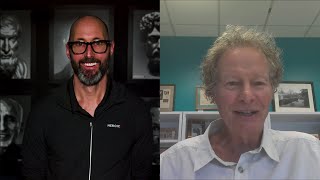
John Mackey, founder of Whole Foods, shares his morning routine (yoga, meditation, affirmations) and how he built love into his business. He uses the mantra "I am love" in meetings, celebrates employees authentically, and runs programs to bring healthy food into schools through the Whole Kids Foundation.
Chapters
Foreign.
My beloved Heroes, it is 1:01pm Central Time and you know what that means. It is day one. Today we have a very special guest. John Mackey, founder, co founder and former CEO of Whole Foods, who is now the CEO and co creator of his new business, Love Life is joining us. John, I am thrilled to welcome you. I will give you a proper introduction in a moment. But great to see you.
Hey, great to see you too, Brian. And thanks for having me on.
Yes, cannot wait to talk about how you've moved from theory to practice to mastery and help us do it together today. But we start these with a quick meditation in which we hit our targets in our energy, work and love. With a quick meditation for the energy target we connect to to someone we serve or with whom we serve them in our work and then appreciate someone in our love. I'm going to do a little different take on that today to celebrate the guides who have changed our lives. And then of course we're going to talk about and Michael, that. There we go. John's back for me. We're going to talk about your am, your PM bookends, how you start your day and all that good stuff and then your favorite books, heroes, guides, et cetera. But let's begin with a breath. We will flip the switch and invite the best, most heroic versions of us to join the party today. And as we did when Phil joined us, I want to really honor our mentors. John is one of the most impactful mentors and guides I've been blessed to have in my life. I want you to think about someone who has affected your life deeply. Have the humility to see that these people lit the way for us. As we commit to getting our soul force to 101. Showing up with heroic wisdom, self mastery, courage, love, gratitude, hope, curiosity and zest in service to something bigger than ourselves. Target swipe. Approaching one minute meditation. Moving to work. Think of that one guide, that one mentor of yours who most impacted your life. What one thing did they teach you or show you or embody that has helped you give your gifts to the world? Feel that with deep gratitude. Target swipe.
Work.
The fastest way to deepen your sense of meaning and purpose is to connect to those you serve, those you are blessed to serve them with, and the people who have inspired you to do so. Moving to love. Keep that guide in mind or bring them back to mind and beam them deep, deep gratitude and love and appreciation. Bonus points. Send him a text. Energy, work and love. I'm going to send my virtual text to you, John. Now. And as I was preparing this morning, I was thinking about how deeply you've impacted my life. And I told our community and I shared with you that you're one of only two living human beings on my wall. We got a big John up there on this wall over here. But you and Phil Stutz, who joined us last week, have impacted me in different ways, but deeply and profoundly. And so I just want to take a moment to celebrate you as an opportunity to demonstrate what I hope our community does for their mentors and also as an introduction. But I remember being introduced to you when I read your debate with Milton Friedman in Reason magazine. And I've shared this with you. I'm not going to get emotional, but I read this, this debate you had 15, 16 years ago, and we'll share a link with our community to it. And you're debating Milton Friedman, the classic free market, you know, intellectual and teacher, and talking about the importance before you, you wrote the book on conscious capitalism about how to run a conscious business. And your. For me, anyway, the main point was. And of course the main point of your perspective was love is a heroic business superpower. And I was literally brought to tears as a younger entrepreneur and a young entrepreneur, you know, 30, 31, 32, whatever. I was at that point to read a story about a man who had committed himself to love and built a business at scale that did not only not compromise shareholder value, but proved that this wins. It literally made me weep. And when I read the blog comments where an individual said they sent their kid to college on their investment in you, it just, it really, really changed me. You know, it just formed me at a really critical juncture and you showed me what was possible. Which is the second thing that I admire about you. Your intellectual rigor, your commitment to love, and multiple stakeholder orientation. The fact that you literally wrote the book on conscious capitalism, on conscious leadership, on your commitment to a whole foods diet, the animal compassion standards, the organic standards that you helped move forward, you literally blazed the trail. And I know that's a metaphor that you've used before and that I feel as an entrepreneur that you showed us what's possible. And I deeply admire that about you. So the love, the blazing of the trail. And then the third thing I really, really like about you is how iconoclastic you are and how unapologetically you you are. And you've really given me that. That demonstration and that freedom for me to show up authentically and even in our private chats, you know, that I Know what you think. I'm not wondering what you're thinking when you and I are having a conversation and it's, you know, beautifully demonstrating that, you know, with a fierce love and it's an intensity that I really, really respect and admire. So I appreciate you deeply. Thank you for taking the time to be with us today and thank you for dedicating your life to showing up and living heroically. Bless you. Welcome to our conversation.
Thank you, Brian. We're all on a hero's journey and to a greater or lesser degree, depending on how we answer the call, right?
So, yeah, Amen.
Amen. I answered it at an early age and most people are too afraid to, you know, they don't want to leave the shire. They, they want to stay where it's safe. And I just got really clear at an early age of the, of the reality of death and how special life was and what a gift it is. And one I don't think should be wasted. One to be celebrated and to answer the call to the hero's journey. I think that's why I love the, the name of your business, Heroic. I mean, I think it's such a great. I mean, that's the subtitle for Conscious Capitalism, which is liberating the heroic spirit of business. So I think we both, we, you and I are good friends, I think, because we sync up on so many things.
Yeah. Amen. And let's go right there. This was actually not. It's an obvious place to go, but I hadn't had it in my preparatory notes. Tell us about your hero's journey. So tell us about. And of course you didn't answer the call. Just once you and I talked about. Yeah, well, love life knocked on my door and I got to answer the call again. So Campbell, who's back there, says a good life is one hero's journey after another. But walk us through perhaps the first, you know, moment where you realize there was a call being made and you had the courage to answer it. And then any other kind of spiraling up evolutionary kind of parts of your journey that you'd like to share.
You know, there's so many, there are so many sort of pivot points that decisions get made and when you're young in particular, you don't understand that you're, you're going through one way doors. You, you always think you're going through two way doors, but it's later on when you look back, you realize, well, I made choices and this led, led me down this path. And, and the Reason we sometimes don't answer the the Hero's Journey call is because of fear. Right? We're afraid of many different things. We're afraid we might fail, afraid we might not be loved, afraid that we're inadequate. Sometimes we're just afraid we might be successful and then we wouldn't know even how to deal with that. So there's lots of reasons not to answer the call. I think that in my case, at a pretty early age, I realized that the kind of the traditional path that my parents wanted me to do and my friends were taking, which was go to college, get a degree, become a professional of some kind, doctor or lawyer, is really what my mother wanted me to do. And. And, you know, I just didn't. Just didn't feel that I didn't. Wasn't in my heart to do that. And. And I began to become a little bit alienated from the people around me. And I felt like I'd entered into my outsider phase. It's like, wow, I am different than most of these people around me. And so I felt a bit alienated. And then it was about the real decision of the Hero's Journey is really is to follow your heart because it's within you. It's not something that you're being tasked to do that you don't want to do. It's because it's there. You want to do it. You're just afraid to do it. And so that holds you back. So when you're young, you have a lot less to lose. So at a pretty early age, I just decided, and I made this decision over and over and over again just to follow my heart, to follow that inner guidance wherever it led me. And you know what? It leads you on a grand adventure. And that's what it's done for me. And I've had. You have to recommit to it. I like the way Joseph Campbell said it, that you just do one hero's journey after another. Yeah, I relate to that. I'm on a new one now after 44 years, retiring from Whole Foods and starting up a new business. Love life. But I really think it has to do with. I think it has to do with being in touch with your own inner guide and being willing to follow it and not let fear paralyze you.
Beautiful and brilliant. And then let's go there. Because our entire work, of course, is to connect an individual to their inner guide, which is obviously always our most powerful guide. That daimon that we talk about a lot, the best, most heroic version of ourselves so let's use that as a segue to how do you do that? How have you done that in the past? How do you do that currently? And I want to talk about. One of the things that led me to create this series is the dinner that you and I had with Tom Morris not too long ago. I don't know, two, three months ago. We were talking about heroic, and then I was sharing my target swipes and whatnot. And you told me how you start your day. And it was one of those moments where I knew I needed to create this series because what you shared was just. It was deeply inspiring for me. And goosebumps as I shared. I'm like, I need to share that. Can I share that?
John?
You said of course, yeah, let's go. So talk to us about your morning routine in particular. Then we'll use this as a means by which we can talk about how you connect to the best version of yourself such that that voice is even present. And then of course, how you cultivate the courage. But can you tell us about your a.m. kind of routines and how you start your day?
Well, I have to tell you about the AM because I'm not sure I have a PM routine.
We'll work on that. Let's go.
The AM routine is I do wake up very early. I'm not a night owl. I'm an early to bed, early to rise person. So I usually wake up around 5 o' clock and, and I wake, I'm a fast waker upper, meaning I kind of get out of bed and I'm. I'm sort of fully up to speed within a few minutes. I mean, you know, the engine rev, I'm more of a Tesla, I suppose. I, I come out of that starting getting blocked pretty fast and, and then I, I go downstairs and yeah, I do my, I do my spiritual practices, which starts out first with spiritual readings and contemplation about what I'm reading. And just, I don't. I spend maybe five or ten minutes on that and then I, I go into, I go into gratitude exercises. And because I feel like gratitude is a. It's one of the keys to happiness. But it also opens the heart when you're grateful. You're expansive by nature and it's easy to be grateful because life is a miracle. It's unbelievable is I have this hat that a friend gave me that I love. It says, holy, we're alive. And that's really true. It's amazing to be alive. And it's such an amazing, amazing gift. And So I do the gratitude practices and then I do a little bit of prayer, basically praying for people in my life in terms of what, what would be potentially good outcomes for them. And I put that. I want to put that out into the universe for people I care about and love and then also for myself in terms of my own health, my own, My. To be true to myself, to be. To be. I, you know, I have, I have certain, I have certain mottos or slogans. One of them, my wife taught me that I practice. You can call it a mantra if you want, which is to try to love everyone all the time and, and, and to not be in that state of judgment. Judgment is a kind of contraction. Love is an expansive opening. And you know what we do, you know, I can forget that during the day, but you can also go back to it in the next instant. The next instant you can go back into love. And so if you forget, it's okay, just remember. And then it's kind of like Guruji of self remembering. Just remember and go back there and not get hung up on the fact that you're not perfect every instant of every. Of every day. And so, and so the prayer kind of is also kind of an affirmation practice as well. So affirmation visualizations all kind of ties together there. And then I just do, I do, I do meditation. And that can vary in terms of length. But in general, I am just trying to be. I might start with a mantra. I have different ones. I am love. I am peace. I am joy. I am find forgiveness. But then it, it, if I'm doing it well, then I will just settle into sort of a type of presence where I'm just present in the moment. And, and, and then the key is of course, to try to stay present as long as that I can. As long as I can. And if I forget, then to go back into the presence. And you know, that varies in terms of length. After that, I actually then go do yoga because I'm getting older and increasingly I find that I watch my friends and they're getting so stiff and they can't move. And if you do yoga early in the morning, first thing, it's harder to do it then because you are tighter and stiffer. But you're just opening up, you know, you're, you're just opening up in a deep way. Your body, your heart, your mind. And I will confess that I, at the same time I'm doing that, I'm putting on, I'm putting Spotify onto some type of playlist that and I'm getting, I'm getting. Sometimes it's energetic music, sometimes it's, it's, it's more spiritual music I might be listening to but it sort of kind of depends on the mood that I'm in that day. But I will do that while I'm doing my yoga. I'll have my little airpods on and after I finish the yoga I go make myself a smoothie. I make a 64 ounce Vitamix a smoothie, 50 fruits, 50 vegetables and I'll drink a couple of glasses and then I'll have a glass for lunch and glass for dinner to get the, get the half gallon drunk. But I love my smoothies and they're so super nutritious and healthy and good for me. And then I exercise. I mean generally right now I'm really into pickleball. I played pickleball this morning for example. And so I had eight o' clock pickleball group I play with and I play three, I play three to four times a week. If I'm not playing pickleball I may go for a walk or I may go down to the gym and, and do some strength training. So I usually don't roll into, then I come back, shower, roll into the office usually around 10 o' clock or so. And yeah, that's kind of my morning ritual.
Beautiful. So much we can talk about there. This could be a weekend workshop in and of itself. But let's go up to the top spiritual if you're open to sharing. What'd you read this morning?
You know, I have been a long time student of a course in miracles. If you ask me about books that have a huge impact on me, that's one of them. And in this case I'm reading today I was reading selected passages that Roger Walsh and Francis Vaughan had selected out and I've read that many times and I've underlined it and I was just going through it and it's amazing. You can read something many times but as your own consciousness evolves and awakens you read it again and you understand it maybe better or in a different way than you understood it in the past. And so that's what I, that's, that's what I read today.
It's beautiful. Let's actually go there then we'll come back to the morning routine. What would you say? So course in Miracles would be one of those books we talked about it before we came on of life changing books. What about it did you find to be most life changing and why have you come back to it so many times.
You know, when I was about 18 and my summer before I left off for college, I had a Christian conversion experience which say I became a born again Christian. And I say that phase lasted for me for just about two years. And then I, I let that go because it really. The problem of evil, I couldn't, I couldn't reconcile. There's so much pain and suffering on this, in this particular reality that we're in. I couldn't, I couldn't reconcile that with any kind of caring, loving God, right? And so that I entered into my atheist, existential phase of my life, which went on for four or five years, you know, and I still see that it was when I was most cynical, most unhappy, most convinced that life was meaningless. And I was reading John Paul Sartre and Camus and Nietzsche and Dostoevsky and you know, the, the classic existential writers and thinkers. And, and then when I was getting into my late 20s, while this was actually still legal, this was like 1983, maybe I did MDMA for the first time. And that just like, oh my God. So I reawakened and that, that reawakened me to love being this incredible. The most amazing thing about reality is that love under. Undergirds the whole thing. And I, I not realize that. And so friends then introduced me to Course in Miracles. And I. Course in Miracles purports to be a channeling from Jesus, right? So I went into that with it, we'll call it a lot of skepticism, right? And I remember I, I went into it basically because I was so angry for my Christian days and I just thought it was such that I was gonna, you know, prove my friends wrong. I'm just, you know, so I, I started reading it and, and with an attitude to sort of debate it, you know, to, to, to, to prove it to be wrong. And I remember maybe not on the first day or the second day, but somewhere I was working my way through it and not, but not very far into it, and I, I came across a passage which just blew my mind. And, and it basically said, lifetime after lifetime after lifetime, you have lived and you have died, and you have blamed God for everything that you see that is wrong in the world. And it said, my son, God knows of none of these things. You are asleep. You are in a dream. You are creating a reality with fear and anger and guilt and judgment. And it's time to wake up, Wake up. And it was like. And because there's only love. And if you don't experience that, then you're just in a bad dream. And it was like, I remember I got up and I started running around my house because then it answered the problem of evil, which had, what pulled me out of my Christianity many, many years previously, entered in my existential phase because of the problem of evil. And the Course of Miracles is not a metaphysical book. It's a practical book where you do exercises that help transform your consciousness. But it was in this little bit, it was saying that it's just your dream. And the course is a path of awakening from the dream, awakening to love. And you do that through forgiveness, forgiveness of others. And then you come to discover that you're forgiven as well. And I found it to be a very powerful system, which is why I keep going, I'll always go back to it because it's had a big impact on me. And, and, and that is when I really began to say, how can you build a corporation based on love? Can you, can you, can you actually do this in the real world? Is, is because there's a fear that if you do that, you're like a sucker. You're just gonna be taken advantage of, that you're going to, you're going to fail. And so those were things I had to wrestle with and to let go, to let go of those fears, let go of that, that resistance. So anyway, that's. I've given you a long answer, but that's why that book remains important to me.
Yeah, that's so good. Well, we'll come back to the many others. I want to drill in a little bit more on so many things we could talk about. But you mentioned the exercises, so of course our whole thing is we're going to help you move from theory to practice to mastery together today. So can you tell us one of the practical tools that you have used consistently over the last X years, decades that's helped you operationalize love?
Yeah. The simplest thing you can possibly do. It's so simple. I can't believe everybody doesn't do it. And very early, pretty soon after I'd. I'd had this love, love realization, we began to end all of our meetings at, at Whole Foods Market with appreciations. They were voluntary. No one had to do them. But the idea is that you would just end the meeting with if you wanted to, just to appreciate people and thank people for, for whatever. It's just something about them you like or something favor they did for you or some thoughtful thing they did or they had a successful something that was success and you celebrate that success and that simple exercise opens love in an organization. It's just astounding what that one. Because so often in meetings people are bored and they, and they, and they're judging. But that's wrong. That's bullshit. He's got that wrong. And I, that might even be happening right now as I do this. People are over there judging and thinking it doesn't sync up. And well, those judgments keep you out of being in the present moment, where. In the present moment is where love is. And appreciations, when they're authentic. You cannot do an authentic appreciation without opening your heart. People know the difference. People know when you're flattering them or you're coming from an ego space and you're just making something up versus an authentic expression of appreciation, which is a type of love. So if you want to operationalize love appreciations is a, we'll call it a gateway, a gateway experience and people like it. And, and then the main thing is, is that as a leader I have to lead by example. Can't just talk about you have to do it. So. But I try to practice appreciation is not just. I practice them all the time. Anytime I see people doing things that I think are beautiful and good, I try to appreciate that. I try to celebrate that with them.
We had a team meeting today in which we talked about celebration, in particular in celebrating others as a form of appreciation. Right. And BJ Fogg, who Behavioral design at Stanford, talks about the fact that celebration, we know that gratitude, we know that meditation and mindfulness are patience, powerful levers to pull. But he says one of the most underappreciated is celebration. Celebrating when you show up as your best and celebrating when you see that in others. And so it was a really important theme of our chat today. And Michael, let's make sure that we operationalize this as a practice at the end of our meetings. We start and end each meeting with a book ended breath. But just to make it more deliberate to truly practice our philosophy and operationalize this is really, really inspiring celebration.
Celebration is a type of appreciation and it is very important that organizations also collectively celebrate together. I mean, I think that there's something, you know, we are tribal beings and when you're celebrating in a tribal fashion, it also helps bond people together. It helps the relationships are forged partly through shared struggle and overcoming challenges. But the celebration is, it helps solidify it, you might say. So celebrations are very, very important and something to be done frequently, in my opinion.
That's amazing. And again, we encourage the team to when they see something someone else does to just send a slack message of, wow, that was amazing how you did this and you did that and then it made this happen. And to find those little micro moments, we like to describe them as positivity from a researcher in the field. But what specifically did you do and do you do beyond the appreciation, to bring celebration more into the culture you created with Whole Foods and now with Love Life? Does anything arise for you on that?
You know, I'm a. I know how important celebration is, and I generally, there. There are people that are naturally great celebrators that know how to throw a good party. There are people that are good. You know, they're just naturally good celebrators. And I. I empower them to. To. They have more skill in that area than I do. It's easy for me to appreciate. I have skills in that. And. And I know I like to celebrate, but I'm a very serious individual in a lot of ways. I'm usually going on to the next task. I just recognize celebration is extremely important for group solidarity and love and morale and connection. So you have to assign people to be your chief celebration officer.
I love it. I love it. Good leadership, right? Know what we're good at, know what we need work on and what those who are great at, what we suck at do what they're great at.
Well, or people that are just great, better at, you know, I mean, better that you might be in a certain area. It doesn't mean you don't have skill in that area, but they have more skill.
Well said. One of the other things I admire and appreciate value is the precision in communication and in everything, so absolutely spot on. I want to talk briefly more about the I am Love mantra. We talked about how you did TM for a long time, and then in the dinner you shared that that was really transformative for you. So I want to spend another moment there. Mantra, as we talk with our community, literally means, from the Sanskrit, a tool of the mind. So we're shaping our mind with the words we use and the mantras we use. But can you tell us about that particular mantra? Because that really struck me and I've played with that and, you know, it's very powerful.
You know, I mean, one of the. One of the books that you've reviewed that I really liked and recommend to people is. Is Atomic Habits. And, you know, there's lots of big ideas. Atomic habits from compounding to 1% type incremental gains. But I think the biggest idea I got out of it was that the importance of what we identify with that, that that affects everything. So we have a narrative that we tell ourselves about ourselves and those shape who we are and they show how we show up in the world. If you have a narrative that, that you are lazy or you're a failure, we have this. We oftentimes people have self deprecating talk. The ego is a, is a mean little critter. The ego is merciless about, about us and our failures and the places we don't quite measure up. And if we identify with that, well, we're trapped in that, in sort of a, we'll call it a, a negative self image. So I am love is a very powerful mantra because if that's who you, if that's how you identify yourself, then that's how that's. You're. You're creating a narrative that lifts you up and empowers you to be what you truly are, which is love. But, but you have to be accelerates when you identify that as who you are. It's an, we'll call it an accelerant. It's a mantra that's an accelerant for what you want to realize all the time. So by practicing that and I, you know, I'm love, I am peace, I'm joy, I am happiness, I am forgiveness, I am compassion. I mean there's infinite variations of it, but they're all basically speaking to that deepest part of my being that I as I want to show up in the universe as that's the part I want to reinforce. So that's what I want to identify with consciously. I don't want to identify with the negative judgments about myself that hold me back and harm other people. When you have a negative self identity, you're going to be destructive in the world because you're going to be hurt and angry and you'll lash out and judge others and be harmful.
And this again, there's so much there too. So one of the things I loved about atomic habits is exactly that. And to pull a thread on his. I didn't know the etymology of the word identity until he defined it for me, which is repeated beingness. So your identity literally means etymologically your repeated being beingness. And then there's this, this idea of your self image is created by how you think of yourself and then how you act. And you want a self reinforcing loop there, which is, you know, part of why our app is architected around your identity. At your best, energy, work and love, the virtues that version of you embodies and then the specific things that you are going to do today in order to more consistently be and repeatedly be that version of you such that that best, most true version of you is who shows up more and more consistently. And I love how you took it all the way down to the mantra. And then I don't know if you're still using the app, but you did share with me the big three when you first got in. Are you open to sharing the identities that at least at one point you had in your energy, work and love? Just as a. Until we have the social and can show you off on that if you'll remind me.
Because remember I told you that when I switched over my phone, I got locked out. I just got it back open today.
I got you. John fell into the death trap. That was our migration between John and I connected. I mean, 15 or 17 years ago or so now. And so John got our first hundred philosopher's notes in a binder, etc. So John was blessed to go through the obstacle course that was our migration. And when he changed email addresses, got tripped up. Well, we'll leave it at that. I got it somewhere buried in our text messages. But we'll move, move forward. Just stressing the importance of the identity and the virtues. And you can't think about that once in a while.
I know, Brian. I do remember the most, the one that I put down. And I just don't remember which of the three it was under, but it was. It was that. That my high intention. I try to practice every day. So. Love everyone all the time. I don't know how I can make it any simpler than that. Love everyone all the time. And that is. That is a daily that when I open my app, I'm going to see that every day. And I'm going to do that when I do my morning practice as well. And I also remind myself of that during the day, particularly if I'm beginning to get into a judgmental space. I just quietly say to myself, john, love everyone all the time because that's who you really are.
Target swipe, baby. Let's go. Hit the identity virtues. Targets hit. Amazing. Okay, cool. So now we're moving out of your a.m. we got the rest of the day. You're dominating. We're going to kind of move from there to stepping back again. We talked about your hero's journey. We talked about how you start the day to connect to that inner voice that tells you when you're on track or not. Who are Some of your heroes that have most inspired you and it's a little different. Heroes and guides. Sometimes they're the same person, sometimes they're a little bit different. But who rises for you when you think of your heroes? Slash and. Or guides?
Yeah. Well, my first one, my first hero and my first really guy, particularly in business, was my father. Because I didn't have any business background. I studied. I mean, I never took a degree. I've got 120 hours of electives in philosophy, religion, anthropology, world literature, history, pretty much wherever my mind wanted to go. And, but no business because I had no interest in business when I was going to university. And so when I got going with Whole Foods, I didn't know what I was doing and neither did my girlfriend. And we, I just read a lot of books. But my dad had been a professor at accounting at Rice University in Houston before he'd gone into business. And then he ended up becoming a CEO of a hospital management company. So he, he was a good business person. And so I always say the first 16 years he was of Safer Way and Whole Foods Market. He was my mentor. I really didn't make any big moves without. And then When I turned 40, I fired him. I dropped him as, as, as my. We were in different places in our life space. He just wanted to, he was conservative. He wanted to hold on to what, what we'd already created and not blow it. And I wanted to really grow. So we had a parting in the way. That's a whole nother story. But he was my first hero and my first main God. There have been other. So intellectually, if we're going to speak about that. I had a flossy professor at the University of Texas, a guy named Bob Solomon, Robert C. Solomon. He wrote 40 or 50 books. And I remember this was back in the early 70s. He had just, he was just finishing up his. What it was his greatest book probably was. It's called the Passions. And that blew my, completely blew my mind because he basically argued that we create all of our emotions, that we create them through the interpretations we make of situations. For example, anger is an interpretation that you've been wronged. And if you make a different interpretation, you won't be angry any longer. Or if you are envious, which is a very powerful emotion. Most people aren't conscious of their envy. It means that you. Someone has something that you. That you want and so you, you envy them. They have more money or they have a. They're with a better spouse or you compare themselves yourself to them and you envy them. Guilt is an emotion that you've made an interpretation that you've done something wrong. So sometimes these emotions are. We create them by our interpretations. And oftentimes our interpretations are. You know, they're not. They're inaccurate. And so we have an unnecessary. Because we have again self identity issues that, that frigate up and that mess it up. And I remember how it. It reading it and he. He takes each one of these emotions and he does this deep dive into it, into the whole history of the emotion and how it's come about and how to understand it, why we do what we do. And. And it was like just blew my mind. And the main takeaway that's lasted me ever since then was I am responsible for my emotions. No one else is responsible for my emotions. I am not a victim of my emotions. I create them. I could create different emotions if I so chose to. I'm not captive of my emotions. I. They don't rule me. They. They're part of me. But I see how I'm. Once you become. Once you change the framework and you. You can actually see your mind creating emotions. I mean it's amazing. So that was a huge. That changed my life. And then I'd say that when I was, you know, I was in my existential phase that I don't think that was a healthy phase for me. But then as I started to get out of it, one of the big influences for getting me out of it was Abraham Maslow. I think we share him as a hero. And you've got him up on your wall, I think. And Maslow. I remember I read everything I could find by that guy. He had. He had a huge impact on me. And then with Maslow I started reading Eastern Thought. You know, people like Alan Watts, Aldous Huxley. I had my total psychedelic phase of my life and I got into eastern philosophies and it was like, you know, my mind was a young mind and I'd broken out of sort of the, the. The track that I was on and the, the. The world was incredibly in. It's still a very interesting place. So, so Maslow had a big impact on me. And then when I got into business there were certain business thinkers that had a huge impact to me. Probably the. The one that had the biggest impact on me was Peter Drucker. I read all of Drucker's work and he. He's got 40 or 50 books out there and I just devoured them and I still have a lot of ways a Drucker mindset. When I think about how to, to operate in business. See that I talked about the course in miracles. Let's see. And you know, I've read one of the reasons that you've, I was drawn to you and we've become friends is that I consider you like the most. You've read more self help and self development books possibly than anybody that's ever lived. And I mean you've just about read them all and, and, and you read them new ones seemingly every week. And I've read a lot of those too. And frankly, I've read a lot of your reviews and then that gets, helps me to dive deeper in some of these books. So there have been so many different books that have influenced me. I mean, economically, you know, you know, I, I'm a capitalist and so I've been influenced by a lot of free market thinkers from Adam Smith to Milton Friedman to Deirdre McCloskey to Friedrich Hayek to Ludwig von Mises. These have all had major impacts on the way I see the world and who I am. And of course then I haven't even gone into fiction. I mean it pretty much as a teenager, before I got out of high school, I'd read the Lord of the Rings and the Hobbit five times each. And so I have a still a great love of fantasy and science fiction. And so I still, I still go into that genre. But I'd say Tolkien and CS Lewis had big impacts on me. Yep.
You, I, I've been so inspired by how much you read. You were part of two book clubs or at least at one point when you're running Whole Foods, you, you're, how much did you read on a weekly basis? How many books are you like? What, what's the kind of time spent in this? Because the amount of reading you do. I appreciate your kind words toward me, but I look at what you're, you've read. I'm like, Mike, it's, you're setting a mean pace. I feel like I'm trying to keep up.
I read less today than I did when I was younger because I seemingly, seemingly had more, more time. I had a lot fewer responsibilities. But I love, I also now my reading has gone back up again because of Audible Books, audiobooks. Anytime I'm driving or I'm hiking, I mean, my wife accuses me, I'm a long distance backpacker. So I've hiked the Appalachian Trail twice. Pacific Crest Trail. I've hiked tens of thousands of miles. I love backpacking. I love Long distance hiking. My wife says, john, the real reason you want to go backpacking is a. You want an excuse to eat junk, vegan junk food in order to get maximum calories. And she said, you just want to listen to books because if you're. I'm on a hike, I might listen. I might. I can finish a book in one day. You know, that is so good. Eight or ten hours of listening to a book.
There are a few greater feelings in the world than starting a book and finishing that book in the same day. Huh? Isn't it a joy? I'm the same way.
So audible and audiobooks have made a big difference. And that's, That's. I probably. And now, you know, with. I also do a lot of digital reading on Kindle, and I love the fact that, that, that Amazon can track the Kindle and the audiobook, and I can go back and forth between those two, or my iPhone for that matter. So I love the versatility and how it tracks things. So, yeah, I still read a lot. I don't read as much as I used to and. But, you know, I think I'm entering a new phase. I'm getting. I'm getting older again, and I'm like. And I have more time than I had when I was running Whole Foods. Love life is. I'm a different person. I'm not going to work 80 hours a week any longer, which is what I did in the early days of Whole Foods. Instead, I'm gonna. I'm gonna be playing pickleball in the morning. I'm gonna be reading some. And I've got a lot of business wisdom accumulated that I can spread, and I got a lot of money invested in the business. I don't have to be the guy that has to do everything. So that gives me a little more freedom.
I love it. I love it. And then to circle back to one question I didn't ask, but I'm curious. Meditation. You said it ranges. What's the range from? Yeah, I'm doing at least this, and sometimes I do that just so I have it and we have it in our head.
You know, it could be. It could be 10 minutes and it could be an hour, and it's.
I.
Sometimes I can't either. I'm either time pressed. And once you get time pressed, then it's hard to settle into the meditation. And because you're thinking about, well, I've only got, you know, I got 20 minutes here. And, and to really make it work, you have to forget that there's any time urgency at all. You have to be in the moment. Right. And when you're in the moment, then the time sort of, it also disappears and then, and, and, and so it can, that's why it can go longer and so, but I'd say we'll say a minimum of 10 minutes and a maximum of an hour, I'd say on meditation.
Perfect.
What I haven't done, what I haven't done, what I haven't done, which my wife does periodically and she's trying to convince me to do it, is she does a lot of silent retreats where basically she's meditating. You know, either walking meditations or, you know, I mean, honestly, you know, 8, 10, 12 hours a day. I've never done anything like that. That's kind of, I've told my bucket list, but I haven't done it yet.
Yeah, that's fantastic. And you've been doing this for decades now, right? The meditation practice, one version of it or another?
Yeah, I've been meditating. The routine I'm in now. How long have I been doing that? I don't know, just. Probably just a couple of years that I've, I've, I've been disciplined enough to. The real difference is I got the yoga in, in the morning. I used to have, I used to just do that when I found time and if I didn't do it in the morning, I found I didn't do it.
Yep.
So now I can't have my smoothie until I do my, until I do my meditate, my. I have to do my spiritual practice and my yoga in order to get my smoothie. So that's my reward.
That is so good. Perfect. Well, which we, we've talked about a lot. Am you know, masterpiece day. Your practices, your heroes, your guides, the books. Let's move into the energy work in love and the number one life changing things. Unless there's somewhere else you want to go.
Well, I just saw a pop up on the chat and it asked me how long is my yoga practice? And so just the good question. Stretching and, and, and you know, in my yoga practice also might include some other things from crunches to push ups. It's, we'll call it a. But it's, you know, I'd say it's 90% yoga and yoga asanas. It's usually from 60 to 90 minutes.
Perfect. So good. We got a thumbs up on that one.
But you know, I'll tell you, I'll tell you something, it's worth doing yoga if you only do it for 10 minutes. And sometimes when I feel like I don't want to do yoga, if I say, okay, you don't have to do it if you don't want to, but you're going to do 10 minutes worth, you do 10 minutes worth and you get into it and then you're, you might, you're going to, you're going to do it for 45 minutes or an hour because it's, it's pleasurable.
You just hit on. Yeah, this is, this is important. And this through the, the atomic habits, the tiny habits, the mini habits start small. Just the hardest part is getting the momentum going. Once you have the momentum going, you're likely to go longer. But don't force yourself to do 60 minutes of yoga or zero, do a minute or two or three or five or ten and let's go.
It's, you know, it's those micro, it's kind of, if you just do a little bit and you still don't want to do it, then you can stop doing it. But I find frequently when I do just a little bit, a micro bit that I said I like doing yoga. Let's keep doing it. It's fun, it's. I feel good, it's, I'm getting all stretched out. I feel the chi flowing around me. So I find that's a little trick I play with myself, which is you're not gonna, you don't have to do it if you don't want to, but let's do at least 10 minutes worth. And 10 minutes can turn into an hour, hour and a half pretty easily.
That is brilliant. Perfect hack for how to install the habits. Let's do a quick number one life changing thing. Energy, work and love. We might have talked about some of the stuff in love, but energy, number one life changing thing.
I think one of the keys to energy is attitude. You know how we're always asked pretty much who knows, 50 times a day, how are you doing? How are you doing? How are you doing? And my buddy Dan Buettner, who's a really close friend and he's the guy behind the blue zones. And when people ask Dan that question, Dan looks at him in the eye and he says, it's the best day of my entire life. And you know what? I started to do that too. And that's a real energy hack. Because if you, if you're saying this is the best day of my life, just to be able to say that is, is creates energy.
That is fantastic. I love it. Target swipe on. That makes me Think of BJ Fogg, too. I begin every day with a smile. It's one of our recommended habits. What do we. I wake up and it's like, bam, today's gonna be a good one. Just a deliberate little smile, you know, right from making the bed.
I never see you not smiling. You're. You're. You're a gifted smiler.
Well, I appreciate that, John.
Mini gifts.
I appreciate that deeply. And in your presence. I have a lot of reasons to smile. By the way, I was just thinking of where am I pointing here to? Oops, wrong way. Viktor Frankl, you and I have in common as well. The first time we got together, you may not remember this, but it ended with us. You could basically recite his don't pursue happiness. It must ensue as a byproduct of you committed to something bigger than yourself. So I just got a rush of joy remembering that moment from our first interaction in which I smile. But thank you and bless you. Work number one. What's the most transformative thing tool. The distinction that you've made in your heroic productivity?
I mean, I. It's kind of what you were just talking about, is that when you're working for higher purpose, it's highly energizing and you can get through the difficult times, the things that are. Might be boring or not interesting or because you have this purpose that you're trying to realize, and that purpose draws you upward. It. The purpose is magnetic. The purpose pulls you along and gets you through some tough, difficult, boring times. So in my book, Conscious Leadership, the first chapter is Put purpose First. Second chapter is Lead with Love. So if you put purpose first, you're going to find that you're going to have a lot more energy. And because you just will. It's. It's. It's just magnetic. You want?
Yeah. Amen. And we're creating. I. I will be creating notes on both conscious capitalism and conscious leadership. And then the Whole Foods died as well. Three books John has currently excited about your memoir that you're working on that will be a fun, you know, hero's journey, like we discussed. What.
I was just working on it before we got into this call, so.
Right on.
I'm in. Like, what am I. What was I reading today? About 19. 1983, I think, is where I am. So. Got a long way to go, but it's fun.
Well, we got the still legal experience, right, that it should be a fun part of the story. Let's go, love. And again, it may be a theme we already hit on but just so we do the energy work and love. Number one distinction on love, I'm not.
Sure what the question. Number one distinction, what changed your life.
The most in terms of how you express more love and are more heroically connected to yourself and your loved ones? And again, we've talked a lot about love, so it might be something we've already discussed, but most.
In my case, it'd be a repeat. I mean, again, when I had that first MDMA experience and I. And I experienced cosmic love, and I Just real. And I've never forgotten it. It's. Nothing's more important than love. Love is the most important thing. Love is what we are. Love is what we came here for. We came here to awaken to love. That is the end of the dream. When we're in love in every instant, with everyone we encounter at all times. That's it.
That's it.
That's what it's all about.
I love it. So then I remember at our dinner, Tom, you said, I am love. And then Tom's like, except when I'm not. Right? And we had a little playful exchange there. What's your practice? So when you find yourself out of love in what my coach, Phil would call a glitch, where you went from being connected to not, what's the practice you use in that moment to bring yourself back into a state of love?
I say. I say I am love because I know that I am love. And so you. You. I always say if you just. If you're present, if you just are present, you go back into the moment. In the moment is love in the ego is not. You're. When you're in the ego, you're no longer in the moment any longer. You're no longer fully present. So you just have to remember it. It's as simple as that. There's nothing to it. It's just remembering who you are and then being that and just relaxing back into it.
Yeah.
The wonderful thing is you can forget it. You might forget it for days, you might forget it for weeks, but we will. You will remember it. And when you do, you go back into it. And then as you practice, as you forget, and then you go back into it, you get more skilled at it. It's like a. Like anything else. You. If you practice it, you get better at it. So it's. So it's about being conscious. And when we go out of it, we can step back into. We're not alienated for all eternity. We can go back into the moment. And in the moment Is love beautiful?
And then to bring it back to your AM rituals. So you're reminding yourself of this every single day with your meditation practice, such that when you need it, it is at hand. Your consciousness has been grooved through your multiple readings of such important spiritual text and your constant incessant practice. And it's that repetition that makes it effortless for you now, but the willingness to put in the reps. Right. So we're remembering when we need to remember.
You know, I was. I just got a hack. It just came to me, so I'll share it with you. One of the things I try to do is it's. It's a game I play with, particularly when I'm around a lot of negative energy, people that are unhappy and angry. I play a little game. And that game is, are they going to take me out of love space or am I going to lift them up, which is going to be more. Who's going to win the game? And so once you, once you gamify it like that, then you, you don't let them with their anger or their judgments or their fears or whatever they're projecting onto you. You don't let. You don't take that in. You don't become that. You remember who you are. And then you, you are like trying to unlock the key to get them to smile, to get them to relax, to get them to feel safe, to let go of their fears so that love can go into them. That is a very fun game to play. I recommend trying it.
That's so good. Then we have the victim to creator to hero move that we talk about in our community, where you can complain about everything that's going on and be dragged down to that level. Level you can create your reality or can truly be heroic and stand in that presence of love or whatever virtue you aspire to, embody more of and be the radiant exemplar who's creating and setting the pace and the tempo and the energy in the room. So good. Is there anything we didn't. Yeah.
I will just say that when we feel the victim, that is the reality that we're creating for ourselves. The, the universe mirrors back to us the energy we're putting out. So that's, that's the most. One of the most fundamental, most important truths. We are literally creating the experiences that we're having. And by the energy that we put out, when we put out judgments and anger and guilt and fear, that's what's going to reflect back to us when we put out love, compassion, Kindness, forgiveness, joy, happiness, peace. That is what comes back to us. We get exactly back what we give. Giving and receiving are the same thing.
I cannot think of a better way to conclude this part of our chat together. Absolutely wonderful, John. Thank you. I know we had talked about being here from one to two. Do you have a few more minutes for some questions from our community by any chance? If not, we'll make hearts out. We can do a little and then let's do that. We already have a hand that has jumped up. Bt was that to. To be able to ask a question with John? Thank you. John.
Are we all done?
You know we're going to get BT online here. We got a couple people that raised their hand. What's our hard stops? We're really respectful of your time.
My bladder is probably our hard stop.
We can take a break for that, John.
Okay, give me two minutes.
Yeah, perfect. All right, cool. And then I know Adam had.
Adam was the quick hand draw today. We were putting the hands down.
Okay.
Earlier in the call.
So.
Dude, how awesome was that?
Beyond. Beyond awesome.
So good. What a blessing. So that's wonderful. So John will hang out. We got some questions. Let's practice our protocol of framing it up and getting as much as we can out of John and his wisdom. So cool.
You know, I want to celebrate the chat as well. The chat was particularly active today and right now there were 243 participants. I just looked down so that was a fun number to see. But. But the chat was super active today. A lot of appreciation, a lot of enthusiasm, a lot of heroes connecting with one another and just celebrating John and his wisdom and the back and forth, the dynamics. So really, really fun to watch the chat today and see everybody engaging a little deeper.
That's awesome. Please send me that. I always love to review it when I can and then we will do the breakout at the end. If you want to stay on. Obviously it will be a longer session but if you want to connect with. With others and share what you found most inspiring, we will facilitate that when. When we wrap up. Yeah. How about a group? I am love. I like that. I was actually going to ask you on to guide us in a meditation but I didn't want to to put them on the spot. Let's enjoy that right now. Let's enjoy a breath or three until John returns. Here he is. But let's enjoy a breath, John. We were going to enjoy on the idea of someone in our. In our group here that we did a I am love meditation briefly before we Transitioned to your time with our community. So I want to take advantage of that. Would you mind kind of guiding us in that just for even just a 30 second kind of thing? If you're up for it. I said I didn't want to put you on the spot, but I'm going to put you on the spot. Would you be up for that?
I mean, I generally just repeat the mantra over and over and over again. Is that what you want me to do?
If you're up for it or if you want to do it in silence. That's also a beautiful.
We just, we can do it in silence, which is. And you. And I'll just say is as. As you're saying it, feel it as well. Feel it in your own being.
Beautiful. Bring us out when you're ready, please.
Wow.
I feel that. Just the pulsing of. For me anyway, that radiant expansion into the one true source and reality of our existence. How amazing was that, Michael? We had. Was it Adam who was the first to raise his hand earlier? Perfect. Adam, you are on. Get Adam off of mute. So he's officially on. There we go.
This is a gift. I almost actually started crying when I was doing that little exercise there, thinking about where I started and the opportunity to have a conversation with you, John. You embody this idea of work done in the spirit of service as the highest form of worship. And so I just greatly appreciate that. I interviewed for a position this morning called Educator Wellness Facilitator. And I work for a school system at the moment, 20,000 plus students, 2,000 leaders and educators. And we're in a situation where we need to heal the healers, as I like to talk about, and become trauma resilient with those that are serving on the front lines, our teachers per se, bus drivers, etc. And they asked me a question and I want, I want to know what John Mackey would say. They said this position is grant funded and may not extend beyond the time frame. And it's a five year grant. And they said, given the urgency, what would be your first priorities to target the biggest challenges that face Educator Wellness in the years 1 and 2 with regard to this position. So in other words, where do you start? With a lack of vision, a lack of funding and a lack of alignment.
In terms of helping people to be healthier. Is that.
Yeah.
In terms of helping people to become the most heroic version of themselves and be. Be well, especially when they're in situations like they're teachers, they're the healers of.
The world, so to speak. Stop. Stop. Eating crap, stop eating junk food, stop eating highly processed foods, eat real foods, eat lots of fruits and vegetables are the healthiest foods. I mean, they recommend five servings of fruits and vegetables a day. I probably eat 15 fruits and vegetables. Eat more fruits and vegetables, eat less oil, sugar, refined flours. That stuff's poisoning us. And you should cut back or eliminate alcohol and nicotine if you consume those things or deadly for our bodies. Caffeine's not so good either.
To play on that theme, Adam, I mean, imagine the lever you can pull when you look at what we're feeding our kids in the cafeterias and how the long conversation on that. But think of that lever. If we can actually reduce, slash. We won't eliminate, but reduce the sugar, reduce the processed food and actually introduce some of these whole foods that we know we're talking about, you know, giving these young kids surgery and giving these young kids medication to deal with their obesity when the solution is so present and so easy, at least simple rather. Anyway, that. What a beautiful question, what a beautiful frame and what a beautiful appreciation of John and John, it looks like you have a little more on that.
Well, yeah, I do in the sense that Whole Foods has. One of our foundations is the Whole Kids Foundation. And we give to any school in America or Canada or the UK for that matter, we give them a free salad bar, we'll give them a free garden and give them what they can do to get a garden going in their school. And we give nutritional education to teachers as well. So we want to get kids eating more fruits and vegetables. We want to get kids actually learning how to grow fruits and vegetables and kids that, that I've kids that don't think they like vegetables and fruits and vegetables, but if they grow them, guess what, they want to eat them. And that's something Whole Foods is doing. And we've given away tens of thousands of them. So yeah, that if, that, that might be a way. If you want to get more fruits and vegetables, that's a key. We'll, we'll, we'll help set it, set it up and just go to whole kidsfoundation.org and you can read about it.
Awesome. Thanks John. Thanks Brian too for teeing that up as well. I know this is a longer conversation, but thanks so much.
Appreciate you, man. Great presence and good luck with that process and whatever comes on the other side of that. Appreciate you and beautiful appreciation just to celebrate you. That was a wonderful celebration of John. Got me emotional feeling your love. So bless you. BT yes.
Finally it's Brian Thomas. Just along the names I always use. Bto John, thank you very much. I really want to celebrate you and I'm so inspired by your example. And I have to found also in this conversation that there's a lot of connections from what you're doing. My morning routine is two hours every morning. It almost looks like yours. And on Brian's recommendation, I incorporated the I am love and it has had a tremendous effect. I was wondering on the bigger picture. I personally have been a banker over 30 years and I started in banking because I wanted to make the world a better place. It was the time of the raiders in the 80s and they did things that were not very social and I wanted to understand the ropes of the business, basically. And then I stayed in banking, was successful and enjoyed it. And now I think fait has just caught up with me. I think I quit banking and venture capital lists have found me for something that may change the world in a smaller way but will do something very good for people and society. And I'm wondering now, since I have the experience from the past where I had a bigger picture that I didn't follow, how do you find your big pictures and how do you keep on track?
I'm not sure I understand the question. How do you find. You mean how do you find your purpose?
Yes.
Yeah.
How do you find the bigger purpose that you want to implement also in your life? I mean, not just as an overriding theme, but something that you can really make actionable.
It's within you and it's quiet. It's your inner guide, it's your soul, it's your. It's. And it's. It's always. It's whispering to you, so you have to learn to attune to it, but it's also in your heart. So when I always. My advice to young people generally is if you want to be happy in life, follow your heart. And your heart's calling you. It's always calling you. Most people, we live in our egos and we live in the fear space. And so we don't. We don't answer it, we don't listen to it and we don't tune into it. But you'll. It tugs at you. It's a yearning. And your purpose is there. Your purpose is there. That's where you'll find it. You won't find it looking for it outside of you. You'll find it within your own being. That's where it is.
All right, thank you.
Beautiful.
I just saw a comment. It says when Your heart speaks. Listen. Exactly.
Beautiful, Sophia.
Yeah, that's very true. Thank you.
That's so good. Wonderful. If you can. Gianfranco, frame it up real quick and then we'll thank John and excited. Thank you for being here. VT and what do you got? Gianfranco.
You're on mute.
There you go.
You hear me? I. Thanks John for being here. Sorry for my voice, but I wanna just be here and answer this question. You talk about answering the call and I've been experiencing this awareness that fear was holding me back from following my passion and my heart. And I started with this elastic band behind me, which was really tight elastic band. So I realized that the fear was really holding me back. And today I'm here because I'm winning all these aspects that were holding me back to follow my passion that I believe is having an impact in other people's lives. Because I feel the purpose there in my life there. As you said, love is something important. And the more I, I'm open to love, the more I feel better with myself. And this elastic band is less strong. Less strong. But how can you really all cut out this band or accelerate this process? Because I'm getting the turning point of my life. So I want to be faster and quicker because I, I want to have the most impact in other people's life and really follow my code.
You know, I'll say, I, I'll tell you what came up for me. The ego is a very tricky part of our being because the ego can get you. So your soul is wise and it has its own speed and its own process. You need to trust it. And once the ego begins to, it's like, well, okay, this guy, you know, he seems to really be on this whole growth thing. So the ego will want to take charge of that and you'll be the very best grower there is. You're going to grow faster than anybody else. You're going to go to the top of the class. And that's kind of the way the ego wants to, to kind of maintain control. It's very tricky. And your soul though is very wise. So you, it's. It's going to teach you and guide you and help you and it's going to go at the right pace for you. So I would say let go of that. That's a self judgment you have. I'm not going fast enough. I want to go faster. That's the ego. That's. That's your band holding you back. Let it go. Just whatever pace you're going at is fine. There's no. It's. It's okay. There's no hurry. Just be there. With who? Your heart and with your soul. Listen to it and don't judge yourself that you're somehow or another failing or not doing good enough. You're doing just fine. Okay.
Thank you, John. Give me tears. My eyes. Good stuff. All right. Bless you, Gianfranco. John, bless you. Thank you. To Echo. I forget whose praise it was just your example. You and I have talked about the importance of us being the exemplars and me doing what I'm here to do. Just want to celebrate. And again, thank you for being who you are and showing us what's possible. And we use love as our superpower to give our gifts to the world. So thank you for taking so much time and. And can't wait to connect again soon.
Thanks, Brian. I look forward to seeing you. Thanks, everybody.
All right.
Remember who you are.
Pure love. All right, well, that's how it's done. Let's go. Heroic chats with Masters number two. How cool is that? I love it. Really fun to kind of get the structures going as well and go where it goes. As we all soak in some wisdom from some people that are doing the work with that. If you would like to stay, I love you too. Everybody who is sending love. If you would like to stay and connect with other heroic masters, please do. If you want to go on with the rest of your day, then please do. And Nat, please transition us to the next stage. I'll emphasize what I like in this idea is that, you know, first name where you're from. Soul 4. Score. And what was the one thing that jumped out at you the most? And again, this is on the card, but to feel me say it. And how are you going to move from theory to practice to mastery together today? Concretely, Nat, if you can throw that thing up and give us the official segue, and that'd be great. And I look forward to seeing you all on day one, which will be tomorrow, precisely at 1:01pm Central Time. Until then, let's go, Hiro.
Thank you. All right, everyone, if you're sticking around, we're going to transition to the mastermind part of our connection today, as Brian mentioned. Please share your name where you're located. What's your soul for? Score. What was the number one idea you got out of today? And how will you use that to move from theory to practice to mastery? In a few seconds, you are going to see a notification for you to join the breakout rooms just hit? Yes. And we'll see you back here in 15 minutes. You'll be in groups of four or five people. All right, let me stop the recording.






