Heroic Chat with Michael Bungay Stanier : The Journey That Creates The Hero
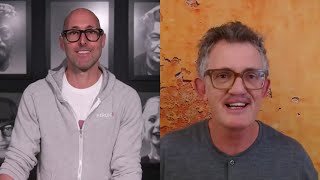
Michael Bungay Stanier talks about his path from teaching to founding Box of Crayons and writing The Coaching Habit. He shares his mission to infect a billion people with the possibility virus, and the frameworks he uses: choose a worthy goal that's thrilling and daunting, travel in small steps, and don't travel alone.
Chapters
Foreign. And it is day one. We've got a special guest today. Michael Bungay Stainier, One of my favorite people on the planet. Your humility and your wisdom and just who you are and how you show up is deeply inspiring for me. So I just want you to know that. Excited to be with you here today. I will share your books with our community. But welcome. Good to see you, man.
It's really nice to see you again. It wasn't that long ago that I came to visit you at the house. We walked around the track, we hung out with your kids. I decided not to play chess because I know I'd have my. You know, I get humiliated in all sorts of other ways. I don't need to be beaten by a 10 year old in chess and four moves. But it's really nice to reconnect here as well. And what is it, three weeks till the book comes out? Close to it. Right? Super excited.
Yeah.
Yeah. I mean, I can feel the excitement building for that. You must be. I mean, thank you for talking to me because I know when I've been doing book launches, I'm like, I can't talk to anybody. I just need to lie down and sleep. It's so much going on.
So this is Michael. This is the perfect summation of who Michael is. I'm celebrating him. And what does he do? Puts the light back on me, which I appreciate deeply. But again, your humility is one of the many things I admire in you. And let's just go to your books. So this is about you, Michael. And yes. It was so good to see you. I don't know how many loops we did, but we got. It was hot too. We got a good workout.
Exactly. I. I think I got my. My body fat down to about 2%, which is, you know, what yours is on a bad day, as far as I can tell. So, you know, it was good. I sweated.
It was good. It was good.
It was.
It was Austin, humid day. We. We. We were in a. A free sauna. It was fantastic. So Michael. Michael has written a number of great books. The most recent is how to work with Almost anyone. Nat's going to share the link. His bestselling book, among many bestselling books, is the Coaching Habit. If you're a coach, you may have already seen this. If you have. Not yet. I don't know what you're waiting for, where you've been hiding, but. 14,379 reviews. What? What? Dude, that's crazy.
It was when I launched it, so it's seven years old. And I just checked for another reason, and it's like 450 on Amazon at the moment, which is pretty amazing. And I didn't set myself a target to sell the number of books because I know. I'm like, I can never tell. I think people just make up numbers around how many books they can sell. And anyway, it's about committing to a process rather than getting hooked up on an outcome. And I went to myself, look, my goal is to make this book a classic. I want it to be considered a classic in the world of coaching. And then I went, well, what would that mean? I'm like, if I could get it to a thousand reviews on Amazon, that would be amazing. And I would consider that a huge victory. I would consider that being a classic book. Now it's like close to 15,000. And I'm like, it's amazing. And Brene Brown actually called it a classic. And I'm like, okay, if I don't really have a mic, I do have a microphone. If I could drop my microphone, I would. It was a pretty great moment.
Yeah, it's cool. And again, your story of how you created that and what you went through to create it in and of itself a heroic journey, and you created a classic. I mean, it's so. It's exciting for me to witness it and to have seen the process of it. I just love it when the good guys win. So congratulations. Exciting. The Advice Trap is another great book. Do more great work, I think is how I got turned on to you and your work was.
Yeah, that created the first kind of mainstream book that got published. So that came out in 2008, I think. Yeah.
Which is phenomenal. Again, coaching habit. And then where's our. Where is the one that I actually blurbed with you? And for you, that one's not showing up.
And.
Oh, how to Begin. Yeah, I got it. The reason I don't have a note on that yet is I. I think I read it. I printed it out, dude. I, like. I printed out the PDF you sent to me. Loved it. Read it. But it was during a phase where I wasn't doing notes. You know, I've gone on and on. But how to Begin is brilliant. It's. Frankly, it's underappreciated relative to if we're using. Well, you're. You're there, man. You're getting to a thousand on that. Yeah, it's a great book on basically, how to live your hero's journey, you know, and follow your. Well, how to live A great life and to live heroically. I found that to be incredibly compelling. Tell us your thoughts on that, and then we'll step back.
How to begin is very aligned with all the work that you do at heroic and with wonderful community. It's about how do you set a worthy goal for yourself, a goal that is thrilling and important and daunting. How do you find that? Because it is the journey that creates the hero. We unlock our greatness by working on the hard things is the core statement in the book. And I'm like, well, that's great, but how do you find your hard thing? I buy into it, but what if I don't know, and what if I feel a bit lost? And so this book is about a process to help you to find and articulate and name and begin your journey. It's about crossing the threshold so that you're like something thrilling, which means it speaks to you, it lights you up, speaks to the core of who you are. Something important, meaning it serves the world, it gives more than it takes. And something daunting, which is like, oh, I don't know how to do this. You know, it's like, I know how to take the first two steps, but I don't know how to. I don't know how to finish this. And if you've got those three elements and you're trying to find the best combination for you, or thrilling, important, and daunting, well, then you've got a worthy goal on your hand. And it might be huge, like, if you just show us some of your tattoos. You've got worthy goals tattooed all over your body, but it also might be small. It might be like, my worthy goal is to build an extraordinary relationship with my spouse. My worthy goal is to build something in my neighborhood. My worthy goal is to have a team at work that just does something extraordinary so it can scale in different ways of work. Not work, intimate, huge. But whatever it is, we unlock our greatness by working on the hard things. So it's like, find your hard thing and then find people around you to work with so you can crack your hard thing.
Oh, my gosh, there's so many threads I want to pull on that. Let's start with I want to hear your life story through that lens, the hard things that you've pursued. And as I said in the prelude, ideally with plenty of dragon attacks, scars. I don't want to hear the, you know, social media Photoshop version. I want to hear the challenges you as you've gone out, however you want to Bring it up from as young as you want to. You want to start, but hear more about your humanity and who you are and what led you to here.
Sure. Well, the first thing to say is, you know, social media aside, I've actually had a pretty lovely life. Like, I grew up in Australia and Canberra, capital of Australia, like a really tight family. My mum and dad were a really strong couple together. My dad was a great role model. My mum was a great role model. I'm the oldest of three sons. I like my two brothers. I always have. Well, you know, mostly. And there's a story about me dropping a shot put on one of my brothers in the bath, but that's a whole nother thing. We're over it now, or at least I am. And, you know, I went to school locally, went to a high school, which I really liked, and I did well at. I was okay at sport, played soccer. I was okay academically. I was a kind of, you know, a leader in the kind of ways you are in high school. Took a year out, worked for a year in England, which is fantastic. I worked in the school. And that was one of those growing up moments. It was really the first time I saw myself as a teacher because I showed up at the school going, look, this is great. I'm going to, I don't know, help be the deputy assistant athletics person and run kids around the field. But they're like, would you like to do some teaching? And I'm like, yeah, sure. They're like, great, here's your teaching schedule. And I'm like, oh, my God. I'm teaching kids who are four years younger than me about stuff. It was like literally a month and a half ago. I was finishing my own high school exams. And so I was really thrown in the deep end. And it really was a moment where it was great. It unlocked this desire to be a teacher. But there was this great moment. This is one of these kind of dragon moments, if you like, Brian, where I'm in a classroom, only 10 kids in the classroom. So anybody who's got kids knows a 1 to 10 teacher student ratio is pretty good. But a, it was me as the teacher. That's off to a bad start. But, like, five of the kids were deaf, five of the kids had adhd. And so this classroom was chaos. And there was this moment where one of the kids picked up a chair and threw it through a window. And I'm sitting there going, look, I'm not a trained teacher. Well, I can tell that this is not going particularly well. Right now. And the process of calming the kids down and calming myself down and trying to get glass swept up and regaining control of that classroom still stands out as a kind of peak moment for me. It was a moment of learning authority, learning status, learning empathy with those kids. So I came back from my time away from England. I went to university in Australia. I did what's called an arts law degree, because law's an undergraduate degree in Australia. Really did well in the literature side of it because I studied English literature. Loved it, was good at. It was terrible at law. And I did. There are two kind of key moments for law school. One is, the one thing that I did enjoy in law school was doing something called the Law Review, which is like a performance. You know, you write sketches like Monty Python and kind of. That Cambridge Footlights, that kind of schedule. And I did something. And speaking of being grateful that social media didn't exist, I did something called synchronized nude male modeling. Me and another guy backed out onto stage naked. Some music was playing, and somebody was kind of doing comedic kind of commentary on us. All sorts of innuendo in there. And another peak moment, that moment where I'm standing out there, I'm in the wings, I've got a robe on, I'm naked, I'm about to step out in front of all my peers and colleagues and. And, oh, my goodness, Brian, the adrenaline and excitement just thinking about, whoa, this is. What am I doing? I wrote it, but it was a ridiculous thing that stands out. So that was a peak moment that taught me something around. I like to perform and I like to provoke, and I like to kind of be on the edge of things a little bit. And then the other key thing around law school is I finish law school being sued for defamation by one of my law professors. So if ever I was sure about should I be a lawyer or not, I was like, this kind of nails the deal, which is like, I should not pursue law. And my law school was really conflicted about this because on the one hand, I'm being sued in a very public way, in a way that's never been done before for defamation because of some minor tempest. Secondly, I just won a Rhodes scholarship. It's a big, fancy scholarship. It took me from Australia to England to Oxford to study where two brilliant things happened. One is it definitely took me off the path, so I didn't become a lawyer because that would have been miserable for everybody involved. And secondly, I met my wife. We just arrived. I'd just broken up with a girlfriend in a painful and ugly way. She had just got divorced. We both showed up going, we are so done with relationships. And then within six weeks, we were living with each other. So that was great. We're still like, that's 30 years ago or more. We're still married. And I'm very happy for it after that. Brian. I finally, you know, I finally staggered out of, you know, education after, I don't know, six years or something at university. And then I had a series of jobs that have shaped me to be who I am today. The first was in the world of innovation and creativity. So being hired to invent new products and new services for companies. So it was really good fun. But I played a minor role in inventing stuffed crust pizza for Pizza Hut. I helped invent a single malt whiskey that has been called the worst single malt whiskey ever invented. It's called Loch Dew, the black whiskey. It was disgusting. And as much fun as I was having with this, I was like, I don't actually want my peak moment. I don't want my hero's journey to be. Michael played a small role in contributing to stuffed crust pizza. That is not. That's not the thing I want on my gravestone. I was like, this is fun, but I've got to go and find something that actually makes a difference in the world. I don't need to invent another sub range of soup for Campbell's or Heinz or whoever. It took me into the world of organizational change and organizational development. And again, I spent a lot of time having no real impact at all in the work I was doing. But I did do things like write the global mission for GlaxoSmithKline, a big pharmaceutical company. And by now I was living in Boston, having a pretty terrible time in Boston because they tried to set up a branch in Boston from the UK and it wasn't working at all. So finally quit, got a job in Toronto. My wife and I, we didn't know where to move. She's Canadian, I'm Australian, we're living in the States. We went to our favorite pub, we had some beer. We each wrote down the name of three cities on the back of a beer coaster. On the count of three, we flipped them over. Toronto made both beer coasters, even though I'd never actually been to Toronto before. So we decided to move Toronto. I got a job as a consultant doing something. But our flight out of Boston was, was on 9, 11. So all of that, we finally crossed the border like three or four days later. The job I had vanished and kind of out of necessity, I started my own little company. And my business plan, Brian, was I'm looking for somebody with a pulse and a wallet and I don't even care if they have a pulse, if they have a wallet. That's kind of all I need. And I had a range of skills but no real plan, no business plan, no experience at starting a business. But 20, I guess it's 22 years old. Now this is a company that became Box of Crayons, which is now one of the leading training companies around coaching skills, particularly for big companies. So we've been responsible for training hundreds of thousands of people in companies like Microsoft and Salesforce and Gucci and all sorts of cool companies around the world. And along the way I've written, I guess eight or nine books now, which you kindly showed some people of which the number one is the coaching habit for sure. That sold north of a million copies now, which is amazing because it's a self published book. I didn't want it to be a self published book. I thought I had a relationship with a publisher. So I was pitching them to publish this book and they turned me down six times over two years to publish this book. It's a very disheartening experience. You know, every time I'd come to them I'd go, here's the idea. And they're like, ah, yeah, we like it, but we don't like it and we like you. So when you go away and have another go at writing it, I was like, okay, go away. And I completely reinvent this book. And then I go back going, here it is again. And they're like, well, we like it, but we don't like it. We like you, but we. Why don't you have another? And finally after six, and this is kind of a bit of a dark night of the soul because I'm like, I think there's something here. I just can't get them to get it. I was like, okay, I've got my head clear. It's like dunking my head in an ice bath. And I'm like, this is the book. I'm really clear what this is. But now it needs to be a yes or a no. I can't go away and have another crack at trying to understand what you imagine this book to be. And they said no. And I was shocked because another book of mine do more great work. It sold like 100,000 copies over some years. And that's a solid performance from a book. Most books sell less than 5,000 copies. So I was thinking that they would bet on the person, but they didn't. So I was like, okay, sad face, bit of crying, a little bit of having a shot of tequila to try and wash the sorrows away. And then I went, you know what? I'm going to back myself on this book. I think there's something good here. I'm going to self publish it, but my commitment is to publish it as a professional. I'm going to do everything I can to make this look be a professionally published book, even though I'm funding it and I'm self publishing it. So the coaching habit launched, it took off. It sold 200,000 copies in the first year and it's just kept selling since then. So that's been the magical behemoth. That's like the. I don't even know how to sell. I don't even know how that's happened, but it's really kind of taken off. And in the last three or four years, I've been focused less on B2B box of crayon stuff, which is selling to big companies, and more B2C things like the how to Begin book, which is helping people find their worthy goal, and a community where people do the work on their worthy goal. And then the latest book, how to Work with Almost anyone.
Brilliant.
I'm old, so, you know, it takes me a while to get through the whole life story, but that's kind of some of it.
I felt like I was with you throughout. My heart was skipping a beat. Imagine being in that robe, getting ready to step on stage. What hero? The defamation. That's just perfect.
Yeah.
You know, I did. We talked about the fact I dropped out of law school.
I didn't. I don't think I knew that.
Oh, my gosh.
I knew I liked you. You know, we have things hard to do.
Yeah. It's law school, but I show up, you know, moving into my place and throw up on the way in. I'm like, no, this isn't it. Thank God for me and humanity in terms of what I would have done as a lawyer, that I didn't do that. But I love that. The 9 11, that's powerful. All big major life decisions should be made. Of course. Writing it on a beer coaster and then flipping it over. So that, that was awesome and fantastic.
Let me tell you about that because, you know, I was talking to Ramit Sethi the other day who, you know, I will teach you to be rich. And he's got a Netflix special. He's had huge Success in his work and his commitment to make finances available and understandable to people. But Ramit is a planner. He researches everything up the wazoo. He is very rigorous around that. But when it came to us trying to figure out where to move, I just didn't know how to research that. You could go visit the cities, but you're always visiting as a tourist. You don't really understand what it would mean to uproot and try and put down routes. So I'd done some thinking and reading around livability in cities, but in the end it felt like you had to get directionally correct and then you had to take your best guess. And this idea of taking a best guess for me is a really important driver for me in terms of those moments where I get stuck around making a decision, and suddenly the decision becomes overloaded with importance and significance and meaning. And I'm like, ah, I'm too afraid to make a decision because of the consequences. You know, I, you know, if I take a left, it means I can never go right again. This permission to say, take your best guess and see where it goes from there, that. That's a really helpful process I use, I guess, to help me keep moving when I feel when. When the core to get stuck is strong.
Yeah, that's so good. And then whatever means necessary, you know, and, and so much we can talk about on that as well. But that willingness to trust, to take the risk, to evolve as it goes, yet to prove yourself right, once you've made the decision, well, you might as well go all in on it and do your best until you get data that shows maybe a different path. I want to know about your tombstone, though. So you said, I want to put, you know, and congratulations on the stuffed crust pizza. That's amazing. I think I got out of pizza right around when that was coming in. So I haven't actually tasted that, but it sounds really good and I'm sure I'd enjoy it.
Yeah.
But what do you want on your tombstone? So, having looked back and now let's look forward, like, what do you see? What's the real or metaphorical, you know, sense of.
Yeah.
Of that for you?
You know, I. I can tell you literally what will be on my tombstone, which will be nothing, because my wife and I have bought a place in what they call a potter's field. So it's a field up north in Ontario in Canada, where I live, where people just get buried. And there is no tombstone and there is no memorial, in part because I've seen the Statistics. And it's like graves are visited less than two times once the person has been buried in those graves. I was like, I don't need to use up space and I don't need a memorial like that. I don't think about legacy in terms of how will I be remembered after I'm dead. That is not important to me. I love the poem by Shelley Ozymandias, and I misquote it, but it's like a traveler comes across crossing the desert and comes across a huge statue fallen into disrepair. And the face has a mark of cruelty. And on the base of the statue it says, I am Ozymandias. I am King of Kings. Look around my majesty in despair, and all around him stretches the desert sands to the horizons. And there's this whole piece around. Look, you can build your fantasy about how you will be remembered, but you don't get to control that or really influence that. However, I have a very clear driving force around the mission I have and the focus I have while I'm alive. And the mission, Brian, for me, is to infect a billion people with the possibility virus. And I've had that mission for 20 years. So let me break that down for you. Infect a billion people with the possibility virus. And of course, by the way, the possibility virus sounded a whole lot better before COVID happened. And now it's like, I don't know, do I really want to be infecting people with viruses? It's probably less cool, but I feel like these are. These are my. You're my people. You'll understand what I'm going on about here. So a billion people is impossible. Feels impossible to me if I had to touch them person by person. Like, I just can't get round. I can't shake a billion people's hands. So however it feels like that is a big enough number where I'm like, I am striving to make this world better. That's what that is saying. But the possibility virus, what the possibility virus is about is, first of all, helping people understand that they are at choice. Whatever the circumstances, they are at choice. It is the key lesson from a man's search for meaning in between stimulus and response is freedom. Victor Hankel. Victor Frankel. Thank you. Not Hankel. Frankel.
Yeah.
So I'm like, so how do I help people see that they're a choice? And how do I help people make the bravest choice? That's what the possibility virus is about. But infecting people with the virus is about. I need to get myself out of the way. So one of the. Because I need to put ideas out in the world and tools out in the world that spread without me. Because that's actually the way I can perhaps touch and influence a billion people. And deeper to that, there's a way of me thinking about how do I be aware of and challenge and deconstruct how power works. In part, Brian, it's because, like, I've got dealt all the cards. Like I am a tall, over educated, white, hetero CIS man, you know, as everybody can see, incredibly good looking, I speak English, I'm articulate. You know, I've got, I mean, like, if I'm not successful.
Yeah, yeah.
So for me, there's an ongoing dance around how do I be a great teacher? Because that's what I'm good at. I'm good at taking things and making complex things simple so that they feel feasible and doable for people. How do I do that? But also do it in a way that I have other voices share the stage with me or other people in the spotlight. And part of what's powerful about the coaching habit and this idea of staying curious is coaching is actually a way that disrupts power because it moves you from one person being the high status. I've got the advice. I will tell you what to do to the person who's receiving it. But when you ask a question, actually you're handing the other person responsibility for their own freedom, responsibility to figure this stuff out. So it really kind of has a way and a subtle way of challenging and disrupting how hierarchy works.
Brilliant. And then just so inspiring too to go back to the math. And as you know, 51, 2051 is the mission that I've dedicated my life to and all that good stuff. But the way we do the math on it is force multipliers. So how do we help people who help people? So when I do the math and bring out the absolute best in people who are committed to being their absolute best, and the hero that we strive to train becomes the guide who then trains the heroes who become the guides. And that ripple effect while we play our roles humbly yet heroically well is what I see in you. And even just doing the math on your million people plus who have already purchased your book, it's like, wow, all right, well what on average do they help? You know, you've got the individual that will help 1 10, 100 people, but you've got the people that are running 100,000 or a million person organization who got a distinction that's rippling out. So it's very inspiring for me to see. And again, what I admire. Another thing I admire in you is your simultaneous integration of the apparent dichotomy that Maslow tells us is dissolved in people like you and those of us committed to actualizing of humility and audacity, you know, where there's this willingness to realize and laugh at yourself and all the other things, but also to go all in and to say, yeah, yeah, let's go. It's a beautiful demonstration. And again, we've had four of these chats this week. And I told our community just, we never do that. We usually have one. And I told our community in advance just how special our chat with you would be and how uniquely you would embody the soul force that we saw in different ways with the other individuals with us. But everyone who's been here, you know, throughout and watched it. Can you feel it in Michael right now? Just his own beautiful, idiosyncratic, no one does it the way you do it. You're doing you. And that more than anything, is what I find so beautiful and so inspiring. So again, bless you. Now continuing with the. Anything you want to reflect on with that before I kind of pull a few other threads in the overall arc.
Well, the main thing I'm taking away from what you're just saying, Brian, is knowing that this is the fourth conversation this week. I only have to be 25% as good as one of your regular ones. So I probably, I'm probably already done. Like, I think we could probably move on now.
Expectations, sir. So, and this is. This is Michael on jet lag, apparently, by the way. So I'm sitting here being like, dude, I want to be like you when I'm fully rested nine hours, the way you're riffing and doing your thing. But he just flew back from Australia. Pro tip. What was the kit we need to get just so we've got it on recording?
Yeah, it's called Flykit F L Y K I T T. I've used it for the first time. You know, you get basically a bunch of capsules with different supplements to take at certain times. You type in your itinerary and it kind of sets out when you take the pills and how you reset your. Your insulin system when you wear the, the light canceling glasses and all that good stuff. I'm like, I don't know, do I buy into that? And then I. A bunch of people I know used it and kind of raved about it. And honestly, this has been the easiest integration back from Australia, which is 15 hours ahead of Toronto. So normally they say it's a day for every hour you shift to really get back to yourself. And I reckon I'm pretty much back to myself after three days or two and a half days. Like it with that two T. There we go.
So we're not officially sponsored by Fly Kit, but today's show is sponsored by FlyKit. Did not pay us anything for that, but we'll go get him another time. There you go. Amazing. All right, Hero gets guides. Who have been some of your most formative guides.
Well, you know, there's a great piece by Seth Godin, you know, who is so prolific and so smart and so many things, and he talks about finding your mentors, and he's. And he says, look, I'm besieged by people wanting me to be their mentor. And I. And I say no to all of them because I can't. And I'm committed to creating work and being a creator, and if I mentored everybody, I'd just never do anything. But he says, it's really helpful to have your. It's almost like you should get pictures of who your mentors are and stick them behind you on a background. It's like, who are those people who guide you? Even if you're not in actual conversation with them, you kind of are in actual conversation with them. So I pull from a range of different people. One that immediately comes to mind is a writer, a thinker called Peter Block. He's written the. He's written a number of books, but the one I quite like is the answer to how is. Yes, he's a champion for. Well, he said this to me once. He said, I see my job as giving people responsibility for their own freedom. Oh, I wish I'd written that. I wish I'd written that. Responsibility for their own freedom. There's so much insight and wisdom in that, which is we are so quick and comfortable to give up our freedom. We look for somebody to rescue us. We look for a way we work in an organization that can infantilize us because it means that we don't have to take responsibility for our own freedom. And this idea of the possibility virus and helping people see their choices and make their choices is a tangible expression of giving people responsibility for their own freedom. So Peter Block is somebody. Then there are people like Bob Dylan, for instance, is another person who influences me because he is so fully committed to creating. He creates what he wants. He's like, I don't know if you Ever heard the Bob Dylan Christmas album. It is absolutely one of the worst albums ever written. I mean, think about Bob Dylan singing Christmas carols. And it is that. But even worse than you think it's going to be. I mean, it is excruciating. But I love that he's like, you know, I'm Bob Dylan, I'm going to do a Christmas carol album because I can. And he's got this relentless creativity and then he's got a way of separating out his sense of this is Bob Dylan the public figure, and then this is the person who does the work. And he understands that there's a. There's a role you put out there which is like, this is the person I'm putting out there. And then I'm just going to get on and do my own thing. And I don't really care about who I serve. And I know that sounds contradictory because I'm with you on this kind of force multipliers and who do I best serve so I can allow people to then go and have impact. But he's not going to be afraid of following his bliss, of finding his worthy goal, of doing the work that he thinks matters most. And the fact that he's still, whatever he is, 80 something or 90 or something, and writing beautiful songs and finding ways of expressing love and pain and courage, I think that is extraordinary. So those are two people who are intellectual heroes of mine, who kind of give me guidance. And then there's these little moments where people say something that changed your life. I had a teacher who said, what did you want? A high school teacher who said, what do you want to do when you finish high school? And I'm like, I'm not sure. And then I said, I think I want to go to Oxford University. Because my dad, who's English, actually went to Oxford University. And that teacher went, huh? In his head, well, that's ridiculous. He goes, well, you'll need to be a Rhodes scholar for that. And at 14, that seed was planted for me to become a Rhodes Scholar at 25. One of the moments that struck a chord for me was when a boss of mine said. He just said. He kind of acknowledged me in a profound way. He said, you are an old soul. And that was a very meaningful moment for me. It gave me permission to. To try to be an old soul, to try and be a teacher, to kind of show up and understand that I wanted to both be an apprentice and be an old soul and to hold those states of being in the same in both hands and Be both of those things. And, you know, I'm sure Dave has no memory of that whatsoever, but it really brought to me the power of, as best I can do it, trying to see the people who are in front of me. And if there's an opportunity to appreciate them and say that out loud to them, tell them what I see in them, tell them the best of them that I do see. Because sometimes that gets shrugged off, but sometimes that's a really powerful moment for them.
Wow. So much on that. And I just want to emphasize the. The last story there. Walt Whitman once said that in the faces of men and women, I see God. Right? Just that when I saw that, this moved me. And one of the things that we like to talk about, and that is a chapter in the book, is in the faces of men and women. Let's see heroes. So let's see the best, most heroic version of someone. And for your life to be so fundamentally, you know, gives me tears in my eyes, like, transformed and shaped by a couple of human beings who may not have even consciously tried to bring that out. But to. To combine that with Aristotle said the most powerful virtue from his mind is courage, because it's the virtue that vitalizes all the others. And then I say, if that's true, which I believe it's at least tied for first, for that, then wouldn't giving one encouragement be the most loving thing that you can do or one of the most loving things you can do? So this idea of taking the time to deliberately find that in others is such a beautiful thing that I just want to highlight and encourage everyone here to do deliberately, all day, every day. I mean, it's a practice of mine to little things. When I'm in Whole Foods, going, getting checked out, it's like, what can I find in this person that's just awesome. That will be the thing that might elicit conversation. Tattoos, by the way, prove to be in your. Tattoos are great conversation starters. And then, boom, you know, and even, like, beards or hair is a thing that's become a thing for me, and I have fun. Literally, like, dude, that is a solid beard. If I had hair envy, I'd have hair envy for you. I'm walking by the guy in the airport, you know, and it's like, really sweet little moment that, you know, becomes a treasure hunt. Like, how do I find that in other people? So I just wanted to play with that for a moment.
I love that, and I like this. The distinction you're making between acknowledging. Often when we go to acknowledgement it's about, I like how you did this and that's great. And it's also, it lands less powerfully than this is what I appreciate about who you are. Here's a tiny other little. This is like a non verbal acknowledgment. My friend Mark Bowden taught me this, the eyebrow flash. And there's a way when you see somebody and you flick your eyes.
My six year old's got an eyebrow flash. This is good. Go on.
Yeah, and it's funny. You catch somebody's eye and you flash your eyes like that and they will like smile because it is this very visceral physical thing saying, hey, I think we know each other. I think I see you. I think we know each other. And people will often walk going, do I know him? I don't think I do know him. But they've had that moment of kind of a brief moment of connection that can be really powerful like that. So sometimes it doesn't even need to be a verbal thing. It can just be a hey, I see you.
That's good. I'm gonna let you play the eyebrow flash. That is solid. I got the smile and the high. I'll keep on working fundamentals. Dude, I'm John Wooden on the socks. But you're going, you're going reverse slam duck on us.
Let me, let me, let me give you the reference. So Mark Bowden, B O W D E N. He has a TEDx talk around nonverbal influencing. He's taught me a lot about how I facilitate and teach. And he's got a tiny little bit about in there about the eyebrow flash. He does it better than I do. The cool thing about Mark, as well as he's a brilliant teacher and a presenter, he's kind of, he's got two great stories in his background. One is there was an ad on the super bowl many years ago for Nike about an English soccer game with a streaker, somebody without any clothes running around the pitch. And the police were trying to chase him and he couldn't catch him because he was wearing Nike shoes. Well, he's the streaker and so there's that. But even cooler in the Lord of the Rings movies, he is the orc general who kind of leads the orcs up to the, the gates of Minas Tirith. So, you know, if you ask him to do his orc impersonation, he's like, I love the smell of human flesh. It's like, it's fantastic. And he has a good TEDX talk as well.
You put the three together, that's heroic. That's impressive. To be able to show up in those different domains. That is so good. All right, so then we're talking to you, one of the, from my vantage point, leading thinkers on what it means to live heroically in the modern age. Give us the quick MBS notes on what a good hero's journey looks like so that we can look at your frame. And again, this is in some ways a distillation of the book we discussed, but what's the. What's the quick take on that with practical tips on how to show up in each phase?
Yeah, Well, I would say you start off by. Kind of going, I think I want to. I think I want to be a hero. Like, I think if you get. You can get lucky and you can kind of find yourself being swept up on a. On a hero's journey where you're kind of pushed in. You're kind of like, oh, here I am. Wow, that's exciting. But I think for many of us, it's like, you know what? I'm going to have the courage, that primary virtue again, to go look, I'm going to see myself as a hero, and I'm going to try and do something that matters. And so the starting point for me is this idea of, so what's your best guess at a worthy goal? A goal that is thrilling, important, and daunting? And most people find that quite hard to name because it feels like there's so much writing on it. And it feels like the first time they write something down, it's like, that's not adequate enough. And I'm like, well, the first time you wrote it down, it's a crappy first draft. It's not supposed to be perfect. It's supposed to be the first time you wrote it down. And so I think the first phase of doing this is actually spending some time going. I'm going to sit with it and try and take my best guess at the expression of the work. For me, that is thrilling, important, and daunting and drafting it and refining it and testing it and sitting with it is part of the process, I think, for actually kind of figuring that and naming that. Now, here's the second part of the process, and I think this is the piece that is least thought about, least reckoned with. And it starts with the insight that the status quo has a far stronger pull on you than you realize. The gravity of the status quo is really strong. It's a really strong force. It's got you by the ankles. And it's holding you there. And even as there's part of you that is hungry for future you, because that's what a hero's journey is. It's like you're leaving present you and you're journeying towards the future, next best version of yourself, there's one part of you that hungers for that. And there's one solid part of you that is like, no, don't do that. No. The brain is wired to like things exactly as they are right now. It loves homeostasis. So there's one part of you is like, yeah, but don't do that. So for this, the teachers I look to for this, Brian, are people like Bob Keegan and Lisa Leahy. And the immunity to change process, If I can be rude, it's not a great. It's not a well written book because they're both academic. So it's a slightly academic book, but the process is really powerful. And so here's my language, my way of teaching, kind of some of their work was on other people's works as well. Which is the difference between easy change and hard change. This is what you're wrestling with in this moment. Because there's different types of change, and all change tends to get collapsed into one big old change. But I'm like, no, no, it's two different types. Easy change is stuff that you know how to do and you do all the time. You decide you want to learn something or do something differently. So you learn a bit, you try it out and you get some feedback and you learn some more. And you read some books and you hear a podcast and you read a book and you sign up to heroic and you learn a bit and you. And then at a certain point, you reach the level of mastery that is appropriate for what you're going for. And the metaphor I think of that is it's like downloading a useful app on your phone, right? It's like, great, here's a bit of app. It's like. And it's. It's additive to the person you are today. But I think with hard change, that doesn't work anymore. Hard change is not a new app. Hard change is a new operating system. It's not additive. It is transformative. You're kind of changing who you are. And all of you who've wrestled with something where you're like, I keep saying, I want to do this, and I keep struggling to do it. You're wrestling with hard change. And hard change is when you need to say no to elements of who you are now and the life you have now so that you can say yes to future you. And that's hard, because when you're saying no to elements of your life, you're saying no to people in your life, you're saying no to expectations other people have of you. You're saying no to expectations you currently have of you, you're saying no to the comfort of the status quo. You're saying yes to ambiguity and uncertainty and risk. So even though we sometimes go, look, just do it, it's not that hard. Read this book. New knowledge is not the solution to hard change. Everybody who's wrestling with hard change, you've already got all the technical knowledge you need. For the most part, you've read enough books. Buying another book on how to write a book is not going to help you write a book. You're actually wrestling with something bigger than that. You've got to figure out the deeper consequences of the choice. So here's how I would frame it. You come to this moment where you're like, do I do my. This is my words. Do you do this worthy goal now or do you not do it? Those are your two choices. You're on the cusp. Do I do it or do I not do it? You're on the threshold and the first thing to do is say, what if I didn't do it? Because that's a choice you have. What if I didn't do it? I've thought about it. I found something between thrilling, important, daunting. But what if I didn't do it? And I can see Eloy's posted up a reference to the immunity to change process there, which is great. Thank you. The choice you have in that moment is like, okay, if I didn't do it, what are the prizes and punishments of that choice? Because there are absolute prizes to you not doing it. You stay comfortable, you don't risk, you don't offend, you stay in the groove. It's pretty comfortable. It's not so terrible. What's the price you pay? Well, the price you pay and the price we pay is you don't get to have that adventure. You don't get to make that contribution and then look at it and weigh up the prizes and punishments of doing the thing, of not just doing it, but committing to it, really going for it. What are the prizes and punishments of that choice? What would you get from pursuing that, but also what's at risk from pursuing that? So as an example, Brian, with my team, the goal we've set ourselves for the next little while is to try and sell 10 million copies of my books. We've sold a million and a half, which is approximately 1.499 million more copies than I thought I would ever sell in my life. But to sell 10 million copies of a book is like I have no actual idea of how to do that. It just feels overwhelming. It's like 25,000 copies a week or some stupid number. I mean it's just, it's kind of vastly large. And so I'm sitting with these like prizes and punishments questions to try and figure out am I brave enough to cross the threshold. If you weigh it up and you're like, I'm going to go for it. Prizes outweigh the punishments for taking this on. Then the key thing for me would be three things. One is travel in small steps. It's like footstep after footstep. David Allen, getting things done, said you can only do a project one step at a time. But you kind of, because you're navigating new territory, it's like find a nearby landmark and make your way to that landmark and then find another landmark and get your way to that way. It's not like you type a destination into Google Maps. It will show you how to get there. You're figuring this out, you're navigating. The second is don't travel alone. Find your people to travel with. Find the the right energies to bring in with you. And I draw on kind of indigenous North American wisdom to think about energies, the calling in the four directions. You've got the energy of the warrior, you've got the energy of the lover, you've got the energy of the teacher and you've got the energy of the visionary or the ruler. All four of those energies are essential. Some of them you have within you, some of them you need to find from other people to help you. So don't travel alone. And the third is to know how to get back to the best version of who you are. Because absolutely, when you step into the hero's journey, you stumble, you fall, you despair, you get miserable, you get depleted. You're filled with self doubt. And so having a practice to find your way back to not just equanimity, but to the best possible expression of who you might be. The heroic expression of who you might be. That's a powerful tool as well. There's a lot there. I'm sorry, it's like, it's a little bit overwhelming. I feel overwhelming and I even know this stuff.
No, all of us pick up the mics and drop them simultaneously. What? As I like to playfully say, insert exploding head emoji. That's so good. I don't remember reading that in. In. Just begin. Is that.
Was that in there? Yeah, yeah. That's mostly in how to begin.
Yeah, but those specific three things, those are so good. All right, cool. It's a funny thing too. When I. When I read a book and enjoy it, but don't then go through the next steps, my recall of it is, you know.
Somebody had written a PN about it, you'd be remembering this, but you know.
Exactly.
Been done.
Let's get.
I'm the one to point. I'm the one to point a finger at anybody, but I'm like, exactly.
What are you doing?
It's not like. Yeah, exactly, exactly.
I'm just sitting here twiddling my thumbs, brother. Exactly.
I know.
Let's. Let's go to. We usually begin these calls with me saying hi to everybody by first name. Hi, everybody by first name. And then we flip the switch and invite the best, most heroic version of ourselves to join us in a very simple meditative thing. What do you do? This is. This will be our bookend. What do you do in order to reconnect to the best, most heroic version of yourself? Yeah, period. How do you do that?
Well, espresso in the morning helps.
It doesn't hurt.
But the perhaps more useful practice is I have a tool called this, not that. So it's a little laminated card that I carry just around the corner here, and it has like seven pairs of words that are an expression of me at my best and me when I'm like, let's say 15 or 20% off my game. It's not me at my worst because I know how to get back from that. That requires self care and time and rest and sleep and nutrition and exercise generally. But this is when I'm like, I'm intimidated or I'm overwhelmed or I'm just kind of somewhat depleted. This, not that. And so over the years, I've found my pairs of words that really work for me in terms of reminding me of what I look like when I'm 15% off my game and reminding me what it looks like when I'm back to the best version of myself. So it's things like stepping forward, not stepping back, being provocative, not being sycophantic. The manifesto of insignificance versus it really matters. The manifesto of insignificance is something I wrote years ago around kind of what we're talking about before, which is not worrying too much about what your legacy is after you're dead. Because nobody will remember me in a hundred years, even if I set up. I remember being in Istanbul and coming across this little kind of buried piece of stone, kind of five foot underground in a drain. And I kind of read down, and I read the inscription. It was the column that represented the centerpiece of the Ottoman Empire. So it was like the symbol of this enormous, influential empire. And 200 years later, it's just a. It was just a piece of rubble in the street, in a drain. I'm like, that's great. So I don't need to worry about legacy. I don't have to worry about it matters too much. It's like be the best expression of the best project. Your best guess at the best project that serves your mission at the moment. It's like holding it lightly, not taking it seriously. I've said some of these provocative, not sycophantic. So I find it most useful when I am off my game and I'm like, oh, I can feel myself playing small or being worried or sucking up to people. What's the state back? And with the state of coming back, I mean, for instance, one of them is nude male modeling, not singing in a choir. So it's the story from before around stepping naked onto stage. I'm like, yeah, naked on stage is one of those key elements. Each one of those words for me connects to a body state. And that's really helpful for me because I am not that good at somatic wisdom. I'm not that good at being connected to what my body is telling me about what matters at the moment and what's important. So I'm kind of in my head too much. So the fact that I've figured out words that connect me back to a physical state, that connect me back to the physical embodiment of the best version of myself. I find that a really helpful tool. And that is. I kind of explained that a little more eloquently in the how to Begin book.
That's great. Let's relink to the how to Begin is your own this, not that. Somewhere public that we can link to right now if we did a quick search.
It has been written about. It's been peered in some newspapers as well. So it's. It's findable. Do I know where it's findable?
No.
Do I have a good system around that? Absolutely not. But yeah, yeah.
Oh, so good. Time flies and you're having Fun with friends. Bless you, brother. I appreciate you. Yeah, and just so grateful for you again. Your embodiment of this. Not that is. It's profound. So thank you. I look forward to seeing you again soon.
And, Brian, I'm cheering you and the community on for the launch of the book. I mean, the launch is just, you know, I know you're good friends with Ryan Holiday just around the corner from you, and as he says, like, the launch is just the launch, but the launch is also the launch. And you're right in that moment where the launch is right there in front of you. So I'm sure it is consuming your time and your effort and your energy and Michael and everybody's kind of rallying the team, which is amazing to watch. But cheering on the launch of the book, but really cheering on the longevity and the success of the book is just another strategy to change the world.
Yeah, I appreciate it. 25 days. Who's counting? 73 days until the end of the year, 440 something days. It's interesting because my exercise is here to 2030, and there's an opportunity for us to hopefully catalyze the movement in a meaningful way. But that all in, not attached. It's exciting. I appreciate you, I appreciate your support. And day one, all in. Let's go. Speaking of cheering on, next time I'm in Toronto, Toronto FC is rolling out. Heroic. So I spent the day with John Herdman, your former national coach, new head coach of Toronto fc. The little boy in me got to celebrate watching a great coach coach and be up in Toronto, I imagine, soon. I can't wait to see you soon. But again, thank you. Bless you. And I look forward to seeing you soon.
Thanks for being with us. I appreciate it. Take care. Bye. Bye, everybody.
Bye. What a week. What did I. Did I call that one, though? Guys, come on. We've got four unbelievably different human beings, yet all of whom had the exact same superpower, which is soul force. You know, Garab Seamus, we have Gabrielle Lai, Ben Greenfield. I'm still buzzing from that chat. And then Michael Bugay, Stanier again. When we live in integrity, with our own idiosyncratic virtues and values and sense of what our best self looks like, it comes out so differently, yet there's still that central felt sense of moral charisma, of aliveness. And as Campbell says, and I almost said it out loud in the chat, the greatest gift, the greatest boon is who you are. So when you go on your hero's quest, you fight your dragons, you Win and you learn and then you come back, transform, you become. What Campbell says is you're transparent to the transcendent. So in that conversation, for me, I felt a divine, transcendent, beautiful power that I felt with Ben, that I felt with Gabrielle, that I felt with Seamus, and frankly, that I feel every. I'm sorry garb that I feel every time I look down at you all which I'm doing now as I look down on my screen. It's like this aliveness and how you're responding to him and how you're showing up. Anthony's giving us a gun show as he's leaning back. Did one with Eleanor, by the way. Her big thing is her muscles. I'm like, you got license for those guns? What are you doing, girl? Laughing about it, but I see it looking at you. And it's an honor to be here with you and to help you flip the switch. Be the best, most heroic version of yourselves. And yeah, sacred opportunity, feeling deep joy. Nat, if you can connect to everyone after we officially flip the switch, that'd be great. I gotta get my names out. Stuart, great to see you. And your beard, sir. That is a solid looking beard. Let's go. So, hi, great to see you and I appreciate your presence in the community and support with the team. Vinnie, great to see you. Jonathan, Dan, Anthony, Robin, great to see you throughout. Love your animated expression. Josh, good to see you, sir. Pauline, Darren, plus one, good to see you both. Are we in Europe right now, by the way? Was that right? Are you guys local? That's great. Germany, if I recall. Roy, great to see you. Aki, Madeline, Sarah, Ryan, Mark, Gary, Claire, Gina, Judith, Anissa, Rocking the work out there, Ben Style. Leonel, great to see you. Loved your post this morning as well, Karen. Everybody else, great to see you and great to be with you. Let's ground all the energy in an instant, flipping the switch, however you do it, Bringing a smile to your face, celebrating the opportunity to be here together. Recommitting to living with wisdom, discipline, love, courage, gratitude, hope, curiosity and zest as we move from theory to practice to mastery together. Playing our roles humbly yet heroically well to help create that world in which 51% of humanity is flourishing by 2051, starting with us. Day one. All in. Let's go. Request. If you have not gone to Goodreads yet and added arete to your want to read list, please do so. There are some really, really powerful strategic reasons that we want to do that that I won't go into details on, but it's very exciting. And if you want to help us catalyze the movement, that's a very small but meaningful way to do it. Right now we have about 6,001 to reads right now, which is great. We want to get to 10,000. 10,000 is a milestone that may move some things that are very, very, very, very potentially powerful for our movement. So make a request on that. I missed the subject line. I was talking to the team right before this. All caps. I need your help and I've been asking that for help a lot more in explicit, you know, concrete ways. But that's a little mundane way to do it. If you feel so inspired, Nat, if you can put a link to Goodreads in the chat right now, that'd be great. And again, thank you all for doing that. If you've already done it, for buying all the copies of the book. I see so many of you to whom we sent that VIP box tears my eyes. It's extraordinary. So bless you. Thank you. And day one, 25 days. Who's counting? 73 days. And again, the game is. We're now, we would have been number two New York Times if we had launched last week. So we're approaching 14,000 books that have been sold, which is exciting. So we would have been literally number two on New York Times. Knowing the data I know from last week, 20,000 puts us in a really good position for number one. We'll be number one. Number two, number three. The challenge is sticking. As I've said throughout weeks two, three, four, five, six through the end of the year. Tears my. It's my deep intuition that if we can stick, then again, it's not easy to get into the New York Times, but it's relatively easy. It's much, much harder to stick, and I've said that from the very beginning. So if we can stick weeks 2, 3, 4, 5, 6. My gut is you don't know what's going to happen. You know, I get emotional saying, oh, you just don't know. But my intuition is we can stick for a long time. So we'll continue to figure out, as he said, travel in. In small steps or whatever he said, you know, like, take the next step, Take the next step, take the next step. Frankly, I don't know what's going to happen once we launch, what's going to happen in week two. We got to sell 3,4000 copies each week to stay in the top 10. Proud of where we're at. But is it going to be crickets after that? We're doing all of our stuff after, you know, but it's fun and funny to look at it. But we'll continue to take the next step and have so much gratitude for you all helping us do it powerfully, joyfully, et cetera. But that's the update on that. So we're winning and it's exciting. And again, looking Forward the next 15 months and then the next 15 years. I was talking to Alexander about it. I'm like, it's done. We're all in tears. My eyes again. A million people, a billion virtuous targets hit a year. We can play our roles humbly yet heroically well to help people live with more virtue. And this is a moment, you know, that's exciting to be aware of it, to be on the journey with you buddied up and doing all the things. So bless you. Thank you. And thank you, Kimmy, for your kind words and the beautiful pictures. My goodness. That's what I got. Nat, if you can connect those who would like to connect, that's great. Tomorrow we'll get to do some one on one work. We should be at a chess tournament, which will be fun. Now I get to go to another podcast, which has been a fun part of my last few weeks. All right, thank you, Nat. Bless you all. See you soon.






