Heroic Chat with Steve Chandler: Commitment Takes Practice
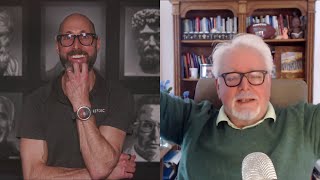
Steve Chandler talks about his recovery from addiction, his mentorship under Nathaniel Brandon, and how commitment works as a daily practice. He explains why keeping small agreements with yourself matters more than grand promises, and how structure and discipline build the life you want.
Chapters
Foreign.
It is 1:01 plus 1:00pm Central Time, which means it is day one. It's a Thursday, which means we have a special guest today. I am thrilled to have Steve Chandler, my beloved coach from years ago who has so deeply impacted my life with us today. Steve, I'll give you a proper introduction in a moment, but so happy to have you here.
Thank you, Brian. I'm very happy. I'm honored to be part of your program.
Well, bless you. And I'm going to share with people just how much you've impacted our program in one moment. First, I like to say hi. So good to see you. Amy, good to see you. Bradley, Aki, Paul, Ricardo, Doris, Lydia, Vinnie, Sheila, Shannon, Coach Lani, Anissa, Pamela, Kira, Timmy B. IPhone. Good to see you. Karen, Carleen, Ryan, Debbie and Alex on screen one. We've got a bunch of people on video. So excited for today. So let's look at the app. Aura's great. I'll tell you more about that. But they're now counting, by the way, in aura, the consistency with which you go to sleep. So it's circadian code 101. It's actually phenomenal. So I'm like, perfect. I win that game. Readiness is going to go up, baby. But let's do a search in the app. So we're in the app, right? Do a search for Chandler. And what will you see? What you will see is we have 24 plus ones on Steve Chandler or in which I reference Steve and the wisdom I got from Steve. We worked together for years after. I think Maurice sent me one of your books, Steve, and I'm like, who is this guy? This is amazing.
Yeah.
Your pithy style obviously is very much the way that I've kind of created my style. And just in and out, short form, big ideas that are super practical. And we'll hear more about your background as well, which led to resonance. But then Michael was telling me that, reminding me that I think Steve is only in the second slot behind Eknath Eswaron, another one of my beloved favorite teachers in terms of number of books on which I. I have done notes. So check out our notes on Steve's fearless crazy good wealth, Warrior time warrior, reinventing yourself, 100 ways to motivate yourself and creator. Somehow. Steve has written nearly 40 books at this point. Are we at what are we at 37, 38? Steve, how many books you written so far? Am I frozen or is Steve frozen? Ry, that was an exceptionally awesome starlink moment for us.
Perfect.
Rewind me. When did I break Up. I'll do it again. Take two. Let's go. Starting to walk us through all the notes that are there. Perfect. I promised Steve that Starlink would bark at us at some point today. A little bit faster and a little bit more significant than I thought it would, but let's go. So we have notes on Fearless, Crazy Good Wealth, Warrior Time warrior, reinventing yourself, 100 ways to motivate yourself, creator. And Steve, I was asking you when I froze nearly 40 books at this point, is that right?
Yes.
And the most recent one, I think is the very best of Steve Chandler, which I need to do a note on. And when Maurice sent me this, Steve and I have goosebumps right now, I was blessed to see that I. My comment is on the back of your book. So the best way that I can describe Steve's influence on me is what I shared with him years ago. And I said, words can't capture just how deeply Steve Chandler has impacted my life. From the countless lectures I've listened to and the books I've read to the years of one on one coaching, Steve's soul force and wisdom are deeply imprinted on mine. So bless you, Steve. Thrilled to have you here today. So grateful for who you are, get emotional. And just how you've impacted my life. You're a good one.
Well, likewise, Brian. It goes both ways. You've had a huge impact on my life and all the work you do and the people you influence and uplift. I hear so much from my own clients, how much they love your work, and so it goes back to you.
Well, I appreciate that and I appreciate you. And we're going to start with a belated breath. We start these sessions before we jump in with a breath. I'm going to do that real quick, guys, as we get ready to hear Steve's extraordinary hero's journey and some of the wisdom that he will share with us today. But flip the switch. Invite the best, most heroic version of yourself to join us, Embodying wisdom, self mastery, love, courage, gratitude, hope, curiosity, and zest as we activate our soul force in service to something bigger than ourselves. As we often do in these, pause and think for a moment of a guide in your life who is most deeply impacted, you and your journey. Bring them to mind. See how they've made you a better human being in both your work and your love. Beam them some love, send them a text, write them a letter, create a video form, do something to celebrate them and honor the connection that a hero has to their guides. Let's not Take it for granted and let's get to work. So, Steve, I want to hear about you and your story. If there's a hero's journey that one can go on, it's your story. Can you tell us a little bit about your life?
Yeah, you know, it was. There was a lot of chaos and failure and confusion, addiction, bankruptcy. The aspects of my life were not on my wife's vision board. She didn't have. When she met me, her vision board did not have bankruptcy, father with full custody of four energetic rule breaking children, alcoholism, previous divorce, you name it. And when she met me, I was working for a used car organization. So she didn't even. When she went to her father with my bio, he freaked out and said, back off, stay away from that man. It's all wrong. And even current profession use cars.
No.
So I had all of that and the first thing that I had to handle was the addiction. And fortunately I found a 12 step program and a beautiful, brilliant sponsor who was a hero of mine. And he guided me through the spiritual nature of the program because I was rejecting that, trying to pass myself off as an intellectual who had, who really had higher levels of wisdom than the mythology of religion could match. And he said, yeah, you're a drunk, why don't you. Let's simplify here. And I'd go to a meeting and one of my favorite, they had slogans on the wall like, slow down, one thing at a time, be grateful. And one of the signs said, your best thinking got you here. So their point was, you think, you think brilliantly, but look at where you are, look at where you've landed. And that was the first part of my life that asked me to leave my ego at the door and come in vulnerable and be willing to allow an egoless openness to reinvent yourself. Which became one of my books. And so that was the first part that had to have happened for anything else to happen. And then once I had that, I was grounded, clean and sober. I had no tools, I had no goals, I had no. I had no idea what to do. And so I was just floundering around and I came upon a friend of mine, sent me a Napoleon Hill book. And it got me excited because it was all about the mind and thought and you could reinvent yourself and every day was a clean slate. And then I just went from one book to another. I got. At that time, there were no coaches in the world except in sports and the arts. So I got a therapist, Nathaniel Brandon, and he was brilliant. I did work with him on self esteem and all the great things he taught. And sooner or later, one book after another, I was kind of like you, Brian. I just loved reading about philosophy, psychology. What are the possibilities? Can I really invent and reinvent or am I stuck with character flaws and permanent personality? And I realized I wasn't. I got another coach. I joined a corporate training company as the marketing manager. This was after five years of being in the music business. I was a songwriter for five years and I was in advertising. I loved to create and I kept finding places where I could create and get paid for it. And I was in this corporate training company and I noticed the main person who was delivering the work. I kept thinking, you know, I could, I could explain that better and I could, I could do this. My problem was I had incredible stage fright. Fear of public speaking. So I took an acting class and I started giving seminars on goals for free. And then I thought, well, I. I have no history of achieving goals that I can talk about. So either I talk from theory.
Or.
I don't do this. And then I thought, wait a second, what if I called it an open end inquiry into goal achievement and I will facilitate the inquiry. And I thought, well, I can inquire with the best of them. And so I started doing that. And so people in the room would have ideas they would share and it. One thing led to another and I became a corporate trainer. I was able to finally see that the best. You referred to the best version of yourself. I was, I finally saw that that best version can be created. You're not stuck with the personality. And so I wrote my second book, Reinventing Yourself. First book was called A Hundred Ways to motivate yourself. Because I couldn't motivate myself for 40 some years I was like a member of the Legume family. I was a, you know, I was really like not physically a vegetable, but motivationally. And then I started learning and so I put all these things I learned in that book. My second book, the tentative title was Death, Death Mask. And so my soon to be wife, I told her what the title was and she said, no, no, no, you can't put that out there. That's a horrible title. I said, no, no. What I mean is the Greek word for mask is Persona. And Shakespeare said, all the world's a stage and we must play a part. And so we're playing a part. It's not really who we are. And so we wear this mask. But if we think that our personality that emerged out of high school is really who we are permanent, then it's a form of death. We've died to the possibility of growth and creation at the level of being. Yeah. My wife said, yeah, good. If you can explain all that, the title sort of makes sense. But you. No one's going to get that unless they read the book. So no one. So I finally went around and it later became called Reinventing Yourself. I never. It became a bestseller, but I didn't expect it to. I thought, you know, I couldn't figure out why it became a bestseller. And it finally dawned on me that readers were, were probably seen because I told about my life and how I floundered around and I was a coward and a loser. Very unheroic. People might have believed that if this loser could do this, I can do it. And so I, then I, I was, I landed at why it became a bestseller and wasn't through marketing or advertising. We didn't do any of that. It was just word of mouth. So after that one thing led to another. I just kept serving. My primary breakthrough in life was that people are not stuck with who they think they are. At the level of being, you can create fundamental change. And the fact that people change, which has later been confirmed in neuroscience, neuroplasticity, it's been scientifically confirmed that the brain itself, through meditation, different ways of thinking, being with different people, actually changes physically. So that, that was my central message from that time on. And I became a corporate trainer altering the cultures of I. I had over 50 Fortune 500 companies come to the training in one form or another. And I did fundamental corporate cultural change from your people having a victim mindset, which is the default mindset in our culture. Just go anywhere and ask people at work what their job is like and you'll hear classic victim thinking and refer to the company as they. They never. They. They. It's never we rarely we. And I taught, from what Nathaniel Brandon taught me, that if you can teach what you're teaching and show people it's in their rational self interest to learn it, it's not what the company wants you to learn. This is for you as a human being. If you can establish that, you'll make a connection. But make sure everything you train in is in the rational self interest of the people who receive it. It's not just your big ideas or your wonderful bio. So through the years I just kept writing books. I never intended to write so many. I always, I always thought my, the book I was writing was my last. I thought, this is it, this is Me, this is all I got. Then all of a sudden, I would wake up one day and think, oh, I'd love to write about that. Maybe this will be my last book. So I hope that wasn't too long, but that's where we are today.
That was far from too long. And I want to drill into a few key aspects there. One, just your humility, your humor. It's such a beautiful demonstration of authenticity. That's not the right word, but just beingness. You being you. You know, the differentiation you didn't try to create in the marketplace was created by you not caring about the marketplace, but really trying to serve, which is such an important theme of the work we did together and how you both affirmed and extended so many of my intuitive ideas. Have you got to assume astonish, you know, crazy good. You're not making the money well, you're out of service. And all the things you talk about in Wealth Warrior, and of course, the victim to creator mindset that you talk about. And not only reinventing yourself to go back here and everyone make sure that you check out if you feel inspired, obviously the notes, and then go deep. Because if you like my style of writing, one of the reasons I fell in love with Steve, and I think the feeling has been at least somewhat mutual, is we're very similar in our style of look. I don't need to impress you with my writing style. I'm just gonna get in, and I'm gonna tell you what I think you may want to know about, and I'm gonna get out. So each book is literally just one beautifully coherent for me. Coherent, poetic, big idea that just hits you after another. But check out these books, because all the themes Steve just talked about are explored here. And we have.
We.
We have 100 ways to motivate, which was Phil's. I'm sorry, Phil. I keep on conflating you with Phil because the two of you have had just so much impact on me. But a hundred ways to motivate yourself in reinventing yourself are in there. Wealth Warrior came out right before we started working together, so that was a big part of our work. Crazy good. You published while we were working together, which deeply informed me. And then, of course, Fearless and the others, just to make sure I don't forget it. Coaches. Steve is also one of the leading thinkers and practitioners of how to build a coaching business. Michael has worked with Steve in our coaching program. Check out that. And check out his book, the Prosperous Coach. I need to do a note on that. He wrote it with a Colleague of his, I think, Rich Litvin. But check out that book and go deep into Steve's work. When I worked with you, Steve, as you know, you had so many audio kind of books, you know, and I. Audio lessons and lectures, I don't even know what they were. I just know that Maurice gave me a folder of your content and he said, go at it. So I read the book, read all the ones he sent me, and I listened to everything. So again, Joseph Campbell 101, when you find a teacher who speaks to you, read everything they wrote and then go read everything the people that influenced them wrote. So, Steve, I think you introduced me to Nathaniel Brandon, who's just a genius, and I have some questions regarding how you met him and stuff like that. But I want to step back and just, I want a chronology. So today, how old are you? And I want to back up to where you were at different phases because your story is so incredibly inspiring. How old are you today, Steve?
78.
78, that's a good year. Now bring us back to you're not sober, so you're currently in addictive behavioral patterns, etc. At what point in your life did you decide to go to the 12 steps? Now this is relevant for me. As you know, my father struggled with alcohol. His father struggled with alcohol, ended his own life. And if there's one thing I wish I could have helped my dad do, which of course you can't start someone else's fire was make that decision to get help and to recognize the challenge and to get help. So I'd like to go to that moment in your life from an age perspective and also from a psychological. What were you thinking? What was the thing that encouraged you to get help?
Well, I didn't realize at the time that asking for help is a superpower because the, the ego wants to be out of fear, wants to be self contained. I can do this. I can. I can drink. I can control my drinking. So my drinking was totally out of control. I lost jobs, I lost relationships. I don't want to go too deep into. I wrote a book about it. Finally. I finally got to write a book.
Death Wish. I need to. Yeah, check that out. If you've ever thought about ending your life. I still need to do a note on that, but sorry to interrupt you, but that's. I meant to mention that too. Yeah, go ahead.
Finally got to write a book with an off putting title, which was always my dream. So it's called Death Wish. And what I realized with all this drinking was it Was a cowardly way of chronic, drip by drip suicide that was taking me out of life. And so finally there was a writer. He was a writer and a poet and a guy I got to know. And I used to write letters back and forth with him. And I was drinking. All my heroes back then were heavy drinkers. Norman Mailer was a writer I loved and he drank like crazy. Dylan Thomas, I loved his poetry. And he was, died from drinking. He was at a bar in New York and took 18 shots of liquor and fell down and died in that bar, the White Horse Tavern. And when I went to New York to go to that bar to honor him, I said, I want. And one of the things he said I could identify. He said they would ask him when they interviewed him, as a poet, what's your ambition? And he said, I want to be the drunkest man who ever lived. And so I said, yes, man, that's me. So I went to that bar. And how sick is that? I, I went to the bar, honored him. I didn't drink. 18 I, I. But I had a lot. And finally my life was in ruins. And the guy I was writing to, he wrote back to me and he said, you know, Steve, I think I get from your letters that you believe you're a wild and crazy rebel and a poet. And you, you need alcohol to quench the fires of your creative heart or you'll just explode. That's how you see yourself. But actually you're just a drunk. You're a common, everyday drunk, Just like the guy you see in the park. That's you. It's who you are. And I know I could lose your friendship by being straight with you, but I myself went through it and I had to finally surrender and go to 12 step. I didn't have money for any treatment center. And that coming from him, who I admired so much, who I thought knew me so well, it hit me like I just kept walking around the house with a letter in my hand. Like, I think this is true. I think, I think he's right. Then I went to someone I knew who went to meetings and I said, you know, I might be, I don't know yet, but I might actually be an alcoholic. I love to drink. I can drink other people under the table, which back in those days was highly admired male trait, you know, Sinatra and the Rat Pack. I can drink you. Dean Martin. I can drink you. Dean Martin would come on a show drunk and the audience would laugh. He's a wonderful drunk. So that's, that's what Got me in. That's what happened.
How old were you at that point? Just to peg it.
30.
30. Okay, great.
Beautiful.
So then you start the AA process. And I want to emphasize for our coaches and for our masters, a theme that we talk about a lot. So Steve has an individual he admires, what we would call a radiant exemplar who has a life and a way of being that Steve admires. And he's credible and he's open to this individual's wisdom. I wish my dad had someone like your friend. And that friend has higher standards than Steve and is willing to tell Steve that he has very low standards, AKA you are a drunk. And there's the trust there, through his demonstration that Steve is open to receiving. And then another theme you taught me, Steve, is there's a big difference between pleasing and serving. So the friend who pleases Steve is the one who said, let's go to the bar. Hey, I want to get ripped too. And I know that you're my guy for fun times, so let's go. That's the one that wants to please him. The friend that chose to serve Steve heroically. And as a result, all of us was the one who challenged him to wake up to the fact that he needed to wake up. But I just want to highlight the beautiful role that your guide played for you on your hero's journey and that we encourage our community to play. And then also final point on that is your guides greatest weakness became his greatest gift to you and to others that he mentored. So I encourage our community to think about that too. If you're struggling with alcohol or addiction or of any kind or weight or depression or whatever it is, your mastery of that and then bringing that boon back is your greatest gift. All of which we've talked about a lot and I know is obvious for us, But I wanted to highlight, because that's such a beautiful demonstration of. For me, of your story. So now you're 30, you get sober, then you get to work. How did you get in touch with Nathaniel Brandon? And Nathaniel Brandon is just an icon today. I imagine he was at some level then, you know.
Yeah. Because he was with Ayn Rand and he left Ayn Rand, and she wrote the Fountainhead and Atlas Shrugged, and he was the model for John Galt in Atlas Shrugged. And I still see billboards here and there saying, who is John Galt? That was Nathaniel Brandon. Well, I. What happened was I got. Once I got sober, I. I would start praying and I. I finally came to terms with spirituality because I fought the organized mythological base of it. I didn't like that. But I found a person gave me. I was struggling in 12 steps. I said, you're trying to get me to believe in God. And I just came here to get sober. What does that have to do with getting sober? It's a bait and switch. And I had a friend who said, why don't you read this book? It's called the Autobiography of a Yogi. It's a book about Yogananda, and it may give you a way to accept the idea that a spiritual journey might be possible for you. And so I read it. It blew my mind. And so I started listening to Alan Watts and reading, and I stumbled upon Nathaniel Brandon's books. And when I first got sober, I prayed for female companionship. I said. I just said, spirit, send me female. I don't have any female companionship. I have. So I got married, and I had three daughters right in a row. So here I am now with a wife and three daughters running around the house, and I'm saying, to God or spirit, thank you. That's enough. So I had female companionship. However, the mother of my children had a brain disorder, and she was institutionalized. I was awarded full custody of the four kids, and that was in the middle of the bankruptcy I was going through. So my wife was institutionalized. I had four kids to raise on my own, and I thought, I need to ask for help again. So I was reading Nathaniel Brandon's books, and I called and I said, do you do. Would you do therapy with me? And he said, yeah, I do it over the phone. We record the sessions, or you can come out here. So I flew out to Beverly Hills, I went to his house. We had two sessions, and it was amazing. He taught me so much. But the. I think the primary thing he taught me was, no one is coming. He would say, what you have not done is you haven't grown up. You haven't embraced the. The power and beauty of being an adult. You fear that you've got what some people call Peter Pan syndrome. I won't grow up. And he said, you've got to realize no one is coming to live your life for you. That this is your life. You have to create it. You can have mentors, you can have teachers, but no one is coming to make you happy or live your life for you. And I was in a group with him, and one of the women raised her hand and said, Dr. Brandon, you keep saying, no one is coming, but you came because you came. We're all getting happier, higher self esteem. And, and he said, he said to the group, yes, you're right, I did come, but I came to tell you that no one is coming. So he sticks to his guns. He gave me so much. I'll tell you a second thing he gave me. Whenever you tell yourself only I will know, your self esteem drops. So let's say I commit to an exercise program or I'm going to read this book by the end of the week and I don't do it. And I look around and I say to myself, well, if I don't keep my agreement, only I will know. And he said, can you understand the profundity of only I will know where that puts you in relation to other people in the world? And so that, that was the second thing that he taught me that was really valuable is not only keep your agreements with other people because people will do that out of fear of being judged, but they'll not keep their agreements with themselves because, well, only I will know. And that was a breakthrough for me because it allowed me to say, okay, I'm never doing that. I'm going to have an agreement I make with myself, have the same stature on my calendar as an appointment I have with Brian to be on his call. They're going to be equal. One is, I wouldn't think of canceling this because I want to go to a movie instead. I wouldn't dream of it. And now I have to practice because commitment takes practice. We're not taught it when we're growing up. In fact, kids learn to say whatever the parent wants to hear to get him off their case. Will you clean your room, Steve? Yes, I will, dad. Can I count on it? Oh, sure. Then I'm out playing baseball and I got him off my case. Anyway, that's how I got through Nathaniel Brandon. Then I did phone calls, recorded them, played them back and that was, that was a big turning point.
Yeah, again, there's so much there, just the, the heroes and the guides that I like to talk about. The recommended books. Again, check out the notes on all of Yogananda's books. Yogananda's autobiography. I got to do a note on that. But Steve Jobs gave that to everyone who came to his memorial service. The last thing they got leaving. We've got a lot of notes on his work, which is phenomenal. I mean, it's intense spirituality, it's you and I and that, that hammer of Nietzsche coming at you from a yogic perspective. But there's no bashfulness there, Nathaniel. Brandon's a genius. We've got two notes on him. The Six Pillars of Self Esteem, and then another great one. I'm forgetting the title, but search the app for that. I want to go to the. It's only. Only I will know. So when you describe that, I think of Abraham Maslow, who said that every single instance in which you don't show up as your best self, to use my language, you make an imprint and those imprints add up. And at the end of the day in which you know you didn't do what you could have done or what you said you would do, those are the days you want to go to the bar to celebrate your hero who's drunk. Right. Or do whatever you do to numb yourself. So this, you know, the arete, moment to moment to moment, are you being your best self is big. But tell us why. What's happening there when we break that agreement that we had set for ourselves, why is it so important and how did it so profoundly change your life?
Well, it allowed me to know that the word that by speaking something and committing to something, I created. So it's like, I don't want to be godlike, but it's like the word made flesh. I can speak something into existence. So when I say even little things, I say to my wife. The garbage will be taken out by me before the pickup tomorrow. If I am consistent and have practiced keeping my word, I've now. The garbage is now out there. And you can hear when people are speaking from absolute authenticity and. And deep commitment, you can hear it in their language. So they will say things as if it's already done. So most people keep their agreements to be on a plane. Like, I have a flight coming out going out Friday. And you. And you say, well, you can you come over Friday and do a coaching session? No, I'll be on. I'm on an airplane at that time now notice they're using the present tense. It is so committed. It has already happened. I'm on an airplane and then I'm in Chicago. It's not. I hope to be on an airplane. I'm going to try to get a flight and if everything goes okay, I'll be in Chicago. I don't know. I can't trust myself very well. No, even the most untrustworthy person who. Whose word means nothing, they have little pockets of commitment that they can learn from. What if you took your airplane flight? Now, the other thing about a commitment like that is you have to create a structure for the fulfillment of it. You can't just, oh, I commit. No, I got to write it down. I got to set my alarm clock, got to make the reservation, leave time. So I don't know where I went there.
Was that in response? Yeah, we went, only I will know. Then I asked you how was that transformative? And then you got to the commitment side. Now I just want to go to our app because, Steve, we haven't talked much about the app, but basically the app is architected to help us identify who we are at our best in what I call the big three. So Freud said a good life is basically work and love. Again, playfully, as we've discussed. Don't agree with Freud on a lot, but yeah, a good life basically comes down to getting your work and your love right. But my point is, if your energy sucks, go. Good luck showing up powerfully in either your work or your love. So our big three is energy, work, and love. But then we help people get clarity on who they are at their best, and we name it. So me at my best, energy wise, I'm a heroic athlete that has meaning for me. Everyone here has their own identity in the app as a work identity. I'm a heroic philosopher, which means a lot for me. And then there's the heroic soulmate in love. To my wife, to my kids, to you, to our community, soul to soul. Now, each of those identities has a set of virtues that I embody when I embrace that identity. And then I have targets. So the entire app is architected to make commitments to ourselves. Not someday, not on New Year's Day, but as you say, the fire goes out every night. You got to rebuild the fire. Spiritual fire. Goosebumps. We got a plus one on that life change idea. When you taught me that years ago, your spiritual fire went out between the time you went to bed and the time you woke up. You better rebuild it. So our app is basically rebuilding that. But one of the important things I want to emphasize, and then we tap, tap, tap commitments in the morning saying, I'm going to do this. So I'm going to meditate for an hour this morning. I did that. I am going to eat within a certain time window. I will do that. I'm not going to look at the digital news. I'm going to do literally dozens and dozens of things now. Team community. One point I wanted to make here. We've had a lot of people ask, what do I do when I don't do the thing I said I would do? And my coaching to them is landmark, inspired. I walked out of landmark after the first night because I refused to be that in that situation where I felt an undue level of co coercion, said yeah, I'll see you later, I'm coming out. But they have great wisdom on making commitments and your word needs to be your law. And if you fail to make the commitment, then you need to re communicate and negotiate with the individual or yourself and acknowledge the fact that you failed to honor the commitment but also honor the fact that there will be times when you say you will do something when you you don't do it. So I just want to have that thread here with our app again thinking of you community as I share that and love love love the way you framed it. Plus one coming soon only I will know and there's no one more important that we need to make sure is being taken care of. This is so good. We've covered so much. Thank you for all of that on your hero's journey, the heroes, the guides that have inspired you, some of the books that have inspired you. I'd like to break it down now to how you show up. So we talk about masterpiece days a lot. And I want to know from you and from the other people I admire that we've brought on here, how do you structure your life? How do you structure your days so you can rebuild that spiritual metaphorical fire and show up? What do your days look like? Like, how do you have a certain protocol, as we would describe it, a routine that helps you more consistently be your best self?
Yeah, I do.
I.
I treat my calendar, my appointment book, as almost like a sacred text, not something I hide away and dread looking at, but I regard it to.
Be.
Something delivered down from the mountain as the. The field guide for opportunity and possibility and everything, everything on my calendar serves me and others and I don't want to see anything as burdensome. And so I try to simplify and I always this has taken years to learn to do. I always leave space because the space is where the creative part of the human system is allowed to come in. If people jam their day, there's no space for the right side of the brain to deliver innovative ideas or aha moments or I could do this or that. And in our society, people are afraid of the unknown and they're afraid of empty space. The void is. It's like a science fiction movie I I don't want to go to but with practice dedicated empty space allows for who knows what and it really serves me. So I I just book according to priority. So I used to have to do list for the day. I never ranked priority of anything. It was just, oh, I got 11 things to do. Wow, that's a lot. I think I'll go for a walk and come back to it. I'm not feeling it right now. And Nathaniel Brandon told me, you know, you're taking your emotional temperature all day to, to decide what you feel like doing and that's not effective. That doesn't serve you, not even necessary. Why don't you get into the action and allow the action to create a feeling of, hey, I feel pretty good, I'm in action, I'm in this, I've started it, I feel great. So I've learned to rate high priority, low priority. And then the calendar tells me, non negotiable, you will do this at this time. And that's over here to my left. And I integrate things that lift my spirit. Like I, I always do music either. Piano, guitar, singing, voice lessons, some. When I don't do that, when I stop it, I feel like I'm just grinding. I'm grinding. There's the, the harmony of the world is not mine until I make this much money. But music uplifts me. So I, I, I put that in my day. I put music, I put exercise. I have time with Kathy or my children, if they call the cutoff time at 5 o', clock, that's when the business shuts down and I'm just, no agenda, having fun. That's how I create my day. I make sure my to do to do list for the coming week and the coming day is in alignment with my mission. And I had a coach, whenever I got flustered, I said, I don't know what to do. He until, instead of telling me what to do, he would always ask, what are you up to? And I'd say, what, what are you up to in life? Well, I'm up to making my company do well and my kids be happy and okay, that'll tell you what, what needs to be done. And so that was a real breakthrough for me is what are my priorities instead of what are my obligations? And you, you know this thing about the, the spirit, the enthusiasm has to be recreated. But, but that's beautiful because if it were automatic, if it were robotic, or if it would just be there forever like we wished it would be, we would lose connection with the fact that we are the ones who created it. We lose that connection to divine creativity. If it, if my spirit, my commitment, my drive, my sense of mission, my love of life, I could think it has to be re lit. But I, I, that's good. That was intended in the grand design. No, no, that'll connect you to the fact that you're not born with it. It's not an accident. You can create it yourself and if that's what you want to do, wake up and do.
Makes me again think of so many things. But you introduced me to the idea that the disciplined, not the meek, but the tamed. You know, the paraeus distinction on that word, or however it's pronounced, that it's not the meek who submit per se who inherit the earth. It's those who submit to something bigger than themselves and discipline and tame themselves to that thing who will inherit the earth. So we talk about that in the plus ones. But I love that and you also taught me years ago of the basic theme of what is feeling like it have to do with it. You said you're gonna do it and then robot do this. Just remove the emotionality. You said you're gonna do it, just leave, let the robot do it. That's also been a fun tool for me that I think playfully connects to everything we're talking about.
It's like a brain trick that allows you to step back from your worried thinking, your self referential thinking. It allows you to step back, what would I give the robot to do? And then do that as the robot. In other words, it's a trick to fall out of your thinking and get into higher thinking, which doesn't have linear words or anything. And it's the spirit that moves us.
And then that leads to the feelings that we want to feel. But we don't need to wait until we feel inspired. Just get to work. Which again is time warrior. That's the essential theme there of how do I do this? Do it. Just get to work on it. Steve has been generous to stay a bit after our hour. So if you have a question, raise your hand and I'm going to ask one more kind of set of questions. I'd like to know the biggest distinctions you've made that you've kind of moved from theory to practice on that have most changed your life in our big three, energy, work and love that you think our community might benefit from hearing about. So the things that have most impacted your energy, your productivity and your connection to others, does anything come to mind?
Well, okay, I'll come off the top of my head. Energy is a dedication to having a learning mindset on nutrition exercise. Like I watched a video of yours and about the body needs to get up and Walk around and every 20 minutes and I, I heard you had some timer and I thought, well, that makes sense. And so my energy, I'm always looking for, like sometimes I'll google energy for people over 65 and well, seniors don't need to do this so much, but if they do that, they'll have energy. Paradoxically, if they lift weights, it has an effect on cognition and vitality. So. So with energy, it's always learning, always finding new things and then doing them so they become experiential and not a theory. I'm trying to remember.
Perfect. I love it. Check that box. Brilliant. And then work. What's, what's the biggest distinction? Productivity. Creatively, work wise, I.
Allow myself to fall in love with my work. So if I have a new course and I find that the way I'm describing it to people enrolling, I realize I don't sound like I have fallen in love was what I'm offering and I haven't. I need to go back to the drawing board and do some deep work on this new program until I feel, oh boy, yeah, that'd be so cool for people. So for work, it's allow myself to fall in love with work. Don't just grind it out like, this is what I have to do. This is what I get to do. Slow down, Slow. If something looks hard or feels like a grind, the cultural habit is to speed up. Oh, I hate this. I'm going to rush through it. Try slowing down and doing it lovingly. And if washing the dishes, Hey, I gotta finish these dishes so I can go watch studs and. No, no, no, take your time. Be with the dish. Make it, make, make it come back to the now. You're in this linear thing. Or my mind is either in the, in the future or oscillating between the future, the past, the future, the past that makes people miserable. Let it slow down. Come back to the now and ascend and do what you're doing in a loving, creative way. That's work. If it's not happening that way, slow it down.
Everything about that is wow. And then I often say in our meditations, when I transition from work to love, I say, if you're doing it right, there's no difference between your work and your love. But for the sake of the discussion and having a discrete, separate category, when you think of the relationships in your life and love in that context, what comes to mind as the thing that has most helped you show up the way that you, you would like to in your love?
The biggest Thing for me is to not fall for the cultural idea that associates love with romantic entanglement only. So it's like that old country song, looking for love in all the wrong places to narrow my love. Who am I going to give my love to? I don't trust anyone else, so I'm only going to give it to my soul mate and who is my soulmate. And I, and I hear people talk that way. A woman in her late 60s saying, My girlfriends tell me I'm going to find love someday. By which she means some kind of Hallmark movie. And it's restrict the word love. And I grew up love is falling in love with Annette Funicello or Beyonce. I had a crush on you. And, and that's the only context for it. We want to widen the mission here, not have it be so narrow and allow your heart to get engaged. Drop from the mind, the judgmental mind, into the heart and allow love to permeate whatever you're doing. And if it's not, slow down. Allow yourself to see the loving essence in that person. Even if they're fearful and behaving like a jerk, non judgmental. I'm. I'm going to give them. I'm going to allow my love, my compassion. I'm going to practice it. So that's. That was the breakthrough for me.
That's so good. As expected. And again, I'm sure it implicitly influenced my thinking on this, but we're. One of the things I'm most proud of with the app is that how do you redefine love beyond the one person in your life? Or maybe you got a kid or two and your cat. Other than that, everybody else is just some weird stranger that you got to begrudgingly go through life interacting with. So Barbara Fredrickson talks about this scientifically, right, in Love 2.0, that moment in which, and she calls it the micro moment in which we connect with someone authentically and positively. Our entire vagal system and nervous system and under all underlying hormonal structure changes, we are made to have those special connections. So again, heroes, if you have not created targets where you're looking for those micro moments of awesome with someone. So I feel, you know, Steve and I are creating a micro moment of awesome right now. I can appreciate that and I can. That's an intention I set in the beginning of the day. How can I find as many opportunities to create that moment? Micro moment with you? With my wife, I've done that. I've done that with my kid, I've done That with my daughter, I've done that with my mother in law who's here with us now. So deliberately setting the intention, priming your intention so your attention follows it and you do it and you celebrate it while you're doing it when you come back and actually hit the target. So if you haven't set that target yet, it's one of our recommended ones. And again, one of the things I'm most proud of in the app is redefining what love is almost exactly the way that Steve beautifully captured it. So bless you. Thank you. We have two hands up, Chris and Gianfranco. Gianfranco, let's start with you and again, as we strive to, let's frame it up as well as we can and excited to hear your inspiration and Steve's interaction. Now let's start with you, Gianfranco.
Hi Brian. Steven, thanks for being here. So grateful and be following me. Your work a lot. And my question is of course using the tools through myself, how can I help people to reinvent themselves and let understand that what's going on in our mind is most of the time a lie and how to make this shift quickly because people are wasting time in their life, losing opportunity to live a fantastic life. So that would be really helpful. Since I'm start I started coaching people and I really want to have this wisdom you have.
And well, I think, I think the best way is share your own experience because that's what people will really listen to. If I share a theory about love or thinking you're stuck in your personality, that's one thing. But if I share what happened to me when I was trapped that way and how I felt and what happened to help me get out, anything I can share from my experience has a greater chance of landing with someone else. And then the second way is when you're coaching someone compassionate, listening so that they really feel heard and understood because until that occurs with your client, they won't share everything. It won't feel safe. So you want to create that ground of trust and safety with your clients so you can start to try more things. And it's a creative challenge. I might share this story that didn't land. I might talk about how I learned this and Yogananda, that might not make any difference. And then I might ask them what do you think would make a difference that would allow you to stay open to the possibility that you don't have to be angry all the time or you don't have to feel like there's no work for you in the world. So it's an inquiry system. There isn't one specific technique that I know of. If I knew it, I'd give it to you. You've got to learn your person and then you collaborate with them just like you would with your child. When my child walked in the room upset, I wouldn't say, well, here are the three laws of breaking through upset. I would say, tell me what's going on, what's happening? And then out of intuition, I would do what I could to help. And sometimes listening alone is. Creates a breakthrough. So that's not a. That might not be a very useful answer, but share yourself. Try everything. You can notice other people's coaching when Brian coaches on and see what they're doing to open people up and stay on the path, knowing you're going to get very skilled at this if you stay on the path. Just know that you have to be.
So good. I want to reflect on that and just celebrate that. The wisdom there, you know. And we talk about this again, guys, that. And gals that. That. Will you tell us what's your experience with these ideas? If we're just. Just parroting some theoretical framework that we've heard makes sense. There's this staleness to it and a straw, you know, scarecrow version of the truth versus. No, no, no. I know exactly what that feels like. My God, that time that this happened to me, I felt, I think something similar to what you might be experiencing now. And Steve, that's your humanity, your humility and your deep, deep wisdom that you even hearing you, I'm like, oh, yeah, I could feel me and you and the work we did together coming through. And how often I say my version of that to people, encouraging them to be present to their own experience. And then I love that. Give us the reps, give us the hard work to get better in your own life experience. Practice your own tools and then go work from different entry points and test different things and trust your intuition. And I need to take notes. Steve, one of my. One of my targets is don't coach your wife. Literally, it's a target for me. Listen without interrupting your coaching because I'm the guy. I'm the guy that gives her the three things to do.
No, no, no, Go ahead.
One of the things I took from you and that you said probably in the reinventing yourself is the people don't want lecture. They want to understand what's going on, what to do not, you know, complicate jargon or try to be the intellectual in the room, but just sharing ideas that can shift people mindset.
So beautiful.
That's fantastic.
You're right. That's it.
Beautiful. Thank you. Jim. Franco, great to see you. Great to see you. Chris.
Hi, thanks for doing this is fantastic. And your answer to my question may be the one that you just gave to G and Franco. So I'll quickly frame it up. My best friend from college, which is now quite, quite a ways since we graduated. Anyway, he is brilliant. He is a father of a 13 year old. He became a firefighter in New York.
City.
And was off duty on 9 11, but of course came in because everybody had to come in. By the time he got down to the Trade center area, his entire fire department company had been wiped out in the collapse. And he, he saved the life of his lieutenant when Trade Center 7 collapsed. Anyway, he suffers greatly from PTSD to this day. The fire department has not been particularly helpful to him and he is very much an alcoholic. And so my question to you, you know, and he has finally admitted that he needs help from, from somewhere else and of course the fire department. And, and this guy's upbringing is all about macho kind of, you know, you don't seek help. I'm gonna go see him next week.
I.
He and I are gonna go see Bruce Springsteen in Brooklyn. So I'm excited for that.
You must be very welcome.
I'm going to be spending four days with, with him. And so here's my question, Steve.
Okay.
How can I. How can I help him get help? And I was thinking about your book Death Wish, which I have not read, but I was about to order and you know, I don't know whether to give him that or whatever. My real question is, how can I help this dear person get, get some help?
You're asking the wrong person, Chris, because you should ask him. Yeah, you know, just be vulnerable, be. Allow your, I don't know, innocence to be exposed. How can I, Can I help you? How can I help you? Would a book help you? Tell me how I can help you. How can I support you? If you want to go to a meeting, would you like me to go with you? Just ask, you know, ask him because I don't have. I would have to know him, I would have to know you to really give you a technique, you know, But. Or does your desire to, to help him is fantastic. You know, it's a gift. So being with him is a gift. And I would just say, man, I'd like to help you any way I can. Teach me how to help you show me if you, if you can make a guess on the best way I could help you. And he might say, leave me alone. Stop talking about, I'm working it out for myself. You say, that's fine, but I care about you and I'm going to come back and ask you again.
I.
Along those lines and you know, full disclosure, I don't mind sharing this at this point. You know, I, I've battled and Brian's talked about this in his journey like so I, I've battled depression, you know, my whole life and I have been through a variety of different kinds of treatments and, and was near. I was suicidal last March, I think it was. And, and I actually opened up about that to Rich, my friend. And he, he had like a holy moment where he was, you know, because he never would have thought, like he knew, he knew about the depression, but he never would have thought that it was that severe.
And.
That was the beginning of him starting to talk to me more.
Good.
So I guess my, so my, my instinct has been to sort of share a little bit more about my own journey and see where that leads and. Sorry, get choked up. I just, I just want to help this guy.
You're on the right path.
All right.
He's lucky to have you, man.
Yeah, he is. Oh, beautiful. And then it's, it's connecting it to Gian Franco's corporation question too. Of that you just shared that with us is precisely the entry point to a deep, real relationship. And then the follow on from my vantage point is everything Steve said and this is what I did. Some of it sucked. It was useless. And this though, you know, when I started paying more attention to my fundamentals and I started sleeping a little bit more, I started eating a little bit more, I started moving a little bit more. You know what, here's the philosopher's note or not. Or here's those. Playful yet earnest and non attached, very clearly loving, kind, courageous jesters are so powerful. So you literally just embodied the very thing that Steve was encouraging Gianfranco to encourage. And it feels like pull on that throat a little bit more and see where he wants to go with you. But we can feel your love and he, he can feel your love. And you know, and then Steve, your mentor of also there's. You need to find the intuitive balance of the softer and lighter and the firmly aggressive of Steve's mentor who had the courage to say you're, let's be honest here, you know, and you continue that path. And it looks like this. And again you and your intuitive sense of what the moment calls for. Is it wherever, out of our head. And Steve, your story, I got emotional telling your story about your daughter who performed that song. And I get emotional right now. She's going for it. You know, she had rehearsed it and rehearsed it. And you're in the audience and you're wondering, is she gonna go for it or she just gonna sing it? Right. You could tell that moment when she went for it and she was all in and just boom, fully expressed, which I'm being right now, allowing myself to be irrationally alive and celebrating that. And there's a felt sense of what we would call soul force that I think is transmitted, that transcends and includes and penetrates every aspect of it way more powerfully than any words or tips or books ever will. It's a human being that's alive, demonstrating what it looks like to be alive. Who cares about another human being meeting them at their best? And that dance of allowing what is alive in those four days for you and Springsteen, let's go. That's the best context that.
Hey, Brian, I just want to say. And you need to get this. Sebastian, I just want to say one, thank you for this. Number two, thank you to the community. I mean, there have been so many things in the chat and direct emails to me and Steve. I came to this conversation a little bit late. I was on a call with a client and I came in. As I heard you talking, I just knew I had to ask this question. And I just want to say thank you.
You're welcome.
Look at the arc here. Look at the arc of humble human beings who have been anything but heroes. Me and you, Steve, inspiring others who have been anything but heroes so we can inspire people who are currently not feeling totally heroic. It's such a beautiful legacy. Step here. And this is it. This is how we change the world when we come together and we have the courage, the wisdom, self mastery, the love, the courage to move from theory to practice to mastery together, not someday, but today. So what a beautiful container. Let's have, if we can, one more question, Sebastian, and then we will wrap up and bless Steve and take this, this energy with us for the rest of our days and frankly, lives. I think there's been some really looking at the chat briefly, some really, really penetrating sacred ideas that will stick with us for a very long time. Sebastian?
Yes, hi.
Thank you for this opportunity. I was afraid to raise my hand and take more time, so I will go straight to my question when you were talking about, like, how you were before toward religion and spirituality. Like, it really resonated with me because I'm at that point and I know it's blocking my heroic journey. I have some. Some bad blood with people in my. In my community, like in a men's circle that are way too spiritual for my taste. And I need, like, grounded stuff. And I know, like, everything that Brian is sharing, like, sometimes it has a bit of spirituality. Sorry. And it kind of blocked me. And I would like some advice from you because I really felt. And it really resonated with me. And my main question is, like, is it possible to have a fulfilling life without having spirituality?
Well, you'd have to call it something else. You can call it something else. You can call it being awake. You can call it being enlightened to the life force. You don't have to call it spirituality. If you have bad feelings about how some people describe the innate joy of living that we're born with, that goes away only because our belief systems are crystallized out of negative thinking and scared thinking. Those belief systems, when they get dissolved with a coach or a program or however they do, they reveal spirit. Now, you could call it something else and make it easier for yourself. And I know Brian would have a recommendation of some. Some books that don't feel spiritual but go to the same place. It's all the same love of life that we've lost along the way. So, yeah, it's possible to have a fulfilling life without referring to anything spiritual. It is possible.
Thank you. I'll read more what Brian has to share.
Yeah, good.
Thank you.
My recommendation on that subject is go check out every philosopher's note I wrote on Steve's work, because it's it. And just so you know, I have an allergy to the word spiritual. How often do you hear me say the word spiritual or spirituality? Almost never. I almost never say that because for me, when you get the basic fundamentals right, when you do the most mundane, logical, scientifically grounded things, eating, moving, sleeping, breathing, focusing your mind properly, and you just show up as a good human being committed to doing the basic fundamentals right, something happens. And the flowering of that you can call spirituality if you want to. I call it the best, most heroic version of yourself is coming to life. The ancient, you know, Greeks and Stoics would describe that as eudaimonia. Good soul. There's some ineffable power that's bigger than you that I do believe in. I'm not controlling my heart rate right now. My Digestion. I'm not keeping the moon and the planet and the sun, you know, there's something bigger than me. I have these humility to recognize the fact that I'm a very, very small spec on a very, very small spec in an infinitely expanding universe. But I don't need to describe that with any particular thing. But then I can honor what Steve's saying, which is good. You don't need to call it that. But you'd be wise to at least do what you can logically, rationally, to connect to yourself if that's where you want to end the conversation. But when you do that, most purely good luck not feeling the thing that many people call spirit within and enthusiasm God within. It's something that's within us. And our only job from my vantage point, is to do the most basic mundane things over and over and over and over again. So that becomes never perfectly but more consistently our default way of being. And again, call it whatever you want, but I to go where I started, share the allergy to the hyper spirituality. I'm not going to blink at you while I look at you approach to life. You know, it's like, no, you can blink and you could also get off of your psychedelic trip and go do what you need to do, to eat, to move, to sleep, to breathe. Because that state you experienced, Steve and I are also huge Ken Wilber fans. That state you just experienced when you were high the other day on whatever it is you get high on to go experience a new reality, good luck maintaining it unless you do the most mundane, basic things. And if I'm imagining your men's group energy accurately, you're probably all into that. Let's go find the shortcut to all these things that are what they are. So anyway, longer chat, but build the fire. Build the fire and see what comes to your fruition. Right?
Thank you so much to both of you. It really helps. And it's. I feel even closer to the community now that I've said that. And with your answer, I'm like, thank you very much. I love you, Brian.
I love you right back. Sebastian. Soul to soul, I mean, this is the soulmate. There's something bigger here. And if we can connect to it together, it amplifies itself in such a powerful, rippling, goosebumps dimension. Steve, bless you. I looked at the chat a bit while I was going through. I can tell that a lot of people were really deeply moved by you. I'm thrilled and honored to be able to have shine a light on your not just your wisdom but your story and just who you are. You're such a blessed human being. I feel incredibly grateful to have had your guidance, your mentorship and your friends friendship. So bless you.
Mutual. Likewise. Back to you.
Day one. Let's go. All right. Big hugs. Can't wait to give you a real one in person. Not too far from from now. All right. We, I look forward to catching up more soon. Have a great rest of the day team. If you want to connect with others who are here, that will help facilitate. Facilitate that. And there we go. Nat.
Yeah.
Do you want to, do you want to do a bookend? Breath or meditation? No, it's. That's great. So I'm actually, I'm connecting with Joe Decenna in 10 minutes so I'm going to do a quick oscillation and a Spartan podcast which will be fun. So I will use this as an opportunity, tuning into both bookend and reground myself, Connecting to our breath, slowing our breath down, Feeling the wisdom.
And the.
Courage and the love that speaks Steve has embodied and shared with us today. Appreciating him, appreciating our community, appreciating your precious life and recommitting to doing the work with joy to give ourselves most fully to the world. Day one. All in. Let's go. See you tomorrow at 1:01pm can't wait.
It.






