PNTV: Future Visions by Abraham Maslow (#391)
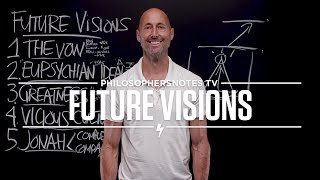
Brian Johnson explores Abraham Maslow's unpublished papers on building a "Eu Psychean" society based on eudaimonic happiness, not just pleasure. Maslow argued we should study greatness instead of averages, resist the Jonah Complex (fear of your higher calling), and embrace necessary challenges. He warned that commercial media threatens the values that matter most.
Chapters
Hi, this is Brian.
Welcome back to Philosophers Nodes tv. It has been a while. It's been too long. A couple of years. I am here in our new studio in our barn outside of Austin. We're here in the country. We've got a few different studios set up here. We just finished this one. I've been so looking forward to connecting with you with these Philosophers Notes TV episodes once again. We're going to start with a book by Abraham Maslow, Future Visions. And then I'm going to walk through some of my favorite books that I have read since we last connected via these Philosopher's Notes TVs. I've read over 100 books over that period of time. We're going to start with my absolute favorite favorite books and there's a lot of them. So today, Future Visions, the Unpublished papers of Abraham Maslow. Abraham Maslow passed away at 62 years old of a heart attack. Four days before he passed away, he wrote about what he called the EU Psychean ideal that we're going to talk about today. He's one of my absolute favorite teachers. If you follow along, you know that we've covered two other books by Maslow. One called Motivation and Personality, which is kind of like a textbook on the self actualizing individual, and another called Toward a Psychology of Being. Both of those are great. But this book gives us an intimate look at Maslow, 20th century humanistic psychologist, one of my heroes, one of my absolute favorite teachers. And the other books are again fantastic, but they've kind of gone through the editorial review, you know, for publication. This is Abraham Maslow and what he was thinking in his private letters, kind of unpublished documents, etc. We have Edward Hoffman to thank. Thank you, Professor Hoffman, for putting together these unpublished papers. Absolutely love it. There's only one Amazon review. No one's heard of it. No one's read it. I heard of it from Scott Barry Kaufman, professor at the University of Pennsylvania, who wrote a book called Transcend we'll be featuring soon, which is on the new science of self actualization. Kind of extends Abraham Maslow's thoughts, but he shared a passage from this book on the Jonah Complex, which we're going to talk about in a little bit. Basically ignoring the call from God to follow your destined path. Maslow had some intense stuff to say about that. So Future Visions, Philosopher's Note. We've got a handful of big ideas.
We're going to cover a few of my favorites.
Now let's start at the top. So the vow, the very first idea that I Pulled out in this note is Abraham Maslow describing the experience he had as a young man when he realized what he was here to do with his life. He said, I made a vow that I was going to make a contribution to the fields of philosophy, psychology, anthropology. He said, I don't know why I picked those three, but I just knew this is what I was here to do. And he said that the vow that he made, had it been 500 years ago in King Arthur's court, he would have sat by his sword overnight in a vigil. It was that level of commitment, that depth of commitment, super inspiring, super powerful to hear him describe his commitment to his own work, to his own process. Now in the note, I talk about the fact that, you know, the whole idea of making a vow is just completely absent from our current society. And I talk about the fact that, you know, King Arthur and his court. Well, that's the classic hero's journey, the classic hero mythology. So I mentioned Joseph Campbell. Joseph Campbell, of course, our scholar on the hero's journey, said, do you want to see what a culture looks like? Well, we don't have rituals that celebrate making vows and doing sacred work with our lives. You want to see what a culture like that would look like, read the New York Times. That's what happens when we divorce ourselves from our higher selves and give the world all we've got. Which leads us to the second idea, which is you, Psychean. Now, when I read this, the very first words of the book, right, he said, it's a short passage, short line, but I'll quote it just because it's good. He says, the more I think of the you psychian society right now. He wrote those words, which are the first words of this book, four days before he passed away of a heart attack, which is a powerful thing. You make this vow, you don't know how long you have to go. Give your best to the world. He had a heart attack before his health suffered, and he knew that his time may be limited, but he passionately pursued these ideas. And I should say, connecting it back to the vow, he said that there's no luckier person in the world than the one who figures out how to get paid to do what they love to do. Now, he loved psychology and studying the.
The greatest among us.
And then he created this movement. He called it Eu Psychean. So I read this Eu Psychean. I'd never heard that particular kind of word combo before. It's you, Psychean. Now, a choir of angels sang for me because Again, if you're following along with our work, we talk about eudaimon, eudaimonic or eudaimonian. Eu psychean literally means good psyche or good soul. So psychology literally means etymologically, the study of a soul. Right. And I playfully say they wouldn't have had to add a positive before psychology to make it positive psychology if they had properly named it in the first place. And I always said eudaimonology, which is how we kick off our entire coach program, is studying a good soul. You, daimon, good soul. So when I saw that Maslow and had coined eu psyche, and I was literally like, yes. And then I wondered, had he studied Aristotle in depth? Because Aristotle had come up with this exact same word, eu daemon. This is the highest good. It's the summum bonum. And in our mastery series for our coaches, I say, look, ancient wisdom, modern science. If we were to ask Aristotle and Martin Seligman, as proxies for ancient wisdom and modern science, we what the ultimate purpose of life is, they'd give us the exact same answer. Aristotle would say, literally, just snap. It's eudaimonia, to have a good soul. Now, we translate that as happiness, but it really means to flourish, which happens to be the name of Martin Seligman, the founder of the positive psychology movement. His most recent book, Flourish. Then you ask the guys, okay, how do we live and express the best version of ourselves and truly flourish as you daimons Aristotle, again, one word answer. He'd say, arete, you need to, as we say again and again and again, close the gap between who you're capable of being and who you're actually being. Moment to moment to moment. Arete. We translate that as excellence or virtue. Right? But it has that deeper meaning, something closer to expressing the best version of yourself. Moment to moment to moment. You asked Seligman, well, how do you achieve this goal of flourishing? He'd say the same thing. They founded positive psychology with the foundation being put your virtues in action. They've got some other things. Perma is a phrase that they use that we come back to again and again in different contexts, but under it all is putting your virtues in action, which is precisely what Maslow talks about in this book in his notes, which actually almost perfectly leads us to the fourth idea, but we'll skip that for a moment. What else do you want to talk about there? Yeah. Real happiness. He juxtaposes hedonic happiness versus what we would call eudaimonic. He would call eu psychean happiness. And the main point he makes here is that everyone wants just pure pleasure all the time. He says, no, no, no, no. A good life has challenges. He calls them misery privileges. Misery privileges is just an inherent part of a good life. Whether that's a parent getting up to be with their child, which I've done recently, or it's, you know, a creative artist struggling to create something powerful. We're going to cover some books on Mr. Rogers. He talks about the experiences he had. He calls it being in the tortures of the damned. It was so challenging for him to produce what he did that he wanted to give up again and again and again. Well, Maslow says the good life, true happiness, is Eusychian, which involves challenges. We need to embrace that if we want to play the game of life well, which leads us to greatness. I'm going to read a couple of quotes here. This is a good one. Checking my philosopher's notes here. Check that out at Optimize me get a free two week free trial, 600 philosopher's notes. Now what do we got? 50 optimal living 101 classes, over 1000 optimized plus ones, et cetera. So the foreword was written by a guy named Colin Wilson, who says that Abraham Maslow once asked his class, imagine being in the 50s or 60s. You're at the university, right, and you got Professor Maslow. And he looks at you and he says, hey, which of you believe you will achieve greatness? Which of you believe you will achieve greatness? And then Colin Wilson says, when they stared at him blankly, Maslow said, if not you, who then? If not you, who then? This is what he was passionate about. You're here to achieve the best, highest expression of yourself. Now, that will differ for all of us. We'll all have idiosyncratic expressions. But he says, very importantly, we all can win this game. We can all show up in this moment, which actually is a perfect segue to another thought. I wanted to share directly from Maslow. He says, anybody, any person whatsoever, under any circumstance whatsoever, can be a psychological success, at least in the above sense of doing the best that one can and doing fully what one can to be himself or herself and to accept the reality of himself or herself. And then one of the contributions that Maslow made was he wasn't interested studying pathology per se. He wanted to know not what the average person could do, but what the greatest among us could do. And he firmly believed that we all had the potential to become the best version of ourselves. And he said, and if I was going to summarize our entire philosophy in one word. It would be represented by this one sentence. Rather, it would be represented by this symbol, which is Maslow's hierarchy of needs. Boom. Moving up into you, expressing the best version of yourself. He said, what one can be, one must be. What one can be, one must be. Then he offers this great line. Again, I'm going to share it directly from him. He says, if we want to answer the question how tall can the human species grow? Then obviously it is well to pick out the ones who are already tallest and study them. If we want to know how fast a human being can run, then then it is no use to average out the speed of the population. It is far better to collect Olympic gold medal winners and see how well they can do. If we want to know the possibilities for spiritual growth, value growth or moral development in human beings, then I maintain that we can learn most by studying our most moral, ethical or saintly people. What use is it if you want to know the. If you want to study the fastest people in the world, you're not interested in averages. So again, psychology studies, data, all fantastic, but ultimately they're giving us averages. And what we need to do is understand what's possible. Ellen Langer the psychology of possibility and studying people who have achieved great things gives us an inkling of what we can do. And then looking back at our own best days, when were we at our best? Don't study your worst. Well, you do want to study your worst days too, to know what you don't want to do. What do you do on your worst days? Know that. Quit doing it. What do you do on your best days? Commit to making that prior best your new baseline, as we've talked about in a number of contexts. So greatness. Study it a lot more we can talk about there, but I'll leave it at that viciousness in our culture. This is a super powerful concept that he has as well. Again, so each of these, it's almost like mini articles or even letters, etc. A brief takes on different topics. So Maslow was very, very intense about the pernicious effects. And this is actually worth reading as well. So let me find the passage here. But the pernicious effects of our society, in particular our cultural influences of television. So again, 50s and 60s. Imagine the TV in the 50s or 60s. You've got a handful of channels, right? Rabid ears barely get anything yet. At that time Maslow said this powerful. He says this is a less pernicious destroyer of. He just mentioned the paragraph before he Mentions Stalin and the Soviet Union back in the day and Nazi Germany as destroyers of what he calls B values. Being values, we would call them virtues, the highest ideals, right? So right after a paragraph talking about that, he says, less pernicious destroyer of B values, again, virtues, the highest versions of ourselves, but nevertheless harmful is the impact of commercial television in American society. Then he says, I believe that its influence is utterly immoral, corrupting, and damaging to the human spirit, especially to children. He goes on about how they can't tell fiction from. From reality when they watch a show with a hero who then goes and eats terrible food. They don't know how to make that separation. We're actually going to talk about that in a note on Food Fix by Mark Hyman. But for now, I wonder what would Maslow say if he was alive today and he can look at the trillions and trillions and trillions of dollars being spent hacking our brains in the attention economy. We're going to talk about this in our episode on Cal Newport's great recent book called Digital Minimalism. We got to get control over the inputs. It's a heck of a lot more challenging and utterly immoral and corrupting today than it was 50, 60, 70 years ago when Maslow was talking about it. So if we want to live with virtue, we've got to properly understand the vice, the viciousness that exists in all the inputs we are consuming. And then we move on to our fifth and final idea here, the Jonah Complex. Now, this is the reason I picked up the book. I read a passage that Scott Barry Kaufman referenced from this book, and it just was just one of those amazing snippets of wisdom. And literally I'm like, that is just amazing. Then I ordered the book used because you can't buy it new because it's not in print, right? And I'm, you know, take the kids out. I think we went to Whole Foods or something. I pick up the mail, you know.
Down the street or whatever, like a mile away, right?
Pick up the mail. Boom, got the book, drop off the kids. I'm sitting in the car and I rip open the package and I flip open the book. And the second place I landed was this passage. Literally read it in the car and.
Just knew I needed to share it in the note.
And then in this context. But Maslow. And again, I'm going to quote, and then we'll riff on it a bit. He says, it frequently takes. It frequently takes half a lifetime for the creatively talented individual to come to terms with. With one's own talent to accept it fully and to unleash oneself. That is to be post ambivalent about one's talent.
Now I'm going to continue.
In our society, the superior individual generally learns to put on a chameleon like cloak of false modesty or humility. Or at the very least, she has learned not to say openly what she thinks of herself in her high capacities, in order to avoid punishment, she becomes humble, ingratiating, appeasing, even masochistic. In short, due to fear of punishment for being superior, she becomes inferior and throws away some of her capacity. That is, she voluntarily diminishes her possibilities of humanness. For the sake of safety and security, she cripples and stunts herself. Then he says, you know what? That leads to? Neuroses. Because this little representation of our need to self actualize, he tells us, the need to self actualize right up here and become the best version of yourself is a fundamental need as need for your need for security, connection, self esteem, etc. We call it soul oxygen. And then he shares this idea from an historian talking about the Old Testament. And this guy called it the Jonah complex. Jonah character in the Old Testament, God comes around and says, I have a problem. You are here to do this, right? I have a destiny for you. And Jonah's like, no, no, no, not me. I'm not going to. I can't do that, right? He tries to hide from God. There's one important detail you can't hide from God. God tracks him down again and again and again. And finally, Jonah submits to this higher calling, to the path that was laid out for him by God. And Maslow talks about our biological destiny and our psychological destiny to fulfill that which we are here to do. You have capacities clamoring to be used. And we need to study the greatest among us and see what they've done to conquer themselves in pursuit and their fears, etc. In pursuit of expressing that best eudaimonic version of themselves in service to the world via heroic vows. To optimize again. We have a string of words we put together throughout our Mastery Series Coach program. Optimize equals optimist equals best equals eudaimon equals hero. So optimize in Latin literally means the best, right? I actually carry around in my pocket as a reminder, a lanyard that we give to our graduate coaches when they graduate, right? So we've got this little thing that strings it out. The team designed this.
It's super cool.
So it's optimize equals optimus equals best Again, optimize is from the Latin optimus, which means the best. In our case, we're talking about you being the best version of you. The Greeks call that a eudaimon, good soul. When you high five the best within you, closing the gap between who you're capable of being and who you're actually being, you're a eudaimon. But that's not enough. You got to become a hero. And again, a hero etymologically means a protector. That's what the Greeks named it. It wasn't tough guy. It was protector. A hero is the one that made a vow, a resolution, a commitment to something bigger than themselves and did that vigil that Maslow is talking about here. So, Jonah, complex, you can't hide from God. You have capacities that are clamoring to be used. What one can be, one must be. Now, I wrote down here Jonah, complex and compassion. Ultimately, Maslow tells us that the difference between the one that doesn't actualize their potential and the one that does. I'll let him say it directly. He says the difference between the diminished individual wistfully yearning toward full humanness but never quite daring to make it, versus the unleashed individual. And I love that word, unleashed, post ambivalent, growing well toward her destiny is simply the difference between fear and courage. That's the difference. We need to step up and have that courage. Now, I drew, I wrote courage because we have this little virtue compass that I've been working on a lot since we, you and I chatted last, Right? So virtue compass. We're actually making a compass right now that you can look at where I distill. We have a plus one. I'll link to in this one as well, so you can check it out.
But basically, there are four cardinal virtues.
In ancient philosophy that are shared across basically all traditions. Wisdom. We define wisdom as knowing the game you're playing and how to play it well. It's the ultimate virtue.
Then you have self mastery.
Self mastery is the ability to get.
Yourself to play that game well.
Now, boom. Wisdom, self mastery. It's not enough to know what you need to do, although it's very important, by the way, because most people get caught up in hedonic pursuits. You need to go after eudaimonic. That's wisdom. Then we have, over here, courage. I draw a heart to represent that, because courage comes from the Latin word that means heart and French words that mean heart. So just as your heart pumps blood to your organs and arms and legs, courage is the virtue of that vitalizes all the other virtues, without courage, which science defines as the willingness to act in the presence of fear, none of this stuff matters. But then that's not it. Then we end with love. Love is the flowering of all of this. It's why we do what we do. A hero is a protector. Literally, etymologically, we have this strength for two. Love is our secret weapon that.
Our optimized compass. We've got some other ones I'll skip right now that we'll hit another time, I'm sure.
But for now, your destiny is calling. I'll let Masvo send this out. And it's courage. It's the willingness to act in the presence of fear.
We're never going to get rid of all the fear.
But we need to take the step forward into the next best version of ourselves to achieve greatness in service to the world. Today is always a good day to do it. So think about what you can do to to move through any fear you might be having to close that gap, etc. Maslow tells us a musician. Think about what you must do as you listen to this. A musician must make music. An artist must paint, A poet must write if he is to be ultimately.
At peace with himself.
What a man, or of course a woman can be. He or she must be what one can be. One must be. This need we may call self actualization. It refers to man's desire for self fulfillment, namely to the tendency for him to become actually in what he is. Potentially to become everything that one is capable of becoming. That's our first PNTV back. I'm fired up to be back. Hope you enjoyed.
Look forward to sharing more with you soon.
We're doing one a day. Between today, September 1st, and our launch of Coach Class 4, which is January 1st, over 100 days, we're going to do one of these a day. And again, Optimize Coach Class 3. We've had nearly 2,000 people optimizers from over 70 countries around the world go through our first two classes and the start of the third one is literally today. You can still sign up. It's awesome. Check it out at Optimize Me Coach.
We've been told it's awesome.
And of course go to Optimize Me for the general optimized core membership. We have well over 10,000 people now from around the world. From guys that help run Navy SEAL training, to executives, to Olympic, you know, medal winning coaches, to just everyday people that want to become the best version of themselves. That's 10 bucks. The coach program is a thousand bucks, 100 bucks a month, 300 day program. Learn more at Optimize Me Coach and just optimize me. That is all for today. That and make today an awesome day. See you.
Hey guys, this is Bry. Hope you enjoyed that video. We have a lot of people ask us what Optimize is all about. So I just wanted to give you a super quick tour of our site, tell you what we do. We do two primary things. We have an optimized core membership and and we have an optimized coach certification program for people that want to go from theory to practice to mastery. So the core membership is basically 10 bucks a month depending on whether you do monthly or annual. And you get instant access to over 500 philosopher's notes, the six page PDF, you know, 25 minute or so MP3 recordings of these great books. And then you get over a thousand optimized plus ones, 50 optimal living 101 masterclasses, et cetera. And we have a free trial the team set up, get it, you know, free for 14 days and then go from there if you like it. So we're blessed to have a lot of people who subscribe to this, including some of my friends who happen to be some world class peak performance gurus like Tal Ben Shahar, who taught the two of the largest classes in Harvard's history. Starts every day with Optimize. Ben Greenfield, friend and coach Optimizes bar none. My go to source for taking a deep efficient dive into some of the world's best books via the Philosopher's Notes. It's an indispensable resource. Thank you Ben. Marcy Shimoff loves Philosopher's Notes. Mark Devine, retired US Navy SEAL commander, dear friend who starts his days with optimized plus one winning win in the mind routine to charge him up for the day's battle. If you're serious about leading heroically, I recommend you use them too.
Huya. Thank you.
10,000 plus other awesome humans around the world. That's the core membership. Then we have and I should say we have apps. Excuse me, you can get apps, iOS and Android. You know we're feel pretty proud and blessed to have basically a 4.9 ranking and people saying some great things. You can check that at Optimize Me Apps and then our coach program is all about helping you master yourself so you can serve heroically so you can empower others to do the same. We have trained over a thousand optimized coaches from over 50 countries and yeah, really excited about this. This is one of the core levers for us to fulfill our mission. To change the world, one person at a time, together, starting with you and us today, We've been told that here's one little thought, and we have hundreds of testimonials you can check out about how it's transformed people's lives. And if you want to be a coach, you're coaching practice now. Half the people who do this want to be coaches. The other half just want to master their lives. But Barb, a coach of ours, says, I already had two coaching certifications, but Optimize Coach was indisputably the most valuable I have taken. Thank you, Barb. Honored to be part of your life. You can learn more about what we're doing with Optimize Coach at Optimize Me Coach. There you go. Hope you're doing great. Look forward to sharing more with you soon. Have an awesome day. See ya.






