PNTV: Play by Stuart Brown, MD (#147)
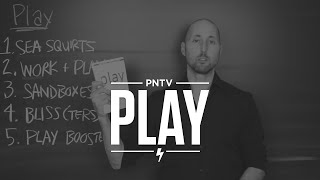
Stuart Brown argues play is biologically essential, not a luxury. Brown uses the sea squirt to show how play shapes brain development, and suggests dissolving the work-play divide by treating work like a sandbox. Movement is a simple way to unlock play.
Chapters
Hi, this is Brian. Welcome back to Philosopher's Notes tv. Today we've got another good book, great book, in fact. Play by Stuart Brown, M.D. play. Very short title subtitle. How it Shapes the Brain, Opens the Imagination and Invigorates the Soul. Stuart Brown is one of the leading practitioners, thinkers, teachers on play, the scientific underpinnings of how it benefits our lives. Presents a really compelling case for how we need play if we want to live optimally. Book is packed with big ideas. He talks about the fact that defining play is actually somewhat challenging. He does so in the book and I share that in the note. But it's kind of like a joke. If you have to explain it, it loses some of its power. And the best way to feel play or to see play or to understand play is to feel it. You, to see the emotion of play. Look at a little baby playing. There's that emotional sense that we all have when we're truly engaged in play. And he also says that every single animal species plays in one way or another. You can watch bison jump on a frozen lake and skid across it on all four. And of course, there's all the little kitties and lion kittens or cubs or whatever they are playing. We all play. And he says anything that's done across that many species has evolutionary benefit, has survival benefit. Nature doesn't waste energy and resources. And he says that play is essential for our very survival. In optimization and actualization, we learn how to function in our world, socially and otherwise. When we play, it's a long prelude. Now, we have five big ideas here. We have this little philosopher's note. We're going to start with the first one. Sea squirts. Sea squirts? Yes, sea squirts. You do not want to be a sea squirt. A sea squirt starts its life. It's got a little tiny brain and it kind of cruises around the ocean, finds nutrients and all that kind of stuff, explores, is active, perhaps plays Right, Little sea squirt. Then it grows, it matures, and then it latches on to a boat hole or a reef and it quits moving. Then what happens? Well, then that little sea squirt eats its own brain. No longer needed. He's not actively engaged in life, so he doesn't need a brain. Eats his own brain. Sea squirts. He says we're like that. Stuart Brown does that when we don't engage in life. Use it or lose it. You're going to lose the ability to function in certain capacities. The most Healthy, vibrant. Among us are those who are most engaged in life. We want to engage in life and not wind up as little sea squirts. Now what's interesting, he says, it's kind of like a Stephen King novel where you've got this little being that eats its own brain like a zombie and that sort of thing. And I just finished this morning, in fact, reading Stephen King's On Writing, which is extraordinary. A little autobiographical memoir, ish book on the craft of writing. It's written over 50 books, all of which are international bestsellers. Stephen King, right. And this leads us to the next big idea, Work and Play. Stephen King talks about the fact that the prime directive of good writing, read a lot, write a lot. That's what you need to do if you want to be a good writer. And then he fills in the details with some other good information. Read a lot, write a lot. And guess what? You're not going to do that or anything. A lot in enough to reach a state of mastery unless you love it, unless you really enjoy it, unless there's actually no difference between work and play for you. I'm going to share a thought from James Mishner, novelist, who says the master in the art of living makes little distinction between his work and his play, his labor and his leisure, his mind and his body, his information and his recreation, his love and his religion. He hardly knows which is which. He simply pursues his vision of excellence at whatever he does, leaving others to decide whether he is working or playing. To him, he's always doing both, work and play. Abraham Maslow says that in the self actualizing individual, the dichotomy, the separation between work and play dissolves. So we want to get rid of this barrier, make our work our play. And that's tied to our next big idea, which is sandboxes. He talks about the fact that he did this, what he calls play history. He interviews different individuals and in the book he talks about play histories and how you can identify your play profile, how you tend to play, really cool stuff. But he was walking around with this Nobel Prize winner. I think he was a biochemist and he was in his lab and this guy who was advanced in age was walking around it like he was a little kid in a huge sandbox. It was just the coolest, most expensive, most awesome sandbox ever. What was he doing? He was playing all day long. Nobel Prize winner was playing all day long. We want to view our lives at least as having the opportunity of making it one big playbox, sandbox, playbox. And Move toward that and create that. Integrate work and play together. Create that sandbox. And then as we do that, though, we need to keep in mind bliss and ters. What's a blister? Well, we want to follow our bliss. That's part of Play. Joseph Campbell 101. Right. But Stuart Brown worked with Joseph Campbell back in the day, and Campbell says, you know, I need to modify my philosophy a bit and let people know that, yes, you need to follow your bliss, but you also need to follow Stewart. Brown doesn't quite frame it this way, but I've heard Campbell describing it this way in other contexts. You need to follow your grunt. You need to realize that sometimes pain is bliss. Sometimes pain is bliss. How is that possible? Well, Stuart tells a story about one of his friends who was really into diving, scuba diving. One time he was on a boat and he was going off to go explore this one region that required a pretty intense boat ride to get there. And the guy was just getting all beat up in it. The waves were big and he was starting to complain a fair amount. And his guide told him, look, if you want to experience these peak moments, to have these peak experiences, you. You have to be willing to deal with some discomfort. So Stuart talks about this and he says, look, if you think all life needs to be bliss, you got it wrong. And Campbell says the same thing. He says, look, if all your life is, is fun and joy and bliss, you're on the wrong path. That's the sign that you're not quite engaged in the hero's journey you aspire to be on. You've got to be willing to invite some blisters into that bliss, to be able to endure a certain amount of pain and see that as inevitable. We're going to talk about that a fair amount. Continuing onward for now, we're going to look at a simple big idea Play booster. If you want to boost your experience of play in your life, obviously you can figure out, well, what things do you engage in that you find most playful? How do you do that more and more and more? One very simple way as you get going in the process, Stuart tells us, is simply to move. Movement is the essence of play. So even just going out and playing catch with your dog, you get two benefits, he says, One, you're moving, you're engaged in a physical activity, and you're actually playing with your dog, who's playing, and there's a certain experience there that's awesome. But go for a run, go for a hike, go for a workout, whatever you're going to do. Do some jumping jacks and push ups and burpees. I'm into burpees these days. Whatever you're going to do, move. That's a great play booster. It's very, very, very, very, very simple tool. But if you're feeling a little bit burned out in this mode, get your body moving and find ways to engage in more play. A great way to boost. There you go. It's a super quick look at this great book. Don't be a sea squirt. You need to keep on engaging in life. Move, play. Don't eat your own brain. Work and play Stephen King. Don't be a zombie. And if you want to do anything great in your life, you need to love what you do. Here's a little idea I was planning to talk about. We didn't get to it, so I'll get to it now. This is three circles talked about before. We're going to come back to a bunch. Love, greatness and a need for money. Jim Collins, one of the world's leading business experts, talks about this as a hedgehog concept. Great businesses and great individuals figure out the nexus point of these three circles where they love what they do. They think they can be truly great at it, perhaps the best in the world, and the world needs it. They find the nexus point of that. That's their purpose, that's their mission, whatever you want to call it, that is what they commit their lives to. When we get clear on that we love something so much we'd actually pay to do it, we think we can be great at it and the world needs it. It's really easy in that model to make our work our play. And then we can let other people tell us, are they working? Are they playing? I can't figure it out. Then your whole life, your work becomes a sandbox. That's a good thing. You embrace the blisters and the bliss. It all goes together. Pain sometimes is bliss, not all sunshine and rainbows and unicorns. And then if you need a play boost, move. Movement is the essence of play. There you go. Hope you enjoyed. Share more with you soon. Have another awesome day. See you.






