PNTV: The Confidence Gap by Russ Harris (#312)
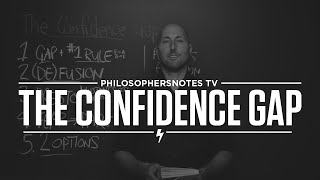
Russ Harris explains why waiting to feel confident keeps you stuck. Act first, then confidence follows. His method: stop fighting negative thoughts, set realistic goals, and do what matters to you regardless of how you feel.
Chapters
Hi, this is Brian. Welcome back to another episode of Philosopher's Nodes tv Today we've got another great book, the Confidence Gap by Russ Harris. The Confidence Gap Subtitle A Guide to Overcoming Fear and Self Doubt Russ Harris is one of the world's leading authorities on something called acceptance and commitment therapy or acceptance and commitment training. Act alright. It's one of the cutting edge therapies out there right now that combines mindfulness and basically some cognitive behavioral techniques. We're going to talk about some of that in this episode today. We're going to talk about a lot more of act acceptance and commitment therapy in another one of these episodes on Russ first book called the Happiness Trap. For now we're going to focus on the confidence gap. Philosopher's note Bunch of my favorite big ideas, five of them here. Let's start with the gap. What is the gap? The confidence gap is when we think we need to feel a certain way. There's a gap between where we are and where we want to be. Right. We'll be able to pursue our big dreams when we feel confident. Once I can bridge that gap by feeling confident, then I'll go out and do the things I need to do to pursue my dreams. He says that's a big problem because you might wait a really long time until you feel like doing something or you feel confident. He says the number one rule that we need to get with confidence is that it doesn't go feelings and then action. It goes action and then feelings. Act confidently. Act the way that you aspire to be and and let the feelings follow. That is the golden rule that he comes back to again and again and again. Don't fall into the gap of thinking you need to feel a certain way before you do anything or you may not ever do anything. We're going to Talk about our two options more @ the end of this little episode. The second big idea is a really powerful idea from mindfulness practice which is the core foundation of acceptance and commitment therapy. So Russ makes the point throughout the book that it's not the fact that we have negative thoughts that's the problem. Right? Negative thoughts are an inherent part of our brain. It's how we evolved over millions of years, our species over the last hundred thousand years. And if you look at our evolution over millions of years, our species and ancestors evolved who were able to see negative things in their environment. If you couldn't see, if you weren't highly attuned to threats in the environment, 1000-002000-00500,000 years ago when you could actually be eaten right or killed or die by doing the wrong thing, you wouldn't have survived. So we've descended from a long line of people who are very, very good at detecting threats. Our brains have a negativity bias and the current self help world tries to tell us that we need to get rid of all negative thoughts. He says that's a very, very unwise thing to do. The best Zen masters in the world can't get rid of their negative thoughts, but what they do is they don't fuse with them, they don't think that they are their thoughts. And what we need to do is defuse from our negative thoughts, not get rid of them, accept them and diffuse from them. It's a really, really important and powerful distinction. How do we diffuse? Well, he gives us a ton of different ways. Meditation is obviously a very powerful practice. He talks about different ways we can do that. I talk about it a little bit more in the note and some of the fun ones are, again, what we want to do is we want to not fuse. So anything we can do to defuse is going to help us. The simple act of observing your thinking is the first step. Obviously, if you aren't aware of that and you don't know that, you're saying to yourself, God, I hate myself, or I can't do this, or I can't do that, or I'll do that when I'm ready. I'm not ready right now, I'm not smart enough, or whatever it is. Think about what you say to yourself. What negative thoughts do you say to yourself, right? And the next time you hear that negative thought or a different negative thought, say to yourself, notice, defuse and say, I'm thinking this thought. Wow, a little bit of separation. You could even say, I notice I thinking this thought. That's diffusion. You can say that thought that used to run unconsciously in your mind in the stupidest, silliest voice you can imagine, right? Say it as your favorite radio announcer or sports broadcaster or whatever, where you can sing that negative thought to the tune of your favorite song, right? You're defusing my favorite one. He had something like, hey, thanks mind. Imagine saying a totally negative thing in your mind. This thought bubbles up. And again, remember he says, negative thoughts bubble up. That's how your brain is wired. And when you're doing something challenging, you're going to feel fear, you're going to trigger a fight or flight response, you're going to have negativity. But when you feel that anxiety or Worry or fear. You can jokingly say to yourself, hey, thanks, mind. That was an awesome thought. Super helpful. That was my favorite is to literally say, say that, oh, you little negative thought of I can't do that, or this isn't working the way I want, or whatever. Oh, thanks, mind. That was super helpful. High five. Right? We want to defuse, pay attention, allow the negative thoughts. It's how we've evolved. But don't become fused with them. Defusion. Third big idea here is presto, instant success. Our idea of success is often the extrinsic type that we talk about all the time, right? That person's super successful. They're wealthy and they're famous and they're hot and they're powerful, Whatever that. That's our current culture's idea of success. He says, you may want to challenge that and think about what true success means. And he says, true success, isn't that right? True success is living your values. And what's exciting about that is that you can have instant success because when you identify your values and you live consistently with them, presto. You can have success right now, even in the midst of failure. You can be successful failure in the big sense or the traditional sense. You can be successful because you're living in integrity with your deepest values. Instant success, moment to moment to moment. Doesn't matter how long you've not lived those values, you can be successful right this moment. And he gives us an exercise. He gives us a ton of exercises in the book and challenges us when we don't do them. He talks about practice more than I talk about practice. He says, if you want to get good at this stuff, you've got to practice, practice. And notice the voice in your head that says, oh, I don't have the time or I don't want to do this, or it's too hard. Notice it, defuse from that, unhook from that, and do what needs to get done. That's in integrity with your highest values. Anyway, he gives an exercise helping us identify our top values. He lists like 59 of them in the book. And he says, hey, identify at least 10 of these that resonate with you. Things like authenticity and enthusiasm and purpose and persistence and all the different core values. Creativity, optimism, kindness, love, spirituality, sensuality, fun, etc. Ton of different values. And he says, identify at least 10 of them that resonate and then go through that and pick out your favorite six values. The values that you feel really capture who you aspire to be and who you're committed to being. Or right now in your life. So think about that. Think about what values really capture who you aspire to be. When you think about what's most important to you, what are the values? What are the virtues that come in mind? And then write them down, put them on a little note card. I put them on a little index card which is sitting on my desk and sitting as a bookmark right now. Boom. There are my values. Then goals are important. You want to go after goals, right, that have meaning for you, that are purpose driven and about something bigger than just yourself. But know that moment to moment to moment, you have an opportunity to live in integrity with those values. And that allows for instant success. That's a big idea. Next big idea is another really good one. He talks about fear, right, as an acronym, F E A R. And it's antidote. Dare D A R E. Let's walk through fear and dare. So if you have fear, you have the F is fusion. Go back to our problem before. If you are feeling fear, you are fused to your negative thought, right? If you're not taking the action you need to take, you're fused. We want to deal with that. And then he says, you have excessive goals. You've got goals that are stressing you out, right? It's just overwhelming. A whole long conversation on that. We'll get to that in a moment. And then he says, you are avoiding avoidance of discomfort. Huge theme is to get comfortable with being uncomfortable. It's not about getting rid of the feeling of fear or discomfort. It's about being comfortable with it, then doing what needs to get done. Then the R is something along the lines of removal from or distance from your values, right? You're not connected to your values. If you have that fusion, excessive goals, avoidance of discomfort, and you're removed from your values, you're going to feel fear. He says, what you need to do is dare. So let's look at dare. D A O D is, as you'd guess, defusion, like we just talked about. Notice the thoughts that you have defuse from them, right? Say, oh, I notice I'm having this thought. Awesome. Way more powerful than unconsciously being driven by an unhelpful thought. An unworkable thought is what he describes it as we talk about it more in the note. And then the A is acceptance. The A in DARE is acceptance of discomfort. Again, he makes the point again and again and again that all growth occurs outside of your comfort zone. Anders Ericsson, the authority on expert performance, that was one of his key things. You have to be willing to leave your comfort zone. If you want to grow, you cannot grow inside your comfort zone, period. It's just a fact. And by definition, when you leave your comfort zone, what do you feel? Discomfort. So if you want to achieve things in your life and you want to grow, you need to get comfortable with being uncomfortable with discomfort. You need to accept it. And then the R is rather than excessive goals. We have realistic goals, realistic goals. Now we want to hold big dreams. And he says the things that we think are impossible may or may not be impossible, but you don't need to overwhelm yourself. Move it back to a realistic goal that you really feel you can hit. And. And then, as we discussed in a recent note. Excuse me, take a sledgehammer to your big goals and then just take those little pieces, those little pebbles that fall off of your big milestone goal and do something on that right now. Have a realistic goal and take action consistently. And then the E in DARE is to embrace our values. Our values are our fuel. If you want to persist through the challenges in life and deal with the discomfort, you need to embrace your values. So what are your values? Keep them fresh and engage in them. Often that's how you move from fear to dare. I love that idea. And then our fifth big idea, two options. He has a great passage on. Look, I'll give you two options. Option number one is you live the rest of your life and you only do what you feel like doing. You've got all these dreams, but you only take action on them when you feel like it. You're psyched up, you're motivated. That's when you take action. Otherwise you don't do anything. That's option number one. Option number two is you have a big vision and dreams for your life and you do what needs to get done. You live in integrity with your values, whether you feel like it or not. Option number two, which one do you want? Do you want to be the person that only does something when they feel like doing it, or do you want to be the type of person that does what needs to get done, whether you feel like it or not? David Reynolds in Constructive Living says, there's no greater source of confidence than knowing that you are the type of person who can diffuse from the negative thoughts, allow them to be present, but not be fused to them, and do what needs to get done. That's the essence of acceptance and then commitment to, to action, therapy, act. Ultimately, that's where the confidence comes from and how we navigate the gap. As we discussed in Our first rule, action precedes feelings. Don't get it backwards. Don't fuse with your thoughts. Presto. Instant success. The moment you live in integrity with your values, right? Whether that's living with a sense of hope or persistence or grit or whatever, you don't need to be succeeding in the larger sense. In that moment. If you if you're living with your integrity to your values, you are a success. And then we make the leap from fear to dare by defusing, accepting discomfort, setting realistic goals, and embracing our values. That was fun. I enjoyed this book a lot. Thank you, Russ. I hope you enjoyed this. And if you did, I think you'll love the book. And I can't wait to share more on the Happiness Trap. For now, think about what your favorite idea was. I interviewed Peter Brown of Make It Stick the Science of Successful Learning yesterday and we talked about these ideas. We'll be sharing it soon, but that idea of engaging, engaging in elaborating on what you're learning is the best possible way to make it stick. So what was your favorite idea? Think about it, reflect on it, write it down, share with somebody. And and as always, most importantly, go out and live it. Have another awesome day. Look forward to sharing more soon. See you. Hi, this is Brian. I hope you enjoyed that PNTV episode. A lot of people don't know all the stuff I do beyond these free videos I share on YouTube. So I thought I'd do a quick video to give you an overview of our membership program that you can get access to and get a ton of other stuff. So here's a quick look. Ten bucks a month. Join the Optimal Living Membership program. You get Instant Access to 250 Philosopher's Notes on some of the best Optimal Living books out there. Old school classics, Positive psychology, Modern stuff, Mindfulness, Peak Performance, purpose, neuroscience, wealth, etc. And what you may not know is that in addition to the PNTV episodes, I create PDFs on all these great books. So six page PDFs. Let's take a look at one of them. Joseph Campbell, you want to figure out how to live your hero's journey? Well, this is a great place to start. I basically pull out my favorite big ideas, riff on them, connect them to other books and other ideas, and help you apply this wisdom to your life today. That's what the PDF looks like. Again, we have 250 of these on all these different great books. And then I record those PDFs as an MP3 so you can listen to that MP3 while you're on a walk or working out or doing some errands or whatever that is. Philosopher's Notes. A lot going on there. And then in addition to Philosopher's notes, you get access to optimal living classes. Optimal Living 101 idea here is that all those great teachers come back to the same big ideas again and again and again. I distill those ideas into classes. Super practical, fun, inspiring classes ranging from habits101, confidence101, getting stuff done one on one, meditation one on one, instant access to all those classes. And then future classes include relationships one on one, energy 101, purpose one on one, business goals, etc. Those are our full length classes. And then I create micro classes. Two to three to five minute little bursts of wisdom on my favorite great ideas from these great books across the domain that you want to optimize in your life. So we have dozens of these so far. I create 50 new micro classes every month and 10 new philosopher's notes every month for 10 bucks a month. So we're blessed to have thousands of members who are enjoying the program and sharing some incredibly kind words with us. And super simple. 10 bucks a month. Cancel anytime. We'd be honored to be a bigger part of your life and and I appreciate your support. And here's to optimizing and.






