All The Lonely People | Holly Furtick Book Club
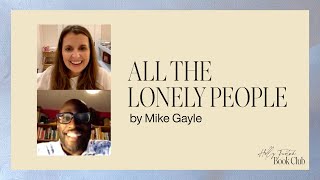
A recorded Holly Furtick Book Club interview with author Mike Gale about his novel All the Lonely People. The host praises the protagonist Hubert Hezekiah Bird and frames the book as an exploration of loneliness, race, immigration and intergenerational relationships. Mike Gale discusses his intent (to show how loneliness develops across a lifetime), his planning approach (outlined beginning/middle/end and chapter breakdowns), and background facts: he began writing the novel around 2018, it was published amid the 2020 lockdown period, and he lives in the UK. The conversation also touches on plot choices (Rose is dead from the start; Hubert's estranged son David and ambiguous resolution), character name origin, the book's resonance during COVID-19, and practical publishing/author details (Gale has written 17 books, Instagram handle mikegalethenovelist, and a forthcoming novel titled The Museum of Ordinary People).
Questions this video answers
Around 2018 (author states he started writing in 2018).
Released in summer 2020 (author says it came out as the world began to lock down).
He is in England; during the livestream he said it was 1:30 a.m. locally.
Seventeen books (author corrects "12" to "17").
@mikegalethenovelist
Chapters
Foreign.
Hi, everyone. It's book club night. One of my favorite nights of the month where me and all my close friends come together and we discuss a book of our choosing. Of my choosing. A book that I suggest. And I'm so excited tonight because we are going to be talking about this book, all the Lonely People by Mike Gale. And author Mike Gale is going to be joining us. We're going to have an incredible conversation. And guys, this is gonna be so much fun. Okay, so a little bit of backstory. Last month I, I don't know why, but I was having trouble choosing a book club book. And everything that I read, I was like, oh man, I don't know if it would be good because of this or because of that. And then I had one book and I tried to get the author and that author couldn't make it on. And so it was kind of down to the wire. And my friend Stephanie Van Allman posted on her Instagram several books that she had read and she always rates them. And she had read this book, all the Lonely People and gave it like tons of stars. And Stephanie is a long term member of our book club. And I was like, I'm gonna give that one a try. And I am so excited because we get to talk with Mike tonight. I loved this so story. I hope you did too. I can't wait to talk to you guys about it. I can't wait to talk to Mike about it. Guys, we got to talk about this book. Now, first of all, if you're new to the book club and you need to know that we do spoilers on this book club. There is the whole point of a book club is to talk about the book that you have read with your friends who have also read the book.
So.
So if you're just joining us, I highly recommend this book. We're going to talk with Mike tonight, all the lonely People. But I just want to tell you, if you think you might read it, you might want to like hop off and then come back watch it. I'll post it on Instagram, the interview, I'll post it on YouTube. But you might want to read the book for yourself and then come back and watch the interview because this is a really, really special book. It's all about friendship and connection and loneliness. And those of you who know at the Holly Furtick Book Club, we love books where I think, okay, I'm always trying to hone in what is it exactly that we love in this book club. And I think what it is that we love is Books that just give you a character that you want to know that you love, that you cheer for, that. That you are rallying for. And so that's 1, 2, which we have in Hubert. I actually. I was trying to think, is Hubert one of my favorite book club characters that we've ever done? Maybe. So I think he would be up there in my top five. I just. I loved Hubert, and I wanted to. I wanted to meet him. I wanted to hug him. Did anybody else love Hubert? So somebody says, doing life with purpose. My first book club. I read the book. I'm so ready and excited for this interview. It's gonna be so great because Hubert was such an amazing character, guys. He was amazing. So in our book club, we love amazing, strong characters. We also love friendship. We also love people who overcome something. And we love books that have good endings but not necessarily perfect endings. And that was one of the things that I loved about this book, was that it just. It ended great. And we're gonna talk about the ending at the end. We're talking about the ending at the end. Imagine that. But I loved. I love a book that makes me laugh, makes me cry, surprises me. And I found that all of that in this book. And also one of my favorite things to find in a book is something that makes me feel empathy. I love a book that makes me think. It makes me feel and makes me go out into the world and look people in the eyes and think about their situations. And that's what Mike does with this book. So before we get Mike on, I want to know. Just recap. Okay, so we have Hubert, and he is an elderly gentleman. He's in his 80s. He moved to Great Britain in the 1950s, and he moved to as a part from. From the West Indies to be a part of the workforce in Great Britain. And so he's an African American. And so we have all these themes of. We have themes of race. We have themes of hardship. We have themes of. We have themes of prejudice, loneliness, immigrants, biracial marriage. I mean, this book, like, what's so great is when a story, a fiction story, is able to cover topics that really make you think, just such a great story. So many great characters. Let's see, what else do I have? Okay. I actually, you know, every month, I print out a favorite quote from the book, and I always Forget or, like, nine times out of 10, I think I forget to read the quote. And tonight I'm gonna read the quote, because I really love this. Here we go. It's a little bit long. And I posted it on my Instagram, so maybe you guys saw. Saw that. Okay, here we go. It says, hubert did not want to go into this room. He was scared, and he felt vulnerable. And the last thing on earth he wanted to was to try and make friends with these strangers. He wished with all his heart that Joyce were here with him. After all, it was always easier to meet new people if there were two of you. It gave you confidence and made you feel at ease. Look, it said to the world, I already have one friend, so I can't be all that bad. And Joyce always made him feel like his best self anyway, so there would be no resisting him. I loved. I guess that's not really a quote. Maybe that's more like a passage. But I love that. And I love how we have this setup. We have this man. He's. He's obviously very lonely. He has this conversation with his daughter, and. And she says she's coming. And so he wants to prove that he's been out in the world and that he hasn't been, you know, like a hermit in his home. And. And so he tries to go out and meet people, and he just feels so, so awkward. And I love that scene in the book because you could feel it like we've all been in a place where you walked into a room and you felt like, gosh, I wish I had one person with me. And it's so amazing how one person can. Can give you so much more confidence when you walk into a room. And so I love the way that Mike created this character and immediately made you feel feel connected to him. I feel like. I feel like it's time to bring Mike on. Are we ready? Let's do it.
Hello.
Hi, Mike.
It's so lovely to be here. Thank you so much for having me on. Thank you.
Oh, my goodness. It is so great to meet you. First of all, I forgot to introduce everybody to you and tell them that you are in England.
Yes, I am. It is 1:30 in the morning here. Oh, my goodness.
Okay. So I just have to make sure that I say thank you so much.
My pleasure.
It really. It's always so much fun to get to chat with an author. And that you would stay up till 1:30 in the morning to chat with us is like, it's really, really such an honor. And I'm so. I'm just. I'm so happy that you would do that.
I'm just delighted. I'm just delighted to be in. I feel like I'm in a room. I feel Like I'm in a room with all of these people and just listen to you discuss the book is just everything that I wanted when I. When I was doing this. It was just everything I wanted because just hearing all your reactions and hearing your favorite bits and even bits that you didn't like, this is an author's dream. So, yes, thank you very much.
Oh, you're so welcome. We have a really fun little community here that we just, we love books, we love to talk about them. And I found it's so I was surprised at how many authors would come on. Oh, sorry. I turned on a space heater and it's about 90 degrees outside, so don't want that. Just this. It's just such a pleasure to talk with authors and get to hear how these characters come to life. And so I forgot to introduce you and tell everybody you live in England. And the most intriguing thing about you to me is that you are a journalist and you were an advice columnist for a teen magazine. And I think that's amazing. And then you wrote your first book and now you've written. So my sheet that my team put together says that you've written two 12 books, but I also saw somewhere that you've written 17.
Yeah, it's definitely 17 books.
17, yeah. I mean, how do you push through and continue to give your all to your 17th book?
It's a strange one. I think this is just a job that I've always wanted to do and so it feels like a complete privilege to be able to do it. And so every time I sit down, I want to tell you a story that will really engage readers, that will really, they'll take into their heart. And so, you know, they might. What I love about my books is that there are people out there who say, you know, one of my books is one of their all time favorite books. And I just think that's such a privilege to think, you know, of all the books in the world, you know, somebody says, no, this one is my favorite. And they take it in their heart with them and they've reread it and they can quote bits. To me, it's just amazing.
So this particular book you started writing in 2018, what compelled you? It's almost, to me, it's almost prophetic that you in 2018 write a book about loneliness that would come out. It was released in the last summer, summer of 2020, when the whole world was dealing with loneliness. What compelled you in 2018 to say, I want to write a book about an elderly man who's lonely.
It's a strange thing because when the book came out here in the uk, it was just as the world was beginning to lock down. And we were thinking, well, you know, that bookshops have been closed and people were worried about how is it all going to work. And. And then we sort of. We had a little bit of an online meeting and then with the sales team, and we were all thinking, actually, this is a perfect book for right now because it's got so many things that, you know, it does feel sort of prophetic, even though I'm certainly not. You know, you've not only got this thing about loneliness, but you've also got the thing about, you know, race became very much a center stage issue as well. And so it just. But you also had people experiencing loneliness who perhaps might not have experienced loneliness before. So, for instance, you know, you know, you don't think of many young people being lonely, but then suddenly everybody had to be in their own spaces. And so, you know, people who are away from their families or lived on their own, suddenly, you know, before they'd had their own social network. And then suddenly they just didn't. They couldn't physically even see their friends. So, yes, it was. It was a book for our times. The reason I wrote it was because I. I really wanted to write about loneliness. That was the thing that was at the forefront of mind, this just this idea of loneliness. And I had an image of, I always say to people, I had an image of a house and a house with maybe one person who comes into it, and then it's drawn by another. And that's, you know, Hubert and Joyce. And then they have their family, so there are two more people in the house. But then gradually that house empties one by one until you're just left with this one person. And I thought that that was the image that was my head. And I wanted to show how somebody becomes lonely. Because we see so many lonely people. When we encounter people who are lonely, I think sometimes it's easy to kind of think, oh, they're lonely. You know, I suppose what I wanted to show was how did they become lonely? We're not born lonely. And that was really important to me. I just wanted to kind of. And because this was the first time in all my writing career that I've written about a character across a lifetime. And, you know, you were talking a little bit earlier about the tragedy, so much tragedy in Hewitt's life. And I think that's part and parcel, I think, of getting older the very nature of getting older is that the longer we live, the more we've experienced and sadly, the more people were likely to have lost. And so I suppose that was very much in my mind as well. Just having this kind of the image of the house, but also this image of someone leaving their country. So we've got the loneliness of the immigrants. Then we've got the sort of the hostility of racism. So you've got the loneliness of being an outsider and then you've got, you know, when he loses various people, you've got the loneliness it's experienced, you know, so sharply because you're so used to being part of a team and then suddenly it's just you. So there's all different sorts loneliness. Of course, you've got Ashley's loneliness as well. And of course, all the different members of the committee, they've all got their own types of loneliness as well.
Yeah. And I actually really loved how you showed that everybody experiences loneliness through. And it was through so many different ages and stages of life. You had the single mom, you had the woman, you know, kind of in her. In her 60s. You had the Emile, the immigrant who was away from his family and sending money back to them and in a country that wasn't his. And then obviously you have Hubert and. And his journey. And you kind of captured the loneliness at the beginning of his life and at the end of his life. And I just thought it was really beautiful the way, like what you said about the pain that he experienced throughout his life, because that is part of life is having these painful experiences, but also the people that you have with you along the way in those places. And yeah, I thought it was really well done. Was there what made you want to take this through the eyes of Hubert? Was there any personal connection to.
To him? When I was thinking about the story, I was thinking I wanted a protagonist. So I knew that I was going to be about this character and I was going to look at him through a lifetime. And then I began to think about my sort of parents generation. And so my parents were in their 80s and the things that they'd experienced, but also friends and family, friends and things like that. And so that's when I sort of got the idea I wanted to talk about a generation. They're the first generation of immigrants who kind of came from Jamaica, so basically invited by England. So we're part of the Commonwealth and so it's post war England needed to be rebuilt. And they looked towards the colonies and they said to the West Indies and Other colonies, please come. We need you to be part of our workforce. And Hubert is part of that generation who comes. And my parents, they came in the 60s and so I wanted to do that and bring this in. And I suppose I. So I was thinking about people of my, My Hubert came in the 50s, came 50s, and my parents came a little bit later. But I wanted to talk about that generation because it was very much in the news as well, because there'd been a scandal here actually in the uk, where people who had lived their lives here had suddenly, and, you know, for reasons, various reasons, they might have gone back to Jamaica for a little while, and then when they come back, they weren't allowed back in the country. So there's a really big scandal about that. And also it was in the news because, you know, it was, you know, it was coming up to, I think it was like 50 years since that kind of wave or there was a big anniversary of that wave of immigration. So that was very much at the forefront of my mind. And Hubert Hewitt sort of came to me. He's a little bit like my dad in that he's quite dapper. My dad's quite dapper. My dad's very particular about clothes. He's very smartly dressed, but he's. He's a little bit different as well. And, you know, so he's a little bit of neighbors and various family members. So, yeah, I just drew him together.
I thought it was such a unique time period of history. I love historical fiction. I love to, to learn about history through fiction. In fact, I was talking to somebody the other day and I'm like, when you read a history book, it's written by someone. You don't know if it's all true or not, so why not read a story about it? That's sort of my philosophy. And so I really loved how you taught me about this period. You know, I've read so many World War II novels, but to take me just 10 years post war realize, oh, there was this era in history where Great Britain needed to be rebuilt. And what did they do? They invited the people from their colonies in. And what was that like to be one of those people that was brought in and I didn't know about that, the news story, you know, 50 years later. But I just, I loved how you brought that to light. And through a character, though, that was just so, so, so lovable. So, okay, what, what, I want to talk to you a little bit about your method. So you start with a character. Did you know the ending before you started, do you have an outline? What, how do you, how do you through your story?
Yeah, I'm very much a planner. So I, I will plan out, I'll get a general beginning, middle and end and then I'll think to myself, then I'll break it down into individual chapters so I'll know what happens in each chapter as I go along. And one of the things that became apparent as I was thinking about the story was that it was definitely going to have two timelines. I wanted to have a, then timeline told the story of how Hubert became lonely. But I also wanted to have a storyline where we see Hubert do something. Hubert be brought out of his loneliness and for him to become a kind of figurehead as well. And that's another strange story. So, you know, occasionally I will read the occasional Amazon one star Amazon review. And you know, I've seen people say, oh, it's, it's. They'll say it's not very realistic. And you go, oh, wow. And you know, oh, that would never happen. And one of the interesting things, again, I'm not a prophet, but during lockdown, I don't know whether you, whether you, whether he got there, whether you know about him, but there was a, there was a hundred. There's a man who's coming in the UK who's called Major Tom and he was a mate, he wasn't a major in the army and he was 100 years old. And during lockdown he decided to walk up and down his garden to raise money for charity. This caught on so much that he ended up raising 3 million pounds for the NHS.
Wow.
And so it's just, you know, it's an incredible story, but what I think is lovely about it is just that, you know, it is real people can make a difference. You know, so often we think to ourselves, oh, I'm just one person. And he must have thought, I'm 100 year old man, I'm living in a home, what can I do? You know. And he was probably maybe thinking, I'm going to raise maybe 100, maybe 200 pounds. He ended up writing 300, you know, raising 3 million pounds to the NHS and also had his biography published. So incredible things can happen, like Hubert says, but you've got to open yourself up to them.
I love it. That's actually, I actually underlined that. That's like one of the last lines in the book where he says, that's I. He says, and that's the funny thing about life. Extraordinary things can happen to ordinary people. Like you and me, but only if we open ourselves up to let them. And that is. That's sort of the whole gist of the story, is it's an ordinary guy who ends up bringing a lot of people together through his. In spite of his pain, in spite of his loss. And that's so cool. Okay, so people are. Everybody's asking. They really are. I'm not just saying that. They want to know, did you plan for Rose to be dead? The whole, like, did you start out knowing that Rose was dead?
Yes, I did. Yes. It was one of the things that when I came up with the idea, I knew that I needed a reason for, you know, so what's. Because at the very beginning, we know, you know, that a synopsis and you know, from the very first chapter that something happened to Hubert five years ago. And so at the very forefront of my mind, I need. I needed to have. Okay, why is this character lonely? And I thought about all sorts of different reasons. And then when the idea came to me, oh, it's because his daughter's dead. It suddenly hit me, like, as soon as I kind of felt it in my chest, and as soon as I knew I felt it in my chest, I just thought, that's got to be it. And it's so horrible because you. I, you know, when I was writing the chapter where Hubert reveals that his daughter's dead, it really. It really shook me. It really shook me. Really felt for me in that moment. And despite the fact that he's. He's a fictional character that I'm creating, I just thought, this is. This is awful. But it's like, also at the same time, it's such a perfect explanation of why he withdrew. And because of that, you know, the temptation sometimes is because, you know, when you love a character, you kind of want what's best for them. And so making horrible things happen to him isn't really what, you know, what you want to do naturally, but you've got to go through it, because that's where the heart of the novel is. The heart of the novel is he's. He's created this world where his daughter still exists, because it's the really. It's the only way he can carry on living, right? And so, you know, you know, when he hears that. That telephone ring, you know, he talks about it, he hears that telephone ring, and he picks up the phone and he. He hears Rosie's voice. He knows in his heart that he can't be. But at the same time, he so wanted to be. And you Know, I spoke to lots of people who have lost loved ones and especially if you don't live in the same place, you know, if you don't normally see them, but you might speak to them on the phone, it's so easy to think that they just carry on their lives and, you know, all you need to do is pick up the phone and talk to them. So because, you know, they're not there, I suppose normally they're physically. And so because Rose is always on, you know, on the other side of the world and he was so used to speaking to her on the phone, it's maybe easier for him to kind of swallow the lie by keeping her alive at the end of the phone. Yeah.
And I have to be honest with you, I didn't really believe. Believe it for a while. I kept thinking like, maybe she didn't die and he has been having. And she is coming home. Maybe he misunderstood because I just, I was in so much shock. But then it did, it kind of. It did. It explained why he was in that situation and it gave you that sort of like, as a reader, it gave me that shock. And, and yeah, at the. I'm going to be honest, at first I didn't like it. I was like, why did he do that? You, meaning you. Why did. Did Mike make Rose dead the whole time but then finished it? I was like, you know what? I liked it. I didn't see it coming. And never read anything, you know, that was quite like that. Because typically when you read something like that, it's more of a suspense type book.
Yes.
So, yeah, you won me over in the end. And I loved how he had to confess it to Jan to make it real, to actually say like, yeah, this really. I know this is going to sound crazy and I think I'm so intrigued by the idea of a friendship and in my own personal life, of fighting for my own personal relationships. And I find that it's those types of moments where you actually really let someone into your life that you're. That your relationship with them deepens at a new level. And it's not until you get. You have those moments that you truly experience connection with other people. And so for all of that, I really. The conversation with Jan was. Was really important and special to me because I thought you really nailed that. That's what connection is, is honesty with the right person, with someone you trust.
I mean, that's the thing. I mean, he, when we, when we first meet him, you know, he's very standoffish, isn't he? And then Layla is the first person who actually comes into his house. And so Hubert's made this house into it. He's almost made it into a prison, really. And so Layla comes in and in and they sort. But because he's still got this secret, she's still a little bit further away from him. And so when we find out about David, she's coming a little bit closer. And then when we find out about Rose, that's finally. He's. She's right in there. There's no hiding anything from her. And once he can't hide from her, and I think it's the burglary, really, that kind of is the. Is what sets it all off. I think he's so heartbroken to have lost his wife's ring. That's him really sort of just saying, I can't even hold up this pretense anymore. And that's him finally, I suppose, breaking open. But it's also, I suppose, the point at which he, you know, you have to kind of. Sometimes you have to break down in order to kind of build yourself back up again. And I think that's what we see with Hubert.
So Nicole wants to know, how did you come up with his name? Hubert Hezekiah Bird.
There's a real tradition in the West Indies for just sweet, lyrical names, and there's lots of biblical names as well. And so, bizarrely, my mum went to Jamaica to see some family and there was. She took loads of photos and she showed us the photos and there was a relative there. And I said, oh, who's that? And she said, oh, that's. That's Herbert. And I just. I just thought, you don't really hear the name Hubert or Herbert anymore. And I misheard her, actually, and I said, oh, Hubert. She said, oh, no, Herbert. But the name Hubert sort of stuck with me. And then I just joined it with Bird because it just sounds so lyrical. Hubert Bird and Hubert Hezekiah Bird just sounds like it wouldn't stand. You know, it's definitely a sort of name of that era in the West Indies. You know, people had those sort of grand names. And I suppose you said it, you.
Really nailed it with the name, because I. It was. It was lyrical, it was lovable, it was, you know, I want to use the word old, but it had like a nice, like. Like age to the name. With just fit. It just. It fit his personality. He was kind of crotchety, but deep inside he was. He was kind and loving and, yeah, it was. He really nailed the name. A lot of People are asking about how you came to make his relationship with the son, which I also, I really love. I mean, I really thought, like, it was hard, it was another hard thing that you revealed. I love the way you revealed it because it's sort of like you, along and along you gave this, you gave us pieces of why he was the crotchety old man that he was. And now we find out that his son had an addiction and lives, is homeless in his own neighborhood. So what, what made, what, where did that, was there anything that, that came from?
I wanted, I suppose I wanted David to be the, the opposite to Rose in a lot of ways. And it was, I suppose I wanted to kind of have a little bit of mystery. So we, you know, we sort of see, we know that the, we know for the past story that Hubert has two children, but in the front story he only ever talks about the one for quite a while. And so that doesn't feel right. So you know that there's something going on there. And then I thought, I suppose I was thinking about, I wanted David. I suppose he's another source of pain for Hubert. And it's quite a complicated story because I, you know, lots of people have asked the question, well, what happened to David in the end? And it was a difficult one.
Lots of people are asking it in.
The comments and it was a difficult one because I didn't want. What. I didn't want to make a complicated situation overly simple.
Yeah.
And it could have been so easy for me to have said yes, David definitely turned around and, and, and gave up drugs and got himself together because it's, you know, I didn't want it to be a fairy tale, but so when I was coming to the end, I thought, well, how am I going to resolve this story? And so when we see, when Hubert sees or thinks he sees David in the crowd, I just thought there's a little indicator. So maybe it's David and maybe David hears his father talking about him and maybe David can turn his life around. But I don't think it's going to be a thing where he and Hubert are going to be reunited or anything like that. And it was quite a sad one for me because I thought, especially after they've fallen out and I really felt for Hubert when he's looking after David and, you know, he does everything for me that he can, and even when David gets up and leaves and he's bringing him food and he's bringing him clothing and I thought it was really interesting when he draws the line when David doesn't come to Rosie's funeral and I think that's where he draws the line. He says, right, you know, I can take anything, and he has taken anything, but he draws the line at him not attending Rose's funeral. And I suppose there's a deep sadness there and it's a complicated issue and I didn't, I didn't want. I knew that. I didn't want to oversimplify.
I thought, for whatever it's worth, I thought you did an excellent job addressing what, like you said, a complicated situation and not oversimplifying it and giving you that little glimpse at the end, like there is still hope, but yet there's a lot of history and there's a lot of, of. And, and in the end, at the end of the day, only David can turn David's life around, not Hubert. And, and, and you, and you, you said that. And, you know, it was just. There was the book. I just really, I really enjoyed it. It gave me enough through the Hubert's life and his pain that I experienced with him. You still gave me a breath of like a smile or something funny or a character. And, yeah, I just. Thank you. Thank you for such a great story and for pushing through and finishing. I can't imagine how difficult it is to complete one novel, much less 17. And for your 17th novel to be so, so touching and beautiful. It was just really great. So thank you.
It's my absolute pleasure. Thank you so much.
And thank you again for staying up so late.
I'm awake now. You can carry on talking all night if you like.
Well, again, I really appreciate you and it was really nice to meet you. Hey. Okay, two quick questions. People want to follow you on Instagram. Mike Gale.
Yes. So it's. My handle's mikegalethenovelist. And so, yeah, you'll just follow me and you can see my face.
Great. We can see what's coming next. Do you have something coming?
So I'm working on a new novel that's hopefully coming out. It'll be out next summer in the uk and it's called, currently called the Museum of Ordinary People.
That sounds amazing.
Thank you very much. Thank you.
And so of your 17 books, this was my first of yours. If I was going to go back read one, I mean, I might go back and read a lot of them, but which one would you say? Oh, start with this one. You'll love this one.
You. This one. It's called, it's called Half a World Away and it's about half a world away. It's about two siblings who or two half siblings who were taken into care and one gets adopted and one stays in the care system and what happens when they meet up as adults. And if you thought that all the lonely people was heartbreaking, you've got to read this. I mean, you've got to read this. You will absolutely love it. It's a no brainer. You will be.
Yeah, done. I can't wait. Hey, thank you so much. It was really.
Thank you so much. Thank you.
Well, guys, that was amazing. I always enjoy speaking with authors and getting to hear how they came to create such amazing characters and amazing stories. And I hope you enjoyed that conversation with Mike. If you'd like more things like this, make sure you leave me a comment. Comment, let me know what you're reading. Make sure you subscribe to the channel so you know when we're putting out more interviews with authors. And if you would like to join the Holly Furtick Book Club officially, all you have to do is go to hollyfordic.com give me your email address. All I'm going to do is send you an email reminder of what we're reading and when we're going to meet so that you can join us. I hope you have a great day and I'll see you next time.
Sam.
More from Holly








The Ultimate Packing Guide: Nurturing Your Soul with Gratitude for the Journey Ahead


