Belgravia | Holly Furtick Book Club
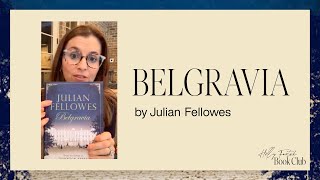
Holly Furtick hosts the first episode of her Holly Furtick Book Club (YouTube, April 22, 2021) to discuss Julian Fellowes' novel Belgravia. The group (Holly, Lisa TerKeurst, Emily, Ashley Hollingsworth) talks about favorite and least-favorite characters (Ann Trenchard, Lady Caroline Brockenhurst, Charles Pope, Maria/‘Mariah’, John Bellasis, Oliver), the book's episodic publication via an app in 2016, themes of secrets, social reputation, and grief, readers' habits (audiobook vs. paperback, reading the end), and reactions to the book's ending and possible TV adaptation.
Chapters
In 2018, I had this great idea to start a book club. Mostly because I love books, I particularly love audiobooks, and I love forcing them on other people and then talking about them. And so I started this book club and I just put it out there on Instagram. I said, hey, read this book and. And then let's come together and chat about it. And I wanted to share those chats with you here on my YouTube channel. So I hope you enjoy this video. This is our first book club. I don't even have a name for it. Holly Furtick Book Club. And tonight we are discussing Belgravia by Julian Fellowes. Okay, so I really, really, really love audiobooks. I got into them a couple years ago and there's something about. I just, I probably listen to an audiobook when somebody else might be listening to a podcast or music. So I listen in my car, I listen while I'm getting ready. I listen while I'm cooking sometimes. And I'll get really addicted to the story and I'll start getting mean to my kids and I'll have my AirPods in and every time they talk to me, I'll be like, yes. So I love audiobooks, but I also love a really good paperback book, especially if I am on an airplane or in bed at night or on the beach, because if I sit still, I get sleepy. Okay, so the author of Downton Abbey, Julian Fellowes, wrote this book. I listened to a podcast with him today and I thought this was really interesting. His publishers came to him and they said, we think it would be really cool if you wrote a book, but if you wrote a story, but if we released it in like a modern day type Dickens release. So basically, Dickens would write his books and he would release them chapter by chapter in the newspaper, which is also one reason why a lot of Dickens books are so long. Because he was getting paid by chapter, getting paid by the word. And so Julian Fellowes and his publishers, they came up with an app. And I didn't even know this. Like, I found the book. I listened to this book on audio. I found it because I like to get books that people recommend. And somehow I had, I think it was on sale, but it had really good ratings. So that's how I ended up listening to the book. But it came out in 2016 and there was an app for it and you could like it. Only one chapter would come out. Or his are called Episodes and that's why they're called Episodes. But one episode a week would come out. So anyway, you could download the app, it has really cool stuff. Like, it has maps, it has a family tree, but things are not revealed until you've actually read that part of the book. And then it's got all this extra stuff, like. Like history stuff and what the dresses looked like and what the actual Belgravia neighborhood looks like. It was really cool. So anyway, that is how Belgravia was written, and that's why it's called Episodes. I'm going to get my friend Lisa Terkerst on. And Lisa, I want to hear who your favorite character was and why. Let me add Lisa here. Hi, Lisa. Hi. All right, tell me now. I know that you haven't quite finished the book, and I know a lot of people who are joining us haven't quite finished the book, which is totally okay. And we're going to try not to give any spoilers till the end. So right now we're just talking about the characters. Who is your favorite character so far and why?
Okay.
I really like Charles. I think probably because he has such a sweet spirit about him, and I don't know, there are some characters I definitely don't like. So.
Yeah, Yeah, I love Charles. He. You just. You just love him. You really root for him, and you want this guy. You want him to get the girl. You want him to, like, realize who his family is. I don't know if I'm giving anything away. I don't remember how far everybody is, oh, hey, Don Cherie. But I love Charles, too. My favorite character was Anne. And I think one of the things about this book that I really enjoyed was how truly the main. To me, the main, main characters are Ann and the Duchess. What was her now? I forgot her name slipped me.
I've referred to your chart on Instagram about 100 times.
I know, because it's really hard to keep up with everybody.
It's so hard. Even when I said Charles, I was like, that was the guy with the last name Pope. Right. So I'm in episode eight, and I'm still having a hard time. So I keep your chart in front of me while I'm listening to the book on Audible.
That's awesome. Yeah. Okay.
Really helpful.
Brock and Hurst. Okay, so to me, Ann Trenchard and then Lady Caroline Brockenhurst, they're like the two main characters, and everybody. Like, there aren't that many characters. There are a lot of main characters in the book, which is also another thing I love about a good book is when there's a lot of people that you really love and you're rooting for them. But I really loved how the book wasn't, it wasn't necessarily centered around young people because a lot of times the main character of a book is, you know, in their 20s and they're figuring out life. They're, you know, falling in love or whatever. And here we have these two women who are, you know, like, they've had their children, their life is established, they're kind of caught in this social world of the upper echelon of the British society. And I love Ann because I love how Ann doesn't, she doesn't play everybody's games. You know, she knows that she needs to be social. She knows that she needs to go to these things that people are inviting her to. And for a lot of reasons, she does it for her husband because she knows it's really important to her husband. But I just, I don't know. I loved her vibe. I found this quote. I listened to the book on audio too. So when I like, I thought about like, hey, what were your favorite quotes? I had to go Google quotes from the book because when there's some fallbacks to when you listen to a book on audio. But tell me if you love this quote about Anne. Ann Trenchard was a practical woman. And one of her chief virtues was that she did not linger over a disaster, but sought almost immediately to remedy what could be remedied and accept what could not. She's just practical.
But did you notice though that she actually does linger over the grief? It's almost like delayed grief. It's like she refused to deal with the grief of losing. And I love how they call her Sophia on the Audible book because if I was reading it, I would have totally said Safiya in my book.
And the other girl, Maria, they called her Mariah. Yes, in the audiobook. Audible.
Yeah. And she was my second favorite character. You know, I'm only in. I'm halfway through episode eight so that I'm still living in that tension of like crazy James. And I so desperately do not want him to be engaged to Mariah. And then, you know, in Charles Pope, of course, everybody roots for him. But the thing I really liked about Ann is, and maybe the author gives us this later in the book. So I'm like I said, I'm on episode eight, but I feel like I'm very invested already. I never get to hear the behind the scenes thoughts of Charles. So that's the only thing I'm kind of aggravated. I love who he is. I love that he has the potential. Of course I Still don't know how it turns out, but I love that he has the potential to be in the upper echelon, but have that. He was raised with none of the. The pretenses and the uppity ness of kind of stuck up, being stuck up in the upper echelon, you know? Yeah. But the thing I actually do like about Ann is that we get to. We get to. To read about her inside thoughts and her subconscious narrative and. And I'm very fascinated by her delayed grief. I'm completely fascinated that for 25 years she did not go see her grandson.
And I know.
I cannot understand that. I really cannot.
I think that when I was reading it, I think that that's part of, like, the culture, that when you read a book that's historical fiction, you really get a lot of insight into the culture of that time period and of that, like, era and that place. And it is really mind blowing to think like you are so concerned about the. The reputation of your dead daughter that you did not ever visit your grandson. I mean, but think about this.
Her husband is actually. What is her husband's name again with you? And I was. And it's. What is your husband's name? Wait, no, all of.
Oliver is their son.
Yes. You know who I'm talking about? Okay.
Yeah, the husband.
So somebody comment. James.
Yes.
Okay. James. Yeah. Because John is the.
The John Bellis is the guy that's engaged to Mariah.
That's right.
Okay, See, it's so hard to keep it all straight. This is something that completely messing with me at the current moment. I'm in. Is that Ann's husband John or James?
James. James.
He was more concerned than Ann, A hundred times more concerned than Ann about their reputation. Semi concerned about their daughter's reputation, but mostly his own reputation. And yet he did go see him.
Like, he, he did like, secretly break that. Yes. And how he had. And he was like, he finally. He was supporting him and giving him money and she didn't know. It's a book about secrets. But the thing that I love about the book is how as the reader, you. You know the Secret. And you're watching all of the characters kind of come into the Secret on their own and, and figure and trying to figure all this out. And they all have, like, they kind of all have a piece of the puzzle, but, you know, the whole puzzle. I think maybe that's what was so engaging about this book to me, is me as the reader knowing what was going on and wanting everybody wondering, when is everybody gonna know when is everybody gonna finally figure this out? And why is this such a big deal too? Yeah, Okay.
I think also the other thing that I was fascinated by is their absolute lack of forgiveness for each other, except in the subtle undertones of the relationship between Ann and Lady Caroline. Right?
Yeah.
And so they have such a love hate relationship. It completely fascinates me. But no forgiveness on either side. At least not at the point where I'm at in the book.
They just tolerate each other. They tolerate each other. They just truly tolerate each other. And they have, like, they're in passing a lot and they, their, their relationship is, is really fun to watch and, and to just, and to realize how people have these. Even today, like we have these social rules and they just could not let go of their social rules and realize how much they had in common. I mean, both of those, these women, Both of these women had, had lost a child, but yet they were. The social rules kept them from being able to have that shared grief.
So what do you think are some of the social rules today that maybe we operate under that we're not even aware of?
I know I've thought about this and I would love for people to. I'd love to hear people's comments because I was thinking, you know, when you read a book like this, you're like, this is so stupid. Like, why are, why do you care about the reputation of your. Of your daughter who isn't alive anymore, at the sake of not having a relationship with your grandson and just worrying about how that would just ruin everything. But it just ruined your reputation, not your, not how you live, not what, how you make a living, not who your immediate family is, but truly feeling like everybody's going, going to just totally shun you if you let this cat out of the bag. And when I read the book, I'm thinking like, guys, this is so dumb.
Just stop.
But I wonder, I was thinking like, okay, if somebody were to write a book in 100 years from now about us today, like, what is, what do we do that is so absurd. What are our social rules that are so ridiculous? I don't know. What do you think?
I mean, I don't know if this is a social rule, but I think being in the south, maybe that people pleasing, not because we actually want to please people, but because we want to protect even our reputation, maybe, you know, I can see some of that playing out. There are definitely social rules in the south that when I get into other parts of the country, I, I find myself becoming more aware of them. You know? Yeah. Even the way, like, trained in the south, we say, yes, ma' am and no, ma'.
Am.
And, you know, those are kind of some social rules.
But.
But I think that hints at our desire for respect, so I don't necessarily think that's a bad social rule. I think it's a good social rule. But what drove me crazy about the book are.
I got a visitor.
Hey.
I just supported a very good family.
That. That is really. That was a stellar prop to pull out right this very minute. But I do have a question. Hey, would you watch Downton Abbey with Holly? I'm so fascinated. She said you would.
I said that you might want Mom.
That's true. I got to know about it.
If you do, I will let you know. Oh, everybody's here. Okay. Everybody's asking. Graham says I need to tell everybody what book we're talking about. Julian Fellows, Belgravia. It's a fiction book. It's a fun story. That's what I like. I like stories. I. I read other stuff. I read helpful things. But I. I just love a good story. I. I really think that there's nothing. It's really healthy to have ways to escape and ways to get your mind off of maybe things that are. Sometimes when I get anxious and I get worked up and I can't get my mind out of whatever I have going on, and I feel like fiction really helps me to have a healthy escape and resetting my mind to not worry about the things that are going on.
But I have one other thing, Holly, that I want to say about fiction books and why I like to read fiction books, because I think it's easier to identify with what frustrates me and what invigorates me or makes me fall in love with the character. And I think it helps me be kind of reflective about myself and more self aware about things I need to work on, but in a way that I can give myself permission to be honest, because I'm seeing issues play out in someone else's life, and then it doesn't feel. Yes. It doesn't feel like someone's trying to accuse me.
Yeah.
It's like, if I come to my own conclusion, wow, that's something I really need to work on. Like, for instance, I really found myself annoyed with Ann.
All right, say that one more time, because somebody called me, and I had to. I lost.
What?
You said you were frustrated with Anne.
The one thing that did frustrate. Frustrate me about Ann, but I found it kind of challenging is because we were hearing. We were reading Ann's thoughts. She did not better manage thoughts about her husband. So this is just an example that I thought, you know, over time, over these 25 years, that. That we're getting to see Ann from the time, of course, when the book opens, we meet Sophia, and then, you know, very quickly it jumps to. To way after Sophia, 25 years later.
Yeah, yeah.
So, but Ann, there's no indication and ever better manages the negative thoughts about her husband. And I kept rooting for Ann and kind of wanting her to better manage those thoughts. But that's an example of where I thought, if I don't manage my inside thoughts about people, then 25 years down the road, I could still. Still be having those same thoughts, but it took greater intensity, and it won't do my relationships any favors. So that's an example.
That's so good. I totally agree. I love putting myself in another character's shoes and thinking, what would I do? I mean, that's one of my favorite types of fiction to read, is when somebody really has to overcome something and just putting yourself in those people's shoes, and what would I do? And how would I do this? And same with Ann. Like, you're going, just forgive your husband. He's hurting too. Just talk to each other. And then you realize in your own life, oh, there's a lot of times where I don't do that or I should do that.
So talking about social norms, I feel like we do that same thing. We have an external dialogue with people, but a completely different conversation happening in our head. And so I found myself getting so frustrated with them, but at the same time, being challenged to, where are places that I do that as well?
Yep, I love it.
Okay, just for the sake of Graham, here's the book one more time. I listen to it on audible, but I also have to have a copy of the book, so sometimes I like to listen to audible while I'm actually looking at the words in the book. Strange, but really helpful.
Hey, you know, you can do that on your iPad. It's called Whisper Sync, and you and it will sync up your audible with the Kindle. And so it. And it, like, highlights the word that it's reading. And you can go back and forth. I like to have a copy of the book, but I don't read and listen at the same time. I just like. Like, if I'm sitting on the beach, I want to hold the book. But then, like, when we're on vacation, we're about to go on vacation. One of my favorite things on vacation is a puzzle and an audiobook in my ear. And so I'll be into the book, but then I'll go out to the beach and I want to hold the book. So I like that too. Hey.
I will say your chart should be in the book so that people could look at it while they're reading, but that's my last comment.
I love you. Thank you for joining us. And you're going to love the rest of the book. You have to text me when you finish it. And I think everybody who's read the book will agree. When this book is over, you're sad because you feel like your friends have left you. And to me, that's a really good book is when you just, you're like, don't leave me, guys. I want to know everything about your life. I want to keep going and you're going to love it. So thank you.
That's awesome. Did the author, when you listen to the podcast, give any indication that there would be more episodes or.
No, no, but. And I was going to talk about this at the end, but I'm going to get people to comment on this question. Since you brought it up, I have done some Google searching and I'm pretty sure that it is in the works being made into a TV series. So it's like the 11 episode TV series. And so I was thinking, okay, you tell me if you can. This might put you on the spot, but can you think of an actor or an actress that you would love to play one of these characters that you would love to see play? One of these characters?
That totally puts me on the spot maybe for the Charles, the girl that Charles has a crush on. What's her name again?
Oh, Mariah.
Mariah. Thank you. I always want to call her Winifred. I don't know why, but Mariah, I think, I think like a Reese Witherspoon. That's who I kind of have in my brain. But maybe it needs to be a younger version of Reese.
Like a really sweet girl, but.
But sweet. But at the same time, you know how Reese kind of has that attitude of I'm going to be smart and I'm going to educate myself about the India trade of cotton so that I can talk to him. I loved that about her.
I think she was a 5 on the Enneagram Mariah, because, you know, really with India, I don't know if that makes me think she was a five. Okay, so the TV show, this is what I was thinking. I was thinking that Claire Foy would be a great person to play Anne, because Claire Foy is the Queen from the Crown. Have you watched the Crown on Netflix?
I haven't, but I know exactly. I know I can pull up a picture in my.
She plays Queen Elizabeth, and I've also seen her in a couple other. She did, like, a Dickens remake. I can't even remember what it's called. Little Dorrit. And I watched that on Amazon prime, and she's so good. She's one of my favorite actresses.
Well, thanks for having me, Holly.
This was so. You're welcome.
I love you. You're the best.
Bye, everybody. Bye. Okay, let's get my sister on, because I think you might like to meet her, and her name is Emily. And I'm going to tell you, I. I wore my glasses tonight specifically because my sister and I look a lot alike when we both have our glasses on. And my sister always wears her glasses, but there she is. Hello, Emily.
Hi.
Okay, so, Emily, who's your favorite character?
I think Mariah is my favorite character. Yeah. I also.
Because she's a number five, I guess.
When you said that, I'm like, oh, yeah. Because when she said that about India, I was like, yes.
My sister, Emily, it happens to be a number five on the Enneagram, if you're into that kind of thing. Okay, so, Emily, I want you to tell everybody how you read a book. Like, what do you always do?
Oh, I always read the end.
I always.
I always.
So can we have some people comment? Do you skip to the end?
Because I have to know if it's gonna be worth it.
But.
But, like, how do you know if.
It'S gonna be worth it? It's gonna be worth it if it's good. Like, no matter how it ends.
Okay, so now I guess knowing that I'm a five, I understand why it's that I need to make sure that the. That I'm not surprised. I don't want to be surprised. I don't want to die.
You do not like surprises. Never throw Emily a surprise party. I never be the end of the book. And I am okay with being disappointed with the ending because I. There have been several books that I've read that I did not like the whole way through the book. And then I got to the end, and I was like, oh, I get it now. I really liked it. And so I feel like if you read the end, it would just spoil everything.
You haven't read the Other Woman. That's one we were talking about.
No, I haven't read that one.
You read that.
Even when you read a suspense book, you read the end.
And I. Because the whole time, like, the other woman is not the woman I thought it was going to be. So I needed to.
Another question for you. Did you have a character that you hated? So ask people who their favorite character was. Who's your least favorite character?
So, you know, I'm really bad with names.
There's a lot of names in this book.
Who's the jerk guy?
John Bellisis.
Yeah.
I hate him, okay?
I hate everything about him. He just. He's such a liar. And I can't stand liars. And like, you guys were talking about, I cannot stand secrets. I A5 cannot handle secrets. So then I'm feeling really bad for Mariah. Like, she doesn't even know this guy. He is such a jerk.
You're like, oh, don't marry him.
Don't know. I would have thrown the book while I was listening to it. I probably would throw my phone if. That would be terrible if she had to marry him and then find out he's a terrible person. Okay?
So my least favorite character. I mean, I hated him, too, okay? But I hated his dad. What was his dad's name? Stephen. Right.
The pastor.
He's a pastor. Which, first of all, it's like, wait, do you work? Like, where's your church? Where are your people? But I can't. I even had to, like, I had to go back and. And rewind and be like, wait, did they just say that. That he's a. Like, how would you even be a pastor?
But besides that, you were talking about culturally, that culture, you know, you were appointed to a church. It was kind of like almost like a.
That's tr.
Move.
But, yes, terrible. So he kept gambling all of their money away.
My God, so much.
And then he would go to his brother and they'd ask for more money. And I felt so bad for his wife because even though his wife wasn't. She wasn't like, a important character or anything. But you felt so bad for her because her husband was a terrible gambler and she had no money.
Her son's a jerk, and her son was awful.
Terrible. That was awful. I really didn't like him. Lou Wooten says he was a major loser. But, like, wasn't that so great about this book, though, that there were some characters that you just really loved and there are other characters that you really hated? This one person is saying, I can't pronounce her name, but she's saying, John Bellisis. He was an opportunist. And that's so true. Like nobody likes an opportunist. Nobody likes. He was a user like always.
No, you can almost picture someone you know like that you're like, yeah, no, no, I don't even like to be around that person.
Yeah, I totally agree. One more question for you. This book is written in like a third person type, omniscient sort of storytelling voice.
Yeah.
Do you like that kind of book or do you like a book that's written in first person?
I'm not, I'm not picky towards those. I'm like you. I like a good story. And what I like about reading, you and Lisa were talking about it. One thing I love about reading is it's kind of like the book is always better than the movie. But I love to watch movies and I love like a series like Downton Abbey.
But yeah, I saw that earlier today. I'm going to send you one. I'm going to send you one. To Lisa. A T shirt. The book was better.
Did you make it or have it made?
Yeah, uh huh. But I love a good book because.
You feel like it's a movie that doesn't end in two hours. So that is. I don't care how.
They tell the story.
I just like a good story.
You just like a good story. I totally agree that stories king. Like when people ask me what kind of books do you like? I always tell them. I just like a good story. Yeah. So like I find romantic or what romance novels, I find them to be kind of boring because the story is. You're rooting for two people to get together. So there's no like, there's no suspense. There's, you know, like. Yeah, they're all the same.
They can be.
They're all the same.
So.
But then, so for me it's the story number two. It's the characters. Like I just, I love a book that when it's over you feel sad that you felt like these people were your friends and that they've all died. But I prefer first person because I feel like you get to know the characters a little bit better. I also feel like I'm not a writer, but it seems like it's easier to write in first person than it is to write in third person because you just.
What about the ones that switch? Like, you know.
Yeah, that switch characters.
So that's difficult to write in first person. You're having to like put yourself in that character and then switch.
Yes, I think that'd be hard. Maybe so, but I like those kind of books. I like where I have one character. Like, I'm right. Right now I'm reading. Did you read the Alice Network? Did anybody read the Alice Network? It's like a World War I, World War II story where you've got, like, a past plot going on and then a present plot going on, and you feel them coming together. And so you have, like, one character telling. Once you're like, you're really into this one girl, and you're really into this other girl, and you're, like, rooting for them. I don't know. That's my favorite. But I think that if the book is really well done in third person, it's even better. Like, it's. It has more payoff because. I don't know. Anyway, that's what I think.
Well, I love that you're a good reader and you recommend good books, so I can't wait to hear the next one.
Okay, so stay tuned, because you finished. So stay tuned. And I still have to decide, but okay. Okay.
Love you.
All right, bye. Love you. Let's talk about the end of the book. And I want to pull on my friend Ashley Hollingsworth, and she's going to talk to us about the end, because I want to know, did you feel like the end was worth it? Like, did you like how everything. And I don't know if Ashley can hear me. It says, we're waiting for Ashley to join us. Here she comes.
Okay.
Hey, Ashley. Hello.
All right, so here's what I want to know from you. Were you satisfied with the ending? Did you like how everything kind of came together and was sort of, like, wrapped up with a bow, even? We haven't even talked about Susan and her whole, like, how, yeah, she wasn't, like, your favorite, but then everything worked out. Even worked out for her in the end. So did you like how it was super satisfying, or did you. Did you wish that it had left you with a little bit more, like, tension or anger or anything like that?
I wanted more tension. I don't want to be skeptical or want that in life, but I also felt like it was almost like a bow was put on everything, even down to the person that you disliked the whole time was John. And he still gets a stipend and stuff. They're still trying to be nice to him.
I'm like, really?
There's nothing that could just have a final. No one died. Which he thought at some point, maybe. And then everyone got exactly what you had hoped, which I Don't. I don't know. I didn't like that every single person had perfect endings.
You know, I kind of agree because, like, like you said, Susan got a happy ending. John got, like. He got away with. With it. I really thought for a second, I was like, oh, my gosh, they're not gonna kill Charles. Like, when they were all in the river and I was stressed out, I was like, I know he's not gonna kill Charles. Is he gonna kill James? That would be so sad. I don't want James to die.
And. And then.
But then you thought maybe John Belsis would die, right? He was in the river with them, too.
I think John, he was trying to convince Oliver to let the two guys die.
Okay.
He was trying to let him.
Convince him to drop even. Oliver was the three men. Those were the three men. So then, yeah, even Oliver. I was happy, though, that Oliver got to go live in the country. Okay, I have a little. Let's talk about Oliver, because it's a name that you love.
Oliver. I love the name Oliver. There was also a Charles. I was really excited about both names.
Both of Ashley's little boys names are Charlie and Oliver. Okay, Here's a quote from About Oliver in the book. And I thought this was really great. Oliver did not seem to understand that the only real fulfillment on this earth was to be gained through hard work. Life as a series of momentary pleasures satisfied no one. He needed to make an investment in it and an investment of himself. And I thought that was so true about how Oliver, like, he thought that, you know, society and money and people would make him happy, but really it was that he couldn't find his place and that his place was in the country, but he couldn't please his father, and he couldn't get in. Like, I don't know. I was just. I, like, I did. I kind of liked his character, and I liked how they. How they rounded him off at the end. What did you think?
It made me think of when you and Lisa were talking earlier and the parts about a character were. While you're reading it, you're like, this is so annoying. Find your place in life. You see where he should be going. But then all of a sudden you're.
Like, oh, do I do that?
Like, I started to see parts of myself in that. Like, do I try to please whoever it is? If it's my father or someone in my life that I'm trying to be that person to them and forcing it, and then you can't be it, and you feel it and they feel it, and you're. It ruins a relationship and what could be a relationship because of it.
And maybe not even realizing. He didn't. I don't think he even realized that he was brought up in a home where his sister had died, you know, and that he was carrying kind of the burden of being the only child left.
And.
And the child of two parents who were, like, grieving and didn't know how to grieve. And he couldn't figure out. I don't think he realized that there was so much more to why he didn't connect with his. Like, with his life, with his parents and everything. So I was. Even though I was kind of bummed about his. The whole situation with his wife, I didn't really want him to lose his wife because, yeah, it felt kind of unfair to him. And so I was really happy that he got to go live in the country and he was going to get to have a child.
And that part, too, made along the way. You're like, I see how you did that. And when he talked about.
At the end.
Sorry, spoiler alerts. But when they. Like his father, he asked him, why didn't you just tell me? I would have had a different relationship with Charles and felt differently about your relationship with him if he had been given a chance. And so part of that, even.
Yeah.
You kind of relate to that, too. You're like, oh, I feel. I don't understand it in the moment, but I see what you're saying and agree with you.
Yeah.
This.
Somebody saying, I felt sad for Oliver at times. Other times, I wanted to slap him. It's true.
I'll take you that way. About my shirt. No, just kidding.
He wouldn't work. He wouldn't contribute.
And he.
And he didn't realize that that was kind of what was in between him and his father was that he was kind of lazy. Yeah. Yes. So I. I don't know. I. I do like a happy ending. I think if my sister were on, she would totally disagree with you. She likes.
She would have read it first. And then.
Yes, she read the ending first. She knew this was an okay for her to finish. But I do. The more I read, the more I do kind of like when a book has an ending that kind of leaves you hanging or leaves you maybe like just more realistic to life, because life does not get a bow on it. And our problems don't all get wrapped up in one story, but our lives do tell a great story. And I think that sometimes it's the hardship and the struggle and the cliffhanging parts of our lives that make our story good. Even though when you're in them, they're not so good.
Right. I felt the same way. Yeah. I felt, like, the tension that kept building up. I really wanted. There's characters I feel like in every story, like, I can't lose this person or this person or this storyline. But this one, I could probably be fine if they ended up not getting helped. And I didn't think there was anything that didn't have a bow on it. And I was like, oh, well. But it was awesome.
I totally agree. All right, Ashley, I love you. Love you. It is time to. Okay, bye. This has been so much fun. So thanks for joining me, and I'll see you later.
Sa.
More from Holly








The Ultimate Packing Guide: Nurturing Your Soul with Gratitude for the Journey Ahead


