Call Your Daughter Home | Holly Furtick Book Club
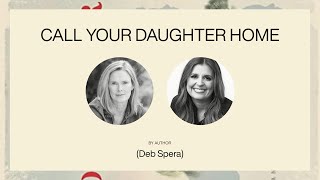
Transcript of a Holly Furtick YouTube book-club episode (Feb 18, 2023) about Deb Spera’s novel Call Your Daughter Home. Holly introduces the Low Country/Branchville, SC setting and summarizes main characters: Gertrude (young woman who kills her abusive husband Alvin in the opening), Annie (older woman, age 70, wealthy and emotionally blind to family abuses), and Retta (Gullah/African American woman, first free in her family). The interview with Deb Spera covers her Southern family roots and research in Branchville, her background as a TV producer, the book’s development (from five short stories to a novel), title history (originally Alligator; changed to Call Your Daughter Home after a scene with Retta), sales milestones (agent sale after auction, Oprah summer read, sold to Netflix), motifs (mockingbird anecdote) and forthcoming work (a sequel/next story tentatively titled Teeth in a Jar). Themes include faith, class, race, motherhood, survival, and intergenerational transmission.
Questions this video answers
February 18, 2023.
Branchville, South Carolina (Low Country).
Just before/during the Great Depression (early 20th century era context).
About 70 years old (Deb Spera states Annie is 70).
27 years old (Deb Spera states Gertrude is 27).
Chapters
In 2018, I had this great idea to start a book club. Mostly because I love books. I particularly love audiobooks, and I love forcing them on other people and then talking about them. And so I started this book club and I just put it out there on Instagram. I said, hey, read this book and then let's come together and chat about it. And I wanted to share those chats with you here on my YouTube channel. So I hope you enjoy this video. Okay. If you're joining us, we are here book club. Tonight, we're talking about this book, Call youl Daughter Home by Deb Spira. And you guys, how did you like this book? Please comment and tell me how you liked it. Hi, Deb, I see that you're here. I'm gonna get you on in about. Give me about five or 10 minutes. So I'm gonna set everybody up with the book. Deb is gonna join us tonight. How exciting is that? I love when we get to talk with the authors. Kelly says hello. Cynthia says hello. Emily, that's my sister, em. It says MJ 2000. She's saying hi to you, Deb. She's. She loved the book. In fact, I don't know if this is a little bit of a spoiler. Heidi says the book was really great. Emily said that Retta was one of her favorite book characters ever. And Emily has read a lot of books. So my mother in law, Faith, is on here. She loved the book. And actually. Okay, so let me get started and tell you how I came across this book. And then we're coming back to my mother in law.
So. So.
Hi, Donna. Did you get to read this book? I can't remember. I know we were talking. Was that this morning on Instagram? We were talking. My mom, Deb. My mom's name is Deb too. Deb Boitnot. She loved the book. Lisa Hughes loved the book. Rachel Heiser loved that. It was set in South Carolina. That's where I'm getting. Okay, so I have a friend that is actually one of my exercise instructors and she. Do any of you have a friend who every time they tell you to read a book, you love it? And that is my friend. Her name is Cheryl. I don't know if she's going to watch this ever, but if you're watching this, Cheryl, I love your book recommendations. And Cheryl comes up to me and says, have you read Call your daughter home? You have to read it. So I was like done getting it. So as soon as I wrapped up the book, I was listening to. I Downloaded this book and I was immediately done into it one over when I saw where this book takes place. So this book takes place in Branchville, South Carolina, which incidentally is where my. It's the low country of South Carolina. So that's where my husband grew up. So I have. Cynthia says I am that friend. Well, Cynthia, send me your book recommendations because I want them. Stephanie says the audio was awesome. That's what I did too, Stephanie. The audio. So my husband grew up in Moncks Corner, Deb. And we can talk about that when you get on, which is right outside of Charleston and low country of South Carolina. And I knew nothing really about the low country of South Carolina, except I'd visited Charleston before until I started dating my husband. And he introduced me to all kinds of great low country delicacies like boiled peanuts and chicken bog and. And those little pineapple and cream cheese sandwiches that you eat at a baby shower. I can eat myself sick on those. These are southern delicacies. Hi, Ellen. Ellen says she can't stay because she hasn't read the book. It's waiting on her at the library, which is closed. That's a bummer. Yes, Ellen. So don't stay because you know, everybody knows on our book club we talk about the end, we talk about spoilers. So if you haven't read the book, if you, you might want to, well, stay for a little bit. I mean, Ellen, you can stay for five or 10 minutes and meet Deb and we won't give spoilers till the end. So. Low country of South Carolina. So I read this book back before Christmas and I got my mother in law a copy. She loved the book so much she said she wasn't going to loan hers out because she loved it that much. And we got to talking because there are certain things in the book, like the revival where they go to camp that takes place. And I knew my mother in law had talked about that. That yes, LD Low country boil. But do you know what it's really called in the low country? All right, I am going to send a keychain to the first person who comments about what low country boil is actually called in the low country. It's not called low country boil. That's just what they call it on menus everywhere else. They sometimes call it that on menus in the low country. But anybody tell me what is it really called? Right, I'm going to keep talking and I'm going to wait until. Nope, not shrimp boil. Carrie. That's a good guess. Buford stew. You're getting close, Kayla, but that's not it. We actually served this southern delicacy at our rehearsal dinner. Faith, you don't count. Okay, Faith gave it away. Faith, I'm going to give you a keychain. No, Lynn Jasmine, I'm going to give you a keychain. Ashley, make sure you contact Lynn Jasmine and send her Frogmore stew. You guys frog more stew. That's actually called. All right, so where was I? Low country. My mother in law. So my mother in law, Faith is. Her dad was a Methodist minister.
Minister.
So they traveled pretty much. And she lived in several different towns in the low country. So she lived in Moncks Corner when she was a little girl. And then she ended up moving back there as an adult. She lived in Harleyville. I always get those two mixed up. Harleyville and Hardeeville. But she lived there and I forget where else. But anyway, Faith is the one who taught me about camp meeting. And she taught me about the low country. And she taught me how to make boiled peanuts. And so I was sold from the get go of just the setting of this book. And so I was talking with my mother in law today and she was telling me about Branchville. So I want to read this to you. She said this Branchville because my mother in law, she doesn't want to get on. Which is okay, you don't have to get on. But she. She wrote us something. Okay, here we go. Branchville is your small Blink your eye and you go through it. One stop light town. Maybe two. The railroad track runs through the center like a. Like small southern towns. Southern class dividers were alive and well even in my teenage years. Think of your own town. People with the pretty white Victorian style houses with big porches. Or your poor dirt. Poor dirt farmers. Writing through. I like to recall what were once grand homes. She says, you know I'm all about the low country. So this is more about the setting of the low country. She says I'm all about the low country. Just has slowness and ease that settles my spirits and even has a certain smell. You still refer to your elders as Ms. Jane or Mr. Jim. And even if you're 45 years old, yes ma' am and no ma'.
Am.
Niceties are still taught and expected to. Funerals are considered a social event. And we pull over on the side of the road for a funeral procession going by. There's no race when paying respect to the dead. And you know, you still better at least say hello. In the low country. Yes, if you're not from the Low country and you're ever passing through, make sure you wave at everybody because that's.
Just what you do.
And so I also love the time of this book. It takes place in the Great Depression. And, and you guys know that I love a book with strong female characters. And so this book. Hi, Deb, Meg's sister in law.
Welcome.
You guys know that I love books with strong female characters. And this book has three really strong women and it is just so great. So I want to get Deb on and I just wanna say before we get Deb on, oh, let me go over our main char because just in case and bring everybody up to speed. We've got Gertrude, who is. And chime in and tell me which one is your favorite character and who, who maybe who is your favorite or who did you like, relate to the most? So we've got Gertrude, who is sort of like a middle aged woman. She has, she has four daughters and middle aged. I don't know, I'm, I'm, I'm 40, so does that make me middle aged? I don't know. I imagined her as being about my age. She has four daughters and she's married to an abusive drunk who she kills in the opening scene. And his name was Alvin. Then we have Annie, who is an older woman. Yes, Stephen Keith Bell. This is a Cahills hat from Bluffton, South Carolina. Probably my favorite restaurant on the planet. And I, I guess Bluffton counts as the low country. And I totally did not wear this hat on purpose. I just love this hat and I love this restaurant. And they make the best ice cream, cookies and cream ice cream on the planet. If you're ever going to Hilton Head, you have to make a detour and eat at this restaurant. I can't believe that somebody just recognized my hat. And I also promise you I did not wear it on purpose. Okay, so we've got Gertrude, middle aged, kills her husband in the opening scene. And it is amazing. Then you've got Annie, who's the older one, an older woman and she's married to Edwin, who is a very powerful man in their town. And, and Annie and her husband are wealthy, but Annie was also wealthy before she married her husband, Edwin. So she has her own business where she employs the women in the town in a sewing circle. And we find out throughout the book that Annie has two daughters who have mysteriously moved away and refused to speak to her. And. Hi, Andrea. And then, oh, Deb says Annie is 70. Okay. And so she's got adult children. Her daughters have moved away Refused to speak to her. She. We find out that she had a son who committed suicide when he was 12. And then she has two other sons, one who works for her with her business and one who, who works more with her husband. And then we have Retta, who is an African American woman. She's the first free person in her family, but she works for Annie, whose family owned her family, if that makes sense. And so Retta is married to Odell. And you love these two characters like they're the heroes of the book. And Retta, to me, she represents hope and how she's optimism even though she's lived a really hard life. And she had one daughter who passed away. And so. Okay, let me hear from you. How did you feel about these women? Carrie says Retta was a strong and good hearted person and she didn't care what people thought. She was going to do the right thing no matter what. Lonnie Sutter. That's right. Lonnie was one of Annie's sons. And he stuttered. And I have a theory on why he stuttered. The, the palette pleaser loved Retta. Of course, my sister Emily loved Retta. Um, let's see, we love them for their strength, these characters. We love Retta and Odell.
Uh oh.
What else is everybody saying?
Let's see.
Retta was amazing. She always tried to do her best. Hey Kristen. So Jennifer says that I'm teary just hearing you outline Retta's spirit. She really was an amazing character, one of like, truly such an enjoyable character to read and in the book. So, all right, we've got our setting, we've got our main characters. So many great themes in this book and I just. Let's get Deb on and let's ask her some questions.
Hi there. Hello. How are you? Good, how are you? Nice to meet you via Instagram.
Yeah, nice to meet you too. How are you surviving during your social distancing quarantine?
I'm surviving. Lots of dog walks, lots of exercising and writing and talking to people via Zoom. You know, all is good.
It's a it. I would imagine it's a good time for a writer because you have no excuse to do anything except write.
You don't. But you know, like everyone else, I'm struggling with a little bit of focus and concentration. I'm worried about people that I love and worried about those across the country that are struggling financially. Trying to stay in the moment.
Yeah, it's hard.
Yeah.
Well, thank you for joining our book club. I'm super excited. I Think it's really special. When I was looking on your website and listening to a couple interviews that you had done today, one of your first interviews, you said, and I'm going to book clubs. I want to come to your book club. And I just think that that's really great because there's nothing like reading a book and then getting to actually meet the author afterwards. And we all enjoyed your book so much. So start us off and tell us, like, why did you pick Branchville, South Carolina?
Let's see. I'll start off by saying I think it's a little known fact that the boll weevil infestation decimated the south during. Before the Great Depression. Actually, this takes place just before the Great Depression. And a lot of people were plunged into dire poverty and many starved to death. And my family was no exception. When I was small, my mom had me when she was 16 years old. So I spent a lot of time with her mother, my grandmother. And Mamaw was raised in Branchville, South Carolina, and I grew up in Kentucky. But Mamaw used to have a morbid fear of worms. And she thought they were caused by unsanitary conditions. So almost Until I was 11, she used to bathe me in this little tiny bathroom. They had one bathroom in the house. She'd sit on this little white wooden child's chair, and her butt would be rolling over both sides. And she'd have a cigarette hanging out of the corner of her mouth. And she'd wave her head back and forth as she scrubbed me. And that was when she would talk. And she talked a lot about desperate times. She talked about being hungry. She lost her teeth when she was young due to malnutrition. When I was small, we used to go to Branchville, South Carolina, to visit my great grandmother, Mama Lane. Mama Lane was just a kind of a stoic, quiet woman. She had five kids. Her husband died when they were young, so she had to parcel them out to relatives so that they could eat. She repurposed everything. An old dress became an apron. There were pecan trees in her yard, so we would always shell them and put them up for winter. There was no running water, no bathroom, so there was a pump by the back door. We used the outhouse. We bathed in the kitchen. She was just a remarkable, you know, sturdy woman who just survived. And my grandmother Mamaw was the only one to ever get out of South Branchville, South Carolina. Many of my relatives are still there. And when I was writing this book, I went back and did a lot of research in Branchville and revisited old stomping grounds. So that's how I was influenced. I wrote this book for my mama, who worked every day of her life. She never sat down to read a book until she retired at 71. And she was a lunchroom lady for all those years, feeding. Wow. And I always wanted. Right before she. The year before she died, she started reading for the first time. And I thought when I started this, I wanted to write a book for her, a book that I knew she would understand the voices, that she would understand the circumstances, that she would understand it and go along for the ride. So what I. What I wanted to write was an adventure for her and with characters I thought she might recognize.
Yeah, that's great. Tell everybody how you came to writing this book, because I know that you. You were a TV executive for years and years and years. And so what made you leave production and. And write such a great story?
Well, I haven't left production. I'm still doing it. But about four and a half years ago, I had a lull in my work. I wasn't shooting anything, and several projects that were teed up to go for whatever reason fell through. And I had this overwhelming urge to create something of my own. I've been a midwife to other writers for 30 years. I've been producing television for 30 years. I've produced probably over a thousand hours of television. The most pop are Criminal Minds and Army Wives, But I've done many more. And so I had always had this idea that I wanted to write this little tiny book, a little novella that consisted of five short stories about five generations of women from the same Southern family. Because I wanted to understand what it is we pass down from generation to generation. And I wanted to understand how one family rises from abject poverty and dependency in a patriarchal society to autonomy and prosperity in my mind's eye. That took five, five generations. I wrote those short stories. And through several different circumstances, it landed in the hands of an agent, a literary agent in New York. And she read them and called me and said, I don't think these are short stories. I feel like these are novels in disguise. And I want you to start with the first short story, and I want you to turn it into a novel. And by the way, I want to represent you. And then I hung up the phone, and I cried for two weeks on the couch like somebody shot my mother. Because I was always the midwife to other writers. I was not the writer. And so I was really afraid. I was surprised at how scared I was. Because I thought, I don't know how to do this. And when she finds out that I don't know how to do this, then, you know, it's over. But then I said to myself, you know what I'm going to do? Every day, I'm going to write for one hour badly. I'm going to write as poorly as I can. And I sat down on my back deck and watched the birds in the neighborhood and just started. Every day, I would do one hour of just what I thought was bad writing. And in five and a half months, I had a first draft. And then she gave me notes, and five months later, I had a second draft. And before the year was out, she sold it in auction with five major publishing houses bidding on it. And. And then when it came out, Oprah picked it as a summer read. And it's just been magical. I just sold it to Netflix. I'm writing it for them. It's been a real surprise to me to be on this journey, but it just goes to show you, if you just face the thing you're most scared of, then your past opens up in a way that you don't anticipate.
Yeah. And sometimes what you're scared of is what's inside of you. Okay, so in one of the interviews that I watched today, you said something that just I thought was brilliant. You said that character drives the story, not story drives the character. So which character did you start with? And how did you. How did you develop this storyline around these women?
What a great question. I started with Gertrude. The first chapter of the novel is the short story.
Okay.
It was. It was originally called Alligator. I started with Gertrude and I, which, by the way, that story was the last of the short stories I wrote because I couldn't hear the voice, but once I wrote that, I could really hear Gertrude's voice. And then I thought, who else populates this story? As an exec, as a producer, and as a television producer, I always believe that you can find the clues and answers to your questions within the writing itself. So when my agent said, I think this is a book, I went looking into the. In the story. And I thought, what else is in here that I can. That I can expand upon? And I saw Retta and Annie and realized that they were so disparate, that they were. So. They were. They were divided by race and class. And I wondered what it might be like to unify three disparate women against a greater evil, against a common enemy, if you will. And so that's how Those characters started to come to life to me. They actually. I could. Started to hear them. Annie was the hardest. I had to rewrite her twice because she was just a. I had a sense of her, but I didn't have her completely because she's the most blind of all the characters. So it took me a while with her, but I eventually found her.
Okay, so I want to come back to Annie, but tell me which character? So Annie was the hardest. I've heard so many authors say when they finished writing the story that they felt a sense of loss, that, like, their friends had left their life. Their friends had died or gone away or whatever. So which character, when you were done, did you miss the most?
Gertrude. Really? Gertrude is a tough, tough cookie. You know, she is. For me, she has the. She changes the most over the course of time. When we meet her, she's feral. She's closed off. She's lost hope. And by the way, she's only 27 when we meet her.
Oh, so she's not my age.
She's much younger. And, you know, she was married off in an arranged marriage at 13. You know, she was in an abusive marriage since she's been 13. So I was interested in her, how all her darkness, her belief that there was no hope, how she started to open up to incorporate hope. I love all the characters, but Gertrude I have the most, maybe, empathy for.
Yeah, I loved Gertrude and I loved her development because I feel like Retta and Annie, you know, they were in the end stages of their lives, and so there wasn't as much development. But with Gertrude, you had this, like you said, darkness and grit, and you wanted to see, and you started to see her rebuild her life, and you really were cheering for her. And that's one of my favorite things in a book, is when you just get behind a character and you're just cheering for them to get a win. And so I did. I also really loved Gertrude, but, of course, Retta also had that, like, special place in my heart.
So I do.
I want to go back to Annie and ask you. So in your mind, do you really think. Okay, spoiler alert, guys. If you haven't finished the book, you might want to get off now. But do you really think that Annie. Because. Okay, did you do it on purpose that Annie was blind and Retta could see? Because, like, Annie was blind to what was going on in her family? And really, to me, quite selfish. If you couldn't see what was going on right beneath the surface, it made me not like her. Like, if she really didn't know what was going on. I was like, how could you not know? But then you've got Retta, who has this ability to see beyond and to feel. To feel beyond and just have this just beautiful perception, not of just, like, the here and now, but of like, what was coming. And so. And she had so much.
You.
You did so much. Oh, the word is slipping me. You know, where you kind of, like, give little hints, foreshadowed, foreshadowing. All I could think of was foretelling, not foretelling. So you've got Retta, who's just foreshadowing. You got Annie, who's clueless. I'm guessing you did that on purpose. But was Annie really that blind, or was she just. Just unable to admit it?
I think there are a couple things to make note of. One, think about the time period. The early twenties, something like this wasn't talked about and wasn't. Just wasn't on the radar for a woman like Annie, who grew up motherless. She grew up motherless. She grew up predominantly influenced by her father. She. She has no faith. None. She doesn't believe in God. She doesn't believe in. And Retta does. So I really wanted to explore what faith or lack of faith does to a human being.
And it was sad.
And I think that, you know, she. The death of Buck confused her so much. Like, she's gone over and over and over it in her mind, and she cannot figure out what happened, why he chose that. You know, I think when you have children and a lot of them and you grow and you have such enormous amount of property, you know, they run free, it's hard to keep track of all of them. But also, too, she couldn't. She. Sometimes when you're so busy, you can't see what's under your nose. And when she realizes what's been happening, then all the clues that she should have noticed then come back to her now. You know, I used to be a grief counselor. And one of the things that I learned in that is that whenever we experience anything, any significant emotional loss, our brain goes back and it picks up every single thing you wish could have been different or better or more. And Annie does that. When she discovers the truth, she goes back and picks all those clues up, like her daughters, why they're not speaking to her. And when they were little, they were obsessed with miracles. Why the Sunday school teacher had to come to her and say, you know, your daughters won't speak. Stop. You know, Buck wanting to sleep with her at Night because he was scared of the dark. Every single night she.
Right.
Every single morning, she'd wake up and he'd be at the foot of her bed. You know, these things that she realized were a little off. Now, in retrospect, everything makes sense. Right. So I. I mean, also, too, I did a lot of research on all these characters, which I can talk more about in a minute, particularly with regard to Retta. But Annie, you know, and I have. I have. I know some women who experienced incest when they were young. And the mothers never.
Oftentimes they are very blind to what's. What's going on.
Yeah, it's true. It's so. It's so upsetting and confusing and it feels so wrong. And that's why when she discovers it, she feels like she needs to take herself out, she needs to kill herself. It's going to be best for everyone. She's going to do this and she's going to take her husband down with her if she can, and that's that.
And it's so. In some ways, I was so mad at her for the way that she goes on this hunger strike because it's like really, like that's kind of selfish and really self absorbed to just. That's the way you're going to choose to die. You're just going to stop eating. But then when you really think about this woman and everything that she's come to terms with, it just. She just can't. She can't handle it. But she also doesn't necessarily want to end her life.
She was.
My sister just commented. She was so stubborn. She really was. I could never go on a hunger strike. Personally, I'd have to find some other way to end it all. But I liked how. I liked how it affected her that deeply that she was just over with life and with everything. Okay, so can you talk to us a little bit about the title of the book? Because I love this title. I mean, I just. I love. I'm really big on titles. I think the title can really make or break the book. Not in the sense of it makes me pick it up necessarily, but I just love when you get to that part in the book where you realize, oh, that's why it's called this. It's just such a great moment, I think, as a reader. So I know the ladies in my club. I guess there's some gentlemen in the book club, too. They would love to hear how you came to that title.
The original title was Alligator, and it was always Alligator. And it's the only thing I could see, because in my mind's eye, all three women were alligators. They were all reptilian. They all were, you know, alligators, the only reptile in the reptile kingdom that protects their young. They. They take. They take care of their young for six months until they. Until they learn to fend for themselves. And I. So the metaphor of an alligator was very prominent in my mind when I wrote this. And then I got a call from the publisher saying they had. We had. I had to change the name. And they said, because whenever you did a Google search of alligator, what came up was Florida or children's books. So they said it wouldn't stand out in the market. I had to change the name. I. I struggled with the name change, and they sent me a bunch of examples that are suggestions that I just didn't. Didn't like.
Do you remember any of them?
I don't. I don't remember any of them, but I. I remember one night I was in North Carolina on a location scout for a show that I was shooting, and. And I called my agent and said, tell him I'll give the money back. I can't. I don't know. I can't think of anything. And she said, we're not giving that money back.
So you're ready to walk away from an entire book a year more. More than a year of your life just because you can't come up with a title?
Well, a. I was exhausted from. From working full time. I couldn't. They. They needed a title, like, quickly. I couldn't think of anything. I didn't like anything they were giving me. I just. I just. She got. She. I got her on a bad night. It was a bad night. So the next day, she. I sort of thought about it, and I thought, you know, whenever I. Whenever I'm reading a book, oftentimes I find the theme in the middle of the book. Let me just open to the middle of the book and see. Just blindly see where I land. And I landed with Retta helping Nellie give birth. And she says, call your child home. Call her home.
Such a great scene. I mean, one of my favorite scenes, probably my favorite scene in the book. And she's, you know, birthing. Helping this woman birth her child. And the child is about to die, and she's. And she, you know, says, call your daughter home. Call out to her. What's her name? Call out to her. And it's just a really, really gripping scene. Everybody's commenting, too, that they love that scene.
Thank You. Well, when I. When I thought about the title, it resonated on every. Every single. Every single aspect of the sh. Of the story. It resonated with Gertrude and her daughters. It resonated with Retta and her daughter. It resonated with Annie and her daughters. It resonated with Retta and. God, it resonated in it. With Retta and Gertrude. I mean, every. Everywhere I looked, it resonated. And that was it. And they loved it, luckily. And. And I like it much better than Alligator. I'm so glad I hunt. I do, too. Yeah.
I think it's funny because sometimes it's so tempting to go with the first idea, but usually the first idea isn't the best one, and it's so hard to push through the better one.
Yeah. Titles are just tricky. But I'm glad it worked out.
Yeah. I mean, I just thought the title was brilliant. Okay, so two more quick things before you go. First of all, I would love for you to quickly tell us about when you were writing the book. Okay. I love birds, and so this is really mostly for me, but tell me about the mockingbird that visited you every day while you were writing the book.
That bird. You know, my. My son kept saying, mom, you're crazy. I'm like, I'm not crazy. That bird. I would whistle this tune over and over, and then that bird started whistling back. And, you know, when you sit out on your deck every single day at the same time of day, you start to get to know your neighborhood birds. I knew the hawks that flew over. I knew the birds, the doves that built a nest under my awning. I knew the birds in my yard, the hummingbirds. But this one mockingbird kept coming back, and it got into our house three different times while I was writing. One month in one month's time. And the first time, my son and my husband shooed it out. The second and third time, I caught it in my hands and let it out the back door. And then the next morning, after the third time, I opened the back door to go outside. It was standing on the back porch to come in, waiting for you. It was the strangest thing. And when my mama was dying, she died of liver cancer when she was 72. When she was dying, I said to her, and I was. I live in California. So as far away. I spoke to her as often as I could. I miss her so much to this day. And I said, mama, when you get to the other side, if you can, can you just please give me some. Some sort of sign? Any kind of sign. And she said, I will. It'll likely be in the form of a bird. And so when I was writing this, this book, I really felt like I crossed over the veil into the, into the veil, the thing that separates us from here and there. I felt like she was with me. I felt her with me. And so I don't know if that mockingbird had anything to do with her, but I, you know, I choose to believe that she is with me. And.
That'S really beautiful. I really, I really love that. Okay, so I've heard you share before that you were just a voracious reader as a child. I'm assuming you still like to read. So can you tell us one of your all time favorite books and one of your favorite like current reads that you've read in the last year or so?
Well, I love Gentlemen in Moscow for the, in the last year. I thought that was a really fun book. I also love Jesmyn Ward's Sing Unburied Sing. So those are the two current ones that I've. That I've read and loved.
Is Gentleman in Moscow, written by the same person that wrote. I can't think of it now.
Rules of Civility, I think it was.
Okay, I haven't read that one.
A M O R T and his last name, T O W L E S. Okay. I love that book. Okay. And then my favorite author of all time, I have two. One is Wendell Berry who is a Kentucky farmer and he's written so many books. My favorite book of his is Jaber Crow, but I've read them all. He's also a poet in an essayist. He's a, he's just a beautiful, a beautiful writer and I just love the characters he writes about because he can write about community better than anybody I've ever met. And then the other one I love, who was his teacher was Wallace Stegner who wrote. Who got a Pulitzer for Angle of Repose. But I also love Crossing to Safety is one of my favorites. But my very favorite of his is all the Little Live Things. So those are my two favorite authors. I have many women I love as well. Marilyn Robinson Gilead is a favorite. Housekeeping. I could go on and on about the books that I love.
Yeah, Jaber Crow is in my, is in my wish list. Another lady, a reader that I follow, she was like going on and on about that book, but I've never read anything by him. So I'm gonna move it to the.
Top of the list. Start with that one. He write the Almost every book he writes is about a town and all the characters that inhabit that town. And Jabeur Crow is the barber of this town. And it's just beautiful. It's really beautiful. It's really a love story at the heart of it.
Can't wait.
There's that. I do want to say something really quickly, if I may, about Retta. People love Retta so much. And I. I was very nervous about writing a black woman because I'm a. Obviously, look at me, I'm a white Southern woman, and what right do I have? But my great aunt Louise, my mama's sister, was a hard, hard woman. She married a man who was in prison twice for murdering men, two men. And she was just the toughest woman I've ever met. And her best friend was a name, was a woman named Ms. Oretta Miller. And they had this unique friendship. Aunt Louise didn't have any friends, but Retta was her friend. And Ms. Oretta still lives in Branchville. And I spent so much time with her talking about this unique friendship, talking to her about her faith, and talking with her about her race. And so I felt better having spent that time with her and wanted to honor her. And that's how Retta came to be. I named this character, obviously after her.
That's so awesome. Stephanie wants to know, was Retta Gullah?
Yes. Well, yes, she was Gullah. And you know, her family was. Were all slaves. And she was born on the day of the freedom came, the day of patience. So, yes.
And really quick, before you leave, tell us, are you working on anything next?
Yeah, I'm working on that second short story. These five stories really track this one Southern family. So Mary, who's only, you know, six years old in our book now, who's the one who's starving to death? Well, they're all starving to death.
The one with the worms, the one that Retta brings back to health.
This book is her as an adult and she migrates to Kentucky. It's her story and it's called, right now it's called Teeth in a Jar.
Oh, that sounds amazing. Thank you so much. We've really enjoyed getting to know you and hear more about the book.
Thank you. What great questions and I just appreciate everybody reading. And if everybody, if anyone liked it, I recommend you leaving a nice review on Goodreads or Amazon. I just appreciate all the attention and thank you. Your questions were amazing.
Oh, thank you. And hey, my mother in law, Faith, I forgot to tell you this because we didn't get to talk about the camp meeting. Oh, she still goes to that camp?
The one in St. George?
Yes. Indian field camp meeting. She still, like. She doesn't go every year, but she's been in the past, like, five years. She's been, I think, twice. She meets her friends and everything.
Look it up. Look up Indian Field Campground. It's the most unique setting you've ever seen in your life. I loved that place. I can't wait. I want to go to camp. I haven't been. I haven't been for this celebration. I've been. When nobody's there. Right. It's a pretty great place. That's awesome. Thank you, Deb. Have a great evening. Thank you. Thanks, everybody.
More from Holly








The Ultimate Packing Guide: Nurturing Your Soul with Gratitude for the Journey Ahead


