Cooking with Danielle Walker | Lunchtime Live Interview with Holly Furtick
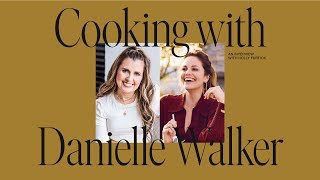
A livestream interview (host Holly Furtick) with Danielle Walker, author of Food Saved Me and founder of Against All Grain. Danielle describes her diagnosis of ulcerative colitis at age 22, how changing to gluten-free/dairy-free/grain-free cooking helped manage symptoms, and how that led to blogging and multiple cookbooks; she promotes her memoir Food Saved Me. The video includes a detailed cooking demonstration for "Real Deal Chocolate Chip Cookies" (ingredient choices, techniques, and storage tips), discussion of family and lifestyle approaches to food, and a giveaway at the end.
Chapters
Hi guys. I've got a special treat for you today. I just got to interview Danielle Walker and my kitchen is a mess because we cooked together. Danielle is the author of this book, Food Saved Me. She's also a New York Times best selling cookbook author. You may know her from her blog, Against All Grain. From her Instagram. She's all over the place because she has spent the last decade creating delicious recipes that are gluten free, dairy free, grain free, all because, because of her own personal health. And I can't wait for you to hear her story. I gotta tell you, these cookies are absolutely delicious. We've got a giveaway for you at the end, so be on comment. If you're watching this live, we'll have a giveaway that we're gonna give away in the comments. It's a copy of her book and this beautiful little apron. So I can't wait for you to watch this. I hope you enjoy. Hey, Danielle.
Hi. So nice to meet you. Thank you for having me here today.
Oh my gosh. So, so nice to meet you. I am a big fan. I've been following you for a long time actually. And so I was so excited when I saw your book was coming out because I thought this would just be the perfect opportunity. I love to cook. I love to cook with people virtually. I love to cook with my kids. I know you love to cook with your kids, so I'm super excited. So the first time that I was ever introduced to you, I was on hole 30 several years ago and I texted a friend of mine and I said, do you have any taco seasoning or do you have a taco seasoning recipe? And she sent me a picture of your taco seasoning recipe out of. I think it's Against All Grain. Is that the one that is Made.
Simple Meals Made simple the second cookbook. But it does say Against All Grain at the top, so it's a little confusing.
So she sent me that one and that was sort of my first introduction to you. I loved it and been following you ever since. I love, like I said, watching you on Instagram and I love your recipes, I love your book. So this is your new book. I just finished it. I just really enjoyed your story so much. So will you bring us, like, give us the very brief version, bring us up to speed of your story and how you sort of got into this whole cooking thing?
Yeah, well, first of all, I love that you picked the recipe we're making today because I wrote a story about that in this new Book Food Saved Me. This is my first non cookbook, first of all. So that kind of gives you a little bit of a picture of what has brought me to this point. I've written four cookbooks, but I started out as a blogger and before that, and what got me into blogging and making this type of food and sharing my journey and story was I was diagnosed with an autoimmune disease called ulcerative colitis when I was 22. My husband and I had been married for probably about eight weeks when I finally got my diagnosis. So it was pretty quick into newlywed life. And I spent a lot of years really, really sick and on really high doses of medications that were kind of causing more side effects and symptoms than they were actually prescribed to help. And I ended up finding that food while wasn't a cure because my disease is not curable, I will have it for life. It helped me manage the day to day symptoms, and it really gave me back so much of my life. I mean, I titled the book Food Saved Me and it has in so many different ways.
And the interesting thing in your story is when all of this was happening, we were just being introduced to the idea of eating gluten free, and nobody even knew really what that was. And then you started seeing it on. On products all over the grocery store that, like, if you know what gluten is, you're like, why did they put gluten free on there? I mean, it's like applesauce or whatever, like something that is always gluten free. And it started being like a selling point. You'd hear people talking about eating gluten free. And so you came along, and I think the coolest thing about your book is you just decided, I need to change my diet, but I don't have to eat food that doesn't taste good. And you just decided, I'm gonna figure out how to make the recipes that I love with the ingredients that I can have.
Yeah. Yeah, exactly. At that point when gluten free was kind of starting to boom and you were seeing it on everything, a lot of it tasted like cardboard. We've come a long way since then. That was probably, gosh, 12 years ago. But yeah, you know, I was young, but I had all of these ideals of what I wanted my life to look like. And I grew up in a family where it was modeled to me that we could show our hearts through the food that we put on our table for our family, for our community, for our neighbors, you know, our kids. And I didn't want to lose that. So, yeah, I got into the kitchen and I just started through trial and error, testing out different recipes and new ingredients subbed in for, you know, the things that I used to love. And. And that's kind of where the blog started.
So I learned so much while I was reading your book. First of all, I love audiobooks, and I really love an audio book while I'm cooking, and I love books about food. So I was actually cooking while you're in the opening chapters of your book, while you're talking about all these comfort foods like lasagna and all these crab meat and all these foods that you ate as a child that you loved.
And.
And so it was, for those people who love books about food, I just thoroughly enjoyed, like, the amount of detail that you went into talking about your love for food. Just really had me hooked. And the part of your story, though, that was so special to me is that you end up in this. You're in this space where you've been diagnosed with this disease, and you start praying for healing, but the healing didn't come the way that you thought it would. It came actually through a lot of work. But I think what's so amazing is how your food, how your work enabled you to help so many people. And even though you didn't get the healing that you thought that you could or should, the healing that you did get enabled you to help thousands and thousands of people find their healing through what they're putting in their bodies.
Yeah. Yeah, it's true. I get to talk for the first time in this book because you can't really talk about those things in a cookbook. It's gotta be recipes. Just about that journey of, you know, being diagnosed really young, growing up with what I now feel like, you know, is a somewhat superficial faith. And I think a lot of that's the beauty of being young and not having to go through a lot of hardships, is you do get to have that, you know, very surface, just really great, childlike faith. And. Yeah, I mean, at 22, you know, being faced with something like that, and then I go briefly into losing our daughter in the book, and then just all of these bumps, you know, I mean, I think the biggest thing that I wanted to have come through in the book was that it is always a journey, and I have never had a perfect journey. And those are the times, though, that it is. It's really difficult, you know, on my faith, but getting to look back and especially read and see everything that has happened since Diagnosis and since those early days of, of crying out and being like, why me? And just heal me now. If I would have been healed the way that I had hoped for and prayed for at the beginning, I wouldn't be doing what I'm doing. And I don't know if somebody else would have shared the message of healing through food. But yes, I mean, I've seen hundreds of thousands of people share their stories about their various autoimmune diseases, their various chronic illnesses, just everyday aches and pains that they've been able to manage through food and through using my recipes. So well, it doesn't make it any easier to go through what I've gone through. It certainly gives it purpose and keeps me going and gives me so much hope.
I love it so much. I feel like you were a pioneer of sorts in the field of cooking and you were just like, you know what? We're gonna figure out how to make some of these foods and make them taste good. And so that's what we're gonna do right now. We're gonna make sure chocolate chip cookies. Now, I have actually never made this recipe before, and so I want you to talk me through it and I want to ask you a couple questions about some of the ingredients that we're going to use, because I feel like in the last 10, 15 years, food and ingredients have really come a long way and there's so much more available. So I want you to talk us through the ingredients too that we're going to be using and, and some of the health benefits and also like the sciences that you figured out in baking. I loved particularly the chapter where you were playing around with combining coconut flour and almond flour. And I had never really, I've never really played around with that that much.
So talk us through it.
Let's go. We're gonna make the. They're called the real deal chocolate chip cookies.
So let's start with the fat and we'll. And I'll talk through the sugar because we're gonna be kind of putting all those things in.
Go ahead and preheat your oven.
So I found palm shortening as a baking alternative. I found it online and found out that it could really work well as a very even butter substitute, but completely dairy free. And it had a really high melting point, which means that your cakes and your cookies kind of stayed nice and fluffy.
I have ghee.
You can do ghee? Yes. So at the time, I was doing absolutely no dairy at all. So ghee I was able to add in a few years Later. And the beauty of ghee is it has this buttery flavor, but it's free of lactose and casein, which are the two proteins that the majority of people that have issues with dairy cannot process and digest. So it's not a dairy free product. If you have a true dairy allergy, it's not exactly the best thing, but it's really great if you just have like some sensitivities and you can still get the buttery flavor. So, yeah, go ahead and put in the quarter cup of ghee. It's just an even sub. And then our one egg. And the lovely thing about these too, and I just, because of what I do and because I'm constantly in communication with my readers and followers on social media, I've just been aware at how many allergies there are. And so these cookies can also be done egg free. If you have an egg allergy that only has one. Usually when there's not very many eggs, it's a lot easier to substitute than when there's lots. So go ahead and put your one egg in there. And then I'm also going to add our two different sweeteners and then we'll process this before adding our flours. So coconut sugar, it's also called palm sugar. It's just made from taking the SAP of the coconut, like the nectar, and boiling it down and turning it granulated. And with that, just your question about kind of the science of some of that. First of all, I found that coconut sugar has a low glycemic index. And so it wasn't spiking the blood sugar as much and causing as much inflammation. And so I loved that. But then I also started researching just, you know, the different. Because you see lots of different things in a chocolate chip cookie, but for the most part, there's usually brown sugar and there's white granulated sugar. And so I started kind of digging in and trying to figure out what does the granulated sugar do. And because at that point I just put in honey, two tablespoons of honey. I was only using honey and everything just tasted like honey, first of all. But also it was kind of soft and chewy and wasn't giving me kind of the little bit of crispness that I wanted. And so by combining those two different sweeteners, I ended up getting that texture that I wanted. So we're gonna go ahead and put it on our lid. Yeah.
So I have a couple questions. See, I have my pretty measuring cups, but they're not very accurate.
Yeah. Does it matter?
With cookies.
Cookies are a little more forgiving than a cake. And quite honestly, grain free baking and gluten free baking I think is a teeny bit more forgiving than traditional baking. For your sweeteners, if you're a little bit over or under, you're going to be totally fine. The bigger issue I'd say is actually the coconut flour. We can talk kind of about its properties when we get there. But yeah, if you're a little over a little under on your sweeteners, you're going to be just fine.
Okay, so here's my next question. Okay, I'm supposed to put the honey in here too, right?
Yes, go ahead and put the honey in. We'll process that for a little bit. What we want to do is process it for about 30 seconds to a minute to give it the dough some really great air bubbles. And that's just going to help the texture as it makes.
Okay, before I do that, I want to ask you about all my different sugars. Okay? Yes. So tell me. Because in our family we don't really have any allergies as of yet, but we try to eat lower carb on the low sugar end for health benefits. Also. I think that it affects my sugar, affects my children and all of that.
Yes.
So sugar sweeteners, I mean, even in the last like three years, I feel like there's just like the world has opened up. So we have like so many. We have swerve. I've got monk fruit. Yeah, I've got, I've got. This is swerve granular.
Okay.
I've got truvia, brown sugar. And then of course I have regular confectioner's sugar and brown sugar. And I know what those do. So tell me, like, if I was gonna sub out, can I sub this like truvia for the palm sugar, would that still give me like that brown sugar taste?
It would give you a similar taste. I have to be honest, I don't use any of those because they're really processed and they all have sugar alcohols in them. If you flip the, you know, and look at the ingredients, they're going to have a few different ingredients in them. So monk fruit I think is the best one. But it's pretty difficult to find pure monk fruit sweetener. They usually have added ingredients. So I try to stick to the single ingredient, the least processed. So the coconut, sugar, maple syrup, maple sugar and honey. Like if you're going to look at those ingredients, you're going to find just one and only one ingredient.
Okay, so now I'm going to do my honey.
Yes. And any honey will work. It's not a huge amount. So. And we are baking them. So, you know, I mean, your raw honey is going to get heated, so you don't want to spend too much on it. But I kind of like a lighter flavored, lighter honey just because it doesn't overpower, but it mixes really well with the coconut, so it works great. And then in terms of machinery, you have a stand mixer, I have a food processor. Both will work. Quite honestly, you could also just do this one by hand.
What's the difference between using a food processor and a blender?
So, you know, a blender works really well for more of a loose kind of batter. I use a blender all the time for muffin batters, things like that. But this dough, you'll find is a little thicker. And with a blender, just because it's tall and a little skinnier, while this is wide and has a bigger blade, it's just a bit harder to get it moving around. You can absolutely use a blender, too. You're just gonna have to use that plunger or stop every once in a while and kind of use a spatula. So it's just a little more. And so I use them kind of for different things. So go ahead and turn your mixer on. Yeah, about 30 seconds or so. And by the way, we're not fully following this recipe to a tea. I think I put a couple things in, and we're just going to process it all, and then we'll add our dry ingredients after that. So it's going to get loud in my kitchen for a second because this is my turn. A stand mixer. So here we go. Okay. So just creaming the fat and the sugar together just helps give these a really nice chewy texture.
Was I supposed to do the vanilla and all these other things or not yet?
You can. No, we can do the vanilla at the end. It doesn't matter as much. It's really just getting the whatever fat you're using. The ghee, your palm shortening, even if you use butter, just getting it in there with the sugars and kind of getting it really nice and creamy. So, yeah, the vanilla is kind of one of those leftover ingredients we can add at the end. It doesn't matter too much. So now our two flours and yes, like you mentioned. So for a long time, when I was first following some recipes that were kind of on the GAPS diet or the SCD specific carbohydrate Diet. I kind of talk a little bit in there about how that was my first intro into gluten free and grain free baking. Everything that I kept testing out that other people had written were all just almond flour based. And I love almond flour and we're going to use it. That's what I'm dumping in now, a cup and a half. But it was causing muffins to kind of sink. It was also causing cookies and cakes to be a little too greasy. And I realized when I was roasting nuts one day that you roast nuts or you toast them on the stove because it brings out their natural oils and it makes them taste really delicious. And so I figured out that as you're baking with almond flour, it also kind of releases some of those oils. And then coconut flour kind of came onto the market at that time. And I baked with just coconut flour and found that everything was just too dry. And I was like, okay, well, why is it so dry? And when I realized what coconut flour was, it is essentially just dehydrated coconut. So all of the moisture is sucked out of it. And then they process it into a fine powder. So as soon as it hits any sort of liquid, it just kind of like sucks it all up. And I realized that if I combined those two, that it could kind of suck some of the oil from the almond flour and also kind of make things a little bit more cakey instead of that dense, kind of gritty texture that I was getting. So that's where those two came about. And I've baked that way now ever since. I mean, I hardly have any recipes where it's just one single flour. And, you know, I realized it. I mean, besides all purpose flour, like when you flip a label for gluten free flours, you'll find five different flours and starches on there. And because they all have different properties, some make things crispy, crispy, some make them cakey, some will make it stretchy, you know. And in order to get the texture that you lose with glutenous flours, you have to kind of use different ones that have different properties. So, yes. So two tablespoons coconut flour. We've got our cup and a half of our almond flour and then our last couple ingredients before the chocolate, which is the most important is baking soda. Half a teaspoon. And, you know, the amount of salt that you put in is kind of up to you. I think I call for, I might call for a quarter teaspoon or a half a teaspoon. I can't Remember, off the top of my head, I've made these so many times, I just kind of eyeball it. But I love a bit of saltiness on my chocolate chip cookies. So we can go ahead and put our vanilla in now, and then we'll go ahead and process again before adding our chocolate. So I'm gonna put this back on, and I'm gonna let it go for a couple seconds here. I'm gonna stop and scrape down the side of my food. I don't know how your stand mixer's faring, but I did get some of my flour kind of up on the side, so I just want to make sure it's all incorporated.
Smells delicious.
So now we're good. Now we can add our chocolate. And, you know, I call for multiple types of chocolate. I use, like, a very dark, like, a 75% cacao, and then I use a little bit of a lighter one. Yes. I have those Enjoy Life ones, too.
Okay, so this is dairy free chocolate.
Yep, yep.
I've never bought this before.
Yeah. So Enjoy Life is a really wonderful brand, especially if you have kiddos with allergies. It's free of soy, which there are, believe it or not, a lot of chocolate chips and chocolate bars that have soy in them. And then, of course, a lot of them have dairy for the milk. So I like to combine. I like to combine these little minis, the Enjoy Life. And then I have a local San Francisco brand that's called Guittard, and they're some of my favorites. They're pretty dark and deep. They're probably like 75% or 80% cacao. But the more cacao you have, the less refined sugar. Okay, so let's grab our baking sheet. You're going to want to have two pieces of parchment paper. So if you don't have a cookie scoop, I would get one. They're awesome. You don't have a cookie scoop. You need to get one. They're like $5 on Amazon. It's so great for any batters, and then it makes everything uniform shape. So I got my parchment over my cookies here, and I'm just gonna push down, you know, firmly. They don't need to be, like, pancake thin, but they won't spread much, much more than where they're at before they go into the oven. So it just kind of depends how you like your cookies. Yeah, very easy. Okay. My oven's over here. I'm gonna put these in, and then I'll come back. I'm gonna check. I'm gonna check on mine at 11 minutes. Just because we don't want burnt.
I just set mine for 11.
Okay, perfect. My timer's going off. I'm gonna grab, I'm gonna look, I'm gonna look at mine. I think they should be ready.
What are we looking for? Are we looking for like a regular cookie where it starts to look brown on the edges?
Yes, yes.
I think mine are done.
There you go. Okay, now my timer's going off again. Ya, here they are. Oh, I like how your cookie rack is like elevated like that. That's cool. Yeah, so they're great hot, but let them cool. I usually let them cool on the tray for just a couple minutes just because I don't want them to fall apart. And then on the cooling rack for about 10 to 15 minutes or so. And they last. So you can put them in the fridge, they'll last for a couple of weeks. You can keep them on the counter for four or five days. But one thing that I found accidentally, I was eating them all the time after one of my kids was born. It was like just my go to in the morning as like in between nursing and just, you know, the craziness of newbornhood. And so I was like, I gotta stop eating these. And I stuck you know like three dozen in the freezer. And then I realized that grain free baked goods don't get like rock hard in the freezer. They actually end up getting kind of chewy and really good. And then the chocolate chips got nice and crunchy and I started eating them out of the freezer probably more frequently than I did when they were fresh. So there's no saving them. Once you've made them, you're going to eat them all.
That's amazing. How about the dough? If I wanted to keep the dough, how long will that last?
Yeah, yeah. I mean it has an egg in it. So I would say in the fridge for probably four days or so. But you can also freeze it. So I have, you know, it doesn't, it can roll into like a log if you, especially if you, you roll it in parchment. So I've done that as gifts before where I kind of put the dough in a log and then just roll it up in parchment and tie it up and then you can just kind of slice cookies off there as well.
I want you to talk a little bit more about your family and your kids because one of the things that I really appreciate about you in following you and reading your book is that you are not one of those food judgy people. You're not like, oh, my gosh, I can't believe that you're putting that stuff in your body. You know, you shouldn't eat dairy. You shouldn't eat sugar. That's so bad for you. You never even use that language. How did you come to that? And how do you talk to your kids? Because I know this is a way of life for your family. How do you talk to your kids about how they talk to other people about the way that your family eats?
Yeah, it's a good question. And I've always tried to approach it from a positive perspective. And also, you know, I mean, I titled the book Food Saved Me for a Purpose rather than trying to make it negative. I don't want to look at food as the enemy. I want to look at it as having the potential to be incredibly healing and preventative. And that's the way that we talk to the kids about it as well. I mean, they know that mom has an autoimmune disease. They know that, you know, certain foods make me feel sick. And they also know that they eat that way as a preventative so that they don't have what I have. And I've let them have the freedom to try things and to go off and eat too many things that they don't normally eat. And typically, they come home not feeling well, they're off the walls, they don't behave as well, their stomach hurts. And we just sit down and kind of talk about how powerful food is as a tool and that God created it to help our bodies heal the way that they were supposed to and to help our bodies thrive and be the most vibrant that they can be. And so they understand it from that perspective, which is helpful. Again, I don't have teenagers, so I always say, I'm sure we're going to deal with going over to friends houses and eating lots of things that they don't get at home and all of that as we get into those phases. And we're just going to take it as we come. But my hope and kind of my prayer in the way that we've done this since they were little is just that they've got a really good foundation.
So tell me a little bit about your husband, because he is a huge part of your story. And I would love for you to speak to somebody who. Somebody that they love is trying to change the way they eat and how much Ryan helped you to be able to really change what you were eating to a lifestyle. Not a diet, but a lifestyle.
Yeah. Yeah, that is exactly what I Call it, it's a lifestyle, it's not a diet. And he essential in helping me get there and stick to it. I think when you read Food Saved Me, it's like he will look kind of almost like this superhuman person. That was my support system and he actually really was. And I'm so grateful for that because what we went through in our first couple months of marriage and then even those first few years could have completely just divided us and driven us apart. And he stuck with it. And he's been our rock and our support system this entire time. He wrote a chapter at the end that I'm just so grateful that he did because, you know, as you read the book, he definitely looks like my knight in shining armor. And he, and he was, he was all of those things, but he's also human. And he also dealt with his own, you know, sense of grief and loss and frustration and, you know, crisis of faith, just like me. But for different reasons as watching his wife and somebody he loves, you know, go through, through all of this. But then also being my advocate and taking care of me at the hospital and then having to come home and do all of the duties at home that I normally did while working full time and just all of those things. So, yeah, I mean, the fact that he was willing even to go in and start eating this way with me so that he wasn't sitting with a huge pile of mashed potatoes or bread or things that I wanted to eat helped me so much. And he was so great about it that when he was home, he would eat what I made, he would eat with me, and then he would go off and, you know, at work or whatever and go get a burger or whatnot. But the funny thing is, and actually I didn't, I don't think I even got to write this in the book. But he would eat gluten free and grain free and dairy free at home. But then he'd go to work and he'd have like a burger with cheese and a bun. And that night, usually he would come home and be like, I don't really feel very good, you know, and he doesn't have anything diagnosed. He's not, you know, doesn't have celiac. He doesn't have what I have. But he just felt like this lethargy, just kind of like not sleeping as well. Like just more like aches and pains, brain fog, which is really what a lot of people, you know, even if you don't have a serious diagnosis, like eating whole healthy foods can just help you live your healthiest life. So he's really, for the most part, I mean, he eats some white rice. He eats potatoes. That's probably the only. Rice is probably the only grain he eats. He's kind of stuck with the way I eat for the last decade because it just makes him feel better.
It's amazing. And I'm just so thankful that you have had him and the role that he has played in your story and really creating these amazing recipes for people to enjoy. So any last, like, tip that you would have to someone who is like, I know that I need to make this change in order to feel better. What would you. What's just one thing that you would say to them?
I hate saying it because I probably wouldn't have wanted to hear it when I was going through it. And again, it's so much easier said than done, but I think to do an elimination diet and give it 30 days. I spent so much time with, like, my toe in and my toe out and, you know, eating a little bit of this and a little bit of this and never, like, fully committing. And when I did fully commit, which you get to read about in the book, within 48 hours, I saw a 75% improvement in my symptoms. And so I feel like I wasted a lot of time with, like, the hemming and hawing of it. And so I really like to tell people, if you're not feeling well and you are ready to try something else, then just dive in headfirst, commit to it for 30 days, because that gives your body some time to heal. It also gives you time to process and really look at those correlations of the food and what you're eating and how you're feeling. But I think it's really important. It doesn't give your body time to heal when you do two days on and a weekend off or that kind of a thing. And then it's also really hard to stick with. When you had a super sugary cookie the day before, then these may not taste as good the day after. They're going to be really good when you realize what you're putting into your body and you haven't had those things, but it takes a while to make habits, to break habits, to break cravings, that type of a thing. And so I think it's important to give it your all for at least 30 days.
I love it. I'm ready to try the cookies.
Yes. They're gonna be great.
Okay. These are delicious. Probably the closest to real cookie of anything that I've tasted. Amazing. I love it. We're gonna give away a book.
We're gonna give it.
We have a book and we have an apron to give away. Thank you so much.
Yes.
Look how fun this is. Yes.
I had so much fun.
I should have worn this. Oh, we're gonna give this away in the comments. It was so nice to meet you.
Thank you so much for doing it. This was so fun.
Thank you for your book. And again, I just. I'm so thankful for people like you who've really been able to come alongside and make food, healthy food, taste amazing. And so, yeah, thank you. It was great.
I appreciate it.
It was really nice to meet you.
So good to meet you. Thank you.
Awesome. All right, guys, if you like this video, make sure that you like it. Make sure you subscrib, subscribe, hit the little button so that we can give you alerts. Every time a video like this comes out, make sure you leave a comment. Go follow Danielle, and we'll see you back here next time.
More from Holly








The Ultimate Packing Guide: Nurturing Your Soul with Gratitude for the Journey Ahead


