Hello Beautiful | Holly Furtick Book Club
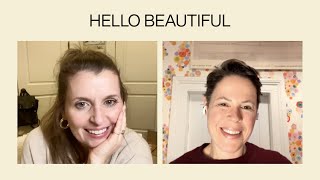
YouTube book-club conversation (host Holly Furtick with guest author Ann Napolitano) about Napolitano's novel Hello Beautiful. The hosts and live commenters discuss favorite characters (William, Sylvie, Alice, Rose), memorable scenes (family reunion after Sylvie's death; the mural scene where Cecilia paints William's sister), and major themes (family, sisters, grief, forgiveness). Napolitano describes her nine-month pre-writing research phase focused on basketball history and civil-rights intersections, setting choice (Pilsen, Chicago), title origin (family greeting "Hello, beautiful"), her drafting rules (research/notes for nine months, then draft; began drafting April 2020 during COVID lockdown), timeline (rough draft in about one year; book written in ~two years total), character surprises during drafting (Cecilia painting William's sister), and reading/teaching influences and recommendations.
Questions this video answers
October 28, 2023
Ann Napolitano
Pilsen, Chicago
April 2020 (nine months after the initial idea)
Napolitano completed a draft in about a year and wrote the book over roughly two years total.
Chapters
Foreign.
To the Holly Furtick Book Club. It is book club night and I am so excited that we are talking about this book tonight. Hello, Beautiful by Ann Napolitano. And Anne is going to be joining us tonight. How much did you love this book? I loved this book. It wasn't a light read, but it was a great read. And it was one of those books where you just feel like these are real characters. Like, it almost felt like they were real people and you were watching them make real life decisions and you were like, oh, are you sure you want to do that? And kind of watching all the events play out. I love this story so much. I know you did, too. Let's talk about this amazing novel called hello Beautiful. And Napolitano is joining us tonight. We're going to talk to her before we bring her on. Let's have a little chat about it. I want to know your thoughts, like, because last month or last book club we had Ann Padgett on and I got so, like excited to talk to Ann, I forgot to talk to you guys about about the book. So I'm not forgetting that this time. And I want to know from you guys how you like the book. Who are your favorite characters? Let's see. Let's get right in it. Okay, here are a few things that I so let me ask you this. Let's just start with did you have a favorite character, like the character that you were truly rooting for the most? And I want you to start putting those in the comments. And I'm just going to tell you a few other things that I liked about the book. I love the realness of the characters. I already said that at the beginning. Like, I loved how there wasn't really a character that you loved or hated, but it was like watching real people make real decisions. Stephanie Van Halman says I'm a sucker for a basketball story. Well, if you love basketball, there was so much basketball in this and it made the story I love. I I'll tell you something I love. I love learning when I'm reading. And so I learned about a lot about basketball by reading this book. A lot of you guys are saying Sylvie was your favorite and books on the Runway says William. Okay, so here's a good question that I want to ask you. If somebody were to say, if you were to say, like, oh, you should read, you know, hello, Beautiful, and they were to say, well, what's it about? Who would you say that this book is is about? That's what I want you to answer next. A lot of you are saying William was your favorite character. Some of you are saying Alice was your favorite character. Alice was great. I loved how tall she was. Lisa says Sylvie really saw people when others didn't. Shell says William was her favorite. Melton 1960s says William. You guys are all William. Okay, so now I'm asking you who the book is about. Okay, so you all are saying William. I feel okay. Somebody. JMA is saying Alice and Cecilia is who the book is about. Porcelain is saying the book is about William. All of you are saying the book is about William. If I. Yes. Thank you, Books on the Runway. If I was saying to you, you have to read this book. I would not say this book is about William. I would say this book is about a family. This book is about two sisters and one man. This book is about bitterness and forgiveness and family dynamics. Yes. Hefner says it was about families. I just was so surprised when I saw Ann do an interview with Oprah, and. And she automatically started talking about how the book was about William. And I was like, the book's about William.
What?
I just. I just didn't think the book was. I mean, I loved William, and I now looking back, I realize, oh, he is the character that is, like, woven through the whole story. So I guess the book really is about William. But I think growing up in a family with two sisters, I just really resonated with it being a book about sisters and family dynamics. Sarah Willis says. Sara Willis says, I felt like the fifth sister. Just watching that is so great. I totally agree. It's almost like you were the neighbor of those girls, and you were sort of, like, watching everything unfold with their lives. All right. Jamie says she loves how the family saved William. Emily just said Rose, and she did her thumbs down. That's my sister. Hey, Emily. Okay. Rose was one of my favorite secondary characters because she was so, like, she was so vocal and opinionated. And one of my favorite scenes. To me, one of the most memorable scenes in the book. So let's go to memorable scenes. Tell me one of your favorite memorable scenes. Okay. Nana Candy says I didn't like Rose. Somebody else says Rose was hard to love. There's this scene at the end. At the very end of the book. And, you know, sorry, there's spoilers on here. So if you haven't read hello, Beautiful, you might want to get off, because we're going to talk about the beginning and the end and all of it in between. So you find out that Sylvie dies, which, if you're reading the comments, A lot of people have already told you that. They're talking about how she cries. So Sylvie dies. It's very sad. And all the families gather together, and one of the sisters says, mom's been gone. Mom's been in Florida for, like, 20 years. And she has something with every sister. Like, she's mad at the one sister who had the baby out of wedlock, the other sister who is gay. She's mad at Sylvie for divorcing or Julia for divorcing William, and Sylvie for marrying William. And she's just, like, just disappointed in general at her daughters and just kind of leaves and leaves them to themselves. So you're kind of mad at her. You're like, geez, mom, like, step up. I, I, I love the scene where I think it's Celia. She says, mom's gonna come back, and she's gonna act like she Nothing ever happened. And I think we should let her. And so they all kind of agree to let her just kind of come back. And she comes back, and there's this, like, one little line where it says, like, she sat down at the, at the kitchen table like it was her throne. And they all kind of gave it to her, like, to just be there and be a part of the family, as if she wasn't a part of all of the trauma. And I kind of loved it because it sort of encapsuled the whole family in kind of going, like, coming to a place in their family where they're like, you know what? Enough, like, enough of Julia and, and, and Sylvie and just enough, like, we just need to be together no matter what we. How we feel, because we all have something that we feel. And I just love that because it was. It just seemed realistic, like, what family does, and.
Yeah.
Okay. Anything else that you want to say before we bring. I mean, we got to bring Anne on. This is. I can't wait to talk to her about the book. So, okay, let's bring her on. And if you have a question for Ann, as always, keep them going in the comments. Keep your hearts and all the things going. I'll try to ask her, you know, all the things that I think you're gonna want to know. And, And. But if you have another burning question, put it here, and I'll try to ask her.
Okay.
All right, let's see. I hope Ann's on here. Oh, Emily. She says she disagrees with me. Here she is.
Okay. Hi, Ann. Hi. Sorry, that took a second. Okay.
There's always little glitches.
Where's the button? Yeah.
Oh, my goodness. Nice to meet you. Thank you for joining us tonight.
Thank you for having me. And thank you for reading the book.
Oh, my goodness. Well, like I said, I started with Dear Edward, and I loved it. And I had it on my list for a book club for a really long time. And then I saw that you had a new book out, and so I was like, well, let me read that. And I read it as soon as it came out, and I just loved it so much. I loved. We didn't even talk about this yet, but I love the sister dynamic, and I love the little homage that it was to Little Women. And so take us back, because I want to talk about all of that, but take us back to the beginning. So you started with Dear. Dear Edward. Well, you didn't start with Dear Edward, but that was kind of like your breakaway book. And you finished Dear Edward. What happens next? Like, how do you know where to go from there and what sparks are flying at you that are making you eventually come to this?
Yeah, so when I finish, like, I. So when I finish a book, like, when I finish Dear Edward, I get so sad because I live inside the world that I'm writing, and it. By the time I finish the book, it's like a completely fully realized to me, real world with, like, real. Real people in it. And then when I hand it over to, like, the copy editors at the publishing house, it's not in my computer anymore, and no one's read it yet, so it feels like it just sort of goes away. And I'm very sad until I get a new idea. So I just sit there being like, please, please, please. And it usually takes about two months, as I've found. And so what happened was I had an obsession with the history of basketball that had been percolating in me for a while, even though it makes no sense. I grew up playing soccer, and I'm married to an English man who plays soccer. And, um. But I could not read enough nonfiction books about basket, the history of basketball.
And so you had brothers that played basketball. You didn't. Did you grow up watching the NBA or. No, no, no.
You just.
All of a sudden you're like, let me read about basketball.
Well, what happened was I actually was reading about the. The social. Social justice history of this country. Like, I went through a period of reading a lot of books about social. About the civil rights movement and that sort of history. And in doing that, I stumbled into the fact that really the history of basketball in this country really runs in parallel and overlaps with the civil rights movement. And there's significant players like Bill Russell and Kareem Abdul Jabbar that were involved in the civil rights movement. And something about it just really fascinated me. And I could, like, I just read so many non fiction books about it and I had this idea of this sad, lonely little boy dribbling a basketball basically to start the book. And my process is that once I have the idea, for nine months, I'm not allowed to write anything because what I really like to do is write what I call pretty sentences. And that's like writing a scene. And then a character comes in and says something that I didn't expect them to say. And it's like being a reader, it's an act of discovery.
Okay.
But I can't think like cerebrally or analytically at all when I'm writing like that. So by. By having nine months in the beginning where I'm not allowed to write, but I can think, research and take notes and have ideas and write them down and take a lot of notes, it allows me to sort of use that part of my brain before I start writing the pretty sentence.
And so it's just your rule?
Yeah. Yes. Yes. My second novel that I published prior to Dear Edward took me eight years to write. And at the end of it, I wrote like 400 pages that I cut. And I was like, there's a wonderful quote from E.L. doctorow, the writer, about writing a novel. And he says that writing a novel is like driving home on a foggy night. You can only see as far as the end of your headlights beam, but that's enough to get you home. You see a little bit and then a little bit and a little bit. And I do find that to be true. But for my second novel, it was like I drove in figure eights around the country before I found my driveway. And it was at the end, my husband was like, I think you should do it differently for the next one. Like, I don't. I think there's probably a better way to do it. And so he was like, I think you should take. It was his idea. He said a year. And I was like, I cannot do a year. So I whittled it down to nine months.
Wow, okay. So for nine months you're dreaming up the characters, you're researching about basketball or Chicago or so where. So in those nine months, you decide who are the main characters. You kind of get their vision. Is that where you decided where you wanted the novel to take place?
Yeah, that was one of the things That I knew quite early. My mother is from a large Irish Catholic family, and all of her brothers and sisters lived around us in New Jersey, except for one brother who moved to Chicago. So he would live there my whole life. And when I was a little girl, he used to send me postcards from Chicago with, like, the Chicago skyline on them, and it was always addressed to hello, Beautiful. And I knew he didn't really know what I looked like because he had, like, 20 million nieces and nephews, and he didn't see me very often. So I felt like he saw that I was beautiful on the inside, and it made me feel really obviously warm and special. And he lived in the neighborhood of Pilsen, still does, in Chicago. And so that also became this sort of, like, magical, quasi fictional land to me. And it just felt right to set the novel there. I think I always was going to set something there.
Were you always going to name it hello, Beautiful?
No, I figured that out, like, a year in, because I was like. Initially, I was like, this is where I'm setting it because of my Uncle Ed. And then I realized, well, that, you know what? That's what Charlie would say to his girls. Like, he would greet them with hello, beautiful. And by him greeting him, greeting them that way, I think he saw their specific individual beauty and he pulled it to the surface with that greeting. So by the time he. By the time he was gone, they have a real strength. All four of those women make a bold choice at some point in the book. Each of them. Yeah. And I think they have the strength to do so because of the love their father gave them and that they really knew themselves because he saw them on the way there. So that was so about a year. And I realized that actually should be the title as well.
Okay. So you get your characters, you get your setting. You're just, like, dreaming, thinking. You do let yourself take notes.
Yes.
And then one day, you just decide it's time to type.
Yeah. It's nine months. Like, I can't. Like, I'm like, okay, so I know, you know, I can't do it until nine months after the idea. And nine months after the idea actually turned out to be April 2020, which was, as y' all remember, quite, quite a interesting time. And I live in New York City, so, like, we were very on lockdown here. And during April 2020, my father also died. And because of the timing, like, for so many people, like, we weren't able to be with him while he was dying, and then we weren't able to gather after he died, which is such a strange experience. You know, it's obviously foundational enough to lose a parent, but then to do it in that. That kind of isolation was so peculiar, and so. Yet the ding had gone off, and it was time for me to start to write. So I feel like when I started writing the book, I already had all the ideas and everything that predated, you know, the pandemic or my father or anything. But I started writing in this, like, very sort of heightened emotional state where I had a lot of. A lot of grief and a lot of fear and a lot of, you know, worry. And from the very beginning, I felt like these people mattered to me and whether they were okay mattered to me, and that they. That I got their story right, mattered to me in this kind of, like, very intense, intense way that really pulled me in, and I. I deeply cared about them and felt like it was important for me to do them justice from the very beginning. Yeah. Wow.
So how long from the time you started typing till you had, like, a rough draft that you were ready to let somebody read?
Well, I have two writer friends who read sort of along the way for me to read each other's first pages, basically. So they read along the way, but it took about a year, a little over a year, till I had a draft, which is, for me, lightning fast. Like. Like I said, usually Dear Edward took me eight years as well. So I wrote hello, Beautiful in just about two years, which, partly because of the pandemic and because of the emotional state in which I was writing it, and I just. It just felt so important to me, and I loved doing it. I didn't want to do anything else like it was. I thought about it all the time.
Did you start from the beginning and work your way through the end?
Yeah, actually. What happens to Sylvie? Like, actually, the scene, presuming you've all read it, the scene where she tells William that she's sick in their kitchen. That was the prologue of the book when I started. Okay. Um, and then we decided later on to move it into the flow of happening. But other than that. Yeah, I read it from the beginning to the end.
So you talked. You talked about losing your father. I feel like grief and mental health is a strong theme in both Dear Edward and hello, Beautiful. Is there some other reason? Is there something that compels you to sort of make that a part of the stories that you write?
Yeah, I think people think that I must have suffered some absolutely catastrophic loss, and I haven't. I mean, I Think that it's just part of being a human being, and it's as beautiful and important and common as every other storyline and feeling and emotion that we have. So. And also, there's something where I want to write about love. And the flip side of love is grief, because we, you know, we risk our hearts, you know, with our children, with our romantic partners, with our friends, and there's consequences to that, and that's also love. So I. It's not something that I, you know, want to shy away from exploring. I feel like it's important to explore it, and it's as. As meaningful in our lives as all the good things that happen to us. Yeah.
And I think, you know, I. Obviously, I love fiction, and I think that stories help us work through. Work through our pain and our lives. And I think a lot of times a story of somebody experiencing. And this is more Dear Edward, but, like, this horrific grief, it kind of gives you perspective on, like, what you would. What I would deal with in my everyday life. And so I love that about fiction. That it. And so I felt like in hello, Beautiful. You're watching these sisters and their parents and their spouses. You're watching them, like, work out their family dynamics. And sometimes I feel like it's so helpful to watch someone else and be like, oh, don't do that. Don't do that, you know, and. But then somewhere, like, subconsciously, I feel like it helps me in the decisions that I'm making in the relationships that I have with people. And so I really love. I really love that. Did you have a lot of sisters?
I have a brother and a sister, but my best friend growing up, who. I slept at her house, like, half of the time. Her mother has six sisters, and they used to come in and out of the house all the time, and they had slightly different versions of the same face. And they seemed more themselves when they were together in a room than they did separately. And they fascinated me. Like, I used to watch them like they were a television set. And it was them, really, that I wanted to explore. What that kind of, like, magical, interwoven root system, you know, sometimes, like really rarely and magically is in a. In a group of siblings. So I was thinking of them when I started writing the Padawano Sisters.
But I think you did such a great job of making what the sisters had magical, but also very complicated and watching them sort of, like, navigate their closeness and yet their individuality and the decisions that they made. And it was just. It was just so wonderful to read and to just, I don't know, like, feel like you were there watching these people. Like a. Like you were the neighborhood kid and you were like coming in and kind of watching these people's lives play out. So we gotta talk about Little Women. At what point did. Did you know that there were a lot of references to Little Women? Did you set out to write sort of about Little Women?
No, I think during that nine month period of, like, thinking and planning, it should have occurred to me that I was writing about four sisters. And obviously I loved Little Women as a child. It's like one of the books that I think. I think that the books that you read in elementary school, if you're a reader, like a real reader, it's like you're empty at that point. You're making yourself as a person. You're so little. And it's like the books that I read then, I feel like they are like the building blocks of my personality, you know, that I loved. I loved them so much and they felt so true. And they, like, they sit inside of me in a way that, you know, books that I read now and love, like, they have to cycle out because there's no more room. Yeah. So Little Women is in there. But it wasn't until, like, I was like 60 pages into writing it and the sisters started arguing with each other over which March sister they were. And I was like, oh, yeah, of course. Like. Like I didn't grow up, you know, thinking I was Jo, like virtually every. Every other girl. And I was like, oh, yes, of course. Like Laurie's on the outside for the March girls looking into their living room and wanting to be in there. And William is on the outside of this living room. And once I saw it, then I. I could see how it related to the story that I was telling too. And it was very pleasing for me. But also it was lovely to write it as a kind of homage to a book that I love.
Yeah, it was really well done. You know, one of the books that we read earlier this year was Demon Copperhead.
Oh, I love that book.
Oh, my God. Like, amazing, right?
Amazing. Oh, my God.
And so. But that is not like, Demon Copperhead is way more on the nose, I think. Well, not that I've read David Copperfield, but based on what Barbara King Solver told me, I did watch a show, but I was not willing to give.
That much of my time.
But it was way more on the nose of the story. Right. It was like a retelling.
Yeah.
And so when I picked up. Hello, beautiful. And at some point, like something I had read had sort of clued me in. I was expecting more like Demon Copperhead of like a retelling of the story. And so it was very. It was a delightful surprise to go, oh, okay, so, like, so four sisters and the boy that comes, comes kind of into their family. But. But like, I love the word homage because that really is what it is. It's like a nod to it of like a great story that we all love, but yet, you know, maybe how it might have played out if it had been written in a. In a modern day time.
Yeah.
So it is really cool. And I think it's. I think this book is such a amazing example of how your subconscious sort of like, can work for you when you're doing something creative. I definitely admire it. I can't say that I have ever felt like I've been in touch with my super creative side, but I enjoy other people who are.
Yeah. Well, you're saying, like, reading is important. It's like you see your humanness in those people and in the stories and in the situations, which allows you to, like, feel weirdly connected to the universe and each other and to our humanness. And, you know, you can feel lit up and plugged in by reading fiction, you know, in a way that really is, you know, beautiful and enriching for us. I'm not saying that about my book. I'm saying that in general about.
Yes, well, and I'll say that about, about your books because it just, it really did accomplish that for me and for so many others.
Okay.
So at any point during the writing, so you do your nine months, you know that Sylvie's gonna die, and you got your four sisters. And like, was there anything that happened as you were writing that surprised you? Because some authors that we talk to, like Ann Padgett, for instance, she outlines out like, every single thing. She's like, my characters do not tell me anything.
I know.
And so it's so fascinating to get to talk to people. So how was that? How was your process? And did they. Did your characters surprise you in any point?
Yeah, I mean, Ann Patchett's one of my favorite writers, and I went to see her when she was in New York talking about Tom Lake a couple weeks ago. And I don't. I can't do what she does. Like, I can't write it in my head. I am much more discovering it on the page kind of person. And I really need that, like nine months of not letting myself do that to figure things out. Like, kind of get close to where Inpatchett gets, but, like, I get like 40% there. But there's a lot of. A lot of surprises for me. And that's part of why I love writing. You know, it's like you set up, you know, 132 different things in the beginning of the book, and then you don't know how they're going to play out towards the end. And one example that I would say of what definitely surprised me was I knew Cecilia was a painter, one of the sisters. And I knew obviously that Pilsen in real life is covered with murals. And in the book it also is. And so when she became a mural paper painter, I was like, oh, that makes sense. And then I knew that William had lost his sister before he was basically, when he was a newborn. And I knew he had the picture in his closet after his parents died of his sister. When he gave the picture to Cecilia to paint onto a wall, I had no. I was like, oh, my goodness. Like, these two. I never thought that these two things would touch that Williams sister, who is gone, would touch Cecilia's painting, much less that he. She would paint her on a wall with his daughter. That's probably. I saw people writing the nice things about, like, what their favorite scene is in the book. And my. Probably my favorite scene is William sitting on a bench looking at that mural, partly because I didn't know we were gonna get there. And that was like. I felt so happy for him. And also, like, I was like, oh, this is amazing that these threads that I had came together in this way that I find really satisfying and beautiful. Like, what a joy as. As a creator, like, as a writer, I'm so lucky. And if I was like Ann Patchett and I had it all in my head, I guess I get that joy earlier. I just don't work that way.
That's amazing when you. So you're writing and you type.
Yeah.
Okay. So you're. You're writing and all of a sudden this. All this comes together. Do you keep typing or do you, like, run and tell somebody?
No, I. I keep typing because I'm afraid I'm going to lose it. You know, Like, I'm like, oh, I'm just figuring it out. It actually started with a little earlier when Alice is at college and it turns out she's collecting all these copies of her aunt's art. And then her mother shows up and she says to her mother, do you know we're in this wall? And I was like, oh, my God, you're in the wal. Like, I had no. And then I was like, oh, my God, Alice is on one of Cecilia's paintings. And then, like, it just started opening up at that point, and I'm like, oh, it's. It's going somewhere that I didn't know we were going. And I. Yeah. Try not to stop writing. But then. And I don't know who to tell. Like, my husband actually doesn't know what my book is about until it's done, and then he reads it, and he's very helpful, so I don't actually want to give away things to him along the way. I think I told my two writer friends because I was like, what a joy. Like, I just had the best afternoon ever.
That seems like it would be such a rewarding experience. Can we talk about Rose for a minute? Because Rose, like, when I was talking about her earlier, a lot of people were disagreeing with me about the scene about Rose at the end. We're like. I will say I was really mad at her. Especially, like, you know, she picks up and she leaves, and she goes to Florida, and it's like, you know what?
She's fine.
Like, she's not obligated to stay and, like, help continue to raise her daughters. Right. But then they're grown. Right? They're grown women. But then kind of the way that she sort of, like, has something with each of them, you're kind of like, you're pretty mad at her. But it felt so real to me. Like, I could just imagine. I mean, I don't have. I have a wonderful mother. My mom's watching. Like, I don't. I'm very involved. She's a great grandmother. I don't really have a woman like that in my life, but I could just imagine a woman like that, and she was unhappy, and she was always unhappy and always unsatisfied with her life. So, like, what. What made you write her like that? Was there any part of you that wanted to soften her at any moment during the story?
She would not allow for softening. Like, she just. She, like, sort of blasted into the story. And I think the thing with Rose is that she had Julia very young. Like, she got pregnant before she was married, you know, after high school, so she started having children really young. She ended up marrying Charlie because she got pregnant, basically. He's very disappointing to her because he doesn't, you know, provides financial stability in the way that, you know, she would certainly like and deserves. And. And then she comes to rest. All of her hopes and all of her aspirations on her four daughters. And they have to do well for her life to mean anything.
Right.
So when they veer off from what she sees as successful lives, for them, it just. It's like, takes her apart because she had nothing else. And she built everything in herself on that. And then when her husband dies, it is the first time in her life where she can act selfishly and also where she can sort of be free. Like, she's been taking care of people forever. She's actually not that old. She's probably about 52. And I think she makes a bid for freedom, and her children are grown, her husband is dead, and this is the first chance in her life she's had for that. So I felt like I understood it. Yeah. And I think it's lovely of Cecilia that she takes her back the way she does. I mean, I think Cecilia is very impressive person.
Yeah. One of the comments earlier was that somebody felt like Cecilia was the kind of, like the secret glue of the. Of the family. And I love. Like, I thought Rose's relationship with Alice was.
Was.
Was also realistic and like, she was trying to have relationship with her granddaughter, but also trying to sort of honor the decisions that Julia had made.
And.
And, you know, and then she ends up having these conversations. I just thought that she was just. There were so many parts of the book that were like that, but just very realistic and people that you could imagine, you know, running into or being neighbors with and just such a wonderful, wonderful story. And I'm just. Was so delighted. I was sad when it was over. I was sad that Cecilia died. I mean, like, I just felt so many emotions, you know, and just like, that's everything that you want in a book. So. Thank you so much. I have to ask you some. A different question. I'd love to ask our authors. Tell me more about who you like to read. Like, is there an author that you're like, oh, I've read all of their books.
I've read all of Ann Patchett's books. I think I've read all of Lauren Groff's books. I haven't read her newest one yet, but she's one of my favorite writers. I just recently read a book that came out, like, 10 years ago that I'm sure many of people on here have read because it was huge at the time. A Little Life by Hanya.
Oh, yeah, I haven't read that one.
Oh, my God, it almost killed me. I mean, you talk about, like, books that make you feel deeply. I mean, it's like, I don't know, 600 pages or something. And I. It's one of those books where I just lived inside it for the very pretty short duration of reading it. It was so deeply emotional, people being kind to each other and this four young men that are friends and. Oh, my God, like, it's like the senior humanity, but also, like, what a gift as a reader when a book, like, swallows you up like that and you feel like it is a real world and these are real people and they really matter to you. And they really matter. I read widely. I mean, Emily St. John Mandel is one of my favorite writers. I think she's, like, extraordinary. Who else? I read a lot of. I just read the Candy House by Jennifer Egan, which is like her most recent novel. I think the Covenant of Water was wonderful. You were talking about Cutting for Stone. I also really enjoyed that. I'm looking forward to reading the new Jesmyn Ward book.
I am, too. Yeah, did that. I think it came out like this today.
Today, Tuesday. Yeah, I came out today, and Oprah chose it today as her new book.
That's how I saw it. And I've been seeing, like, you know, all the people who get early release copies and. And write about them. I've been seeing so many people really love that book. And I really enjoyed her. I think I've read. I've read at least one, maybe two of her books. The one that took place with Hurricane Katrina.
Oh, yeah. Yes, that's. I read Salvage the Bones, which is not that. I think it was the other one. I think I read it when it came out, but I don't think that was Hurricane Katrina. But I mean, she's an amazing writer.
Amazing.
So I am.
I am also. That's like high on my.
Yeah, me. Me too.
To read. So. Okay, I was gonna ask you something else. When you said salvage the bones, do you. Do you see you. You teach about fiction too, right?
Yeah, like, sometimes I do it, like, erratically.
When you do that, do you use other books as, like, do they. Is it like a creative writing class or is it like, do you read other people's books? And what books would you use to teach?
Well, generally I teach like a fiction workshop. So I'm reading the students work. Oh, okay. Okay. Yeah. And then like in. Actually, in December, I'm teaching an online class for One Story, which is literary magazine, and that is actually about how to craft your writing life. Like, how to. How to like. I hate the word optimize, but how to, like, focus how to make sure that your life serves your work and that you can show up to write and be so that the channels are open and that you can write the book that you're meant to write or the story that you're meant to write. So I sort of. I do both of those. I haven't taught, like a literature class where I teach fiction itself, though I have taken many, many such classes.
Would you say Little Women is like your all time favorite?
My all time favorite book? Yeah. Oh, God, I can't do that. That's impossible. It's one of the books that like, sits and lives inside of me. No, I can't do favorite, like, because then. Then I have to go through, like, my whole life and be like, at this period, this was my favorite book. At this period, this is my favorite. I mean, Little Women probably wins elementary school, but also then there's like the Betsy Tacy books and Trixie Belden, who's a Detective. And I read so many books when I was in elementary school. I read all. Read all the time, obviously, and I listen to books all the time.
Is there a book that you have read more than once or many, many times?
Yeah, I've read a friend who reads Jane Eyre every year. And I have read Jane Eyre a couple times, actually. But I don't tend to. I'm trying to think. I don't tend to reread books. I like, love them and put them on my shelves and then like, I'll look at them and I'll turn to a page and be like, oh, my God, I love this scene. And I'll dip in and out of it. But I don't tend to reread that much. Do you?
I have a handful of books that I've read multiple times. A lot of them are books that I've read to my kids. So not like, I don't know. I have little traditions. Like, I always read. Their first novel that I read to them was Charlotte's Web. So I read that three times. I always read Ramona the Brave. The year that they were, the summer they were going into kindergarten. I just had little, like, milestone books like that.
Yeah.
So I think I've read. I've read Gone with the Wind a couple of times. Yeah, I. That was a book that I read when I was like 13. And so then I read it again as an adult. I'm like you. I don't reread a lot, but especially my daughter's getting older and so I will. Like, I'm reading the Nightingale with her by Kristin Hannah.
Oh yeah. I haven't even read that yet. I should read that, shouldn't I?
Oh man, that's one of my favorites. That's probably my. In my top 10 at least. Maybe top five. I just. For a World War II novel, it's just, it's wonderful. It's about two sisters.
Yeah.
Just like heroine kind of vibe. And so I've read there are a few books that I will wait like 10 years and then read again just because I want to experience it again. But not, not too many. But I also have memories. I think it's interesting when you talk about, I wonder how many people that would consider themselves readers as an adult found some type of connection to reading as a child. Because I have a lot of memories of reading as a child and as a teenager. And I had a bunch of, I guess, series of books. They weren't even like. They're not even like well known books. They were like Christian fiction that my mom had picked up by an author named Lori Wick. And I would read, I remember like pulling it out and rereading certain scenes or like reading the book and then like skimming parts of it and then like loving like the scene where they fall in love or whatever.
So I think I did that when I was young. Yeah. Like Anne of the Anne of Green Gables books and Emily of New Moon, which is also by her. Like those books I think I ingested numerous times and I skimmed and read the parts that I loved the most.
That's what's so great about books. Thank you for, for talking to me about books. Thank you for writing such a lovely two truly wonderful stories. And do you have anything you're working on now?
I'm working on a novel now. Yeah. The Nine Month Timer went off in June, so I'm about whatever that is five months into it.
Do you think it's gonna take you eight years or two years?
I think hopefully closer to two years. I'm doing pretty well. I'm working at a pretty good clip and I'm really enjoying it. So we'll see.
That's wonderful. Well, I just wish you just blessings on your writing and I'm just so appreciative of people like you who are putting great stories out in the world. So thank you and thank you for coming on and talking with me.
Oh, thank you for talking with me and thank you for choosing hello Beautiful for all your lovely things.
You're welcome. And we loved it. And I'm going to tell everybody to go back and read Dear Edward if they haven't.
So thank you. Thank you.
Well, guys, I hope that you enjoyed that conversation with Anne and that you enjoyed this book. Hello.
Beautiful.
As much as I did. It was just such a gorgeous story. And, and I just thoroughly enjoyed every second of it and every second of our conversation together and our conversation with Ann. So if you would like more content like this, make sure that you like, subscribe, leave me a comment, let me know if there's a book that you would recommend for our book club. And if you want to join the book club, go to hollyfurtic.com and just all you have to do is put in your email and we will let you know what we're reading and when you're meeting so that you can join us live. And and again, I hope you enjoyed that conversation and I'll see you back here next time.
More from Holly








The Ultimate Packing Guide: Nurturing Your Soul with Gratitude for the Journey Ahead


