Human Trafficking: An Interview With Christine Caine about A21 | Holly Furtick
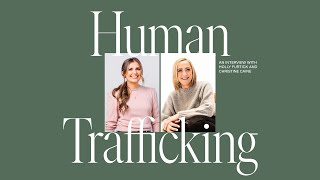
This is a July 2021 YouTube livestream interview hosted by Holly Furtick with Christine Caine (founder of A21) focusing on A21's work to combat human trafficking globally. Christine summarizes A21's origin (seeing missing-person posters in Thessaloniki), scope (operations in multiple countries), definitions and common forms of trafficking (forced labor, sex trafficking, online exploitation), and practical steps viewers can take (education, reporting hotlines, school curricula, awareness at travel hubs and events). The video highlights A21 campaigns and resources (Can You See Me?, Bodies Are Not Commodities curriculum, Freedom Walk, the film Coercion), gives concrete partner/donation numbers, and issues calls to action for parents, churches and communities.
Questions this video answers
2008
19 cities in 16 countries
$513,300 (host notes uncertainty about the $300)
$50,000 from Elevation Church to A21 (announced on the call).
40 million slaves (figure mentioned by Christine Caine).
Chapters
Hi, everybody. I am a little slow today. It is Friday. It is the end of Love Week. Well, we are nearing the end. We actually have an amazing weekend ahead of us. And so there is still time for you to serve. There is still time for you to be a part of Love Week. I have had the best time going and visiting some of our amazing outreach partners that we have at elevation. And I have also had a really great time chatting and videoing and live all these wonderful things with several of our outreach partners. You may have watched the interview that I did with Jeremy, Courtney and Preemptive Love. And if you didn't get to see that, you got to go back and watch that. And today I have a very special guest for us, a really good friend of mine. I am going to bring her on right now because I want to get started chatting with her. It is my friend, Christine Caine. Hello, Chris.
Hi, my friend. I had to laugh. We are so close.
Hold on. Wait, wait, wait. I can't hear anything. Do I need to. Oh, you know, now I can hear you.
Okay. That would be my husband's dream, to pretend that the thing wasn't working. It's like, I can't hear anything. I am awesome. I had to laugh at how slick our opening was. Like, oh, we're live. Well, I was.
I. You know, it's been a long week, and I was confused because I thought I would see you first. I don't know why I thought that. And I realized I'm opening it up here, so here we are.
I thought it was perfect, because that is just so us.
That's right. I haven't seen you in so long. How are you doing?
You know, I'm doing well. I just came back from two weeks of grad school, so I'm going well. And I've read every single novel that you have told me to read. So you need to send me some more. Because, guys, you got to know that Holly is my personal novel curator. So that's it. The book club is what we live for.
Something I'm very proud of is that I'm your personal book curator, and I. I strive to be that for every person in my life. And. But the thing is that people don't understand is that, personally, I go through these really bad reading slumps. And.
And.
But yet I'm still able to recommend stuff. I've been really bad reading slump this month.
And so I can tell because you haven't sent me any texts with books.
Yeah, I haven't. Haven't been loving the stuff that I've been reading. So I think I like the one I just started. But I will let you know. Okay. Typically when I do a lunchtime live, I do all kinds of chit chat because you know me, I am a chit chat kind of person. Some people don't like chit chat. I really love mindless conversation about books and french fries and all the wonderful things. But I am not going to do that today. I am going to have to have you back another time to talk about books and family and traveling and all of that. But today is a very special day. First of all, it is Love week here at Elevation and we are out and about serving all of our communities. But it is also World Day against human trafficking. So what an amazing combination to bring you on to talk about A21 and. And human trafficking. And you know, A21 has been a partner with Elevation. I know you know this, but I don't know if the people watching know that we, you and I have been friends for a really long time. More than a decade.
Yep.
And in fact, a 21 has been an Elevation partner for a decade. And I know you know this, but we just have to say this out loud because this is staggering. Elevation Church to date has given $513,300. I'm not sure about the $300, but we've given half a million dollars to age 21.
Outstanding. Like, I mean, honestly, the generosity of the people of your church is unbelievable. And their commitment to abolish slavery, it's just stunning. It's stunning. We're just like blown away. Our team was talking about it and blown away. And I love that the overflow of that comes out of true relationship and true partnership.
Yeah. I mean, it's amazing and it is something to truly be proud of. And so that is really what I want to talk to you about today. I want to talk to you about a 21. I want to talk to you about human trafficking and just bring everybody up to speed. I know it is kind of for a while, it was a really hot topic and something that people were always talking about and always wanting to give to and volunteer with. And I don't know if it is still that way anymore. I think that it has maybe become something that is common to us and I don't want it to be common today and in this discussion. So what I want you to do, first of all, is just for everybody watching who maybe doesn't know anything about a 21, bring us up to speed. Like, give me the 62nd version of Christine Cain's life leading up to starting a 21.
Sure. Here's the really quick story, is that I was going to speak at a women's conference in Thessaloniki, Greece, which is in the north of Greece. Think of the book of Thessalonians. That's where Thessaloniki is. And I saw these posters of these missing children and women, but there was so many of them. You know, I'm standing just waiting for my bag. It's a tiny little regional airport, and I'm thinking, why are there so many missing people in this part of Greece? Of course, I'm Greek, so I can speak and read Greek, and I could understand what it was saying. And I was 40 at the time, Holly. I had just had Sophia, So, you know, you could imagine already I've just had a baby. I. I've flown 27 hours from Australia to Greece. I'm hormonal anyway, because, you know, it's just happening. I look at these posters as I'm going through the names. There was this little girl, and her name was Sophia. And it just made me stop, because, of course, I've just had a baby. You know, I'm 40. I've just had a baby called Sophia. This is when I say that the seed of a 21 was actually formed right there. I say that I went from looking at someone else's missing child to seeing my own daughter. And, you know, when you look, you can look away, but when you see, you can never unsee. And so I'd say at that moment, it was like, I've got to find out, why are there so many missing children in this part of the world? Why are there so many missing young women, you know, teenage women this side of the world? And after that is where I went on to find out these are the alleged victims of human trafficking. This is happening in around 2007. And a 21 started in 2008, so it's 313 years old now. And that was. I didn't know what to do. You know, people like, did you see. You know, we've got 19 officers around the world. We. We reach the vulnerable, we rescue the victim, and we restore survivors. So it's very holistic now and. And huge. But when it started, like everybody else, I had no idea. I just like. But I knew that I had a mouth and I had the ear of some of the churches. So I just began with what I had, and God has grown it over the last 13 years.
And I know that you wouldn't necessarily say this about yourself, but it's actually one of the largest human trafficking organizations in the world.
Yeah. Yes. That's incredible. But the Lord has done that, and there is an amazing team in 19 cities in 16 countries around the world.
How did you come up with the name?
Okay, it was a bit of pressure because I was overseas, and one of my friends that was working with me in Australia, just in our normal sort of preaching and teaching ministry, she goes, chris, I've got to register. We were talking about, we've got to start something. And she goes, I've got to register this thing. What is its name going to be? I wish I could say it was spiritual. I wish I could say I was praying and fasting and interceding, but because I was under pressure and she was. In a Word. That logo was designed in a Word document 14 years ago in Australia on my kitchen sink. That's what I want to say to everyone. And I said, I don't know, what are we going to do? I said. She goes, what do you want it to be? I said, I just want to abolish injustice in the 21st century. I mean, just as it came out of my mouth. So as I said, abolish injustice in the 21st century went a 21. Okay. That was it. I did not know that that was how it was. There was no. I wish there was fasting and praying and interceding in a Hebrew word. But no, I just wanted to see injustice abolished in the 21st century.
That is amazing. So I think a lot of people have this assumption that sex trafficking victims are primarily. And there's a difference between sex trafficking and human trafficking. But I think when we think of it, we automatically think of the movie taken. And so can you tell us what is human trafficking? How do you define that and even talk a little bit about the difference between human trafficking in a developed country like the United States versus a less developed country, more like Thailand? And how does all give us the broad spectrum of that?
I mean, of course, you can look it up for the very technical terms, but in lay language that we can all understand, of course, any sort of trafficking is the exploitation of human human beings, the buying and selling of human beings for profit. And, you know, the fact is that there's many different types of trafficking. The biggest. The largest component is actually forced labor trafficking, which a lot of people would think, does that still happen? I mean, we've had the Emancipation Proclamation act, the Freedom from Slavery act, and the truth is there are more slaves on the earth today and mostly enforced labor than any Time ever before in human history. And of course then there's sex trafficking, there's trafficking begging, like people are taken and there are circumstances where either their limbs are taken off them so that they can elicit more compassion so that people will give money. It is horrific. But you see this sex trafficking, what sex trafficking might look like in Thailand could look different here. And we'll talk about this in the United States. Some people, there's a lot of young people that are taken. It's kind of more of a lover boy thing that they fall in love with a guy that actually is out to exploit them. They are very vulnerable, very at risk. He'll develop a codependent relationship with them, make them absolutely dependent upon him, make them fall in love with him. They've got nothing else, no other resources, no other sense of love. So much brokenness. Often foster, foster children, very often isolated children in families. People in often and not exclusively but single parent families with just, you know, a lot of partners coming in and out of the home. So there's been a lot of exploitation. They're extremely, extremely vulnerable and they're looking for love, they're looking for acceptance, they're looking for affirmation. It can also come from people in obviously two parent families that are being exploited online. We'll talk about that. Just being bullied at school, feeling vulnerable, feeling isolated. Someone comes into your DMs, someone comes into your comments, begins to foster a relationship and off we go. I mean, there are so many different ways people are trafficked in Eastern Europe. There have been so many cases of girls being promised job in villages and jobs in other countries. So they get a working visa, they come to another country, they're greeted by who they think is going to be the person that's going to help them with their job and it ends up being a trafficker. They're taken, they're beaten, they're isolated, and then they're sold into brothels for sex. They have no passports, they have no papers, they have no language skills and they are totally exploited for sex. I mean, the number of ways this happens around the world is innumerable. And it mostly happens with very vulnerable and isolated people. So obviously those that are more prone to poverty, those that you know, are extremely emotionally vulnerable. But it can happen to anyone. And that's why we're having this conversation. I'm really glad because there's people obviously watching this from all over the world and oftentimes for those that are watching this from the States or maybe more developed Western nations, Will think, oh, that doesn't happen here. I'm like, oh, yes, it does. Yes, it does. So that's why I'm so glad that you're bringing it into the mainstream conversation, because you're right, there was this period where everyone was talking about it. You know, I remember when I started, nobody was talking about it. About three years in, it seemed like everywhere you went, people were talking about human trafficking and slavery. But then, you know, there's always different causes that rise to the surface. But I can tell you this, Holly, there are churches like yours that have stayed with the path. A decade later, we're in the fight in the trenches. And people. What I've loved is watching so many young people, when I first started Talking about it 10 years ago, go to university, get educated, become social workers and psychologists, and become lawyers and doctors. And they are working for us today around the world because 10 years ago they heard a message on this say, when I came to your church, when I spoke, and then they went, changed their major at university, and here they are. So there are so many, many ways people that truly want to get engaged in the fight can get engaged in the fight.
So, all right, we've got trafficking going on in developed countries that typically, like you said, targets the girls. Would you say trafficking is mostly girls in a developed country?
Well, yes, but look, I don't want to say that because it's not only girls. There are many young boys that are being exploited. And truly, especially with online stuff, because there are many vulnerable, both boys and girls, and many are just deceived. I mean, you've got no idea because. And especially post Pandemic, so much of schooling has gone online, so many friendships have gone online. And so online trafficking has just escalated. And of course, the online pornography people. Young kids, this is why I love our can youn See Me campaign. If parents are watching this, I really want you to go and have a look at some of these videos because you will see how you think your kids are upstairs doing their homework and you're doing everything, man. You've taken them to church, they're involved in great youth groups and everything's fine. They've got good friends and you have no idea up in their bedroom while you think they're doing homework, how people are dropping into their DM box. People are dropping into their comments on their socials and developing friendships with them. Before you know it, a photo has been sent, perhaps, you know, and that. That becomes increasingly. Take off another layer of clothes. Take off another layer of clothes and before you know it, that photo is on the Internet being sold and you know, into the whole porn industry. I mean there are, there are so many ways this can happen and we have developed a unbelievable resources that I think every parent, even if you think there is no way my kid is involved in this, I could not recommend it enough. Like please go online and watch how this happens and how deceptive it is.
Okay, so let's stop right there and talk about. So you say we've developed resources or we have all these resources that we recommend, where do we find them and how. And like what are a few of them that you would even like? What are some tips, I mean because you have teenage daughters, what are some tips that you would give to parents to just help us be more aware and aware of what our kids are doing?
Well, for sure, have a look at who their friendship circle is. Have a look at if there are sort of controlling, manipulative people around them. If you've got teenage kids, have a look if there are people like slightly older than they should be suddenly kind of hanging around and it might all look good. If your kids are becoming isolated, withdrawn, I mean look for things where you think they're not quite as joyful. They seem to moving themselves, they seem to be disappearing a little bit more. They seem to be, you know, being isolated. So look for changes in the disposition of your kids. Look at their friendship circles. As much as your kids are going to resist it. Look at their phones. I'm like, listen, I have a 19 year old and a 15 year old, I'm paying the phone bill, I'm looking at their phones. I mean, you know, a lot of times people are like, well I can't do that. I promise you in every case where we have been involved, especially with teenagers, the parents wish that they had paid more attention to their kids online activity. And sometimes they're thinking, I just want to give them a little bit of space. You would be stunned at what is happening online. And I'm in this industry and Nick and I have been vigilant about our own children, our own two daughters. And I would say, and I'm a minister, I'm in full time ministry, I talk about this all the time. Nobody is not susceptible to this, not in today's day and age. And I would say increasingly so after this last year when even, I mean our kids were all online anyway. But it's gone to a new level over these last 15, 16 months. And so parents have to educate themselves. Parents have to be aware of what's going on with their kids, who their friendship circles are of their kids. And you almost have to insert yourself into. I guess I'm unapologetic about that because I've seen too many cases where parents are regretting that they didn't. And you know, sometimes your kids will resist, but the fact is, if there's really nothing to hide, there's nothing to hide.
True. It's hard though. I mean, I have teenagers too and they're like, you know, I need my privacy.
And I know that, listen, I'm not trying, but. But this is real. I don't know what to say. This is real. And it has led to young people committing suicide because they've sent a photo that's used to threaten them. We're going to show this to all your friends. And then it does end up in their friends phones. It can end up on the dark web. It can end up in the. And the kids don't know what to do and then they often don't know how to tell their parents. And the anxiety and the stress and the depression. So watch your kids eating habits. What you know, all the things that you go, hang on, this is real and increasingly so post pandemic because there's more anxiety and depression and isolation. They're not meeting together like they were. So they are far more vulnerable to being exploited online. I mean, I can't stress this enough. It's not that I'm trying to be, you know, sort of an old person coming in going, you know, we need to really monitor. But I am saying it is urgent. I am saying that like I see the statistics, I read the reports, I'm not ignorant, it's real. So I think a lot of those signs are very, very important. You've got to somehow find a way to, as uncomfortable as it is, find out what's going on.
So, okay, here in the United States, we've got teenagers that are being taken advantage of. Then we also have a lot of women who are in prostitution or similar types of industries. What does a 21 do to help those people?
Yeah, okay, so here is. What we are exclusively involved in is those that are being taken and being forced against their will. So it is slavery. It's not like I've made a decision that I want to be a sex worker. It's. I did not make this decision and I have been taken and being forced under the threat of death or that my family's going to be killed or my family's going to be injured or I'm being Beaten and forced to be exploited. So that is who a 21 deals with. And so in that case, we work with hotlines around the world. I kind of want everyone to go online and go, we have so many resources for you. So we have. Everybody should have the national hotline. Whatever country you're in, there's a national hotline. It should be in our phones so that if we see something and we're very big at a 21 of educating people, if you see something, say something. So call the number and just say, look, I know this seems weird. I mean, I did this the other day. I was just in a particular city at grad school. I would drive to grad school every day and there was a particular place and I would go, that just looks weird. Of course, I'm sort of got my high antenna on every morning. I would drive every afternoon back and I'm like, why is there only one car? And this thing is supposed to. This doesn't look right. So by the end of the week, I'm like, you know what? I'm going to call this number and just say, I just want to report that. It just seems very odd to me. There is women walking in and out. There's not a lot of people. There's not. And it should not be like this in the place that it is. So there. And then that leaves it in the hands of law enforcement to go, you know what, just go and check out that. Because a lot of us are like, what would I do? I don't know. There's a place in a strip mall right next to me. And I. It looks a bit shady. And I mean. So I just think sometimes it's as simple as that. Sometimes you could be in an airport and this has happened where they were in the Ukraine airport. Eleven girls, young women, they looked scared. They had come through customs, but they were by themselves. And it was like this. This doesn't look right. So there's the national hotline number. Well, it works out that the trafficker was waiting on the other side of customs at a baggage claim. And because we'd made that phone call, the customs officers were able to intercept that, stop the girl, and find out that these 11 girls were being trafficked from somewhere else. So the more you educate yourself, and we have so many resources on the a21 website that are in normal everyday language for normal everyday people across all of the world in multiple languages to go, oh, wow, this is what it looks like. So our can youn See Me campaign has got multiple short films that you go, I had no idea. That's what online trafficking can look like. Oh, that's what it might look like in a strip mall. This is what it looks like in an airport, bus station, anywhere that people are moving. Train stations, bus stations. So the more we are educated, Holly, the more we can obliterate this, because the fact is there's 40 million slaves, but there's 8 billion people on the earth. So we just woke up literally. This is not, like, even spiritual. This is very natural. Naturally, we could abolish this very quickly if we all just went, oh, now I know what I'm looking for. Because we all think it's Liam Neeson. It's taken. I got a particular set of skills, and I want to get on a plane and go and use that. That's what we all think. Now, is there a component of that? Yes. Is that mostly what it looks like? No. And for a lot of us on our way to work every day, if we were just as aware as I was this week in a normal American city where nobody would be thinking thousands of cars would be driving past what I drove past. But I won't be surprised if over the next week, I get a report to go, wow, we just did a raid there. And this is what happened. Simply because I had my eyes open on the way to school every day.
It's so amazing. People are commenting. Tiffany says, this is so frightening and so eye opening. And then another lady named Cheryl says, how can we help? And I think a lot of times the help that people want to give isn't necessarily the help that they should give. You know, obviously give financially to organizations that you trust. That's an amazing way that you can help. You know, I've seen so many passionate women or women's ministry at small churches, and they want to open up a home where they can have a shelter for women. And those things are great. But I think the average person, the average woman, the average wife, working husband, whatever we think, oh, well, I don't have the means to start a home, or I don't necessarily have the means to give that would make an impact to an organization like a 21, which isn't true because we know that every gift counts. But some people don't want to do the simple work of just educating themselves and going on the A21 website and looking through and watching the videos and really understanding. Because even to me, I know so many people feel the way that I do when I feel overwhelmed with. I don't know how I can help. I don't know what's going on, but just educating yourself and then being aware of your community and your surroundings and what you should be looking out for versus what is overreacting. And I think even as parents, a lot of times we overreact and we're like, oh, I would never let my child go to a food court at a mall. And it's like, yeah, but are you monitoring who they're talking to online? You know, and there's. There's so much to it, but it's not that complicated if you just take the time to educate yourself as to what is the actual issue and the problem and how we can be of help. Just like you said, seeing this place that I drive by all the time, that I'm like, like, I just don't. Something gives me a bad feeling about this place. And I think a lot of times you don't even know if anything came of it. But just being aware and doing your part can actually make a massive contribution.
More than a massive. This is the answer. It's like I keep trying to say to people, I know we all want to be Liam Neeson, but seriously, take one hour to go through the website and go, I'm going to watch this. As uncomfortable as it is. And they're all, of course, appropriate. If I made them as graphic as the reality of it, it would just devastate people and go, okay, this is in my situation. This is what I can do. And if we all open our eyes, that's why our whole can you see me? Campaign, which has reached literally hundreds of millions of people around the world on billboards and all over the world, is to say that is go. Yeah, I feel like saying to the world, they're just hidden in plain sight. And in most of our normal everyday interactions, I really. We spend a lot of time educating students and teachers to help identify potential victims, because especially in America, you would be shocked how many kids are going to school every day but are being. Being trafficked in that they are, because we think, well, they haven't been taken from their homes and they're not in some brothel, but they're sleeping in their own beds. But they are being exploited and they are fearing for their own lives and they're sitting next to you in school or there. And so we have so many. We have a program called Bodies are not commodities, and this is worldwide. And so what we've done with this, I mean, we produce student lessons. It works with local, state and national governments, and basically, we've created resources that are aligned to, you know, like national standards so that you can work through it in your normal school curriculum. So we've worked very hard around the world to work with all of the different education departments because we don't want to be a side thing. We want to work with law enforcement, with government, with education departments, because with hospitals, so we do training with airline workers, with hospital workers because people are brought into the ER and they're traffic victims. With the legal profession to separate the difference between prostitution and trafficking. Like, you know, I mean, people need to be educated in every sphere and teachers at school as well. So the Bodies are Not Commodities curriculum from k through to 12 is all age appropriate to teach young people and teachers to teach them that bodies are not commodities to be bought and sold. And how do we identify with how someone is being exploited in our sphere? Now if we just took the time to watch those 10 minute videos and go, oh wow, now I know when I'm sitting in my schoolroom or when I'm at the shopping mall or when I'm at the checkout buying my groceries, just an awareness and suddenly you would be shocked that you may go, I think I just saw something and now I know what to do. I've got a national hotline number. I don't need to be Liam Neeson and go and try to do that. I've got a hotline number. If someone comes to me, if something happens, I'm aware of where there are aftercare facilities in my city or in my region. The answer is not us all starting in fact a 21. What we're probably most known for is our Freedom Centers. We have a whole different model of aftercare that's not based on full time residential care, but helping give the survivors autonomy and job skills and life skills and health skills. So there's a whole different model of aftercare that is actually more effective for survivors anyway. So there are people that are trained and on the cutting edge of best practices to help right through from reaching, rescuing and restoring. So the best thing we can do is go. Even for me, I'm not an aftercare worker. So the best thing I can do, do on my way to grad school, keep my eyes open at traffic lights, keep my eyes open in my area and I'm always, I'll ask even questions if I'm going and getting different services at different time. I'm like, okay, so you know, are you being paid? Are you like, I'm just like, just little, you know, things that you just go. It just gives Me a bit of a heads up. You learn just little skills, little questions. And then of course with my children I'm on hyper alert, like hyper alert of just where they're going, where their friends are, what their online activity is. And I have all these conversations with them and I make my own kids watch the videos with me and go, okay guys, this is what can happen. This is what can come into your DM box. This is where your friends might. I go, I can't control you. I'm not with you. Especially my 19 year old's about to go to college and I'm very vigilant with her. I'm like, Katherine, I'm not going to be with you 24 7. In fact, you could go anywhere you want to go and do anything you want to do and I'm never going to know. So the best thing I can do is give you tools. This is, you're, you're a great young girl, but you might feel vulnerable when you go to college. You might suddenly be overwhelmed, you're going to be lonely at times. Things are going to happen. So I want you to be aware of what can happen. I want you to have these numbers ready. I want you to, you know, like all the stuff. Because I think a lot of times, and perhaps those of us that have been raised in church or we just think, oh, not my kids. And I'm like, you know what, I'm in this and I'm in church and I'm hyper vigilant with my own children. I want to say that to parents because I don't want you out of fear to pull back. You don't need to fear. Of course God's got our kids, but we have a responsibility as well to educate them and to be willing to have the uncomfortable conversations really. And I think for parents that's a big one is because it means I've got to talk with my 19 year old and my 15 year old about sex, about what's going on and you know, all of I'm in this thing and even I feel like a little bit weird. I'm like, you know, can I just get the youth worker over? But they're, you know, like really send them to an E group and just go, look, can you just go? Of course I feel the same as every other mother and I do this for a living. So what I'm saying is I've got to overcome my own awkwardness like everybody else. But their lives are too valuable and I'm too aware of the reality to pretend that it's not a reality.
Talk a little bit about how a 21 goes into these large events like the super bowl or right now the Olympics are going on. And I know the Olympics are a little bit different right now because of COVID and all of that, but. But talk a little bit about what you guys do at these really big events where we know people from all over the world are going to be coming together in a place where exploitation and prostitution and sex industry is just going to be ratcheted up.
Well, of course. And because, I mean, anywhere that there's a large gathering of people remembering trafficking is a supply and demand issue. It's like, unfortunately, know that's what it is. It's the buying and selling. So while there's a demand, so you got a large group of people together, there is, you know, demand goes up. What I Love is a 21 is a founding partner with an organization called It's a penalty. So how it all started was, of course, World Cup Soccer. It's the biggest sporting event, you know, like, it's like in the world, and in soccer there's a penalty. And so. But what used to happen, I remember when we first started, you could go to another country, say that you went to Thailand and you were exploiting children in Thailand. You wouldn't do it here in America, but you would get on a plane. It's like you left your brain behind. You'd go over to another country and somehow you. You would think sex with minors is okay in Thailand. But, you know, you're a grandfather here in America, and you would never do it here in America.
Temporarily lost your mind. And.
Yes, but it happens like it's. It's unbelievable to me. But what that shows is that you don't consider those children to be really human beings. That's. That's really what it comes down to. They're just objects for your exploitation. So it used to happen that you could do something there and even be busted, but you would not be penalized here for what happened there. So laws had to be changed. I mean, things had to change so that you would learn that if you got on a plane and went to the World cup or the Olympics or pick any other large. The super bowl, and. And it would be a penalty. Like, the fact is that exploitation there would be penalized wherever you are from. So you're not covered anymore by thinking, well, it doesn't matter. What happens in Vegas stays in Vegas. No, that's not the case. So that's where it's a Penalty happens. So we do training of hotel staff, rideshare. The airplanes coming into the events have got videos. And I don't know if anyone sees, sometimes I post during the super bowl, different football players will be talking about it's a penalty. Like, they will be talking about it. Going into the Olympics, we work with major athletes that everybody recognizes. So around it is a short video about what is trafficking, how it happens at large events, and then it's interspersed with sports stars that everybody knows going, no, trafficking is a crime. You will be penalized. And so imagine every airplane coming into those cities. You've got to watch this video. It's just like that's what comes on the back of every city seat. So again, it makes you, like, aware, oh, this is a thing. Then during halftime in the super bowl, that it's a penalty video will play. And so it's on billboards everywhere, hotel staff. Because of course, that's what's going to happen is you're going to bring someone back into your hotel room and you've got to be aware that you know what this is going to be penalized, that you cannot exploit people and buy and sell people. So a lot of that is we really want to equip the public to say, you can do something about this. And I think, you know, last year alone, nearly 400 million people were reached with this around the world now during the Olympics. So we're talking in the hundreds of millions. And next year, the Super Bowls in Los Angeles. So because of all of the playing on airplanes, playing at halftime, being on the halftime ads, hundreds of millions of people are being told this is happening and this is how it happens and this is how we can stop it.
I mean, it's truly amazing to think that to know. I was actually just reading some information and writing about how people often feel, they feel a sense of when they're giving to an organization. Is my money going to the right place? And that's why I love that we get to partner as a church with organizations like yours that, I mean, we could stay here and talk for another hour and you could go through more and more in depth of the programs that A21 has from helping with the. I know like the one that you guys have a. Not a hub, but you have like an office here in Charlotte and they make these amazing bags that they give to police officers to have in their trunks that have just items that a woman might need. From that to legislation, to education. And it's not just in the United States. It's Worldwide. And you guys have been able to look at every situation where people are being taken advantage of and people are being exploited, and you're able to take the funds that people are giving and truly make a difference in this world. And I just, every time I talk to you about it, I'm overwhelmed and I'm excited because I know that the money that the generous people of our church give is going to be put to actual use of fighting this fight of slavery all over the world and in my neighborhood.
And we've got to have a holistic approach. Like I'm thinking, you know, in the last couple of years, 700,000, literally 700,000 students have gone through. Bodies are not commodities. So. And when you're in vulnerable countries, that kind of messaging is major. It's like, oh, I don't have to end up in this cycle. This how you stop the cycle of trafficking. Educating governments, massive people, people, people on airlines, people in hotels, people at bus stations, like all of the places where you move people, customs agents, all of those sorts of things. We've got to work together. This is not like, okay, I just want to do my thing. We have to work systemically and holistically in order to abolish this. And that's why for me, even our walk for freedom is so major. Because you've got 55 countries in our last one, and I think it's 100 up for more. This one coming up, you know, hundreds of thousands of people walking in single filed for 24 hours. It's like when. When you have the new year celebration starts in New Zealand, goes right round to Hawaii. So it's kind of like, oh my word, you watching people walk, especially in a lot of countries, you know, well, post Covid as well, but with a lot of the terrorist attacks and a lot of things happening around the world, it's very hard to get permission for people to walk publicly and to march for anything. It's not like, you know, you could do that in lots of countries in the world. So the fact that 821 has got such a great reputation that, you know, people trust, I'm meaning law enforcement and governments to allow us. And that's a great testimony of the people that are marching, you know, in a very peaceful way, very compliant way, you know, and honoring all of the authorities of how we're to do that, the fact that we're allowed to do that year after year, that. But I'm telling you, and hand out brochures, the amount of attention that gets and the amazing Thousands and millions, really, of people worldwide that are just, what is this? Does this still happen? It's breathtaking. So I think. And what it does is it puts the power back into the hands of normal, everyday people, which is what a 21 is. A 21 is not the Chris Kane. In fact, I'm the least one that knows the most. It's the team. And what we do have is literally tens of thousands, and we call them abolitionists that in their own sphere of influence and making a difference. While I'm talking to you right now, someone sent me a message. I don't even know what city it's in, but there's this young guy, and I think he's a teenager that's in a lock in. In a Waffle House somewhere in America, just raising money for 821. He's just decide, I'm locked in here till I make. And apparently the money's coming in, and he's like, this guy just like, I want to raise awareness for trafficking, and it's going to a 21. I'm thinking, you're a hero, man. And that's kind of like where I just think, I want to see people in everyday places go, I can make a difference and I can stop this. And I think that's what we're seeing. And then, you know, you have this. I love this with elevation. Just. You guys have not kept your platform just to you. You're like, listen, this is a global issue. We're a global church, and we can make a global difference. And it's like, this is what we can do. And we could partner with organizations that are actually doing the most. I love it when people can go, I know what the most effective thing we can do is. And then I'm like, that releases us to do what we're best at doing on the front lines. And that's what true partnership is, because we together truly. I mean, 400 million people on one campaign last year, our coercion video. Okay, so if you. If someone's watching this and you go, I think I've got the. The ability to watch something a little bit more like in your face. So the movie Coercion, you listen, don't let your kids watch it. But it's not sanitized, but it's very important for people to watch. Well, that just in. I think it was released a few months ago. It got several awards at the Cannes Film Festival, and it got five Tony Awards because of just its effectiveness in what it was. And so I'm thinking It's even sort of world class film production to help people see what this is, to give them a tool. This is not a faith issue, this is a humanitarian issue. All care about it. So even if you've got people that go, I don't even know if I believe in God, you can get this film and say, let's have a watch party at our place because it's not sanitized. So your friends will think it's got Cannes Film Festival Awards and Tony Awards. So you know that this is going to be the kind of film that you're not going to be embarrassed about. You.
Right, right. And you go, we've all seen a few of those.
Yeah, we've all done that. So you go, I could play this and together then we could talk about it and then maybe we can go online to a21 and see what we might be able to do about it. So I think there's. We're trying to create a whole bunch of resources that no matter what you believe, where you're at, we all go, hang on, this is a human rights issue.
It's also a great way. I like what you're saying of as Christians, when we have people in our lives that we asked to come to church, they don't want to come to church. I always say this about Love Week too. It is a great opportunity to show the people in your life that there is so much more to being a Christian than just going to church and to invite them to come to your home. Everybody who is going to say no to human trafficking, come, let's talk about this. Let's see how we can help in our community. Let's be aware. Let's watch this. Let's go on this march together. Those are all things that are, that really show people the love of Christ without necessarily being in their face all the time about coming to church and all of those things. So let's do this. I am going to have somebody on my team in the comments type out some of these things so that people can know like practically where you can go. So they can watch the movie Coercion not for children. They can be a part of the freedom walk, which is what is the.
October, I think it's this year, October 16th.
Okay, so October 16th worldwide. And where would you go to find out more information about that?
So I think if you go to821.org you will see and then you just click on all the various things, movies, resources, education. So you would find where is a freedom walk? That's Happening right near you. And if it's not near you, how you could host a walk. And we, I mean, we make it. This is like the freedom walk for dummies. You basically just. Your body needs to show up because we're going to give you everything else that you need to make this thing work. There's. You go, okay, how do I access these little. Any resources that I need, I mean on that website is. And you go, haven't got any money. That's awesome. Here is 21 things you can do at the end of our zoom call that requires zero money, but you can do today in your area. I mean, we constantly going, what can you do right now? Because it's one thing. This is overwhelming. I'm imagining probably in the comments section there are people. This sort of thing just freaks people out. And I don't want to paralyze and cripple people by overwhelming them with fear. I'm saying, no, no, no, I'm going to give you tools to go, you know that we don't have to be scared of the darkness. We just take the light in the darkness. So when you're equipped and resourced, you could go in and make a difference. So if you go online, here's where the films are, the short films. I want to say to every parent, watch the films about online trafficking. I want you as uncomfortable. It's going to freak you out that one got so many awards. Because it's about. When I say a normal kid, a kid that you would think, okay, two parents, great neighborhood. There's no reason that we would attribute to why you would think this is happening. And it's all based on real life story. Nothing's fabric. Of course, name details are changed for the privacy of the people, but the scenarios are 100% what is happening every single day. And I think that to me is a start right there. So there's the freedom. There's a global freedom summit again, if there's pastors and leaders watching this, I've put together a whole presentation and a theological one that you can even play on Sunday. Like I've filmed it so that you could do all your normal church stuff and then just drop in this video which is me talking to you church, that will make you feel, I think, very safe. It's very theological to go, okay, where is this in scripture? What is our role in scripture? To fight injustice and because sometimes we just don't know or we sometimes think, oh my gosh, is this really a scriptural thing? Like, should we be talking about justice. I think I address that very soundly. And also we have made it available for you. Just I don't care how. You just drop it into your church service. And I think your people will feel. Feel wow. Equipped to be able to do and informed from the word of God about our responsibility for this. So there are a plethora of resources.
So amazing. All right, so I want to do a couple giveaways. You sent me some fun things. We have 8, 21. I think you can get all of this on your website. But these little like pens and stickers and a journal. We have a T shirt. So I love this T shirt. I have this one. I have the long sleeve one that you sent me. So I want to give all of this stuff. I'm going to send it to Cheryl Leader, who has been commenting. And Ashley, you took the names away. Okay, wait. She says go. Go to the top. Cheryl Leader, Debbie Wenwenner, W E H N E R and Stacy B. We're going to send you all of that. Thank you for being a part of this conversation, guys. And for those of you who've been on with us the whole time, also Chris, I have to take a minute. Tell everybody you have a new book out. So if you guys want to hear more from Chris, pick up her book. Everywhere books are sold. Amazon, all the great things. You can follow Christine personally on Instagram. You have a YouTube. I don't know, just Google Christine Kane. You can find all places you can. You can follow her. And then obviously we want you to go follow A21. Go to a21.org to find all of these amazing resources, whether it is for yourself personally, for your church, how you can be a part. And before we go, Chris, it is Love Week and we are sharing the love of Christ, not just with. I think one of the really amazing things about Love Week is that it is a time where all of the people of Elevation, we come together with our time, with our gift gifts and with our resources. And so today Elevation Church has a check for a 21. We want to keep that tally of half a million dollars going up. So this is $50,000 to the work of a 21. Because we love you so much and we are so honored to partner with you.
I love you. You're freaking me out. Ok. I love you all. And thank you to everyone at Elevation Church. I so mean that. I mean, this is like 10 solid. You're not fair weather friends. You're like life friends. Ten solid years of. I could cry of just sewing in. I want to just thank you truly.
We love you so much. Thank you for taking the time to be on here with me today. And I'm going to send you some book recommendations soon, please.
On that note, I know we're ending. Can I just say to everyone the importance of that. I've been in this fight for 13 years. How you stay in it. Of course you got to spiritually keep yourself up. Connection to local church, that's. That's the key. And you've got to be able to have good friends that will give you books that have got nothing to do with this to just. But it's all true. Like you've got to have your own holistic approach to your own mental health and self care because it is such a dark thing. And I think I've been able to stay in it as long as I have truly because of church support, friends. Support and friends that'll say, look, just read this book.
And so speaking of, have you ever read the book? Okay. Everybody who follows me knows I love fiction. And I feel like fiction is the, is the door to empathy that you can. And so whether it's a movie or a book, but stories, Jesus used stories to teach and to invoke empathy. And so while we were talking I realized. Have you ever read the book the Girl with the Louding Voice?
Yes.
Okay, so that is a great story about human trafficking. It's about a girl in Nigeria. And it just is another story that just opens up your mind to what is going on all over the world. So if you're looking for a fiction book to read, Christina and I both recommend the Girl with the Louding Voice. L O U D I N G. It's not actually a word louding, but when you read the book, you'll see why they titled it so there's a.
Book and remember why you're reading it. So we're talking. I love what you're saying because I've learned a lot about trafficking through books like that. So I'm not reading them for biblical theology. I'm reading them to understand trafficking. So and, and it moves your heart. Sometimes we don't even realize how many presuppositions we come in with like that. We think, well that's just what happens over there. Or they're just asking for and reading fiction for me personally and of course primarily meeting the survivors. But then reading fiction, you get into the stories of people and go, oh wow. It deepens your heart to want to abolish this issue. So thanks for saying that that's actually really important.
All right. I love you.
Love you.
Thank you. Thank you to everybody who has been watching this interview today. Thank you. For all of you who are participating in Love Week, there is still time for you to participate wherever you live in the entire world. All you have to do is go to loveweek.org did I say that right? Loveweek.org elevation outreach.org I don't know. Google it. You can find it. Go to my Instagram or YouTube Holly Furtick and you can find out more information how you can be involved. But there's still time. So wherever you live, you can do virtual events. We have events going on all over the world. We have partners. So make sure you check all of that information out. If you like this video, don't forget to like it. Comment, subscribe, tell me if you want more stuff like this. And I will see you guys back here next time. Thanks for joining us.
Love you, my friend.
Love you, Chris.
More from Holly








The Ultimate Packing Guide: Nurturing Your Soul with Gratitude for the Journey Ahead


