Lessons in Chemistry | Holly Furtick Book Club
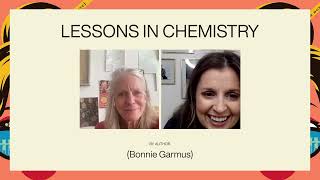
This is a transcript of a Holly Furtick Book Club interview with Bonnie Garmus about her debut novel Lessons in Chemistry. The host praises the book and Garmus discusses her writing routine, the novel’s origins (including a last-minute title change before the Frankfurt book fair), character development (Elizabeth Zott, Harriet, and a thinking dog inspired by the author’s late dog), and reads an excerpt about Elizabeth as a new mother. The conversation also covers genre crossover, the novel’s tone (humor with serious themes), and Garmus’s forthcoming non-sequel novel.
Chapters
Foreign.
Hello, everyone. Welcome to the Holly Furtick Book Club. I am so excited that you're here. I am so excited to talk about this book and this author. I think that this could possibly be. I can't think of a better book that I read in 2022. I grabbed this book. I saw it everywhere. The color, the brightness of it really grabbed me. And today we're going to be talking about Lessons in Chemistry by Bonnie Garmas. And guys, I read this book with the biggest smile on my face. I mean, well, okay, I read this book, I listened to this book. You know, I listen to all of my books and I didn't want it to end and everything that happened and there are some tragic things that happened in the book, but for the most part, you're just smiling while you're listening to this story, you're rooting for the main character. Her name's Elizabeth. There is a dog in the book. And remember, we do spoilers here. So if you haven't read this book yet, you got to go read the book and then come back and listen to this because we're going to talk with Bonnie today. We're going to talk about all things in the book. But some of my favorite characters were really unexpected, like a dog and a neighbor. And guys, I'm just telling you, I was, I, I didn't want this book to end. And I can't wait to talk to author Bonnie Garmas right now. Let me tell you a little bit about her. She is a copywriter and creative director who has worked widely in the fields of technology, medicine, and education. She is an open water swimmer, which would be kind of a fear of mine. I'm not really much for water and especially open water, but she is an open water swimmer, a rower and a mother to two daughters. Born in California, lives in London with her husband and her dog, whose name is 99. And today we are talking about her debut novel, Lessons in Chemistry. Let's meet Bonnie. Hi, Bonnie.
Hi, Holly. How are you?
I'm wonderful. It's so, so nice to, to meet you. Like I said, I just thoroughly enjoyed this book. I just, I can't wait to talk.
To you about it. Oh, thank you. It's so nice of you to have me on your show. I'm so excited. Really, it's really great. Thanks for all the nice things you said too. Great.
Oh, my gosh, what a delightful story. And I want to ask you, you know, I said in your introduction that this is your debut novel, but do you really consider this your debut novel? I mean, obviously debut novel does not mean that this is your first book, right?
Oh, it's. Yeah, that's exactly it. I call this novel 2.5. I wrote half of one and then I stopped that one. I shelved it. Then I wrote a whole nother book and it never went into anywhere. And then I wrote this one. And so this is really 2.5. Yeah.
How. How did you come. So you're, you're a busy woman, you're a copywriter. When do you find time to write as well?
Well, I finally decided I wasn't getting much done, you know, in all these years, especially as a writer. I didn't feel like writing when I got home. It was the last thing I wanted to do. So I finally realized, you know, I'm a rower and rowers get up early. And so on the days you don't row, that's when I was writing really early in the morning before work. And that's. It sounds terrible to say this, but I do my very best work early in the morning. So by the time I start working, were they getting my best? I'm not completely sure, but that's kind of how I had to do. I had to arrange it in order to get through it.
So how many days a week do you row?
Well, right now I'm not rowing at all actually because of this book. But Normally I row four mornings a week and we start at 5am so you have to be there at 5. But yeah, I'm not rowing right now. So now I have no excuse. I just have to get up and write.
So you're getting up at five every day and you're just writing and letting the characters come to life?
Yeah, I mean, mostly I'm battling myself, you know, and working, trying to tamp down my self doubt the entire time and also just trying to find the story. I like to write down different avenues and alleys and explore things because I don't write from an outline. And that's always the way I've worked as a copywriter. So I've really. I have the same process I've used in my career and that's just sort of the way I work.
I want to ask you more about that. So you say you don't write from an outline. So are you saying that you didn't know how this book was going to end when you started it?
Well, actually. Okay, so the day I started this book, I wrote the first chapter, which, you know, all my most. My chapters are fairly short. That one's short. And then I wrote the last two or three lines of the very end, and those lines are still there, which surprised me. I just felt like I had to throw a dart down the road, down a dark hallway and try to hit that and, you know, knowing that it might change along the way. But it didn't, which really shocked me. Wow.
Okay. I want to ask you more about that, but since we're talking about you wrote the first chapter. Will you just read for us? I love to hear authors read a part of a passage from their book. So will you just read something to us from Chemistry?
I would be happy to. I'm going to read a small part of When Elizabeth Is a Mom this is really about her daughter, Mad, and Elizabeth is a new mom and she feels like she's not quite very good at it yet. She doesn't quite understand why the baby doesn't do what she thinks the baby should do. But it also starts to see this passage. She begins to realize that this child is almost like an alien that's come to live with her, and she starts to respect that. So I'll read that part. Last week she peeked on our Mad during nap time and found the child sitting up in her crib, explaining something in earnest to 6:30. Elizabeth had hung back, watching in wonder as the baby, wobbling back and forth like a bowling pen, threatened to topple, waved her hands as she chattered, a steady stream of consonants and vowels strung together haphazardly like laundry on a line, but delivered with a kind of passion that made it clear she was an expert in this area. 6:30 stood next to the crib, wrapped his nose stuck between the slats, ears tracking every syllable. Matt paused in midair as if she'd just lost her train of thought, then leaned forward toward the dog and started in again. She said, as if clarifying a point, ba ba ba ba da jo. Having a baby, Elizabeth realized, was a little like living with a visitor from a distant planet. There was a certain amount of give and take as the visitor learned your ways and you learned theirs. But gradually their ways faded and your way stuck, which she found regrettable because, unlike adults, her visitor never tired of even the smallest discovery. She always saw the magic in the ordinary. Last month, Mad had let out a shriek from the living room, and Elizabeth ruined an hour's worth of work in a rush to her side. What is it, Mad? She said, swooping in like a helicopter in a war zone. What's wrong? Mad, wide eyed, looked back at her as she held up A spoon. Look at this. She seemed to say was right here on the floor.
I have to tell you, I'm. I'm really glad that you read that scene, because I was. I was so rooting for Elizabeth the entire book. Right. When you get to the part where she has this baby, and having had three babies of my own, I'm right there with her. I. I remember feeling like my entire world was just completely rocked. And what is this thing? And who's going to help me? And. And she has no one in her. I mean, I had a husband. She had no one, and I was just feeling for her. And, and, and it's funny that you said that they're like an alien because they. I mean, it is. It's like this.
This thing.
You don't speak the same language and you don't know what they need, and you're. And you're just in your hormones and everything, and you're just. And I'm like, who is going to help this woman bring in her neighbor to just utterly rescue her? And I was just. I was like, relieved when Harriet comes on the scene, because I'm like, oh, okay, she's going to survive now. She has Harriet, and Harriet's going to sort of show her the ropes. And I just love. I love books about women. I love. That's probably my favorite thing to read is no matter what the time or the genre, but a woman who overcomes, just a struggle, and it's the ultimate when it's another woman or a group of women who come alongside her and really help her shine and overcome, and you just really encompass that in this story. So as you're writing this character and you. And you say that you don't really exactly know where this story is going. And every morning you're waking up at 5am and you're just kind of seeing where Elizabeth is going to go. Was there anything that Elizabeth did that surprised you?
Everything that she did surprised me. I know. You know, it's really fun to have her in my head all the time, but, yeah, I mean, she would. She would make decisions that I think I would have been afraid to make, you know, and she would say things out loud that I think most people would kind of hold. Hold back on. And that's partly because of the way she. She more or less raised herself. And sometimes she can be very frustrating to people. She doesn't have excellent manners, but she. She does have a certain vulnerability that I think a lot of people can resonate with. And I think, you know, the Thing that I admired about her was that she was just resolute. She absolutely knew who she was, and she was not going to let that fade from her life. And I think so few of us know exactly who we are. So it was a delight to write from that point of view of a woman who never questions herself and just.
Knows and who really stuck to her, her goals and her resolve. Even when this wonderful man comes into her life and wants to get married. And she. You knew she wanted to marry him.
Yeah.
And. But the choices that she makes, and then you kind of watch these. These choices unfold. And there are moments in the story where I was like, oh, my, why didn't she just marry him?
Everything would have been okay if she.
Had just married this guy. But she knows. She really stuck to it. And then you watched her fight and fight for herself and fight for her work and. And really begin to overcome. It was just beautiful. Did you miss her when you.
Yeah. I mean, I do. I kind of miss her. I'm working on a different book now with different, you know, people, but I do miss her. It's really something to have someone in your head who is just so definite all the time and knows exactly, you know, what she's going to do. And if she fails, she says, I failed. I messed this up. I'm moving on. I'm doing something else. So. So my dog is crying in the background.
But Anyway, mine is 2 minus 2, so we won't know which one. Which one is.
Okay, great.
My dog snorts and snores, so if you hear a funny noise, that's him.
My dog has decided it's playtime. But I just waved at her now. Yeah. So, no, I missed having her in my head all the time. But I talk about her enough lately that she's still there.
Do you ever think, what would Elizabeth do in this, in a situation?
Yeah, I do. You know, it's so funny. Readers will write and say, sometimes I'm not sure what to do. And I'll say, what would Elizabeth do? And I think, yeah, I do that, too. And I try to be as brave as she would have been.
She was brave. Tell me about the title.
The title? Lessons in Chemistry. The title my lovely agent thought of the night before we released the book to the Frankfurt Fair, because the original title had been Introduction to Chemistry, and the fair had put it under nonfiction as a textbook, and we couldn't get it out. And so. And we knew that that might be a problem, but we both kind of like that title and literally the night before she submitted to Frankfurt, she said, we have to change the title right now. And I said, okay. And she goes, how about Lessons in Chemistry? Said, done. So that was. That was how we did it. She came up with the title, not me.
I loved how the title had, like, obvious. You know, obviously the book is about a chemist, but it's also about her chemistry with her husband. Her. Well, he wasn't her husband, but her. Her chemistry with her man, her chemistry with her neighbor or with all the people that were sort of in her life. In her life.
And.
And she was learning. I think she was a person who had more. More intellect than necessarily social skills. And so she understood chemistry as a science, but not necessarily chemistry as an interaction between human beings. And to watch her grow in that aspect. Such a cool title. And. And I love the COVID And I think it's really funny that you. I heard you say that, that you had the night before, change the title, which I would imagine might have been a little bit hard, because all along you've been thinking it's Introduction to Chemistry. You kind of had to let go of it pretty quickly.
Yeah. You know, it's really. I have such a great agent, though, you know, and I trust her. So, you know, she had suggested before we were. We were thinking we might have this problem. And she said, well, and this was maybe two weeks before Frankfurt. She said, well, we could call it this or that or whatever. I was thinking of just calling it Elizabeth Zott. And she had suggested Lessons in Chemistry. And I said, oh, do you think it sounds too, you know, soft? And then that night we went, forget it. It's Lessons in Chemistry. We really had about a minute to decide, but thank God for her because she really. She really kind of saved me there.
Well, you know, one of the things that I. That I loved about this book, and I don't know if this was actually intentional, but I feel like this book crossed over many different genres. So there are people who I, you know, I'm friends with a lot of people who love to read. Right. And everybody has something that they like, a genre that. That they love, like whether it's romance or. Or rom com or, you know, historical fiction or what. And I just felt like this book kind of reached and grabbed people who like more serious stuff and people who like more light stuff, because there were times in the book where I was like, is this a funny book or is this a serious book? And. And so it. I think. I personally think that's why it's taken off, because so many people who love different. Did you mean to do that? Or, like, what do you. What do you like to read? What were you setting out to write?
Well, you know, honestly, I sort of have been writing like this for a while for my job. And so I. I mean, I can do several different kinds of voices when I write and several different kinds of. Of narratives and things that I kind of rely on that I've honed over the years. And, and this one in particular, I just really think that if you're going to explore difficult topics, you better do it with some grace and with some humor, because otherwise preaching to people about how they should be is not an effective way to communicate with them. But being empathetic towards people and using humor is the best way, I think, to reach people. Especially when things are difficult for people in life, it helps to laugh. It really helps.
Yeah, it does. And to me, that's also the beauty of stories, right? Is it allows people to think about or talk about a topic that maybe they wouldn't even be open to in. In real life or in like, direct conversation, you know?
Yeah.
And speaking of unique characters, tell me about 6:30, where did you come from? How did you. Because I wish you could have seen me. I'm in my kitchen, I'm cooking dinner. I'm listening to the audiobook. And I remember just thinking, wait, is the dog talking? I was like, no, he's not talking.
You.
We. You hear the dog's thoughts. How did that. Because that's what I mean by like, crossing genres. I was like, is this fantasy?
Is this.
You know, what is going on here? And that's what was so delightful and surprising.
How.
Where did that idea. Did you plan to put this dog in the book? Did you. What happened there?
Well, I did plan to put a dog in the book. I did not plan to put a thinking dog in the book. But as I was writing it, I mean, that's for me is the beauty of not having an outline line. You can try all sorts of things. And. And so one day he did appear on the page and started thinking out loud. And I had the immediate reaction of, don't go there. Because it's sort of magical realism. People won't like that, you won't like that. Don't go there. But he kept coming back and he kept thinking things. And I suddenly realized I really needed him to help round out Elizabeth Zott, but also to round out all the other people. He is the spokesperson from the animal kingdom, coming at us from a whole different perspective. And reporting on us. And it was really a delight to spend time with him and write him. He is the only character in the entire book who's actually based on a real live being, or it was my dog Friday, who's long since passed away. But she was really, really smart. And I didn't know it, and I didn't credit her for that. And she'd been horribly abused. And when we got her, my kids thought she was perfect. She was just a wreck when we got her and we brought her home. And it took about six to eight months to realize that this dog was super smart and was learning everything single thing that we said. And she would prove it to us all the time by retrieving items that we mentioned to each other in conversation, you know, and then we were transferred to Switzerland. And she. I'm not kidding, she learned German. She was an exceptional dog. And I always, when I was writing, she used to just stare at me from across the room. I always read out loud, and I always felt like she was listening, going, no, not that either. No, I didn't like that one. You know, And I thought, what is she thinking? So I started to put what she was thinking, what I think she was thinking in the book.
I'm telling you, it was amazing. It was so surprising to me and just simply delightful for a character. There's nothing better than a book that introduces an unexpected character and then a character that you just love. And I think you did that so well in this book. You love Elizabeth, you're rooting for Elizabeth. But some of your secondary characters, I mean, I loved them just as much. I love. So 630 was my favorite. My second favorite was Harriet. So tell me about Harriet. How did she enter the picture?
You know, Harriet. I loved writing Harriet, too. She was kind of a memory for me. You know, my mom was a mom during this. This age in the late 50s and the 60s. And I just remembered the women in the neighborhood helping each other. They were all home. A lot of them, I would say, weren't super happy to only be at home and doing this. They had millions of kids. You know, I think the average size of the families in our neighborhood were five kids. We had four. And it's not like they had any extra help or anything. They literally had to do everything on their own. But I know when I was creating Harriet, I thought, you know, it would be nice to have some wisdom from this woman who'd seen it all and had a really rough time of it, but was still. Still had some. Some information to impart that. You know, Elizabeth has never wanted to be a mother and certainly never wanted to stay home with children. And Harriet, that was her only recourse. That's what she did. And she is the one who really helps Elizabeth come to it and realize what she can do. And I think they're kind of the perfect foil for each other. They couldn't be more opposite, but they are so dependent on each other.
Yeah. And it was beautiful how you kind of showcased that there are so many. So many beautiful aspects of a woman. And some women shine in their intellect, and some women shine in their nurturing and in their ability to come together and have an unlikely friendship and realize how much they needed each other and how much Elizabeth. I think that Elizabeth was the type of person who had been her whole life. Like, I can do this on my own. And for her to come to a place where she was like, I. I can't do this on my own anymore. And just the beauty of friendship. I mean, it just.
It.
It's needed. And I. And I hope that. I hope that people read this book and they go, I need a Harriet in my life, or I need an Elizabeth. I need someone that. And the beauty of mentorship. Right.
Of.
Of a woman like Elizabeth having somebody that. No, there. There. There are things in this world that I don't know and that I need to learn from another woman. It was just. It was just beautiful the way that you wove that all together. And. And I just. So. I so enjoyed it. So let me ask you more about the characters. I love to ask authors this question. Are there any characters in the book that are based on someone in your real life?
No, I. You know, I. A, I live in fear of being sued. I would never. And B, actually, I can't write. I'm not. Like, I could never write. Help. Somebody asked me to help them write their memoir, and the idea of that was so I wouldn't be able to do it, because you can't make anything up. It's too confining. So I love drawing things from my imagination that way. As someone once told me, when you're writing a novel, you're the mayor of your little town. You get to decide everything. I love that. So that. That part, for me is great. But, yeah, I can't base anything on anyone. You know, the character immediately becomes short and wooden, and so it's not worth it.
That's so interesting. I talked to an author one time who said that her grandmother shows up in all of her books in, like, One of the characters, your grandmother's personality is always there. And I think it's interesting because her grandmother was passed away, so it's probably easier to put someone. And she's not going to sue you, you know.
Yeah, probably not. Probably not your grandmother, but yeah, I just don't do that. And for me, it's much more fun to have it come. Also, you get a chance to really, really, really not have your own biases affect these characters. So you let them talk and let them tell you about themselves.
I love it so much. If you could use one word to describe the book, what would you. How would you describe it?
Uh, oh, that's a hard question, Holly. Rule breaker, I guess, you know, Elizabeth is a rule breaker. The way the book is written, with 10 points of view, breaks a lot of literary rules. And then the things that of course she says are. Are very difficult for that time in history for women to. To say out loud, and she. She goes ahead and she does it. So as what I was trying to do was make sure the writing reflected that nature, her nature of, you know, I'm gonna. I'm gonna be stirring the pot here, and the writing is going to also be stirring the pot in terms of, wow, you really can't put two points of view on one page. Yes, I can, and I did.
And everybody loves it. And everybody loves it. I'm telling you, every person that I have recommended a book to, this is the first one that if somebody says, you know, what. What have you been reading lately? What do you love? I'm like, have you read Lessons in Chemistry? And every person that reads it, it comes back, they're like, I loved. I loved that book. I didn't want it to end. So I hope we get from you. Are you working on more?
Yeah, I'm working on a new book. It's not a sequel. I better get that out of the way right away. It's not a sequel, but I really. I'm really enjoying this book. And I really love the protagonist, who is a man, actually a young. A young male. I love writing from his point of view. And so I'm having a good time with it. I'm just. I'm just finding it's hard to sort of do the promotion for this book and write him and all of those characters and hear all the voices. Because occasionally one of the characters from Lessons in Chemistry will try to worm their way into that story. And I just have to go, no, because if you come in, then the rest of them are going to want to come in, too, and I can't do that.
Doors closed. Well, I can't imagine, because I know you're still living in lessons in chemistry and talking. Everybody wants to talk about this book. I mean, because it's just that wonderful. And so I'm just. I'm so excited to hear more from you. So before you. Before you leave, thank you so much for being on. I know you're. You're super busy. Can you tell me. I love to ask authors about what they like to read. So can you tell me, like, who do you like to read? And is there anything great that you're reading right now that you're like, you have to read this book?
Well, I just read something that hasn't come out yet, and I think it is so good. It's a little bit sickening, actually, because it's a sequel. And I am convinced that I could not write a sequel. But she did. There's a new book coming out by Rachel Joyce. She wrote the Unlikely Pilgrimage of Harold Fry. And this book is called Maureen the Angel of the North. And I highly, highly, highly recommend this book. It's beautifully written and. Oh, it's just. It's very short, too. It's like 150 pages. You can just zip through it. But you won't want to zip through it because she just. Oh, my gosh. She's a master at characters. But this character still sticks with me every day. I mean, honestly, I highly recommend Rachel Joyce. Yeah.
I haven't read her, and I love when people recommend new books, so that's awesome. Thank you so much.
Yeah. She's British, by the way.
Okay.
Maybe that's why she's not as popular, but, oh, my gosh, highly recommend.
And you're also not British, but you live in Great Britain.
Yeah, I know. What is with that? My husband and I were transferred here for his work, and then now. Now he. He quit that job, and now he has a small company here. We're still here, but we have. And we're all here on a visa, but we actually still own a home in Seattle, so we're still American.
Good. And thank you again. I mean, what. What a wonderful story. And I'm just. I'm just so happy that our book club could read this book and enter into Elizabeth's world. You know, I just. I just thought, everybody needs to read this book. It opens up your eyes. It gives you something to divert from life, but also think about important things at the same time. And just such a wonderful work and just so happy and so grateful that you would come on and talk to us today.
Oh, it's my pleasure. I was thrilled to get the invite, so thank you so much. Awesome.
I really appreciate it. Have a great rest of your day.
You too. Bye.
All right, guys, I hope that you thought that Bonnie was as amazing as I did. I hope that you enjoyed reading this story. Make sure that you recommend this to all your friends, tell them how wonderful this book was, and if you enjoyed this book, I'm going to recommend for you a previous book club book that we have read. And there's going to be a little window that you're like little button that you can click to. To watch the interview with this author, but you got to read the book first. So anyway, the book that I want to recommend to you, and I don't have a copy of it in my hands, but it's Kitchens of the Great Midwest by Jay Ryan Straddle. And it is very similar in the fact that it's light and that the dog is going crazy in the background. This book is. Is light but important. And it makes you think and it makes you cheer for the characters and it's unexpected. You're going to love it. So Kitchens of the Great Midwest would be your next one. Hey, if you have not signed up for the Holly Furtick Book Club, it's so easy. All you have to do is go to Holly Furtick dot com, give me your email address. I'm not going to spam you, I promise. I'm just going to send you a little email, tell you what we're reading, what we're up to, when we're meeting. If you want to join us for our live discussion that we have on Instagram, we get on, we talk about the book. We usually get to meet the authors. It's wonderful. So make sure that you join the Holly Furtick Book Club and if you enjoyed this video, make sure you like it and subscribe and hit the little button so you can know when we have more videos like this coming out. And, oh, I'm going to introduce to you our. Our next book. So our next book club that we're going to have is going to be this wonderful story called the Last Thing He Told Me. And we're going to be meeting on November 15th at 8pm so if you're watching this and it's not November 15th of 2022, then you can grab this book and you can join us to talk with author Laura Dave. It's going to be wonderful. And I hope that you'll join us. I hope that you'll sign up. I hope that you'll be here next time for the Holly Furtick Book Club. Have a wonderful day.
More from Holly








The Ultimate Packing Guide: Nurturing Your Soul with Gratitude for the Journey Ahead


