Mr. Dickens and His Carol | Holly Furtick Book Club
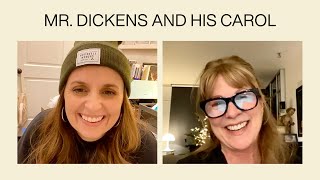
A recorded book-club interview (YouTube livestream) in which host Holly Furtick talks with author Samantha Silva about Silva’s novel Mr. Dickens and His Carol and about Charles Dickens. The conversation mixes light, personal holiday-focused questions (trees, cookies, carols) with deeper discussion of Silva’s long creative journey (screenplay → multiple rights sales → novel), her research into Dickens (reading biographies and multiple Dickens novels), and themes linking Dickens’s life (debt, workhouses, philanthropy) to A Christmas Carol. Silva describes Dickens’s creative intensity (the host notes Dickens wrote A Christmas Carol in about six weeks) and explains her own process: the project spanned roughly 15 years from first screenplay to published novel, and Silva completed the novel in about three years and three drafts. The interview also notes Silva’s next novel (about Mary Wollstonecraft).
Questions this video answers
November 25, 2023.
About six weeks.
Roughly 15 years.
About three years and three drafts.
Chapters
Foreign.
Tonight, we are discussing Mr. Dickens and his Carol by Samantha Silva. And Samantha is going to be joining us tonight. For those of you who are just getting on, it is book club night. So I did so much research about. Okay, wait, I should be honest. I wouldn't actually call it research, but I got in the YouTube vortex hole of Charles Dickens, and I started listening to this woman who is like a biographer of Dickens, this English woman. I listened to her for, like, two hours talk about Charles Dickens, and not just about Christmas Carol, but about Charles Dickens in general. So I'm going to give you a few bullet points of what I want learned about him before we start talking about the book. So, first of all, Charles Dickens was a massive celebrity during his time. Like, as big as a person could be, because you have to know that there was no radio, there was no television. All people had was newspaper. And then, like, live concerts and plays and all of that. And so Charles Dickens would write his stories for the newspaper, and they would come out one chapter at a time. And so that's why if you read a lot of Dickens books, the chapters are really long, because I think he even got paid per word, but the chapters are super long. But then also, I mean, this was like your first, you know, like, series, like Netflix. You couldn't binge. You had to wait every week for the next chapter to come out. So he would always end on a cliffhanger. And so when he wrote A Christmas Carol, and we're gonna get more into this, but he was in the middle of a story that wasn't doing well. And so A Christmas Carol came out. It went straight to print as a book. And so he was a massive celebrity. He was a huge philanthropist because he had to spend some time. His family lived in a debtor's prison, and he had to work as a child. And so that's why he had such a heart for children and for the poor. And he just. He used his writing as just his way of being a social activist and creating change during the Victorian era for the poor and for the children and for the hungry. And so that's why you see that common theme throughout his book. So massive celebrity, massive philanthropist. He was obsessed with prisons and workhouses, and he would visit them often. And I told you, he wrote in installments. And then I loved this quote, and we're going to get into the book, so just hang with me. But I love this quote about what he said when he was writing A Christmas Carol. And it says this as an idea for the story. Took shape, and the writing began in earnest. Dickens became engrossed in the book. He wrote that as the tale unfolded, he wept and laughed and wept again, and that he walked about the streets of London 15 or 20 miles, many a night when all the sober folk had gone to bed. And so this story, it came to him. A Christmas Carol came to him in about six weeks. He wrote the whole thing, and he was just in love with this story, and he was in love with these characters. And a lot of people, this happened in my Netflix vortex. But many, many people credit Dickens with bringing back Christmas and with making it popular. And a lot of the traditions that we celebrate today are credited to Dickens for celebrating Christmas feasting and families and Christmas carols and philanthropy, like giving to the poor and all of that were themes, obviously, throughout Christma Carol. We all know that story. And so, you know, I always. I love and I'm intrigued with these people who could create characters that just lived for hundreds of years after their death. It was just so fascinating, and so many of the things that we. The traditions that we know about Christmas came from a Christmas carol. Let's get Samantha on. Oh, there she is.
I can't believe it.
I was nervous for a second that we weren't going to get to talk, so yay.
Technology is not my. Is not my thing. So anyway, but here I am. We did it.
It's okay. Hi, nice to meet you.
Meet you, too. Yeah, it was really fun listening to you guys talk about the book.
Thank you for being on here tonight. We really enjoyed your book.
God, I'd love to be a fly on the wall in that conversation. It was really like being a fly on the wall in that.
Oh, that's awesome. Okay, I have lots of questions for you, but I'm gonna start off easy and just ask you some, like, little Christmasy questions, kind of like I do with my sister. So do you like a real tree or a fake tree? I'm a real tree girl. I see your tree.
Yeah, there it is. There it is. I mean, I'm reading all about that. It's not, you know, the environmentally friendly thing to do. And now we know that trees communicate with each other. And so I have. And I have lots of people who, you know, who have fake trees and absolutely will never go back. I think once you've had a fake tree, you never go back.
Eileen. I really like fake trees.
Yeah, I get it. So does my sister. I'm one of five kids. We do a different thing. But my mom was famous for getting a Tree the day after Thanksgiving. And one year, she violated our family rule and got the tree before Thanksgiving. And we call it the two tree Christmas because her tree, you know, just expired, and she had to go out and get a new tree. And she had, you know, probably 400 Christmas decorations that she'd made herself. And so we. That was. That was our famous two tree Christmas.
Wow, that sounds like a nightmare. Because I find decorating Christmas trees to be not that fun. I like them once they're up. All right, White lights are colored. I see white lights are on your tree.
White. But I grew up with colored. You know, I grew up, you know, that era when people like colored lights. And so I like the simplicity. I've spent time in Scandinavia. I lived in Denmark, and I really, really love the Scandinavian aesthetic, and I love the simplicity. I've spent Christmas there a few times, and I love the simplicity. I mean, they light real candles on the tree, you know, on Christmas, hold hands and dance around the tree and sing songs. That was my Scandinavian. That was my Danish experience. Experience. And so I really, you know, came away from that as a. As a young. As a young woman.
I think my husband would. Would absolutely not allow real candles on their hazard. Very hazardous.
Okay.
Sugar cookie or candy cane?
Oh, sugar cookie. No, no contest.
Same. I don't like candy canes. They remind me of toothpaste. Turkey or ham?
Oh, well, we do turkey at Thanksgiving. Maybe ham.
Okay. I think I prefer turkey to ham, but I don't really love either one. But I did learn in some of my research that did you know that turkeys are from North America and that the early settlers brought them back to England? And that makes sense.
Didn't know that.
And that's why they, like, they had a Christmas goose, but they switched to turkeys because turkeys get fatter than geese. So I like fried turkey. All right. Favorite Christmas carol.
Oh, God, there's a beautiful one. Heard the bells on Christmas Day. Yeah, I love it. And there was a fantastic cover of it by a band I can't think of right now that just brings me to tears every time I hear it. It's really. It's really beautiful. I mean, it's hard to beat, you know, at the end of its wonderful life when they all sing, hark there, old angels sing.
That's true. I think mine's, oh, come let us adore him. I like the harmony and the simplicity of it. Okay. Gifts on Christmas Eve or Christmas morning?
Christmas morning.
Yeah, same. My dad grew up opening gifts on Christmas Eve, but you don't find very many people. Okay, these are not Christmas questions, but I just curious to know audiobook, ebook or historic or hard copy?
You know, I'm going to say right now, actually paperback, I like. I prefer paperbacks to hardbacks. I find them easier. You know, I lie down, I read in all sorts of positions, and I find it easier to manipulate a paperback. And I kind of like the way it gets weathered in your hand. I do read, you know, books on Kindle quite a bit, which I think is great for travel and nighttime and, you know, not waking a spouse. Yeah. So probably, you know, in that order. But I've gone after a while of reading books, ebooks on Kindle. I really love going back to real books in my hand.
I. I agree with what you say about a paperback. I totally prefer a paperback to a hardback. But I really like audiobooks and they're just great to me.
Yeah, I'm doing more. I'm doing more of that. But I really have to be in a space. I really have to be like, all alone. It's, you know, even in the pandemic, it's sort of hard to be all alone for a patch of time. One of my favorite experiences was reading, hearing an audiobook of Frankenstein. I think it was read by Ralph Fiennes. And I was driving my daughter to summer camp, you know, to film camp and back. And, you know, I had hours. I had like six or seven hours, and it was just to be able to get lost in it, like, that was really, really wonderful.
Now, now that isn't. That is a very big undertaking to listen to a book like Frankenstein. I actually downloaded David Copperfield. It's free on Audible and it's read by Richard Armitage, who is one of my favorite favorite pastic.
I'll have to look that up.
But I never, never read David Copperfield. I only listened to the first, like, couple paragraphs and then I got distracted. It was literally like yesterday. But it's free on audible if you have an Audible account.
Dickens, most autobiographical novel, it's really about him.
And a lot of people, like, had said that it's their fate. A lot of people's favorite. And it's written. It was the first book that he wrote in first person and so I thought I would give it a go, but it is 36 hours, so.
Well, I just read War and Peace with Ever Reading Club for the pandemic and we read War and Peace aloud to each other, which took, you know, like we were meeting five days a week, which Was crazy. And, you know, it took us four months, so I'm not sympathetic to the 36 hours.
That's impressive. Okay, so do you have a favorite Dickens story that sort of made you fall in love with Charles Dickens? No.
I mean, you know, I have to say, when I. When I came to this. This idea, a friend of mine called me. I started as a writer, as a screenwriter, and writer called me and said, you know, we ought to do a ghost story anthology movie about Dickens telling Chris, you know, ghost stories around the hearth. Because that's how I heard that's how he came up with Christmas Carol. Well, it turns out it isn't how he came up with Christmas Carol. And so we. We sort of ditched that idea. But. But I, you know, I didn't really know. And aside having read. Read the requisite Dickens that we read in high school, Tale of Two Cities, maybe Great Expectations, being familiar with Carol, I just wasn't a Dickens fan. I really. I really wasn't. And so. So all the years that I've been involved in this project through screenplay, novel, and I'm adapting it into a play for Seattle Repertory Theater has been an absolute education in Charles Dickens. Both the man reading every biography I can get my hands on, and I still haven't read the complete Dickens. But reading Dickens and sort of learning about the man as I read his work made me feel so much closer, both to him as a man, as a flawed, complicated, you know, genius of a man. And his writing, which is, you know, now I absolutely delight in.
So you decide you're gonna write this, and I know this about you, but I don't think that everybody watching knows it took you 15 years to get to this.
Yeah, but. Yes, but that's because it took me a year to write the screenplay. Okay, 10 or the next, probably 10, 12 years. When we sold the rights to it to four different companies in, you know, England, Germany, America, and had, for various reasons, as I call them, heartbreaking near misses with the big screen. And finally, out of. Out of intense frustration as much as desperation, I really wanted it to have a life. And I knew the story worked because we kept selling it.
Right.
My hand at writing it as a novel. And so that's why it took so long. Took me three years and three drafts to write the novel that ended up, you know, as the novel. The novel as it is today. But it was a long journey getting there.
So you start reading and studying Dickens, did you? And you were reading, like, the biographies. I bet you read the woman that I was listening to on YouTube.
I wish. Clare Tomalin. Is she.
Yes, yes.
Claire Tomalin. Because she's one of the, you know, most famous biographers in the world and, you know, an incredible biographer of Dickens. Yes, I did read Claire Tomlin.
No, I didn't read her. I just listened to her lectures and she was. She was great. Like, she. I don't know. She was very likable, but yet very dry.
So I want to be.
She knew so much about Dickens. So did you go back and read more than just the Christmas Story? Did you read more of his works?
Oh, yes. I mean, you know, now, I mean, I saved Bleak House as a reward to myself for the end. I'd never read Bleak House, but I did. I read. I have to admit, people ask me if I've read Martin Chuzzlewit, which is the book you wrote that was the flop.
Right.
I haven't, but I know a lot about Chuzzlewit. But, yeah, I mean, you know, by now I've read six or seven of the Dickens books, and I just, you know, I really delight in them. I'm a gigantic advocate.
And which one is your favorite story besides A Christmas Carol?
David Copperfield.
Okay.
So far. Yeah. I mean, I'm in the middle of Bleak House, which is, you know, a long haul as well. But, yeah, I think David. And I don't know whether you've had a chance to see the Armando Iannucci personal history of David Copperfield movie. I think it's streaming now. It's really beautifully imagined.
So it's the book, but it's on, like, Netflix.
Yeah. And it's.
I might do that one.
Patel as Charles Dickens. And it's really about how Char. It's how Charles Dickens became a writer.
Okay.
At all, you know, from his youth. And it's a wonderful movie. I highly recommend it. It's really lovely.
Bleak House Masterpiece or dvc. They did, and I watched that and it was great.
That's what. I'm saving it. You know, if I watch the show, I end up not reading the book. And so I'm trying to get through the book. And I signed up even for a Cambridge lecture in February by a Dickens scholar about Bleak House. And so I got till February to finish. Finish Bleak House. And then I'll watch. And then I'll watch the BBC version.
So I like that. And I also think BBC did Little Dorrit. Little Dorrit.
I've also heard. That's great. Yeah. Little Dorrit is not one I've Read. But people loved a little Dorrit.
It was great.
The shows.
I haven't read the books. Okay, so back to our book. To start out as a screenplay, do you now, like, did you wrestle with, like, I'm not a writer. Did you always considered yourself a writer? How was the journey in going? I want this story to get out however it can, so let's do it as a book. And how do you feel about yourself as a writer now?
Well, the process of going sort of from screenwriter, novelist was really interesting and challenging because when you're a screenwriter, I realized, you know, the goal, the discipline, is efficiency and economy. You're really writing a blueprint for a movie. Nothing is there that's superfluous. You know, there is no interior life without dialogue and action. There is, you know, you can pick maybe one or two details of this or that, and then if you're lucky enough to make the movie, you have an incredible team of people who are doing the production design, the set dressing, the costuming, the casting, the directing. And when you're a novelist, you have all those jobs. It's all on you, including, you know, building the interior life of the character, which in a movie, you rely on from performance. And so, you know, in some ways, unlearning what I learned as a screenwriter and giving myself permission to create, you know, layers and go deeper and have texture and, you know, go down rabbit holes for an entire afternoon about, well, what is the underlace, you know, of the sleeve that she's wearing? And, you know, what would the fabric on the settee be? And what are those curtains? And, you know, what's on at the theater in 1840, in 1843, you know, I can spend an afternoon or an entire day doing that, but it's that kind of thing that really adds, you know, the texture and layering that you cannot do as a screenwriter. You just don't have space for it.
Well, Jennifer. Jennifer. James hall says it was so lyrical and beautifully written. Really enjoyable. And I agree. I think you did a great job at just the detail and painting this really great story of a man that, you know, we know, we all know his name, but we don't necessarily know that much about him. And once I kind of like. Once I kind of, like, let go of, like, my sister and I were talking like, did this happen? Is this really real? Did he really do that? Once I kind of let go of that, and I'm like, this is a story about a story. And it just. And settled into that. It was just. It was so fun, and it was so. It had so much life to it. So. So this was your first book. Do you have more coming?
Yes, I just turned in my second novel, which is about. It's quite different, and when I started out, I didn't know the story at all. But it's a novel about Mary Wollstonecraft, the mother of Mary Shelley, who wrote Frankenstein.
Okay.
She was, you know, is considered a foremother of feminism and really lived in the 18th century in a kind of extraordinary life. And so it's a novel about her life. Sadly, lee, she died 10, 11 days after giving birth to Mary Shelley. And so for the. For the first five days, they thought the baby who was born weak and low would die. And then she realizes that she's gotten puerperal fever or childbed fever from a doctor who didn't wash his hands. And so, you know, the next six days, she's dying. And it's such a tragic story, but I use the. Those 11 days for her to tell the story of her life to her newborn daughter.
That sounds amazing.
It was quite an adventure in writing and novel writing. But, you know, and honestly, it was very hard to let go of Charles Dickens because I spent so much time with him.
I can imagine. I mean, I get to talk with different authors, and a lot of times they say, like, when the book was over, that they really missed the characters, like, that they were a part of them. So for you to have spent so many years with him, I can't imagine how sad you were sort of to, like, he's like a friend.
Yeah. And my kids, you know, sort of were growing up during that span. They were really little when I started and practically grown up when I finished. And they, you know, they wouldn't have been surprised if Charles Dickens had popped in for dinner one night just, to them, he was a member of the family. And, you know, the way I talked about him and talked to him, I think, you know, when I was writing, felt like I was channeling. And they, you know, told me that, you know, mom, you talk when you write.
You said this at the very end in your acknowledgments. You actually said this when you. I mean, I know, you know, you wrote this, but for everybody who's watching, you wrote how you thanked your children and you said, they helped me understand what it's like to be flawed and still loved fiercely. And when I read that, I thought that was such a great picture of how you portrayed Charles Dickens because he was this massive personality and a really good man, but who was flawed but you didn't choose to like. I loved how, because this is a story and this is your story, and you get to tell the story however you want. And I loved how it really felt like you wanted us to love Charles Dickens, too. And that just came across so, so beautifully in the book. So I'm excited to see what comes out next. And just thank you for this story. It was so great. Had a hard time. It's really hard to find good Christmas books. And so I really, I really enjoyed this one.
Thank you so much. Much. I really appreciate being here with you.
You're welcome. Thanks for joining us tonight.
My pleasure.
Nice to meet you.
Merry Christmas.
You.
More from Holly








The Ultimate Packing Guide: Nurturing Your Soul with Gratitude for the Journey Ahead


