Tell Me More | Holly Furtick Book Club
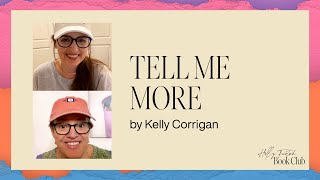
This content was created by Holly Furtick. This content was uploaded by Holly Furtick. This is a YouTube video titled "Tell Me More | Holly Furtick Book Club" featuring a conversation between Holly Furtick and Kelly Corrigan. The discussion, recorded on May 6, 2021, revolves around Kelly Corrigan's book 'Tell Me More', touching on themes of parenting, grief, and personal anecdotes. Holly Furtick hosts the book club session, engaging with Kelly Corrigan about her writing process, personal stories, and insights from the book.
Chapters
Welcome to the Holly Furtick Book Club. I just realized my phone wasn't plugged in, so I'm gonna do that really quick. It's another book club night. Feels like we were just here, but here we are again. Reading good books, Ted. Talking to them, talking to the authors who have written them, which is always so much fun. We are talking about this book, Tell Me More by Kelly Corrigan. And I'm so excited. Kelly is going to be on tonight. She's going to be chatting with us. It's going to be the best. I love talking to authors and I hope you enjoyed this book and as much as I did. This is an essay driven memoir and I. I love the subtitle because it's. Well, let me read it to you. Stories about the 12 hardest things I'm learning to say. And so every chapter is about a different thing that we need to learn to say that's difficult to say. It pretty much speaks for itself. I don't know why I had to elaborate on that. She has written four New York Times best selling memoirs in the last decade. That is amazing. And last month she released her first children's book, hello World. This book is so adorable. It's for children, it's for grown ups, it's for teenagers. It's amazing. You're gonna love it. Kelly Corgan also has an amazing podcast which I'm gonna ask her about and she has hi, Lindsay Franklin. She has a TV show on PBS where she interviews people and it's amazing as well. Kelly is just a really amazing woman and I'm so excited to talk to her. Let's get Kelly on because I have a lot of questions to ask her. So here we go. Let's see. Hi, Kelly.
Hi. Look, we have like the same outfit on today.
This is my dirty hair look.
That is the dirty hair look. It's the international sign of. I didn't take a shower yet.
Well, I took a shower, but I haven't washed my hair since Saturday, so.
Wow, impressive.
So it's getting to where I was like, I think I'm gonna wear a hat. Cause I don't wanna stare at myself. No, I only wash my hair twice a week.
I'm like, I'm like an old lady.
Tuesdays and Saturdays.
I was like my mom, she used to put her scarf on and sleep on her silk pillowcase because she had her hair house and she didn't want to go. Why? I want to go back to the hair house. Kelly.
We really do kind of look the same with our Hat and our glasses tonight.
It's so funny. It's a vibe.
Okay, first of all, thank you for coming on here. We are so excited to meet you. Everybody in the comments is saying hey and how much they love your book and also how much they don't like.
To wash their hair.
Yeah, we're getting all of these things.
So.
Okay, Kelly, I have to ask you what I asked everybody else to start with. Which of the 12 things is the hardest for you?
It's hard for me to say nothing. It's very hard. My kids are 18 and 19 year old girls and I do feel like I may have reached the outer limits of what I know that can be useful to them in kind of a practical sense. Of course I know deep, important emotional truths. But I don't know how Georgia should get this internship and I don't know what college Claire should go to. And I don't know where you get mattresses, if your mattress is uncomfortable on campus and all sorts of things like that. Where I'm inclined, I don't know whether they should go with their friend to the prom or try to find an actual like date date, you know, I don't know what they should wear. Like. And I am coming repeatedly to this place of humility, like. And the way the fastest route to that place for me is what could have my mother told me when I was 18 or 19 that I would have been like, wow, great idea, mom. Thanks for that. That's perfect. That's just what I'll say. That's just what I'll do. Ah, just do my resume like that, you know, like, I just don't know. I don't know. I don't know what the right answer is. And I think it's time to cop to that. But to me, and it sounds like for you too, that like to love someone is to. To guide them.
Yeah.
To love someone is to say some things. Yeah. It's shocking to me and particularly challenging to me that maybe to love someone is to not say something.
It's so true. You know, I think one of the biggest things I've learned as a mom is that parenting is more and more and more about the older your kids get. My oldest is 15. It's more about listening than it is about lecturing. And lecturing feels good.
Well, it feels like you're putting all this stuff into use. Like, you know, by the time you're our age, you have learned some lessons the hard way and the idea that you would not be able to there then turn that around into some sort of useful, you know, anecdote, just at the right time to save them a little failure or heartache. Like, it's kind of a shocking ripoff to me.
Yes.
Was that. Was that all just for naught? Like, why. Why won't you let me use this? But it's not. It's like, the other thing that helps me that I say a lot is she's on her epic journey. Like, it's not my journey, and I'm not walking it with her. And it's epic to her. You know, there's no. There's no sort of fast forwarding her to a year from now or five years from now, or certainly not ten years from now. Everything's big, Everything matters, everything's real. And, you know, it's just asking more questions. I mean, that's really the. The most useful thing you could ever do. Like, a lot of times I'll get something very wrong, and if I don't ask a question, I won't even know it. And so we'll leave the interaction, and I'll think, like, good job, Kelly. Like, you really said the right thing at the right time, like, really helped her out. And then, you know, a month later, she'll say, oh, no, no, no, you didn't understand. But it just seemed like that you weren't gonna. So I just let the conversation. So, like, even just saying, is this helping, like, will often yield, like, not really. And then do you think, oh, sorry, what? How could I be? Is there a way I can be helpful?
Yeah, I know the book isn't really necessarily about parenting, but. But there's so many great parenting nuggets in there. One of my other favorite parenting nuggets. So I love the chapter on Tell Me More, and I thought it was brilliantly written. And the first time I read your book, which was a couple years ago, I tried to tell my husband. I tried to, like, retell it to my husband, and I sort of, like, took it more like a formula. Like, Tell me more is a phrase you should actually say, which, I mean, you can, but it's not as much a phrase as it is about, like.
Like a mindset.
Yeah. And when you. When you.
When I.
When you tell the scene of your daughter calling you and how you. The things that you say that you don't actually say Tell me more, you're like, and then what happened? And what else? And so I think that maybe the second time, I'm hoping that it, like, sunk in a little bit better. But my other Favorite little parenting nugget comes from your mom. And the story about you not eating cheese, which, first of all, okay, I have to ask you because I know everybody else who read this book wants to know what made you. Why did you go so long? And what made you just be like, wait, I love cheese. I'm going to eat cheese.
Okay, so to back up, I wanted everyone at my birthday party when I was 10 years old to be able to order their own hoagie, which is what we in Philadelphia call a sub, like, big sandwich. And the sandwiches in Philly are like, you know, they're like 12 inches long. And my mom is super waste not want not. So not only was did it seem like logistically ridiculous that all 20 girls would order a different sandwich, but also she's just picturing the waste. Like they'll just take two bites and then they'll throwing away like a month's worth of food.
Valid point.
Intolerable for her. So she said, we're not going to do that. We're just going to have pizza. And I said, I don't like cheese. And she said, what do you mean you don't like cheese? Like, you ate cheese last night. And I was like, I hate cheese and you don't even know me and you don't even notice what's important to me. And I hate cheese. And so we got in this kind of like ridiculous standoff where I knew that she knew that I didn't hate cheese, but it was like, it was the only thing I could think of to maybe get the hoagies. Anyway, she got the pizzas and I pulled off the top of the cheese, you know, like in the sheet, and just ate the tomatoey bread. And, you know, I, like dropped it into the trash can. Like it was like a dead spider. And then I had to stick to it, you know, Then I had to, like, make the lie real. And so I just. For 10 years, all the way until I got to college, I had no cheesecake, no cheese and crackers, no nachos, no cheeseburgers, certainly no pizza.
It's so funny to me.
And then I kind of got there in my head, which it was like, you know, really on the verge of insanity. So anyway, I get to college and one of my best friends is this girl, Mary Kay Lombino. Mary Kay Lombino is from this Italian family, and I go visit her in Rye, New York after freshman year. And her mom, I didn't know what olive oil was. Like, I had no idea what that was. So there's. That's how. Like, I didn't know peas came in a pot. I thought they came in a plastic bag. Like, I'd never seen peas in a pod until I was like 20 and I thought was like the most beautiful thing. And everyone teased me about it. So anyway, I get to Mary kaylanbino's and they have these tomato. I love tomatoes. They have summer tomatoes and then a big leaf. And then what I think is chicken breast, like a white chicken breast, mozzarella. And then this thing that I thought was like butter. Like, I didn't know what this colorful oily lubricant was. So anyway, I just couldn't get enough. And Mary Kay had always suspected me that I wasn't really allergic because I had started to say I was allergic to cheese.
Okay.
You'd say to people, you don't eat cheese, they just go crazy on you. How can you not eat cheese? You must eat cheese. You don't eat this, you don't eat that. And so it's the whole deal. So I started saying I was allergic. And then she said, are you lactose intolerant? And I said, I'm Catholic because I didn't know what lactose tolerant men. So she was like, you're lying. Like, there's something funny going on here. So anyway, I ate this entire plate of mozzarella. And then she was like, you just ate these? And then that was the turning point of my love affair with cheese. And I went right from there into mozzarella sticks, which is like one of the world's greatest products for sure. All that to, like, show my mom that, like, she wasn't going to win.
And, like, that's like a legit commitment to. Somebody just asked, did you ever eat cheese in secret?
I'm thinking, no, no. Because, like, I got it in my head, you know, Like, I can. I'm very suggestible. So, like, I have regular headaches and I am, like, almost sure that I'm giving them to myself. Unfortunately, I can't.
Right.
I can't think my way out of them, but I could definitely think my way into them. So I know that I am capable. And I've had panic attacks and stuff. Like, which is a very. Like, I'm. I'm suggestible. I haven't had one in like 20 years, but I used to have them before I met Edward. And so anyway, I think I got myself kind of convinced that, like, I really didn't like cheese and I thought cheese was disgusting and I wouldn't eat grilled cheese. And I was like, that is so gross.
And so your mom. Did your mom, like, legit? She just let it go? Because actually, this is really funny because my 15 year old has started saying, cheese hurts my stomach. And I'm like, no, it doesn't. Cheese does not hurt your stomach. He's like, mom, I'm telling you, when I eat cheese, it hurts my stomach. And I'm like, you've always eaten cheese. And I like, I can't let it go. I'm like, something else is hurting your stomach?
No, she would let it go in two seconds. I care. Like, we're so different. My mom and I are so different. And I kind of wish I get older that I was more like her. Like, she just. Way more detached, way more. She would never give a second thought if a kid said his stomach hurts. She'd be like, well, okay, like, one less thing for me to buy at the grocery store. Just, like, utterly pragmatic. She doesn't need resolution. She doesn't need closure. She doesn't need, like, emotional repair. You know, like, if we. If I got mad at her in high school, went upstairs and, like, slammed my door, she would never in a million years come up and like, knock, knock, knock. And then, you want some dinner? Like, the things I do. I'm like, if she saw me right now, it would be more shameful to her than if I had slept with the entire football team. Like, she. It's unbearable. It would be crazy for her to see how much I cave to my kids.
Right?
I, like, want them. I want it to feel good, our relationship. And I just don't think that she had that desire. I think she wanted it to work.
Right. Do you think it's a generational thing?
Maybe? I mean, we really. She thinks it's Oprah. So she thinks that Oprah, like, literally Oprah Winfrey, but also Oprah, like that body of thought and talk and openness and vulnerability, et cetera, et cetera. Like, she doesn't know who Brene Brown is, but if she did, she wouldn't buy it. And, you know, like, that. That. That's like so much navel gazing to her. Like, she's a person who goes to church every single day. She plays bridge. She doesn't spend money. She. She does her job. Like, she's not. I think she thinks that we're precious flowers and also that we are looking in the wrong places for our deepest satisfactions because she has really deep faith. So she would never, like, need a job to be, like, deeply Satisfying for her or like her children. Her relationship with children isn't like something that's supposed to fill her soul. Her soul is filled elsewhere. Yeah. That is not the work of the world to do that. She wouldn't even think that the world was capable of doing that. You know what I mean?
It's amazing.
I know. I think it's married to Catholics. And he went to church every day. And so they had that routine and that foundation that made it all very unassailable.
So much to learn from that generation.
I do. I do think. I mean, I'm very. I'm so glad she's still alive. And I'm so glad because I have come around to see so many things from her point of view and have such high regard for her. I really respect her. And I just didn't when I was younger, you know, I thought was closed and kind of unsympathetic. But it's more. She didn't find me a sympathetic character. Like, she wasn't worried about me.
Right.
She's worried about people with real problems.
Right.
And that's not terrible.
Right. You turned out pretty good.
But all my worrying. And your worrying is actually productive. Yeah.
It's true.
What end or we're giving. Like, the other thing my dad used to say about money was when we would ask to, like, get paid for chores and stuff. And then he'd say he came home one day and he's like, here's the thing, guys. We're passing the money around the middle. We want to bring it in from the outside. That about your mindshare is that, like, our mind share and our capacities are sort of wasted on, like, the inside. If all you're thinking about is like, your marriage and your kids in your school, like, that's not quite big enough. That's not a big enough canvas for your capacities.
Right.
And so maybe, like, the best thing you could do is focus outward. And then you would find that the internal requirements or the requirements within your inner circle are naturally lowered because you are small enough in the frame. Like, it's not every single thing is not about you, you, you. And I think that's part of why. Sorry, I'm really going deep on this.
But I love it.
Part of why I think being a teenager is really hard because when you're a teenager, the message is you're the center of the universe.
Right.
I don't think they want to be the center of the universe. I don't think they want it to be such a big deal whether they Make a team or such a big deal. What college they get into. Like, I just don't. I think we have put them in this place. That's very stressful. Yeah. Because if it's like, oh, there's 8 billion people here, honey. Like, go wherever you want to go, like. Right. Don't take yourself so seriously. Like, it's just not. There's not one person in this family that's any more or less important than any other person on the earth, except that there's just so many people on the earth. It's like, an unimaginably large number.
Right.
Yeah.
So I think that's. It's so true. And I think it's hard because teenagers just naturally make everything about themselves, and they're supposed to. That's part of their development.
Yeah.
But I think we give into it.
Yeah. I think we reinforce it. Yeah. All right, so just, like, little things, like, going to every game. Like, my mom thinks it's so funny that we go to every game now. There is almost nothing that's more joyful for me than to watch my kids do anything. Yeah. One of the only things you can watch them do is. Is play sports.
Yeah.
Like, if I could watch them in class, I probably would. Like, if they gave a presentation, I'd love to watch it. Or if they're like, my daughter worked at a cupcake shop. Like, I would love to go watch her, like, interact with a customer. Like, that would be so fun for me. But the only, like, sanctioned activity that you can watch your kid do is play sports, which is so weird. Y' all go. We.
We all.
I mean, but I love it. I love it. You couldn't take it away from me. Yeah. But I see her point that it's giving them. You know, people are, like, running around and leaving the office early and driving across town and sitting in chat, and it's like, I just wonder if that feels like pressure. I feel like. I wonder if it might be more fun for them if we weren't there.
I mean, you. You have a good point, but I don't think we'll ever know.
I won't. And so the book.
Okay, the book's a little bit about parenting. It's a lot about grief and about your. Your journey in grieving these two people that you have loved and lost. And now we're. I mean, several years away from that. How has your grieving changed?
Well, the one person I lost was my dad, who was 85. And so that has changed a lot. I mean, I. I just Liked him so much. I just loved his personality. I loved talking to him. So. And I'll never. And he loved me so much. Like, no one will ever love me like that again. There's no. Certainly not my children. This is possible for a spouse. Like, he just. I just never had anything like that, and I never will again. And I know it. I'm old enough and wise enough to know that the dynamics of that relationship allowed for something that was so lovely and easy and pure and that. And I knew when it ended that it was ending forever and there was no replacing that. I mean, maybe like a grandkid or something, like, you could get into that space, you know, where there's just no expectations and no judgment and no hurt feelings and no scars. Just joy, joy, joy. And then my friend Liz died when she was 46, after seven years of ovarian cancer. Three kids, 8, 10, 12. And I was just thinking about her today, because Sunday's Mother's Day. So I think about them a lot. They all look like her. They look like her in different ways. Her oldest is going to college. She just went to her prom. Like, she wore Liz's necklace. I think about those kids, and I think about how much was taken from Liz. Like, what a loss for her. And I'm so proud of Andy, her husband. I mean, he's just killed it. He's just done such a great job, and I don't know that's on the job learning. And he. You know, he just does so many things right with him and just such a good job of keeping her at the table in a way that's not weird and not. It's just so positive. I mean, he's really incredible. He's incredible person. I didn't know that.
So when you were in the, like, the physical stages of grief, and you described this in the book, so. So real, and so many people are commenting about how. How much they appreciated this part of the book. And so when you're in that. That stage, the physical, like, I can barely get out of bed, Leave my house. Was there anything that anybody said to you or did for you that you took with you? Like, when somebody else that you knew lost a loved one, that you were like, I'm gonna do that for someone else, because that meant something to me.
I mean, I think. I think there are certain people who probably learn the hard way how little there is to say that, but that. But how long that period is where it's the dominant thought. And so to not be rushed into, like, saying something I didn't even, like. Like, this thing would happen so often, and it really, really clammed me up. It really made me stop. Talking to people on the phone was, you know, we try to say, I'm so sorry I heard about Liz, and blah, blah, blah. Then there would be like a. You know, five minutes in or something. They'd say, I mean, she was just in so much pain, you know, and it was like the. Turning the corner on the conversation. It was just wrapping it up because what are you gonna do? Like, hold the phone and nobody talks. But it was like, this is inappropriate to me, those statements to me, I mean, everybody's so different. But to me, I was like, it was a concluding statement. And I wanted to. I didn't want conclusion.
Right.
I don't want anyone to say anything after I say, she was robbed. Yeah, she was raped. She spent seven years in pain. Her kid, her youngest, like, doesn't even know who she is. He doesn't even know how funny and smart and athletic she was. Like, she kept saying to me, like, he doesn't. He won't know how, like, strong I was. Like, she could surf. She could run marathons. Like, she was a baller. And all he knows is that she was, like, bald and nauseous, and we had to be quiet, and Mom's taking a nap and shh. And, like, don't jump on her and don't touch that side and get her a cup of tea. And Drew, you know, and just, like, it's not at all who she was. Not at all the way that she would want him to think of her, you know? And so I guess. I guess that the only thing that people can do is internalize the details of the loss, such that you get out of the platitudes. That's the best thing about rating, is writing stories instead of writing ideas. And. And it's like the. This thing that my editor, who I really love, said to me a lot, is like, just stick to the stories. Like, the stories speak for everything. You don't. You don't need to say what this means. You don't need to say how the reader should feel. You just tell the story.
Yeah.
Find the details. Like, talk about the beet juice on his upper lip and the way she would wipe it and the way she could toss a spoon across the room into the sink, like, every time. And the way she would just, like, cut the mold off the bread and stick it in a toaster and make, like, the best piece of cinnamon toast. And, you know, like, just Go to the details, and you let the reader figure out what they want to make of it. And that I feel that way writ large. I feel that way about grief and taking each other in and telling me. Tell me more. Ing each other is. I don't need to wrap things up. I just could just. Just to absorb the detail. Like, just to think about Drew Lotz for five minutes, thinking about his mom as this weakling, like, that's a new wrinkle to the loss. And just absorbing that is, like, way more meaningful for me, for him, for Liz, than you figuring out what you're gonna say.
Yeah.
And rushing, you know, there's like a rushing because it's so uncomfortable. And I don't blame. But it is terribly easy to just grab one of those platitudes off the shelf and say, you know, she's in a better place now, you know, or something like that, which is just, like.
It's so true. Rather than just being. Being there.
Right.
And just allowing. Allowing the moment to be sad.
Right? Yeah. Just nodding. I mean, you know, there's just nodding. I mean, you're doing it right now. You're doing what I would like people to do. Like, it's so obvious that you're not trying to figure out what to say next. And that's like. That's when you feel like you're actually connecting with someone, when you don't see them, their wheels turning on, like. Well, then next I'll say, you know, because people just take turns talking. Like, they don't really.
They're not really. You're not really listening.
Right. So.
Kelly, I love audiobooks, and both times that. That I read your book, I actually listened to it. What was it like for you to go back and read your own words? Because you do such a great job with the audiobook. A lot of times I get nervous when the author is going to read their own book because I'm so used to listening to professional people read books, professional book readers or whatever, narrators or whatever you want to call it. And there are so many moments in the book where you. You get choked up. Like, you can. I don't know if you've, like, gone back and listened to it, if you remember recording it, but there are several moments where you can. I can hear the tears, like, in your throat.
Yeah.
What was that like to go back in and, like, relive all of those stories and read your own words and.
Just the times that I got choked up, you can assume that there was a worse reading that got cut I'd be coming along and I know what's coming and I'm holding it together. And then I would. And you know, I cry really easily, and so just start coming and then I just push through it, and then there'll be a pause. And then this great woman whose name is also Kelly, who's done the last three books with me, you know, like, she's in the booth and she's in my ear, and she'll say, that was beautiful. Do you think you could try it again? And I said, yeah, I'll try it one more time. Like, I'll do one, but I'm not gonna do it three times. And you know what she said, which is really interesting. And it goes to. The parenting thing is when you cry as the narrator, your listener is less likely to feel free to emote because they automatically switch to, like, worrying about you a little bit.
And so I think, I gotta stop that. I.
You're not buying that.
When you would get emotional is when I would get. I would start crying.
Yeah.
Every time your voice quivered, I'd be like. It was so touching. It was so beautiful because it felt like. It felt like the words were coming from. From a real place. It didn't feel like just something that, like, it was like, oh, wait, she's a person and this is her story, and these are her.
This is her friend.
And what would I do if my friend. That happened to my friend? I mean, I was just. I. I just thought it was beautiful and so well done and must have just been so difficult for you to just go back and relive all of that.
Yeah, I mean, I'm. I'm in my. Like, it happens all the time. Like, I just. I coached lacrosse, and I just had the team over last Wednesday on the deck for the end of the year thing. And I got. Trying to say a few words about the season, and I got totally choked up. And, you know, partially because the pandemic is. It was just like hitting me that what an incredible life giving joy it was to watch them on the field. We were together 7 to 9pm every night, five nights a week. Wow. And they're funny and they're physical and they're growing, and it was just like the opposite of, like, say, stagnation and isolation. And I got choked up trying to describe it. But the other thing I didn't even get to was I coach because my dad was coach. And when I'm there, he's there too. Like, I can find him there, and I wear his jacket and feel like his kid. And I feel like he would laugh so hard if he knew I was doing it because he actually was like an excellent athlete. I am not, nor was I ever. But I like kids a lot and I care about them and I can explain things. And so that's the part of the puzzle that I can do and. But yeah, it's like kind of like, God help you the day you stop crying.
Yeah.
You know.
Well, it comes through in your words. Tell me about how you became a writer. Because in the book you have this one chapter where you talk about, I think it was when you talked about good enough and you talk about how long it took you to like, find yourself and how. And how you were later getting married and this whole progression. But you never, you never told me when you became a writer. Have you always been a writer your whole life?
Like, since seventh grade, I've been writing in journals and I'm like a kid who would write like a 14 page letter home.
Okay.
Like, I, you know, this is the bug juice, this is the tree, this is the boy's name, this is the Sue. You dance, we listen to the Cars. Like, I'm gonna borrow the sundress. It has ties on the shoulders. Like, you know, I just wrote it all down and, and having that and looking back on it frequently from, you know, age 12 to 30 was fun. It was fun to read back then. It was fun. And as you, because you're reading back way more frequently, you might read like last year's. This year, you see, see what's fun to read. Educating yourself in terms of what makes a good story. And, and because you're entertaining your own self.
Interesting.
So it's like, oh, I got it. Oh, God, that's so funny. I can't believe that song. Like this. Just what I Needed by the Cars. Like, that was the song that summer at the Suyu dance. And every time, every time I named something, I was, I got a little thrill. And so I knew that, like, as somebody who's wanted to entertain you, I knew that if I could call up Luke and Laura's wedding on General Hospital and Bobby Spencer, who was a hooker and then she became a nurse, and like all the details of that crazy soap opera, it would just read better. You would, you would be. I could like. And we could have fun together, you know, in that little recreated space, like a diorama. Like, I can put it all together for you and then like, bring you in. But I didn't ever think I could write a book like I. First of all, I didn't think. I think writing a book, a whole buck is really hard. And I just didn't think I could do it because it's so long. And I'm actually really struggling to write one right now. So it's. It's not like I got so much better at that part of it. And I didn't know anyone who had ever written a book. And then I did. So I was my husband's little sister, and I went out for drinks in New York a million years ago, and somebody who was there had written a book, and I was like. Like, tell me everything, you know? And it just. It was like, just talking to that one person made it seem conceivable in a way that never had before. Like, when I was in my 20s, I bought a book. I worked free night away. So I made zero money. I mean, I made, like $19,000 in San Francisco. Unlivable. And I spent money on this catalog, and it was like, this fat. And it was a list of every literary agent in the United States, okay, On paper. And it was like, each person had an entry. So it was like, clients, genres, address, phone number. And so you just had a super thin. You know, that paper, that's like.
Like a phone book.
And I'm going down. And there's a lot of genres. There's, like, a lot of authors I never heard of, and there's just nothing in there that looked remotely welcoming. And. And then I read Anne Lamott operating instructions. Have you ever read that? So good. It's about first year with her son. And I just had never read a memoir before. And I thought it was a memoir, and I thought it was, like, something that, you know, like Elizabeth Taylor would write a memoir. And then I read the super down to Earth. Funny, honest, very useful little story about this one year. The other thing about it is, I didn't know that a memoir, you could just pick off any old experience or any old period of your life and go deep. I thought like an autobiography where you were like, I was born in Chicago, Illinois. And so that was pretty big, Emma. And then having drinks with that guy, I was like, like, I mean, you're definitely smarter than I am, but you're not, like, that much smarter than I am. Then I remember reading a very famous memoir that I will not name and thinking that was like, you know, selling like, hotcakes and thinking, I can definitely do this. I could definitely write something as good as this. Everybody's into this. I can definitely get in this game.
I think I know which one you're.
Talking about, because, you know, I was used to reading, like, Marilyn Robinson or Charles Dickens or, I mean, people that are absolutely unattainable.
Right, right.
And. And even now, I read way above my pay grade. But there was a moment where I almost got a little mad. I was like, huh, all right, well, see what I can get done here. And then I didn't have a story. You know, I had. I had been a nanny in Australia for a family after the mom died. So I thought that was my story. And so I wrote a lot of it. I wrote 100 pages, maybe, and then I just petered out. I just didn't. I couldn't imagine it really coming to fruition. And then I got cancer. Two kids in diapers. My dad got cancer same time, both in chemo. And that was something to write. Yeah. And I started writing all the time, and I had all this space to write because everybody was helping. Yeah. I wasn't, like, doing my own laundry. I wasn't going to the grocery store anymore. I just did my chemo, slept it off, did my chemo again. And so that created, like, impetus. I really was pretty sure my dad was going to die. He didn't. And I. But I thought I got to write this while he's alive. I got to tell him what it's been to be his kid. And I had all that emotional energy, and I actually had time. Yeah. So, yeah, that was. That was so fun. It was so exciting. Like, the whole thing just. I had never. I had never asked for anything more in my life. The most exciting ride ever.
Is there anything that you felt like you. If you could go back, you'd put it in that book or. Or anything you wish you could take out.
You know, it's so funny. When I was writing that book, there were some great stories about my mom, and I knew that I would want to write about her eventually. Like, once we all, as a family, kind of get used to the idea that I was, like, going to be this writer person, I asked. Pam Dorman was the one who bought the book, and she's very famous editor in New York and very, very smart. And I said, oh, I feel like I want to save that one for the next one. And she said, you never save anything. You got it? Don't leave it on the table. And I thought, okay. And so there's nothing I regret not putting in, but it, like, clear out. Like, those are the best 40 stories. I know. Like, at that moment, I was like, I am Empty. Like, that's the best stuff I've got because, you know, you tell stories your whole life. Like, I told the prom story that my brothers and I all went to the same promise.
Right.
Buns. And I had this, like, Victorian dress, and I just totally made a fool out of myself, and I knew how to tell that story, and so then I just wrote that story. Yeah. But then I didn't have so much left to mine. I had to live a little.
Yeah.
And actually, the next book, I went back to the Being a nanny in Australia.
Okay.
I did tell a story because it's so powerful to me as a woman who had had cancer, the idea that I had nannied for someone who died. And I was like, this is so weird. How weird is it that I would have that experience?
That one was called the Middle Place.
The first one was the Middle Place about me and my dad. And that one was called Glitter and Glue, because my mom always said, your father's the glitter, but I'm the glue.
My husband quotes that line a lot. And I don't think. I don't think he knows it came from you.
It came from Mary Corgan.
So. Okay, before we go, I want to hear about the other things that you're doing right now. But I have to say, before we go, please tell your husband Edward that I wholeheartedly agree. Cast iron skillet is the only way to cook bacon.
Right. And you don't put soap in.
I think I put soap on mine, but mine's like a fancier. Mine's like a fancier cast iron skillet.
We're like. Like a campers. We have, like, a camping. I could kill him with it.
Yeah, mine's super heavy, but I don't know, maybe I'm not supposed to put soap on it. Well, okay, tell us before we run out of time. You are not only a great writer, but you are also an incredible interviewer, question asker. And you have a podcast.
I do.
Everybody. Everybody's talking about Soap in the Skillet right now. My sister, everybody's telling me, Holly.
No. So, no. So, okay. So Shauna, she's like, no, no.
They're all. They're all. I'm sorry, guys.
No more. So.
So, okay. The podcast, which is phenomenal. And I just want to say I listened to you interview Margaret Atwood and your questions, like, you must have spent so much time. Maybe not. Maybe you're just that brilliant. But your questions were so good. And then you kept up with her. Like, she was on, like, another level. Intellectually.
I was like, whoa, I know, I know.
What in the world? But you kept up with her so good. And so I just didn't tell everyone they need to check out. Your podcast is called Kelly Corgan Wonders.
Kelly Corgan Wonders. I would really. There's a podcast that just went up today that's one of my favorites. We've done 33 so far, so there's a lot to explore. But the one today is with this woman, Tamara Gendler, who was a philosophy professor at Yale. And I found her on the Internet because I had listened to her class and I was really into it. And so then I found her and was like, hey, I just listen to your class. We'd be on my podcast. And she vetted me because she's now she's like the Dean of Arts and Letters of Yale. She's like the real deal. And anyway, she is the best thinker, talker, person, and she has five ancient secrets. 5, 2000-year-old secrets to modern happiness.
Okay, what's your name again?
Tamar T A M A R Gendler. Right now it's on the top of the feed.
And that's your favorite one that you've done in 33.
I don't know. I love talking to Margaret. I love George Saunders so much. I love Gia Tolentino. I did four with this woman, Wanda Holland Green, who's just like a soul sister. It's a really fun project. You should do a podcast. Do you have a podcast? You're so good.
I don't have a podcast, but I have a YouTube channel. And so I do an interview every month on my YouTube channel. And it's. But it's.
You're gonna have to co host me.
I would love to, but I've not interviewed. I've not interviewed anybody on the level of some of the people you mentioned. Although I will brag about our book club. Last month, we got to talk to Dr. Edith Ever. Edith Eger. Do you know who she is?
Okay.
She wrote this book called I just have it right on my desk, called the Choice. So Edith Eva Eger. She is a 93 year old woman who survived the Holocaust. And this book is about her. Not just surviving Auschwitz, but it's about her recovery and rebuilding her life. And so we, our book club, like spammed her and was like, we had a hashtag eager for. Eager to get her to come on. And we got her to come on and it was awesome. So that was a really fun interview.
You're hysterical.
Okay, so you also have A TV show. And you have interviewed. Okay, you interviewed Jennifer Garner, who I love. She's like one of my favorite celebrity follows on Instagram. I love her pretend cooking show. I just, she seems like the most down to earth person. Down to earth. I don't even know what that means.
Really. Truly as nice as you think she is.
So I loved your interview with Jennifer and then I loved your interview with James Corden. Cork Corden and carpool karaoke. And the story that he told with. Oh my gosh, I can't believe I forgot his name. Paul McCartney.
Yeah. Just.
I just want everybody to go watch your show and then tell. So it's on pbs, but then I looked it up and you can watch the interviews on YouTube too.
Oh, are they on YouTube? Yeah. So PBS.org or YouTube. It's just, it's called Tell me More with Kelly Corrigan. And we're filming 10 more for the fall. They'll be up in. They'll start going up in October. Then we have 10 more in the spring. And yeah, it's gonna be like a thing. Like, it's like the new Charlie Rose.
That's amazing. Can you, can you like sneak peek us? Any of the people that you interviewed? I can't.
Okay.
Kelly, thank you so much. I hope we get to meet in person one day.
I know. I really enjoyed this. You're great.
Thank you so much. And thank you for your book. And we can't wait for more from you.
Thanks. Bye, guys. I'll see you on the pod.
Good night.
Good night.
I really loved getting to chat with Kelly tonight. I hope you did too. And I hope that you will pick up a copy of her book, Tell me more. If you didn't get a chance to read it, I promise you that you will love it. We had the best conversation. And this is why I love book club. I love reading books, I love meeting authors, and I love talking about to my friends about those books. And so if you have not officially joined the Holly Furtick Book Club, make sure you go to Holly Furtick dot com. All I need is your email.
Promise.
I'm not going to spam you. I'm just going to send you an email once a month to tell you what we're reading, when we're talking about it and where we're going to talk about it and so that you can join us for that conversation. Don't forget, if you like this video, like it, subscribe it, share it, and you'll see more of that right here on The Holly Furtick YouTube channel. I love you and I'll see you next time.
More from Holly








The Ultimate Packing Guide: Nurturing Your Soul with Gratitude for the Journey Ahead


