The Choice | Holly Furtick Book Club
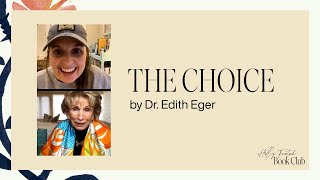
A Holly Furtick Book Club livestream focused on The Choice by Dr. Edith Eger. Holly introduces the memoir—highlighting its focus on surviving Auschwitz and the long, non-linear process of healing—and reads key lines (e.g., “suffering is universal, but victimhood is optional” and “healing isn’t about recovery, it’s about discovery”). Dr. Edith Eger (noting she is 93) joins for a live conversation about why she wrote the book, reframing trauma, forgiveness, self-love, and practical steps toward healing; the session includes audience interaction and closing encouragement to read the book.
Chapters
Foreign.
Welcome to the Holly Furtick Book Club. We are discussing this book, the Choice by Dr. Edith Eager. And I am so excited because in just a few moments Dr. Eager is going to be joining us. And so I just really can't wait to have a conversation with her. I can't wait to meet her. I can't wait for you to meet her. I want to talk about this book. So this book, the Choice, is the true story of Dr. Edith Eger. And she's a Holocaust survivor. When she was 16, she was sent to Auschwitz and she survived. And in this story, we track with her. I've never read a book like this before. I've read a lot of memoirs. I've read a lot of Holocaust memoirs and a lot of Holocaust fiction. And what I think was so gripping about this story was that it wasn't just about the horrible atrocities that Dr. Eager faced when she was in the concentration camp. And then all of a sudden the book ends and she gets set free. And you know, you, you are left to just assume that everything goes fine with that person. But Dr. Eger Only that her time in Auschwitz is only the beginning of the story. And the rest of the book, she takes us on the journey of her life to overcome the trauma that she experienced. And my favorite line in the book is she gives away at the very beginning and then she weaves it through the whole book. And that line is this suffering is universal, but victimhood is optional. And Dr. Eager takes us on her journey through her just recovery process and finding her place and coming to the United States and, and becoming a mother and becoming a clinical psychologist. And she takes us on this journey of her healing, her path to healing. And there are so many great quotes in this book. It's such a powerful testimony that anybody can experience healing, that healing is a choice that we experience in our lives. I love and those of you who are a part of this book club, you know, we love books about resilient women. And whether it's a true story or a made up story, it doesn't matter. You can learn from it. But this story is so special because it's about a woman who not only overcame so much, but she ended up devoting her life to helping other people overcome their trauma and find their own healing. And so, so we'll start with her characters. We have obviously Dr. Edith and her two sisters, Magda and.
Oh boy, you guys, Clara.
And Clara was the violinist and Magda was the one that, that was with her in the concentration camp. We have her, her parents that she loses straight on when they go to Auschwitz. And then also one of my favorite characters. And I don't know, you guys, if Bela was one of your favorite characters as well, but Dr. Eager goes on to marry a man named Bela, and he was truly one of my favorite characters in the book because he loved her so well and so patiently and was able to help her through her trauma. So here's one of the things that wrote down that was just such a touching scene was the scene where Magda had her head shaved. And she was so upset, and she says to her sister Edith, how do I look? And of course, this is Jessica saying the same thing.
So powerful.
When they got to the camp. Hold on, I'm going to interrupt myself and read Jessica's comment. So powerful. When they got to the camp and had their head shaved and her sister asked what she looked like, and her response was so terrible. And she says to her, your eyes look so blue. And I just thought, man, what an incredible response to be able to have to your sister and to just. Even the power of sisterhood and being able to go through that together. Another one of my favorite scenes. And I don't know if any of you can relate to this, but I loved how much they talked about food and in the concentration camp and just.
As sort of a.
This book is so well written, and it's sort of when you need a little bit of a breath and not comic relief, but a breath from the heaviness of the story. She starts talking about how they would. How they would share recipes and talk about cakes and how they would make this strudel and that.
And.
And it was just such a beautiful picture of sisterhood and focusing your mind on what you can and not on what you can't. Of course, you guys know I love cooking and I love food. And so she ends up going back to Auschwitz and she's scared to relive that trauma and to be there. And she experiences a moment of healing and a moment where. And so for me, I not only loved when she went back and she was able to experience the scene where she was. Yeah, Lisa, In. In Hitler's home. And the scene where she was really just trying to forgive and trying to find that place in her where.
And.
And just how she'd been dealing with it for so long, but still was. Was willing to face her fears and her trauma once again. But I love the scene where she saw her mother leaving and she allowed her mother to smile back at her. Just such a powerful book. Such A powerful story. I was thinking tonight as I was getting ready for our book club, that of all the books that we've read over the last two years since starting the Holly Furtick Book Club, if I could only tell you to read one book, I think this would be the one. Because not only is it a story that is so gripping and so beautiful, but you can't read this book without being challenged in your own life and without being challenged with your own issues that you face and traumas that you carry. And it's just truly one of the most inspirational, kick in the pants, cry your eyes out kind of stories. It's just every page in this book is so powerful and so good. I really feel like Dr. Eager is a modern day hero and that we don't have. We truly don't have heroes like this. We live in a world where people want a quick fix and we live in a world where I think we're very quick to blame others for our pain. And I'm actually really nervous to talk to Dr. Edith. I think. I don't think I've been this nervous to talk to any of our authors before because she's just such, such a true hero. And so. Okay, I'm gonna read you one of my other favorite quotes from the book. Let's see. She says healing isn't about recovery. It's about discovery, discovering hope and hopelessness. Discovering an answer when there doesn't seem to be one. Discovering that what happens that matters is what you do with it. And then she goes on to say, sometimes moving forward means circling back. And I just thought it was such a powerful picture, just over and over again that she paints that it's a choice that you make sometimes daily, sometimes hourly, to not allow yourself to be a victim. Let's do this. So excited. Let's see.
Hi, Dr. Eager. So nice to meet you.
Hello. Hello, hello, hello. I'm so happy to show up for you.
Oh, I am so, so honored that you had. Come on. I don't know if you know that we. My book club that we've been on Instagram all month trying to get your attention and we created a hashtag that was that said that we were eager for eager because we wanted so badly to talk with you about your book.
Thank you. Thank you, thank you. Well, you. You not only see me now, but I am so happy to be 93 years old and a good role model to you because you're the future. I'm going to call you the ambassador. You're the ambassadors for love. And peace and joy. And most of all, to have faith in the loving God that put us here.
Yes. So you're 93 years old.
Yes.
And the book came out three years ago. What made you finally decide at 90 years old that you were going to write down your story?
You know, Philip Zimbardo, who wrote the foreword, told me that people who survived are famous, are all men, that they need a female voice. And that's what pushed me into writing the Choice, which is really so, so wonderful that it's my great grandchildren's living room that my book is on that table. So I hope you're going to write your own book as well.
Well, I'll have. I have lots of time. If I get to wait until I'm 90. I have lots of life. I still get to live before I. Before I write my. My story still being written. What did you have to push through to write the story, even at 90? Was it. Was it difficult?
Very difficult. And there is a lot of tear in every page. But after the Choice, people told me that they need to write another book. I need to really write a more practical book. So that's why my second book, the Gift, and I'm going to send you. My Gift is about practical applications. It's the gift and 12 good, good, good, good ways for you to save your life.
I can't wait, because I honestly don't feel like a book could be more practical than the Choice. Because through your life, you just show over and over again that you were choosing to heal. One of the things that you say in the book is no one heals in a straight line. And I thought that was so powerful. Do you feel like you're still healing even today?
Yes. Yes. I think not only I'm healing, but I am also celebrating every moment that is left here because I think that people don't come to me, they're sent to me. And you were sent to me. So I celebrate every wonderful person who is now letting me know what they can do for other people that not just for the me, me, me, but to be really give the love that you're getting. And then we form a human family so we can empower each other with our differences.
So there's a lot of people who have read this book this month and who are watching this now, and I know that they're feeling frustrated in their path to healing because I think sometimes trauma can be so frustrating because it just. It comes back and you never know when it's going to come back. What would you Say to those people who are just still feel like they're circling the same problems over and over.
Again, I think it's not what happens, it's what we do with it and what we think we create. So it's very important to learn how to endure and how you find suffering that makes you stronger. So instead of panicking and complaining, it's like football. Timeout, Time out. Time out. And take stock of your life. Where am I coming from? Where am I now? And what do I want to do with the rest of my life? But most of all, look at life as one day, one day. And I am at the evening time in my life. And the question I ask, how do I want to be remembered? And I want to be remembered that I committed myself to you most of all, the young people who are the future, who are the ambassadors, and who will never, ever give up. There is a gift in everything. And I think that you are the most wonderful ambassador who went into the hard work of finding me. And I'm not easy to find. And here we are, you and I. And so I'm. You're actually your ophthalmologist. I'm going to help you to see things from a different perspective because it's not what happens, it's how we turn everything into an opportunity for growth.
So I love when you talk about in the book this idea of reframing our trauma.
Yes.
Can you talk a little more about that?
Yes. It's very important to reframe everything so we can use everything, what you thought was so dramatic as an opportunity to look at it in a way that you can discover your inner resources, that you don't wait for someone to make you happy, that you have the God within you that always looks at the love that. The caring that you give of yourself. So I think it is very important to take time out and ask yourself, how do I want to feel at the end of my life? And I want to feel very satisfied, very satisfied. Not what asking the world has given me, but in what way I can contribute to someone else's welfare.
I just. I love it so much and I can't even. I'm so nervous that I'm even getting to talk to you because I truly feel like you are a living legend, that you are just such an incredible example for my generation to be able to look to. Because so many, I think in my generation, we want to. I think especially as women, we want to blame and we want to be angry.
Yes, I know. Because children blame all the time and While you blame, you're still a child, no matter how old you are, you know, you can be mature or immature. You can really look at things from the point of view as a victim. I refuse that I am not a victim. It's not my identity, it's what was done to me. So that's very important to differentiate that. It's not who I am. I am a human being who went through an experience that made me stronger and better and a survivor and not a victim of anything or anyone or any circumstance.
Do you think that anger is something that people hide behind?
Yes, I think anger is not a primary emotion. You see, when you're angry, you actually give your power away to someone because you allow them to feel anger. When you actually want to look at it as an opportunity to discover that you don't let other people get to you, that you don't blame other people, and you don't stuff it either. You have to learn to dissolve it. So yes, underneath of anger are many other emotions. Emotion is energy, all energy. Everything is energy in motion. And so it's very important to think about your thinking and pay attention. What you're paying attention to, what you're focusing on has to come close in alignment to get closer to your goal. And the goal is called an arrow. An arrow that you follow. An arrow that you follow that, that you keep walking, walking. You're not revolving, you're evolving. Just like a butterfly. Yeah, that's why I'm wearing you, a butterfly. So you can shed the chrysalis, so you can fly freely like a butterfly. So this is time out to regroup and redecide.
So what would you say to a woman out there who is just feeling so angry and so it's perfectly all.
Right to legitimize your anger? It's perfectly all right. Anger is not a dirty word. The question is how long you're going to hold on to it. You got to go through the valley of the shadow of death. But don't camp there, don't set up household there, you see? And that's why, you know, we have beautiful way and we are really students for someone who can say love thy neighbor as thyself, that self love is self care. It's not narcissistic. Love yourself. Because if you don't love yourself, why should I? It's very important. Not narcissistic. Narcissistic people don't like themselves. So one of the things you want to really look at, one of the words is called shame. Shame is very, very Unfortunately, a word that people call each other or gut, to be cold or shamed. If you were a child who was shamed, you can easily grow up to shame yourself and others as well from generation to generation. And now is a good time to stop that. You can honor your parents, but you don't have to be like them. You can be the you that God created. And God created you, one of a kind. There never, ever be another you. And that's very exciting to me. So I like to turn anxiety into excitement. Yeah.
Do you think that there was a specific turning point when you look back in your life where you just. Where you decided to love yourself?
Well, let me make it simple for you. You either have something what you don't want, or you want something what you don't have.
Okay.
Okay. So it's really what you're holding on. And what are you willing to let go of? My definition of love is the ability to let go. Let go of the shame and the guilt. Guilt is in the past, but if you knew then what you know now, you would have done things very differently. So you must forgive yourself and give yourself a gift. Forgiveness is not me forgiving you. It's me giving myself a gift. We don't have any godly powers, but what we do, we do what's humanly possible. As you do at a young age, you're committed to someone, something other than you. And I want to give you a standing ovation for that. You're a wonderful, wonderful role model to every Muslim.
Well, it's because I have role models like people like you in my life that are just. I mean, you're. The things that you're saying.
I want to.
I want to write everything down. And I don't know if you can read the comments, but everybody is just.
I'm going to send you the gift. I will send you the gift. My. My wonderful assistant will ask for your address.
I can't wait to read it. I want to ask you one more question. You talk about. You tell your whole story in the book. And I think the thing that's the most comforting to me about your story is that it took a lot of time and that your healing journey took so much time. And I think that that brings comfort to the person because. Who is struggling to heal from a trauma. Because we want. We live in a world where we have a microwave, where everything is just immediate.
Yeah.
And yes, I think. I think even the fact that at age 50 was when you decided to make a huge career choice and just decided no Matter what I'm. I'm doing this. I'm. I'm going to change it and, and not. I think you set me free from feeling like I have to have everything perfect right now in my life.
Perfectionism leads to procrastination. I think very important what you're saying. I think if you can just live life as fully as you can to be able to really do as much as you can with our limited capacity, because we are limited. We're not limitless. I cannot go out now and start flying. I don't have any wings. But I can do many, many, many things that I will never stop. Never stop climbing. And I sleep and I climb and I sleep and I. And I climb and I never stop climbing. That's life. That's life. Yes. Children want everything easy and they want it now. They don't want to. They don't want to endure the difficulties that life challenges us. But you know, the more you suffer, the stronger you become. I get.
I heard you say that. You said when you have something to.
Prove, you're still a prisoner.
Yes, yes.
Can you talk a little bit about that?
I usually see mothers and fathers differently. See, I am the mother who hold you, especially if I have a boy child. You know what boy children do? They pee in your face when you change them. That's what they do. Okay, they don't care. They don't care. But the little boy looks at daddy differently. He looks at daddy and makes two decisions. I want to be just like him or I want to be everything he is not. So when he grows up, he becomes a priest. Even though the father wanted him to join the million dollar business, no problem. Because he gives up the need for father's approval. But when he says I'm never gonna be like him, he's still a prisoner because he wants to prove somebody wrong. So anytime you want to prove something, you're still a prisoner.
Do you think it's ever okay to want to prove something to yourself?
I don't think it's really proving anything to ourselves except to have faith that I am one of a kind Diamond. And I want to feel satisfied in my deathbed. I know I will feel very satisfied that I was able to give to the world rather than asking what I could get. So I think you are a future beautiful. You are now actually a role model to all of us. All of us. Because God didn't send you to me. No, you didn't come to me. You were sent to me. Yes, that's what I wanted to Say you were sent to me. So you are truly a beautiful gift of God.
So before you go, I just, I don't know if you heard me say at the beginning. One of the things that I think you set people free from right from the beginning in the book is when you talk about how we don't have to compare our pain to one another. And I don't know if there's anything else that you want to say about that because that was, that was really special to me because I think when women, when women are able to come alongside each other in their pain rather than compare that, that is when we're able to help each other on our healing path.
And the healing is a lifelong journey. It's about grieving, feeling, healing. You cannot heal what you don't feel. So it's okay to cry. The opposite of depression is expression. Crying is very good because what comes out of your body doesn't make you ill. If you don't, that will make you ill. Your body always talks to, to you. You better listen to your self dialogue and tell yourself before you say anything to anyone. Is it kind? Is it important? Is it necessary? And if it isn't, then you don't say it. Because God gave us two ears and one mouth so we would talk less and listen compassionately. Learning how to listen compassionately.
Well, Dr. Eager, I just want to, I just want to thank you for telling your story. I know that that was not an easy thing to put down and you could have said I've lived a great life, I've helped a lot of people. I don't want to go through the pain of remembering. But I feel like your story.
I'll show you what I will send you also with my book. This.
Victim or survivor?
Yes, Be a survivor and not a victim of anything or anyone at any time.
I mean this is a message that I feel like our generation needs, our nation needs and that the only way for us to find and experience healing as a nation is to experience it within ourselves first and doing the work inside us.
Be a good mommy to you. Be kind to you. Be kind to you. Don't put yourself down ever. Don't show that many times parents come with a finger and you should get scared that you're doing something bad or wrong. It's very important to have self love. That is self care. So I hope you get up in the morning, look in the mirror and say I love me. It's fine. Yeah, self love is self care. Very important.
That's so great and just thank you for your story. You say in the book, if I can do it, then you can do it. And I feel like that's the message of the book. And I want everybody to read your story because it brings just so much hope.
I hope. Yes. Never give up. Never ever. There is a gift, and the beautiful gift is you who came to this world to move beyond the me, me, me and commit yourself. Because love is not what you feel, is what you do. So we must then do right now what is in front of us, because it's temporary and we can survive it. Yeah. I wish you well and wonderful life.
Thank you.
Remember, God only made one of you.
Thank you so much. Such an honor.
You're a living legend and I'm just.
So honored that I got to chat with you tonight.
Me too.
Have a great night, God.
God bless.
Thank you. God bless you too. Wow.
That was such an incredible experience for me. I hope that it was for you too. I truly feel like I was in the presence of a living legend, of a true, true hero. That our generation needs women just like Dr. Eger to look up to and to listen to and to follow. And I just love her message that healing is a choice. And that while we can't control what happens to us, we can control our response every single day. Sometimes we have to choose to have have the right response. And I hope you enjoyed that interview as much as I did. I took so many notes and I just hope that it impacts you and if it did, like it, share it with somebody that you think it'll be meaningful to. And also, if you're not officially a member of the Holly Furtick Book Club, go over to holly Furtick dot com. All you have to do is give me your email address. I promise I'm not going to spam you. I'm just to going to send you an email once a month to remind.
You when we're meeting and what we're reading.
And I will see you back here next time.
More from Holly








The Ultimate Packing Guide: Nurturing Your Soul with Gratitude for the Journey Ahead


