The Exiles | Holly Furtick Book Club
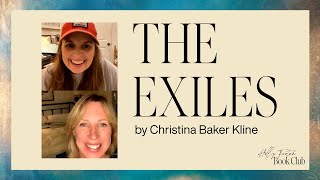
A Holly Furtick Book Club livestream (early 2021) focused on Christina Baker Kline’s novel The Exiles. Host Holly and the live audience discuss characters (Evangeline, Hazel, Mathinna, Ruby), major plot shocks (notably Evangeline’s death), and themes of resilience and exile. Christina Baker Kline joins to discuss how she found the story (NYT “Motherlode” column inspiration), her research and craft (handwrites first drafts, revises extensively), structural intent (a three‑part ‘baton‑passing’ Hero’s Journey), real‑life basis for Mathinna, publishing notes (paperback due in July), and screen/series optioning by an all‑female production team. The program closes with Nora Briggs (Dollywood Foundation) describing Dolly Parton’s Imagination Library: program model, impact (150M books gifted to date), current scale (1.7M books/month across five countries), and a $25,000 gift/partnership announced by Holly’s book club to support local library partners.
Questions this video answers
Held as a Holly Furtick Book Club livestream in early 2021 (context indicates January 2021 session).
150 million books.
Approximately 1.7 million books per month across five countries.
$25,000 toward local library partners and Imagination Library efforts.
Pilot P500 extra fine black micro tip.
Chapters
Foreign.
Welcome to book club. It is our first book club of 2021. How many of you are excited to be a part of book club in 2021? It is the Holly Furtick Book Club. And I am so excited to discuss the Exiles by Christina Baker Klein. Now, I think this was my favorite book that I read in 2020. Now, I read a lot of books in 2020. I read a lot of great books in 2020. I probably have a top five, three. Five. This would be in my top two of all the books that I read in 2020. I loved it that much and I cannot wait to discuss it with you. I can't wait to get Christina on and get to talk to her about this amazing story. Now, this book takes place. I don't know where I would say it takes place. Takes place in. It has three locations and it has three main characters. So your first location is in London. Your second location is on the ship, and then your third location is in Australia. Because this is about a book about a woman who was sent to as an exile to Australia during the time period in history when the English were sending prisoners to Australia, and they sent prisoners to Australia to colonize Australia. And then what happened was they realized they really only sent men, and there were nine men for every one female. And so then they started exiling women. And so women who were accused of, like, fairly petty crimes, like stealing would be exiled to seven years in Australia, which obviously, once you go to Australia, you're never coming home unless you're wealthy, which you wouldn't be, because if you were wealthy, you would have money and you would have a lawyer, and that probably wouldn't have happened to you. So I love this book. I love the setting, the settings. I love the characters. Because those of you who have been a part of our book club, you for a while now, you know that my favorite books are books about resiliency. And then on top of that, books about resilient women. And here we have three extremely resilient women. And there are so many twists and turns in this story and so much history in this story that we learn, and it's just awesome. All right, so let's get started. You tell me who was your favorite character? And we have. I'm going to give you a list of characters. You guys can start, like, chiming in and commenting. But we have Evangeline, who is our starts off and she is our. She's a governess, and she gets accused of stealing a ring, and that's how she ends up in Prison. So we have Evangeline. Then we have Hazel, who we meet on the ship, who is this saint, 17 year old girl who has had a really rough life and now she's being exiled. A lot of you guys are saying Hazel and Angeline are your favorites. Hold for that. Then we have Mathinna, who is our Australian native aboriginal. And we follow this little girl who was considered a princess. And this British family sort of, I wouldn't use the word adopts, but they sort of like take her on as a project. And so you're following this poor child. And then we've got olive, we've got Dr. Dunn, we've got Ruby, who is Evangeline's child that she has on the ship. How would you like to be exiled as a prisoner on a former slave ship, which is just crazy in and of itself that they put these women on freaking slave ships and sent them to Australia. A lot of you are saying Mathinna's character broke your heart. Ashley Barclay says, I love Mathina too. I love them all. Lisa. Lisa loves Dr. Dunn. Some of you are saying Mathinna was so precious. Lana's mom says doc. And Hazel. Christy Collins says Olive was great. Mathena. You guys love Mathina and Olive too. The name of the book is in the title. Emily says, unbelievable. So Ruby, then we've got Buck, who is really our, our bad guy and our villain in the story. And I know he's not going to be your favorite character, but he turns out to be a really interesting character. And guys, I read this book twice. I listened to it back in.
I.
Don'T know, right when it came out. Whenever that was, I listened to it and I loved it so much. I immediately wanted to make it a book club book. You guys are showing your hate for Buck. That's awesome. I immediately wanted to make a book club book and I immediately wanted to talk to you guys about it. So again, that's why I'm so excited to talk about this book tonight. But when I read it the second time, I just loved it even more. And I think when you can listen to a book twice and still love the characters and still love the story and, and get some nuances to the story that you didn't really catch the first time, I think that is a telltale sign of a great book. So, all right, we've got our character list. Chrissy Collins says she listened to it in one day. I don't think I listened to it in one day, but I think I probably was like under 3. Mimir09 says, first time watching. Welcome. Glad you're with us. Saved by lacrosse and Caffeine says that you loved Evangeline and you couldn't get over her fate. All right, so you have just let the cat out of the bag and we can go ahead and talk about that. How many of you were so shocked that Evangeline died in practically the middle of this book? Maybe not the middle. Two thirds of the way through the book, the main character is killed by Buck. I was so shocked, and I'm so excited to talk to Christina. Christina, you need to be ready to answer this question. How in the world did you have the guts to kill your main character two thirds of the way through the story? I was shocked. My sister Emily says shocked. I know. I think Emily was mad at me. She texted me and was like, what in the world? And yes, Jackie, same thing. Because she falls off the ship and you're like, well, maybe she didn't die. And then all of a sudden, we go to Mathinna's story. Emily says she almost quit reading the book. Joanna texted me and she said she was right in the middle of it. And she said, this book is, like, worse than 2020. It just. This girl's life keeps getting bad. And did she actually die? Joe Erica Lopez said I had to keep reading and stayed up till 1am to finish. I mean, to me, like, the fact that the main character dies in the middle of the book made this book so good. Because I was, like, I was so shocked and I was so sad. And then I was so intrigued, and I wanted to know what happened next. Beth says, it took my breath away. Stephanie said she had to go back. Yeah, because you were like, wait, surely she didn't die. I mean, this is like, what else could possibly happen in this book? Elizabeth says, I skipped ahead to see what happened to her. I know. Jennifer says, that's so true. Worse than 2020. So. All right, so we have that memorable scene. Let's talk about some more memorable scenes. I really loved. Okay. I had two more favorite scenes. I loved the part where Hazel was in the jail and she was so depressed. And how, again, like, this is where the resiliency of women comes into play. I loved how she had to really pull herself together. I thought that was really beautiful and really well done. I'm wondering what some of you are thinking. You guys are still talking about Evangeline dying, because that was just so shocking. And Charlotte, I loved what you're. What you said, too, about Ruby going to. Going back to Find her dad. So, okay, somebody says, wait, which part? The part where Hazel. Okay, so she's. They take the Ruby away.
They.
They shave her head. They put her in solitary, and she has to, like, untie the knots. And she's so sad, and she just wants to, like, quit, and she wants to die. And she, like, just gathers her wits and she remembers the quote about the rings, which. I mean, that was my favorite quote, of course. And we're going to talk about that. I just thought that. I thought that was so amazing how Hazel was, like. It was up to her. Like, her survival at the end of the day was up to her, and she knew that she was gonna have to pull herself together in order to survive. Ashley says, I love that part, but it broke my heart, literally. Tears. I know. It was so sad. What else are you guys saying? Hazel had a choice, and she had to choose to live, or she wouldn't have made it. Exactly. Ashley says, the way they killed Buck was brilliant. Yes. That was amazing. Um, let's see. Rhonda says, I thought we were gonna lose Hazel. The solitude was so tough. I thought we were gonna lose Hazel, too. And I was. Then I was not gonna be okay. Then I was gonna be mad at the book, so. And then my last favorite part was the part about where Ruby goes back and she meets her biological father. And I want to talk to Christina about that. So let's get Christina on.
Hi. Hi. Oh, my goodness.
Thank you for being on tonight. I'm so excited to meet you.
I am so. Oh, I'm gonna take off my glasses because they're all reflecting. Hi. I'm so happy to be here.
I really appreciate it. We really loved your book. I don't know if you've been listening to us chat about it, but I've.
Been listening the whole time. It's been so interesting. And seeing all the comments from all the amazing readers. Thank you all so much for reading the book. And I know there were a lot of shocking things in. Was a very intense story to write, and, you know, we'll talk about that.
Okay. I love it. All right, so really quick, just so we could get to know you for a second, I need to know where you grew up. Where did. What did it say in my bio of you? I thought that was really American South. Where did you grow up in the American South?
So I lived in Gastonia, North Carolina. My mother was there. Yes. And Chattanooga, Tennessee, where my dad is from. And Johnson City, Tennessee. But we lived all over the place because my parents. My dad Was a young professor, and we moved around, and I was born in England. We lived there for nine years. I have dual citizenship because of that, and I have relatives in England, but all of my American relatives are Southern, so. And then we moved to Maine because, truthfully, because my parents were kind of hippies. And it was in the middle of, like, all the turmoil of the late 60s, early 70s, and I think they just left the south and moved to Maine and kind of became professors at the University of Maine. And they taught there for 20. For 30, 30 years. So that was what brought us there.
Yeah, and that's amazing. That's a huge. It's a lot of culture jumps that you made. To go from England to the south to Maine. That's like, very different people.
My dad actually went to Wake Forest Seminary. He was studying to be a minister. And I was thinking about that tonight when I was reading about you, Holly, and, like, learning about this. But he had this. He used to preach on Sundays when he was in college. He played football on Saturdays. He was a quarterback. And he went to Furman, and then he, you know, he would preach on Sundays. And then he went to the seminary. And one summer he had a fellowship to go to Cambridge to study theology, and he ended up staying and doing a PhD. So that was how that happened.
That's amazing. Yeah, really amazing.
I love it.
Well, we have a lot in common. All my family lives near Furman, down in Greenville.
Yep.
And Gastonia is right down the street from us. And so that's awesome. Okay, so a few quick questions just so we can get to know you. If you had to pick between the two, would you pick French fries or ice cream?
That's so funny. My husband is obsessed with ice cream, but I am a salty versus sweet person. I like salt, so I would probably say French fries.
Okay, me too. I love French fries. Beach or mountains?
Definitely beach.
Nice.
Although I hike every day with my sisters. We live on an island off the coast of Maine. We've been here since March. It's called Mount Desert island, and it's connected by a causeway, so you don't have to take a boat. But we have mountains and beaches. Although we're in Maine, so it's not necessarily like a Southern beach. But we hike every morning. There are four sisters, and we have. All of our families are here, and we hike.
So that is amazing. My. My sister Emily is on tonight, and.
Hi, Emily.
We. We don't live that close to each other, but we are really good friends, so we live two hours apart. All right, well, how do you like to read? Do you prefer to hold a book or audiobooks or e reader?
You know, I love Audible, and when I. Before we moved to New York City after my youngest went to college a couple years ago, we lived in Montclair, New Jersey, and became friends with Don Katz, who's the head of Audible, who's this wonderful guy. He kind of invented. I mean, people did books on tape before, but this digital version of it's just exploded. So I do love audiobooks, but I really like holding a book, so I prefer not to read on an E reader. I know people do, but I'm one of those people who desecrates my books. I mean, I underline and write notes in the margin, and I really like to have an actual book.
I. I like Audible because I like to have a story with me everywhere I go.
Yeah.
And so I just blow through audiobooks constantly. But the one thing that I don't like about them is you can't underline. It's very hard to like, you know, you can. You can notate certain passages. But I was trying to go back, and my favorite quote from the book, and even though I found. I marked it in audible, I couldn't find it in the book, and I was super frustrated. So I will say there is nothing like holding a book in your hand.
Yeah. And then you can just always go through it and find the things that you are drawn to. And it's funny because my. As I told you, my mom. My parents were professors. My mother would always write in her own books, especially because she taught them. And so when I was then studying and then even teaching, I would use her books where she had under. I mean, it was so interesting.
Oh, that's special.
My son called the other day, and he's like, mom, I have your copy of the Great Gatsby. And I'm. He's at college at Duke, actually, in the South. And he said, you know, I. It's really fun to see the things that you underline. So there is something to that. I know a lot of people don't agree with writing in a book, but.
Oh, I definitely agree with writing in a book. So. Okay. Do you have a book that made you fall in love with books?
Anna Karenina, I think, because it's such an epic story and it's so intimidating. Like, a lot of people are afraid to read it because it seems enormous, and it's written by Tolstoy, and it seems like it might be boring, but it's so filled with life. And it just blew me away and inspired me. And now I read it every five years. I like, I pull it off my shelf and reread it because I want to kind of see if it's still has the effect on me that it had when I was 26. And it does. I mean, it's such a brilliant book.
Okay. I'm so glad that you said that because I like to go back and read classics books that I didn't, you know, should have read, but didn't or whatever. And so, like this summer, I read Pride and Prejudice for the first time. Oh, yeah. And so I bought Anna Karenina and I haven't had the courage to start it.
Right.
And I texted one of my friends who is like a huge reader. She was like a literature major in college and all of that. And I was like, do you think I like Anna Karenina? And she was like, I don't know, it's kind of slow. So I didn't, I haven't started it yet. But if you say that's the book that made you fall in love with books, I'm going to do it.
Honestly, it is. I didn't find it slow at all. I mean, I, you know, my rule for my kids when they were growing up was the 50 page rule. Like, you have to give it 50 pages before you give up on it. Because some books do start slowly and some are faster. But with Anna Karenina, I just felt like his understanding of life was like 360 degrees. He. Tolstoy was able to concentrate on the minutia, but also show the big picture. It's such a mind blowing thing. You know, you're in the hands of a master when you read that book. I really think. I'd love to hear what you think about it.
Okay, I'm. I'm going to do it. I don't, I'm. I don't.
I have a couple books I have.
To read first, but I am. I'm. I'm going to read that book this year. So. Speaking of, you said books that start slow. I do agree with that. I also think the longer the book, the, the slower the start is. But I do not think that the Exile started slow. And I think that was one of the things that really grabbed me was from the get go, I was in, I loved Evangeline. And you kind of know what the book's gonna be about. And so you're, and you let the story unfold fast enough that I was just gripped from the beginning. But then I really Liked how you took your time. Like, once she got on the ship, it was a four month journey. And so it felt like a four month journey. And like, you know, like, I thought that was. I thought that was really, really great. So take us back and tell us, like, do you believe that stories find you? And so if it, how did this story find you?
You know, I. What I do think is that you don't always know consciously why you're drawn to a story until later. So. So I read this article in the New York Times. There used to be a column called Motherlode that was about parenting that I read because my kids were early teenagers. And this one column was about the convict women having children on the ships. And I'd never heard of them. I didn't know about it, and I was just completely captivated by it. And this column was never about history. It was like a contemporary, you know, parenting column. So I read this piece and I thought, this is an amazing story. After I got involved, after I, you know, started doing research for the novel, I remembered all the stuff that. Or I sort of realized that all these parts of my life came together. I had gone to Australia as a Rotary fellow in my 20s and fell in love with it. I was there for six weeks. Then I taught in a women's prison. I wrote a book about mothers and daughters. And all of those parts of my life kind of came together when I wrote the Exiles. And I think when I read that article, I didn't know it at the time, but, like, somehow those three different things melded and I realized this was the right story to tell next for me. I just felt very exciting and interesting.
So you get this idea and then what, like, did you start with one of the characters? Because, you know, you want to write about these women, so where do you go from there?
So actually, I. I don't always say that. I don't always talk about this, but my. All my novels have different kind of models and structures. And for this novel, I realized it was going to be kind of an epic adventure story in a way. And so I went back and rereading the Hero's Journey by Joseph campbell, which is 12 steps. You know, the Hobbit has the Hero's journey, and many of these epic adventure stories have it. And so I was looking at the 12 steps of the Hero's Journey, and I realized what I wanted to do was to have that journey go through three different people. So it starts with Evangeline, moves on to Hazel, and it ends up with Ruby and you go through every single step with those three. But it's like I envisioned it as passing a baton. I know you guys were talking earlier about Evangeline. One of the things when I was doing research that became so clear was how capricious this experience was and how. How incredibly, like, vulnerable you were to turns of twists of fate. Women would slip off the debt and disappear and. Or the kind of thing I describe where, you know, a drunken sailor would do something terrible. Those kinds of things happened. And one of the things I wanted to emphasize in the book, and the reason that. I mean, poor Evangeline was the scapegoat, I suppose. But I did feel like once the reader gets to this, she'll. Or he'll realize that nothing is. You can't count on anything in this world. In that world of my book, as I read the stories of the convict women, I was struck over and over again by how vulnerable they were to the. Just the winds. They had no agency because they were captive, because they were convicts. So I wanted to really hit that home and for people to see how. How much. How easily. How quickly things could change. But also, Buck was, you know, Evangeline passes the baton to Hazel, as I said, she passes all these things that are both literal and metaphorical. She passes, you know, she passes her necklace. She passes the handkerchief. She passes ruby. Right, right.
Her daughter.
She also passes the gift of literacy. She teaches her how to read. She passes poetry. She passes, you know, the tempest, the metaphor of the tree. You know, so you've got all these things that go from one character to the next and then to the third. So that.
Well, and like, one of my favorite things. Cause I didn't actually think of it as, like, passing the baton, but you actually gave a picture of that with the quote of the rings and how you have Evangeline, kind of like, when she's in prison, she sort of reveals this idea of how your. Your life is like a tree. And the rings represent the people within your. Within your life. And so they're. And they're always with you. And so then she tells that to Hazel, and then Hazel tells that to Mathena, and then Mathena tells that to Ruby. And they each have their own version of it. Like, it sort of morphs every time. And truly, that was my favorite thread of the book, was this idea of just resiliency. And the people that come in and out of our lives and the things that happen to us, good and bad, are all a part of who we are.
Right.
And you don't lose them. When they leave you, they're still with you. And I just thought that was so beautiful the way that you did that.
You know, one of the fun things about writing novels is that you can sort of express aspects of your own philosophy in some ways. And with Orphan Train, there's a line at the very beginning in the prologue where this old woman, you know, Vivian, says, I believe that heaven is a place in the minds of others where our best selves live on. And that I wrote that scene right at the beginning, actually. I mean, it is the prologue, and I wrote it right at the beginning of writing the book. And it sort of set the tone for me of the whole novel. And this story of the Rings, this idea of the Rings of a Tree occurred to me at some point early on. And it's exactly the same thing that I thought. This is really what it means to connect with other people, that you carry them with you to that they build around your core. You know that each person who means something to you is strengthening you. And no matter what happens to them, they're there inside of you. And so, in a way, it's a similar sort of philosophy, as you can see. But I loved that concept. And then that Mathinna had her own cultural concept, which, by the way, I read about in an Aboriginal sort of a book of mythology and tales and whatever. But this idea, that of the shells which were made by Aboriginal women, the Palawa tribe made these necklaces with little green mariner shells. And that. That idea that you're the necklace and the shells are all the things and people and places that mean something to you.
Yeah, I mean, it was just brilliant. And it was so beautifully woven throughout the story, and it wasn't too much. And I just. I thought it was great.
So I've.
I heard you say in an interview that you actually hand write your manuscript.
I do. I do. I know. I know it's weird, but a lot of people do. I was just talking to Kristin Hannah, who you mentioned earlier, the nightingale. She's really a dear friend. And she handwrites, too. We both do. Barack Obama not to care, but Barack Obama writes by hand. And, you know, we all have our favorite pens. I actually read. So I had a favorite pen, and then they discontinued it, and then I hoarded it. And then, like, I started running out of it and I was getting very nervous. And I read a Paris Review interview, I believe, with Ann Tyler, and she said, I write longhand and the only pen I can use is the pilot P500 extra fine black micro tip. And so I immediately ordered it. And it is my. I've now had it for like five years, but it's my new favorite pen. So now I hoard the pilot P500 microtip.
So everything is. Is handwritten. How much do you go back and like, scratch out or.
Oh, my God, so much. No, I write the first draft. The first draft is handwritten and then There are like 10 more drafts. I did an event last night with Fiona Davis, who wrote the Lions of Fifth Avenue. She's amazing and does serious research. And we were both lamenting that we wish we didn't have to revise as much as we do, but we both are serious serial revisers that you just, you know, you write. So I write longhand. My next draft is typing in.
You type it in yourself?
I type it in myself. Kristin doesn't actually. I. For me, that is the most important draft. I type in myself so that I can really get a handle on what I got handwritten and put things together, pull things from different places. In a way, it's the most fun because I've got a full draft. I know it's not the final, but it's. It's sort of a pulling things together draft. And then, and then I have that draft and I print it all out and I read it, Print it. I mean, it's so. Such a waste of trees. I know, but I read it. You know, it's okay because I listen.
To it on audiobook, so I saved a treat.
That's good. So we're balancing. We're balancing. Meg Walitzer says that she then prints it out in a different font for the next version. And I do that sometimes. I will print it single spaced or one and a half spaced or, you know, in a different font anyway, whatever you can do to sort of jolt your mind to see it in a new way. And then eventually your editor gets involved and you have to revise it again. So it's just a lot. I know it looks like there it is on the page and it just happened. And it's still, no doubt, not perfect, but it just. There were so many different, you know, so many different versions that went into it.
That's so fascinating because I think people have this misconception with anything creative or spoken that it just, it just. You like the story just just came out of you. And in a sense it does. But it's a lot of work and it's a lot of, of of revising and, and making it, making it better. And I think I've seen that with my husband and the books that he's written and when he prepares his sermons and everything, and how just the best of the best, what they're good at is revising and letting go of something that they thought was a good idea, but really it was just something to get them to the next idea, you know?
That's so true. And the work is what you're talking about, like, that he puts in that work to get to the next level with it all the time. There's this great quote from Picasso. He said, inspiration exists, but it has to find you working. And I love that because what it means is really just that, like, don't wait for inspiration to strike. You actually need to be doing the work, and then you'll be inspired. It's interesting to think of it the opposite way.
Okay, that's amazing. All right, so tell me about the title. Did you have the title at the beginning? The title?
No, I actually didn't have the title at the beginning. And we went through a lot of titles. I mean, at first I was thinking tim Ticket, you know, because this ticket that she wears that means so much. But by the end of it, the book felt kind of epic in a different way. And we realized. I was realizing that I used the word exiles in the book a number of times and that they are all exiled. All these women are exiled. And what a concept to be exiled. What does it mean to be. To be sort of cast away from your. The place, you know, the home you love. So I felt like it was perfect when I came up with it eventually. Do you like the title?
I love the title. I. I absolutely. And to be quite honest, it didn't really sink in with me until the second time that I read that I read the book because, you know, you get more the second time. And I know I didn't really think about. I mean, obviously, yes, the English women were exiled to Australia, but I didn't actually think of Mathinna as an exile until the second time that I read the book. And I was like, oh, yeah, they were. They were all exiled and they all had to fight and. Okay, so. And let's talk about Mathinna.
Yeah, great.
This is the other thing that I loved. How you. And you haven't answered my question yet. How you had the guts to kill Evangeline, but then also what you did with Mathinna. I think I don't want a book when I read. I don't want a book that's perfect where, like, Everything good that you want to happen happens to the character that feels, I don't know, unrealistic. I know it's fiction. I don't know what the right word is, but that's. I don't like that in my stories. But I also don't want a book that is so gritty and so sad and so frustrating that, like, everything bad happens. And I thought you had a really nice balance of, like, not making Mathena, not fixing Mathena, that, like, actually making the statement that this poor child, this poor woman, like, she never came back from what they did to her or did she? So, like, do you feel like when you finished writing. But then I know you kind of left her open, and I like to think that she somehow fought back and, you know, and came to a place that was where she could live a life that was fulfilling for her. But do you think about that? When you do, you leave it open. What do you think happened to Methena?
So the issue with Mithinna and something that a lot of people don't know is that she was a real person and she lived with the Franklins and she had that life, and what happened to her was so tragic in the end, in real life. I read about this on my website, and I. If you go to. If you Google her, you'll see all this stuff. But she drowned at the age of 17, not long after the Franklins abandoned her. She was either murdered or she committed suicide, or she was. It was a drunken mistake. Nobody knows, but it was really tragic. And she. After they abandoned her, she was caught between two worlds. She couldn't go back to her own people because she'd lost her language. And her stepfather died, and they didn't accept her, and the white people were not accepting. And so she ended up working in what they called a grog shop, which is like a pub. And there's a question of whether she became a prostitute. I mean, there was. It was a very hard life, and I didn't want to. I felt like the book had enough tough parts. I wanted to end on a moment of connection with her and not end with her drama. More tragedy. And that's the hard thing about writing about real people. So, as I said, was a real person. And I felt like I needed to be faithful to her story.
Well, I think you were absolutely faithful to her story. But as someone who didn't know that she was a real person, I could just imagine that she somehow found a place where she belonged. And so I think. I think that. So my mom Just. She just commented this. She said parts of the book felt raw at times, but also hopeful and exciting at other times. And so I think you. I think you left us with hope and hope for Mathinna or maybe others like her, and hope for Hazel. And just. It was enough. It was enough grit to keep me rooting for these women, but then also enough hope to make me feel like, you know, I was reading. I don't want everybody to die in the book.
So I felt very much that it wasn't a grim book, but I understand why. I understand that it was a hard journey to go on. But you know what? Honestly, that real story was really intense and I did my best to make it. What I wanted to emphasize were the connections between women and the friendships that were made and the strides they made. And for the convict women, unlike for Mathena, unfortunately, terribly. But for the convict women, if they could survive all that, when they got out, they had a lot of options, a lot of social mobility, and as you could see with Ruby, a lot of choices. And so it was really exciting to write the Ruby section where she's very self actualized because really, in one generation, the next generation of Australian women kind of kicked ass and were amazing.
Yes. Okay, so before we talk about Ruby, tell me, when did you know Evangeline has to die? And did you ever. Did you ever try to make her live? Did you ever take it back out?
And I always knew. I knew at the beginning because I. The whole story arc with Buck, I mean, the whole story was about Hazel coming into agency because Buck was still out there. And, you know, all everything was contingent on every other thing. And he had done this terrible crime and had never true. You know, he escaped from prison. He was still on the loose. There was just. I knew that that had to be a story arc that was solved, you know, and there are a lot of stories. I mean, if you read Greek tragedy, this happens all the time. If you watch Game of Thrones, it happens all the time. It's just not so common in, I think, in novels, you know, that aren't sort of of a series and whatever else. But I want again, I just. I knew that. I knew that poor Evangeline really didn't have what it took to survive that experience. I mean, she was our guide. She was a stand in for the reader. She's literate, She's a reader. You know, as she descends into Hades, literally going down the steps into Newgate Prison, we go with her. Everything is a fresh shock to her. She's Completely shocked by everything. And then after we're on the ship with her for a while and we eventually move to Hazel. We need someone who's an expert, who knows what she's doing, who has a skill, like a superpower. And I thought of Hazel as a superhero. I mean, just that she has this ability to both heal and hurt with her. Her skills. She can barter with it. People want it. You know, she's very confident. She's very sort of brazen. She's very sure of what she wants in life.
But also kind of dark.
Yes.
Like, has this darkness in her past, which makes her really interesting. And you kind of want her to soften up. Like, she's strong, but she's not quite softened.
Yes.
And beautiful. Beautiful character in Hazel. I don't. We haven't given Hazel enough of our time tonight to just talk about. I think Hazel was my. Was my favorite character.
I love her because she's just so resilient. And we were talking about resilience earlier. I love that she. I just think she could survive almost anything. You know, she just. And I loved that Dunn eventually was able to, even though. And here. Here was part of my. What I was trying to do with that story, which is, you know, if you've had more than one boyfriend, or if you've been divorced and married someone else or had another whatever, you know, or girlfriend, you know that different people bring out different parts of you. Right. So Evangeline really spoke to Dunt's literate self and poetry loving. And they're very cerebral. And then Hazel was just much more practical. But they were able to connect professionally once he got over the shock of, like, deferring to a woman in some ways. But I loved that they could share this very different kind of life and that he would still find joy in that way and that she would, too.
I loved it. I love their relationship, and I love that their romance was sort of like, not really the point, but still something you wanted, but it just wasn't like, it wasn't the point. Okay, so before we run out of time.
Yeah.
I want to talk about Ruby, because again, as somebody who reads a lot of fiction, when I realized what you were doing with Ruby in this. In the. At the very end, she's back in England and she's knocking on the door of her biological father, and he, you know, you find out that he's single, he never married again, you know, or never married at all and doesn't have any children. My mind is like, oh, Ruby's gonna inherit everything that her mother deserved. And then you just, like, did this little turn again, and she's like, no, I don't. I don't want that ring. Don't put that on me. And I just thought that was so great.
Do you remember when Ariana Grande broke up with Pete Davidson?
Sure.
And she wrote a song called thank you Next. Or it had a. And I thought of that the whole time I was writing that scene, because I just thought, Ruby's gonna get in there, and she's like, I'm gonna get what I need here, and I'm gonna thank you for your service because I would not exist without you. And then I am leaving you behind. And I loved that I was able to end the book in the same exact place. It started right on that front stoop, basically, with Evangeline. And that Ruby got answers to questions. And that in some ways, Cecil Whitstone represented. Well, in many ways, he represented old England and those. You know, that hierarchy and all the sort of staid, sad, quiet, you know, lack of ambition and everything else, lack of excitement. And Ruby represented this new world, and she was gonna go and claim what she needed. And I. I'm sure she had a happy ending.
I. I'm sure she did, too. What a great story. Anything else coming for this book? Is there anything? Is there anything? Is it still gonna live on?
Yeah. Paperback is coming out in July, and there's a lot of exciting stuff happening with the paperback. And it's just been a real joy to publish this book because the readership has been really engaged and it's been a fun book to talk about. A lot of book clubs are doing it, and, you know, I think it's a story a lot of people don't know that much about. And I also think there are so many parallels with America. You know, we've got the story of Australia, this new continent, and there's a lot that we can think about in our own lives, too.
I heard you hint that maybe there was going to be a show.
Yeah. So it's been optioned by the team who did Big Little Lies and the Undoing and Wild, and it's an all female production team based in Sydney, Australia, and La Bruna Papandrea. She used to be Reese Witherspoon's production partner, and they're really excited and they're moving ahead. So I'm an executive producer, which I'm really excited about. And we're doing it. We're doing it. We're gonna make a movie. I mean, it's actually a series. We're gonna make a series.
That's so exciting. And I can't wait. I will definitely, I'll definitely watch it. I don't always, like, you know, sometimes if you read the thing, then the show's not as good, but I will for sure watch it. And what are you working on now?
I'm working on a new novel that takes place in Civil War era North Carolina. So we'll talk more about that another time.
Is it still in the handwritten phase?
Yes, very early. It's really still in the research phase. I'm reading lots of books right now because the Civil War era is a nightmare because the people who are obsessed with the Civil War are insane. They know everything.
Also a very, you know, touchy subject right now.
Yeah, very.
So, yeah. That sounds amazing. I can't wait. Thank you so much for joining us.
Thank you so much. This was so much fun. I hope you guys enjoyed it. I loved being here and I love seeing all the comments, and I really just appreciate what you're doing so much. This is the coolest thing, your book club. I'm gonna be. I'm gonna be lurking on many of your conversations.
Thank you. Thank you. We're reading here. I'll do our reveal for our next book club with you on. You might have read this book where the Lost Wonder by Amy Harmon.
Oh, I haven't read it. How wonderful.
It is awesome. So thank you so much for being on. We really loved. I wish that you. I know once you get on, you can't really see all the comments, but everybody just loved this book so much. It was such a great book to start the year off with. So thank you.
Thank you, Holly. All right. Well, thank you all so much.
Have a great night.
Okay, Bye. Bye.
Bye. All right, guys, that was awesome. I have the biggest smile on my face because I love talking about books and I love talking about books with all of you and I love all your excitement.
Excitement.
So what a great start to 2021. All right, so real quick, before you click off this week, I have the opportunity to talk with Nora, who's the executive director of the Dollywood foundation and the Dolly Parton Imagination Library and the Holly Freudick Book Club and Elevation Church Outreach. We're going to be partnering with these organizations and local libraries and in order to get books in the hands of kids, it's an amazing organization. I want you to hear more about it. So check this out. I'm talking with Nora Briggs today, and she is the executive director of The Dollywood Foundation. And one of the things that I'm excited about, Nora, this year is that the Holly Furtick Book Club and Elevation Church that we wanted to partner with some organizations that are really making a difference in literacy, especially in our country today. And so I love the Dolly Parton Imagination Library and I would love for you to just tell us a little bit about it.
Perfect. Well, the Dollywood foundation is Dolly Parton's nonprofit and her flagship program is Dolly Parton's Imagination Library. And that is a monthly book gifting program. So every month, in conjunction with local partners and community heroes who register children 0 to 5, they get a specially selected age appropriate bookmailed to their home, which is so important. We know that kids in particular need to be read to and need to be loved and snuggled and cuddled with their people that they love in their home in those early years. And it's very simple. It's just to inspire love of reading, make that connection and heart connection in the family and hopefully inspire them to be able to dream and self teach themselves. Just put that great foundation out.
Yeah, I love books, obviously, and books have been just a foundational part of even my memories. I was talking to my husband the other day about, I said, do you, do you remember going to the library as a kid? And he was like, yeah. I said, I just, I have such vivid memories of going to the library and checking out books and. And I remember the smell of a library book.
I remember that too.
I have such a. Such great memories of books. And I don't know if you know this about me, but I also was an education major in college. So my favorite class that I ever took in college was children's literature. And I remember the professor talking about the importance of reading to your children even when they're babies and you think they don't understand. And her explaining how the importance of just having book literacy.
So, you know, the reading network in a child's brain doesn't naturally exist. We're not born with reading network, so it has to be built. And the best way to build it is interactive reading. And all that means is reading out loud and singing and talking about it and making the sounds of words and making it really fun connects the brain. And when it's most important in the 0 to 5, that's when that developmental piece occurs most rapidly. It's when that reading network and the language development and comprehension really takes place. And so if you wait until kindergarten to that first exposure at books, you've missed the most important Window of opportunity. And the other thing too is Dolly calls this her heart program. And it really is about just connecting the hearts of the families together around reading. And what happens is when a book comes to the home every month belongs to a child, they know it's theirs. It's specially selected. They make something happen in the home. Somebody is going to crawl in the lap of someone else. And there's hugging and there's laughing and there's reading and there's talking. And it's not just the little child, it's the adult siblings. It could be the neighbor, friend, the aunt, uncle, the caregiver. And it starts to create this really special bond with just the family time. It's also really good because parents who may not realize they need to read to children really young, they're also laying that really important foundation of one on one time, right almost in an educational framework right at the very beginning. So when children go to school, they've already got that piece established.
There are so many children that grow up in areas where there aren't books, a lot of books in their homes, and there aren't, there isn't money to purchase books and books readily available everywhere like they were for my kids. And how there are children that go to kindergarten who don't even know what's the correct way to hold a book, what's right side up, what's upside down. They don't know that you read words from left to right. They don't know their, you know, of course, they don't even know their letters. And so when I heard about this foundation and how it serves ages 0 to 5, because you would think like, oh, we need to get books in the hands of children who can read. And it's like, no, we need to get books in the homes of children who are at that foundational stage and really be able to make a difference. And I love how the Imagination library is completely free. All you have to do is sign your child up.
It's such a great program. It's really simply designed and it's really just meant to be easy.
I just love that this foundation is able to provide some of those experiences and memories for kids.
You had mentioned something earlier about, you know, starting school where books kids come into kindergarten and some of them have never seen a book. Can you imagine? The other way is coming into kindergarten, all children have had the same books together and they've got a common bond. And a lot of times kindergarten teachers in our areas will have a bring your favorite book from the Imagination Library. Program. And it creates that instant friendship. Right. Now I've got a friend in kindergarten because he likes the same book, or she has the same book. I do. It's pretty amazing.
Isn't that interesting? Because that's still the connection that books give us, even as adults. I mean, here we are, I have a book club, and it's really based on a common love for fiction and for being able to say, like, hey, I read this book. It was really good. We should read it together. We should talk about it.
I love that.
And that's what we're doing, and that's what you're creating from the earliest foundation. And a child being able to come to kindergarten and bring their book that they love, that they've gotten just from just generous people who care, and it evens the playing field.
Certainly does.
You have books, the same book that this other child had in their home. It doesn't matter what the income of that home is. Here we are. We're just. We're just loving this story.
That's right. We're two kids with the same. Right. The same book. The same story. And you know what's great about some of the imagination library books is they're very culturally diverse as well. And so we have STEM books. And that's why another key reason that all kids should be included in the program in an area because, you know how parents typically buy boys books for boys and girls, girl books, and they may not buy books of other cultures or other languages. You know, they tend to buy what we look like ourselves. And so what's great is kids are getting exposed, right. In a really gentle, loving, inclusive way to numbers and engineering and to other cultural cultures and other languages and to children that may look different from themselves. So. So then when they go to kindergarten and there's a variety of kids and different cultures and they're. This is not new to me. You know, it helps build that inclusion right away from the very beginning.
Yeah, I love it. I love it so much. How many books has the Dolly Parton Foundation, Imagination foundation, given away?
150 million books.
That's insane.
I know.
100 million books.
Yes. So we are gifting every month 1.7 million books across the five countries that we're currently in. And my role as the executive director is to increase that. I'd love to get to 5, 10 million books a month for children everywhere.
Well, I'm excited to tell you that we want to help you increase that. And so for 2021, Holly Friedrich book Club. And along with Elevation Outreach. We're excited to give $25,000 toward your local library partners and across the country to just really further this initiative and this goal of just getting more and more books in the hands of kids.
Oh, my goodness.
I'm so excited that all of the. The proceeds of the merchandise that we sell for the Holly Furtick Book Club, we're going to also give all of that to the Imagination Library.
So that is so generous. That is so amazing. If you think about children and families, right? You think about the number of children who are going to get books because.
Of that, it's so exciting. And I. And I love to think about.
All.
Children being able to receive these books, but especially kids that are in homes where they can't afford books. And I feel like it, like I said, it evens the playing field, and it also just lets the kids and the moms feel, feel seen and feel known and feel just the love of people who want to help raise a community of children who love books and who love reading.
I agree with you. I think education is that equalizer, and I think the gift of that is very special. And when it's community given, I think it's even more special.
I love it so much. Thank you, Nora. Thanks for coming on. And again, I'm just really excited to partner with you guys.
We are, too. I'm looking forward to working more closely with you and your organization. Thank you so much for caring.
Don't you just love books? It's just such a great thing. It's an equalizer. It's a conversation starter. It's a way to connect with other people. And I've just had the best time tonight chatting with Christina Baker Klein about her book, the Exiles. I hope I didn't seem overly excited. I was really trying to contain myself because I love that book so much. And I was so excited to talk to Christina about how she created such an amazing story and such amazing characters. And I loved hearing all of your comments. And then we have Nora, the executive director with the Dolly Parton foundation and the Imagination Library. And I love that we're gonna get to partner with them this year. So listen, if you would like more information about how you can be a part of the Holly Furtick Book club, go to HollyFurtick.com for more information. Really, all we need is your email. And promise we're not going to spam you. We're just gonna send you a few emails to remind you what we're reading and when we're meeting in case you want to join us live on our discussion on Instagram. Anyway, I hope you'll join me next time. If you like this video, don't forget to like it. Subscribe and I will see you back here next time.
More from Holly








The Ultimate Packing Guide: Nurturing Your Soul with Gratitude for the Journey Ahead


