The Extraordinary Life of Sam Hell | Holly Furtick Book Club
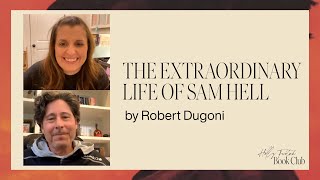
A Holly Furtick Book Club YouTube interview (uploaded March 11, 2021) in which Holly Furtick and novelist Bob Degoni discuss his novel The Extraordinary Life of Sam Hell. They cover the book's premise (a coming-of-age story about a boy born with ocular albinism), Degoni's inspiration and long writing process, family influences (including a brother with Down syndrome), themes of faith and hope, character roles (Sam, Mickey, Ernie), publishing via Amazon's Lake Union imprint, and potential screen adaptation interest.
Questions this video answers
March 11, 2021.
Lake Union.
'The World Played Chess' (described as coming out "next September" in the interview).
Chapters
In 2018, I had this idea to start a book club. And really it came because I love books, mostly audiobooks, and I love forcing them on other people and then talking to them about it. And so I just put it out there on my Instagram page. Hey, I'm gonna read this book this month. Read it with me. And then we'll come together and discuss it. And we would just go on Instagram live and have a chat. And then I got this idea. What if I invited the authors to come on and talk with me about that? So I wanted to share these videos with you so that you could see some of the amazing chats that I've had with some incredible authors about some amazing stories. Anyway, I hope you enjoy this video. Welcome to the Holly Furtick Book Club. We are discussing, discussing this book, the Extraordinary Life of Sam Hell by Robert De Goni. And Robert is going to be joining us here in just a little bit. Guys, I know I say this every week, but a good book is just so good, right? So good. So we get to discuss another really great book tonight. And I'm so excited that Bob is going to be joining us here in a minute. If you are joining us and you're a reader and you haven't read this book yet, just so you know, we do spoilers here at the Holly Furnick Book Club because that's what a book club is. This is not a book review. This is a book club where we talk about the books that we've read. I started this book club because I like talking to people about the books that I read. I like making people read books. And so if you're in my book club, this is a dream come true for me. I get to tell you books to read, you read them. And we come and, and we talk about them and we're friends and it's amazing. It is time to talk about our book for this month. This book is a book about a boy who is born with ocular albinism, which means that he had red eyes. And so, heads up, we're going into our book discussion. We do spoilers. So if you wanna read this book, it's a great book, highly recommend it. And so we open up with this scene of one of the first scenes in the book. The baby's being born and everybody is shocked because the baby has red eyes. And the mom and dad, their last name is Hill. And somebody says, what in Sam Hill? And that's what they named the boy. They named him Sam Hill because they are just so shocked by what his mother calls extraordinary eyes. And so this is a coming of age story and we follow this boy back and forth. We start with him as like a 40 year old man and we go back and forth with him from his childhood kind of progressing forward. And then he's in his 40s and that sort of progressing forward as well. And you're just grabbed automatically by this opening scene. You automatically love the characters. You love the name of the book because you automatically get it. Which I love when the title, I just think the title of a book makes everything. And I love it when the title is revealed. And so I particularly enjoyed how this title was Straight away, we get it. So Bob Degoni has written 20 other books and I can't wait for you to hear the story of how he writes this book. I thought that Bob did such a great job with this book and you're following this character and you're watching him overcome this disability. And it's funny because the disability doesn't physically, emotionally, mentally hold him back from achieving anything, but yet it holds him back socially. And he's made fun of and he's bullied and here come these friends. And you guys know that I love books also about friendship. And so not only is this a coming of age story, we also have this really cool friendship between the three characters, which is Mickey, Ernie, and then Sam. Okay, now let's bring Bob on. Okay, here we go, guys. Oh, there you are. Hi, Bob.
Hi, how are you?
I'm so good. Thank you for being on here tonight.
Oh, thank you for having me. It's a pleasure.
Oh, my goodness. We loved your book and I know that you're really busy and so it just means so much when you read a book and then we get to chat with the author. I always, when I finish a book, a lot of times I'll go on YouTube and like see if I can find an interview with them and, and hear more about their book. So I'm just so excited to get to talk with you tonight.
Well, it is, as I said to other, I've done quite a few book clubs and I say it, I mean, you know, it's a blessing to have people that enjoy your work and then you get to go on and talk to them about it. So it's a blessing and it's a pleasure to be here and thank you for having me.
Oh, I'm so excited. Okay, so the first thing I really want to ask you is you talk a little bit at the end of the book about your process in writing this story, can you just catch everybody up on how this story came to you and then how it went from, you know, a manuscript to actually being a book for people to enjoy?
Yeah, sure. You know, I was reminded of it this week because my best friend, who I've known since grammar school, he lost his father this week. And so we were chatting about growing up in Burlingame and what a special place it was back then. There were so many families. You know, I'm of the generation where, you know, people had come back from the war and it was their kids. And so I grew up in a neighborhood where there was just kids everywhere. And we walked to school, and, I mean, it was just. It was amazing. So it was really kind of a bucolic, special place. And I just decided I really wanted to somehow capture a story of that time, of that period and of that school and of that neighborhood. And, you know, I sort of woke up and I had this idea that I was gonna write this story about this. This time in this neighborhood, but I didn't have a character. And that was really sort of the biggest problem was I. You know, the first problem was I just. I just didn't have a character. And I got up one morning on a Sunday, and I opened the newspaper. And in the newspaper there was an article. It was about this big. And it talked about this young boy in Australia that had been denied admittance to the Catholic school because the nuns believed that he would be disruptive to the classroom because he had ocular albinism. And the irony of that story, you know, obviously captured me. And I. And I looked at it and I thought, oh, my Lord. I have. I have my story. I have my character. And so I began to write the story of this. Of this young boy who was born with ocular albinism. And I think most authors will tell you that when a story. And it's going to sound funny, but I'll just say it. When a story is being told to you, you just write it.
You don't.
You don't question it. And this story was being told to me, and I've heard many authors talk about this, too. Stephen King, Diana Gabaldon, the man who wrote a Christmas Story. Drawn a blank. Famous, famous, famous.
Charles Dickens.
Charles Dickens. There's a whole movie out there about how he wrote a Christmas story. And really what the movie is all about is the story was told to him. And at some point, you have to just sit back and let the story be told through you. And that's really what sort of happened with this story? And so the story came out, and it was in first person, which I had never written anything in first person before. And I really made a mistake early on. And the mistake was that before the story was ready and I was a new writer at the time, I sent it off to my agent. And my agent, she didn't like it. Basically, she said, what you have is you have a collection of scenes, but you don't have anything holding those scenes together. I mean, what is it that really drives a reader through the story?
Right?
And so I put the. I put the book, I set it aside on my computer, and it really. It sat there for probably a good eight to 10 years.
Wow.
And then one day, it was a Saturday afternoon, and I was going to mass right down the street, and I jumped in the car and I drove down the street and I took a left. And as I was heading down the street, I saw the steeple of the church over the top of the tree line. And it was as if I got hit by a bolt of lightning. And the bolt of lightning said, sam wants to believe. He wants to believe. He wants to believe his mother. When his mother says, you have extraordinary eyes. You're going to lead an extraordinary life, he wants to believe her because it would make life so much easier for all of us, you know, if all of us could. Could say that our afflictions, if we could say they're all for a reason and everything's going to be fine, it would just make life a lot easier. And so his mother just had this steadfast belief that. That Sam was going to have an extraordinary life.
Right?
Everything was going to be fine. And. And he wanted to believe that with all his heart. I made a U turn, I came home, I sat down, and I wrote the Forward. My mother called it God's Will. I often wondered how my mother knew God's Will. I just. It just flowed out of me. And from that moment forward, I knew what Sam wanted. And I went through the book and I just started cutting scenes that didn't have anything to do with that through line. And I started adding and, you know, molding it and putting it together. And by this time, I had gotten to be pretty well known in. In the literary world, and I had made a name for myself. And so I got some benefits that some people might not. And one of those benefits was I had an editor that. That really loved my work. And I said, I have this book, and I'd really love to get your opinion. And that's how it started. And it got sent off to their literary arm of Amazon Publishing called Lake Union. And, you know, the woman who read it really, really identified with it. And I found out later she had been in the convent and she had thought she wanted to be a nun. And so she really understood what it meant to go. To grow up and go to Catholic school and to have nuns that taught you and what that was really like. And she loved it. And she said, this book is gonna be big. It's gonna be really big. And so, you know, I just. I think that there was a reason for me to write the book. And it's a very special book for me, and it's a very. Has a very special place in. In my heart and on my bookshelves.
Yeah, it is a special book, and it feels that way when you're reading it. And I think everybody loves a great story that takes them somewhere, takes them out of whatever they're going through in their everyday life. But it's really special when that particular story sort of brings you back to your faith. But I just think it's really special when a story just. Just inspires your faith to. To. To grow or to be more. To be extraordinary. And so I think it's really special how you. You wrote this book, you set it aside, and something in. You knew it wasn't dead. It just wasn't ready yet. And when it was ready, you pulled it back out. And I think. I think that's really hard, especially like you. You said your career had become successful, but this book wasn't within anything that you had written. And so to have the. The courage to say, I have something else, it's a little bit different. But I just. I thought it was wonderful.
I grew up reading these books. I was really very blessed. My mother. My mother was an English teacher before she started having 10 children. And she had all these books. And so she. My mother would hand me all these terrific stories. Stories, you know, of Mice and Men, the Old man in the Sea, Great Gatsby, you know, you name it. She just had all these wonderful stories. And so I fell in love with. I fell in love with stories at a very young age. And I really thought that this would be the kind of book that I wrote. I thought I would write these kind of books. It's a book about a life lived and not about an event. It's not about something happening. It's about a life lived. And I thought that's what I would write. But, you know, things have a weird way of happening for all of us. And, you know, it didn't happen that way for me. It happened in a completely different way, which. Which I'm totally fine with. And I love. I love the mysteries that I write, and I love those books, the espionage books. But this book is, you know, this book is special for me.
I have so many questions for you. Okay, so tell me about you. You share a little bit about some of your siblings, because a lot of people are going, 10 siblings, 10 kids. Oh, my goodness. So tell everybody about your. Your brother who sort of inspired. Had some inspiration in this story.
Yeah. You know, when I wrote the book and my brothers and sisters read it, not all of them read. Read my stuff.
Not everybody's a reader.
Right. The ones that did read it, they. They said to me, you know, what. What. What the hell? I mean, I. You cut us all out of the story.
There's only one kid in the whole.
Book, but my youngest brother Michael, was born with down syndrome, and he was the 10th child. And my mother was 40 or 41 years of age, and it was just kind of a textbook thing. My mother was at a certain age, and she'd had a number of kids, and boom, she had a child born with down syndrome. But my brother Michael is, like, 40. I think he's. Let's see, I just turned 60. 48.
Okay.
And so, you know, 48 years ago, the doctors came into my mother's room, and the first thing they said to her was, your child has down syndrome. He's mentally retarded. He will never progress past the age of two, and he needs to be placed in a home. Otherwise he's going to be disruptive of the rest of the children in your family. And my mother just. She just wouldn't do it. You know, she was very distraught, very upset, not only about, you know, the fact that. That, you know, this. This lovely little child was going to have a difficult life, but also about the way that people were already treating him, and he was just. He was just in the. It was an infant. You know, they were already treating him poorly. And so she became an advocate for children with down syndrome, and she was very instrumental in starting the requirement that. That public schools had to educate handicapped children. Wow. Child was handicapped. Did not. Did not absolve the state of their obligation to educate these. These kids. And my brother was one of the first kids to graduate from high school. Now, he graduated from a special education class. You know, my brother could under no form. But so I grew up understanding when a child is different And I grew up understanding when someone was bullied because they are different. And I, and I understood that there were very, there was going to be very unkind people in the world.
Right.
But. But the strength we have against those unkind people is love.
Yeah.
And, you know, my family really gathered around my brother and we loved my brother. And my brother has. Performs so many miracles for all of us. There are just so many blessings have come from my brother's birth. And, you know, as difficult as it was for my mother and, and my father and, you know, as it is for my brother, his I can look back and I can say that my brother's birth was a blessing.
Yeah.
That was given to us. We don't take anything for granted in my family.
Yeah.
My brothers and sisters, we count all of our blessings and we appreciate them. Yeah.
That really touches me. I have a similar story. And so the mom who's fighting for her child, I had a mom like that. My younger sister also has some, some mental and physical disabilities as well. She doesn't have overarching diagnosis. She just. When she was born. She's 37 now. The doctors just, nobody really, they kept telling my mom she was a late bloomer and she had a hearing disability and she was going to catch up and she just sort of never did. And my mom had to do many of those things. So my sister would have. Would be about 10 years younger than your brother. And so she did have the benefits of the public education and all of that. And so it is, it's really special when you have somebody like that in your family and you realize how they're. They're a gift from God. They're a gift to us. And the moms that God blesses with those children are very, very special, resilient, strong women. And so I loved how you, you wrote that into the story. All right, so I'm going to read one of my favorite quotes from, from the book. And it's. It says this. We live for the quiet, intimate moments that mark not our calendars, but our hearts. The day we marry, the days our children are born, their first step, their first word, their first day of school. And when our children grow, we remember those moments with a touch of melancholy. The day they get their driver's license, the day we drive them to college, the day they marry, and the day they have their children and the cycle begins anew. We realize that it is in these quiet moments that each of us has the ability to make our lives extraordinary. I love that quote, and I just love that theme throughout the book, that life isn't necessarily made up of these, like, crazy big moments, but it's all the little moments woven together. And I was just wondering, are there any moments, like, spiritual, specifically from your life or your childhood, that you wove into this story?
Many. Many. I was the kid that was bullied by Sister Beatrice. I was the kid that was bullied in church by Sister Beatrice. I was the kid that was bullied by. By David Bateman. You know, not. Not as. Not as much as Sam was certainly bullied. But, you know, I. I've heard writers talk that books are of us. They are not us, but they are of us. And that's one of the things when I teach. I teach the craft of writing to new writers. That's one of the things I teach them, is I say you cannot be afraid to put your heart into a story because you don't want people to know what your vulnerabilities are.
Right.
It's the vulnerabilities that make us human. And unfortunately, new writers tend to pull away from that. And it's important that people see those vulnerabilities because it's in seeing those vulnerabilities that they can really relate to a character. Now, having said that, I can also tell you that that quote, one of those quotes that when I read it or when I hear it, and I hear it a lot, I don't know who wrote it. I know that it was my fingers on the keyboard, but I'm not really sure who wrote it.
Yeah.
And I just give that over to that power. Whether you want to say that that's God, that it's the muse, whatever it is. There was a reason for me to write that. And I think, you know, my wife last night was watching the Meghan Markle and Harry interview, and it dawned on me very explicitly and very clearly that here was a fairy tale marriage, and who would want that life? Not me.
Not me.
You know, I'm very happy to. When I. You know, when. When my kids are home, I'm very happy to sit on the couch, you know, under a blanket with. With my little girl who's now 21 years old, and watch a movie together and eat popcorn. Those are the magic moments, I think, in our lives. And that's. I think that's what I meant more than anything is. So often we focus on what's wrong in the world, what's wrong in our lives, and too rare. We should focus on what's right in our life, what's good in our life. It's one of the reasons why American Idol is so successful, because when you watch that show, it really emphasizes the difficulties that people have in their lives, and yet they overcome them. And I think that's what's important, that about the story is that we all have the ability to lead an extraordinary life. It's within our power. And I have seen some incredibly wonderful human beings in some incredibly horrible situations who lead extraordinary lives. Yeah.
And they. And those people like that. And these stories like this are what inspire us to make our own lives extraordinary. Not necessarily by what we accomplish, but by. But by the moments that we get to enjoy. So was there a character? I often hear authors say that when they're done writing the story, they feel like they miss the characters, like they're act. They've become actual people. Was there a character that you missed the most when this story was over?
I miss Sam.
Yeah.
I miss Sam because Sam was that part of my conscience. That's hope. You know, people have asked me, you know, what has been the reception to your. To your novel? And, you know, for the most part, it's been extremely positive. But you do have the people out there that they get angry. They go on Amazon, they say, it's a book about religion, and I don't believe in religion, and religion is the cause of all the problems in the world and, you know, yada, yada, yada. But it's not a book about religion. It's a book about faith.
Right.
The two are not the same.
No.
I sold the book to Hollywood, and the woman who bought it, bought it because she said, I'm a Jewish woman, Bob. I'm Jewish. I'm not Catholic, I'm not Christian. I'm Jewish. And she said, but this book is about hope.
Yeah.
And that's, you know, I think that that really is sort of the appeal of Sam is. Sam has. Has such hope. And, you know, I had people ask me, are you going to bring these characters back? You know, maybe you could bring Sam back and you could write a book about. About the sun. And, you know, I started to think about it, and it was my own son who said to me, dad, why would you do that? I, you know, why would you take away from this story? You know, this. This is a book that sit. That stands on its own.
Yeah.
The story's over. It. It ended, and people like it. Leave it alone.
So I kind of agree.
Yeah.
You just don't want to mess with it.
Yeah. I've had people say to me, you know, did you have Your mother? Was your mother like the mother in the book? And I say, very, very, very similar. And they say, did you have an Ernie in your life? And I said, well, when I got older, I had a very, very close friend. Still do have a close friend who's African American. And I. And I went through school with him and saw some of the things that. That he experienced, and I experienced those things with him. And they said, do you have a Mickey? Did you have a Mickey in your life? And I say, no. And I wish I did. I really wish I did. Because if I had had a Mickey in my life growing up, I think I would have been a much more rounded and better human being. Because Mickey is Sam's conscience. She's the one who points out to Sam all the time. Yeah, you know, you're never going to be happy until you learn to love yourself.
Yeah.
And what's really ironic in life is, you know, at. I got married at 33 years of age. I had dated a woman for about six years, and we broke up and it just was not going to work. And, you know, all my brothers and sisters got married, you know, straight out of college. And so here I was. I was. I was the different one. And, you know, I didn't go to medical school like they did, and I was more artsy, and I did theater in San Francisco. And yet the funny thing is, is when I met my wife and we began dating, it never really struck me at all until after the book was published that my wife is very much like Mickey. Very, very much like Mickey. Very strong willed, very, very strong woman. Very practical. Yeah. She's the person that, you know, brings me back down on, onto, you know, where I need to be in life. So, you know, everything happens for a reason. And I think the best thing a writer can do is just be open to the opportunities. Mm.
I love it. That's amazing. Okay. People are asking several questions. They want to know, so is this going to be made into a movie?
I hope so. You know, it kind of went out onto the market right when Covid hit. And when Covid hit, everything shut down in la. But there was a. It's a funny story, and it's too long to tell, but the short of it is that this woman really wanted to buy it. And so my agent, my Los Angeles agent, she said, just get on the phone with her. You're good with people. You're a lawyer by background. Just get on the phone and talk to her and see if you're comfortable with her. And so I got on the phone with this woman and, you know, we talked. I had no idea. I didn't get a chance to look her up. I was busy. And so finally I'm just talking to this woman and she said, do you have any, do you have any questions for me? And I said, debbie, I apologize up front, but I don't really know your background. And so she started to tell me her background and she said, well, I started in this one project and it turned out to be the longest running show on television. And it was called South Park. And that did so well that I went and I helped out in New York City on a show that started and that was called Saturday Night Live. And then she ended up being the president of Universal Studios. And in any way, that was all really wonderful to hear. But really what was more heartwarming was just the fact that she loved the book and she bought it and she's trying to package it. She's trying to find a, you know, a screenwriter, a director, a producer. And, you know, I'm hopeful that when, when kind of this whole pandemic subsides that, that she'll have that opportunity because I don't think Sam's done yet. I really don't. And I think it would be, it would be wonderful if Sam could reach more people.
I think so too. And I think that's amazing. And everybody watching also agrees. So other people are saying, what, what are some of your other books? And I know you have many, many books, but for those of us who you know, our book club, we read a lot of historical fiction, a lot of, you know, some memoirs and coming of age stories. So if somebody was gonna just dive into some of your other titles, where would you recommend that we start?
So let me, let me say this first. I have a book coming out next September and it's called the World Played Chess.
Okay.
It's a coming of age story for young men. It's that moment between high school and college when young men are expected to go from being basically boys to men, whether they go to college, whether they go to the workforce, whether they go off to war. And it's the story of 1979, this young boy going to work on a construction crew with two Vietnam veterans and he gets the education of a lifetime. And it's told much the way Sam Hell is told through a man who's 40 years of age and now he has his own 18 year old son who's in high school, getting ready to graduate. So that's called the World Played Chess.
That sounds amazing.
And I'm really excited about that book. As far as my other stories go. People really have fallen in love with Tracy Crosswhite, who, who's my Seattle homicide detective. And the first book in that series is called My Sister's Grave. And it's the story of. I'm writing it down as a 22 year old woman is supposed to keep an eye on her 18 year old sister as they're coming back from an event and her boyfriend wants to propose to her and the sister knows this and so she's in on it. And so Tracy goes off with the boyfriend and the sister is never seen again. And it's a 20 year struggle to find out what happened to her sister and why. And so people have really kind of fallen in love with her. And I say that because if people like, and I know you have a lot of readers and if people really love to read books, if that book appeals to them, then there's seven more in this in the series, right? Yeah.
And then you know exactly what you're doing when you finish one, you've got your next one.
Yeah. And so people have really fallen in love with Tracy Cross White. She's like a Mickey grown up. She's a very strong willed, very force of nature and she's also a very good person. She's got a beautiful heart, she's got a family. I mean, there's a whole lot of things, the way her life progresses. And again, it's a story about hope because she starts in a very dark place in her life. And as you go through the series, you begin to see the clouds start to part and she begins to see light in the darkness.
That sounds amazing. And so many people, I don't think you can read the comments, but people are like, I love this. I can't wait to read this. So thank you so much. Thank you for just, you know, I just think stories just give people an escape. And I'm so appreciative of people like you who, who do the work of writing down a story because I, I know that it is a work that requires a lot of perseverance and tough skin and, and just dealing with things within yourself that come out in your stories. And so I just want to thank you for that and for this, this story and, and, and for coming on tonight. It was just really, really nice to meet you.
Thank you. It was, it was really a pleasure to meet you. And I'll just reiterate, you know, anytime somebody wants to talk to me about what I do for a living. This is my passion, this is my love. And, and I love what I do. And I'm blessed to be able to do it and make a living at it. So I appreciate you helping to spread the word to. To people out there about good books. I've been a reader my whole life. I'm a reader before I'm a writer. So to be able to come on and talk to you and all your viewers is a blessing. Thank you.
Thank you. Have a great night.
You too. Bye now.
Bye. Well, that was such a great discussion with Bob de Goney. I hope that you enjoyed it as much as I did. This book, the Extraordinary Life of Sam Hell, was such a great read. So much fun, so inspiring, and just so cool to get to talk to the author and hear about how much he had to persevere, really to get this story out into the world. And I really hope that you enjoyed it. If you haven't already joined the Holly Furtick Book Club, you can head over to Holly Furtick.com give me your email address. I promise I'm not going to spam you. I'm just going to send you an email every month to remind you what book we're reading and when we're going to be meeting. And don't forget, if you like this video and you want to see more, leave me a comment. Let me know your favorite book, like subscribe all the things and I'll see you back here next time.
Sa.
More from Holly








The Ultimate Packing Guide: Nurturing Your Soul with Gratitude for the Journey Ahead


