The Girl With The Louding Voice | Holly Furtick Book Club
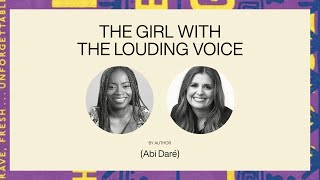
Live YouTube book-club conversation (Feb 10, 2022) between Holly Furtick and Abi (Abby) Daré about Daré's novel The Girl with the Louding Voice. Key points: Daré's Nigerian/Lagos background and childhood experiences with housemaids inspired the story; the novel began as her creative-writing thesis/dissertation; Aduni's distinct voice came naturally (first line recalled) and the author wrote the book entirely in that voice before revising; difficult scenes (notably the wedding scene) required emotional breaks and research; the title "The Girl with the Louding Voice" was chosen after finishing the book ("louding" appears twice) and was submitted when Daré anonymously entered a competition which she won; Big Madam is a memorable antagonist whose rounded humanity emerges through editing; the host reads and Daré performs the chapter 23 description of Big Madam; Daré mentions influences (Jodi Picoult, Maya Angelou, The Color Purple) and recommends Nigerian author Ayobami Adebayo (Stay With Me); Daré's next project expands on scenes/characters from the novel, set partly in Lagos and the UK.
Chapters
Foreign.
Hello everyone. Welcome to the Holly Furtick Book Club. We are going to be discussing this book, the Girl with the Louding Voice by Abi Dari. I think I just totally mispronounced her name. I think she goes by Abby. Dari and Abby like my daughter. I don't know why I mispronounced it. I was just trying to be fancy, I guess. Did you like this book? I loved this book. I loved this story. I can't wait. And seeing all the hearts, I cannot wait to discuss it with you. The Girl with the Louding Voice and the author is going to be joining us tonight. Well, let's just start with an easy question. What were some of your favorite scenes from the book? Like a memorable scene. I just felt like there were so many great scenes and what I loved is we have this really strong main character that we're pulling for and she's so beautifully written because from the very get go you're pulling for this girl. She's in a really tough situation and you're just pulling for her. But she has this. Well, first of all she has resilience and with which is I really think my favorite thing to read in a book is when the main character just has incredible resilience and they have to overcome something and then add to that when it's a woman who is resilient. I mean a woman who has resilience is a force to be reckoned with, I think. And I just loved her spirit. Did you love Aduni's spirit? She was, she was feisty and she was not afraid to speak up and she was joyful and I feel like no matter how she was treated in the book, she still, she never really lost her sense of self worth. And I think that that really goes back to her mother who wasn't really a main character in the story but she was an anchoring, an anchoring person for Idunni and she gave her just this, this confidence that she would have this goal to be educated. All right, here's another question for you and then we're going to bring Abby on. What was a hard scene for you to read? Maybe I should say what was the hardest scene for you to read? Because there were some really difficult scenes in this book watching this girl experience some really traumatizing life events. One of those events could take a person out. And yet over and over again we see Aduni just rise above and decide not to be bitter and decide to fight. And at the end we get to see her really hopeful and be able to get an education, she wins the essay contest and all those beautiful things. So we also in the book had some really strong antagonists. And I wonder what you think about, about the antagonist and maybe which one you hated the most. So I wrote down three major ones that came to my mind. Iduni's father and then obviously Big Madame and. And what did they call him? Big Daddy. I just lost my place on the. Yeah, Big Daddy. So which one of them did you hate the most? I. Yeah, Jamie. I, I don't know. I really started off hating the dad, Marufu, because he was such a horrible dad and he was such a. A weak character. And you really were just so disappointed in how he didn't fight for his daughter. And then of course we hate Big Daddy. And then you've got Big Madam and she is such, such a strong character. And, and we're reading her and she's. And she's mean and she feels like she's picking on. On Adouni. But then we get some little glimpses that she's human and that she's not just this evil demon, but that she has these little glimpses of her humanity. Guys, this is such an important book to read and I'm really excited to be able to talk to Abi tonight. And so let's bring her on. Yay.
Hi. Hi.
Thank you so much for being on here tonight. I know that you are joining us from the UK and I. What time is it there? It's 1am thank you so much for staying up so that we could talk with you. We really, really loved your book. First of all, do you go by Abby or Abi?
Abby. Abby.
Well, that's easy. That is my daughter's name. I think it's really funny how sometimes we try to complicate somebody's name. It's really simple. So first of all, thank you for this book. We really loved it. I think it's a really important book and like I said, I just. I love books that open up our eyes and bring awareness to certain situations and things that are going on in the world. And I listened to and read a couple of interviews that you did and I think it's really interesting how this story came to be. So can you start by just telling us how this story came to you?
Right. First of all, thank you so much for having me. Such, such an honor. Such an honor. I mean, I was born in Lagos in Nigeria and growing up as a young girl, we had a lot of maids, housemaids, young girls that were working for families including my family. And I was quite inquisitive. And I used to wonder why many of those girls were not going to school, why many of them were not educated. And I guess I think the seed of storytelling had been in me for a long time. So I think I might have known that I was going to write this story one day. But when I left Nigeria and came to the United Kingdom about 21 years ago now. Wow. Yes. It's been such a long time. And then I had my own daughters, and we had a conversation in the kitchen where I was asking her to help with the dishwasher. And as kids do, she was throwing a tantrum. She didn't want to help. And I made a statement that I think I might have made along many times. But for some reason, that evening, that really struck, and it was me saying to her, do you know, the young girls like you who are probably working for families in Nigeria don't have, you know, they have nothing, have no food and anything? And so she said, why, you know, why would anyone send their daughters to work for a family? Would, you know, do they get paid? Can you pay me for doing the dishwasher? And so that led to a lot of. A lot of back and forth and conversation. But I think that evening made me realize just how much. I think being a mother of two daughters made me realize just how young and vulnerable these young girls were that were working for families. And I really felt like I had to tell the story of this girl, because the first question I asked myself was, who were these girls that lived with us and the people around us? What did they sound like? What was their dream and their hopes? And I think that was what really led me to writing the girl with the louding voice in Aduni's voice as opposed to in any other voice.
Yeah. She's such an amazing and strong character. How did you decide? I'm gonna write it through her perspective. And how did you decide how. How to make her sound because she has such a unique. I don't want to say accent, because it's a written book, but the way that she talks is so unique. And you. And you so beautifully carry it out throughout the whole book.
Where did.
Did you decide that from the beginning?
How did.
How did that come about?
So I was. At the time, I was doing some. My master's in creative writing and had received, you know, some really wonderful criticism of my work, which is great, because that's what you're looking for in doing a course like that. And it was really that I couldn't quite create characters that were quite memorable. And so when it came to writing the Girl with the Louding Voice, which was my thesis, my dissertation, I knew that I wanted to create a character that I would remember for a very long time. So it was really about me and me getting an A on that course. But also I think that growing up, many of the girls that I knew had come from a background where they weren't fully educated, so they had partial education, or they came from a neighboring country. So they spoke a little bit of English or spoke Yoruba, which is my mother tongue, and they navigated English language in their own way. But as a young girl, I found it so fascinating. I used to go around with some of the girls that worked with us and asked them to repeat words, and they had words for TV and the microwave and all of that. And I think that I had sort of internalized those things. And so when I came to writing Aduni's voice, that first line, you know, this morning, papa come Apollo, that came to me, it felt like it was like a shout in my ears. And I wrote that down. And from the moment I wrote that first line down, I did not stop writing in that voice. I think it was just divinely inspired. I just kept going and going, and it just felt like she had a so far in my head and wanted to be heard in that voice. And it wasn't until I got to the end, and even when her English starts to get better, I couldn't do that until I got to the end. And then I went back and started to fix her English. So she really wanted to be heard in that entire voice.
It's so amazing. And the way that this character just comes to life on the page and from the very beginning, you're just fighting for her and all of these things keep happening to her. So as you're writing and like we talked about, there were a lot of really hard scenes in the book. How did that feel to Cause, you know, a lot of authors say they'll be writing and they're like, oh, I don't want to do this. I don't want this to happen to this character that I love. What was that like for you?
It was very hard writing. I mean, I was reading some of the comments and, you know, thank you all for the love of this book. It's just so, so humbling to see. But writing the wedding scene that night for me was really hard. I. Many times I had to step away from writing and just take a breather. But then I realized that I'm telling a story that needed to be heard. It felt like a mandate for me that I had to tell the story of many of these girls that are still living this kind of life and are still suffering this kind of injustice to them. And if I took any of those sins out, and it's not just about just Adunia, of course, you see some of the other women, like Tia and all of that, that go through various things by virtue of being women born in a society that, you know, that patriarchy sort of thrives. And so, yes, it was really difficult. Yes, I had moments where I cried. I had moments where I had to step away from the book. I had moments where I would just write in bold what I wanted to happen. But I couldn't write that scene until I felt emotionally ready to do that. So it was really tough. But I felt that I had to tell the story of what I had seen in my research and what I'd heard from different people as I began to write a new story.
So I think it's really important because I'd heard, just as people talk about books and, you know, I love to read about books, I follow lots of people who recommend books, you know, because I'm always looking for the next great book that I want to read. And I heard some people say, like, does this really happen, you know, in the modern world today? And, yeah, it does, and I think it's important. And I'm so grateful for people like you who really allowed yourself to go into these dark places and write these things, these stories. Because, like I said, I think as people who don't live in a third world country, we often want to look away, turn away, or be like, that's not actually happening in the world today. And it is. And I think it's a hot topic to talk about human trafficking. That's like, in the United States, people love to talk about human trafficking in, like, a broad sense and to support organizations that. That fight human trafficking. And I think what we don't realize is that human trafficking is not. Have you seen the movie Taken? It's like a really old movie where this girl is literally, like, she's, like, 17, and this guy, like, steals her and she gets put into, like, a brothel and whatever. It's not. It's not a fantasy like that. It's not a thriller movie. It's actually. I was talking with our outreach director at our church, and they were saying how it starts with children who are exploited in the labor force and typically when they're exploited in the labor force, then they're open to abuse, and all of these things happen to them, prevent them from being educated. And so I want to. I don't know why I just started talking and not asking you questions, but it's just something that I'm so passionate about is people understanding that this is truly a real issue and a real situation. So tell us a little bit about how you came to the title.
So the title came after I'd finished the book, so I had all sorts. I thought of the nobody girl, and then I thought, nah, she's not a nobody girl. She's feisty and she wants to be heard. And I'd written the book and I was going through. And I was about to enter it into an essay because I wasn't very confident in my abilities as a writer, right. So I had done written this whole book, and I thought, I'm not going to send it to a lot of agents. I didn't want to deal with the rejection that came with that. So I thought, I'll go into this competition. Sorry, I. And it was judged anonymously, and no one will know who I am. And if I don't win, then I could just go and hide with my little book. And so I thought, okay, I needed to type in the title of the book at the point where I'd written the essay. So when I'd written the book and I'd written the. Entered into the competition. And it just occurred to me that twice in the story, Aduni had used the word louding. At the time I had written it was about Sunday when she was talking to her mother and somewhere towards the end of the book, and I thought, wait, hang on, that's who she is. She literally has a louding voice, but she also wants to have a voice that. So the choice of louding is not just because she doesn't speak very good English, but also because she wants her voice to continue after she's no longer here. For her, it's about a legacy. It's about carrying on and passing on the torch to other people, to the light of their lives. And she is real. She's light. And so I thought, okay, I would use the girl with a louding, because I was very excited about that title, actually. And so I put it into that competition. And. And so obviously when. When I won, it just. I just felt, yes, this is my louding voice, because I'd been writing for many, many years and I hadn't been heard. And so it just felt Very, very special to have that title. And yeah, for her.
Did at any point when the book was going to be published, did anybody push back and say, you know, this isn't really a word and did anybody or. Because to me you would have to have not read the book. Because once you've read the book, you totally get the title. And I love how it comes twice. Like, you get it at the beginning, but then you understand it at the end. But was there ever any point where, where anyone tried to get you to change the title?
No, I think that was one thing that really everyone agreed with. I think there was conversations around taking off the girl because there was a lot of the girl on the train, the girl on this girl. So just louding voice. But then we thought, no, this is about. This is this girl with this louding voice. So we decided to keep it. But the louding was. It was unanimously agreed that it was. It was great to have it there, which is great.
It's amazing. So one of the, one of the things that I've heard a few authors say is that they'll slip in people that they know into their, into their stories. Are there any little Easter eggs in. In this book that we should know about? Any, you know, cousin or aunt that you sort of gave a little character to?
I think that, you know, many of the characters are a little bit of people at sin, right? So for instance, Big Madame is not really real, but there were women that sin, you know, going to the market with my mom and seeing this really sort of huge, powerful businesswoman with a lot of makeup and a lot of very colorful, you know, fabric on their bodies and really commanding their space growing up. And I think some of these women made up Big Madam. Not the character of her, but what she kind of looked like. Tia, I think, was maybe a bit of myself and some of my friends. And I think Tia was. Is me thinking, I wish I could do a lot more and feeling quite guilty that I'm in this privileged position growing up in a middle class to affluent family. And you know, I want to do more, but I'm really not doing anything. So that was kind of that part of Tia, but then the rest were really a lot of. A bit of my imagination on people that's seen around me.
All right, we have to go back to Big Madam because one of my favorite scenes in the book is when you describe her for the first time. And I actually every. I have to tell you, this is a first for our book club. We've been doing this book Club for almost three years. And I've interviewed a lot of authors. And almost every time I want to get them to read a portion of the book. And I always forget. And tonight when I was preparing, I was like, I'm not forgetting because I want her to read this particular passage from the book. And I messaged you, so I know you're ready. And I would love to hear your voice and you reading the description of Big Madam.
Sure. Thank you for the opportunity. And I've just closed it. So chapter 23 it was. Yeah, there we go. Right. I'm going to read this in what I call Aduni's voice.
Okay.
First thing I am seeing is feet. Yellow feet, black toes. There is different color paints on all the toenails. Red, green, purple, orange, gold. The smallest of the toes is having gold ring on it. Our whole body is almost filling the whole compound. As she's coming out. I am now understanding why they are calling her Big Madam. When she come out, she draw a deep breath. And her chest, wide like blackboard, is climbing up and down, up and down. It is as if this woman is using her nostrils to be collecting all the heat in from the outside and making us to be catching cold. I am standing beside Mr. Kola and his body is shaking like my own. Even the trees in the compound, the yellow, pink, blue flowers in the long flower pot, all of them too are shaking. She's wearing a lace boubu which is long up to her feet. The bubu is doing shine, shine as if the lace is having eyes everywhere. And blinking the eyes open, close, open, close. She's not having a neck, this woman. Just a round, fat head on top. The white chest with breasts that must be reaching to her knees area. There is one gold gele on her head. It is looking as if she just gummed a ceiling fan on her hat and put it on her head. She take two steps near us. Then I'm sealing her face very well. Her face is looking like one devil child vexed with her and paint it with his feet on top. The orange powder on her face. There's a red line on the two. Both eyebrows which is drawing all the way to her ears. Green powder on the eyelids. Lips with gold lipstick. Two cheeks full of red powder.
I wish you could have seen all the hearts going while you were reading that. That is one of the best character descriptions I've ever read. I just. I had read the book before and then I was listening to it yesterday. And when I was listening to that scene, I was like oh, my gosh. This is just. This is everything. This is like this woman, you're getting introduced to her, and there's no doubt what she looks like. And to see her through a Dooney's eyes is just.
It's, it's.
It's funny and it's a little bit scary and it's, it's everything that she is. And I just. I just love that so much. And I loved. I did love how you, you gave her, like, a really dark side, but then you also gave her, like a human side. And what made you decide to make her just a little bit more round as you got. As we got towards the end of.
The book, I think it wasn't a decision I made on my own. I'll be honest. I had written her as bad as bad can be. I didn't like her. She, to me, she was one of the women that I had, in my research, seen. I remember that I'd saw this little clip of a woman who had a really young housemaid, and this woman had broken a bottle on the head of this young girl that she hired. And that really, really pained me. So I really was determined to write her as bad as could be. But then in conversations with my editors, you know, we came to the conclusion, and I agree that, you know, a lot of people, you know, not everyone is really bad. Bad yet there are quite a few people, but not. There's always a reason behind certain things. And when I looked at Big Madam's character quite closely, I realized that this woman is a victim of so many things. Her marriage, her horrible marriage, society, the need to. To impress and to make people think all is well. And so she's taking. She's. She's bottling in a lot of things. She's very frustrated and she's channeling her frustrations to the weakest link there, and that is Aduni. But of course, Aduni gives her back what she takes. I think as I wrote the book and I realized that, okay, I needed to make a little rounded. I thought what would be the most. What will make sense to do that? And I thought towards the end, as she's come to know Aduni and felt her love, her unrelenting love, then it would be good for her to just show a little bit of her own vulnerability and then let that go very quickly so there's a glimpse and then she just suddenly takes her pride back and goes, no, you're not going to see that part of me. So.
So well done and thank you. I'm wondering if. When you finished the book, were you a little bit sad? Do you miss Adouni now that you're not, like, with her?
Every day I grieved this character. I cried. I remember when my editor sent me an email saying, abby, that's it. We're done. And I was like, no, we're not done. I want to keep going. I wasn't ready to work on another story. It took me a really long time to come out of Adun. I feel like she exists, truly exists somewhere, and that we'll meet one day. My mom believes that she is working at the United nations somewhere and making policy changes and effects in the world. So it was really.
That's really funny that you said that, because I actually had that as a question. Where do you think she is today?
Yeah, my mom believes that's where she is. And she. And what she says is final. She's like, abby, that's it. She's in the United nations making changes and stopping all this crap that's happening in the world today. I agree.
That's amazing. I love that. All right, so one of the things I love to ask our authors is I find that everyone who writes fiction loves fiction. And so I'm curious to know who is an author that you've read all of their books that you just. Every time they come out with a book, you're there and you just devour it.
Oh, gosh. I love Jodi Pwickle. I think she really pulled me into writing human stories. You know, I think many, especially for me as a black woman. At first, I wanted to start writing very literary, you know, a lot of English and really, you know, profound. And there's nothing wrong with writing stuff like that. But I thought to myself, I think I prefer more of emotional stories. Those stories are really talk about your heart. That. And Jodi Picol showed me that you could do that. I love John Grisham as well.
Wait, wait, wait, stop, stop. What's your favorite Jodi Picoult book?
Gosh, I really love Small Great Things that was just. And there's this book about elephants. I think he's about elephants.
Yes, that's my favorite one.
Right?
Leaving time.
Oh, my. You know, it wasn't the. I read the blurb, and I thought, I'm not sure. And I was like, oh, my gosh. I love that as well. Yes, I really love those two. I mean, some of the authors that you brought up tonight as well. I mean, Maya Angelou is one of my favorite authors of all time. She. I mean, I know why the Caged Bird Sings. I read that when I was about 16, and I just completely fell in love with her. I love the Color Purple as well, which inspired me in writing the Girl with the Louding Voice, because I thought if she could do it as a, you know, in black American sort of voice, then maybe I could do this in this Nigerian voice. So. Yes. And so many other Nigerian authors that, you know, seen and loved as well.
Tell us a Nigerian author that you would recommend.
Ayobami Adebayo. Stay With Me is a beautiful, beautiful book about a couple that are trying for a child and all the emotional upheaval that comes with that. I think it's a lovely book that you should get.
I gotta get it.
Okay.
So it's called Stay With Me.
Yes.
Love it. And it takes place in Nigeria.
Yes.
Amazing. And my final question for you, something that we always want to know. What are you working on next?
Well, I was working on a story that was going nowhere, and it really frustrated me. And I'm now trying to look at. I'm trying to look at the, you know, the scene in the Girl with the Louding Voice where Adini walks into this party and there are women there trying to take those women and kind of zoom in into their lives a little bit and see what comes out of that. So a bit set in Lagos, a bit set in the United Kingdom, and just coming together.
I love that scene. They're. They talk about, like. They talk about designer bags.
Yes. And all of that. Yes.
That's a great. That's great. That sounds amazing. I know that. Not personally by experience, but my husband is a writer, and I've watched him just labor over books, and I can't imagine what it's like for you that so. Well, let me ask you this. Was this your first published book?
No.
Obviously not your first story?
No. Oh, my gosh. I'd written so many. I think this was probably my. I. I said I had about a million words in practice before I, you know, traditionally published this book. So this was my first book that an editor said, I am interested in this. I'm willing to back you up and support this. But I'd labored a lot in writing and writing and writing for years and years.
Well, we wish you all the best. Thank you. Writing. I wish all of the. Of the writing fairies to descend on your mind. Thank you. Because I really appreciate this story. I think it's an important story. And I think the way that I've watched this book kind of go around the world. And, you know, it was a Jenna Bush Hager Book club pick. And I just see it, I see it on lists all the time. And it just makes me really happy because I just think stories are powerful and I know this probably wasn't an easy one for you to write. So thank you very much for this story and we can't wait for more from you.
Thank you so much for having me tonight and all of you joining. Thank you so much for reading my book and love and it's.
We love and thank you for staying up late with us.
Such a pleasure. Thank you very much.
Get some sleep.
Okay, thanks. Take care. You too. Bye.
Well, I hope you enjoyed that conversation as much as I did. Such an incredible book, such an incredible author. I just love this story and I know that you did, too. So if you would officially like to join the Holly Furtick Book Club, all you have to do is go to holly furtick dot com, give us your email and we'll just send you an email once a month. I promise. We're not going to spam you, but we just want to let you know what we're meeting and when we're meeting and how you can join us live for the conversation. If you liked this video, make sure you give me a thumbs up. Make sure you leave me a comment, let me know what you're reading. And as always, you can subscribe so you know when we're posting great videos. I love you. I'll see you back here next time.
More from Holly








The Ultimate Packing Guide: Nurturing Your Soul with Gratitude for the Journey Ahead


