Where the Lost Wander | Holly Furtick Book Club
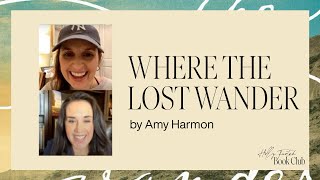
YouTube book-club video (Holly Furtick) featuring a live-style discussion of Amy Harmon’s novel Where the Lost Wander. Holly outlines book-club rules (spoilers allowed), summarizes the novel (1853 Oregon Trail pioneer caravan, love story, survival, themes of prejudice and family loyalty), lists favorite scenes from audience members, and then interviews Amy Harmon about her background (author of 16 novels), writing process, research into historical figures (John Lowry, Chief Washakie, Lost Woman/Hannah Bee), use of real and fictional characters, title origin (Where the Lost Wander), and the book’s opening/ending choices. The video closes with promotion for Harmon’s upcoming novel (The Songbook of Benny Lament) and Holly’s book-club sign-up.
Questions this video answers
16 novels.
Four children, ages 25 down to 10 (described as "25 all the way down to 10").
March 16 (year implied by context around the interview).
Chapters
In 2018, I had this idea to start a book club. And really it came because I love books, mostly audiobooks, and I love forcing them on other people and then talking to them about it. And so I just put it out there on my Instagram page. Hey, I'm gonna read this book this month. Read it with me. And then we'll come together and discuss it. And we would just go on Instagram live and have a chat. And then I got this idea. What if I invited the authors to come on and talk with me about that? So I wanted to share these videos with you so that you could see some of the amazing chats that I've had with some incredible authors about some amazing stories. Anyway, I hope you enjoy this video.
Welcome to book club.
I am so excited that we are going to be discussing. Oh, my goodness, I don't have my book. Oh, yes I do. Here it is. Hold that thought. Ta da. We are going to be discussing where the Lost Wander by Amy Harmon. It's a prairie book. It's a love story. It's an epic summer saga. Oregon Trail pioneers. It was a great book. Just so you know, if you are new here, we do spoilers on this book club because we're gonna talk about the book. And one of the reasons I started this book club is because I love books and I love telling other people to read books so that I can talk to them about the books. So we don't just say, oh, you should read this book. This isn't Reading Rainbow. This is book club. And we've all read the book and we're going to talk about it. We're going to talk about the end, we're going to talk about the beginning, we're going to talk about our favorite characters, we're going to talk with the author. It's going to be lots of fun. This book is. And this is what I wrote down in my summary. It is an epic and haunting love story on the Oregon Trail. A family and their unlikely protector. This is probably from the back of the book. A family and their unlikely protector find their way through peril and uncertainty and loss. The story takes place in 1853, following a caravan of pioneers. I loved how Amy in the book called them immigrants because I'd never read a book where. Where the pioneers were called immigrants. Or maybe I just never paid attention and I thought that was such an interesting idea that they were immigrants within their own country. So caravan of pioneers departing from Missouri and headed to California. And I just wrote down pioneer love story and so it's great. It's got lots of survival, persistence, determination. There's. There's all kinds of themes of prejudice and family loyalty and Community was such a great book. Okay, so who was your favorite character? We've got.
Wait.
Before we talk about our favorite character, I want to tell you about Amy. Amy is the author of 16 novels. And this says that she knew at an early age that writing was something that she wanted to do, and she divided her time between writing songs and stories. As she grew up in the wheat field without a television, without. With only her books and her siblings to entertain her, she developed a strong sense of what made a good story. I really can't wait to talk to Amy. You guys are already telling me who your favorite character is. And I agree, you guys. John, hands down, my favorite character, which is a very difficult thing to do because usually I'm very biased towards the females because again, I love books about girls and friendship and sisters and. And especially friendship. Abby says. I don't know if you guys can hear Abby on the other side of the door, but I loved John Lowry. I loved him almost as much as I love Stephen Furtick. Not really, but I loved John Lowry as a book character. He was. He was so kind. He had overcome so much. He was so patient with Naomi. Guys, he was the best.
All right, Jennifer.
James hall says John was. But Naomi rocked, too.
Of course.
Naomi rock. Naomi carries the story, and Naomi overcomes a lot. And Naomi is there for everything, for her family, and she's just such a rock. And she's already been through so much. By the time we even meet Naomi, her first husband has already died. So props to Naomi. And Ashley said her favorite character was Winifred, which was Naomi's mom. And I liked Winifred, too. I thought she was a really. She was a good mom. And I loved how she had all the boys and then she had Naomi, and she leaned on Naomi so much. So, yes, I loved Winifred. Then we had the brothers, Wolf Webb, William Wyatt. I think I got all the brothers. And then also some major characters. Chief Watch Key, and Lost Woman. Let's see, somebody Eld says. Are we gonna talk about that intro? Yes, we are gonna talk about that intro. Because, you guys, this book starts off with a bang. Right smack dab. At the end of the story is where this story begins. And in all of the horror, we just are dropped right into Naomi's life and Naomi's tragedy. And so for sure, ld. We are going to ask Amy about starting the book off with such a bang. Okay, before we get Amy on, I want to hear about some of your favorite scenes. So obviously, first scene really grabs you, which I love about a book. I love a book that just grabs me right away. And that's how I felt about this book. It wasn't slow to get into the characters. Just straight away, somebody says, name of the book where The Lost Wonder by Amy Harmon. Straight away, you are in love with these characters. You're intrigued by this story. Yes. Rainy. Hooked from the very beginning. Jennifer says, gutted from the start. Somebody else Sundays, I have four boys and I'm done, so I'll just get a dog and name her Naomi. That's funny. Emily. Emily says that she loved knowing what was going to happen. Emily. Amy. Amy is your girl because Amy gives the end away in the beginning. And Emily loves to read the end of the book, so you're right. Okay. Somebody else says one of your favorite scenes was Naomi taking care of John when he was sick. I love that scene, too, because I loved how it was hard for John to let anybody take care of him. And here comes this woman, and that's sort of his first to me, him, like, really letting her into his life was when he was sick with. I don't know, maybe it was cholera or. I don't think they knew, but he got sick. Somebody else says, I love the scene where John visited Ginny for his haircut and how he didn't see how much she cared for him. That was great. I love that part, too. Ginny was John's, like, stepmom. Stephanie says, my favorite scene was when she was bringing the painting and they were all bringing her gifts. That was so much fun when she started painting and drawing everybody's faces and they all started bringing her stuff. And then she got the horse for John. That was awesome. Somebody else says, let's see the Indian woman nursing baby Wolf. That was in how the baby was so hungry and how they cried because the.
What was her name?
I think Hanabi was the one that fed baby Wolf. Somebody says they liked when John helped her do the laundry. The wedding was a great scene. All right, guys. So I had two. I mean, obviously it was a great scene when, you know, you realize that Naomi has been kidnapped by the Indians with the baby. So now you've made it all the way through the book, and you're back at the thing that you. The part that you read at the beginning, because. But I was really shocked. And tell me if you agree that the brother accidentally, you know, he was the one that loved hunting. And he accidentally shot the Indian and killed him with the arrow. And that's what made the Indians kill the mom and dad. And like all the other people and the two boys, I. I did not see that one coming. And so I loved how the Indians weren't. They weren't actually being, you know, terrible and. And just out to get. But they actually thought that they were defending themselves. And so then they took Naomi and the baby. You guys. That was so tragic, wasn't it, Bethany? And how John had bought him that bow. Yes, that's so true. I just didn't see that coming. But my favorite scene in the book was at the end when Naomi and Lost Woman had the conversation. And Naomi was so sad, and she was grieving her mom, and she was grieving her brother, and she was so lost. And Lost Woman comes, and she's just talking. Oh, hey, Donna. And she was. She was listening. Naomi was just talking in English. And Lost Woman was just listening, and. And she was talking about how she missed her mother. Guys, that was my favorite part.
So.
All right, are we ready to bring Amy on? Everybody said that you. Lots of crying, lots of balling. Yes. The footprints.
So good.
I love that part. Donna says she's never complaining about her life again.
Yes.
All right. And we're going to talk about the ending, but let's bring Amy on.
Hi, Amy. Hello. Hello. This is so exciting.
Oh, my goodness. Thank you for being on with us.
Thank you for having me. I've loved the discussion so far. Now I have to talk. Now I have to defend my intro.
That is one of the first things we want to hear. But I do want to get to know you a little bit first. Tell us a little bit about yourself. I know that you're a mom, but just tell us, like, a little bit so we can get to know you.
I am a mom. I have four kids. 25 all the way down to 10. We have lots of gaps. But, yeah, I started writing a little bit later in my life, and I say later. I feel like I'm in the prime. Right.
Yeah.
I didn't publish my first book till I was in my 30s. You know, everything has a season, and I definitely. That was, you know, the right time for me. But I write now full time between raisin and juggling a family. And it's been a wild. It's been a wild ride. I tell you what.
Well, we absolutely loved this book, and I just. I'm always in awe when someone. My husband and I talk about this all the time. But when someone is able to create like this whole entire world and characters and just this whole family that doesn't exist, it's just mind blowing because you bring them to life and I just think it's awesome. So, okay, let me ask you a couple questions just a little bit more so we can get to know you. How do you like to read?
How? Whenever I can audiobooks, when I'm on the treadmill, you know, I listen sometimes at night when I'm too tired to read. But I can still. I can still read that way, but I read everything. I think I grew up reading everything. And so that's continued. I think that's what made me a good writer.
It has to be. I mean, you can't leave that out. So what is the book that made you fall in love with reading?
Oh, boy. Probably way back when my. My girl, Anne of Green Gables, you know, from the beginning, that was my book. I read Jane Eyre when I was 12, which I know is early, but my mom let me read everything. I think about that, and I'm now and I think, oh, maybe that wasn't so good. But I did. I read everything. And so those are kind of the books that started it for me.
That's amazing. I am a huge fan of Anne as well. But, you know, I was in a bookstore with my daughter yesterday, and it was a used bookstore, and I came across what I was reading when I was 12, which was VC Andrews.
Oh, yeah.
I left me some flowers in the Attic, but that's not Jane Eyre.
But no, no, I read Flowers in the Attic, too. So, you know.
Who'S an author that you've read almost all of their books.
Oh, boy. I'd have to think about that one. I've read. This is kind of surprising, but I've read almost all of Louis Lamour's books. I have read almost all of Dean Koontz books. So really opposite ends of a spectrum. But both amazing writers. At what? At, you know, at their craft and at what they do. So.
Do you have. What's a book that you've read more than twice?
I have read. I've read Anne of green gables probably 50 times. I've also read more as a grown up. Read the Bronze Horseman by Paulina Simons. I've read that book I write. I read it every year. It's set in World War II. Leningrad. Amazing love story. I didn't know much about the Russian front.
What's it called again?
The Bronze Horseman. Yes. Paulina Simons. Okay.
I'm on it.
It'll rip your heart out. That's a good one.
Do you have a preferred place to read? You said you read everywhere.
You know what I mean? I read in my bed. I love to read in the tub if I possibly can. But, you know. Yeah, you know, you. You get really. You're not very choosy when you're a mom. You kind of take whatever you can get. Whatever. Quiet time when you're waiting at lessons, whenever. Yeah, I don't have. I'm just glad when I get to. When I get to have a little quiet time and sink in.
Yeah. That's why I love audiobooks, because it's like having a story follow you around everywhere.
Yes.
And I'm in my car a lot. My kids are. Are in the stage where I just drive them everywhere and wait. And so I love audiobooks. Yeah, but that's awesome. Okay, so you've written 16 books. I love how in your bio on your website, you said something like, you know, I'm just a mom who loved stories. And I started. And I just started writing, and I think that's so cool. How did you find your process in being able to accomplish writing so many books and still raising your kids at the same time? How do you do it? What do you like to do?
You know what? I look back at the very early years of having. I had a surprise pregnancy. I had a surprise baby. I was done. I thought. I thought I was done. And I think Lord had other plans, and so he was a surprise. And it really shook up my life, everything that I was doing, even the place we were living. And I thought, you know, I can't keep going in the same direction. And I'd already written a book earlier. I written a book. It was kind of my Everest. I wrote it and thought, oh, great. And then I put it away. I had no goals as far as I didn't know how to publish. I didn't know what to do. And I put it away. And it wasn't until life got really hairy, and I thought, I can't keep doing the things that I've been doing. Were broke. You know, things are bad. And I pulled the book out, and I thought, I'm just gonna. I'm gonna see what I can do with this. And I shined it up a little bit, slapped a really homemade cover on it, and I put it up on Amazon all by myself, knowing nothing about the industry, you know, nothing at all. And I just thought, I'm gonna do this. And I don't know exactly what gave me the confidence to keep writing when I wasn't making any money. Yeah. You know, I wrote four books before I made any money. Yeah. And my sister in law asked me about that. What kept you going when, what kept you doing this when there was no return? And I really don't know the answer to that except for that. I just had this well of confidence about what I could do. It wasn't that I believed I was entitled to anything, but I really believed that I had gift and I had a talent and what I had to offer in my books was as good as anything that was out there. And maybe it was even better in some ways. So I just, I think it was just that confidence that I just, I knew, I knew I could write a good book. I knew I could do it. And I just kept at it until my fourth book hit the New York Times list. It was just a weird kind of. It really is a weird story to have done that and to not. I didn't even have a publisher when I hit the New York Times list. I was self published. Wow. And after that?
No.
And you know, then, then people were interested in me after that. Then I got an agent and then I got a, you know, a publisher and, and I continue to go on, but I know my story's not like everyone else's, but it's also proof that if you do believe in yourself and you put in the work and there's, and there's timing and things like that, but I. It can happen. You know, big things and exciting things can happen to very regular people.
That's amazing. What, what a cool story. I didn't. I knew that you had self published a couple of your books and I knew, I think because one of them I was, I actually, whenever we have book club and the authors coming on, I always go on YouTube and try to find as many interviews as I can with that author and there's like nothing, there's nothing on you. I found this one that was about like an ebook that you had and so, so cool. And, and I'm just, I'm so excited to, to get. To chat with you and to hear. I mean again, I just, I love it when somebody just has a passion and you just kept writing because the stories were in you. And then eventually your books pick up speed and they really touch people's lives and give people a place to escape to and. Yeah, it's just really great. So tell us about where the Lost Wander. By the way, in case I forget to Say this. I love the COVID of this book. I don't know what inspired the COVID but I think it's beautiful. I think the lettering is. Is gorgeous, and I love the COVID.
And I can't take credit. Too much credit, because the publisher says, what about this? What about this? And I put my two cents in. And so they did.
They.
They nailed it. This is.
This is gorgeous. And this. You have a very personal connection to this story. So. So give us a little bit of background on your personal connection to the people in this book.
I actually didn't know about John Lowry, who is a. My husband is a descendant of John Lowery through his paternal grandmother. And I just didn't know much. You know, I knew some of my own family history, but not a lot about his. I knew we were both from pioneer families on. On at least one side of each. One side of the family. And so, you know, it just wasn't. It wasn't anything I was really interested in. I mean, it was so much part of the. Of growing up. You know, it's the story of the west, really. And the story of, you know, my religion, it was all wrapped up in that. In that pioneer. In pioneer stories, and I wasn't interested. So my husband came home one day. He'd been doing some genealogy, and he said, you know. And he started to tell me about John Lowery, about some things he learned about John Lowry. And it was one of those moments where you start to get goosebumps, you know, oh, somebody is talking to me. And I knew that I was gonna write John Lowry's story. Of course, I only had little pieces. I had to use those pieces and create a story that people could really, you know, dive into. But, yeah, there are. John Lowry really did come west, and he really was of Native American. Of Native American. His mother was Native American. And so. And he just kind of. His story of just coming west and kind of making a lie for himself was really inspiring to me. Um, and so, yeah, he's. He's there in our family tree, and it's exciting to have him now on the pages of a book.
So cool. And did you start out wanting to write about. You started out wanting to write about John Lowery, but how did you know that you were gonna more anchor the story through Naomi?
I think there's something with. I always write romance, a romance arc in every one of my stories. I just. I can't resist. I'm kind of not interested in a book if it doesn't have a romance arc. Doesn't matter what genre it is, we could be talking about aliens. And I still need that romance arc.
I agree.
I needed. I needed. I needed for John to have. Have a love story and have a life that was beyond just his identity. The story couldn't just be about his identity. And so then I had to create a lovely character. And it's so funny about what you said about women earlier in. In your. In your podcast here, because that was what kind of, I think, came out of this story is even though it kind of feels like John's story, the real story is these women is Lost Woman and Hanabi and Winifred and Naomi. That the women in that. In this story, it just kind of kept coming back to them. And even John Lowery's mother, I mean, and his. And his. And his relationship with his stepmother. Those relationships in his life. His relationships were. He was really formed from those relationships with women, with the women in his life.
He really did paint a beautiful picture of the strength of women in every character in the book. And even when you talked about it more literally with the Shoshone women.
Yes.
And how the men did the hunting, but the women did everything else, you really showed the strength and the beauty of a woman just, like, around every corner in the story. And it was just really beautiful. All right, so let's go. The question that everybody wants to know. How did you. What made you say. I'm gonna start with. Did you originally start the story with the. With that?
I wrote that scene very first.
Okay.
I knew it had to come there. And it's funny, because when I was. I. When I was done and. And sent it to my publisher for them to begin their revisions and their suggestions, they came back to me. My sweet editor and my sweet publisher came back and they said, we're worried about this scene right at the beginning. You know, the book isn't a violent book, but it's kind of a violent scene. And we're afraid that we'll turn people off or, you know. And I said, there will not be a book without that scene first. This is a hill I'm willing to die on. And the reason was. Was because, first of all, we're plodding along on a wagon trail. And the days. That sense of, you know, plodding along and having this very narrow, you know, this narrow path of what could happen. I felt like it. First of all, it needed that. That tension right there at the beginning. So everybody's like the entire. You have this scene, and then it's. Then it is. And then Everything's fine.
Yeah.
And so the entire book you're waiting for this shoe to drop. And I think that it needed that tension. The book needed that tension. And then I also think that the reader had to be prepared otherwise it would have been too shocking. It would have felt jarring and it wouldn't have felt true to the rest of the story. So by putting it right out there out front like that, you know, really up to the tension. And then it of course it prepared the reader, reader for some from, for some pretty hard things that were going to come and that I felt like I needed to, you know, prepare them for.
So you also did such a great job mixing made up characters and real life characters because you said in the you're afterward, you know, John Lowry was a real person and Chief Washakie and Lost Woman and Hannah Beat there. They were all actually real life characters. So where did, where did you find those characters along the path? Did you have them before? Did you stumble upon them in your research? And how did you decide that you were going to bring all these people together?
It's part of my, you know, my husband hasn't read my books. He can't sit still. I'm married to John Wayne. But he, he since he was a little boy has had a picture of Chief Washakie and all of our married life. All 26 years of our married life, that little picture of Chief Washakie has been stuck inside of a saddle. His, his father made him a saddle with a mirror. And that he, that we've hung on the wall of every place we've ever had and stuck in that is a picture of Chief Washakie. I, you know, it was, it wasn't my thing. I knew that it had something to do with where he. The Wind Rivers in Wyoming. I just didn't know much about it. And so when I started thinking about John Lowery and all of that, Travis, my husband brought up the fact that he, you know, Chief Washakie probably, he probably would have known Chief Washakie during that time just because of how it all, you know. And I thought, huh. And so I started to do research on Chief Washakie and there's a great book that was written oh years and years ago that was an actual account of a little boy who spent a couple years with the Shoshone Indians. And he got to know Washakie, Lost Woman and Hannah Bee. And so all of his little memories and his, his experiences had these people that were already there in the pages. And I fell in love with them. And I thought, you know, there's. There these people. And she didn't have. Lost Woman wasn't named in the. In his account. I didn't find her name till after, which again, felt like another, like lightning bolt because it was the idea of Lost Woman was. Was the was. And so to have that be her. Her name just blew me away. But, yeah, I had found some actual accounts of Washakie and he's very. Washakie lived for a hundred years and he has. He's very. Well, I. He's very well known around where we. Where I live. It was fun to take a character that is. Is not well known in the history books. Yeah. But that really made a mark on part of the world that I live in and made a mark for his people and. And was really a visionary kind of a man. I loved having his real Persona and his real story in a fictional account.
It was so interesting. And I loved. You know, I'm okay with bringing real life and fiction together. I think it. I think that history becomes sort of fiction just by the way people are telling stories anyway. So I just loved knowing, oh, that was a real Indian chief. But, you know, I'm okay with the parts that you, you know, wove together because that just makes the story even more interesting.
Right. So.
Okay, I have to go back. You said that your husband doesn't read your books. Does he know the whole story, though? Because I can't imagine that you can keep any of it to yourself.
I mean, we talk about it. He definitely is my sounding. You know, he gets to be my sounding board. He. I don't know if he wants to be my sounding board, but that's part of his. Those are part of his duties, his husband duties. I tell him what I'm working on. I talk through things. He knows a little bit of everything that I'm writing about. He knows if I'm struggling with the plot. And he probably feels like he's already been there and done that by the time the book comes out because he does know what I'm working on, and he does know, you know, what I'm stuck on. But as far as sitting and reading, he always says, oh, I gotta read that book. Oh, I gotta read that book. And then it's just. It's just not gonna happen. And it's okay. That's funny. Who.
Who is a person that is one of the first people that you want to read the book when you're. When you have it in a place where you're ready to Share.
I'm very lucky because I'm. I'm from a family of six kids and my parents are still around and still vibrant and kicking and. But my dad reads all of them. My dad reads all of them. My mom reads all of them too. And it's funny how that they offer different things. And then my oldest sister reads all of them and her husband, her husband will set. My brother in law sends me tweets or, or text, you know, when he's done. And a lot of times it's his sad face. So I mean, I definitely have a. A family of, you know, not all of my siblings read them. We all have different interests in that. But I do have a little core group within my family that just makes me feel like, you know, I want to keep riding and they ask for him as soon as I'm done, you know, and so that's really special.
Okay, this is an incidental, not really important question, but what is the difference between a wikiup and a teepee?
A teepee is shaped like this, you know.
Yes.
And a wikiup is more a. More shaped like a square or a box than. And it. And it's. And it's constructed a little bit differently. Wikiup lasts longer. So like if you were. If they were traveling and moving, they would put up the teepees maybe. But the wikiup is more of a, you know, they would winter in the wikiup, maybe the end of the. So it really had to do with more of what type of shelter they needed for what place that they were in. And the Shoshone stuff that I read, they really didn't call it a teepee. They called it a wikiup. And yet when they talked about it in the descriptions, it sounded like a teepee. So I feel like it was kind of a hybrid of both. And it's just depending on the different tribe and the language and the dialect. They had different names.
I couldn't picture it and I tried to look it up and all I could find was a wigwam. And I knew it wasn't made out of like a bunch of little sticks. So I mean, they had that, but usually it had.
It was. It was spurs over the top. But wigwam, Wikiup, I ran into that stuff too. So it's hard. It is hard to kind of differentiate.
Somebody just commented that they. That they just pictured a yurt, and.
I don't even know what that is. What's a yurt?
A yurt is just a fancy tent. Like people Go. Do you know what?
Glam. Glamping. Yeah.
So that's a yurt.
Yeah, I don't think it was. Yeah. And I only know that because of a book that I read. It was.
What's her name? Sophie Kinsella. She wrote a book one time about a girl who I think her parents or somebody had, like, a glamping. Like, they got into yurts.
Anyway.
Okay, so tell me. I heard you say towards the end of the book that you felt like Lost Woman represented pretty much the women in this book. Tell me a little bit more about that.
Well, she. You know, for someone that really says nothing for most of the. For most of the book because of the language barrier, you get to know her through Washaki. Lost Woman is Washakie's mother. And you kind of get to know her through the conversation between Washaki and. And John Lowery. But she's sad and she's grieving, and you. And you kind of see her through her son's eyes, and he says she's, you know, she's Lost Woman. And it wasn't just her name. It was that she was lost in her grief. And she had reason to be, you know, and had many tragedies of which were real. Those weren't made up for the book. And she just kind of has this piece about her and this long suffering, and yet she also knows at the end. And I think she helps John to understand that Naomi isn't going to be home until this whole thing can be resolved. Right. She was a big part of. She was a big part of them understanding themselves and understanding each other. And I kind of feel like she and Winifred, like, Winifred started the book with Naomi kind of guiding her, and Lost Woman kind of finished it out at the end. She kind of took that role, stepped into that role where. Where Naomi needed her to be that and John needed it, too. She was kind of the surrogate mother right there at the end to guide them both.
Yeah. And so I already said this, but I love that scene at the end and how Naomi just is just talking, talking, talking, and, you know, they don't speak the same language. And then Lost Woman says to John she misses her mother. It's like you don't necessarily need words for her to understand that. Is Lost Woman the one I can't remember off the tip of my tongue. Is Lost Woman the one that delivers the title?
Yeah. You mean when you say delivers the title, that. Where the lost wander. Yeah.
Where she says, where the lost wonder.
I think it's actually. It's actually in that scene. But I think it is more. It is more Naomi. That Naomi kind of ruminating on the fact that she's. She's stuck where the lost wander.
Yeah.
You know, this place between lives and between being able to move up, move on. So she's stuck where the lost wander. And that's where the title was.
I love the title. How did you. When did you know that was the title?
Well, it was funny because the book wasn't titled. The book was called Two Feet and Many Faces. That was what it was when I sold the contract. And then they came back and said, I feel like that sounds like One Fish, Two Fish, Three Fish, Fish, Blue Fish. They said it sounds like a child's book, and we need a different title. And they. So that. That happens. And I went back to all the Louis Lamour books that I'd read growing up because I wanted. He has this romantic feel to his titles. And I was, what am I gonna do? What am I gonna do? And then. And the whole idea of Lost Woman and wandering, and it just came to me. And I actually added the line about that she's caught where the lost wander into. Back into that scene just so it could. It could be there in the book. But it was. It wasn't till the book was over.
It ties it all together so beautifully. And it really just. I. I love when the title kind of just pops and you're like, oh, yeah, okay, this is. You know, she's stuck. And I really did. I really did love how you ended it, because I was. I. I didn't know you. I was torn. You know, I didn't. I'm like, well, what is she supposed to do? She's supposed to leave. Is she supposed to stay?
Is she.
She can't stay and she can't leave. And so when you had the baby pass, it really was like, oh, she's released now. And it was just great. I mean, it really. It released her. And then she could go to the other brothers. And I just. I thought it. I thought it was brilliant. I really love the ending. And so which character. This is my last. My last question. Which character did you miss the most when you were done writing the book?
Oh, my gosh. I always miss them all. I mean, I really. I always miss them all. It's like, for a while, you kind of grieve for them. You miss them and then you move on. And they're this lovely, you know, group of people on the pages of a book that you can Revisit anytime. But for me, I have to say, I always. There's an affinity that I have for my male characters, and I don't know if it's just the dynamic between men and women, but I always, I always long for my male characters the most. And that's so funny because I've been in love with the same man for most of my life. And yet it's funny how I fall in love with all these male characters that I write. And I kind of like, you know, I have. It's. It's the end of the affair every time that I finish a novel. That's really funny. That's really funny. You're politically correct there. But it's. I'm sorry, there's the truth.
I love it. That's maybe one of my favorite things that I've ever heard an author say. Thank you so much for being with us. Tell us about your new book that you have coming out in just a couple of weeks.
Oh, my gosh. Thank you. Thank you for saying that because, of course, it's all about promotion time right now. Yeah. This is called the Songbook of Benny Lament. It's set in 1960, the music scene, New York, silver rights era. I, I love this book. So I'm super excited about. I'm super excited about it. I'm excited about the love story. I'm excited about the murder mystery. I'm excited about all of it. And it's coming on March 16th.
I can't wait. That's so exciting. And I know everybody who loved where the Lost Wonder are going to grab a copy of that and read that. Somebody said somebody's already read it. They said another five star.
Oh, yay. They must have gotten an early copy.
That's awesome. Hey, Amy, thank you so much for being on with me tonight.
What a pleasure.
Nice to meet you.
Nice to meet you too. Yeah.
And we really enjoyed your book. So thanks again.
Thank you. Good night. Talk soon.
Well, I hope you enjoyed that discussion with Amy Harmon as much as I did. I have loved her book and was really looking forward to chatting with her about it, and she absolutely did not disappoint. So thanks for joining us here for another book club. Don't forget to like and subscribe and leave me a comment. Leave Amy a comment. Let her know how much you love the book. And if you'd like to officially join the Holly Furtick Book Club, all you have to do is head over to Hollyfurtic.com and just give me your email address and all I'm going to do is send you a reminder to let you know what book we're reading and when we're going to be meeting. If you'd like to join us for the live discussion over on Instagram, that's it. Thanks for joining me, and I'll see you next time.
More from Holly








The Ultimate Packing Guide: Nurturing Your Soul with Gratitude for the Journey Ahead


