Custom Harvester Insurance: Worth It or Not?
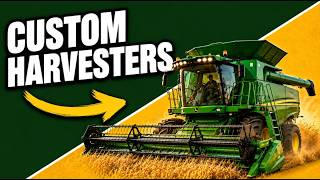
In this YouTube presentation, Hunter Nelson of Nelson Insurance Agency explains the specialized insurance needs of custom harvesters and agricultural trucking operators. He outlines why standard trucking policies are insufficient, detailing the unique risks such as H‑2A labor, foreign CDLs, oversized and double/triple trailer loads, and the need for specific coverage types. Nelson discusses commercial auto insurance challenges, the concept of insurance as risk financing, and the importance of properly scheduling drivers. He emphasizes mandatory workers’ compensation and recommends $1 million auto liability limits. The video contrasts admitted versus non‑admitted general liability markets, explains inland marine policies for high‑value equipment (including TIV and rate calculations), and reviews shop/building coverage options. Nelson also clarifies the role of umbrella liability and its limits. A case study shows a client reducing premiums by half over three years, illustrating the value of a knowledgeable agent. The presentation concludes with a call to action for viewers to contact his agency for tailored coverage.
Chapters
Hey guys, I'm Hunter with Nelson Insurance Agency. We have agriculturaltruckinginsurance.com and Nelson Insurance in Sioux Falls, South Dakota. Our main specialty is trucking insurance, especially in the agricultural space. So I'm going to talk about custom harvesters here, what your guys' insurance looks like, the things that you guys are going to be dealing with that's different than normal insurance, how to handle it. You guys got H-2A workers, you guys got long hours, you got oversized loads, all sorts of stuff. So let's get into it here. So in my background, all my family farms, our main specialty in the agency is trucking. And now you guys are taking on two risks there with the agricultural space and the trucking space. And so you guys are going to have a little bit different, um, insurance than maybe you're just your typical trucking insurance. Your general liability cannot be trucking general liability. Because now instead of driving a truck all the time, you guys are in combines, you guys are roaming around, uh, helping on the farm, whatever it might be. You guys do more loading and unloading than a typical trucker. You guys have different risk, and so your insurance is gonna be a lot tougher. One of our largest clients is actually a custom harvester, and so I've done deep research into everything and anything about it to make sure that we get these guys taken care of. Matter of fact, they've been with us for 3 years and every single year they've dropped on insurance rates pretty significantly, tens of thousands of dollars. And so the longer they've been with us, the cheaper things have actually gotten. Just kind of throw that out there because that's kind of a cool deal. But, uh, when it comes to this, you guys are gonna have very limited options for commercial auto. When you guys have commercial auto, a lot of, uh, custom harvesters have H2A workers. H2A workers, now you guys have foreign CDLs, Uh, you know, the test here in the US, it has to be through English. And so a lot of it's these guys go and get their, their US CDL. It's your insurance company that allows B1 drivers, which can make it difficult. So you guys want to make sure that your guys' insurance company has options for B1 drivers. You guys will be doing oversized loads with hauling combines, maybe some tractors, uh, and then you got the grain trucks rolling like crazy. You guys might be doing double and triple trailers. And a lot of insurance companies— well, a lot of the custom harvesters I talk to, their insurance company does not cover that stuff whatsoever. So they either do not schedule the drivers or, um, they're blatantly not aware that you guys are doing double and triples, if that's the case. And one thing I just want you guys to think about is a lot of people think insurance companies are there to screw them over, or insurance is too expensive, so I have to do what makes sense for me. One thing I just want to give you guys, and I just— a perspective on this. Now, you guys think about insurance however you'd like. But when you guys buy insurance, you were just financing risk. That's all it is. Now, sometimes, sometimes it makes sense. Sometimes it doesn't, you know, going to get a loan from a bank. The interest rate's too high. Shoot, I'm gonna find a way to pay cash for it, right? That's all you guys are doing with insurance. If you guys do not schedule your driver on the policy, um, does that mean you're actually putting more money in your pocket? No, because all you're doing is just financing that risk. If the statistic says that you're going to have a million dollar claim every 20 years, for example, you're going to statistically probably pay out $1 million within that 20 years. Or you could do the math on it and pay out X amount of dollars a year to finance it instead of waiting for that million-dollar bill to come and you'll be paying it out of pocket. So if you can't afford the insurance, it's— you can't afford it now, but you're going to either not afford it at the time a claim happens and you're going to pay it all out of pocket and go to business, or you find a way to afford it and finance it and go from there. Insurance is a transfer of risk. Now, again, like I'm saying, sometimes the transfer of risk does not make sense. The financing would just not make sense. I don't believe you should insure— have insurance for absolutely every little thing in the world. There's cancer insurance, accident insurance. I don't have that stuff. I'm a young guy, so I'm not going to finance that. But when it comes to my agency, I have insurance for— I bought everything you possibly can. So back to the point here. You guys have got multiple different policies. You guys are going to want workers' compensation insurance. A lot of the time they're going to require that for H-2A work, or you don't have H-2A and you just got farmhands. It's still a risky business. You guys are going to want to have workers' comp. It's going to be required or just highly recommended. A lot of guys are not going to do insurance for this. Luckily, we do have a couple programs that will do, uh, agricultural haulers, um, custom harvesting along those lines, and they will do H2A as well. They will be able to provide workers' compensation for you guys, but most will not. And again, if they do not know there's H2A workers, you'll be paying for absolutely nothing. So you'll be financing the risk and you'll be retaining it and waiting for that claim to happen. So it makes absolutely zero sense. You're paying for a piece of paper at that point. So where there is workers' comp, you guys are going to want $1 million in auto liability. You guys might be an exempt for hire trucker, but you are still going to want $1 million because you guys face the same risk as a trucker. And, uh, they have $1 million for a reason, because lawyers are going to go after you for that full million dollars, whether you got the coverage or not. Your general liability is going to be required by a lot of brokers. Uh, not all you guys be working with co-ops and everything along those lines. You might just work with a lot of farmers, and they could give a crap on what kind of insurance you have. But general liability is gonna be a big piece. You guys are hopping in and out of combines, you guys are being farmhands, whatever the case is where your guys' operation comes into play. General liability is just as important as your auto liability and your auto, auto coverage. And what general liability is, is a general business coverage, right? It is going to cover general business operations unless there's another policy coming to play. Since auto exists, pollution exists, workers' comp exists, it's not going to cover any of those things. That's the easiest way to think about general liability. It's a general business coverage, but that's too broad, so there's another policy that exists for it. They're not going to cover it. And so general liability is going to be a big piece. Not a lot of people do this. They will go through what's called a non-admitted market. It's not backed up by the state. It's not regulated. You're going to pay tax and fees. It's going to be financed and a good chunk of your insurance dollars will be going to tax and fees. And nobody wants to pay insurance anyway, let alone paying multiple people to go get you guys error or excess and surplus lines or non-admitted insurance. Plus the coverage is going to be garbage. We do have an admitted option. Where your premium dollars are going towards the insurance. It's gonna be 10 times better coverage, and your brokers, if you work with any, are gonna absolutely love you. That is one thing you want to be looking out for when you're looking for general liability. Next up, you guys are going to probably have a lot of equipment. You got combines, you got tractors, everything on those lines. Half you might have it insured under the farm policy. I'd be very careful. 95% of those farm policies are not going to cover any of your equipment. And when you get a half-million-dollar combine out there, you're going to want coverage for it. And so you guys need to be aware if your guys' farm policy will cover commercial use of the equipment, because you guys are now for hire and it's not just being used for your personal farming needs. You guys will get what's most likely called an inland marine policy. Inland marine policies are pretty easy to do the math on. You guys might have $5 million in equipment on one policy, but then you just bought a couple things, you're gonna go ahead and quote at $7 million. All inland marine insurance really is for pricing is your TIV, which is your total insured value, your value of everything that you want to insure, times your rate is going to get your premium. It's not much more to it than that. You don't have drivers that fluctuate all the rates and everything like that. You know, that matters as much. It is value times the rate gets you your premium, right? Now, if you guys are getting a good premium, you might be like a 1%. So if you guys have got like $7 million, you'll be paying some insurance which we're talking about financing. That means it's averaged out. You're going to lose everything in about 100 years, right? You might not lose everything, but if you lose one of the key pieces there, a lot of guys, including my family, have had combines start on fire or total losses or anything on those lines. They're not cheap repairs. So if you guys have X amount of dollars and stuff, you feel like you're paying over 1% or you are paying over 1%, it's maybe not the best deal out there. Some guys, maybe 1.2, 1.3, That's not bad. But if you're over 1.5, 2, it's probably getting overcharged by quite a bit there. And this stuff does make a big difference. Even a half a point, if you have $7 million, or let's call it $10 million of equipment for easy math, um, half a point's $50 grand a year. So looking at that stuff is going to be a big key piece. Now we've gone over auto, we've gone over work comp, general liability, and, um, and inland marine. You guys have got shops, everything on those lines, unless it's just kept on your property, or if that's just kept on your property and you guys don't have to sweat about leasing it out to other people, it's not really used for the business besides just storing stuff in it. Um, you guys are probably just going on your farm policy that a lot of times— now I'm not saying all the time, but a lot of times it's gonna be a lot cheaper, it's gonna be actually covered correctly, and things will be going well there. And there are a million farm mutuals or little farm companies around you guys No matter where you're at, you'll probably have an option. Otherwise, we have multiple insurance companies that can bundle everything together, and honestly, that might even be cheaper than your farm policy plus have better coverage. So then you got your buildings, everything on those lines. Some people will look at an umbrella. I do not see it very often because, um, insurance is expensive enough. You guys are custom harvester, you guys know insurance is expensive. An umbrella stacks liability over top your other limits. And so if you have a million dollar umbrella, think about your general liability, you have employer's liability with your work comp, your auto liability, anything else, right? It is going to stack over top of it. Now you got a million, million, million, million dollars. It's an umbrella, it's going to stretch over. Now you guys have $2 million liability. This will not cover property. A lot of people think an umbrella covers property. Oh, I've got a— I've got my, my tractor and shit under it. I'm never going to cover that stuff. Liability is third party. Liability is going to cover you if you take the truck and mow over a tractor. That's where it's going to come into play. You could have a blanket, um, like in the Marine policy might be under that. That's going to be more so, um, you know, like a blanket. That's gonna be more so like where it's covering that equipment. That's pretty much an overview of custom harvesting insurance. It's expensive, but it doesn't always have to be. There's a big difference between the insurance companies. When one of our clients started with us, where they're at now, after 3 years, they're paying half the rate of what they started, and it's allowed them to grow their business by quite a bit. Almost no insurance companies will insure custom harvesters. It's actually one of the hardest things I've ever had to insure. I think it's much harder than insuring hazmat trucking, which has $5 million limits and all sorts of regulations for it. It is tough. Get an insurance agent who knows what they're doing, can ensure this stuff correctly, and has the available options. Because even with the guys I was dealing with before, they were with farming insurance agencies, they just didn't have the options for custom harvesters. So if you guys want to talk more about it, please shoot me a call, please reach out. You guys are watching this maybe on the YouTube channel or on the website. There's gonna be our contact info there somewhere. Appreciate you guys watching, and please like and subscribe. Thanks.










