how to fill out a COI
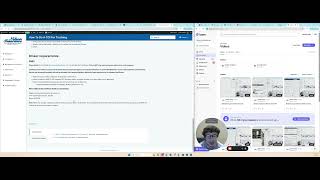
A practical walkthrough by Hunter Nelson showing how to prepare and send a Certificate of Insurance (COI) for trucking clients. Covers which fields to populate (exact date, producer info, legal insurer name and NAIC, policy numbers, limits, endorsements such as additional insured and motor truck cargo), portal tools to use (Accords/NowCerts, RMIS), common mistakes (abbreviations, wrong form type, sending COI before coverage exists), urgency expectations (send within an hour; often within minutes for truckers), and verification best practices (check binder/policy and request endorsements before issuing).
Chapters
All right, I'm going to go over cois here. So let's look over how to do cois here. Okay, so I'll pull up a COI and get rid of this deal and let's go to the portal here quick. Okay, so the first thing is I was checking the portal before we do anything, right? So go to Accords, because Accords is like a COI is an Accord form. And so running through this thing here is how to actually fill it out so you guys can watch this video. This is actually how to fill the CY manually there. Right. So you're going to view the specific requirements of the certificate holder. Every COI is different. Some are just going to say, hey, just need a COI with the certificate holder. That's the basic stuff. So you're going to do is you're just going to list what is normally required on the coi. Now what is normally required here? So this is coi I did. Anytime you're going to fill out a coi, you're going to need the exact date. If somebody asks for COI for the exact same thing, let's say it's even the same certificate holder. Doesn't matter. You still got to update the date on it no matter what. Okay, you're going to put in the producer information, which is it right here. This is our producer information. You're going to put the insurance information. If they have a dba, include the dba. You put our information. Who is sending this thing out. If you're a producer, I would recommend probably putting out the processing email. So that way it gets sent to everybody and they can send out the coi. So that was a key come back to you put in the legal insurance company name. I'm not talking. You have a policy progressive and you're just going to put in insurance company Progressive. I'm saying the legal name of it, the subsidiary, whoever it is there. So if you do sell Progressive Policy Progressive has got about, I don't know, 30 different writing companies, probably more than that. So you're going to look at the, at the documents in the Progressive portal. If you don't know if it's like right away, otherwise the legal name should be in now, cert or Momentum, whatever you want to call it, it's gonna have the legal writing name, that's what you need. And then attached to that, it's gonna be an NAIC number. This is how people can look up this, that people can use this number to look up the rating of the company. So for the Hartford they have one of the companies called the Hart the Hartford Fire Insurance Company. That's I put it Canal. Canal's got a couple Canal insurance company. Go Google the NEIC number if you don't know. Otherwise all this should be now Certs and I'll pull up now Certs and show you guys here as well. Well you're going to check if they have blanket additional insured. This usually should be in now Certs. If not just double check the binder or go into the policy actually and go look up there. As you see I've got this box checked. We're always going to have this checked. It is almost always an occurrence policy. But again if you're unaware go go check the binder or now Certs. I just want to. I just want to emphasize this. We always, always, always need to be double checking the work before you send it out. If you are sending out a certificate of insurance for the first time for an insured you need to double check the information. COIs are the largest Eno risk out there by a long shot. And even getting narrowed down to it, 40% of Eno claims are from additional insured status on a. On a coi. So you'll tie it here a second but you're always going to be double checking stuff. So I found this information from the document with a whatever. And then as you see here the dates are not exactly a year. This is not typically how things are. Right. I've got the year here. But they all have the same or these two are the same policy number. So it's all on policy that's added on as an endorsement. And so that's how I did it there. Scheduled auto is simple 7. That is what most people are using if they have hard not an auto great. Can add that on there. If it's any auto great. Add that on there. You're just going to add in million because most truckers are a million but obviously you're going to do what the policy states. So I've got the million for csl. CSL is combined single limits. If it's a personal policy or the dual split limits you put split limit split split limit for like 1003-001001-00300,000. 100,000 right now it doesn't have umbrella you he doesn't have work comp. He does have motor truck cargo. And this is my fault. I should be spelling this out. I just did this for this one certificate. Kind of figured it'd be no big deal. And sure enough a certificate Holder reached out to me and says, do they not have cargo? It's motor truck cargo. So don't, don't abbreviate anything. I just had motor truck cargo put policy number, put this stuff. You're going to put the deductible of the cargo. You're going to put. If it's broad form, whatever it is, you actually think I was wrong. This was special form, completely my fault. That is unacceptable. I should have read the policy and confirmed that before I did this. They have a $250,000 limit in cargo. They didn't ask for anything crazy. So I just said this. And then here is certificate holder. I should always be signing my name here as well. I will show you guys how to do this. So this is kind of the old way. If you're just drafting up a COI because they're not announced search for example, you just got drafted up real quick. Whatever, whatever. This is what a COI looks like. Always have all this information on here, but all the policies that apply. Brokers don't care about physical damage. So we don't need to put physical damage on here. And really this is a liability certificate of liability insurance. Physical damage is not liability. So then you, you know, if you're just doing a liability certificate, you put on a different certificate. But usually you do an MTC for this one because you're going to a broker, you're not gonna have two cois. So this is what it looks like and there's the example there. So you put in all this information. Here is the stuff. Speed is very important of a coi. If you're taking more than an hour for a coi, that's an issue. Okay, CUI should be sent out within an hour, ideally within five to 10 minutes. So if you get a COI request, you're dropping everything you're doing and you're sending out the coi. Okay? But you're not going to be so much in a rush that you're going to mess up on something and put us in trouble or put the insured in trouble by sending out a Jackie or a, like a, a janky COI that's jacked up and any cause some trouble there. COIs for truckers like many others need to be sent out ASAP. Some truckers will send a COI request and they may only have 15 minutes before that load is gone. That is not a joke. Usually it says urgent coi. So if you see urgency, why and you don't know what you're doing, go get A hold of somebody, get the COI done asap, whatever needs to be done, right? If you're on the phone, get to somebody else say hey, this needs to send to like right now. Most people do not only have 15 minutes but again don't, don't bet against it, right? So load can easily be $5,000 in revenue. We don't want them to cause, we don't want to cause them to lose it. Also they need to be extremely accurate. If they're wrong, they may lose a load and a claim may come back on us. Almost, almost always you're going to get a COI request from highway and rmis. Below are the requirements for these guys. RMIS is a system that sends out a COI to everybody. Okay. So it's like a system, you send it to RMIS and it's gonna send to all brokers that these guys work with. So it's kind of like a third party deal. So it's just got the deals right here. Indicate that the NAIC number for all underwriters. They may ask for the DOT and MC number. You'd put this in the remarks section. That is what I was just showing there. That's that blank box where you can put remarks in there for intro or an introstate number if applicable. Please include additional policy provisions but not limited to reefer breakdown, including deductibles, all risk, broad form, all sorts of stuff. All risk is special form. It's all risk, but these risks, right? So it's open peril. If you have reefer breakdown on policy, you should always be including this on cois. So include that type of stuff on it. Here's the information. RMIS only accepts certificates directly from the agency or underwriter. Any certificates received by the carrier directly, carrier being insured will not be accepted and RMIS will request request a direct copy from the agency. So in this case you'd go into the portal, get a coi, go about it that way. Now what do you do in the situation that somebody needs a certificate and there's something that's not on the current policy that is needed. For example general liability, do not send out a certificate of insurance until we have coverage placed. I've made a couple very risky calls where I thought okay, I'll get the certificate bound, we'll get it sent off to underwriting, blah blah blah. It's not worth putting the agency at risk because an insured is going to pick up a load for something that they did not make you aware of. Kevin. So let's Think about this. If somebody needs an additional insured and they have an urgent coi, that might be fine because we can send it out to the insured or to the insurance company saying, hey, these guys gotta be added as additional insured. And we send out that risk, we send out the coi. If somebody needs something a little more than that, like a general liability policy, let's say their cargo does not cover what they're hauling and they're going to go pick it below it for reefer breakdown. And they have a Hartford cargo policy that doesn't cover any reefer whatsoever. In fact, the Hartford has an exclusion for refrigerant products in their policy. Don't send another coi. Do not put yourself in trouble. Do not risk it to keep the guy happy. I think it's better to lose a hundred thousand or a $5,000 load than be caught with your pants down with $200,000 in meat in the back not being covered, right? Because they might not pay, they might not sign, they might not do whatever the case is. The only time this is remotely okay. And again, I don't even want to, I don't even want to say this. You. I mean, it's got like you just need approval from me before if you're going to do anything like that. Okay? If you're going to send out a COI and you're requesting the coverage from underwriting, you just basically just need approval before you do anything. Okay? It's, it's got to be a really situation by situation deal. And almost always it is not okay. So I wouldn't even play with, play with that idea. So again, the only time it is okay to send off something before it's added is if it's a minor little fix like a little endorsement like adding an. Adding additional insured. If adding additional insured. If they need, you know, blanket waiver segregation and you know for a fact they can add it if they say, okay, we'll get this, you can email underwriting and if they email you back saying, okay, we'll get this added, this will be added in like by tomorrow, okay? You put on the certificate added, effective tomorrow, whatever the case is, right? Just do not send out something where it's risky at all. Like, hey, when you prove this vehicle's insured and you request to be added, don't, don't even send out a COI until you get confirmations added, right? So don't play with that stuff at all. Always, always, always double check. See, why is get some trouble Do I'd rather have an unhappy client than us having no claim or them having a massive claim and it's not being covered. Okay, so don't even, don't even risk that stuff. How to see or how to create and see the information for coi. So here I've got jers harvesting, as you can see. I've got their policy numbers in here. I've got the effective dates, low policy, the policy type, I've got all this stuff. The insurance company, it's got the NAIC number. Again I'm a little bit newer to, I'm a little bit newer to now starts at the whole offices. So I've still got to figure out how to add the premium in here. But if I go in here and I go to master coi, I can go in here and I can see the COI that is created. So this is a COI for the trucking side. The million dollars in liability. Got the motor truck cargo, I got the limit and deductible insurance company. One thing I did forget to mention is what this A stuff means. If it's, it's just referring to this directory up here. A, B, C, D, F. You just matched up to who's got what. Right? So there's all that and, and I've got my signature on there. So I can go in here and I can add, I can say send a COI so I can type in the certificate holder and who it's going to and it's going to pull up that COI that I just looked at or I can click this and download a blank COI and it should have all this information if somebody's just been sold or it's only added, double check it 100%. Like as I can see right here, I didn't have the NASC number because again we're still importing all this information into now certs. But I want to double check all this information, make sure we're sent good. So I download one, I can add a new certificate holder. Otherwise I can send out a certificate right there to the, to the certificate holder. For certificate holders we need something like this. We need the legal name, an address. So somebody goes please send out certificate to Highway. Well that's pretty broad. Go check and see if highway is in here. Right, because we need all their information. Look at this. I think we do have highway app. So then you send it to them and just confirm with the insurer if that's the correct information. So again with the cois, never send out anything that's not on the policy. The only time this is remotely okay is if it's a quick little endorsement like an additional insured and we can add it. This is if it's through underwriting, if it's through progressive, just go add it real quick and don't even think about sending it off until it's added. If it's through canal and you got to wait day, that's fine. You might be able to just send it off and you have to add the additional insured. If you forget about it, that's where the 40% comes in. The highest Eno exposure again is not adding additional insured after setting out a COI with additional insured status. So double, triple, quadruple, check your work, make sure it looks good. Send it out right away. If you need somebody to look it over, have somebody look it over. Watch this video to see how just like the nitty gritty of it works, where you put in, how you put in, what the stuff is there. Some of the COI. But again, COIs are a big importance. A COI is usually going to somebody who has an interest in the insurance business, like a broker. A broker. A broker is somebody who gives out loans, right? So if I am Hunter's Truck Company, I say, hey, I want to take the slow that you're offering Mr. Broker. Sounds good. Send me a proof of insurance. Broker requests a certificate of insurance. And the reason they're requesting certificate insurance is so that way they can prove that the carrier has insurance for the loads that he's about to give out. He has some interest in those loads because his name's been the Bill of Lading. This is why we send those out. He doesn't care whether your truck or trailer are covered. He cares about liability because he has contingent liability. And he cares about cargo because he has contingent cargo. Those interests he cares about. So kind of knowing that stuff's a big deal. Somebody asked for a COI that's got lots and lots of wording and all sorts of stuff on it. You're going to be reading the policy. It's not a bad idea to ask for the contract and make sure that the insurer is not being screwed over in that scenario and doing your due diligence in that part. If it is a bank or a mortgage company now, they do care about physical damage, or if it's a mortgage company, they do care about the home because they have the interest in that. Now they don't care about liability because if you get sued by somebody doesn't affect them. So it's kind of good to know about that stuff. Yeah, that's a good chunk of the stuff on a COI there. Let's look at an example here real quick. That's not it. So here's a gala requested a COI from me attached proof of insurance for JS Harvesting please if any questions. She is a lien holder on the trucks and trailers that Jerus Harvesting has. So as he said please send over to update certificates. Please review and confirm this information it's list in the policy. If so, please send certificate for both this and this trailer. Here's the values of them so she cares about the value. So what I'm going to do in this scenario is I'm going to list out these trailers in the remarks showing scheduled trailers that this person is a loss payee on. I'm going to state the values because she wants at least these values. So I'm going to make sure these values are updated. So I'm going to. In this case she's with ten four I'm going to email ten four I'm going to get the updated values or I'm going to update the values once I have confirmation of it. I'm going to send Alphine an updated certificate of insurance with the updated values. I'm going to list them on the remarks. I'm going to state that there is physical damage coverage there on a certificate of inland marine. See why I'm sorry. A certificate of property. Whatever you whatever coy it is, I can't remember but make sure that is covered. Make sure she has proof that this is covered and I'm going to request this endorsement before I do anything. So this one is a little bit scrambled but that's kind of how you do that scenario and how you handle that stuff. So that is the art of cois and making sure that everything is looking good there.










