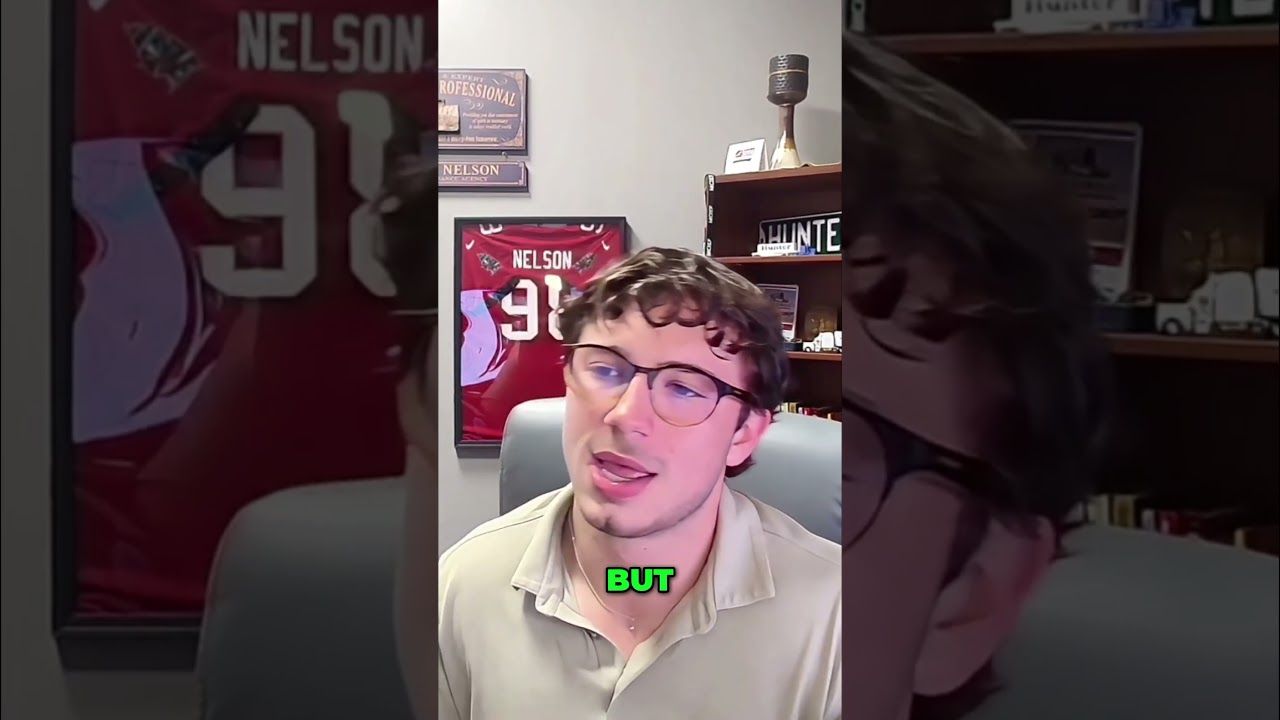
In this instructional video, Hunter Nelson of Nelson Insurance Agency walks trucking company owners through how to read and understand commercial trucking insurance quotes. He begins by emphasizing that insurance is a major expense for trucking businesses and that owners should not blindly trust agents. Using a basic Progressive quote, he explains payment options, down‑payment percentages tied to credit, driver points, medical payments, uninsured/underinsured motorist coverage, comprehensive and physical damage, roadside assistance, non‑owned trailer versus trailer‑interchange coverage, general liability limits and exclusions, cargo limits, additional insured provisions, rating for specific hauls, radius limits, mileage, and stated vehicle values. He then examines a more complex fleet quote with multiple trucks, showing how artisan‑contractor labeling works, payment structures, limited medical payments, employee coverage, and the inclusion of cyber, identity‑theft, and employment practices liability (EPLI) coverages. He highlights policy form length, key exclusions (e.g., cyber‑war), ultimate liability, vehicle‑specific radius ratings, covered auto symbols (owned, non‑owned, hired), cargo deductibles, aggregate deductibles, lease/loan gap coverage, and down‑payment schedules. Throughout, he offers practical tips for verifying agents, asking detailed questions, ensuring accurate business information, and understanding policy language, stressing that informed owners can better control costs and avoid over‑paying for unnecessary coverage.
Chapters
Hunter Nelson Insurance. I, I'm sure most of you guys have seen these insurance quotes. Sometimes agents or agencies will send out different quotes or their own proposals, but really it's all put into insurance jargon. And so good insurance agencies or guys who have adopted to this recently are gonna be breaking down these quotes into more of a proposal that's very basic, easy to read, so you guys can understand these coverages. We've started to do that now. And, but you guys also wanna see the actual quote too, because sometimes these proposals, you know, might, might be missing some things. You can't verify things, anything along those lines. They're gonna have some key details on there. So it's good to see both. And I'm going to break down how to read an insurance quote, what you guys are actually looking at, because insurance is the 4th largest expense for a lot of trucking companies. So you guys want to know what you're actually paying for, what's needed. What it is. And so that way you don't have an insurance agent either just trying to say the cheapest thing— I'm sure you're wrong— or maybe they are. So it's something that is too expensive for what you guys actually need. So you guys want to know what's going on. I've just realized just because somebody's professional doesn't mean you guys should ever blindly trust them. So let's get into how to read an actual insurance quote. All right, so we have got 2 quotes here. I've got one that's a little bit more basic and another one that is a little more complicated. It's a different style quote. It's got a lot more trucks on it, everything on those lines. But right here, you guys are going to see a Progressive quote. A lot of you guys are going to get quotes from Progressive. What the heck does it mean? Why is there 20 different payment options on here? Let's kind of go through that. So I blanked out a lot, or I've blacked out a lot of the information. I don't want anybody's data, you know, getting leaked or anything like that. But with Progressive here, they're going to have that pay-in-full discount. They're going to have a premium up here. This is almost never going to be correct. You guys are going to want to look at this first one here. As you can see, total premium is lower. This is if you pay by mail. This if you pay by EFT. That's what you guys want to do. Nope, you never send in checks for your insurance. Progressive, their down payment fluctuates by how good your credit is. So sometimes you guys get a low down payment like this. Where it's only 9%. Sometimes it's 20%. I've even seen 25%. So it depends on your credit. These guys have a 9% option available, giving them pretty much little to no down payments. Let me turn down the brightness of this thing real quick here. Okay. There's your payment options. There's pay by mail. Here's your drivers right here. Let me just make sure. Yeah. So here's your drivers. Make sure all this is accurate. Points. If there are any points, that means there's something on their MVR. The more points, the worse it is. As you guys can see right here, medical payments is rejected. Just for the sake of example, I rejected medical payments. I would never recommend having medical payments rejected. Medical payments is a coverage very similar to liability, but it's very much less because liability can sometimes have a demand for money or a lawsuit needed to get more money out of it. And so medical payments is like, hey, here's $5,000. You scuffed up your hand. Let me give you $5,000 for your health insurance deductible or whatever the case is. Don't go get a lawyer and don't come sue me. Having medical payments will save you guys a ton of money if the insurance company use medical payments instead of liability, because you guys can avoid massive losses or losses getting way too outta hand on your loss runs. Un and underinsured. This is what protects you guys. Uninsured motorists, underinsured. This is the coverage that if you guys get hit by an uninsured driver or an underinsured driver, it gives you money to go to the hospital and get fixed up. And liability gives money to the other person to go to the hospital and recover there. Otherwise, it also includes property damage. So if you smoke the vehicle, you hit a building, you hit property, right? Comprehensive inclusion is physical damage. This protects your truck and trailer. Roadside assistance, you can kind of see the price here. As you can see, liability is pretty dang cheap on an underinsured, it's pretty dang cheap. Covering the truck, you know, it's a decent premium there. We have non-owned trailer physical damage. The difference between non-owned trailer physical damage and trailer interchange is trailer interchange requires a trailer interchange agreement. If you guys are not doing intermodal, you should almost never have trailer interchange on your guys' insurance. Non-owned trailer physical damage is the way to go. And so it's kind of weird, you guys see some deductibles up here versus down here, versus, uh, or I should say down by the vehicles. These are the auto insurance coverages. General liability is just like general business coverage. So when you guys are a trucker where almost everything involves the auto or the truck, it's going to be slander, defamation, you know, anything you get sued for there. You've got advertising injury. It can come into play a little bit on like the unloading process. If you guys excuse me, if you guys unload the truck, you know, stack the boxes too high, it falls on somebody, then general liability can come into play. You know, whatever. But loading and unloading actually is part of the auto liability because the auto is still involved somewhat. You know, but once you guys are leaving and it's not involving the auto. General liability can come into place. What this means here is you guys are going to see $1 million. It's just you got $1 million and it can be used 100 times throughout the year pretty much. This has $1 million per claim, $2 million per year. Aggregate means year. You can turn into $1 million claims per year. Products completed operation does not really apply to truckers. Advertising personal injury. Those are the examples I just gave. Damage premises rented to you. This does not mean if you rent out a shop it's going to cover it. This is only for 7 days or less. That's why it is so cheap. If they actually have price listed, I'll be stupid cheap. Medical expenses. Cargo, get $100,000 coverage, $1,000 deductible. Reefer breakdown is included. State filing fees, $35. Blanket additional insured. That means by contract. So anytime you guys have or need an additional insured on your policy, as long as there's a contract, you can buy blanket coverage for $75 a year, usually sometimes $100, sometimes $200, but it can be done there. As long as there's a contract, anybody can essentially be— I mean, take that with a grain of salt— additional insured on your policy with no additional cost. Fees for the filings, you know, to activate your MC or file with the state. Here's what you guys are rated for hauling. It does not mean you cannot haul anything not listed here, but, uh, if you don't, you should let your insurance agent know. Because if you start hauling hazmat, whatever the case is, or it's completely different, now they can come after you for misrepresentation. You are not rated for it, and so you need to be rated accurately. Most insurance companies say if you go outside of this radius, there is no coverage for Progressive and Geico have a little bit of leniency on it. As long as you're 80, 90% of the way within that radius, or 89%, 80 to 90% of trips are within this radius, you're typically fine. But, um, on pretty much any insurance company, what you should just do is, if I go outside of this, what's the furthest I would go out within a year? Uh, make sure that's updated. Annual mileage, this guy's a more local guy, so not driving a whole lot. Stated value for the truck does not mean you're getting that amount for the truck. It means you're going to get market value for the truck up to this amount. So you want to just guess on roughly what it's worth. Here's a premium breakdown, deductibles, roadside, everything like that. Vehicles. And yeah, that's how you guys read a progressive policy. Okay, so this one is a little bit more complicated. This one's got more trucks. You're gonna see artisan contractors. That's just how they label their general liability motor carrier. You know the auto. Here's the payments. So if they paid in full versus monthly, and and yeah month or paid down payment for monthly. So as you can see, they are rating the. So this one has med pay for only a thousand bucks. They have employees listed in there. Meaning probably it's being listed for that liability. So this is under the artisan and contractors, which is like general liability. The way you can tell it's general liability is because you're going to see an aggregate. So liability. Yeah. So there's that. They have cyber insurance included. They have identity fraud included. They have EPLI or employment practice liability insurance included. These are phenomenal coverages. Without making this video too long, you guys want to have those if you can. This is a fleet, so that's why they are on this one and not on the single unit. Employment practice, you're not going to need if you don't have any employees. Cyber should always be included for pretty much anybody. A lot of truckers do not carry cyber, but it's still very, very good coverage. Bunch of little perks here. These are policy forms. If you guys can read this, Kind of get an idea. It's not going to have a lot of language in here. This policy is actually 214 pages long. Your insurance agent should have an idea what's on it. Obviously nobody's gonna have it memorized. It's a lawyer-written contract, but they should have an idea what's on your policy, and so should you guys. So you guys can kind of skim through that, see if anything stands out like, oh hey, what's— you know, nothing here really does stand out. But what's this exclusion? What does this thing mean here? Cyber and war exclusion. What's that? What's, you know, what is all this stuff? What's this ultimate liability? So here's the same thing. Here's all the vehicles. Here's the radius. As you can see, these ones allow you to rate it different radius per vehicle. So that was different pricing per truck and trailer. And then you can see the coverages right here. Covered auto symbols. A symbol is not always going to be used in trucking, but I'm going to try to get this not too far into insurance jargon. But essentially, symbols are what is going to be covered. So for example, symbol 67 says all— or these symbols are going to include All trucks scheduled in the policy are gonna be covered. Non-owned trucks doesn't mean you can just go borrow a buddy's truck for however long you want and it'd be covered. All owned and operated units have to be on the policy. But if you have like a receptionist run to the bank to drop off a check for you, she gets in an accident, hurts somebody— oh hey, police officer asked, what were you doing? I was dropping off a check for my boss. Oh really? Where do you work? Blah blah blah blah blah. want to sue insurance, they want to sue a trucking company over a receptionist. There's gonna be a lot more money with the company 9 times out of 10, and you guys can still get sued for that. So non-auto, because it's not owned by the business, can help you out there. Hired auto, if you guys are renting a truck for little bits, gives you guys some leeway there. $50,000 cargo limit, $1,000 deductible, $3,000 deductibles here. Here's the price per coverage on everything. So I get a lot of people asking me, hey, How much does the price differ if I do this? Well, usually it's broken down. Vehicle number 1. All right, so then I have to go back up and find the VIN. It's, you know, kind of annoying here, but here's vehicle number 1. So here's that. Okay, I know vehicle number 1 is $11,000. Oh, I want to remove comp and collision. How much is going to be to take off physical damage? Well, right here I can see it's going to be around, you know, X amount of dollars, right? So here's the hired auto. Here's the non-owned, un- and underinsured. Here's some other little benefits these guys have. They got lease and loan gap coverage on this thing, aggregate deductible, which means total, right? So it's a combination of the truck, trailer, and cargo. So instead of having 3 $3,000 deductibles, they got one. So it saves them $6,000 per deductible. So deductible amount doesn't always matter as much because some companies are going to have an aggregate or a combined deductible, and some are going to have a And so you might have $1,000 or $2,500 come out per instead of together. And then you can see the down payment here on all this stuff. So as you can see, a down payment actually decreases if you pay by EFT or by card. $19,000, $9,600 a month. They do 10 payments, so they do 2 payments up front, 10 monthly payments after. Last month is essentially free. And his policy period and everything on those lines. That is how you guys can read insurance quotes. Again, I've learned as a business owner, you cannot just say, oh, they're a professional, I'm gonna blindly trust them. There's always things I say, hey, what about this and this? And then you go back and look at it and, and they actually change things up for me. Same thing goes for you guys. There's a lot of insurance agents who do a great job. There's a lot of them you guys cannot just blindly trust. You guys gotta let them know what's in your business, how everything rolls. So being able to read insurance policy notes you guys have is very good. It's a lot, a lot of money. So if you guys have any questions or anything, please do not hesitate to reach out. Again, I'm Hunter with Nelson Insurance Agency. We specialize in trucking insurance and we write in 42 states. Thanks.