Is Your Trucking Insurance Ready for Growth?
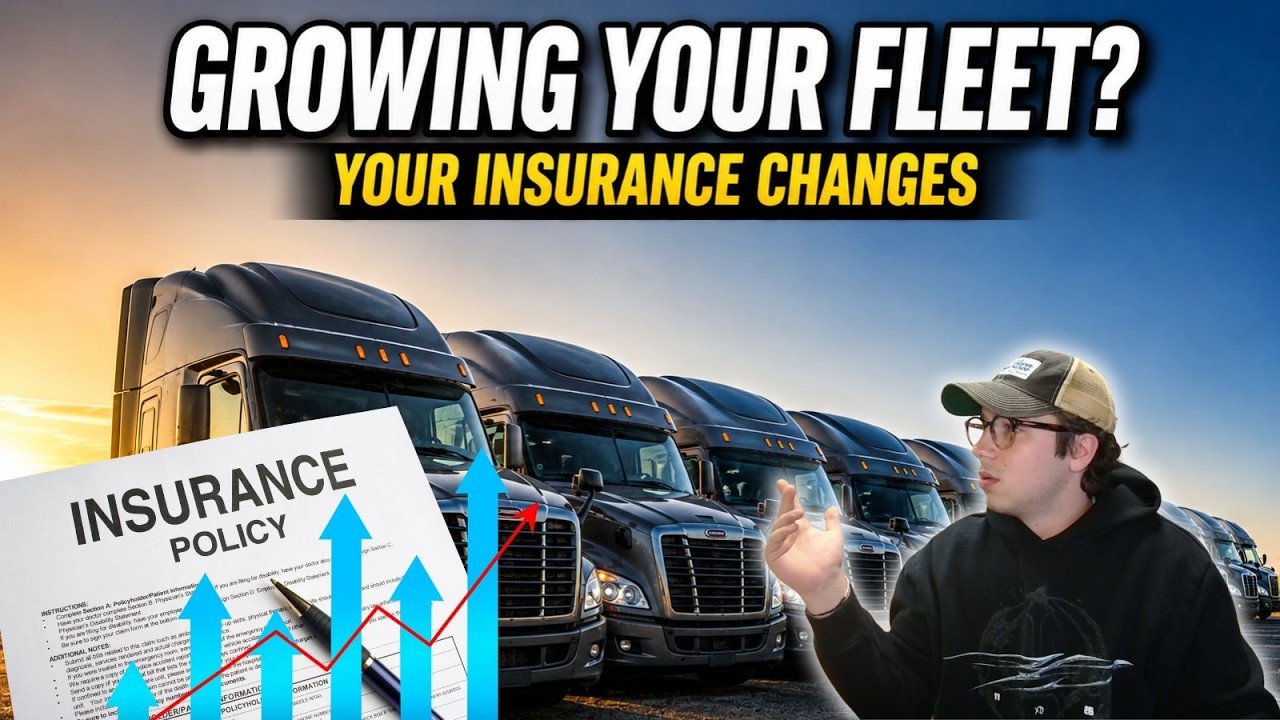
This content was created by Hunter Nelson. This content was uploaded by Hunter Nelson. This is a YouTube video titled "Is Your Trucking Insurance Ready for Growth?" (published Aug 10, 2026) featuring Hunter Nelson of Nelson Insurance (based in Sioux Falls, SD) presenting an educational talk aimed at trucking companies about how insurance changes as fleets grow. The transcript is a semi-dialogue between Hunter Nelson and an interlocutor labeled "Speaker B." Topics covered include marketplace underwriting thresholds by years in business and number of trucks, profit sharing/dividends, pay-per-mile/revenue reporting, captives (structure, costs, and benefits), self-insurance and self-insured retentions (SIRs), deductible strategy, loss runs, cost of risk versus premium, and safety investment. The format is an informational/presenter-led discussion targeted to fleet owners and operators.
Chapters
Hey guys, I'm Hunter with Nelson Insurance. I'm going to get into what does trucking insurance look like more as you guys start to grow, uh, because as you guys grow, you gotta have captives coming to play, you're gonna have SARs, and you guys can start lowering that insurance premium. You guys qualify for more insurance companies. There's a million different things that come into play here now, uh, versus than— versus just 4 different insurance companies you guys had when you got started. So, uh, we're based out of Sioux Falls, South Dakota. Again, I'm with Nelson Insurance Agency. Let's get into it. So as you guys continue to grow, there's going to be a ladder to this stuff. There's going to be more options the larger you get. Uh, the end point would probably be self-insurance, but not even some of the largest guys are self-insured truly. Uh, that stuff is incredibly difficult. You got to have a trust account, millions of dollars set aside into it, and so it really doesn't even really make sense. You even some of the big guys. I've heard some of the C-suites at the largest trucking companies talk, and they are still in a captive. And so I'll get into a captive here in a minute. But as you guys are growing, you guys are hitting 5 trucks, 5 years in business, whatever the case is, I'm gonna go down this ladder here. Uh, once you guys hit 2 years in business, you guys have more insurance companies that are going to start taking you, start looking at you. Uh, typically those insurance companies definitely can be better. Your insurance will decrease even with the current guys. But more options is always a good thing because it's a higher percentage that your premium will go down regardless. Same thing with trucks.
Well, actually, I'll get to that here in a second.
So then you get 3 years in business. That's the second big leap. 3 years in business, now you get even more insurance companies gonna take you. 4 years in business, not really much. 5 years in business, there's a couple more insurance companies that also are looking at you, which is great. And it's gonna get less and less the more years in business you get into it.
And then it cuts off and just becomes a pure, what's your loss ratio?
Look at the data. What goes on from there? Number of trucks does affect your guys' premium and how many insurance companies will look at you guys. So a lot of these guys will say, hey, I need at least 5 trucks to get a quote for you. I need at least 10 trucks. There's people who say 50 trucks. There's people who say 200 trucks. People say 35 trucks, 25 trucks. It goes on and on and on. The more trucks you have, the more insurance companies you have, and you're still in the standard marketplace of insurance companies, and definitely is going to help your rates. Now, when you guys are purchasing normal insurance, it's just like renting a house, right?
You guys are paying premium dollars.
You really don't expect to pay for much with what you expect insurance to cover, right?
So if you have a claim, you expect insurance To pay for it. And the problem is though, if you guys go pay $100,000 a year for 5 years and you guys turn in $100,000 in claims, the insurance company in theory just made $400,000 off you. Now granted, insurance companies have a 35% expense ratio. So typically that $100,000, $65,000 is actually going— did I say 35%? $65,000 is going to them because they gotta pay employees, they gotta pay adjusters. You got court or you got lawyers. All sorts of different stuff all gets mixed in there, right? There's not really any way to get rid of that 35%. It's the cost of running a business. So honestly, having 35% expense ratio is pretty dang good. Most companies do not run that low. Just a heads up too, going direct to somebody versus going through an agent makes literally zero difference. I think a lot of people think that they are saving money because they don't have to go to an agent, but somebody still has to pick up the phone and answer you guys' questions and handle claims, all sorts of stuff. I promise you there is literally no difference between going direct online versus having an agent for free. Now, when you guys are doing this and you guys are paying those premium dollars, there is a way to get some of that money back and start sharing that profit with the insurance company. Now, some insurance companies will do a thing called profit sharing. Uh, it's exactly what it sounds like. I've seen this on physical damage premiums, not really auto liability. Anything on those lines. There's also pay-per-mile or revenue reporting where if you guys have a slower year, just pay a little bit less in insurance because your risk is less. You're gonna pay a little bit less, right? But profit sharing is gonna come into play. Let's say you guys pay $100,000 a year in physical damage insurance. You guys turn in $100,000 in claims over the next 5 years. Insurance company has made, in theory, $400,000 for rough math, we'll call it $250,000 right now is what they've made. And so you guys will get a percentage of that back.
You guys can see this on work comp insurance.
You guys can see some physical damage. There's a couple different lines. Work comp is really going to be the most common. And so having dividends or profit sharing or anything on those lines on work comp is going to be a good first step there where you guys can start seeing some of those premium dollars. Because if you guys invest in safety and are a well-rounded, well-rounded company, And insurance companies making money off you, you're gonna get some of that money back. Now captives is where you really capitalize on this. This simple example I always use for captives is like owning a home versus renting. It can be cheaper to rent. So do not think, oh, captive is the ultimate end goal. I want to do it no matter what. I got to get into a captive as soon as possible. There are times in life where it makes sense to rent versus buy. You got cash in hand when you rent, all sorts of stuff. The really big reason why this stuff is renting and buying a home and captives versus going through the marketplace— marketplace is just buying a policy and paying it annually, obviously, which you guys normally do. Captives are going to have a higher down payment. You got to put more money into it. You're going to be more invested. The big thing is, is that you guys are going to get the equity when it comes to your premium dollars. So when you guys go rent, if something happens, landlord picks it up, right? It could be cheaper to rent versus having a mortgage on your house. Depends on the situation, right? You don't have a down payment when you rent. Uh, you don't carry the liabilities like I was just saying with having the landlord fix everything. Now you guys do have that with buying a house. So those are the negatives there. But the big key piece is those dollars you're paying into your house, instead of it going to the landlord's pocket in theory, or in other scenarios be the insurance company, it's now going partly in yours and partly to the bank, right? Same thing goes with captive insurance. You're going to pay that 35% to manage the captive because they are still going to have people who need to deal with the Department of Insurance. You're going to have board meetings, you're going to have trips, you have all sorts of stuff because you guys become an owner in this insurance company. You guys are still going to have some of those claim expenses, and they are going to use some of that 35% to actually cover you guys to an extent, uh, and I'll get into that here in a second. But when you guys are throwing in, let's say it's a million dollars a year in insurance. Now that money, three hundred fifty thousand of it's going to the captive management. The other six hundred fifty thousand dollars is going to an A and a B fund. I won't get too in depth on the structure of it, but it's going into a fund, and this fund is gonna be paying out your claims, and then the B fund, you guys gonna be sharing some claims with the rest of the captive. So they're gonna be selective, and you guys are gonna want to be selective on who you invite into this captive and allow them to. Share financial responsibility with you guys. But let's say you are paying in a million dollars. Five years goes by; you've had a million dollars in claims, right? So in that scenario, you have four million dollars in in premium dollars that's gone to nothing right now. What happens with that when you guys have a captive? It's just like I was saying buying a home. Thirty-five percent is going to go to the captive management. Some of that might be to help pay with your ten million dollar claim. Some of it might be to.
Uh, to help out with the rest of the management of the captive.
But the $4 million, you're gonna lose 3— we're gonna, you know, rough math, we're gonna call it $150 grand. You guys get— or I'm sorry, $1.5 million. You got $2.5 million. Just again, I'm, I'm just spinning from the, from the hip here. $2.5 million is gonna be sitting in an investment account for you. It's actually going to grow. You're gonna get dividends from it. It's an appreciating asset now. Just like sticking in the stock market. It's not really— it's not tangible asset, but you guys will be making money off it. And then at a certain point, after a couple years have gone by, you guys can start collecting that money. You can start taking it back. It is tax advantaged. You've got money that you've paid in and it's literally appreciating for you and earning interest, but it's still tax deduction. So you get some tax advantages with that as well, and you can start taking it back out as you guys would like, and you start to get control over those premium dollars again. And that is such a key piece because it's just like buying a house. It just gets to be your money if you guys are obviously profitable. Now, if you guys pay a million dollars a year and you're turning in $1.5 million in claims, it makes absolutely zero sense to go out and go hop into a captive. You guys would be losing money. It's cheaper to quote unquote rent, go through the insurance. Now, if you get doing that, you guys are probably going to get dropped and go out of business. So you guys want to invest in safety and look at your total cost of risk versus just what's the premium dollars, because the captive is not a light decision. I truly firmly believe that's how everything should be looked at in business, is the cost of risk, not the premium dollars. If you guys have $1 million in claims, it's probably going to cost you $2 million in opportunity costs and indirect losses. For example, hurt might be $50,000 with hospital bills, but what if they don't want to come back? What if they just go sit on their wages and just sit at home for a while? It's a morale killer. It could cost you guys a contract with your broker or your shipper or your direct customer. Whatever the case is, you have lots of missed opportunity costs and indirect losses. So invest in safety. Look at the actual dollars there, not just the premium, and see if a captain makes sense. You guys can also start looking at SIRs and self-insured or self-insured retentions as well as Or deductibles, and you can start you can start retaining those claims. And instead of having the insurance company come in, waste extra dollars on lawyers and whatever, it might not be the way you guys want to do it. You might be able to set it settle it in ten thousand dollars cash after whatever the case is. You don't have adjusters. You guys can take on that, pay it out of pocket. Doesn't hit your loss runs. It doesn't count as claims frequency. It's going to lower you guys' insurance premium, but it's all. The cost of risk. Does it make sense? How many of those things do I have? Because insurance is just a transfer of risk. When you guys retain it, you might be able to make money off it, you might not. The whole point of insurance is protect against the catastrophes. So you want to have insurance for the absolute worst-case scenario. I'm Warner, I just got sued for $95 million for non-fault accident. Thank God I have insurance in that scenario. Or a $5 million claim because somebody ran over a family. Thank God I have insurance. But the small $50,000 stuff, depending on how big you are, $50,000 might be small if you're 100 units. Whatever the case is, you guys want to be paying out of pocket, most likely, if that makes sense for you guys. And you guys want to start looking at what, what risk do I want to retain and what risk do I want to transfer. Then you guys start looking at the bottom dollar.
And that's how insurance Changes and, and evolves as you guys start getting larger. So appreciate you guys watching. If you guys have any questions, again, I'm Hunter with Nelson Insurance Agency. Happy to help. Appreciate you guys watching. Please like and subscribe.










