Nelson Insurance Agency Meets With Ten Four Truck Insurance
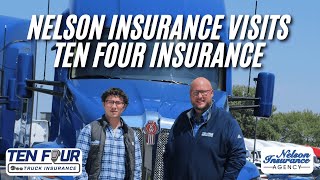
This is a YouTube interview between Hunter Nelson (Nelson Insurance) and Chris (Ten Four Truck Insurance) recorded in Carter Lake, Iowa. The video covers Ten Four's origin (insurance arm introduced in 1992), their expansion to the broader trucking market in 2020, and their emphasis on selective agency partnerships and human, common-sense underwriting. Ten Four reports nearly 5,000 customers spanning one-truck operators to large fleets, uses Trucker Cloud as a telematics partner (non-punitive monitoring), and offers a competitive billing approach (standard industry down payment ~20% vs Ten Four’s 12% at inception). The interview highlights quick turnaround when agents respond, direct-bill billing (no mandatory premium financing), and a partnership-focused service model.
Questions this video answers
1992.
2020.
Nearly 5,000 customers.
Around 20%.
12%.
Chapters
Hey, guys. I'm Hunter with Nelson Insurance. I am meeting here with Chris today. We traveled to Carter Lake, Iowa, to meet one of Our insurance companies, 10 4. I don't say this lightly when I say this, but 104 is one of my favorite companies. And we're going to kind of get into why here. All right. To somebody who maybe has not heard of Ten4, doesn't know their origin story, why don't you tell me a little bit about 10.4 and how they came out to be.
It's definitely a unique story, and it's one that sets us apart, I think, from a lot of our peers in that, you know, the origins are as. We were born out of a family of trucking companies. We have three companies, basically. One, there's a fleet, there's a leasing operation, and now we have the insurance piece. But in 1992, we introduced the insurance piece to it, insuring some of our own assets. And, you know, fast forward through enough time with our partnerships, the feedback we got. Those partnerships allowed us to get a lot of feedback about the state of the market. Right. As it pertains to insurance. And wasn't a lot of good feedback. It was a lot of rate increases, a lot of coverage issues.
It was.
You name it. And we took the opportunity in 2020 to expand our offerings and be able to offer them to the general trucking marketplace. It's gone very, very well. We've had a great experience so far, and to date, we have nearly 5,000 customers. Anywhere from one truck to a couple thousand.
Yeah.
So we really do have a. Have a pretty unique story.
Yeah.
In getting here.
Well, 5,000. 5,000 customers is definitely quite a bit. I mean, and everybody, when they think of trucking insurance, a lot of truckers, they just think of the basic, hey, I. Progressive. I know them. They got 100,000 agents, but you guys got 5,000 customers with a limited insurance or a limited agent base. Why don't you tell me a little bit about that?
I mean, we're different from a lot of carriers in that we are extremely selective about who we work with from an agency perspective, we want to. It's very important for us to work with agents that really, truly understand the trucking space. There are a lot of nuances and regulations and filings that need to take place that everybody in the whole chain of communication need to be aware of. And if you're not, you can kind of get caught in trouble, and there are consequences to those kind of mistakes. Right. And so just working with agents that understand what we need to see from a submission perspective, what's important in trucking, you know, what an underwriter wants to see. You know, it's just important to be kind of locked in with each other as a partnership. We're hugely focused on the partnership. As you've experienced.
Right.
It's something that I think sets us apart there as well. But the way we're. The way we can really lean into our partnerships is by working with a limited number of partners and those that we can kind of trust with the business they're selling.
Yeah. So it sounds like you guys know the trucking space in and out because you guys have companies that are even involved in the trucking space. You have agents who you guys vet very heavily, and they know the trucking space. They're not. They don't have one to two maybe clients. And they're still trying to figure things out. And on top of that, I mean, just working with you guys, I can get a hold of an underwriter like, no, like it's. It is incredibly easy. Whereas 90% of them will never answer their phone and take two days. Email me back. Which is tough because you got. You got insured to sometimes need something quick. They get out of truck and it'll take. I mean, I know even some companies will take 25 days out of truck and you don't get notification of it. And then you got to pay 25 days later. You got to explain the whole situation is. So it's just really tough. But I mean, really, when you're dealing with 10, four, you guys just know that you're dealing with somebody who only does trucking and just have a good team behind you.
Yeah, well, you said it to. The urgency piece is really important there. Right. We're not a huge company. We're kind of a small boutique insurance company that relies on old school underwriting to make human level decisions. We don't. We use technology in a really efficient way to make sure it's easy to work with us, but we don't rely on it to make decisions about underwriting.
All right, when it comes to down payment quotes, what does all that look like with Dun Forward?
Yeah. As with everything we do, we like to think it's. It's to make the lives of who we're dealing with a lot easier. Understanding what other carriers are doing out there. You know, we thought it was important to be able to deal directly with the insured for billing. So we are a direct bill. The benefit to that, obviously, is that we don't require Any premium financing, it's a huge deal. Save the APR off the top makes us a little bit more competitive. But to get a quote, it's pretty simple. We have a pre qualification page that you make sure it's a fit as far as operations are concerned. And then you're able to upload the remaining supporting submission documents into our agency application portal. From there it hits an underwriting desk and then you're dealing directly with the underwriter. So like I mentioned earlier, we do use technology to make things simple, but we still let people do the work, right. And so, you know, they're gonna have questions about certain things they see in a submission, about violations, about some of the things that maybe give them a concern. But I think the important thing to think about there is that they are asking the question, right? And they want to hear the story about an account. Because not everything that is true about an account shows up the right way on paper. You know, there could be some losses that are in subrogation or we're not at fault, and here's the police report to show that, or questions about violations to talk about what the trucking company owner is doing to mitigate those issues. Right. I mean, that's a, that's a huge piece of the story that's often missed in the underwriting process with a lot of carriers. You know, we like to, we like to know who we're working with. We like to get those questions answered and find a way to get to a yes on an account and pass through the appropriate rate based on the risk.
See, I think you said it really well there. I mean, 10, four. You guys are not, this is no system we're plugging information into. And oh, you got a couple violations, quotes declined or just automatically to be way higher. You're going to get. It's common sense underwriting, you know, if you got something that, hey, a mistake was made, but this is not going to happen again, or there's a story behind something like this. Now if I go talk to insured, I can go relay it to an underwriter who I've got a good relationship with and I've met most of them person, and I can go say, hey, here's what's going on. And so that is tremendously helpful. Tell me about the timeline too. And like what getting a policy started. Because some of these guys, I mean, I'll wait two weeks for a quote and then you gotta, and then I, then I find out the down payment is. And then they're like, holy crap, this is this bad?
Yeah. Well, I mean, the standard. Excuse me, the standard down payment in trucking is around 20%.
Right.
So what we, you know, we understand that the cash flow issue when it comes to insurance is a really big issue. Right. Operational costs have never been higher for trucking companies with insurance being a significant line item in those operational costs. You know, the way we kind of combat that and make it easy to move over to us is to only require 12% down at inception and fast forward another policy year at renewal. We're not going to charge another down payment. And you know, the advantage of that, obviously, is keeping the cash in the trucking and trucking company's pockets to use for other things they need to use it for.
Yeah.
And that 20% is, is a, is a big chunk to bite off, especially with, with the, the rates these days in, in trucking insurance.
And some of those guys are charging 20 every renewal too.
Yeah, yeah. I mean, we like to keep it pretty simple.
And then two, I mean, just like, you know, sometimes you got to wait on loss runs, which depending on who you request loss from, you take a couple weeks and then you got to go get a quote and then it's a couple weeks and. And sometimes time can just get kind of cut short here. What. I mean, you guys are pretty quick turnaround. What does that kind of look like?
Yeah, the turnaround time is a huge priority for us. Understanding that we aren't using a quote like a rating portal, like where you plug in information. It pops out a number.
Right.
We don't do that. We like to underwrite the account before we offer terms, which is good. Yeah, I mean, we're not going to surprise you with any changes after we get lost. Runs after we offer a quote. We're going to offer a quote after we see the loss. Runs after we get the information. The only thing that can slow us down really, in the quoting process is if the agent isn't responding to our questions. Yeah, right. So if you're able to get us the information we're asking for, you know, we're going to work on the account. In the meantime, we're going to look at it, make sure we have everything else kind of squared away. If we're only waiting on a few pieces of information like loss runs or violations, explanations, things like that. But really, you know, once we have all the questions answered, we need answer, we're able to turn things around really quickly. The other thing we do like to use as well is Trucker Cloud, which is our telematics partner.
Yep.
And so we, we want the insureds, if there is an AL exposure on the account, we want them to integrate their ELD with Turker cloud so that we can, we can see how many VINs they're actually running to make sure we have them on the policy. Yeah. And also see where they're driving. We don't monitor things like hard brakes. I mean, hard brakes are what, to avoid an accident.
Yeah, exactly.
I don't want to punish that behavior. Yeah. I don't want them saying, oh no, if I hard break here, I'm going to get punished. They missed the, miss the accident. Right.
Yeah.
So we, we use, we use that, we use the telematics data in a really non intrusive way. We do need that back a lot of times in order to get comfortable. But your rates should reflect our comfort.
Yep. And I just want to point that out here too. You guys are not using that to monitor all their data throughout the policy period, jack up rates and scare them into connecting these elds. Because I got some guys who are already like, I'm not connecting my ld. I don't want my rates changing. You guys are just making sure you're following the regulation the FMCSA puts into place with the MCS 90 and, and then that's, that's really about it.
Yeah. I mean we're not big brother.
Yeah.
And like I said, we just want to make sure we're abiding by the regulations.
Yep.
And because there's oftentimes someone will forget to report a truck or whatever happens in that, that chain of command that's hugely important to make sure we have all the trucks running on our policy. You know, if they get an accident, we want to make sure that we're, we're in the right position to, to cover the, COVID the loss.
No, I think that's great. Yeah. Quick quotes, low down payment, you got an underwriter, you can tell the story too. You're not going to be using the ELD data, jack up rates or anything like that, not scaring off truckers. Sounds pretty dang good.
Yeah. I mean some folks have said too good to be true, but then they sign up with 104 and they, they see it as not.
Hey, Chris, I learned a lot. Well, I knew quite a bit about 10.4, but I did learn some stuff today. I will say that. So I just want to say I appreciate you, appreciate you showing me around the place. This is a really cool space. Appreciate your time here.
Shoot.
If anybody wants to know more about 104 feel free to reach out to me. I'm ha. I'm happy to answer any questions on it, Anything about that. If you guys want to talk to any of the team. I've gotten these guys to call some of the insureds to meet with some of them, hear their story, to get things helped out for them. It's been great working with you guys and I am just looking forward to continue doing so.
Yeah, same. You guys offer amazing services on your side too. There's a reason we partner with Nelson Insurance. I want to add that one thing that you mentioned just there is that we're accessible. If you are looking to place insurance with us, we don't mind getting on a call with the owner of the trucking company. We like having those conversations because this is really is like a three way partnership.
Yeah.
You know, at its base it's, it's us, it's you guys, and it's the insured. I think that's an important piece of the puzzle here is that feeling like the insureds have a partnership and their insurance carrier as well. Yeah, that's something that's overlooked. I think in the market we really do want to treat everybody as if they're one of our partners because that's really essentially what it is at the end of the day.
And that, that, that really is just so important. Sometimes they need help and they're just really unaware of what should I do here next? Or hey, I've said it a million times, I've got the story. I just need somebody to, to hear me out because when I go do a quote online, it's given me something back really, really high and I just need somebody to hear that. So you guys got all the resources there. The ease to contact you guys is like no other. Just the turnaround and everything. It really has just been really easy to work with you guys.
Well, I really appreciate the kind words.
Yeah.
And the opportunity to talk about 10, four with you.
Heck yeah. Well, hey, appreciate it and good seeing you again.
Always.










