Step by step guide to starting a trucking company.
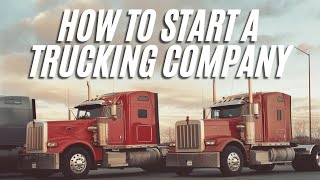
Hunter Nelson, an insurance agent in South Dakota, walks through launching a trucking company: save 3-6 months of operating expenses, form an LLC, register for DOT and MC authority, and get insurance with at least 750,000 in auto liability (brokers often want 1,000,000). He covers hiring drivers with CDL experience, using ELDs like Motive, and pulling motor vehicle records.
Questions this video answers
3–6 months of operating expenses.
750,000 USD minimum (Hunter recommends 1,000,000 USD because brokers often require it).
5,000,000 USD for hazmat.
Motive or Blue Ink.
10 days (do not buy insurance in the first 10 days after applying for authority).
Chapters
Hey, guys, welcome to Nelson Insurance. Say I'm a trucking insurance agent here in South Dakota, and my father owned a trucking company. So I keep up with the industry quite a bit. So if you guys ever thought about owning your own trucking company or you guys are in the process of. Now I'm going to walk through what you really want to keep an eye out for and how you get that process started. So, I mean, obviously the first thing is you want a solid business plan. 50% of truckers go out of business in the first year because they don't have things set up enough or they don't have enough money set aside. So I'm gonna get into all that stuff. So you don't want to outlay all your starting costs. You guys can find mentors on stuff. You want to find goals. Because, you know, there. I've seen some trucking companies out there get to 300 trucks in, you know, four years. Obviously, that's. That's extremely rare deal. But just have realistic expectations and have goals, because if you start growing really quick, your insurance is gonna be brutal and have financial projections, have all that stuff ready to go. So, yeah, there's that. Then you want to set up your. The entity. Most people are going to an llc. Talk to the attorney to see if you want to do a corporation, sole proprietor, whatever. Most people, again, are going with an llc. Then you want to register right at the bat for your ein number. Just get your employer identification number, the irs. That's a pretty easy deal there. And then when you're talking about financing, this is what nobody wants to hear. This is where a lot of guys go under. So have a lot of money set aside. Make sure you got enough money set aside for three to six months because you're gonna have unexpected repairs. I'll get into what the trucks look like and all type of stuff. And insurance is being expensive down payment. You're gonna be dealing with fuel and obviously pick out your truck. So have three to six months of operating expenses set aside. Start working with banks. I had one insured. I worked well. She got to number one bank and it just gave up. And I'm like, no, go try these guys. They're in town. And sure enough, she got. She got funding right away. So try a couple different banks. Don't let anybody get a hold of you, because I'm. I'm in real estate too. And, you know, some of these banks will try to get you by the throat and, and really take control of you. So shop out. Shop with the banks quite a bit and, and make sure you're getting good terms there. But once again yeah the, the three to six months operating expense right away is extremely important. Obviously here's the stuff for trucking. You're gonna need your dot, you're gonna need your MC number, your bill, your BOC3, your IRP, your if does and drug testing. Every single driver that has that drives that's under motor carrier will need drug testing done. Your DOT obviously what you apply for first right away. If you guys don't know what any of this stuff means, I'm not trying to make this a super long video but if you guys don't know what any of those things I just said are, feel free to just message me and I can, I can, I can get into further explanation of that stuff. And then with the BOC3MC number, your dot number you're going to want to go to the fmcsafilings.com and then you're going to go to the website here and you're going to click on proceed to filing right below it here. It's got BOC3 and then once you get past that point you can get your MC number, you get all that type of stuff. Obviously I'm a truck insurance agent. Insurance is one of the most important parts here. The the FMCSA cares about auto liability. That's the main thing. Cargo get a lot of stuff set up but you're gonna need 750000 minimum for auto liability. Really you're 1 million though because that's what a lot of brokers would be acquiring. Almost nobody's be taking yet some 50. The only time you want 750 is if you're sending if you are cooking your dot. Otherwise it would be if you got a couple brokers lined up there taking a 750, you know, whatever. If you get a cargo van or anything on those lines obviously you got different stuff along. Same goes for hazmat. If you got hazmat be 5 million which be the heck of a down payment for insurance then explaining those insurance policies here real quick. You got auto liability. When a lot of people don't understand what all these insurance coverage means. So I'm breaking down for you here real quick. Yeah, auto liability, think of it as like car insurance. You hit somebody else. It's it's covering them has nothing to do with you hardly besides the medical payments. But just keeping it simple. Then you got physical damage. Physical damage covers your truck and nothing else. That's you put the value on it. That's why insurance agents ask you the value of your truck. And that's what comprehensive inclusion is. Collision is physical damage when you get an accident. Comprehensive coverage is physical damage when it's hail, theft, storms, fire, anything on those lines. Cargo coverage is pretty self explanatory. It's your cargo stuff you don't own, so it can't be anything on those lines. And then there is a million endorsements for cargo coverage. If you're a reefer, you want reefer breakdown. Because if you have a reefer refrigeration piece breaks down or anything on those lines and that stuff's getting thawed out real quick and destroys your load, you want something like that. Pollution coverage can be added on to that. So if your hazmat or you're hauling ice cream for example, that stuff melts and you get a big hazmat claim, that stuff can be hundreds of thousands. Pretty quick you get driver error, all that type of stuff. But keeping that simple, those are three main coverages. And general liability would be the fourth one if there was. General liability is covering your business when you're not driving the truck. It's, you know, you're just. It's business operations outside the truck. That stuff's really cheap. Your auto liabilities be your most expensive part by a long shot. Your general liabilities be your cheapest part belong shot. You can get general liability for 500 bucks a year. When you're starting off trucking, your typical auto liability coverage is probably about 17,000 a year. Your physical damage really varies by, varies by your truck. That's how it's possible. Say you want to shoot for a 4% rate. I have a whole video explaining that stuff. And then your Cargo Anywhere from 950 to 1950 is really where you be sitting. Again, you guys, any question of that, just let me know how to pick up the best truck. I mean this stuff's all, it's all opinionated, it's whatever. Obviously brand new truck, you don't need as much money set aside for repair costs because it's not gonna hardly break down. What my father did and what I mean I think is a good recommendation is go pick up a truck if you're just starting that just got off its warranty, it's lost a ton of its value and it just fell off the warranty. So you got guys who got much money and are buying trucks that are only on warranty. And so if it just falls off the warranty, price drops significantly and you're and that's about the best truck you're gonna get. That's, that's, you know, used. So that's what I would do there. You're gonna need an ELD for your truck. Go with Motive or Blue Ink. Blue Inks really got all the details down. I mean they're, they're very detail oriented mode as well as popular ones out there. So go check out those guys if you're gonna be a driver, if you're not. My father, he owned three trucks. Get all that stuff in a year. He didn't drive a truck one time, never had a cdl. So if you're gonna hire drivers or if you're expand quick and you both obviously need drivers, the most important thing is pull in a VR before you hire somebody. Once you get your insurance in place, once you got all this stuff in place, pull motor vehicle reports of your drivers before you hire them or before you technically hire them. Put them on your insurance quick or quote them on your insurance. Because if these guys have got the suckiest driving record or just even they got a couple things on there, you're gonna pay an arm and a leg for it and it's gonna be miserable. I, I quoted one company who had three drivers. They were really not that bad compared to three drivers who were excellent. And it went up 60,000 a year for this guy and he had nine trucks. So be careful that stuff pulling VRs two years minimum CEL experience would be very helpful. If you're someone, somebody like Progressive or geico, they're not really going to care. I mean it's going to be cheaper if they get two years CEL experience. But once you been in business for a couple years, two years CEL experience are going to be putting you with good companies. You know, you don't want to hire qualified drivers. I've seen bad drivers run a company. I had one company I was quoting, been around for 27 years to hire one bad driver, had two or three claims and then they went on business because their insurance tripled. They had, they had quite a few large claims. Instead of a maintenance program, make sure these trucks are being run through the shop weekly. That you guys are always doing regular inspections of the trucks because you know in your first year you're going to have a DOT audit. If your, your truck sucks and the thing's not kept up, you're either going to be put out of business or you're going to collect some fines. So be careful that stuff. One thing I did for you have to say is do not buy insurance in the first 10 days of applying for your authority. There's a 10 day vetting period. If you start shopping around for insurance and this guy is like, oh hey, just apply for your authority. Go ahead and get insurance on this thing right away. So you spill the process. Don't listen to that guy. Don't work with him. He obviously either doesn't know or he does know and he's just trying to get you to waste your money. You can't do anything for those 10 days anyway. So don't have, don't have freaking insurance to sit around. Do nothing. Your first month's your most expensive month. Your first year is the most expensive year. Don't pay a ton of money on insurance when it's your second most, when typically it's your second highest expense and you're just wasting days of your down payment. Do nothing. So be careful that so now that you guys got this stuff, there's one last piece I would say before you go and start finding loads. I highly recommend getting hooked up with Synergy Solutions. They're going to give you a mock DOT audits so that way you're staying in business. They're going, if you got any drivers, they're gonna watch the drivers on the camera. I, I've seen them bring companies down from 2.7 million in claims to 5,000. You guys, a lot of you guys who want to just do the bare bones, keep this thing as cheap as possible. But here's the thing is if you can't afford to have a safety manager, you can't afford to be in business. And as soon as something goes wrong, you're gonna be out of business anyway. So make this stuff work so that way you guys can afford to stay in business. Because safety kills businesses when it your insurance costs go through the roof or your drivers are not being taken care of or anything along anything of the above, Synergy Solutions get hooked up with those guys. Another thing too is you can go to my truckingmentor.com and get hooked up with a mentor who's been doing this forever. So that way you guys are, are sin good. So there's that last thing is now you guys find the loads. What do you guys got to do to to get the money coming in? Hit the dad, start working for contracts early. Your first three months are going to be the worst. After six months things we sent pretty good. Nobody's really going to work with you for the first three months. You can go lease out with somebody if you want to. Maybe Talk to other guys. Again, the mentor deal. Find the other guys. Who are they getting loads from right away in the beginning, do not get insurance cancellation the first few months. You will not get any loads whatsoever. If you know it's hard, you get insurance cancellation the first few months. It's the damn near impossible for you. So. But hit the dad, start working contracts early. A lot of these trucking companies are going out of business. 135,000 carries went up business last year. So you know the demand's going to start going up here. But hit the dat, find other truckers, see what they're doing. Once you get six months, you kind of are golden. So that's really how you guys start a trucking company. I kept it pretty simple, straight to the point. If you guys have any questions, feel free to reach out below in the comments or I'm going to leave my contact info. You guys can call or text me, tell me you guys want. I mean I'm here to help. If you guys would hit the subscribe button, hit the like. I am trying to grow my content to reach more people so that way I can just help other people out. My father's in the truck industry. I was originally in the trucking industry before I got into insurance. So I love this stuff. And yeah, thanks again. Thanks for watching guys. Saga.










