What Is Fleet Trucking Insurance?
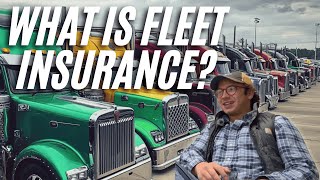
Hunter Nelson (Nelson Insurance) explains what “fleet insurance” means for trucking companies, emphasizing that “fleet” is an informal label whose minimum unit count varies by carrier (often ~10 but ranges widely). He lists multiple insurers and their typical fleet thresholds (examples: Carolina Casualty 50+ units, Berkeley Prime 15+, Berkeley small business 1–14, Protective 25+, DMC 35+, Chubb for very large fleets ~500+), discusses captive insurance as an alternative for very large operations, and describes how underwriters evaluate fleets (safety programs, maintenance, financials) and different policy reporting structures (monthly reporting, annual mileage reporting/pay-per-mile). The video closes with practical advice to tell agents about safety measures (dash cams, drug testing, incentives) to get better pricing.
Questions this video answers
May 28, 2025.
Around 10 trucks (often cited as a common informal threshold).
50+ units.
Berkeley Prime: 15+ units; Berkeley small business: 1–14 units.
At least 25 units.
Chapters
Hey guys, I'm Hunter with Nelson Insurance. I get a lot of people asking me, hey, can I get on fleet insurance? So I'm going to get into it right now. So fleet insurance is not like, hey, I'm on a fleet policy or I'm on nine trucks. Now I'm going to switch to a fleet policy. And there's all sorts of like this. It's like not like a different policy per se. It's, it's kind of like one of those terms where like full coverage, like it doesn't really, it's not a real thing, but you know, it's kind of like a nickname for something that might be, might be there for you. So when you're getting into fleets, you got to remember that every single different, every single insurance company is looking at fleets at a different way. Some are going to count fleet as 10 trucks. There's commercial auto carriers can count as five trucks. Some, some of them will. And some of these guys are going to say hey, to join our program because we'll insure big fleets. We're gonna need 50 trucks, we're gonna need 500 trucks, something along those lines, right? So it depends. Company, company, if you are 50 or so trucks, you're paying, you know, over 250,000 a year, 500,000 a year. I do have a video on captive insurance, which might be a good option for you. So go watch that. Because captive insurance is where you're going to create your own insurance company and you're going to get a say in everything that's going on. If you are still looking through the marketplace, which is, hey, I'm, you know, buying insurance and paying these guys, I'm not getting any dividends or anything on it. You're going to be looking at what, what the threshold there is for fleet. Again, like I'm saying, most of these guys are considering the, the 10 units as a fleet here. You know, one company I do know of that is five trucks considered kind of like their fleet program is Fairmatic, Fermatic is pay per mile, all this type of stuff. They do not insure semi trucks. But if you guys are, you know, like household good movers or couriers or non emergency medical transport, just in the transportation industry, they might do this or they will do this. But let's get into some of the companies here that are actually, you know, what you guys care about the semi trucks. So some of the companies that are not gonna be 10 trucks, but they're, you know, they're considered their fleet insurance. They only do fleets. They're usually doing bigger fleets or considering what you call a big fleet. But you know, these guys are looking for the above 10. So you've got Carolina Casualty, who's a sister company to Berkeley prime and Berkeley Small business. Carolina Casualty wants 50 plus units. Berkeley prime is 15 plus units and their smaller sister company does the 1 to 14. You've got Protective, who wants at least 25 units. Protective has now been bought out by Progressive, so it's Progressive Fleet. Now you have dmz. DMC is, is a sister company to Crum and Forester. So if you guys know Crum and Forester, they're very competitive, they're very picky, but they'll do 35 plus units. You know, then you've got companies like ROI Hudson, those guys who are going to want, you know, the 20 something up there, plus and so on and so on. Once you get into massive stuff and you're still with, you know, the marketplace, you've got companies like Chubb and such who will go in there and look at you if you're like 500 or so units above. Now, let's say you're just creeping up from like the 8, 9. You're like, hey, I'm really close to 10. I kind of want to get in this fleet insurance that all my buddies are talking about. What is, what does some of that stuff look like? Right, so with some of this stuff you're gonna get AIG for one, who won't accept in. Yes, unless you're 10 plus units. You know, there's a lot of these programs out there, like Highlander Specialties through a brokerage and they want 10 plus units there. And you know, and then those are some of the companies who are going to be lower, like the 10. You're just hitting that threshold. Boom. Now I can get some stuff rolling there. And then a lot of the insurance companies that you guys are familiar with, like Great West Sentry, Acuity, Progressive, like all those guys there too, will allow you to go from the nine units to above. The only ones that I'm really aware of who don't want you to go above Fleet or above the nine units are going to be like Berkeley small business is 14. And then, you know, you got to move up to their sister company or you got to find something somewhere else. If you're with geico, they're going to allow you to maybe grow up to like 10 or 11, but you're kind of stuck at that. Nine is really all you can be quoted with. They're up front now. Okay, so we talked about all the entry lines of hey, how do I get into fleet? And what does that process look like? Now let's get into like what does the quote unquote fleet insurance actually look like? Or what does it do here? So fleet insurance, it's not like, it's like truck insurance is not like personal auto insurance. You know, if you got three, I don't know, private passenger vehicles and your auto insurance, you had a fourth. Those other three are going to go down in price. That's not how truck insurance works, unfortunately. You're not going to add me three trucks and add two more and be a five. And it's like, okay, well I was paying 17,000 truck, now it's going to 15,000. Unfortunately, it's not how it works with fleet. Companies are going to be typically a lot more competitive on that stuff because you're gonna have underwriters who are definitely looking at the stuff. Not a lot of it's system generated spitting out of price. You got underwriters. So you're gonna want to know. So these underwriters are going to be looking at this and you're going to want to tell your age and everything that you're doing with hey, here's my safety programs, here's my maintenance program. Some of them want financials, which I know a lot of you guys, like, that's none of their fricking business. But you know, they're, they're knowing that, hey, if I, if I go write this account or if I go, you know, provide this guy a quote on insurance. Believe it or not, insurance companies are not making bank off of truck insurance. They, for the last 11 or 13 years camera what it is, they've been over 100 loss ratio or they've been losing money every year. The only reason they are making money and still providing you guys truck insurance is because they're, they're investing the money and they're earning the dividends on it or the interest. But, you know, so they got to be on the account for a year, two years, three years to at least recuperate their money on that deal. Because when somebody writes a piece of new business for truck insurance to you guys, they actually lose money here right off the bat with the underwriting fees and such. So you're going to get underwriters who are going to look at all of your, well, they're going to look at your business, all these underwriters, and look at it and they're going to get a little bit of say in the price here for sure. So you're gonna want to talk to your agent, let them know everything you're doing. Hey, here's my safety procedure. I do safety incentives. I do random drug testing. I do. I've got all the dash cams in my truck that alert my drivers if they're fatigued. You know, there's dash cams now where I say, hey, wake up, wake up. If the driver's looking fatigued and he's, you know, possibly getting into an accident, they'll let them know, hey, this guy's distracted every time he looks at his phone or doing something on those lines and alert the, the owner of the company. So if you guys have any of that stuff, you're going to want to be letting your agent know exactly what's going on. So now that you got underwriters looking at it, they're going to get a little bit of say in this. Some of the perks for you guys too, besides just that, hey, I can, you know, if I look good for an underwriter, I can get a little better pricing is. There's going to be annual reporting policies, there's going to be monthly reporting policies. And what the heck does that mean? Right? So let's say you guys are five units right now and you're watching this video and you're with Progressive. Progressive has got, you know, the second you bring on a truck, you got to let your agent know or you got to call Progressive and get that truck added to get insurance on it, right? Or you gotta add a driver and you gotta do all this stuff. A monthly reporting policy is going to say, hey, if you're swapping out trucks and drivers all the time, you continue to grow. Well, shoot, if I'm, if I'm going to hold a progressive every, you know, every time I gotta do this or I gotta go hold my agent, I gotta wait. Like this is just such a pain. There's so much. I gotta make all these changes. Instead you can do a monthly reporting policy where it's, hey, Mr. Agent, Mr. Progressive, Mr. Insurance Company, here is my changes made for the month. Let's go and get them added. Boom. Changes made and they'll have coverage as long as you're adding within the 30 days. There's annual reporting policies where they be basing you off of, you know, your trucks for the year, your, your mileage, your revenue. The main one there really is your, is your mileage reporter. You can do a mileage based policy for the year. So like I always talk about Pay per mile insurance. Well, if you're non fleet, you gotta hook up to all your elds. They do it then the month and all sorts of stuff. Whereas this annual reporting policy is going to be kind of like a work comp policy. If you guys are familiar with how the work comp works, you know the work comp, if you're not synced to the, to the payroll company or the payroll system, it'll go in there. Or you're going to go to your age and say, hey, I think I'm going to do a million dollars this year in payroll. Well, that's what work comp companies base the premium off of is what your payroll is going to be for the year. Well then you're going to get audited. If a guy's got work comp, you're familiar with an audit. That's how this is going to be with an annual mile reporting policy. So you can do pay by the mile basically. But for the year, say hey, I got 50 trucks, I'm be driving probably 5 million miles for the year. Okay, great. Let's say, let's just say for example, I'm just fit a number out here. It's 500,000 for the year for your insurance. So you're 100,000 for your. Yeah, you're 100,000 for a million miles you're driving. Okay, let's say you go and drive only 4,4 million miles for the year. Perfect. Insurance company is going to cut your check. Here's 100 grand, boom, here's your 100 grand premium back. Now the other thing is though, if you go in there and drive 6 million miles for a year, like ah, shoot, I was, I knew we were gonna be driving more. I kind of forgot to my age. No, you, now you're gonna have to take your pocketbook or your checkbook out and write the insurance company a check for 100 grand at the end of the year. So you know, you gotta be a little bit careful with it. But it's, it's mileage based. So that way you know if, hey, it's a tough year, I'm kind of losing contracts, my revenue's down. You know, you're gonna have to be your, you know, your insurance is gonna compensate for that. So that's nice. It's, it's basically like a revenue like you're gonna pay. The more, the more you pay, the more revenue you typically make him because you know, the more miles you put on. So it's kind of nice. So that way it's not a fixed premium. If you're, you're doing really well, great, you know, you benefit from it. But if it's a tough year or something along those lines, your, your insurance is going to adjust for the revenue and the miles you're putting on. So that's a little bit of fleet insurance. We do a lot of fleets. We've got a lot of the insurance companies. Actually I didn't mention all of them because I don't want to go. My treat, my trade secrets, you know. But we had a lot of fleet insurance companies. We got at least 10 plus units or something along those lines. So if you guys are fleet and looking at, you know, hey, I want an annual mile policy, I want a monthly reporting policy, let me know. But otherwise I'm here. Just provide values, value to truckers. So if you guys would like subscribe so I can keep making these videos, I can keep helping you guys out and, and hope pretty much expect nothing in return. So I certainly appreciate it.










