6 Steps for Negotiating an Executive Salary
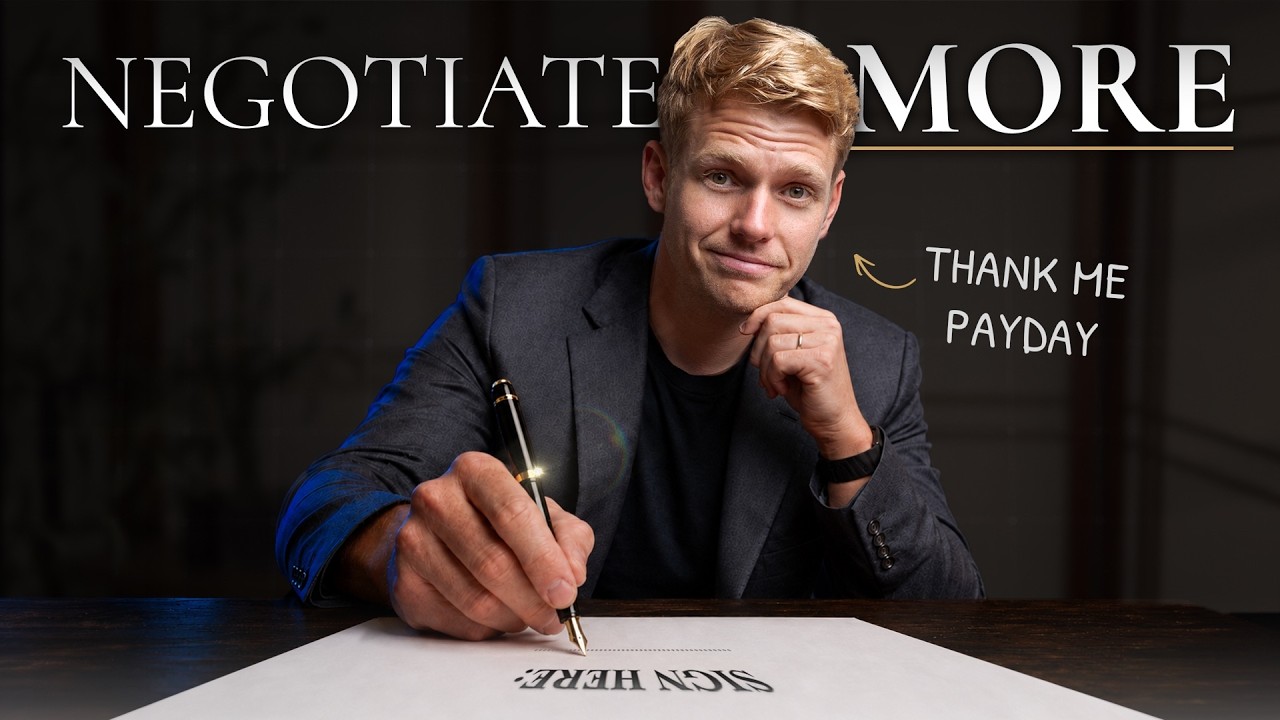
Jacob Warwick breaks down six steps to negotiate executive salaries without sabotaging yourself. Start with genuine gratitude and curiosity, stay calm by embracing silence, and reframe it as joint problem-solving instead of combat. Concrete phrasing examples and the psychology behind each move.
Chapters
Many people don't even have the courage to try to ask for more money. But let's change that right now so you're not one of them. Today, I'll show you 6 tips that will help you navigate and secure bigger wins through your next salary or job offer negotiation. Now, picture this. You did everything right. You researched the salary benchmarks. You built the perfect strategy. You rehearsed your pitch until it was flawless. But then You got in the room with the boss or the CEO. Reality hit. Your voice shook. You talked too fast. You backed down at the first sign of resistance, and you walked away wondering, what the hell just happened? I did all that practice. Now, the gap between preparing for a negotiation and actually doing it can feel quite massive, even for seasoned negotiators and the best executives. Here's why. When the stakes rise, your body produces cortisol and adrenaline, and these are hormones designed to protect you from physical threats. But to be honest, they're no good when we're in a room trying to ask for more money. Your breathing will often get more shallow, your vision can narrow, and your thinking becomes more rigid. Now, right when you need your brain the most, your lizard brain kicks in and works against you. It sabotages all of your efforts. Let's fix that with 6 simple steps. Now, step number 1 is to start by expressing more gratitude. Most people enter high-stakes situations focused only on what they want. This is a big mistake. Start instead with sincere appreciation. Now, I don't want you to fake it. I want you to find something you actually are thankful for. Thank you for making the time for this conversation, or I appreciate the thoughtful offer that you've put together. After all, we are happy they are trying to pay us and compensate us fairly. Gratitude creates an immediate shift from tension to connection, and it also triggers reciprocity. When you express genuine appreciation, people will instinctively want to give something back to you. But gratitude isn't just about changing them, it's about changing you. It's why I like it so much. Gratitude is scientifically proven to reduce your anxiety, and it will decrease those stress hormones that are actively sabotaging your efforts. When you genuinely appreciate the other person's position, you make better decisions and think about solutions, not not just problems. You'll find opportunities that others miss, and you'll think more clearly and creatively, which is exactly what we need. This isn't just about being nice. It's about being smart. Now, step number 2 is to start by showing more enthusiasm. Enthusiasm sells when nothing else will. I've watched weak ideas, and I'm sure you have too, beat great ideas simply because the presenter seemed so excited about what they were proposing. It was infectious. Your energy level will speak louder than your words. If you seem bored by your own ideas, well, guess what? Everyone else is going to be pretty damn bored too. The trick is to be really enthusiastic, not faking it. So it's got to be something you actually care about. Find what truly excites you about your work and let that energy come through. And I found that the next time you have a tricky conversation about salary, one of the most powerful approaches is to assume and speak of a positive outcome. Whatever it is you're asking for, it will be granted. Now, it looks something like this: I'm excited about working with you and the team. I have a few points about the offer that I'd like to discuss, but it sounds like I'll be starting next Monday. When you talk about the future as if it's already happening, you plant a vision in people's minds. If people don't believe a deal is possible, they won't even try to make it work. This is where enthusiasm can be so powerful. It's your job to sell that the deal is going to happen. What you're asking for will be accommodated. Enthusiasm isn't just about energy. It's about creating those possibilities. It will create momentum when negotiations hit sticking points. Now, step number 3, express childlike curiosity. Now, when you feel attacked, you defend yourself. When you feel questioned, you justify. And when you feel challenged, you often push back. These are natural reactions that will kill deals faster than anything else. And that's unfortunate. Instead, we need to replace these defensive reactions with curiosity. So the next time you're challenged, try something like the following. Can you help me understand a little bit more about why you feel that way? What factors led you to that conclusion? Or, and this is one of my favorites, it sounds like you have your doubts, But if you were in my shoes, what would you be asking for? What solutions would you present? These questions will transform the conversation. Instead of opposition, you're creating collaboration. And more on that later. A client of mine was negotiating a role. It's a pretty big role, but the offer came in 40% below the benchmark even. Instead of expressing disappointment, we went with a curious approach. So we used, I'm curious about how you arrived at that figure. 'What factors did you consider?' Now, this simple question actually revealed that the company benchmarked the role against a different role entirely, and it was undervalued. The conversation was able to reset after that, and after we got our final offer, we landed 20% above my client's original target, which is really not bad for asking a simple question versus being bummed out and defensive. Now, curiosity doesn't just give you information, it helps create power. It creates space to think instead of react. Buy yourself some more time. When in doubt, ask instead of tell. Now, step number 4 is a relaxed confidence. Nothing signals that you're valuable like being comfortable with tension. Now, most people rush to fill silence. They talk too much. And as they do that, they often make concessions to ease discomfort. But they also telegraph desperation through nervous energy. But the strongest negotiators do the opposite. They speak less, not more. They move deliberately, not frantically, and they embrace pauses rather than simply rushing past them. Now, this quiet confidence comes from knowing that your value really doesn't depend on this single negotiation. It comes from trusting that your preparation has set you up for for success. And it also comes from your ability to walk away if the terms of this negotiation don't really make sense to you. No deal is better than a bad deal. Being confident shows up physically as well. You'll make more steady eye contact. You'll relax your posture, maybe take up more space because you're comfortable. You'll have calm speech. And when everyone else gets animated or frustrated, you'll be still. When you project confidence without arrogance, you'll create a gravity that will help pull others towards your position. We need all the help we can get. So the next time you're about to enter a tense moment, instead, take a break beforehand, practice some deep breathing, maybe walk around the block and listen to relaxing music, or maybe some hype music if you want to get that enthusiasm up. I like to have my clients visualize weight being lifted off their shoulders. Now, step number 5 is about having a collaboration mindset. The weakest negotiators only see what they want, their side of the table. The average ones will acknowledge, hey, that, that other person has needs too. But the strongest will actually put themselves on the same side of the table as the decision maker. Now, this isn't about compromise. It's about reframing the entire conversation. Instead of a more traditional negotiation of I want this and you want that, we're creating an environment of How can we solve this together? So you might ask a question, how can we structure this so it works for both of us? Now, here's the gratitude piece. I appreciate your offer. Are you open to exploring how we can make this better for both of us? Who's gonna say no to that? You'll notice how our Curiosity theme carries true here as well. Smart questions will unlock bigger wins for everyone. Now, we're expanding the pie. A mental hack for you to visualize this is to think about yourself on the same side of the table working through a challenge, or maybe putting your arm around the other person and brainstorming a solution on a whiteboard. We're working on this problem as a team. Remember, you're not opponents, you're partners finding the best solution for one another. This approach doesn't mean accepting unfavorable terms. It means changing the conversation from combat to collaboration. We're working together. Now, step number 6, probably the most important: be patient. Speed kills deals. The person with the most urgency holds the least power. When you rush, you signal desperation, and when you push for a quick resolution, you surrender your leverage. Now, being patient means having comfort with extended timelines. It's a willingness to pause when appropriate. Maybe think through things a little more. It's the ability to withstand and recognize pressure tactics, and it's also about having clarity about when you walk away. Remember, haste equals risk. When you rush, they sense danger. When you demonstrate patience, you signal confidence in your position. It's also more attractive. I found that the most powerful phrase in any high-stakes situation is That's a great point. I need to think about that. I'll get back to you early next week. What works for you? This creates space for better decisions while also demonstrating your seriousness about the outcome. All right. And there you have it. 6 simple steps to improve your next negotiation. Not ZOPA, not BATNA, not a bunch of crazy acronyms, just genuine gratitude, being enthusiastic, expressing curiosity. Having confidence, being able to collaborate, and being patient. Now, obviously, there are going to be many more questions, especially tactical ones. How to— what if the offer is really far off? What do I say? How much should I ask for? Do I get specific? Why or why not? What if I anchor too high and I scare them away and they rescind the offer? Or this happens all the time. How do I be patient when they've only given me 48 hours to respond? We'll save those great questions for another video, or you can read my article on Lenny's newsletter with some more tactical details in there. In the meantime, you can subscribe to my newsletter, Execs in the City, for weekly tips, or follow me on LinkedIn @JacobWarwick for more tips that you can use every day. Remember, negotiation isn't magic. It's a skill that you'll need to build through practice. But the executives who master this don't just survive high-pressure moments, they thrive in them. They look forward to them, and that is what helps them make more money. They turn pressure into advantage, and they negotiate with such precision that more opportunities come to them when doors are closed for everyone else. Your next salary move, your career discussion, or leadership opportunity will largely be determined by how well you negotiate when it matters most. But the question is, will you be ready? Stay fearless, friends, and thank you for tuning in.
More from Jacob


How to Negotiate Your Salary Like a Fortune 500 Executive (Featuring Jacob Warwick)

Leaving LinkedIn and the Power of Professional Focus with Jacob Warwick - Damns Given 2.02

He's negotiated $1B+ in executive compensation. Here's his playbook. | Jacob Warwick






